Updated 2026-03-15

Best Email Marketing Tools for Auto Parts & Accessories Stores

Cars need parts. Email makes sure they buy those parts from you.

Auto parts and accessories e-commerce has a unique challenge: fitment. Every product recommendation needs to match the customer's specific vehicle. A brake pad for a 2020 Honda Civic is different from one for a 2019 Ford F-150. Email marketing for auto parts stores needs to be vehicle-aware, timing maintenance reminders and product recommendations based on what the customer actually drives. I reviewed 19 email marketing tools for auto parts stores, focusing on vehicle data segmentation, maintenance reminder automation, fitment-based recommendations, and seasonal campaign capabilities.

TL;DR

Klaviyo is the strongest option for established auto parts stores because its custom properties let you store vehicle year, make, model, and engine for every subscriber - making every recommendation fitment-specific. Sequenzy is the better choice for stores watching costs, since pay-per-email pricing keeps expenses manageable as your parts buyer list grows. Neither platform has native fitment database integration, so you will need to manage vehicle data through tags or custom fields.

Why Auto Parts Stores Need Email Marketing

Vehicle-Specific Recommendations

Generic product recommendations do not work for auto parts. Every email needs to show parts that fit the customer's vehicle. Segmenting by vehicle data dramatically increases relevance and conversion.

Maintenance Cycle Reminders

Oil changes, brake replacements, tire rotations, filter changes. Cars have predictable maintenance schedules. Email reminders timed to these cycles drive consistent repeat purchases.

Seasonal Preparation

Winter tires in fall, AC service in spring, detailing products in summer. Seasonal vehicle maintenance creates natural campaign opportunities throughout the year.

Project and Upgrade Cross-Sells

Car enthusiasts rarely stop at one upgrade. Someone buying a cold air intake will want an exhaust system next. Email introduces the next step in their build or maintenance plan.

Auto Parts & Accessories Stores Email Marketing Benchmarks

Know these numbers before you start. They'll help you set realistic goals and pick the right tool.

22-28%
Average Open Rate

Auto parts emails perform at or slightly above e-commerce averages. Vehicle-specific subject lines that mention the customer's make and model boost open rates by 15-20% compared to generic subject lines.

3-5%
Average Click Rate

Click rates are highest when product recommendations are fitment-verified. Including a one-click reorder button for consumable parts like oil and filters dramatically improves click performance.

Saturday morning 8-10 AM or weekday evenings 6-8 PM
Best Send Time

Weekend mornings catch DIY mechanics planning their weekend projects. Weekday evenings reach people researching parts after work. Test both for your specific audience.

$0.15-0.40
Revenue per Email

Auto parts have higher AOV than many e-commerce categories, which drives strong revenue per email. Maintenance reminder emails and browse abandonment typically generate the highest revenue per send.

Important Tips Before You Choose

Lessons from auto parts & accessories storeswho've been doing this for years. Save yourself the trial and error.

Store vehicle data as subscriber properties from day one

Capture vehicle year, make, model, and engine type at account creation or first purchase. This single data point powers every future email recommendation. Without it, your product emails are just generic catalogs that auto parts buyers ignore.

Build separate tracks for maintenance buyers and enthusiasts

Someone buying oil filters wants convenience reminders. Someone buying a cold air intake wants build inspiration. These are fundamentally different customers with different buying cycles, budgets, and content preferences. Mixing them kills engagement for both groups.

Time maintenance reminders to actual usage intervals

Oil filters every 5-6 months, brake pads every 12-18 months, air filters annually, wiper blades every 6-12 months. Trigger replenishment emails based on average product lifespan after purchase, not arbitrary calendar dates.

Use seasonal pre-season campaigns to capture early buyers

Start winter tire and winterization product campaigns in September, not November. Auto parts buyers who plan ahead have higher average order values. Late-season buyers are price shoppers. Capturing the planner segment is more profitable.

Cross-sell the full project, not just one part

If someone buys brake pads, they likely need rotors, brake fluid, and caliper grease. If someone buys a cold air intake, suggest a tune, exhaust, or intercooler next. Bundle cross-sells around complete projects rather than random related products.

Include installation guides or links in post-purchase emails

Auto parts customers often install parts themselves. A post-purchase email with a link to an installation video or guide reduces returns, increases satisfaction, and positions your store as helpful rather than transactional.

19 Best Email Marketing Tools for Auto Parts & Accessories Stores

#ToolDescriptionBest ForPricing
1KlaviyoE-commerce email with custom properties and deep segmentation.Established auto parts stores wanting vehicle-specific email personalizationFree up to 250 contacts, then from $20/month
2SequenzyAI-powered email with Shopify integration and pay-per-email pricing.Auto parts stores wanting AI automation at affordable pricingFree up to 2,500 emails/mo, then $19/mo (unlimited contacts)
3DripE-commerce email with revenue attribution and custom fields.Mid-size parts stores wanting revenue-focused email$39/month for 2,500 contacts
4OmnisendE-commerce email with SMS and product tools.Auto parts stores wanting email and SMS at a fair priceFree up to 250 contacts, then from $16/month
5ActiveCampaignAdvanced automation with CRM for complex automotive businesses.Auto businesses with service operations alongside parts sales$29/month for 1,000 contacts
6MailchimpPopular email with free tier and basic features.Small auto parts shops starting outFree up to 500 contacts, then from $13/month
7BrevoBudget email with SMS and transactional capabilities.Budget auto parts storesFree up to 300 emails/day, then from $25/month
8OmnisendE-commerce email and SMS for auto parts stores on Shopify.Shopify auto parts stores wanting quick-launch email and SMS automationFree up to 250 contacts, then from $16/month
9KlaviyoAdvanced e-commerce email with custom vehicle properties for auto parts stores.Established auto parts stores wanting vehicle-specific segmentation and AI maintenance predictionsFree up to 250 contacts, then from $20/month
10SendlaneE-commerce email and SMS with real-time triggers for auto parts retailers.Auto parts stores wanting real-time behavioral automation and email plus SMSFrom $99/month
11DripRevenue-attributed email for auto parts stores tracking maintenance campaign ROI.Auto parts retailers wanting revenue attribution on seasonal maintenance campaigns$39/month for 2,500 contacts
12SendGridTransactional and marketing email for high-volume auto parts retailers.Tech-forward auto parts retailers wanting unified transactional and marketing emailFree up to 100 emails/day, then from $20/month
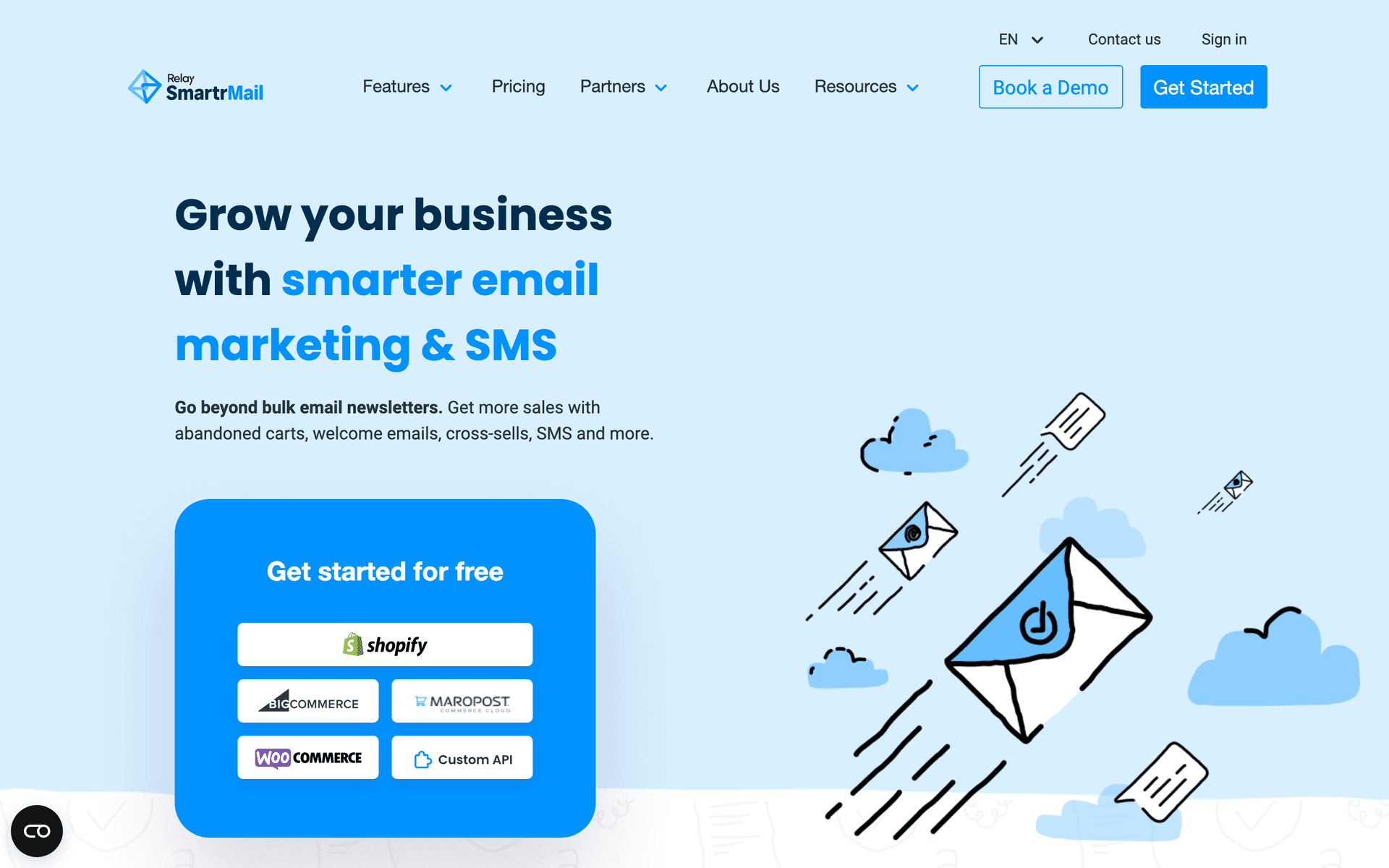
13SmartrMailAI product recommendation email for auto parts stores with large catalogs.Auto parts stores with large catalogs wanting AI-powered compatible parts recommendationsFrom $19/month
14ActiveCampaignCRM and automation for auto parts stores with fleet and B2B customers.Auto parts stores serving both B2B fleet accounts and DIY consumer customers$29/month for 1,000 contacts
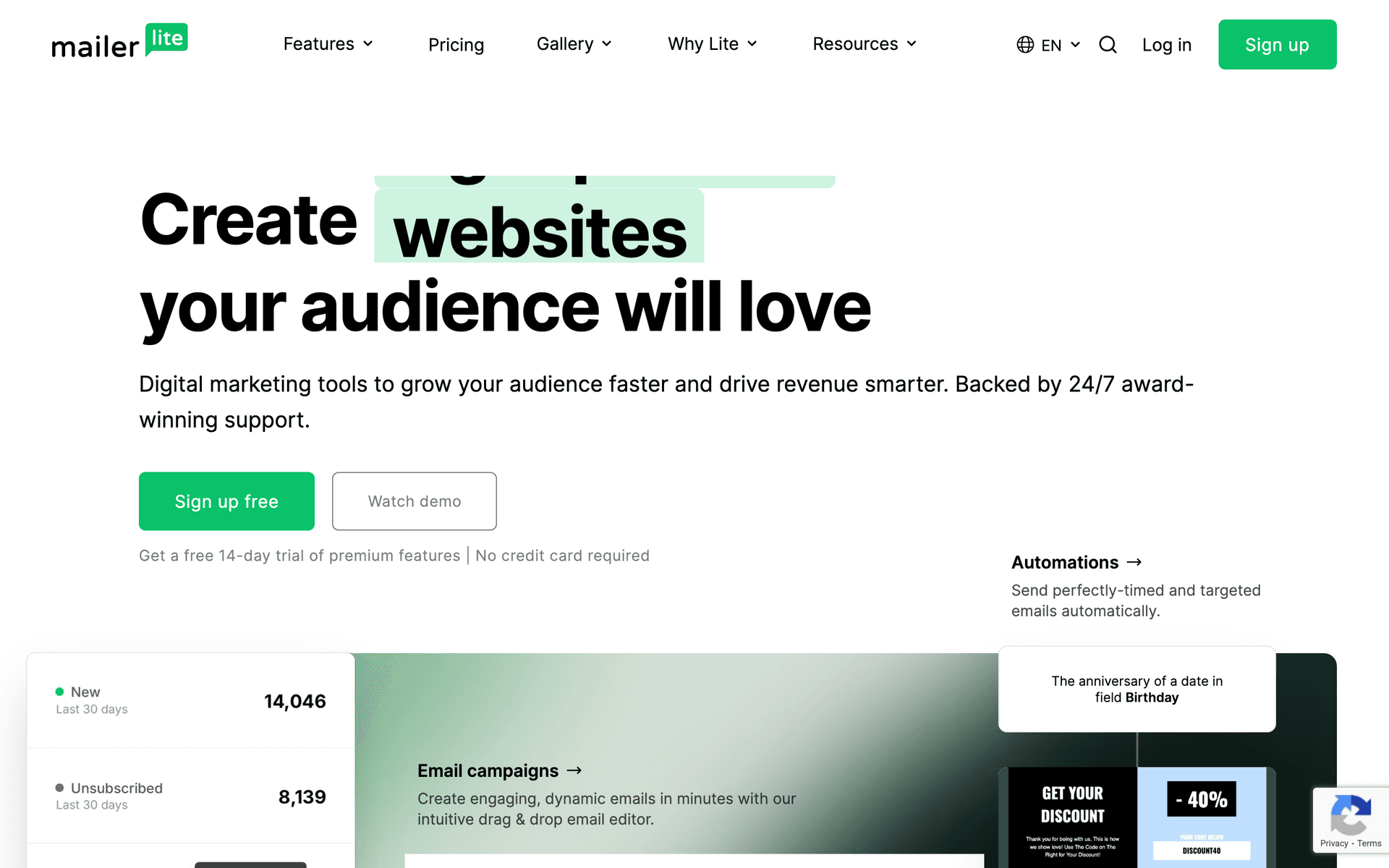
15MailerLiteClean email for small auto parts stores starting with email marketing.Small auto parts stores starting email marketing at low costFree up to 1,000 subscribers, then from $10/month
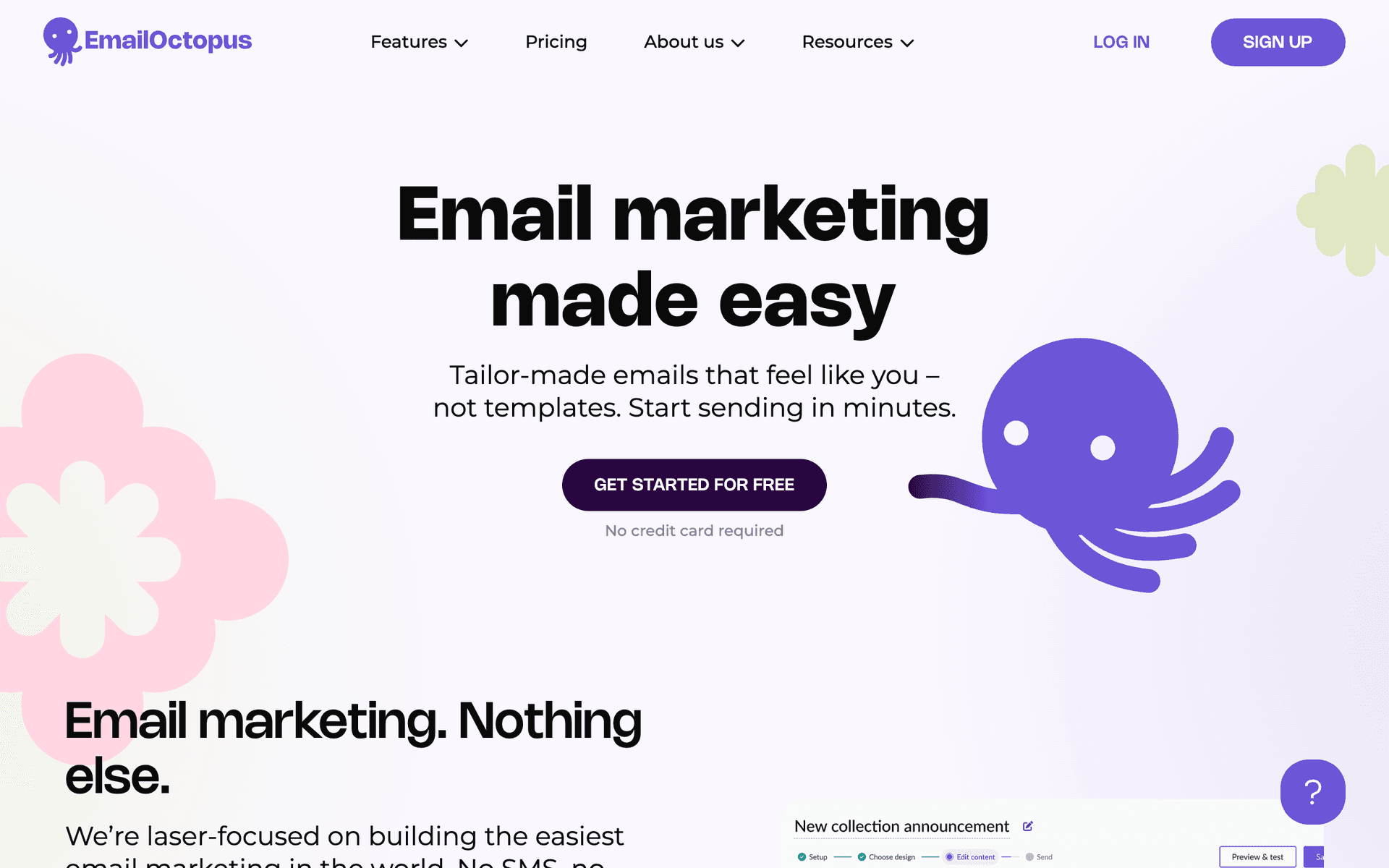
16EmailOctopusBudget email for independent auto parts stores.Independent auto parts shops starting email at zero costFree up to 2,500 subscribers, then from $9/month
17SenderFree email and SMS for auto parts stores on a tight budget.Small auto parts retailers wanting email automation at zero costFree up to 2,500 subscribers and 15,000 emails/month, then from $15/month
18MailchimpFamiliar email with free tier for auto parts and accessories retailers.Auto parts retailers wanting a familiar platform with a large user communityFree up to 500 contacts, then from $13/month
19GetResponseAll-in-one platform with landing pages for auto parts stores running campaigns.Content-driven auto parts brands using landing pages to capture subscribers from car community contentFrom $19/month for 1,000 contacts
#1
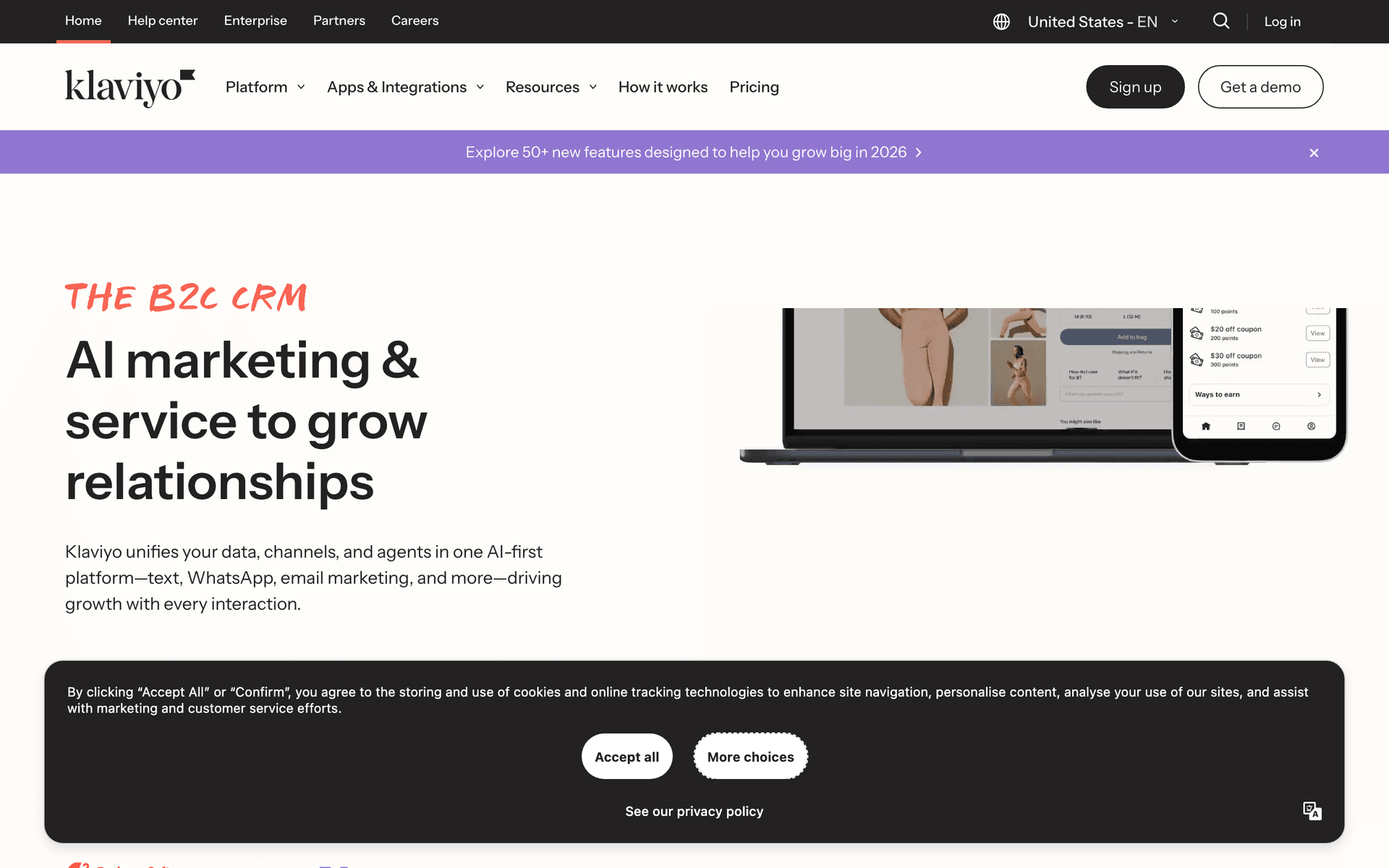
Klaviyo

E-commerce email with custom properties and deep segmentation.

Visit
Klaviyo dashboard screenshot

Klaviyo is the strongest option for auto parts stores because of how it handles custom properties and product catalog data. You can store vehicle year, make, model, and engine as subscriber properties and use them to filter product recommendations in every email - so a 2020 Honda Civic owner sees brake pads, oil filters, and accessories that actually fit their car. Browse abandonment catches researchers comparing parts for their specific vehicle and brings them back with a targeted reminder. The product catalog integration pulls fitment-specific items directly into email templates. Predictive analytics estimate when consumable parts need replacement based on purchase dates. The downside is cost - contact-based pricing gets expensive for parts stores with large customer databases, and auto parts margins can be thin. But the higher AOV of auto parts (compared to, say, books or apparel) typically justifies the investment for stores doing $15K+ monthly revenue.

Best for
Established auto parts stores wanting vehicle-specific email personalization
Pricing
Free up to 250 contacts, then from $20/month

Pros

  • Custom vehicle properties
  • Product catalog integration
  • Browse abandonment
  • Deep segmentation

Cons

  • Expensive at scale
  • Complex vehicle data setup
  • Contact-based pricing
  • No native fitment support
Our Top Pick for Auto Parts & Accessories Stores
#2
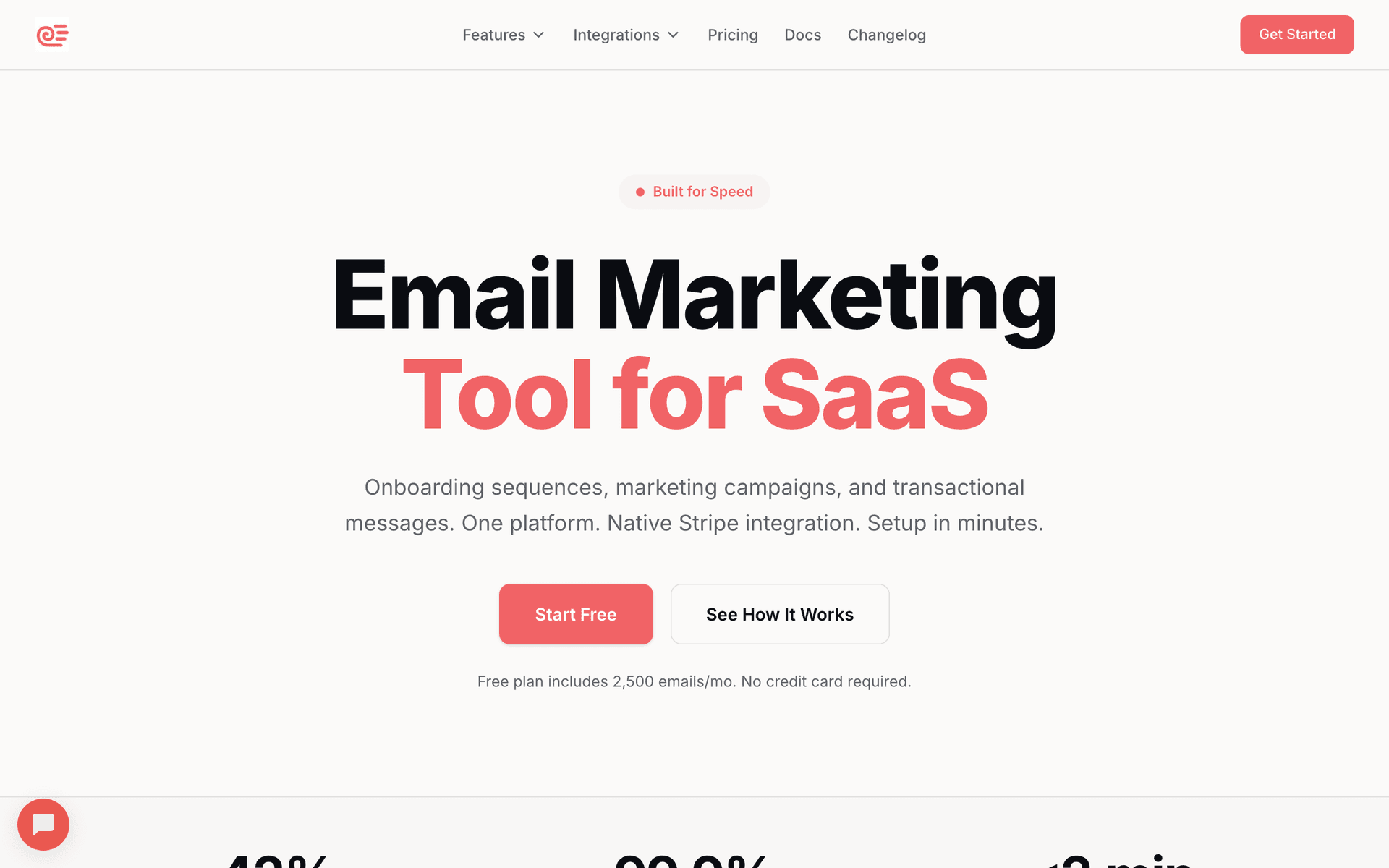
Sequenzy

AI-powered email with Shopify integration and pay-per-email pricing.

Visit
Sequenzy dashboard screenshot

Sequenzy works well for auto parts stores on Shopify that want to automate maintenance reminders and seasonal campaigns without Klaviyo's price tag. The native Shopify integration syncs order data so you know what each customer bought and when, and subscriber attributes can store vehicle information for basic segmentation. The AI sequence builder generates maintenance reminder flows, seasonal prep campaigns, and post-purchase cross-sell sequences in seconds - just describe your product categories and it creates the full automation. Pay-per-email pricing is a genuine advantage for parts stores - if you have 15,000 subscribers but only email 5,000 per campaign, you pay for 5,000 sends, not 15,000 contacts. The free tier covers up to 2,500 emails per month, which is enough for a new store testing email marketing. The honest limitation: no AI product recommendation engine like Klaviyo, so cross-sell recommendations need manual setup rather than algorithmic generation.

Best for
Auto parts stores wanting AI automation at affordable pricing
Pricing
Free up to 2,500 emails/mo, then $19/mo (unlimited contacts)

Pros

  • AI builds maintenance sequences fast
  • Native Shopify integration
  • Subscriber attributes for vehicle data
  • Pay-per-email pricing

Cons

  • No fitment data integration
  • Newer platform
  • No built-in SMS
  • No vehicle-specific product picker
#3
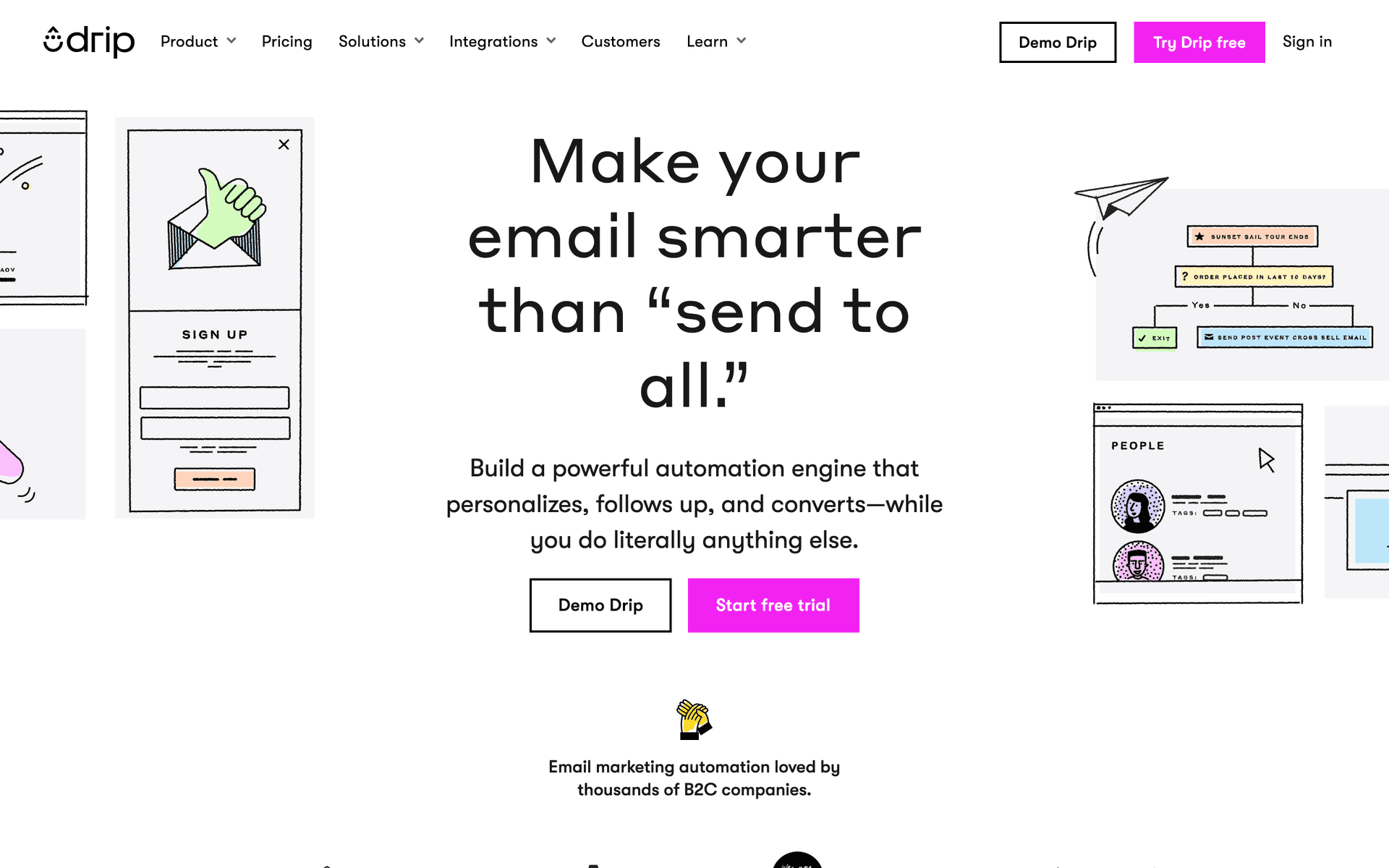
Drip

E-commerce email with revenue attribution and custom fields.

Visit
Drip dashboard screenshot

Drip handles auto parts segmentation through custom fields where you can store vehicle year, make, and model for each subscriber. The revenue attribution is Drip's standout feature for parts stores - it shows you exactly which maintenance reminder sequences, seasonal campaigns, and cross-sell flows generate the most revenue, so you can double down on what works. The visual workflow builder handles complex automotive email sequences well, like branching a post-purchase flow based on whether someone bought maintenance parts or performance parts. For mid-size parts stores that want data-driven decisions about their email program, Drip delivers actionable revenue insights. The $39/month starting price and contact-based pricing are the main drawbacks.

Best for
Mid-size parts stores wanting revenue-focused email
Pricing
$39/month for 2,500 contacts

Pros

  • Revenue attribution
  • Custom fields for vehicles
  • Visual workflows
  • E-commerce focused

Cons

  • No free tier
  • Contact-based pricing
  • Higher starting price
  • No fitment integration
#4
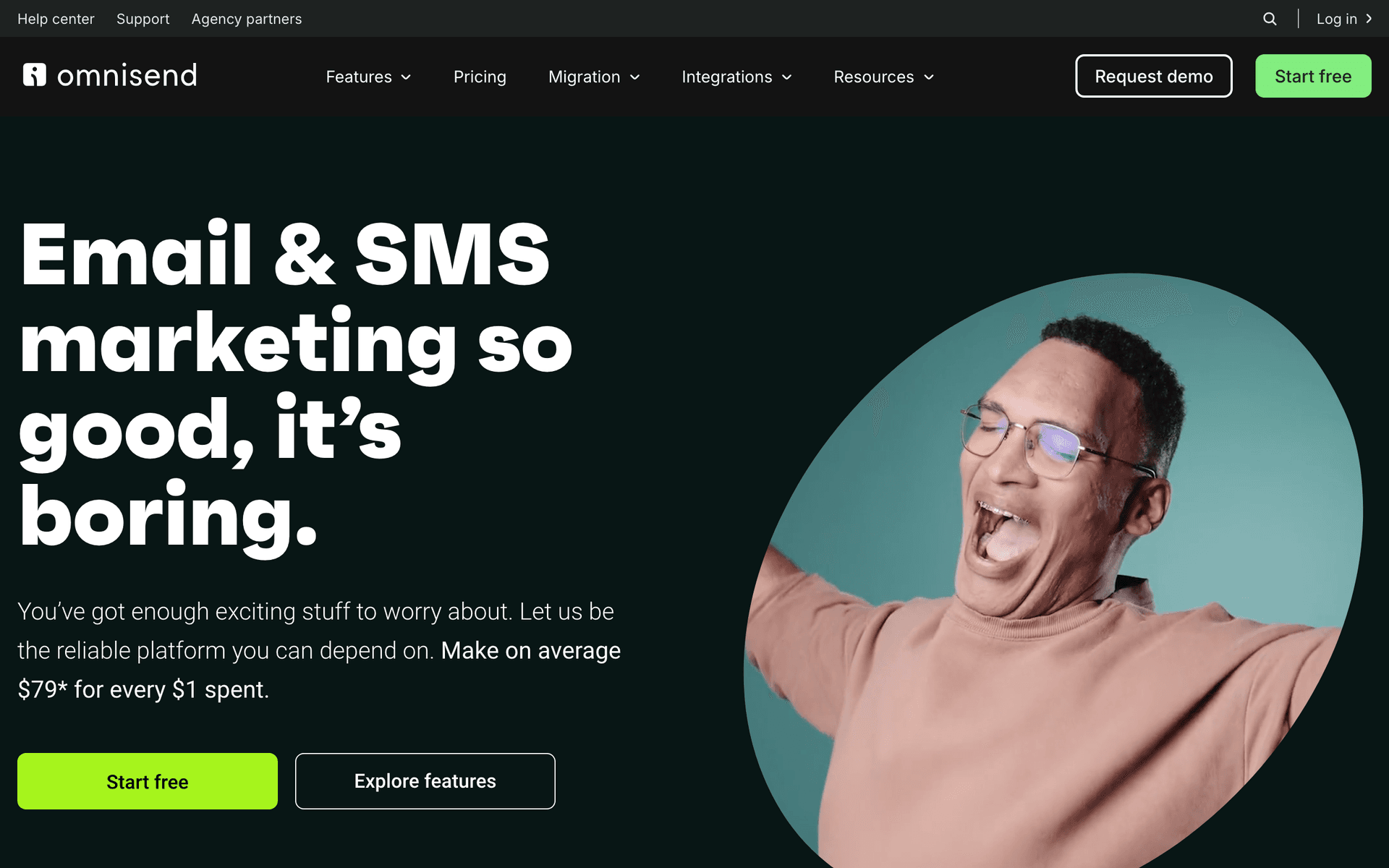
Omnisend

E-commerce email with SMS and product tools.

Visit
Omnisend dashboard screenshot

Omnisend covers the auto parts basics well: cart recovery with product images, welcome series with bestseller showcases, and post-purchase automation for cross-sells. The product picker makes building visual emails with part images, descriptions, and prices straightforward. SMS is genuinely useful for auto parts - flash sale alerts for seasonal items like winter tires or clearance notifications for discontinued parts. Pre-built automation templates save setup time. The limitation for auto parts specifically is segmentation - basic tagging handles broad vehicle categories (trucks vs sedans) but does not support the granular year/make/model filtering that Klaviyo provides. Good for stores that prioritize simplicity over deep vehicle personalization.

Best for
Auto parts stores wanting email and SMS at a fair price
Pricing
Free up to 250 contacts, then from $16/month

Pros

  • Email and SMS
  • Product picker
  • Pre-built automations
  • Good pricing

Cons

  • No vehicle-based segmentation
  • Basic custom fields
  • No fitment support
  • Generic templates
#5
ActiveCampaign

Advanced automation with CRM for complex automotive businesses.

Visit
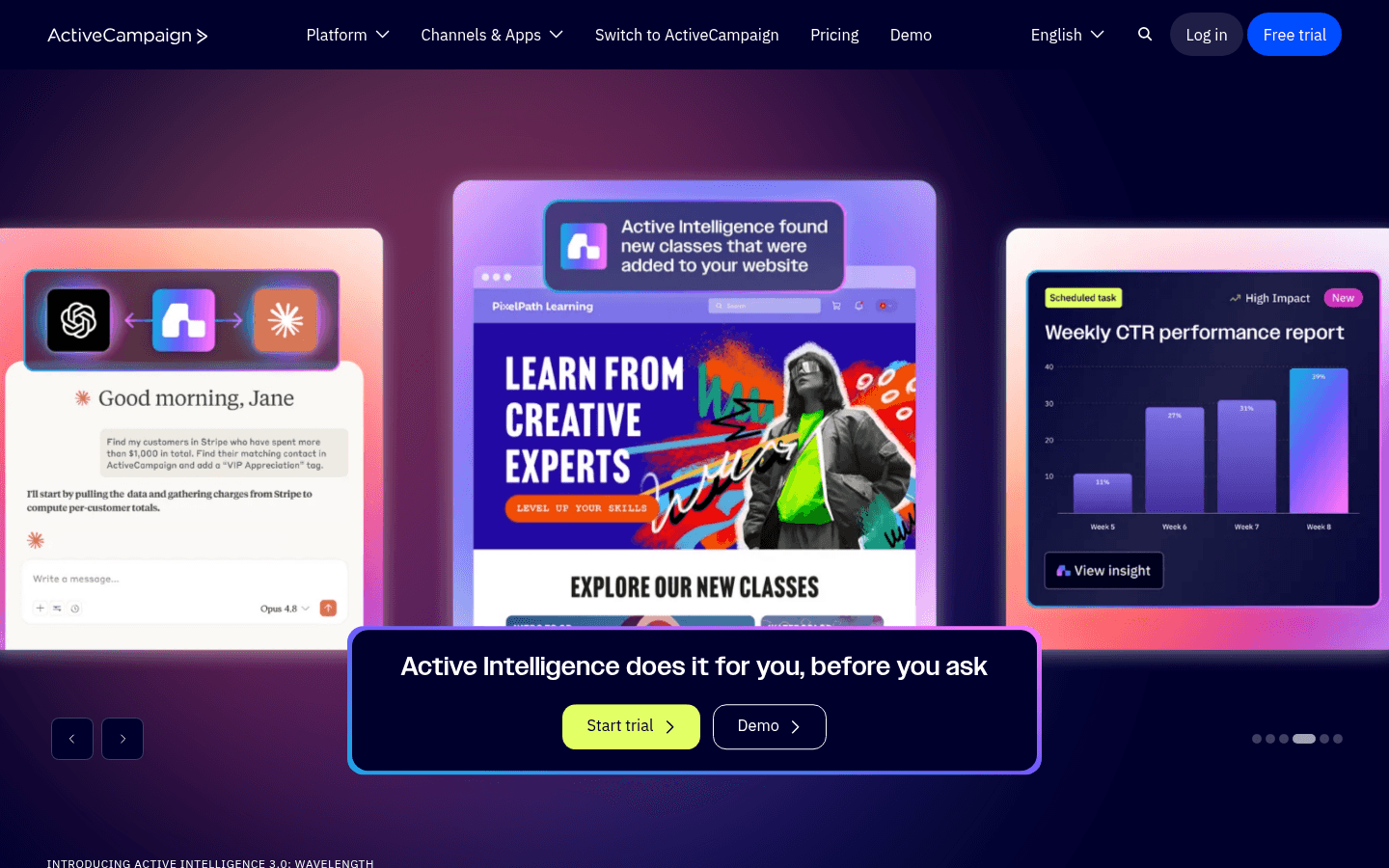
ActiveCampaign dashboard screenshot

ActiveCampaign makes sense for auto parts businesses that combine retail with services - shops that sell parts and also do installation, custom builds, or fleet maintenance. The CRM tracks the full customer relationship beyond just email, including service history and vehicle details. Automation handles complex scenarios like triggering a maintenance reminder for a fleet manager's 20 vehicles on different schedules. For businesses that are part retailer, part service provider, the combined CRM and automation bridges both sides. Not the best fit for pure online parts retailers - Klaviyo and Sequenzy handle e-commerce-specific needs better.

Best for
Auto businesses with service operations alongside parts sales
Pricing
$29/month for 1,000 contacts

Pros

  • CRM for service tracking
  • Complex automation
  • Multi-vehicle data
  • Good deliverability

Cons

  • Not auto-parts specialized
  • Steep learning curve
  • No e-commerce templates
  • Significant setup
#6
Mailchimp

Popular email with free tier and basic features.

Visit
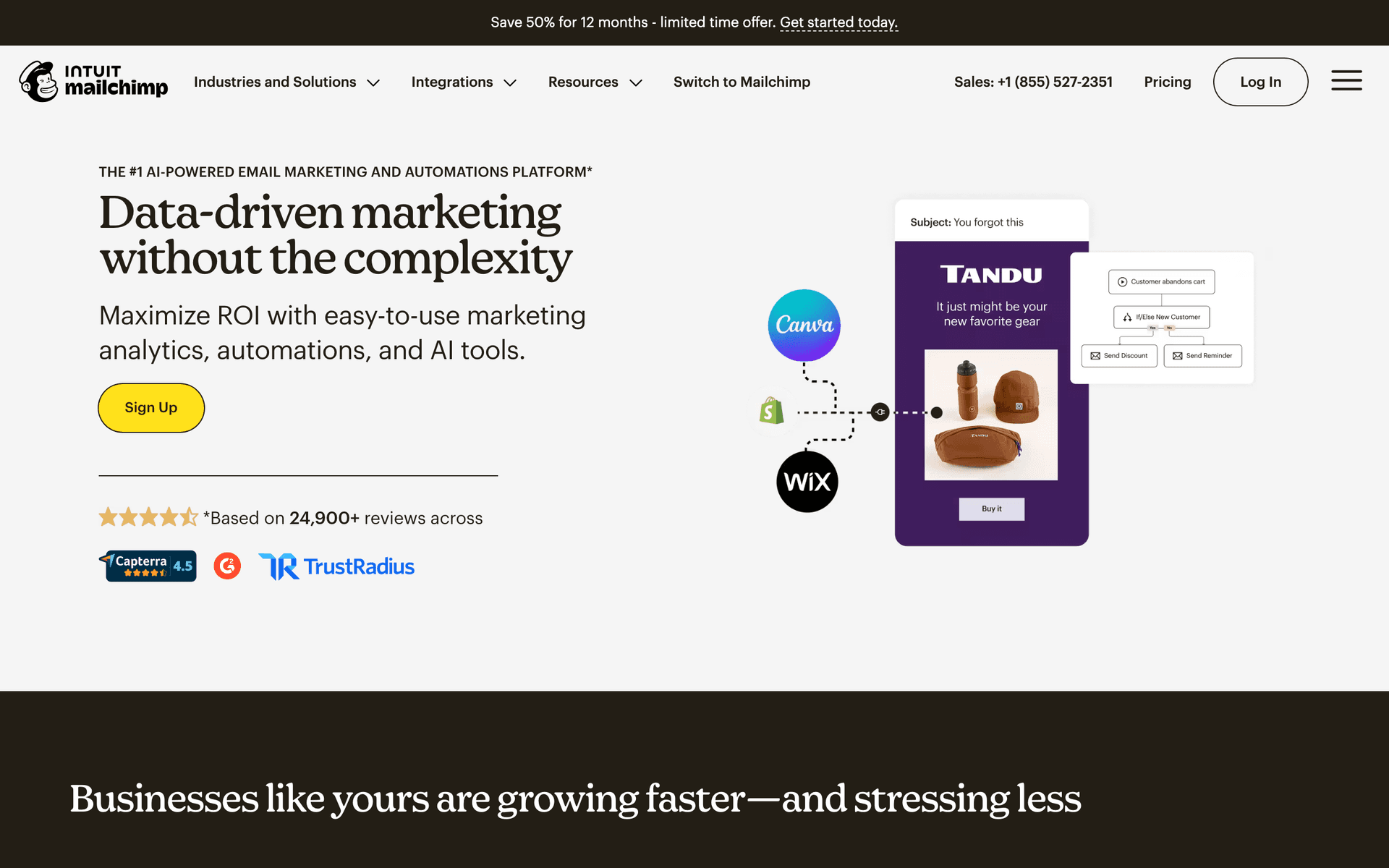
Mailchimp dashboard screenshot

Mailchimp gets small auto parts shops started with minimal investment. The free tier covers 500 contacts, and the template library has clean layouts for product showcase emails. Basic tagging lets you segment by broad vehicle type (truck owners vs sedan owners) for targeted campaigns. The integration ecosystem connects to most e-commerce platforms. For a new parts store building their first customer list and sending basic newsletters and cart recovery emails, Mailchimp covers the essentials. The limitations become clear as your store grows - no vehicle-specific product recommendations, basic automation that struggles with maintenance reminder timing, and pricing that escalates quickly past 500 contacts.

Best for
Small auto parts shops starting out
Pricing
Free up to 500 contacts, then from $13/month

Pros

  • Free tier
  • Easy to use
  • Basic tagging
  • Many integrations

Cons

  • Basic automation
  • No vehicle segmentation
  • Gets expensive
  • No fitment support
#7
Brevo

Budget email with SMS and transactional capabilities.

Visit
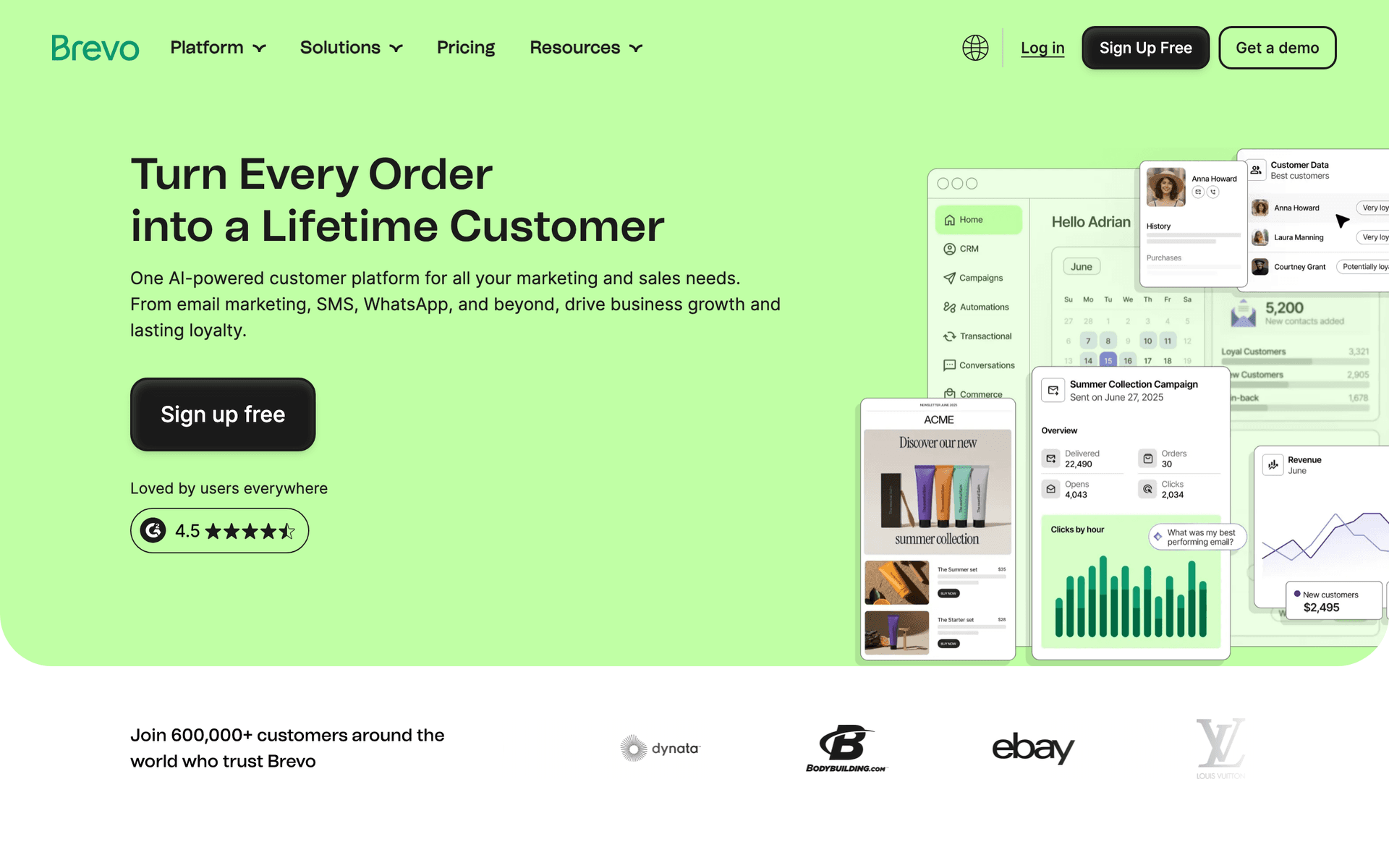
Brevo dashboard screenshot

Brevo is the budget option for auto parts stores that need to keep email marketing costs minimal while still covering the basics. Pay-by-email pricing keeps costs manageable even with a large customer database - store unlimited contacts on the free tier and pay only when you send. SMS works for flash sales on seasonal items and clearance alerts for discontinued parts. Transactional emails handle order confirmations and shipping notifications from the same platform. The automation handles basic post-purchase flows and seasonal campaigns, though vehicle-specific segmentation is limited to manual tagging. For parts stores on a tight budget doing under $10K/month in revenue, Brevo covers the essentials at the lowest cost.

Best for
Budget auto parts stores
Pricing
Free up to 300 emails/day, then from $25/month

Pros

  • Budget-friendly
  • SMS included
  • Pay by email
  • Transactional email

Cons

  • Basic automation
  • No vehicle data support
  • Limited features
  • Basic templates
#8
Omnisend

E-commerce email and SMS for auto parts stores on Shopify.

Visit
Omnisend dashboard screenshot

Omnisend works well for auto parts stores that sell on Shopify and want pre-built e-commerce automations without complex setup. Cart abandonment, post-purchase follow-ups, and win-back campaigns come ready to deploy. SMS adds a second channel for back-in-stock alerts on popular performance parts and seasonal product launches. For auto parts stores that want email and SMS automation running quickly without custom development, Omnisend's pre-built flows reduce setup time significantly. Vehicle data segmentation requires manual tagging, but core e-commerce workflows are well covered.

Best for
Shopify auto parts stores wanting quick-launch email and SMS automation
Pricing
Free up to 250 contacts, then from $16/month

Pros

  • Pre-built e-commerce automations
  • Email and SMS
  • Shopify integration
  • Free tier available

Cons

  • No vehicle data integration
  • Contact-based pricing
  • Manual vehicle tagging required
  • No fitment-aware segmentation
#9
Klaviyo

Advanced e-commerce email with custom vehicle properties for auto parts stores.

Visit
Klaviyo dashboard screenshot

Klaviyo is the strongest platform for auto parts stores that want genuine vehicle-aware segmentation. Custom subscriber properties store vehicle year, make, model, and engine trim for every customer. This data powers fitment-specific product recommendations - send brake pad emails to Honda Civic owners and F-150 owners each see brake pads that actually fit their truck. Predictive analytics identify customers approaching their next maintenance interval based on purchase history. For established parts stores generating over $50K monthly where personalized recommendations matter, Klaviyo's investment delivers measurable revenue improvement.

Best for
Established auto parts stores wanting vehicle-specific segmentation and AI maintenance predictions
Pricing
Free up to 250 contacts, then from $20/month

Pros

  • Custom vehicle property storage
  • Fitment-specific recommendations
  • AI maintenance predictions
  • Revenue attribution

Cons

  • Expensive at scale
  • No native fitment database
  • Contact-based pricing
  • Complex setup
#10
Sendlane

E-commerce email and SMS with real-time triggers for auto parts retailers.

Visit
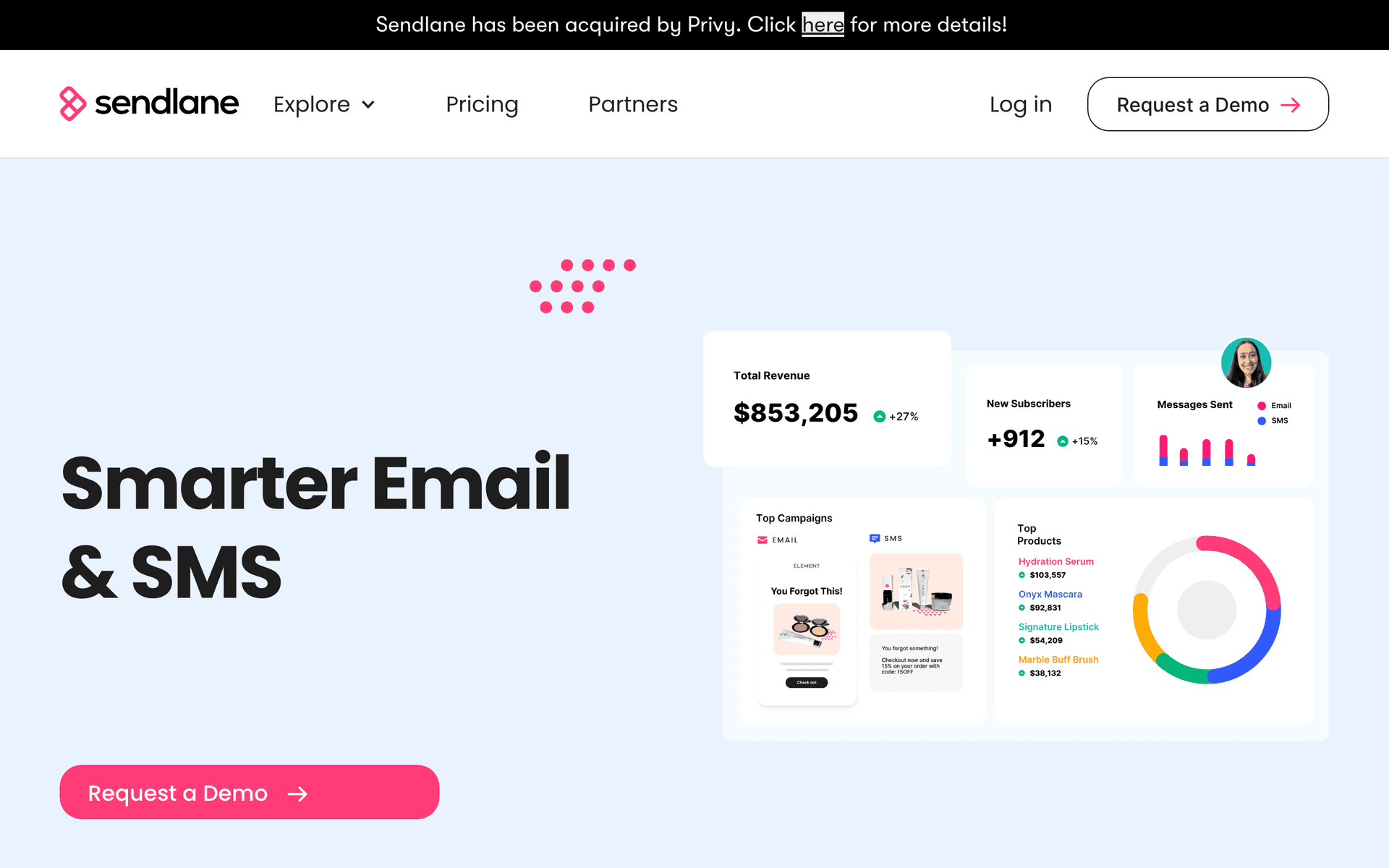
Sendlane dashboard screenshot

Sendlane's real-time behavioral tracking fires automation within seconds of customer actions - a parts buyer who abandons a cart gets a follow-up email before the browser tab closes. For auto parts stores where high-consideration purchases involve research cycles and multiple site visits, real-time browse abandonment and cart recovery outperform scheduled batch emails. Revenue attribution shows which maintenance reminder campaigns and seasonal promotions generate the most parts sales. Email and SMS together reach customers across both channels for high-urgency seasonal inventory promotions.

Best for
Auto parts stores wanting real-time behavioral automation and email plus SMS
Pricing
From $99/month

Pros

  • Real-time behavioral triggers
  • Email and SMS unified
  • Revenue attribution
  • E-commerce focused

Cons

  • Expensive starting price
  • No vehicle data support
  • No free tier
  • Overkill for small shops
#11
Drip

Revenue-attributed email for auto parts stores tracking maintenance campaign ROI.

Visit
Drip dashboard screenshot

Drip connects to Shopify and WooCommerce auto parts stores for revenue attribution on email campaigns. For parts retailers who run seasonal maintenance reminder campaigns and want to track which sequences generate the most revenue, Drip provides that attribution clearly. E-commerce playbooks include win-back campaigns for lapsed parts buyers and post-purchase cross-sell sequences that are easy to adapt for automotive maintenance categories.

Best for
Auto parts retailers wanting revenue attribution on seasonal maintenance campaigns
Pricing
$39/month for 2,500 contacts

Pros

  • Revenue attribution
  • Seasonal playbooks
  • E-commerce focused
  • Good segmentation

Cons

  • No free tier
  • No vehicle data features
  • Higher starting price
  • Contact-based pricing
#12
SendGrid

Transactional and marketing email for high-volume auto parts retailers.

Visit
SendGrid dashboard screenshot

SendGrid handles both transactional and marketing email from one platform, making it useful for auto parts retailers who send high volumes of order confirmations, shipping notifications, and tracking updates alongside promotional campaigns. The marketing automation covers basic email sequences and segmented campaigns. For parts retailers with custom-built stores or complex tech stacks, SendGrid's robust API provides reliable email delivery for both operational and marketing communications.

Best for
Tech-forward auto parts retailers wanting unified transactional and marketing email
Pricing
Free up to 100 emails/day, then from $20/month

Pros

  • Unified transactional and marketing
  • High deliverability
  • Robust API
  • Scalable sending

Cons

  • Developer-oriented
  • No vehicle data features
  • Limited automation depth
  • No SMS
#13
SmartrMail

AI product recommendation email for auto parts stores with large catalogs.

Visit
SmartrMail dashboard screenshot

SmartrMail's AI recommendations work well for auto parts stores carrying large cross-reference catalogs where manually creating recommendation emails is impractical. The AI analyzes purchase history to suggest compatible or complementary parts automatically. For parts stores where customers frequently buy entire maintenance kits rather than single items, AI-powered recommendation emails can increase average order values by surfacing all the parts needed for a complete job at once.

Best for
Auto parts stores with large catalogs wanting AI-powered compatible parts recommendations
Pricing
From $19/month

Pros

  • AI compatible parts recommendations
  • Good for large catalogs
  • Shopify integration
  • Automated emails

Cons

  • No vehicle data awareness
  • No SMS
  • Limited advanced automation
  • Smaller platform
#14
ActiveCampaign

CRM and automation for auto parts stores with fleet and B2B customers.

Visit
ActiveCampaign dashboard screenshot

ActiveCampaign works for auto parts retailers that serve both consumer DIY mechanics and commercial fleet accounts. The CRM tracks fleet company relationships and purchasing history, while marketing automation handles consumer promotional campaigns. Conditional automation routes fleet buyers into account management sequences and consumers into maintenance reminder and promotional flows. For parts retailers with meaningful B2B fleet revenue alongside consumer sales, ActiveCampaign manages both channels from one platform.

Best for
Auto parts stores serving both B2B fleet accounts and DIY consumer customers
Pricing
$29/month for 1,000 contacts

Pros

  • CRM for fleet accounts
  • Mixed B2B and B2C workflows
  • Advanced automation
  • Custom fields for vehicle data

Cons

  • Not automotive-specialized
  • Complex interface
  • No fitment database
  • Higher price per contact
#15
MailerLite

Clean email for small auto parts stores starting with email marketing.

Visit
MailerLite dashboard screenshot

MailerLite is a practical starting point for small auto parts and accessories stores that want simple email marketing without the complexity of larger platforms. The free tier (1,000 subscribers, 12,000 emails per month) covers early-stage stores. The automation builder handles basic maintenance reminder sequences and post-purchase follow-ups with a visual interface. Landing pages are included for capturing subscribers from social media and car shows. Not vehicle-data aware, but covers standard e-commerce email use cases affordably.

Best for
Small auto parts stores starting email marketing at low cost
Pricing
Free up to 1,000 subscribers, then from $10/month

Pros

  • Generous free tier
  • Clean interface
  • Good automation
  • Affordable

Cons

  • No vehicle data features
  • Basic e-commerce integration
  • No SMS
  • Limited segmentation
#16
EmailOctopus

Budget email for independent auto parts stores.

Visit
EmailOctopus dashboard screenshot

EmailOctopus provides 2,500 subscribers and 10,000 monthly emails free - enough for a small independent auto parts shop to send seasonal maintenance reminders and promotional campaigns at zero cost. Zapier connects Shopify or WooCommerce parts stores for basic contact sync. For independent mechanics who sell parts online or small specialty parts retailers just starting email marketing, EmailOctopus removes the cost barrier.

Best for
Independent auto parts shops starting email at zero cost
Pricing
Free up to 2,500 subscribers, then from $9/month

Pros

  • Very generous free tier
  • Simple interface
  • Very affordable
  • Basic automation

Cons

  • No vehicle data
  • No SMS
  • Basic segmentation
  • No e-commerce native integration
#17
Sender

Free email and SMS for auto parts stores on a tight budget.

Visit
Sender dashboard screenshot

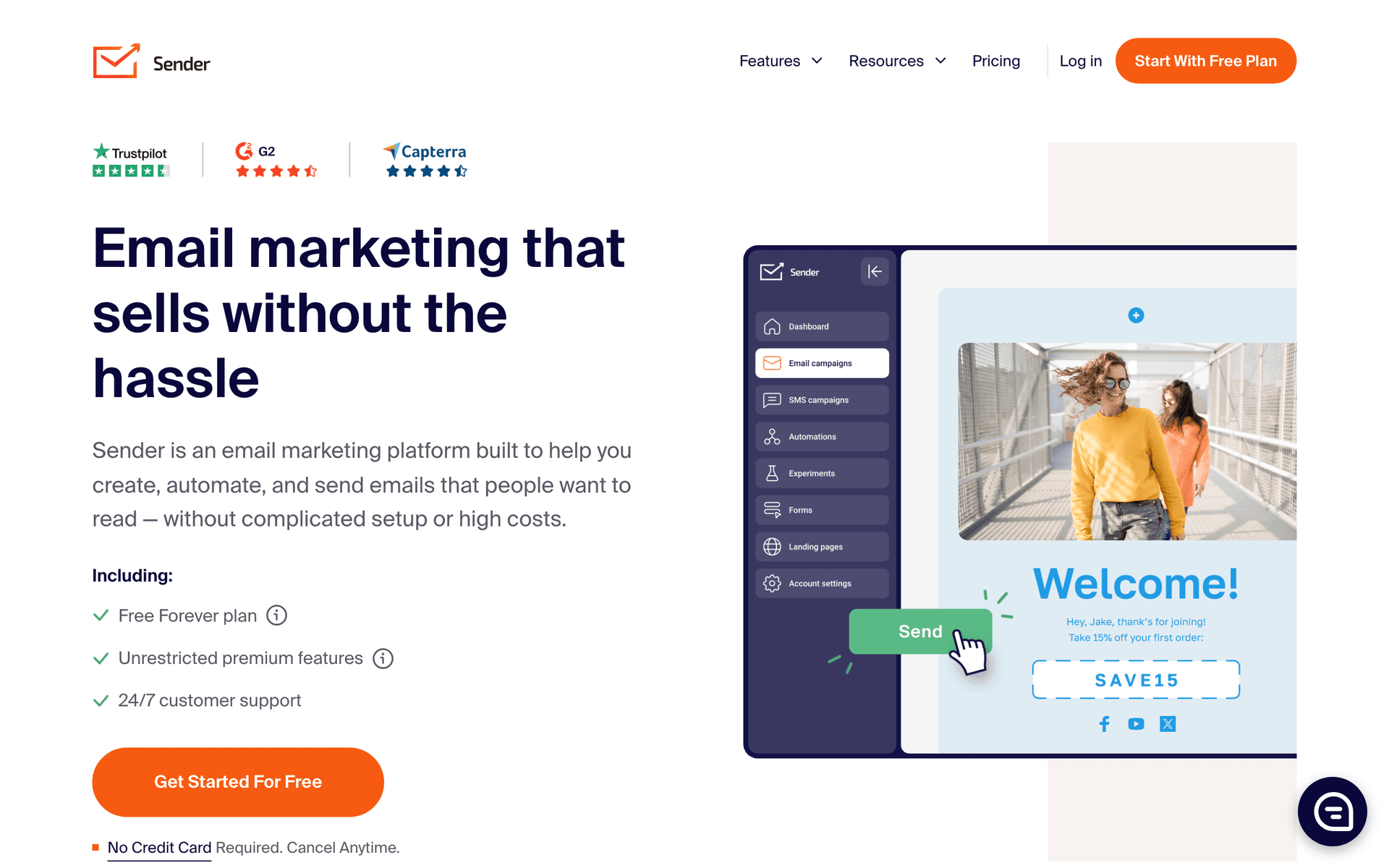
Sender's free plan covers 2,500 subscribers and 15,000 monthly emails with automation - sufficient for a small parts retailer to run seasonal maintenance reminder campaigns and post-purchase follow-up sequences without any monthly cost. SMS is available on paid plans for urgent seasonal inventory alerts. For auto parts businesses in the growth phase that want email automation running while managing costs carefully, Sender provides the core functionality at zero upfront cost.

Best for
Small auto parts retailers wanting email automation at zero cost
Pricing
Free up to 2,500 subscribers and 15,000 emails/month, then from $15/month

Pros

  • Generous free tier
  • Automation included
  • SMS on paid plans
  • Simple setup

Cons

  • No vehicle data features
  • Basic e-commerce integration
  • No AI recommendations
  • Limited advanced features
#18
Mailchimp

Familiar email with free tier for auto parts and accessories retailers.

Visit
Mailchimp dashboard screenshot

Mailchimp is a reliable entry point for auto parts retailers who want a well-known platform with a free tier (500 contacts) and good community resources. The Customer Journey Builder handles basic maintenance reminder sequences and post-purchase follow-ups. For parts retailers who prefer a platform with extensive documentation and a large user community for learning email marketing basics, Mailchimp offers familiar ground. More specialized platforms above deliver better vehicle-aware automation, but for basic parts newsletters and seasonal promotions, Mailchimp works.

Best for
Auto parts retailers wanting a familiar platform with a large user community
Pricing
Free up to 500 contacts, then from $13/month

Pros

  • Free tier
  • Familiar interface
  • Large user community
  • Good template library

Cons

  • No vehicle data features
  • Basic e-commerce automation
  • Gets expensive at scale
  • No fitment-aware segmentation
#19
GetResponse

All-in-one platform with landing pages for auto parts stores running campaigns.

Visit
GetResponse dashboard screenshot

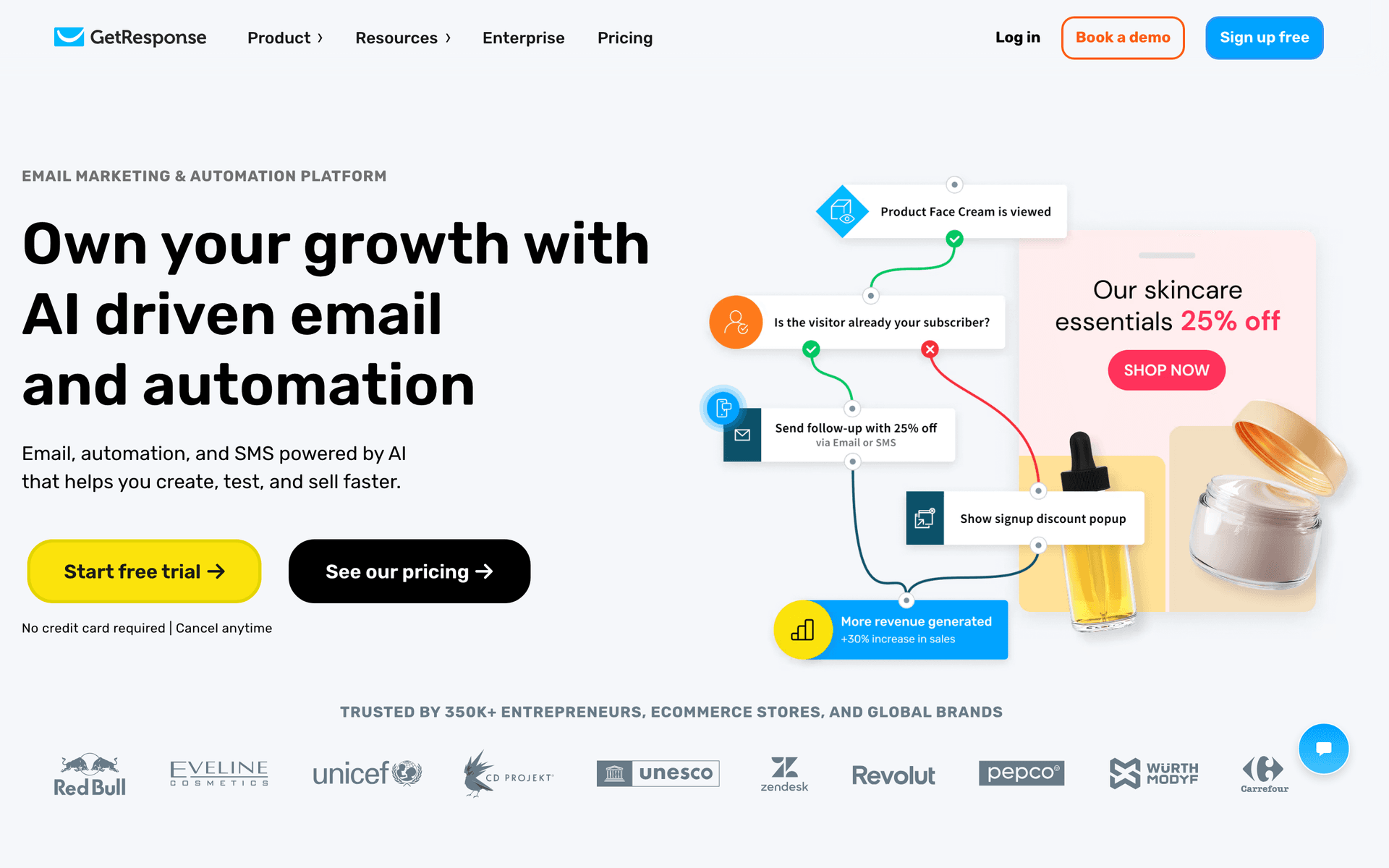
GetResponse provides landing pages and email automation from one platform, which suits auto parts stores that create seasonal campaign pages for tire season, summer performance builds, or winter prep kits. Landing pages can capture email subscribers from YouTube car builds, automotive forums, or paid social campaigns. The e-commerce features handle order-triggered automation. For parts retailers building audience through content marketing - car review YouTube channels, modification guides - GetResponse handles both the audience capture and the email marketing from one tool.

Best for
Content-driven auto parts brands using landing pages to capture subscribers from car community content
Pricing
From $19/month for 1,000 contacts

Pros

  • Landing pages for campaigns
  • Good for content-driven strategy
  • All-in-one platform
  • Competitive pricing

Cons

  • No vehicle data features
  • Interface feels dated
  • Not automotive-specialized
  • Limited fitment features

Feature Comparison

FeatureKlaviyoSequenzyDripOmnisend
Vehicle data segmentation
Custom properties
Attributes
Custom fields
Basic tags
Maintenance reminders
Via automations
Via automations
Via workflows
Limited
Product catalog sync
Yes
Via Shopify
Yes
Yes
SMS marketing
Yes
No
Limited
Yes
Pay-per-email pricing
No
Yes
No
No
Revenue attribution
Yes
Yes
Yes
Yes
Shopify integration
Deep
Native
Yes
Yes
Free tier
Yes
Yes
No
Yes

Common Mistakes to Avoid

We see these mistakes over and over. Skip the learning curve and avoid these from day one.

Recommending parts that do not fit the customer's vehicle

This is the number one mistake in auto parts email marketing. Sending a brake pad recommendation for a sedan to someone who drives a truck destroys credibility instantly. Every product recommendation must be filtered by the customer's vehicle data.

Treating all auto parts buyers the same

A fleet manager buying bulk oil and filters, a weekend warrior doing their own brake job, and an enthusiast building a track car have completely different needs. Segment by buyer type and purchase behavior, not just vehicle.

Ignoring the research phase

Auto parts buyers spend significant time researching before purchasing. Browse abandonment emails that catch someone who viewed brake pads for their specific vehicle and left without buying can recover 10-15% of those potential sales.

Sending promotions without fitment context

A generic 20% off brakes email is less effective than 20% off brake pads that fit your 2020 Honda Civic. Even if the discount is the same, the specificity makes the customer feel the offer was made for them.

Email Sequences Every Auto Parts & Accessories Store Needs

These are the essential automated email sequences that will help you grow your business and keep clients coming back.

Maintenance Reminder

Oil, filter, or consumable parts purchase

Remind customers when their next maintenance is due.

5 months after oil change parts purchase
Time for an oil change on your {{vehicle_year}} {{vehicle_model}}

Maintenance reminder with the exact oil and filter for their vehicle. One-click reorder.

11 months after brake parts purchase
How are the brakes on your {{vehicle_model}}? Time for a check

Brake inspection reminder. Signs of wear to look for. Replacement parts ready.

Seasonal Vehicle Prep

Season change

Help customers prepare their vehicles for seasonal conditions.

Early fall
Get your {{vehicle_model}} ready for winter

Winter prep checklist: tires, battery, antifreeze, wipers. Vehicle-specific products.

Early spring
Spring maintenance checklist for your {{vehicle_model}}

Spring cleaning: detailing products, AC service, tire rotation. Seasonal product picks.

Upgrade Path Cross-Sell

Performance or aftermarket parts purchase

Suggest the next upgrade for car enthusiasts building their vehicles.

Day 7
How is your new {{product_name}} working out?

Check-in and installation tips. Link to install guides or videos.

Day 21
The next upgrade for your {{vehicle_model}}: {{suggested_product}}

Logical next upgrade based on what they bought. Why these mods pair well.

Day 45
Complete your {{vehicle_model}} build: What other owners are adding

Popular upgrades from other owners of the same vehicle. Social proof.

Email Marketing for Auto Parts & Accessories Stores

Auto parts e-commerce is different from most online retail because of one critical factor: fitment. Every product recommendation has to match the customer's specific vehicle, or it is useless. This makes vehicle data the foundation of your entire email marketing strategy.

The Core Auto Parts Email Strategy

  1. Vehicle-specific recommendations ensure every product in every email fits their car
  2. Maintenance reminders timed to service intervals drive predictable repeat purchases
  3. Seasonal prep campaigns catch customers before they need winter tires, summer detailing, or spring maintenance
  4. Upgrade paths for enthusiasts suggest the logical next modification for their build

Why Fitment Data Is Everything

Collect vehicle year, make, model, and engine early - either at account creation or first purchase. Without this data, your email recommendations are just generic product catalogs that auto parts buyers can find anywhere. With it, every email feels personalized and relevant to their specific vehicle.

The difference in performance is dramatic. Vehicle-specific subject lines ("Time for new brake pads on your 2020 Civic") get 15-20% higher open rates than generic versions ("Time for new brake pads"). Product recommendations filtered to the customer's vehicle get 2-3x more clicks than unfiltered catalogs.

Separate Your Audiences

Maintenance buyers and performance enthusiasts are fundamentally different customers. Maintenance buyers want convenience, predictable reminders, and easy reordering. Enthusiasts want build inspiration, installation content, and the next upgrade in their project. Sending the wrong content to the wrong audience hurts engagement and drives unsubscribes.

Beyond these two core segments, consider fleet accounts (bulk pricing, scheduled delivery, maintenance reporting), professional mechanics (wholesale pricing, frequent reorders, technical specs), and weekend DIYers (installation guides, tool recommendations, project planning).

Integration Recommendations for Auto Parts Stores

E-Commerce Platform Integration

The quality of your email tool's integration with Shopify, BigCommerce, WooCommerce, or your custom platform determines how well vehicle data flows into your email segments. Look for integrations that sync:

  • Customer purchase history (what parts they bought and when)
  • Product catalog data (for dynamic product recommendations)
  • Browse behavior (for browse abandonment emails)
  • Vehicle profile data (if stored in your e-commerce platform)

Fitment Database Connection

No email marketing tool has native fitment database integration. You need middleware (Zapier, custom API integration, or a parts data provider) to connect your fitment database to your email platform. The goal is ensuring product recommendations in emails are verified against fitment data before sending.

Review and UGC Platforms

Auto parts buyers rely heavily on reviews, especially for aftermarket and performance parts. Connect your review platform (Judge.me, Yotpo, Stamped) to your email sequences so post-purchase emails include a review request, and product recommendation emails include star ratings and review counts.

Common Workflows That Drive Revenue

The Consumables Replenishment Engine

For every consumable product category, set up a timed replenishment sequence:

  • Motor oil and filters: 5-6 months after purchase
  • Brake pads: 12-18 months after purchase
  • Wiper blades: 6-12 months after purchase
  • Air filters: 12 months after purchase
  • Cabin filters: 12 months after purchase

Include a one-click reorder button that adds the exact same products to their cart. Make replenishment effortless.

The Enthusiast Build Path

When someone buys a performance or aftermarket part, trigger a build progression sequence:

  1. Day 3: Installation tips and how-to video for what they just bought
  2. Day 14: "The logical next upgrade" - what pairs well with their recent purchase
  3. Day 30: "What other owners of your vehicle are adding" - social proof recommendations
  4. Day 60: Seasonal opportunity - track day prep, show season, rally season parts

The Seasonal Campaign Calendar

  • September: Winter tire early-bird campaign, winterization product bundles
  • November: Last-chance winter prep, holiday gift guides for car enthusiasts
  • February: Spring maintenance kits, detailing product launches
  • May: Summer road trip prep, performance season kickoff
  • Year-round: Monthly new product roundups segmented by vehicle type

What a Healthy Email Program Looks Like

For an established auto parts store, these benchmarks indicate a well-performing email program:

  • List size: 5,000-50,000+ subscribers depending on store size
  • Vehicle data coverage: 60%+ of subscribers have vehicle year/make/model stored
  • Email revenue attribution: 20-35% of total store revenue should be traceable to email
  • Replenishment conversion rate: 15-25% of maintenance reminder recipients should reorder
  • Browse abandonment recovery: 8-12% of abandoned browsers should return and purchase
  • List growth: 500-2,000 new subscribers per month from purchases and signups

If your vehicle data coverage is below 50%, run a campaign asking existing subscribers to update their vehicle profile in exchange for a small discount on their next order. The improvement in email relevance will pay for itself within one campaign cycle.

Getting Started

Start with the three automations that generate the most revenue for auto parts stores:

  1. Cart abandonment recovery with vehicle-specific product images and a 3-email sequence
  2. Post-purchase cross-sell suggesting complementary parts for the same vehicle
  3. Consumable replenishment reminders timed to average product lifespan

These three automations typically generate 25-40% of total email revenue. Set them up first, then add seasonal campaigns and enthusiast content as you grow.

How We Evaluated These Tools

I evaluated each platform by testing vehicle data storage capabilities, automation trigger options, product catalog integration, and the ability to build fitment-specific recommendation emails. I focused on how well each tool handles the unique auto parts challenge of matching products to specific vehicles, and calculated realistic costs for a parts store with 5,000-20,000 subscribers.

Frequently Asked Questions

Ready to grow your auto parts & accessories store practice?

Start your free trial today. Set up your first email sequence in minutes with AI-powered content generation.

Related Industries

Sequenzy - Complete Pricing Guide

Pricing Model

Sequenzy uses email-volume-based pricing. You only pay for emails you send. Unlimited contacts on all plans — storing subscribers is always free.

All Pricing Tiers

  • 2.5k emails/month: Free (Free annually)
  • 15k emails/month: $19/month ($205/year annually)
  • 60k emails/month: $29/month ($313/year annually)
  • 120k emails/month: $49/month ($529/year annually)
  • 300k emails/month: $99/month ($1069/year annually)
  • 600k emails/month: $199/month ($2149/year annually)
  • 1.2M emails/month: $349/month ($3769/year annually)
  • Unlimited emails/month: Custom pricing (Custom annually)

Yearly billing: All plans offer a 10% discount when billed annually.

Free Plan Features (2,500 emails/month)

  • Visual automation builder
  • Transactional email API
  • Reply tracking & team inbox
  • Goal tracking & revenue attribution
  • Dynamic segments
  • Payment integrations
  • Full REST API access
  • Custom sending domain

Paid Plan Features (15k - 1.2M emails/month)

  • Visual automation builder
  • Transactional email API
  • Reply tracking & team inbox
  • Goal tracking & revenue attribution
  • Dynamic segments
  • Payment integrations (Stripe, Paddle, Lemon Squeezy)
  • Full REST API access
  • Custom sending domain

Enterprise Plan Features (Unlimited emails)

  • Visual automation builder
  • Transactional email API
  • Reply tracking & team inbox
  • Goal tracking & revenue attribution
  • Dynamic segments
  • Payment integrations
  • Full REST API access
  • Custom sending domain

Important Pricing Notes

  • You only pay for emails you send — unlimited contacts on all plans
  • No hidden fees - all features included in the price
  • No credit card required for free tier

Contact

  • Pricing Page: https://sequenzy.com/pricing
  • Sales: hello@sequenzy.com