
20 Best Transactional Email Services for Invoice Emails (2026)

An invoice or receipt email has a narrower job than most transactional email: arrive fast, land in the inbox reliably, and look correct every single time, because customers treat this specific email as a financial record. The top transactional email services for invoice emails share three properties: strong deliverability for billing-related content, template support that doesn't require rebuilding the invoice layout for every provider, and delivery monitoring so a failed send doesn't quietly go unnoticed.
This guide compares 20 platforms in detail for invoice and receipt emails: Sequenzy, Postmark, Resend, SendGrid, Amazon SES, Mailgun, Brevo, SparkPost, Mandrill, Mailtrap, Elastic Email, SocketLabs, SMTP2GO, Mailjet, ZeptoMail, MailerSend, Maileroo, Netcore Email API (Pepipost), Knock, and Novu.
What Matters for Invoice and Receipt Emails
- Deliverability: Billing emails are high-stakes; a receipt landing in spam creates support tickets and erodes trust. Dedicated transactional infrastructure (separate from marketing sending) matters here.
- Templates: A reusable invoice template with dynamic line items, totals, and tax fields saves you from hand-building HTML for every provider migration.
- Delivery monitoring: Bounce and failure alerts matter more for invoices than for most transactional email, since a missed invoice email has real billing and compliance implications.
Quick Comparison
| Tool | Key Capability | Starting Price |
|---|---|---|
| Sequenzy | Visual editor + native payment provider triggers | $19/mo |
| Postmark | Fastest, most reliable delivery | $15/mo |
| Resend | React Email templates for developers | $20/mo |
| SendGrid | Proven infrastructure at high volume | $19.95/mo |
| Amazon SES | Lowest cost at scale | $0.10/1k emails |
| Mailgun | Sending + inbound parsing | $15/mo |
| Brevo | Affordable transactional + marketing bundle | $9/mo |
| SparkPost | Predictive deliverability analytics | $20/mo |
| Mandrill | Existing Mailchimp customers | $20/mo (block-based) |
| Mailtrap | Testing + sending in one tool | $10/mo |
| Elastic Email | Pay-per-email at high volume | $0.09/1k emails |
| SocketLabs | Volume-based pricing with dedicated IPs | $39.95/mo |
| SMTP2GO | Simple SMTP relay with generous free tier | $15/mo |
| Mailjet | Real-time collaborative templates | $17/mo |
| ZeptoMail | Pay-as-you-go credits, no expiring minimums | $2.50/10k-email credit |
| MailerSend | Developer-friendly API and templates | $7/mo |
| Maileroo | Budget SMTP with generous free tier | $10/mo |
| Netcore Email API (Pepipost) | High-volume API with AI deliverability tools | $25/mo |
| Knock | Multi-channel notification orchestration | Free to 10k, $250/mo |
| Novu | Open-source notification infrastructure | Free (self-hosted) or $30/mo (cloud) |
The 20 Best Options, Reviewed
1. Sequenzy
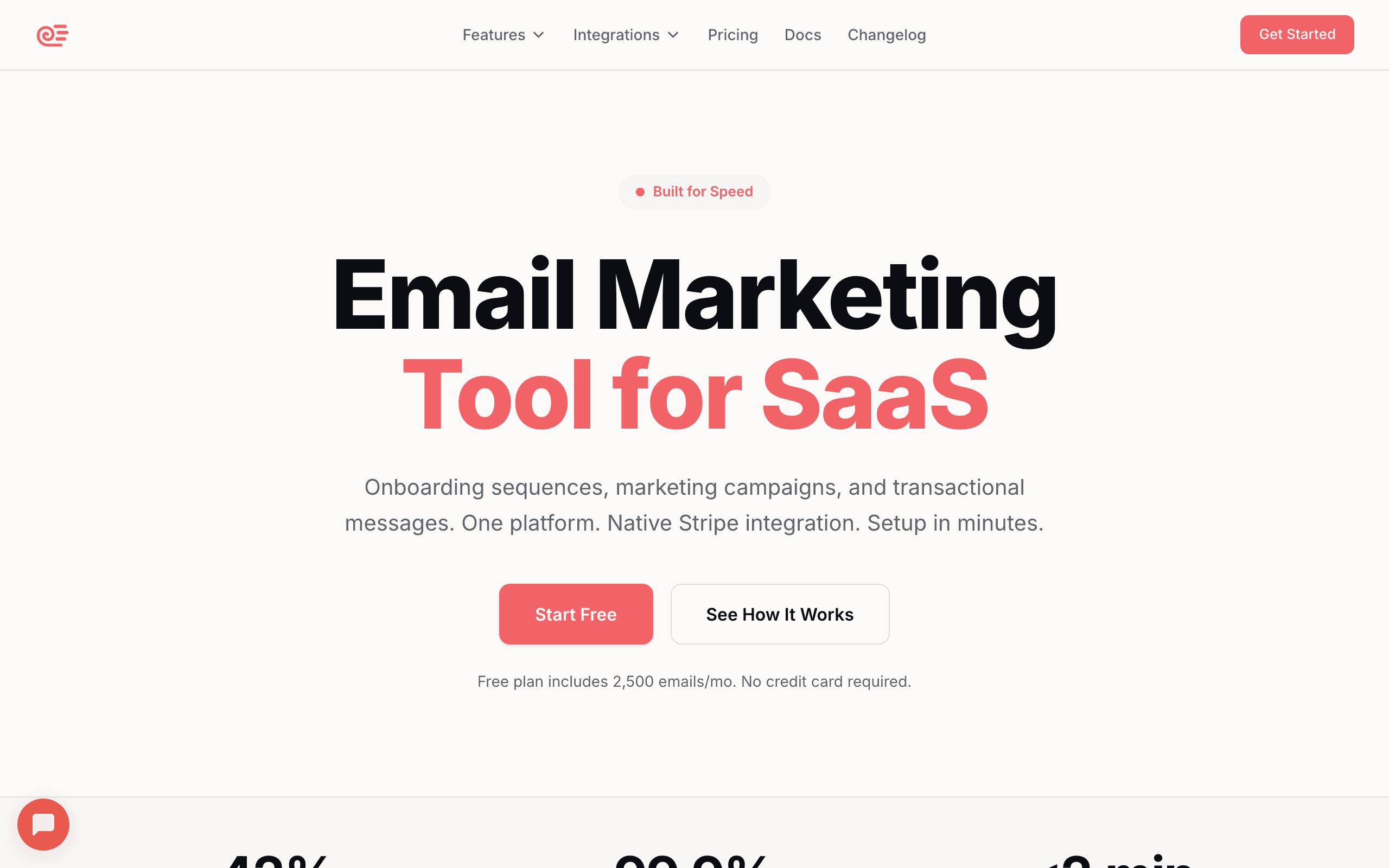
Best for: SaaS teams wanting invoice emails and marketing email in one platform
Sequenzy's transactional emails handle invoice and receipt delivery through the same visual editor used for marketing campaigns, so you can build an invoice template once and reuse the layout system rather than hand-coding a separate HTML file. Native Stripe, Paddle, Polar, Creem, and Dodo Payments integrations mean invoice-triggering events fire the email automatically without custom webhook plumbing. See the invoice email template and subscription invoice email template guides for ready-to-use layouts.
- Pricing: Free up to 2,500 emails/month, paid plans from $19/month
- Pros: Visual editor for invoice templates, native payment provider integrations, transactional + marketing in one account
- Cons: Smaller dedicated deliverability tooling than pure transactional specialists
2. Postmark
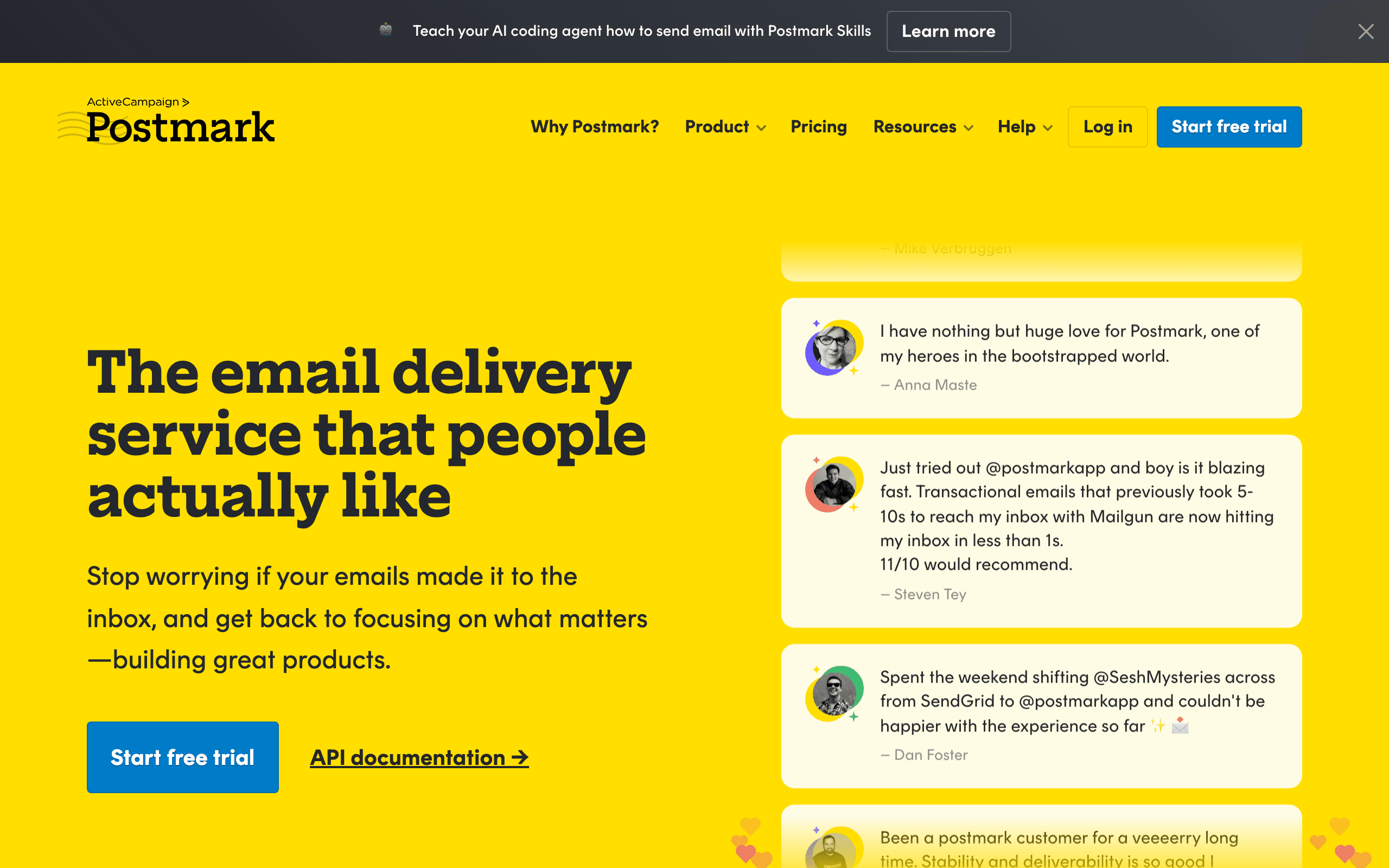
Best for: Fastest, most reliable invoice delivery
Postmark separates transactional and marketing sending onto different infrastructure by design, which keeps invoice deliverability high regardless of what else you send. Its median delivery time is under 10 seconds, and message streams let you monitor invoice-specific sending separately from other transactional traffic.
- Pricing: From $15/month for 15,000 emails
- Pros: Excellent deliverability, fast delivery, clean delivery monitoring dashboard
- Cons: No marketing email support, templates require more manual setup than a visual editor
3. Resend
Best for: Developers building invoice emails as React components
Resend's React Email integration lets you build an invoice template as a React component, which is a natural fit for teams already generating invoice PDFs or line-item data in code.
- Pricing: Free up to 3,000 emails/month, from $20/month
- Pros: React Email templates, clean developer experience, good documentation
- Cons: No visual editor for non-developers, broadcast/marketing features still maturing
4. SendGrid
Best for: High-volume invoice sending with established infrastructure
SendGrid's dynamic templates support the kind of variable line-item and total fields invoice emails need, and its infrastructure is proven at high volume for billing-heavy platforms with large customer bases.
- Pricing: Free up to 100 emails/day, from $19.95/month
- Pros: Mature infrastructure, dynamic templates, scales to high volume
- Cons: Support has a mixed reputation, dashboard feels dated
5. Amazon SES
Best for: High-volume invoice sending at the lowest possible cost
Amazon SES is the cheapest way to send invoice emails at real scale, at $0.10 per 1,000 emails, but it requires you to build your own template system, delivery monitoring, and bounce handling on top of the raw sending API.
- Pricing: $0.10 per 1,000 emails
- Pros: Unbeatable price at scale, reliable AWS infrastructure
- Cons: No built-in templates or delivery monitoring dashboard, requires engineering investment
6. Mailgun
Best for: Teams that need both invoice sending and inbound parsing
Mailgun handles invoice sending reliably and adds inbound email parsing, which is useful if customers ever reply to an invoice email with a billing question you want routed automatically.
- Pricing: From $15/month for 10,000 emails
- Pros: Inbound parsing, solid deliverability, flexible API
- Cons: Templates require more manual work than visual-editor platforms
7. Brevo
Best for: Budget-conscious teams wanting invoice and marketing email together
Brevo bundles transactional and marketing sending at a low starting price, with a visual template editor that can build an invoice layout without code.
- Pricing: Free up to 300 emails/day, from $9/month
- Pros: Affordable, visual template editor, transactional + marketing bundled
- Cons: Less mature delivery monitoring than dedicated transactional specialists
8. SparkPost
Best for: Teams wanting predictive deliverability analytics on invoice sending
SparkPost's analytics predict deliverability issues before they cause a spike in bounces, which matters for invoice senders who need to catch problems before a billing cycle is affected.
- Pricing: From $20/month
- Pros: Predictive deliverability analytics, solid API, enterprise-grade monitoring
- Cons: Production volume requires a sales conversation, dashboard has a learning curve
9. Mandrill
Best for: Existing Mailchimp customers wanting transactional sending
Mandrill is Mailchimp's transactional sending add-on, a natural fit if you're already using Mailchimp for marketing and want invoice emails on related infrastructure.
- Pricing: From $20/month (block-based pricing)
- Pros: Simple for existing Mailchimp customers, reliable delivery
- Cons: Block-based pricing can be confusing, less flexible than standalone transactional APIs
10. Mailtrap
Best for: Teams wanting to test invoice emails before they reach real customers
Mailtrap's sandbox environment lets you test invoice email rendering and content safely before switching to its production sending API, reducing the risk of a broken invoice template reaching real customers.
- Pricing: Free up to 1,000 emails/month, from $10/month
- Pros: Built-in testing sandbox, straightforward API, good for QA workflows
- Cons: Smaller production-scale track record than dedicated high-volume providers
11. Elastic Email

Best for: High-volume invoice sending on a tight budget
Elastic Email undercuts most competitors on pure per-email cost, making it a reasonable option for high-volume invoice senders who don't need a polished visual editor.
- Pricing: $0.09 per 1,000 emails, from $29/month
- Pros: Very low per-email cost, decent API, includes basic templates
- Cons: Less polished dashboard and support than premium providers
12. SocketLabs
Best for: Teams wanting dedicated IPs and volume-based transactional pricing
SocketLabs offers volume-based pricing with dedicated IP options, suited to invoice senders who want reputation isolation from other transactional traffic.
- Pricing: From $39.95/month
- Pros: Dedicated IP options, volume-based pricing, solid deliverability
- Cons: Higher entry price than budget alternatives, smaller brand recognition
13. SMTP2GO
Best for: Simple SMTP relay for invoice sending with a generous free tier
SMTP2GO offers a genuinely useful free tier (1,000 emails/month) and a simple SMTP relay setup, good for smaller invoice volumes that don't need a full API integration.
- Pricing: Free up to 1,000 emails/month, paid from $15/month
- Pros: Generous free tier, simple SMTP setup, affordable scaling
- Cons: Fewer advanced template features than dedicated invoice-focused platforms
14. Mailjet
Best for: Teams wanting collaborative editing on invoice templates
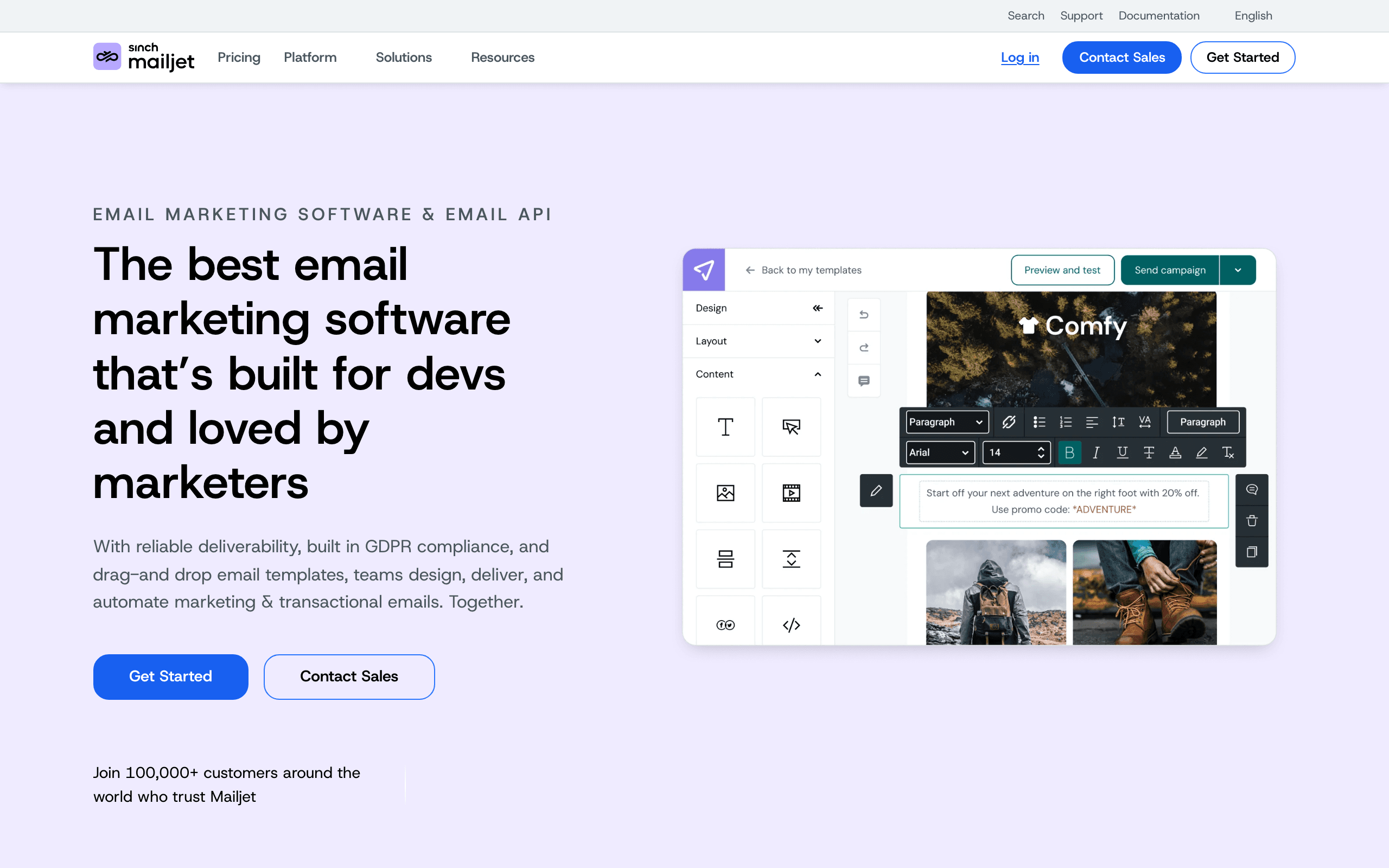
Mailjet's real-time collaborative template editor lets multiple team members build and adjust an invoice template together, distinctive among tools at this price point.
- Pricing: Free up to 200 emails/day, from $17/month
- Pros: Collaborative editing, solid transactional support, decent free tier
- Cons: Smaller ecosystem than larger providers
15. ZeptoMail
Best for: Teams wanting pay-as-you-go pricing without a monthly minimum
ZeptoMail's credit-based pricing (each credit covers 10,000 emails and stays valid for six months) suits invoice senders with variable monthly volume who don't want to pay for capacity they don't use.
- Pricing: From $2.50 per 10,000-email credit
- Pros: No expiring monthly minimum, transparent pay-as-you-go pricing, part of the Zoho ecosystem
- Cons: Less full-featured template editor than visual-first platforms
16. MailerSend
Best for: Developers wanting an affordable, modern transactional API
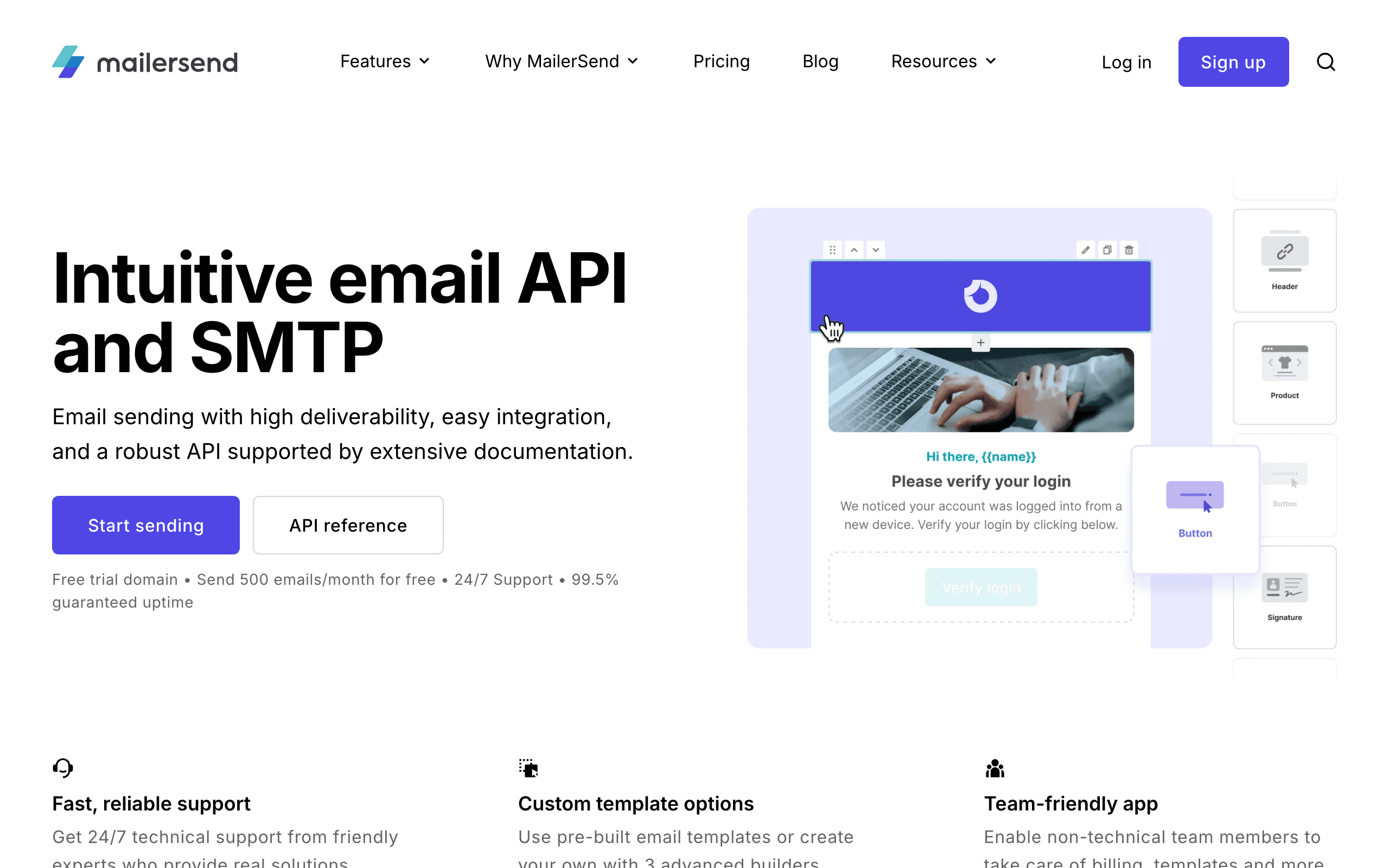
MailerSend offers a modern API and template editor at a low entry price, a reasonable alternative to Postmark or Resend for developers building invoice sending into their own billing system.
- Pricing: From $7/month for 5,000 emails
- Pros: Affordable entry price, modern API and templates, solid documentation
- Cons: Free tier was reduced in a late-2025 pricing change
17. Maileroo
Best for: Budget-conscious teams wanting a generous free SMTP tier
Maileroo offers a free tier covering 5,000 emails, making it a reasonable starting point for a small business sending a modest volume of invoices before committing to a paid plan.
- Pricing: Free up to 5,000 emails, paid plans from $10/month
- Pros: Generous free tier, straightforward SMTP setup, affordable scaling
- Cons: Smaller brand recognition and community than established providers
18. Netcore Email API (Pepipost)
Best for: High-volume invoice senders wanting AI-assisted deliverability tools
Netcore's Email API (formerly Pepipost) combines high-volume sending with AI-assisted deliverability monitoring, aimed at platforms sending large invoice volumes that need proactive inbox placement management.
- Pricing: From $25/month for 150,000 emails
- Pros: Competitive pricing at high volume, AI deliverability tools
- Cons: Less brand recognition in Western markets than SendGrid or Postmark
19. Knock
Best for: Teams wanting invoice notifications across email, SMS, and in-app together
Knock orchestrates notifications across channels from one workflow, useful if an invoice notification should also appear in-app or via SMS alongside the email.
- Pricing: Free up to 10,000 notifications/month, then $250/month for 250,000 notifications/month
- Pros: Multi-channel orchestration, developer-friendly API, generous free tier
- Cons: Steep jump from free to paid tier, billed per notification rather than per email
20. Novu
Best for: Engineering teams wanting open-source, self-hostable notification infrastructure
Novu is open source and free to self-host with unlimited usage, making it an option for teams that want full control over invoice notification infrastructure without a per-email vendor bill.
- Pricing: Free (self-hosted, unlimited), or cloud-hosted from $30/month
- Pros: Open source and self-hostable, favorable multi-channel event pricing on cloud plans
- Cons: Self-hosting requires your own infrastructure and maintenance
FAQ
Should invoice emails use a separate sending domain from marketing email?
Yes, where possible. Separating transactional sending (invoices, receipts, password resets) from marketing sending protects invoice deliverability from being affected by marketing campaign performance. See transactional email deliverability for the full setup.
What should an invoice email always include?
Invoice number, itemized charges, tax breakdown where applicable, total amount, payment method used, and a link to a hosted, printable version of the invoice. See the invoice email template for a complete layout.
How fast should an invoice email arrive after payment?
Within seconds to a couple of minutes. Customers expect an immediate confirmation after a payment completes, and a delay creates uncertainty about whether the charge actually succeeded.
Do I need delivery monitoring specifically for invoice emails?
Yes, more so than for general transactional email. A bounced or failed invoice email has billing and, in some jurisdictions, compliance implications, so alerting on failed invoice sends specifically (not just aggregate bounce rates) is worth setting up.
Can I automate invoice emails from Stripe or another payment provider?
Yes. Platforms with native payment integrations, like Sequenzy's Stripe, Paddle, Polar, Creem, and Dodo Payments support, can trigger an invoice email automatically on a payment or renewal event without custom webhook code. See invoice and receipt emails, automatic for the setup pattern across providers.
Is open-source notification infrastructure like Novu a good fit for invoice emails?
Only if you have the engineering resources to self-host and maintain it. For most teams, a managed transactional email service is simpler and more reliable for something as important as billing communication, even at a higher per-email cost than self-hosting.