
Updated 2026-01-11

12 Mailgun Alternatives Worth Considering

Mailgun doubled Flex plan prices in late 2025. Here are 12 alternatives from modern APIs to full marketing platforms.

TL;DR

Quick answer: For best developer experience, Resend is unmatched. For guaranteed deliverability, Postmark is king. For SaaS with marketing + transactional, Sequenzy ($19/mo) has AI and Stripe sync. For budget at scale, Amazon SES at $0.10/1k emails.

12 Best Mailgun Alternatives

Our Pick for SaaS Companies
#1
Sequenzy

Marketing + transactional for SaaS with AI content generation. Unlike Mailgun, includes visual email builders, automation, and Stripe integration. One platform for all emails.

Visit
Best for
SaaS teams wanting marketing + transactional together
Pricing
$19/month for 10k emails

Pros

  • Marketing + transactional in one platform
  • Visual drag-and-drop email builder
  • AI generates entire email sequences
  • Native Stripe integration
  • Subscriber-based pricing (predictable)

Cons

  • No inbound email parsing
  • No email validation API
  • Newer platform
#2
Resend

Modern developer experience with beautiful APIs and React Email integration. What Mailgun would be if built today. Transactional only.

Visit
Best for
Developers prioritizing DX for transactional
Pricing
$20/month for 50,000 emails

Pros

  • Best developer experience in email
  • React Email integration
  • Modern SDKs for every language
  • Clean, intuitive API
  • 3,000 emails/month free

Cons

  • Transactional only (no marketing)
  • No SMTP relay
  • Newer (less proven at massive scale)
  • No email validation
#3
Postmark

Exceptional deliverability because they reject bad actors. If your emails must arrive (password resets, 2FA), Postmark's strict policies pay off.

Visit
Best for
Apps where deliverability is critical
Pricing
$15/month for 10,000 emails

Pros

  • Best deliverability in the industry
  • Strict customer vetting
  • Clean, developer-friendly API
  • Message streams for organization
  • Human support

Cons

  • Transactional only
  • Will reject questionable use cases
  • More expensive at high volume
  • No marketing features
#4
Amazon SES

The cheapest at scale—$0.10 per 1,000 emails. But zero hand-holding. You're on your own for templates, deliverability, and bounce handling.

Visit
Best for
Cost-sensitive high-volume senders with engineering resources
Pricing
$0.10 per 1,000 emails

Pros

  • Cheapest at high volume by far
  • AWS reliability
  • Full control
  • No monthly minimum
  • Scales infinitely

Cons

  • Zero developer experience
  • DIY everything (templates, bounces)
  • No dashboard or analytics
  • AWS complexity
#5
SendGrid

The obvious comparison—both are Sinch-owned now. SendGrid has marketing features Mailgun lacks, but the DX feels equally dated. Similar pricing.

Visit
Best for
Teams wanting marketing + transactional from same vendor
Pricing
$19.95/month for 50,000 emails (Essentials)

Pros

  • Marketing + transactional
  • Proven at scale
  • Part of Twilio ecosystem
  • Good documentation
  • Both API and SMTP

Cons

  • DX feels dated
  • Deliverability varies on shared IPs
  • Complex pricing tiers
  • Now owned by same company as Mailgun
#6
SparkPost

Enterprise email with predictive analytics. Now part of Bird (MessageBird). Good for high volume with deliverability insights.

Visit
Best for
Enterprise high-volume senders
Pricing
$20/month for 15,000 emails

Pros

  • Predictive email analytics
  • Handles enterprise scale
  • Strong deliverability tools
  • Email validation
  • Real-time bounce classification

Cons

  • Enterprise-focused pricing
  • Not for small teams
  • Owned by Bird (acquisition concerns)
  • DX not modern
#7
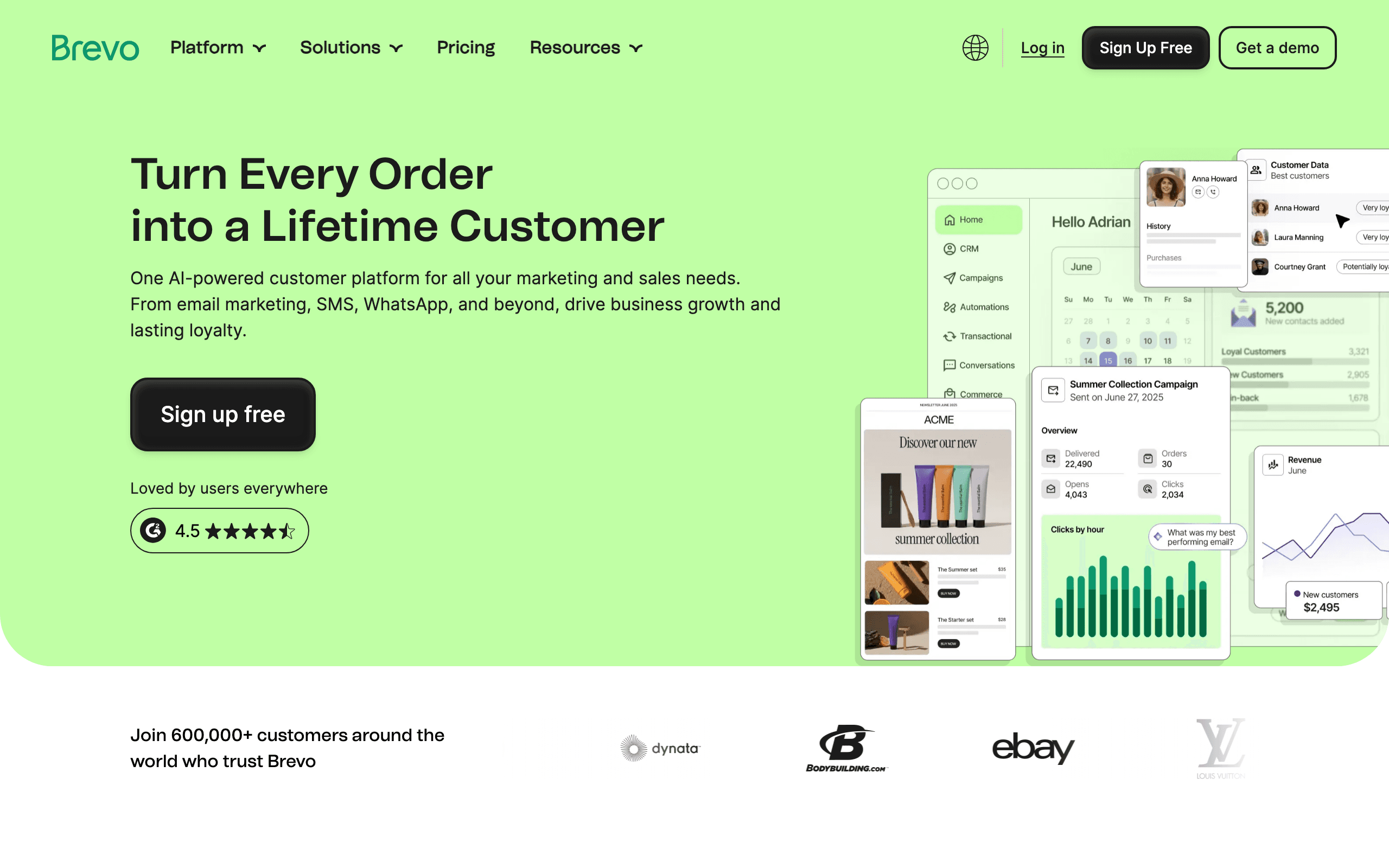
Brevo

Budget-friendly with unlimited contacts. Includes transactional, marketing, and SMS. Not the prettiest but capable and affordable.

Visit
Best for
Budget-conscious teams wanting all-in-one
Pricing
$25/mo for unlimited contacts (20k emails)

Pros

  • Unlimited contacts
  • Transactional + marketing + SMS
  • SMTP and API
  • Actually affordable
  • No per-email surprise bills

Cons

  • Interface is dated
  • Pay-per-email adds up
  • Support can be slow
  • Less developer-focused
#8
Customer.io

The powerhouse for PLG companies. Email, push, SMS, in-app—with sophisticated behavioral triggers. Expensive but nothing matches its power.

Visit
Best for
PLG companies with complex user journeys
Pricing
$100/month for 5,000 profiles (Essentials)

Pros

  • Most powerful behavioral automation
  • Multi-channel (email, push, SMS, in-app)
  • Transactional included
  • Excellent API
  • Built for product-led growth

Cons

  • 3-4x Mailgun's price
  • Complex setup
  • Steep learning curve
  • Overkill for simple needs
#9
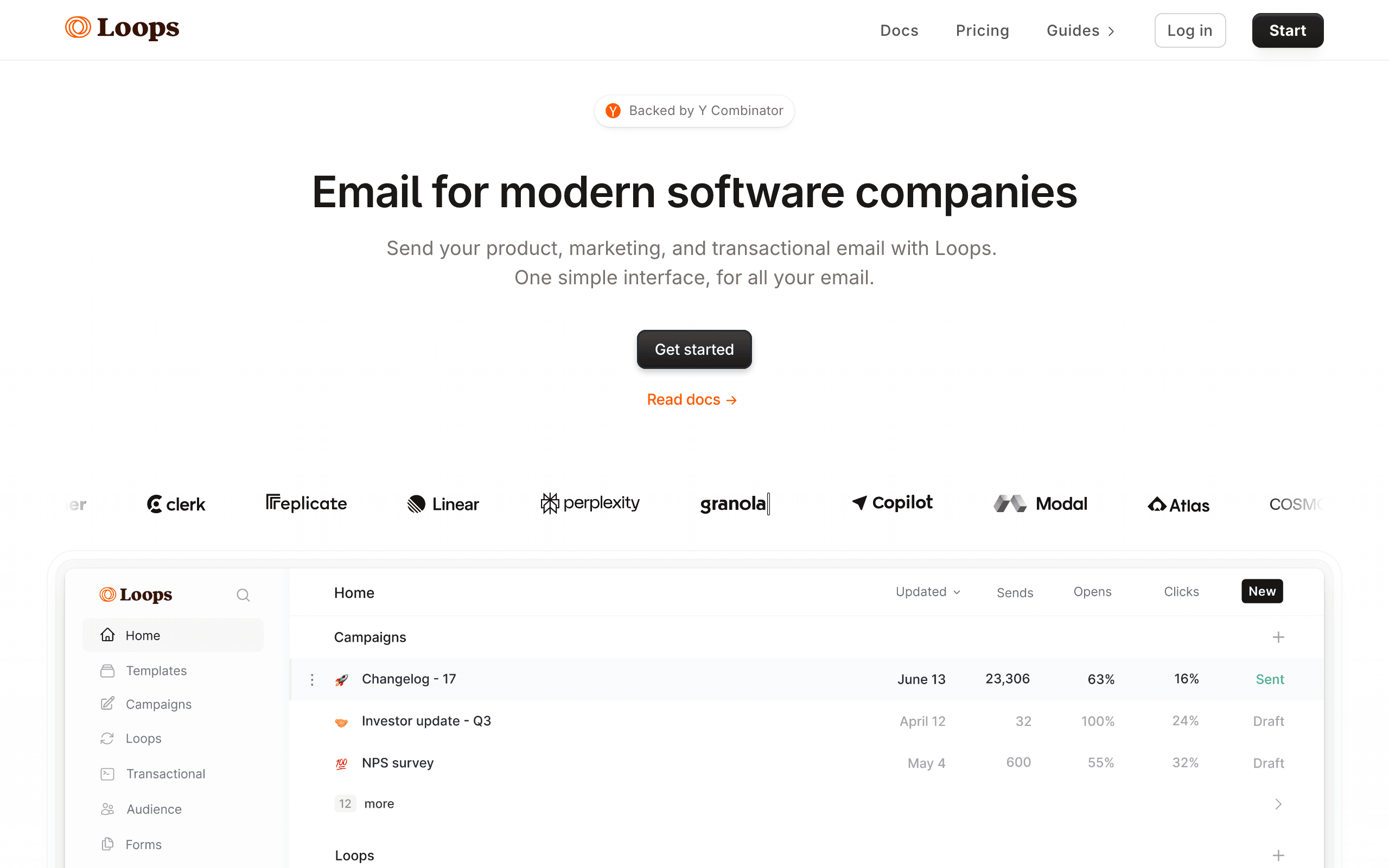
Loops

Modern SaaS email platform with transactional included. Clean interface, good deliverability. Specifically built for software companies.

Visit
Best for
SaaS teams wanting modern email
Pricing
$49/mo for 5k, ~$99/mo for 10k subscribers

Pros

  • Built for SaaS from day one
  • Transactional + marketing together
  • Clean, modern interface
  • Good deliverability
  • All features on all plans

Cons

  • Gets expensive past 10k
  • No AI content generation
  • No SMTP relay
  • Newer platform
#10
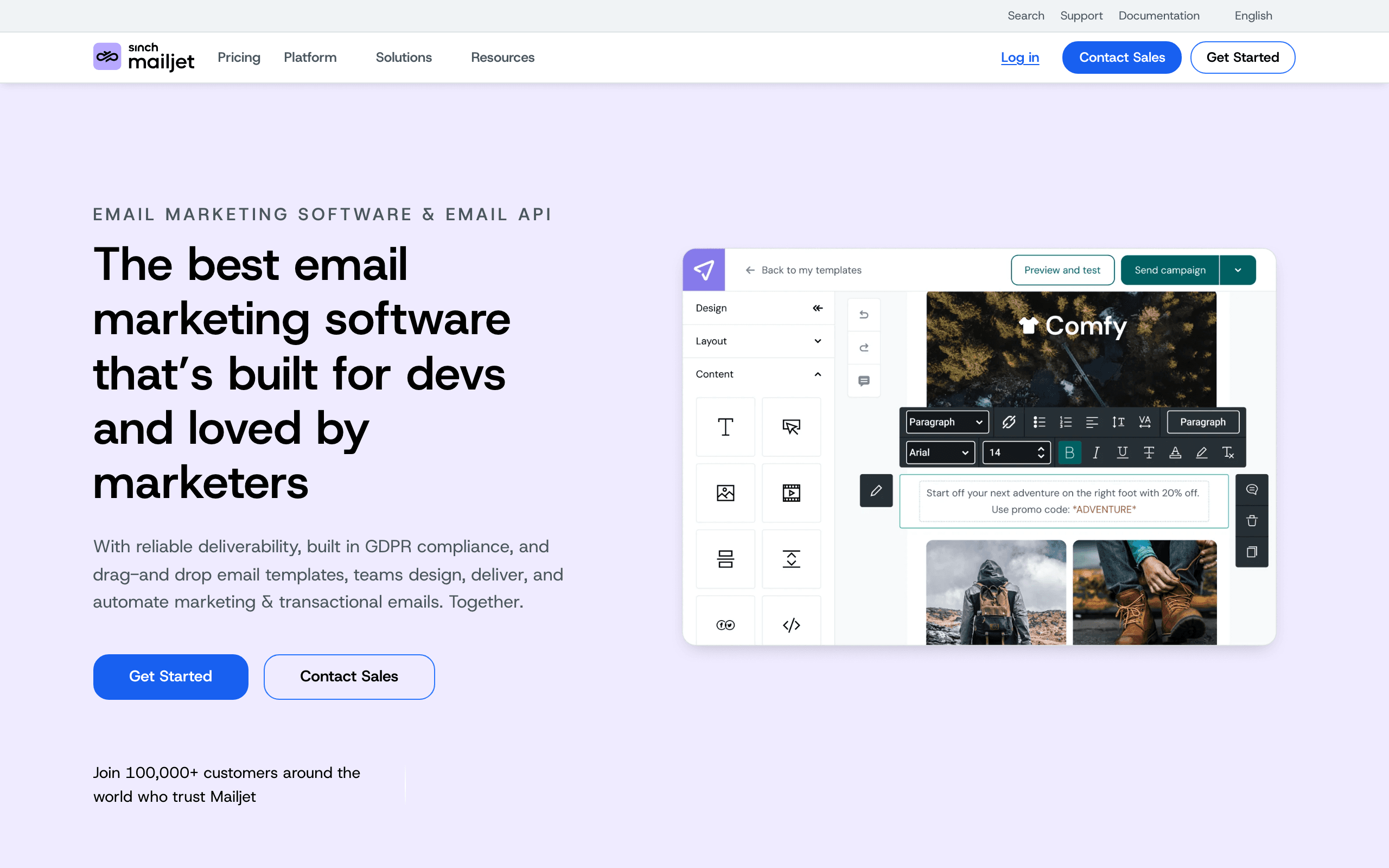
Mailjet

Mid-tier option from Sinch (same parent as Mailgun). Offers marketing + transactional with real-time collaboration. Good middle ground.

Visit
Best for
Teams wanting collaboration on email
Pricing
$15/month for 15,000 emails

Pros

  • Real-time email collaboration
  • Transactional + marketing
  • SMTP and API
  • Good template editor
  • Affordable pricing

Cons

  • Same parent company as Mailgun
  • Less powerful automation
  • Not as developer-focused
  • Support varies by tier
#11
Elastic Email

Very budget-friendly API with decent features. Similar to Mailgun but more affordable at volume. Good for cost-conscious high-volume.

Visit
Best for
Cost-conscious teams with volume needs
Pricing
$25/month for 25,000 emails

Pros

  • Very affordable pricing
  • Both transactional and marketing
  • Email verification included
  • Good for high volume
  • API access

Cons

  • Developer experience is basic
  • Not as reliable as premium options
  • Support can be slow
  • Fewer modern features
#12
Plunk

Open-source email platform. Self-host for full control or use their managed service. Good if you want Resend's approach but open-source.

Visit
Best for
Developers wanting open-source or self-hosted
Pricing
Free (open-source) or hosted plans

Pros

  • Open-source and self-hostable
  • Modern developer experience
  • Free tier available
  • Full control if self-hosted
  • Modern API design

Cons

  • Early stage (less proven)
  • Smaller community
  • Self-hosting requires work
  • Fewer integrations

Why Consider Alternatives to Mailgun

The 2025 price increase hit hard

Mailgun doubled Flex plan pricing from $1 to $2 per 1,000 emails in late 2025. For many users, this made alternatives like Postmark or Amazon SES more attractive at volume.

Sinch acquisition concerns

Since Sinch bought Mailgun, some users worry about long-term direction and pricing. The company now owns both Mailgun and Mailjet, consolidating the market.

Developer experience feels dated

Compared to modern APIs like Resend, Mailgun's DX shows its age. If you're starting fresh, newer platforms offer cleaner SDKs and better documentation.

No marketing features

Mailgun is transactional only. If you need marketing automation, campaigns, and visual builders, you'll need a second tool. Platforms like Sequenzy or Brevo include both.

Feature Comparison

FeatureMailgunSequenzyResendPostmarkAmazon SESSendGrid
Price at 50k/mo
~$100*
$49*
$20
$50
$5
$19.95
DX quality
Good
Good
Best
Great
None
Dated
Transactional
Marketing
SMTP relay
Deliverability
Good
Good
Good
Best
DIY
Variable

When to Use Each Platform

Choose Sequenzy if...
  • You want marketing + transactional in one
  • AI-generated email sequences appeal to you
  • You use Stripe and want automatic sync
  • You prefer subscriber-based pricing
Choose Stay with Mailgun if...
  • You've already built around their API
  • You need SMTP relay
  • Inbound email parsing is critical
  • You prefer pay-per-email pricing
Choose Resend if...
  • Developer experience is your top priority
  • You only need transactional email
  • You love React Email
  • Modern SDKs matter to you
Choose Postmark if...
  • Deliverability is absolutely critical
  • You want a platform that rejects bad actors
  • Human support matters
  • You're sending critical transactional emails
Choose Amazon SES if...
  • Cost is everything at massive volume
  • You have engineering resources for DIY
  • You're already deep in AWS
  • You don't need any hand-holding

Why people leave Mailgun

Mailgun has been a solid transactional email API for years. But recent changes have pushed many users to evaluate alternatives. To understand what modern email platforms offer, read our guide to best email marketing tools for SaaS.

The 2025 price increase

Mailgun doubled the Flex plan from $1 to $2 per 1,000 emails in late 2025. For small-volume users, this made alternatives like Postmark ($15/10k) or Resend ($20/50k) suddenly more attractive. The Foundation plan also starts at $35/mo now. Check our Mailgun comparison page for current pricing breakdown.

The Sinch question

Sinch acquired Mailgun, and now owns both Mailgun and Mailjet. Some users worry about consolidation and future pricing. When one company owns multiple competitors, the incentive to compete on price disappears.

Developer experience fell behind

When Resend launched with React Email and beautiful SDKs, it made Mailgun feel dated. The API works fine, but the developer experience isn't keeping pace with modern alternatives. If you're starting fresh, there are better options for transactional emails.

Transactional only

Mailgun doesn't do marketing. If you need campaigns, automation, or visual builders, you'll need a second tool. Platforms like Sequenzy or Brevo combine everything.

The alternatives, honestly

If you want modern DX: Resend

Resend is what Mailgun would be if built today. Beautiful API, React Email integration, modern SDKs for every language. The developer experience is unmatched. The catch: transactional only, no SMTP. But for modern apps, the API approach is usually better anyway. See our Resend comparison.

If you need marketing + transactional: Sequenzy

Sequenzy combines transactional and marketing with AI-powered sequences. Native Stripe integration syncs customer data automatically. It's $19/mo for 10k emails, including both marketing campaigns and transactional API.

No SMTP relay, but API-based integration is cleaner for most SaaS. See our Mailgun comparison for details.

If deliverability is critical: Postmark

Postmark has the best deliverability because they're strict about customers. They'll reject you if your use case seems sketchy. This keeps IP reputation pristine. If your app depends on emails arriving (password resets, 2FA), this matters. Check our Postmark comparison.

If cost is everything: Amazon SES

At $0.10 per 1,000 emails, nothing beats SES on raw cost. But you get zero help—no templates, no dashboard, no deliverability tools. Only choose this if you have engineering resources to build everything yourself. Check our Amazon SES comparison.

If you want to stay in the family: SendGrid

SendGrid and Mailgun are now siblings under Sinch. SendGrid has marketing features Mailgun lacks. Similar API maturity, similar pricing. If you're leaving Mailgun but want something familiar, SendGrid is the obvious alternative. See our SendGrid comparison.

The pricing comparison

At 50,000 emails/month:

  • Mailgun Scale: ~$100/month (after 2025 increase)

  • Resend: $20/month (transactional only, best DX)

  • Postmark: $50/month (best deliverability)

  • SendGrid Essentials: $19.95/month

  • Amazon SES: $5/month (DIY everything)

  • Sequenzy: $19/month for 10k emails (marketing + transactional)

Note: Some prices are per email (Mailgun, Postmark) while others are per subscriber (Sequenzy, Loops). Compare based on your actual usage. See our pricing page.

When Mailgun is still the right choice

Mailgun wins if:

  • You've already built extensively around their API

  • You need SMTP relay for legacy systems

  • Inbound email parsing is critical for your app

  • You prefer pay-per-email pricing

  • Email validation API is important to you

Don't switch just because of the price increase. Migration has costs too. But if you're frustrated with the DX, need marketing features, or the new pricing doesn't work—the alternatives are genuinely better. Use our email warmup calculator to plan your transition.

Frequently Asked Questions

Resend for pure transactional with the best DX. Modern SDKs, React Email integration, clean API. If you need marketing too, Sequenzy combines both with good developer experience.

Mailgun doubled Flex plan pricing from $1 to $2 per 1,000 emails in late 2025. This affected many small-volume users significantly. The Foundation plan also starts at $35/mo now.

For developer experience, yes. Resend has modern SDKs and cleaner APIs. For features like SMTP relay, inbound parsing, and email validation, Mailgun has more. Resend is transactional only.

Amazon SES at $0.10 per 1,000 emails. But you get zero features—DIY everything. Elastic Email and Brevo are also cheaper with more features. Postmark is $15/mo for 10k (comparable).

No. Mailgun is purely transactional. For marketing, you'd need a second tool like Mailchimp. Sequenzy, Brevo, and SendGrid include both in one platform.

Both are now owned by Sinch. Similar capabilities. SendGrid has marketing features Mailgun lacks. Mailgun has slightly better email validation. If choosing between them, SendGrid is more complete.

No. Sequenzy is API-only. If you need SMTP relay for legacy systems, Mailgun, SendGrid, Amazon SES, or Brevo offer it.

Sequenzy or Loops. Both combine transactional + marketing for SaaS. Sequenzy adds AI content and Stripe sync. Loops has cleaner interface. Both are purpose-built for software companies.

Yes. Postmark has the best deliverability because they're strict about who they accept. They'll reject sketchy use cases to protect IP reputation. Mailgun is good, but Postmark is exceptional.

For most platforms, yes. Update API calls and DNS records. Templates may need reformatting. Most alternatives have migration guides. Plan for a few hours to a few days depending on complexity.

Go to Settings > Account > Cancel Account. Your data is retained briefly. Export any data you need before canceling. Downgrade to the free tier (100 emails/day) if you want to keep the account without paying.

Mailgun has Flex (pay-per-email at $2/1k), Foundation ($35/mo for 10k emails), Scale ($75/mo with dedicated IP), and Enterprise (custom). The Flex plan doubled in price in late 2025. Additional emails are charged on top.

Use the API to export logs and events. Templates can be downloaded from the dashboard. Suppression lists (bounces, unsubscribes) can be exported via API. There's no one-click full export.

Mailgun has a permanent free tier with 100 emails/day (~3,000/month). No credit card required. This lets you test the API before committing to paid plans.

Mailgun generally doesn't offer refunds for prepaid plans. Monthly plans can be canceled anytime. For billing errors or disputes, contact support. Enterprise plans may have different terms.

Ready to try Sequenzy?

Start your free trial today. AI-generated sequences, Stripe integration, and direct founder support included.

Sequenzy vs Mailgun: Direct Comparison

See a detailed side-by-side comparison of features, pricing, and when to choose each platform.

Compare →

More Alternatives

Sequenzy - Complete Pricing Guide

Pricing Model

Sequenzy uses subscriber-based pricing. You only pay for subscribers active in sequences (automations). Inactive subscribers are free to store.

All Pricing Tiers

  • 0-100 subscribers: Free (Free annually) - 2k emails/month
  • 101-1,000 subscribers: $19/month ($205/year annually) - 20k emails/month
  • 1,001-5,000 subscribers: $29/month ($313/year annually) - 125k emails/month
  • 5,001-10,000 subscribers: $49/month ($529/year annually) - 300k emails/month
  • 10,001-25,000 subscribers: $99/month ($1069/year annually) - 875k emails/month
  • 25,001-50,000 subscribers: $199/month ($2149/year annually) - 2M emails/month
  • 50,001-100,000 subscribers: $349/month ($3769/year annually) - 4.5M emails/month
  • 100,000+ subscribers: Custom pricing (Custom annually) - Unlimited emails/month

Yearly billing: All plans offer a 10% discount when billed annually.

Free Plan Features (0-100 subscribers)

  • Up to 100 subscribers in sequences
  • 2,000 emails/month
  • Email campaigns
  • Email sequences
  • Advanced analytics
  • Advanced segments
  • Stripe integration
  • API access
  • "Built by Sequenzy" branding

Paid Plan Features (1,000 - 100,000 subscribers)

  • Subscribers in sequences
  • Monthly email quota
  • Email campaigns
  • Email sequences
  • Advanced analytics
  • Advanced segments
  • Stripe integration (Segment by LTV & MRR)
  • API access
  • Priority support
  • No branding

Enterprise Plan Features (100,000+ subscribers)

  • Unlimited subscribers
  • Unlimited emails
  • Advanced analytics
  • Advanced segments
  • Stripe integration
  • Dedicated support
  • Custom integrations
  • SLA guarantee
  • No branding

Important Pricing Notes

  • You only pay for subscribers who are active in automations/sequences
  • Storing inactive subscribers is free
  • No hidden fees - all features included in the price
  • No credit card required for free tier

Contact

  • Pricing Page: https://sequenzy.com/pricing
  • Sales: hello@sequenzy.com



