

Overview
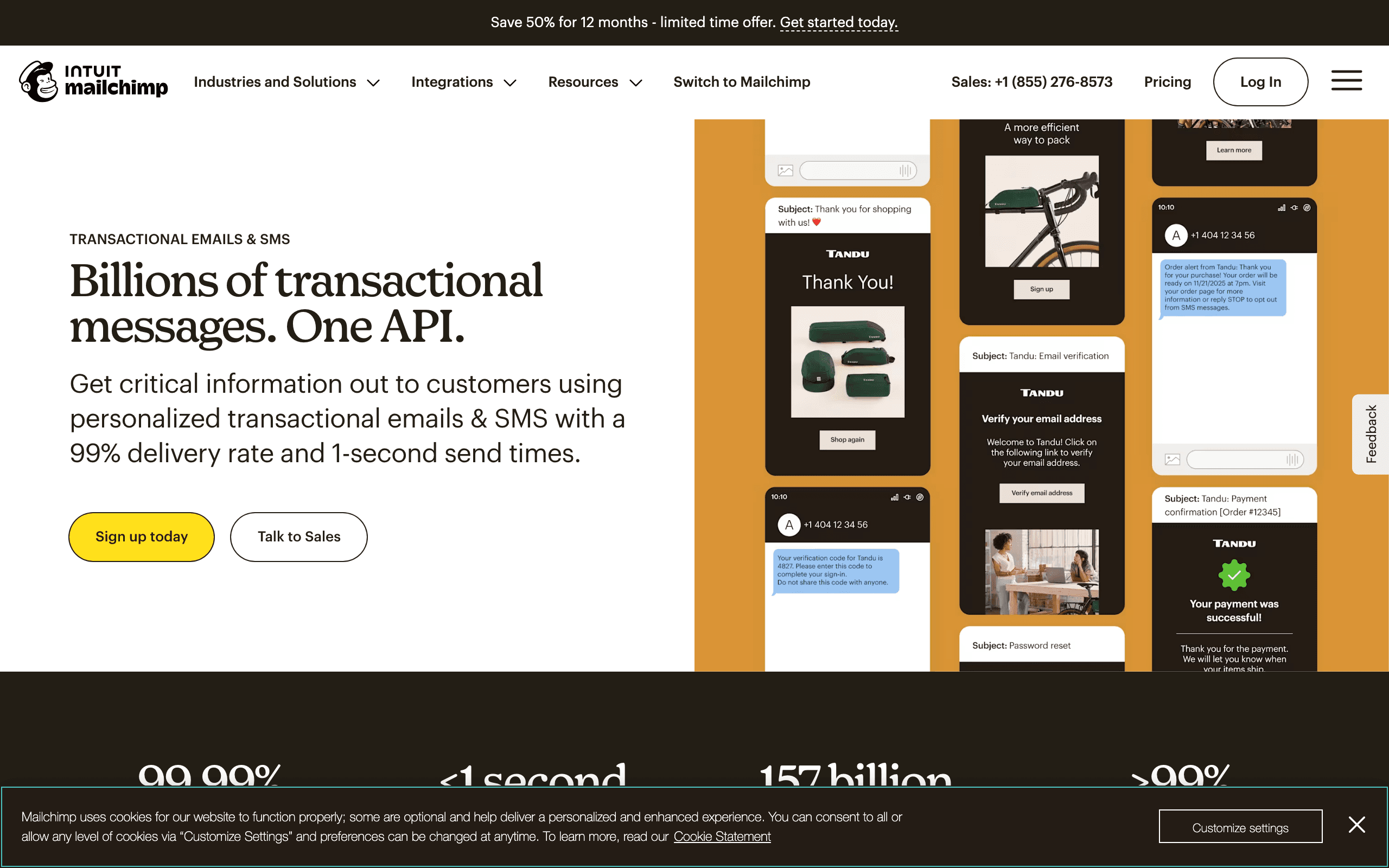
Mandrill and Maileroo take different approaches. Mandrill is a Mailchimp add-on with platform dependencies. Maileroo is a simple, independent email delivery service focused on doing one thing well. For our take on each, see our Mandrill comparison.
Maileroo's Simplicity
Maileroo focuses on reliable email delivery without platform overhead. Sign up, integrate the API or SMTP, and start sending. No prerequisite subscriptions, no confusing block pricing. Mandrill requires a Mailchimp account, a paid plan, and then enabling the add-on.
The Free Tier Gap
Maileroo offers 5,000 emails/month free. Mandrill offers a one-time 500-email trial. For startups, side projects, and development testing, Maileroo lets you run for months before needing to pay.
Transactional vs Marketing Email Needs
Mandrill only exists as an add-on to a Mailchimp subscription, so using it for transactional email means paying for Mailchimp's marketing platform too, whether you need it or not. Maileroo stands on its own, built specifically for transactional delivery via REST and SMTP with a strong focus on getting messages into the inbox. If you don't already run Mailchimp campaigns, that independence saves you a second subscription.
Deliverability and Sender Reputation
Maileroo markets deliverability as its main focus and includes built-in email verification to keep lists clean before you send, something Mandrill doesn't offer. Mandrill instead relies on Mailchimp's shared sending reputation. Good SPF, DKIM, and DMARC setup still matters more than the platform itself, but Maileroo's verification tools give you one more lever Mandrill's setup lacks.
Migration Path and Switching Costs
Switching away from Mandrill usually means leaving Mailchimp's ecosystem entirely, since Mandrill can't run standalone. Maileroo lets you keep transactional sending independent from any marketing platform, so migrating contact lists and API calls over is more contained than untangling a full Mailchimp account. Either direction, expect to rebuild templates and update your domain's authentication records, plus a short dip in reputation while the new sender warms up.
Use-case matchups
| Need | Better fit | Why |
|---|---|---|
| Mailchimp-connected transactional delivery | Mandrill | Mandrill is cited for API/SDKs, Mailchimp integration, templates, and analytics. |
| Affordable standalone transactional SMTP/API | Maileroo | Maileroo is cited for simple transactional delivery, affordable pricing, quick setup, and deliverability. |
| No Mailchimp dependency | Maileroo | Mandrill requires Mailchimp; Maileroo is positioned as a standalone transactional service. |
| SaaS marketing plus transactional email | Sequenzy | Sequenzy is listed at $49/month with transactional plus marketing and Stripe integration. |
Best Fit by Mailchimp Dependency and Standalone Delivery
Best transactional email service for Mailchimp users
Choose Mandrill when transactional email should stay connected to an existing Mailchimp account, template process, and analytics workflow. It is the better fit for teams already committed to Mailchimp that want password resets, receipts, confirmations, and app notices to remain near their campaign data.
Best standalone Mandrill alternative for transactional email
Choose Maileroo when the team wants SMTP/API delivery without a Mailchimp dependency. It is stronger for products that need affordable standalone sending, simpler setup, and transactional delivery without paying for or maintaining a broader Mailchimp marketing account.
Best SaaS platform for marketing plus transactional email
Choose Sequenzy when the issue is not just replacing Mandrill's delivery layer. SaaS teams that need campaigns, onboarding sequences, billing-triggered messages, and transactional templates can keep those workflows together instead of pairing Mailchimp, Mandrill, and another lifecycle system.
Pricing reality
Mandrill is listed at $30+/month for 50k emails plus Mailchimp Standard, around $40+/month total. Maileroo is listed at $49/month for 50k emails with SMTP/API and analytics. Sequenzy is listed at $49/month for 60k emails (unlimited subscribers), with transactional plus marketing email and Stripe integration.
Maileroo is cheaper and simpler if you only need standalone transactional sending. Mandrill is best when the transactional layer should stay close to Mailchimp.
Review signals
Mandrill reviews cited here highlight reliable email handling and fit for technical teams, with support responsiveness as a caution.
Maileroo reviews cited here highlight reliability, good value, and transactional delivery fit. The limitations are basic analytics and limited marketing capabilities.
Migration checklist
- Export domains, templates, API keys, SMTP credentials, webhooks, suppressions, Mailchimp dependencies, analytics, and bounce logs.
- If moving to Maileroo, map SMTP/API calls, transactional templates, webhook events, and suppression handling.
- If moving to Mandrill, confirm Mailchimp account requirements and convert templates to Mandrill merge tags.
- Update SPF, DKIM, DMARC, return-path, sender identities, and webhook URLs, since Mandrill's Mailchimp-dependent setup won't transfer to Maileroo.
- Test transactional sends, bounces, suppressions, retries, and analytics before cutover.
Decision checklist
- Choose Mandrill if Mailchimp integration is important.
- Choose Maileroo if affordable standalone transactional email is enough.
- Avoid Mandrill if you do not want Mailchimp in the stack.
- Avoid Maileroo if you need deep marketing campaign features.
- Choose Sequenzy if SaaS marketing and transactional email should be unified.









