
Overview
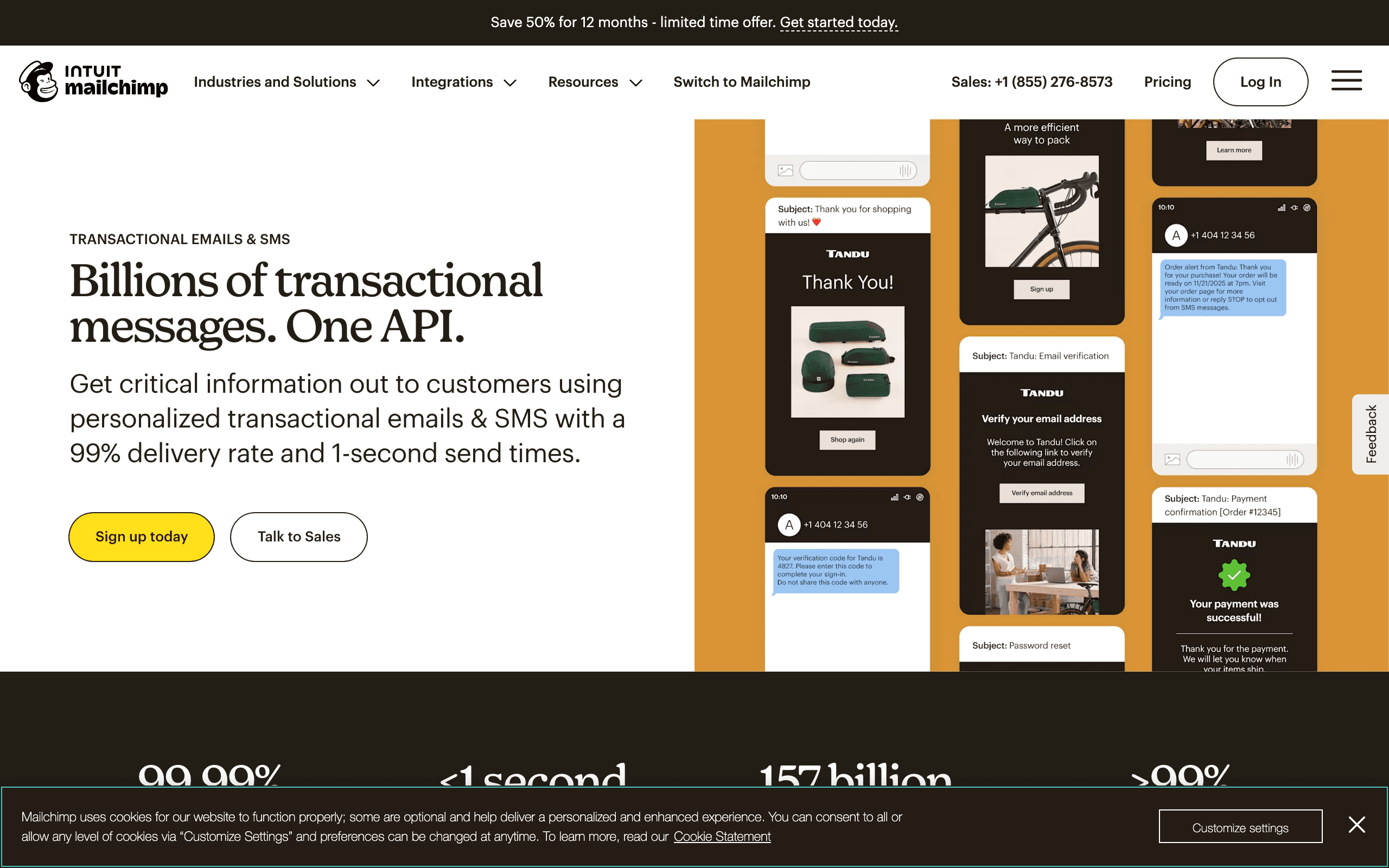
Mandrill (Mailchimp Transactional Email) and SendGrid (part of Twilio) are both established transactional email services. The key difference: Mandrill requires Mailchimp. SendGrid is independent. For our take on each, see our Mandrill comparison and SendGrid comparison.
The Independence Question
This comparison often comes down to one question: do you use Mailchimp? If yes, Mandrill integrates seamlessly with your existing setup. If no, paying for Mailchimp just to access Mandrill makes no sense when SendGrid is independent and has a free tier.
SendGrid's Developer Experience
SendGrid has invested heavily in developer experience. 7+ official SDKs, extensive documentation, code examples, and a large community. Dynamic templates, email validation API, and event webhooks. For developers, SendGrid is the more complete platform.
Mandrill's Mailchimp Advantage
If your marketing team uses Mailchimp, Mandrill syncs templates between marketing and transactional email seamlessly. One set of designs, shared analytics, unified billing. This integration genuinely simplifies multi-channel email.
The Sequenzy Alternative
For SaaS founders wanting transactional email and marketing campaigns in one platform with Stripe integration, Sequenzy offers a simpler alternative at $49/month - no Mailchimp subscription needed.
Transactional vs Marketing Email Needs
Mandrill is transactional-only and only works as an add-on to a paid Mailchimp plan, so you cannot run it without that subscription. SendGrid works fully independently, backed by Twilio's infrastructure, and combines transactional sending with built-in marketing email, while offering 100 free emails a day permanently. For teams not already committed to Mailchimp, SendGrid's independence and free tier make it the more flexible starting point; Mailchimp users get more value from Mandrill's tight integration.
Deliverability and Sender Reputation
Mandrill's deliverability rides on Mailchimp's shared infrastructure, which works well but only for accounts actively paying for Mailchimp. SendGrid runs on Twilio's larger infrastructure and offers dedicated IPs on its Pro plan for around $89.95 a month, plus a built-in validation API to keep lists clean. Both can deliver reliably with proper SPF, DKIM, and DMARC setup, but SendGrid gives you more control over reputation without depending on another vendor's account.
Migration Path and Switching Costs
Leaving Mandrill for SendGrid means you can drop the Mailchimp subscription altogether, since SendGrid runs independently with its own dynamic templates and webhook system to rebuild against. Moving from SendGrid to Mandrill means you would need an active Mailchimp account just to keep transactional email flowing, plus rebuilding templates around Mailchimp's merge tags. Either direction, plan to re-verify your sending domains and expect a temporary dip in reputation while the new setup settles in.
Use-case matchups
| Need | Better fit | Why |
|---|---|---|
| Mailchimp-connected transactional sending | Mandrill | Mandrill is cited for deep Mailchimp integration, templates, analytics, and API/SDK support. |
| Enterprise-scale API, webhooks, validation, and dedicated IPs | SendGrid | SendGrid is cited for scale, API/SDKs, dedicated IPs, Twilio ecosystem, webhooks, and validation API. |
| Lower cited 50k standalone infrastructure cost | SendGrid | SendGrid is listed at $19.95/month for 50k emails, while Mandrill also requires Mailchimp. |
| SaaS marketing plus transactional email | Sequenzy | Sequenzy is listed at $49/month with transactional plus marketing and Stripe integration. |
Pricing reality
Mandrill is listed at $30+/month for 50k emails plus Mailchimp Standard, around $40+/month total. SendGrid is listed at $19.95/month for Essentials with 50k emails. Sequenzy is listed at $49/month for 60k emails (unlimited subscribers), with transactional plus marketing email and Stripe integration.
SendGrid is cheaper and more infrastructure-oriented at the cited volume. Mandrill is most sensible when Mailchimp integration is the reason for buying.
Review signals
Mandrill reviews cited here highlight reliable email handling and technical fit, with support responsiveness as a caution.
SendGrid reviews cited here highlight reliable delivery infrastructure and fit for the use case. The cautions are developer-oriented UX, confusing pricing tiers, and weaker marketing features.
Best Fit by Ecosystem Dependency
Best transactional email add-on for Mailchimp teams
Mandrill fits teams already committed to Mailchimp that want transactional sending, templates, analytics, and Mailchimp-connected workflows. It should be evaluated first when Mailchimp ecosystem alignment is the main reason to buy.
Best standalone email API platform for scale and webhooks
SendGrid fits teams that want independent infrastructure with APIs, SDKs, webhooks, validation, dedicated IPs, and Twilio ecosystem options. Choose it when standalone delivery depth matters more than Mailchimp integration.
Best SaaS email platform for marketing and billing lifecycle
Sequenzy fits when the team needs transactional plus marketing email tied to subscription or product lifecycle events. It is the better fit when Stripe-aware automation matters more than choosing between Mailchimp-connected or standalone delivery.
Migration checklist
- Export templates, API keys, webhooks, dedicated IP settings, validation usage, suppressions, Mailchimp dependencies, and delivery logs.
- If moving to SendGrid, map API calls, dynamic templates, validation, webhook events, and IP warmup.
- If moving to Mandrill, confirm Mailchimp account requirements and convert templates to Mandrill merge tags.
- Repoint SPF, DKIM, DMARC, and return-path, then rebuild sender identities and webhooks, since Mandrill's domains sit under Mailchimp.
- Ramp traffic gradually and compare delivery, bounces, suppressions, validation, and webhook counts.
Decision checklist
- Choose Mandrill if Mailchimp integration is required.
- Choose SendGrid if standalone scale, validation, webhooks, and infrastructure depth matter more.
- Avoid Mandrill if you do not want Mailchimp dependency.
- Avoid SendGrid if marketer-friendly campaign building is the main requirement.
- Choose Sequenzy if SaaS lifecycle email should combine marketing and transactional sends.