
Overview
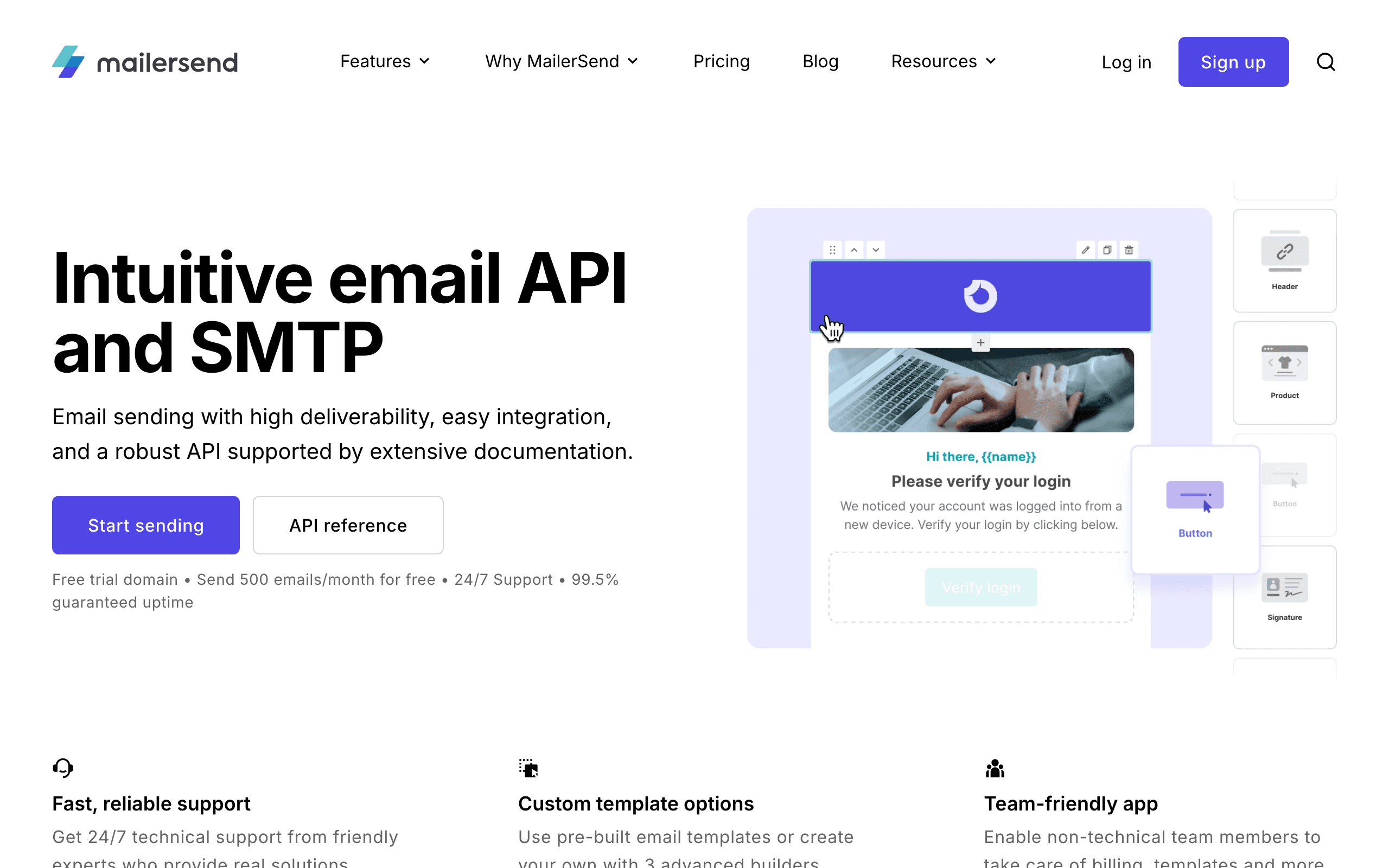
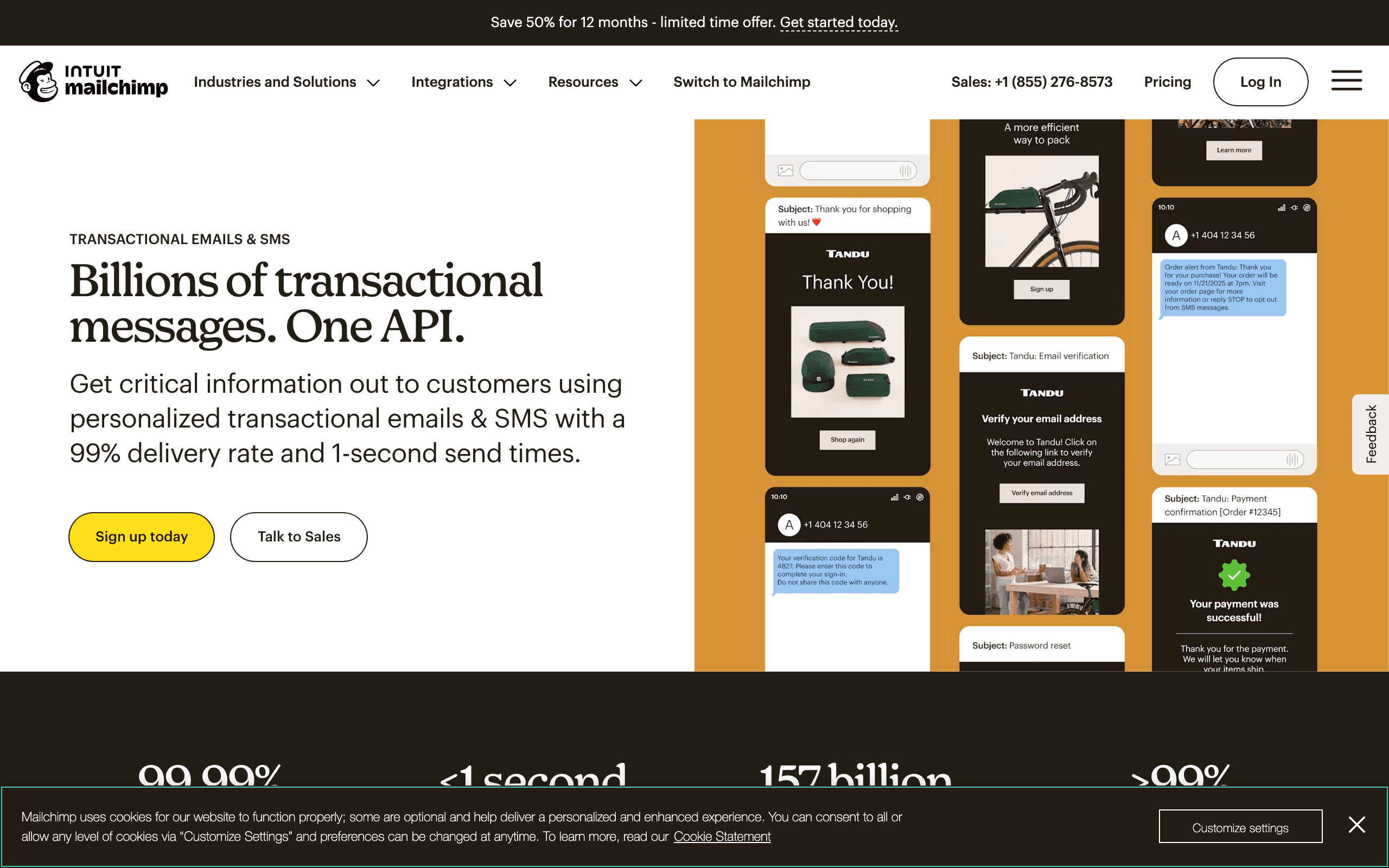
MailerSend and Mandrill are both transactional email services with different setups. MailerSend is standalone. Mandrill requires a Mailchimp account.
Independence
MailerSend is standalone - sign up and use. Mandrill requires a Mailchimp account. If you're not using Mailchimp, MailerSend is simpler.
Mailchimp Integration
For existing Mailchimp users, Mandrill is the natural choice. Everything in one ecosystem with native marketing integration.
Email Verification
MailerSend includes email verification. Mandrill doesn't. For validating addresses, MailerSend is more complete.
For SaaS Companies
Neither has native Stripe integration. Sequenzy offers Stripe integration for subscription businesses with modern unified platform.
Making the Choice
Choose MailerSend for standalone transactional with email verification. Choose Mandrill if you're already using Mailchimp and want unified ecosystem.
The Mailchimp Dependency Question
The biggest factor in this comparison is whether you already use Mailchimp. If Mailchimp is central to your marketing, Mandrill provides seamless transactional email with shared templates and unified analytics. The integration is genuinely well-done.
But if you are not using Mailchimp, or are considering leaving, the dependency becomes a liability. You cannot use Mandrill without Mailchimp, and Mailchimp's pricing has increased significantly over the years. MailerSend's independence is a real advantage for teams who want flexibility.
Cost Analysis at Scale
At 50,000 emails monthly, MailerSend costs $25/month flat. Mandrill's block pricing plus per-email charges can reach $45 or more, plus you need a Mailchimp subscription. The cost difference is meaningful for bootstrapped startups and growing companies watching their email spend.
For teams sending higher volumes, the gap widens further. MailerSend's predictable pricing makes budgeting straightforward, while Mandrill's block system can lead to unexpected costs during traffic spikes.
Modern API vs Legacy Integration
MailerSend was built with modern API conventions and developer workflows in mind. The API feels current with clean endpoints and comprehensive SDKs. Mandrill's API is functional but was designed years ago when different conventions were standard.
For development teams building new applications, MailerSend's modern approach reduces integration time. For teams already deeply integrated with Mailchimp, Mandrill's familiarity and template sharing can outweigh API elegance.
Delivery Speed and Reliability
MailerSend and Mandrill both handle transactional mail like password resets and receipts, but they get there differently. MailerSend runs standalone with its own infrastructure and built-in email verification, while Mandrill only works as an add-on inside a Mailchimp account, so its delivery path always passes through that dependency first.
API Design and Developer Experience
MailerSend's API is modern and clean, and being part of the MailerLite team gives it a reasonably proven backing despite being newer to transactional email specifically. Mandrill's API is solid too, and it inherits Mailchimp's merge tag support and template sharing, which is convenient if you are already building on that ecosystem but adds little for teams that are not.
Scaling and Cost at Volume
At 50,000 emails a month, MailerSend runs about $25 on its own. Mandrill costs roughly $45 for the same volume, and that price only exists on top of a required Mailchimp subscription, so the real cost includes both. For teams not already paying for Mailchimp, MailerSend's standalone pricing is the more straightforward number to budget against.
Use-case matchups
| Situation | Best first look | Why |
|---|---|---|
| Standalone transactional email without Mailchimp dependency | MailerSend | MailerSend can be adopted independently and includes developer-facing transactional features. |
| Existing Mailchimp team that wants shared templates | Mandrill | Mandrill makes the most sense when Mailchimp is already the marketing system and template sharing matters. |
| Team that wants email verification in the same product | MailerSend | The page data highlights built-in verification as one of MailerSend's advantages. |
| Team deeply committed to Mailchimp merge tags and reporting | Mandrill | The dependency is easier to justify when Mailchimp is already central to campaign operations. |
| SaaS team combining lifecycle marketing and transactional messages | Sequenzy | Sequenzy is a better first look when subscription events, campaigns, and transactional email need to live together. |
Best Fit by Mailchimp Dependency
Best standalone transactional email service for modern teams
MailerSend is the better fit when the team wants transactional email, verification, SMS options, and templates without adopting Mailchimp as the marketing system. It is simpler to evaluate on its own.
Best transactional email add-on for committed Mailchimp teams
Mandrill is the better fit when Mailchimp is already central and shared templates, merge tags, reporting, and campaign operations matter. The dependency is only a benefit if Mailchimp is truly the system of record.
Best email platform for SaaS lifecycle and transactional messages
Sequenzy is the better fit when the goal is one SaaS-oriented workspace for campaigns, transactional email, and subscription events. Stripe lifecycle automation is the reason to look beyond a delivery-only add-on.
Pricing reality
MailerSend pricing is easier to reason about when you want a standalone transactional provider. The main cost checks are email volume, verification usage, SMS needs, dedicated IPs, and support tier.
Mandrill pricing should never be evaluated alone. Because it depends on a Mailchimp account, the real cost includes your Mailchimp subscription plus Mandrill blocks and any marketing-plan requirements.
Sequenzy is not a pure Mandrill replacement. It becomes relevant when the team wants transactional email and lifecycle marketing in one SaaS-oriented workspace rather than a delivery-only add-on.
Review signals
The existing MailerSend review snippets are positive on reliability, the MailerLite backing, free-tier value, SMS, and email verification, with cautions around maturity and limited marketing features.
The Mandrill review snippets are positive on Mailchimp ecosystem integration, merge tags, and shared templates. The repeated caution is dependency: Mandrill is less attractive when the team is not already invested in Mailchimp.
Migration checklist
| Workstream | Moving to MailerSend | Moving to Mandrill | Moving to Sequenzy |
|---|---|---|---|
| Account dependency | Create a standalone MailerSend setup and remove Mailchimp assumptions from transactional flows. | Confirm the required Mailchimp account, plan, and template-sharing model. | Decide which transactional and lifecycle emails should move into one workspace. |
| Templates | Rebuild templates in MailerSend and test variables, layouts, and fallback values. | Map Mailchimp templates, merge tags, and Mandrill transactional variants. | Rebuild transactional templates and automation emails around subscriber events. |
| API cutover | Replace API keys, sending domains, webhooks, and error handling. | Replace transactional calls with Mandrill payloads and Mailchimp merge-tag syntax. | Route app events, Stripe events, and transactional sends through Sequenzy. |
| Deliverability | Reconfigure SPF, DKIM, DMARC, tracking domains, and suppression handling. | Confirm Mailchimp/Mandrill domain authentication and suppression sync. | Preserve suppressions, bounces, and unsubscribes before sending from Sequenzy. |
| Cost controls | Monitor volume, validation, SMS, and support-tier usage. | Monitor Mailchimp plan cost plus Mandrill block consumption. | Monitor included email volume and whether marketing plus transactional scope fits. |
Decision checklist
- Are you already committed to Mailchimp, or would Mandrill create unwanted lock-in?
- Do you need standalone transactional email, SMS, verification, or shared Mailchimp templates?
- Which API is easier for your team to maintain for the next few years?
- Does your transactional system need marketing automation context?
- What happens to cost if email volume spikes for one month?









