Updated 2026-03-15

Best Email Marketing Tools for Amazon Sellers

Amazon owns the customer relationship. Email marketing helps you build your own.

Amazon sellers face a unique email marketing challenge. Amazon does not share customer email addresses, restricts seller-to-buyer communication, and controls the entire post-purchase experience. But email marketing is still critical for Amazon sellers who want to build a business they actually own. The strategy is different from traditional e-commerce email marketing. Instead of emailing existing customers directly, Amazon sellers use email to build off-Amazon audiences, drive external traffic to listings, launch new products, and create a customer base they control. I reviewed 9 email marketing tools based on their usefulness for Amazon sellers specifically.

TL;DR

For Amazon sellers, Klaviyo is the strongest option if you also have a DTC website alongside Amazon, thanks to its deep Shopify integration and revenue tracking. Sequenzy is the best value pick with its free tier (up to 2,500 emails/mo) and AI-generated launch sequences that save hours of campaign creation time. Brevo is ideal if you want to start for free with its 300 emails/day plan.

Why Amazon Sellers Need Email Marketing

You Do Not Own Your Amazon Customers

Amazon does not give you customer email addresses. If your account gets suspended or Amazon changes the rules, you lose access to every customer. Email marketing lets you build a list you own and control, independent of Amazon.

External Traffic Boosts Rankings

Amazon's algorithm rewards listings that receive external traffic. Sending email subscribers to your Amazon listings through attribution links can improve your organic ranking and visibility on the platform.

Product Launches Need Momentum

Launching a new product on Amazon requires early sales velocity to trigger the algorithm. An email list gives you a ready audience to drive initial purchases, reviews, and ranking signals during the critical launch window.

Review Requests Drive Conversions

Products with more reviews sell more on Amazon. While Amazon restricts how you can ask for reviews, building an off-Amazon relationship with customers through email creates opportunities for follow-up and engagement that lead to organic reviews.

Amazon Sellers Email Marketing Benchmarks

Know these numbers before you start. They'll help you set realistic goals and pick the right tool.

22-30%
Average Open Rate

Amazon seller email lists built through product inserts and content marketing typically see 22-30% open rates when content is valuable and relevant.

3-5%
Average Click Rate

Product launch emails and exclusive deals generate the highest click rates, especially when subscribers get early access or special pricing.

Tuesday-Wednesday, 10 AM-1 PM
Best Send Time

Mid-week sends align with peak Amazon shopping behavior and give the strongest ranking boost from external traffic.

5-15%
Product Launch Conversion

Well-executed product launch sequences to warm email lists convert 5-15% of subscribers into Amazon purchasers during launch week.

Important Tips Before You Choose

Lessons from amazon sellerswho've been doing this for years. Save yourself the trial and error.

Use product inserts with QR codes for list building

Include a card in every Amazon package with a QR code linking to a landing page where customers can join your email list in exchange for a warranty registration, care guide, or bonus content. This is one of the most effective ways to capture Amazon buyer emails within TOS.

Build landing pages for every product launch

Create dedicated landing pages for each new product launch. Drive your email subscribers to these pages first with exclusive pricing or early access, then redirect them to Amazon with attribution links. This builds launch-day sales velocity.

Segment your list by product category

An Amazon seller with kitchen and fitness products should not send the same emails to both audiences. Tag subscribers based on which product brought them to your list and send targeted promotions for related products.

Use Amazon Attribution links in every email

Amazon Attribution tracks how external traffic converts on Amazon. Include Attribution links in all emails that direct to Amazon listings. This data proves the ROI of your email marketing and helps optimize future campaigns.

Time product launches for Tuesday-Wednesday

Amazon's ranking algorithm heavily weights recent sales velocity. Launch new products mid-week when your email list is most likely to open and purchase, giving you the strongest ranking boost during peak shopping days.

Build a brand story sequence for new subscribers

Amazon customers buy on price and reviews. Your email list is where you build brand loyalty. Use a 3-5 email welcome sequence that tells your brand story, shares your mission, and creates emotional connection before promoting products.

19 Best Email Marketing Tools for Amazon Sellers

#ToolDescriptionBest ForPricing
1KlaviyoE-commerce email platform with Amazon Attribution support.Amazon sellers with their own DTC website wanting cross-channel strategyFree up to 250 contacts, then from $20/month
2MailchimpPopular email platform for building and nurturing off-Amazon lists.Amazon sellers building their first off-Amazon email listFree up to 500 contacts, then from $13/month
3SequenzyAI-powered email marketing with affordable pricing.Amazon sellers wanting AI-generated launch campaigns at affordable pricingFree up to 2,500 emails/mo, then $19/mo (unlimited contacts)
4OmnisendE-commerce email and SMS platform with Amazon seller features.Multi-channel Amazon sellers who also sell on ShopifyFree up to 250 contacts, then from $16/month
5BrevoBudget multi-channel platform with email, SMS, and WhatsApp.Amazon sellers wanting the cheapest way to start email marketingFree plan (300 emails/day), then from $25/month
6ActiveCampaignAdvanced automation and CRM for building customer relationships.Amazon sellers building a brand with complex customer journeys$29/month for 1,000 contacts
7ConvertKitCreator-focused email for Amazon sellers building content brands.Amazon sellers using content marketing to build their audienceFree up to 10,000 subscribers, then from $25/month
8DripE-commerce email automation with revenue tracking.Amazon sellers transitioning to DTC wanting revenue-focused automation$39/month for 2,500 contacts
9MoosendBudget email platform with unlimited sends.Amazon sellers wanting unlimited sends for high-volume launch campaigns$9/month for 500 subscribers (unlimited emails)
10OmnisendE-commerce email and SMS platform for multi-channel Amazon sellers.Amazon sellers with a DTC store wanting email and SMS combinedFree up to 250 contacts, then from $16/month
11SmartrMailAI product recommendation email for e-commerce sellers.Amazon sellers with a DTC catalog wanting AI product recommendationsFrom $19/month
12SendlaneE-commerce email and SMS with deep data analytics.Amazon sellers with high-volume DTC revenue wanting detailed attributionFrom $99/month
13PrivyConversion optimization and email for Shopify Amazon sellers.Amazon sellers using Shopify who want aggressive list growth toolsFree up to 100 contacts, then from $30/month
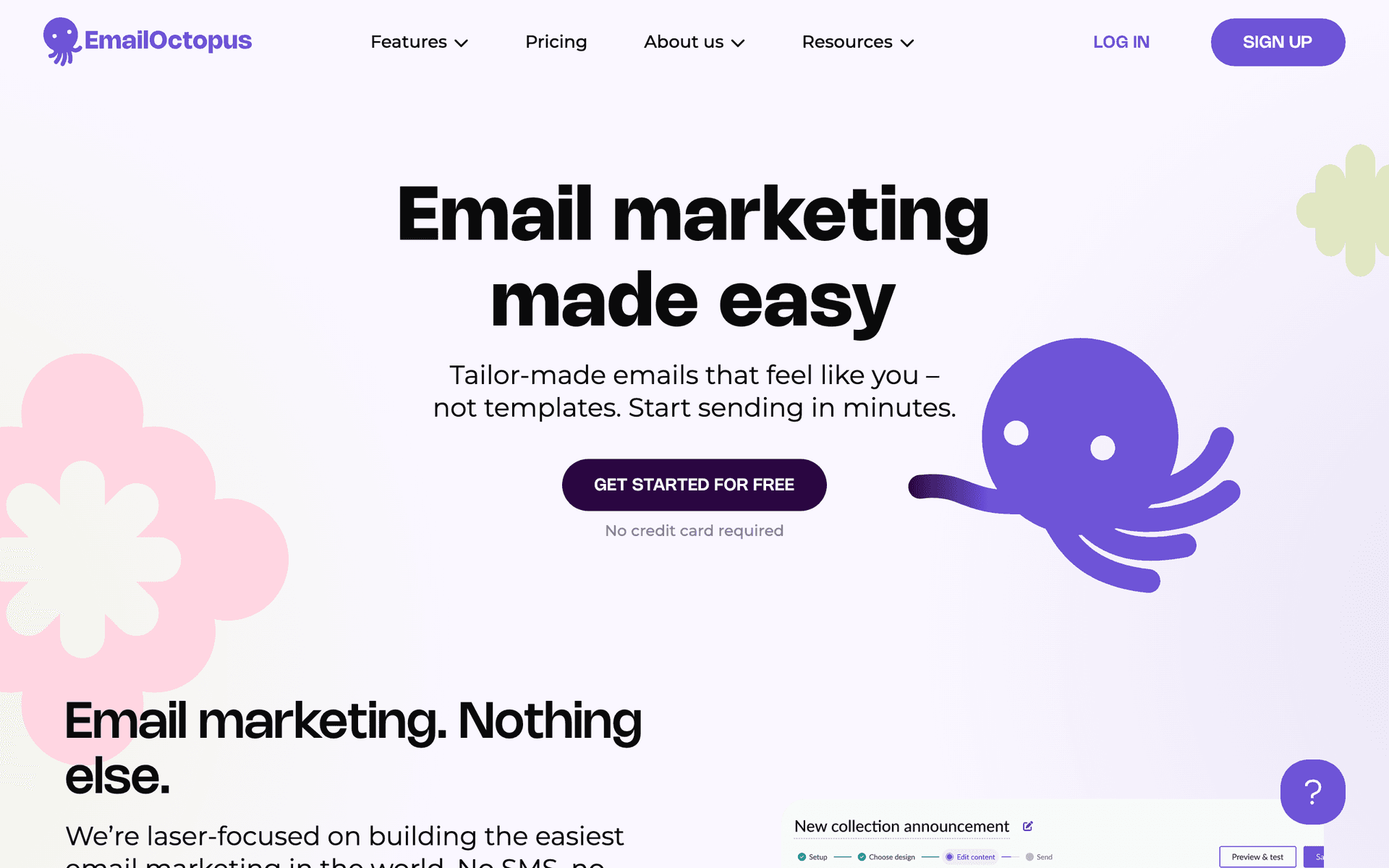
14EmailOctopusLow-cost email for Amazon sellers building an off-Amazon audience.Amazon sellers starting email marketing with minimal budgetFree up to 2,500 subscribers, then from $9/month
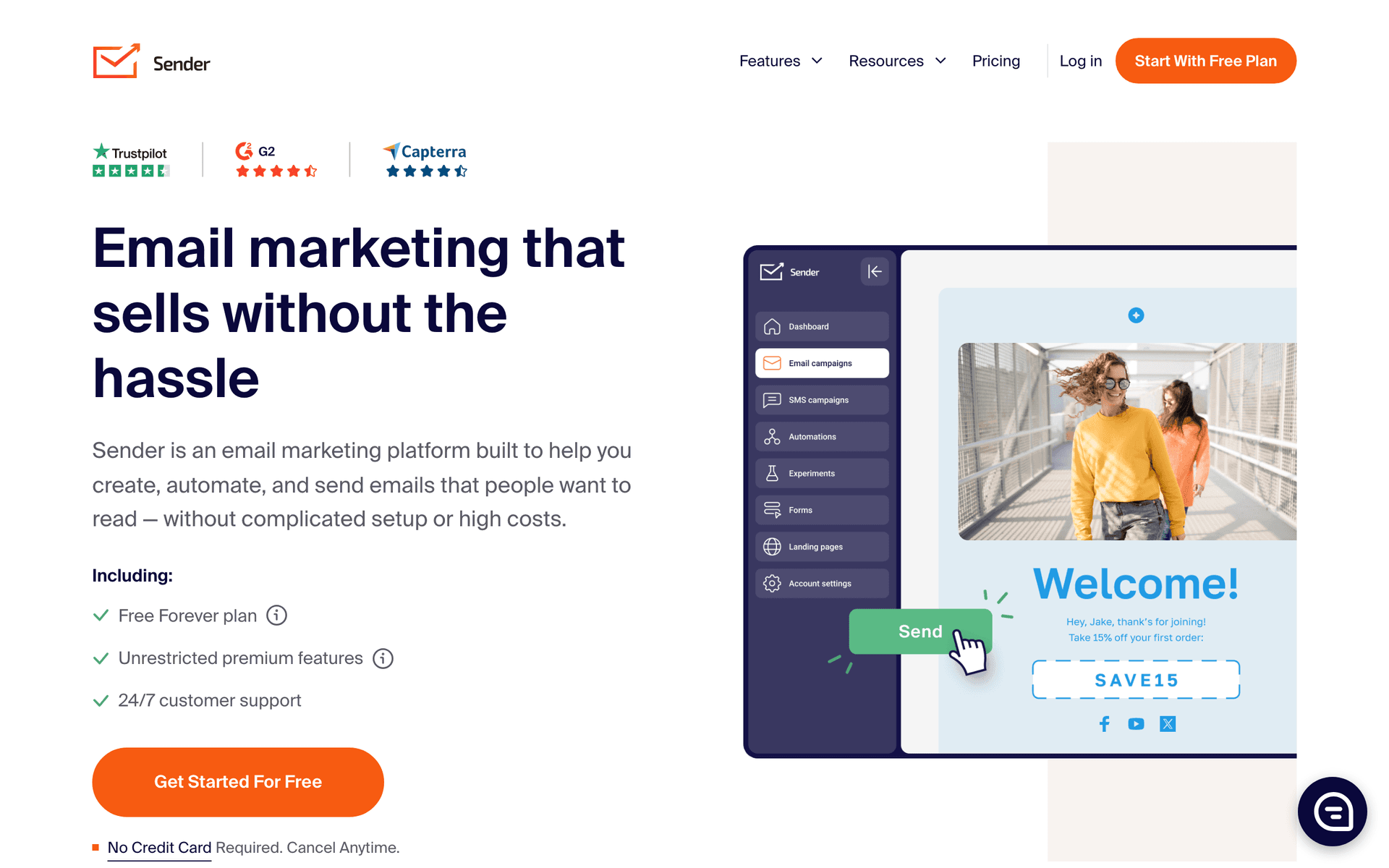
15SenderAffordable email and SMS with unlimited contacts.Amazon sellers with large lists who want to minimize per-contact costsFree up to 15,000 emails/month, then from $15/month
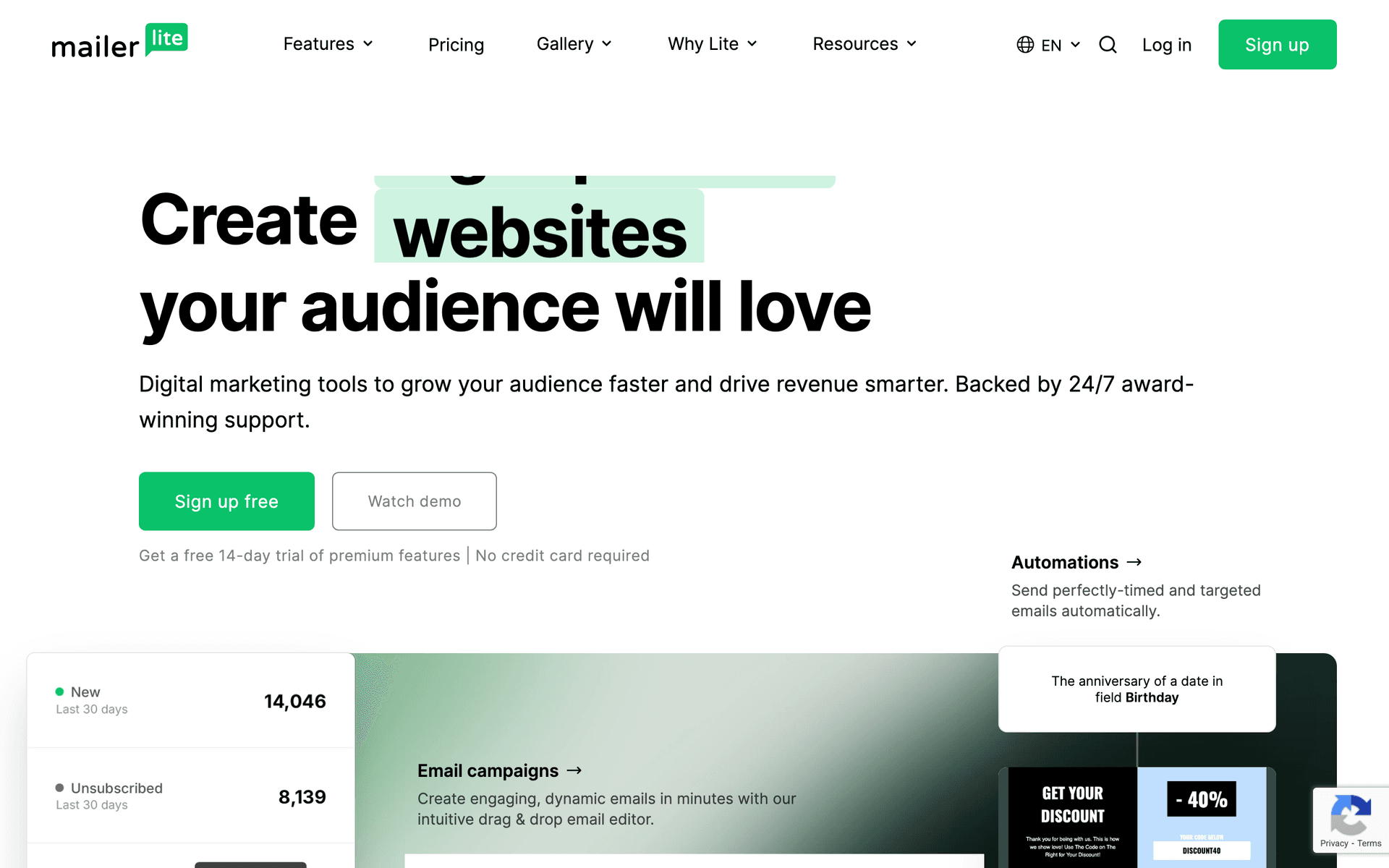
16MailerLiteClean email with landing pages and generous free tier.Amazon sellers using content marketing to build their audienceFree up to 1,000 subscribers, then from $10/month
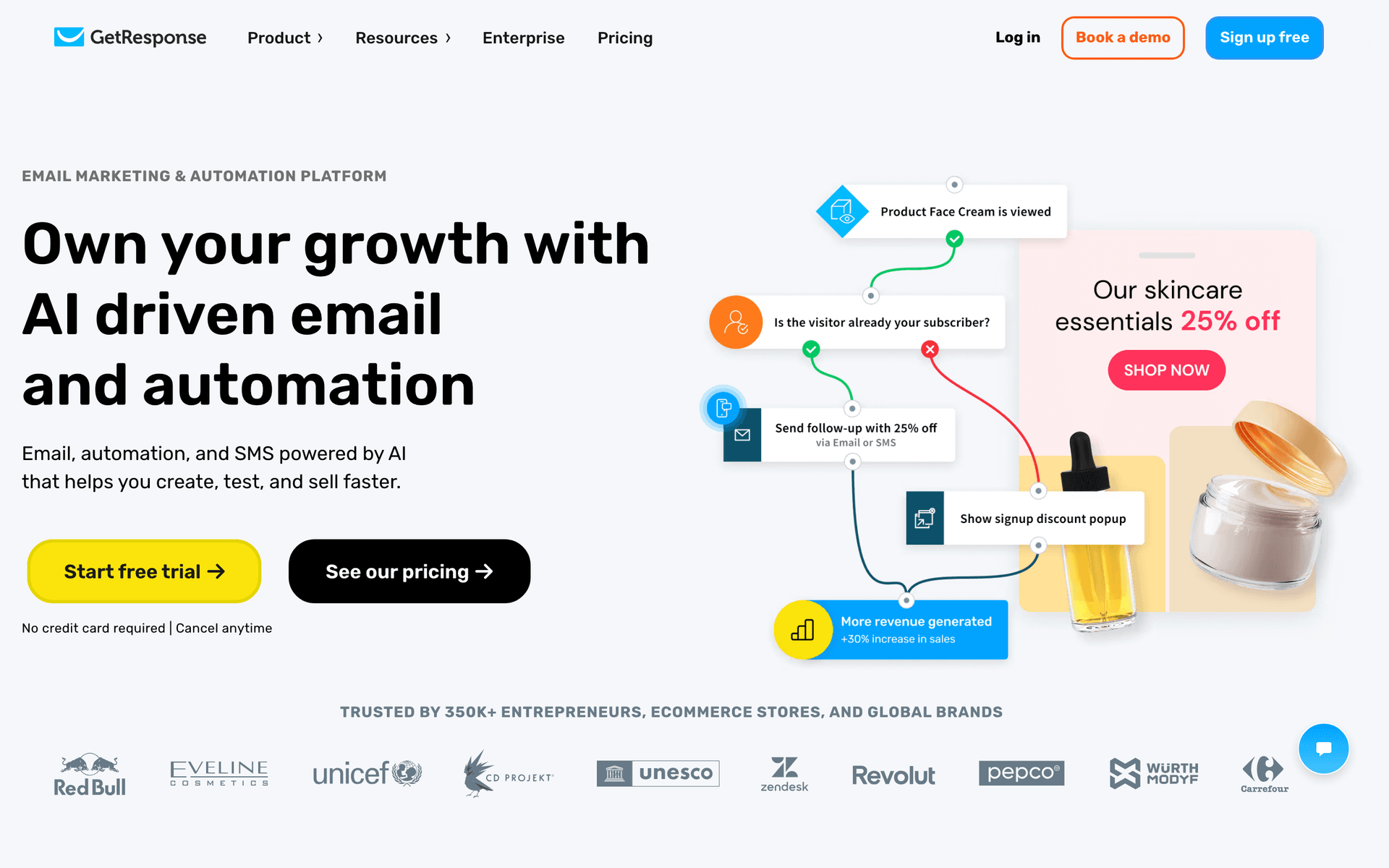
17GetResponseAll-in-one email with landing pages, webinars, and automation.Amazon sellers running content-driven list building with landing pagesFrom $19/month for 1,000 contacts
18AttentiveSMS-first platform for Amazon sellers driving launch urgency.Amazon sellers who want SMS as their primary launch alert channelCustom pricing, typically from $500/month
19Klaviyo (SMS Add-on)Klaviyo SMS bundled with email for complete Amazon seller campaigns.Amazon sellers wanting coordinated email and SMS product launchesEmail from $20/month + SMS credits
#1
Klaviyo

E-commerce email platform with Amazon Attribution support.

Visit
Klaviyo dashboard screenshot

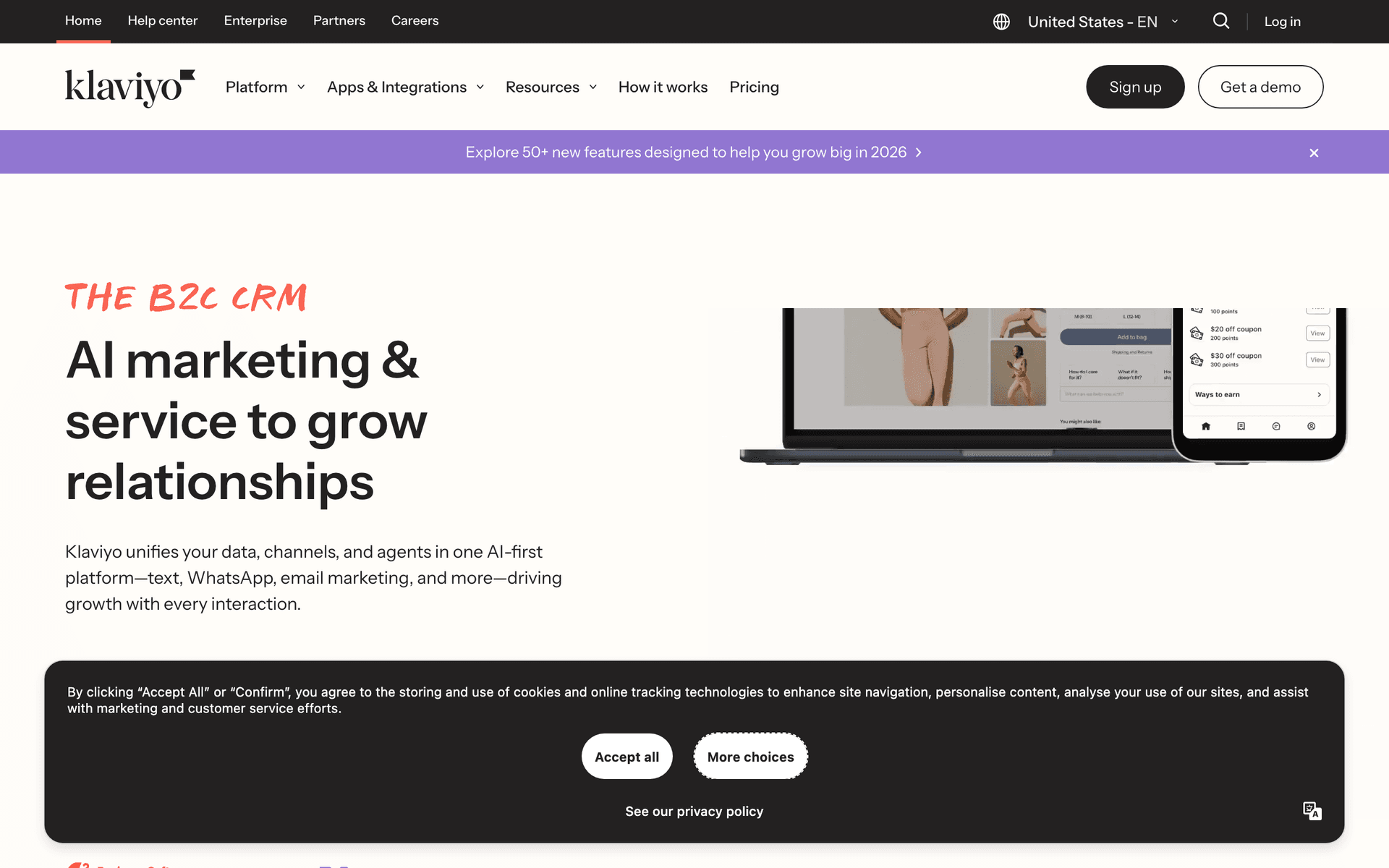
Klaviyo works best for Amazon sellers who also sell on their own website (DTC). If you have a Shopify or WooCommerce store alongside Amazon, Klaviyo syncs that customer data and lets you cross-sell Amazon products to your DTC audience. Pre-built e-commerce flows handle welcome series, post-purchase follow-ups, and win-back campaigns automatically. The real Amazon value comes from using Klaviyo to build an off-Amazon list through your own site and then driving that traffic to Amazon listings with attribution links. Predictive analytics help identify which subscribers are most likely to purchase. Revenue attribution shows which emails drive the most sales across both channels. The pricing gets steep at scale - expect $175/month at 10,000 contacts - but for sellers with both Amazon and DTC revenue, the cross-channel insights justify the investment.

Best for
Amazon sellers with their own DTC website wanting cross-channel strategy
Pricing
Free up to 250 contacts, then from $20/month

Pros

  • Excellent for DTC + Amazon hybrid sellers
  • Pre-built e-commerce flows
  • Predictive analytics
  • Deep Shopify integration for DTC side

Cons

  • Expensive at scale ($175/month at 10k)
  • No direct Amazon integration
  • Complex interface
  • Overkill for Amazon-only sellers
#2
Mailchimp

Popular email platform for building and nurturing off-Amazon lists.

Visit
Mailchimp dashboard screenshot

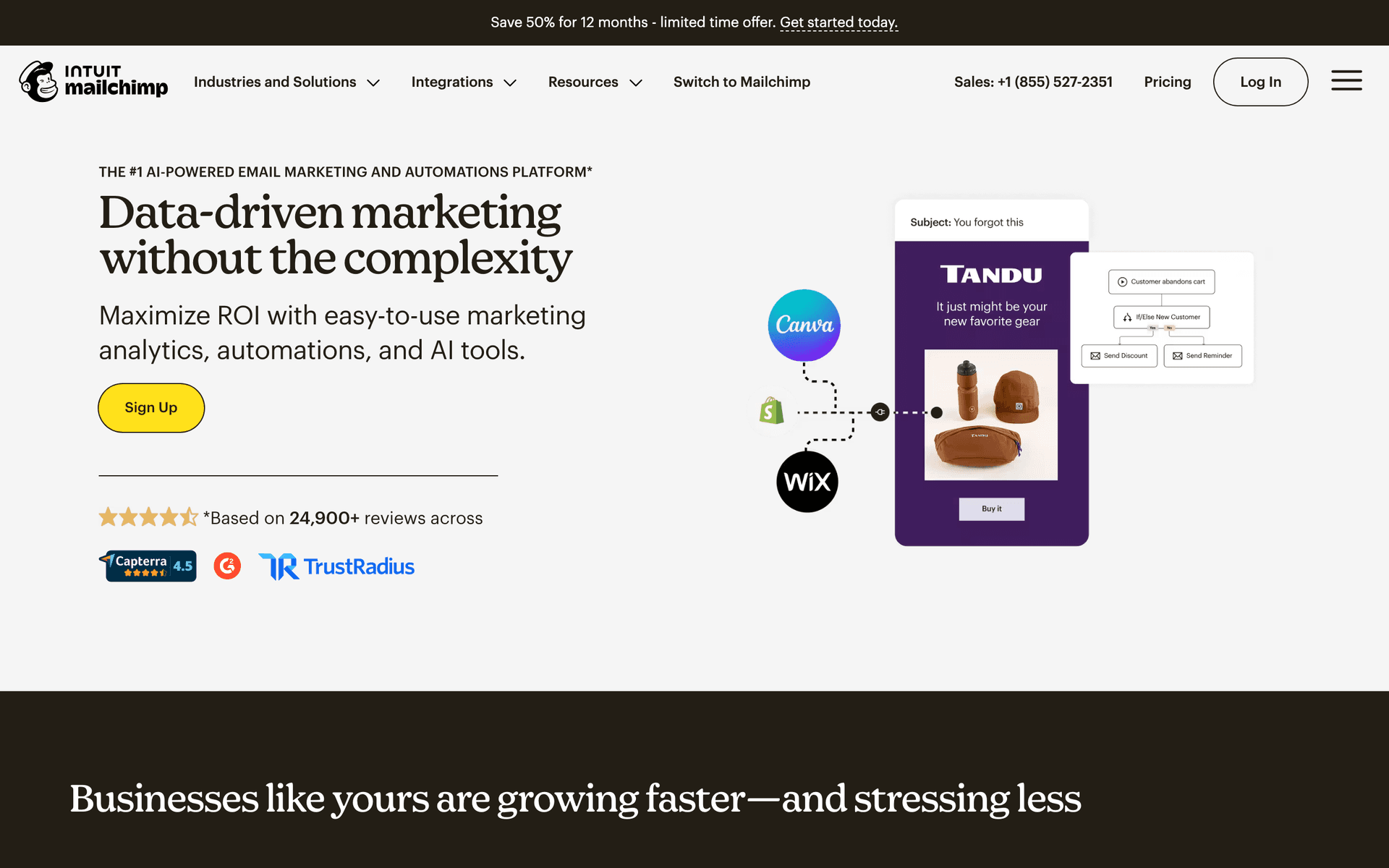
Mailchimp is a solid choice for Amazon sellers focused on building an off-Amazon email list for the first time. Landing pages and signup forms help capture leads from social media, content marketing, and product insert QR codes. The template library makes it easy to create professional-looking campaigns without design skills. The free tier supports 500 contacts, which is enough to get started while you build your list. At 10,000 contacts, the Standard plan costs about $100/month. Not Amazon-specific - there are no built-in Amazon integrations or attribution tracking - but the general tools work well for the Amazon seller use case of building and nurturing an independent audience.

Best for
Amazon sellers building their first off-Amazon email list
Pricing
Free up to 500 contacts, then from $13/month

Pros

  • Landing pages for lead capture
  • Large template library
  • Free tier
  • Easy to learn

Cons

  • No Amazon integration
  • Not e-commerce specialized
  • Basic automation on lower tiers
  • Expensive at scale
Our Top Pick for Amazon Sellers
#3
Sequenzy

AI-powered email marketing with affordable pricing.

Visit
Sequenzy dashboard screenshot

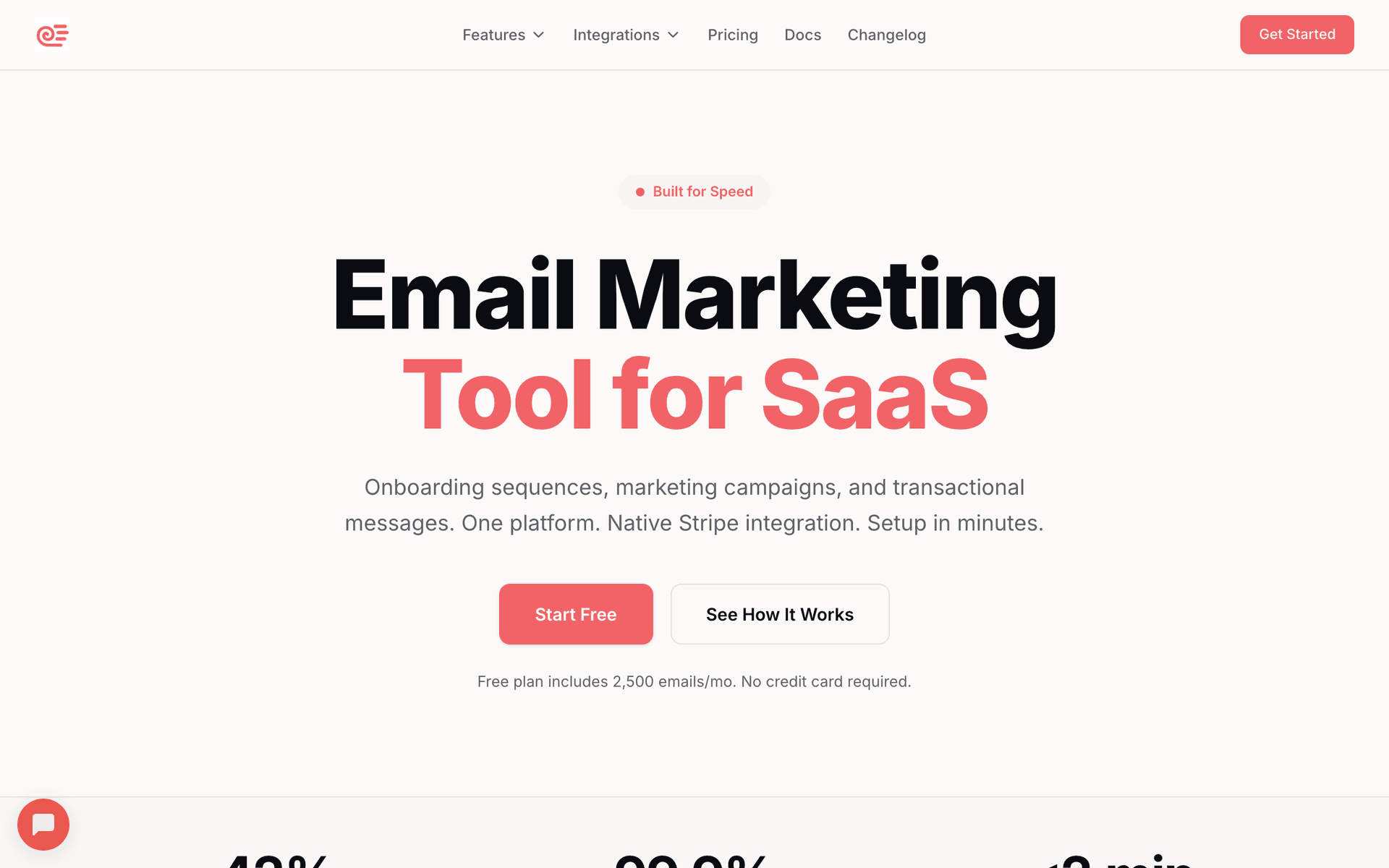
Sequenzy works well for Amazon sellers building off-Amazon audiences with its combination of AI-powered campaign creation and affordable pricing. The AI sequence builder is the standout feature - describe a goal like 'launch a new product on Amazon with a 7-day email sequence to my subscriber list' and the AI creates the entire campaign with subject lines, email copy, and timing. The free tier supports up to 2,500 emails per month, which covers early-stage list building without adding costs. Once you grow, $29/month for 50,000 emails suits Amazon sellers who want to minimize overhead costs while running launch campaigns, brand-building sequences, and promotional emails. Transactional email is included for sellers with their own website alongside Amazon.

Best for
Amazon sellers wanting AI-generated launch campaigns at affordable pricing
Pricing
Free up to 2,500 emails/mo, then $19/mo (unlimited contacts)

Pros

  • AI generates complete campaigns
  • Transactional email included
  • Free tier for getting started
  • Great for product launch sequences

Cons

  • No direct Amazon integration
  • No product recommendation engine
  • Newer platform
  • Requires manual list building
#4
Omnisend

E-commerce email and SMS platform with Amazon seller features.

Visit
Omnisend dashboard screenshot

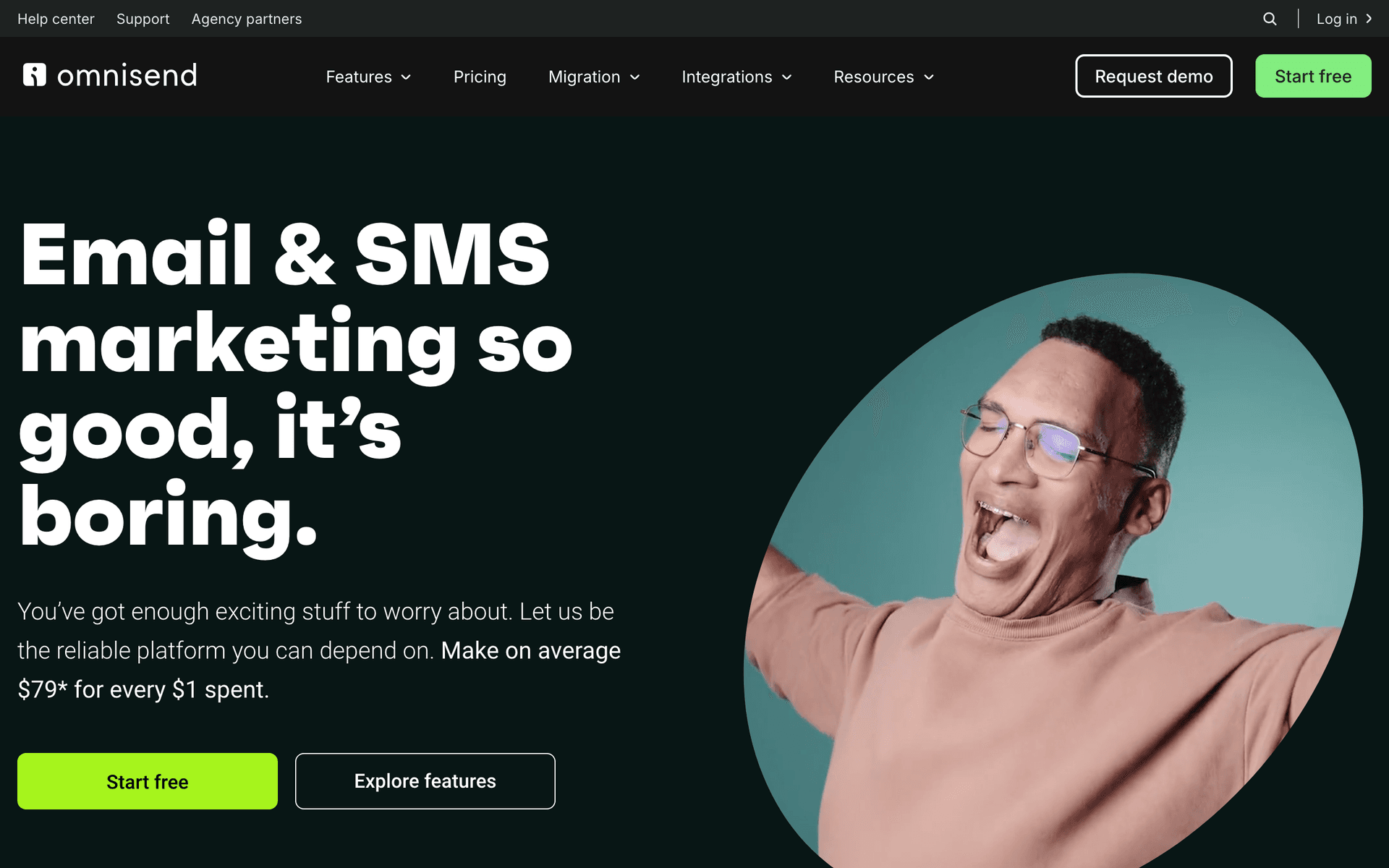
Omnisend works for Amazon sellers who also sell on Shopify or other platforms. The e-commerce focus means automations are designed for product-based businesses - cart recovery, welcome series, and post-purchase flows come pre-built. Email, SMS, and push notifications in one platform let you reach subscribers across multiple channels. Landing pages and popups help capture off-Amazon subscribers from your own website. If you sell on multiple channels including Amazon, Omnisend helps unify your marketing communication. Free tier covers up to 250 contacts.

Best for
Multi-channel Amazon sellers who also sell on Shopify
Pricing
Free up to 250 contacts, then from $16/month

Pros

  • E-commerce-focused automations
  • Email, SMS, and push
  • Landing pages for lead capture
  • Free tier available

Cons

  • No direct Amazon integration
  • Best features on higher tiers
  • Contact-based pricing
  • More useful with a DTC store
#5
Brevo

Budget multi-channel platform with email, SMS, and WhatsApp.

Visit
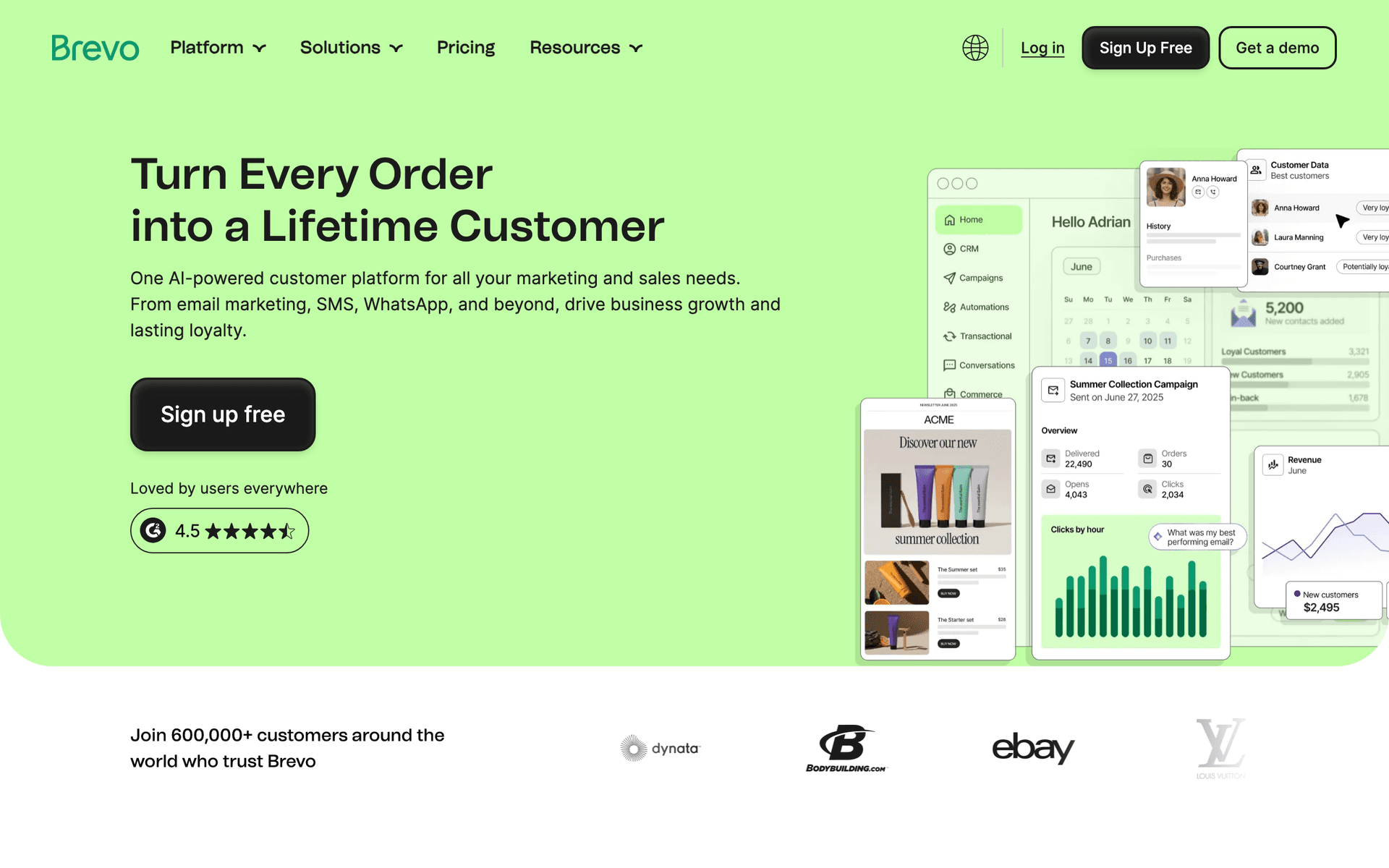
Brevo dashboard screenshot

Brevo is the most affordable option for Amazon sellers building an email list from scratch. The free plan includes 300 emails per day with unlimited contacts - you can store your entire growing list at no cost and only pay when sending volume increases. Email, SMS, and WhatsApp in one platform means you can reach subscribers however they prefer. Landing pages and signup forms help capture leads from product inserts, social media, and content marketing. For Amazon sellers who want to start email marketing without any investment while they build their list, Brevo makes it easy to begin for free and scale when ready.

Best for
Amazon sellers wanting the cheapest way to start email marketing
Pricing
Free plan (300 emails/day), then from $25/month

Pros

  • Generous free plan
  • Email, SMS, and WhatsApp
  • Landing pages included
  • Transactional email included

Cons

  • No Amazon integration
  • Not e-commerce specialized
  • Basic automation
  • No product recommendations
#6
ActiveCampaign

Advanced automation and CRM for building customer relationships.

Visit
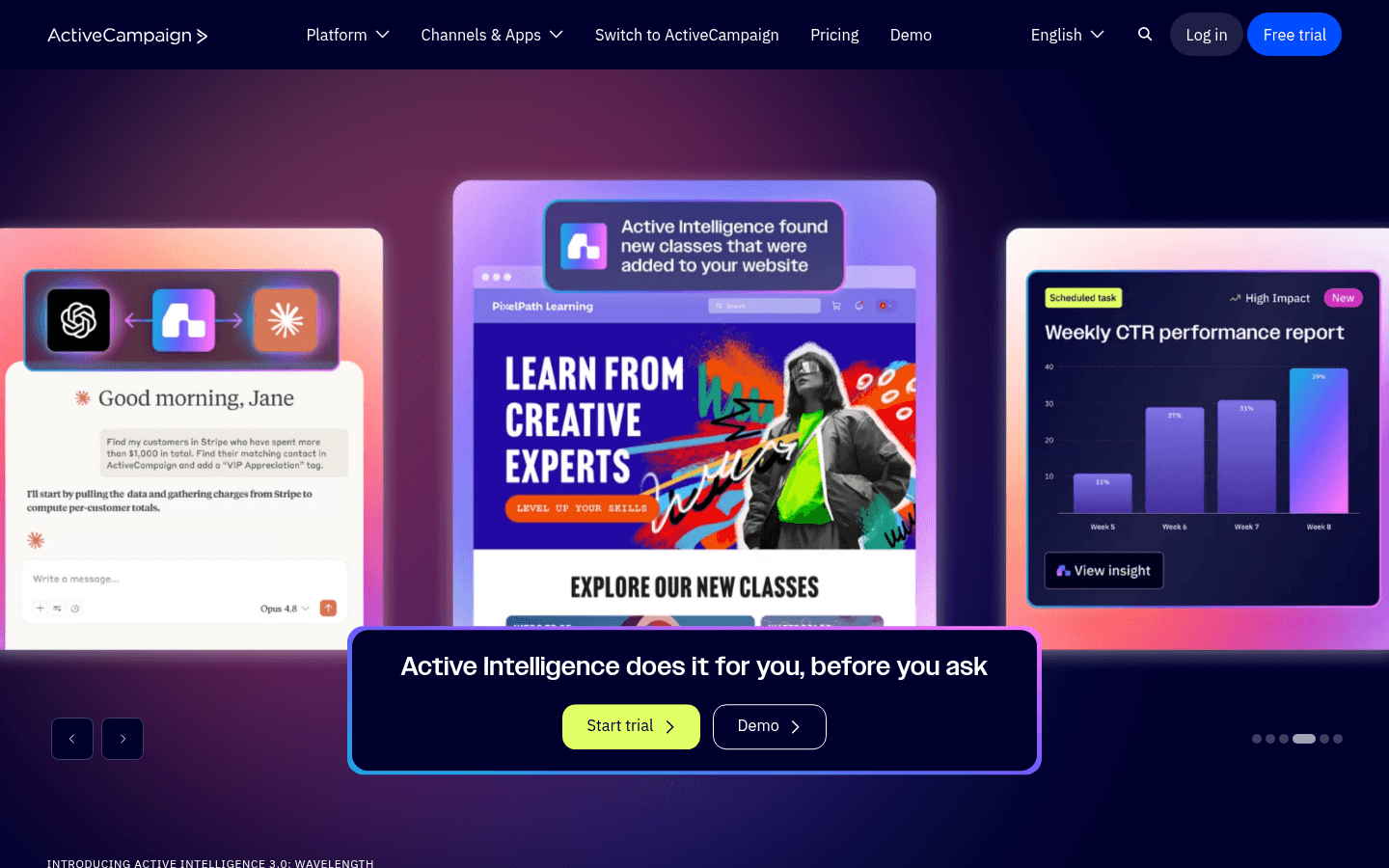
ActiveCampaign dashboard screenshot

ActiveCampaign's powerful automation builder serves Amazon sellers who want sophisticated customer journey workflows. CRM features track leads from initial capture through purchase and repeat buying. The automation capabilities are among the best available - build complex sequences with conditional logic based on subscriber behavior, purchase history, and engagement patterns. For Amazon sellers building a brand beyond Amazon with complex nurture sequences that segment subscribers by interest and buying behavior, ActiveCampaign delivers the most flexibility. The learning curve and starting price ($29/month for 1,000 contacts) make it better suited for established sellers with growing lists.

Best for
Amazon sellers building a brand with complex customer journeys
Pricing
$29/month for 1,000 contacts

Pros

  • Most powerful automation
  • CRM included
  • Excellent deliverability
  • Advanced segmentation

Cons

  • Not Amazon-specific
  • Complex interface
  • Higher price per contact
  • Steep learning curve
#7
ConvertKit

Creator-focused email for Amazon sellers building content brands.

Visit
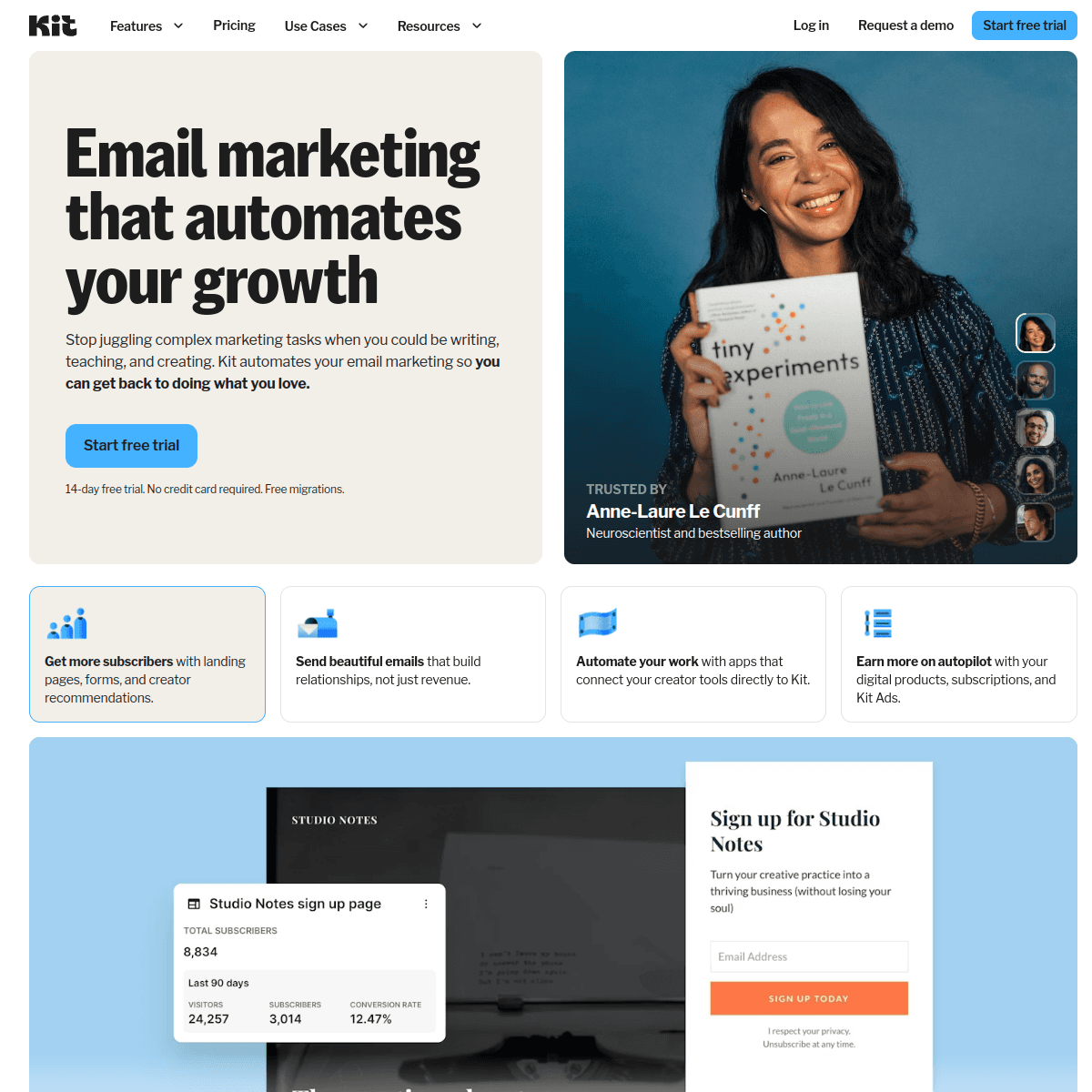
ConvertKit dashboard screenshot

ConvertKit (now Kit) works well for Amazon sellers who use content marketing to build their audience. If you run a blog, YouTube channel, or social media presence that drives traffic to Amazon products, Kit's creator tools help you capture and nurture those subscribers effectively. Landing pages and signup forms are included on the free plan for up to 10,000 subscribers - the most generous free tier on this list. The focus is on content creators rather than traditional e-commerce, so there are no product recommendation engines or revenue tracking. Best for Amazon sellers who build audience through content first, then monetize through Amazon product promotions.

Best for
Amazon sellers using content marketing to build their audience
Pricing
Free up to 10,000 subscribers, then from $25/month

Pros

  • Generous free tier (10,000 subscribers)
  • Landing pages included
  • Creator-focused tools
  • Visual automation builder

Cons

  • Not e-commerce focused
  • No product recommendations
  • Basic segmentation
  • No SMS marketing
#8
Drip

E-commerce email automation with revenue tracking.

Visit
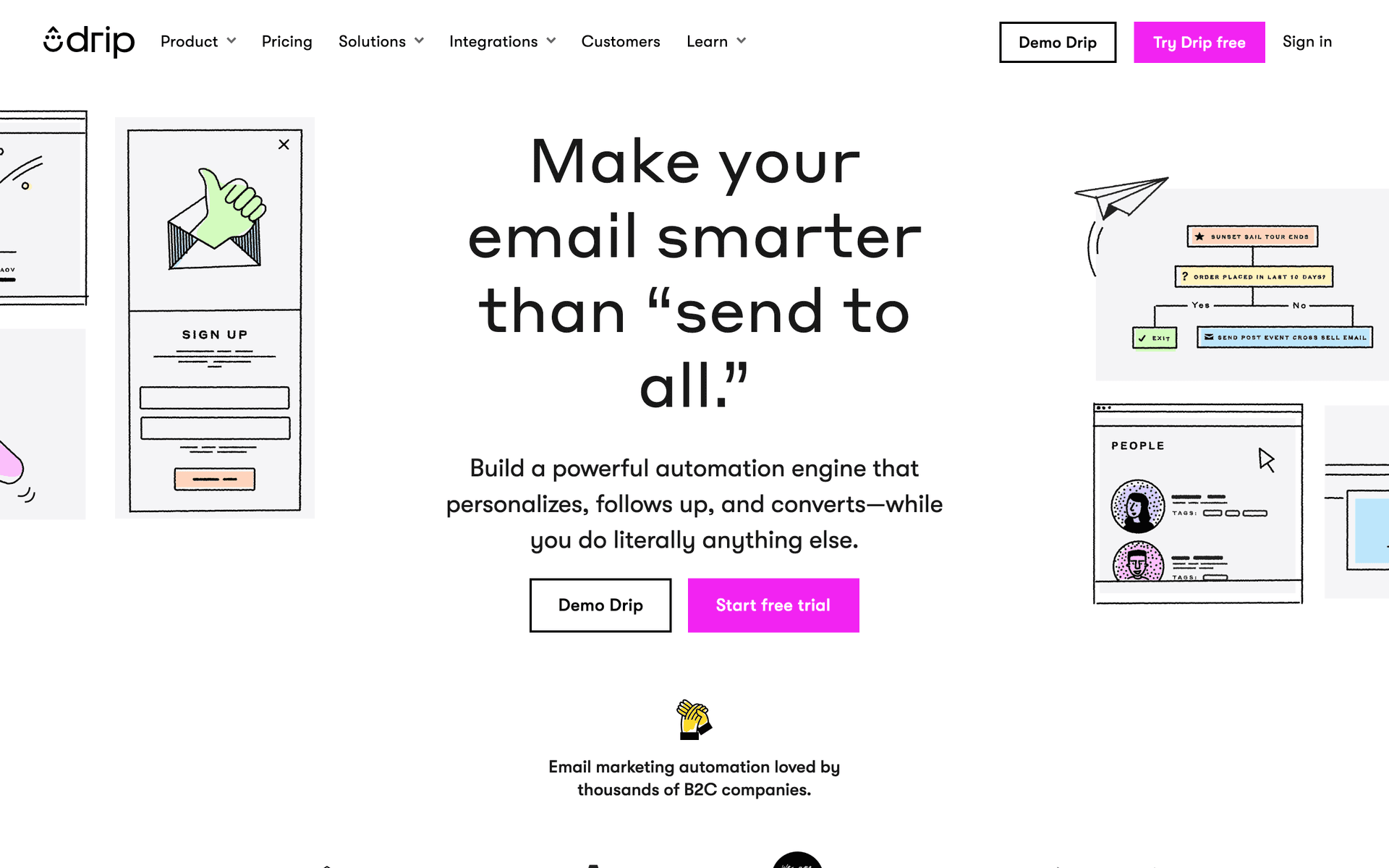
Drip dashboard screenshot

Drip works for Amazon sellers who also have a DTC store on Shopify or WooCommerce and want detailed revenue attribution. The platform tracks which emails drive sales on your own website, providing data to optimize your campaigns. E-commerce playbooks offer proven campaign strategies that you can adapt for your products. For Amazon sellers transitioning to DTC or running both channels seriously, Drip connects the DTC side while you use the insights to drive traffic to Amazon listings. The $39/month starting price and lack of a free tier make it better suited for sellers with established revenue.

Best for
Amazon sellers transitioning to DTC wanting revenue-focused automation
Pricing
$39/month for 2,500 contacts

Pros

  • Revenue attribution
  • E-commerce playbooks
  • Visual workflow builder
  • Strong Shopify integration

Cons

  • No direct Amazon integration
  • Higher starting price
  • No free tier
  • Best with a DTC store
#9
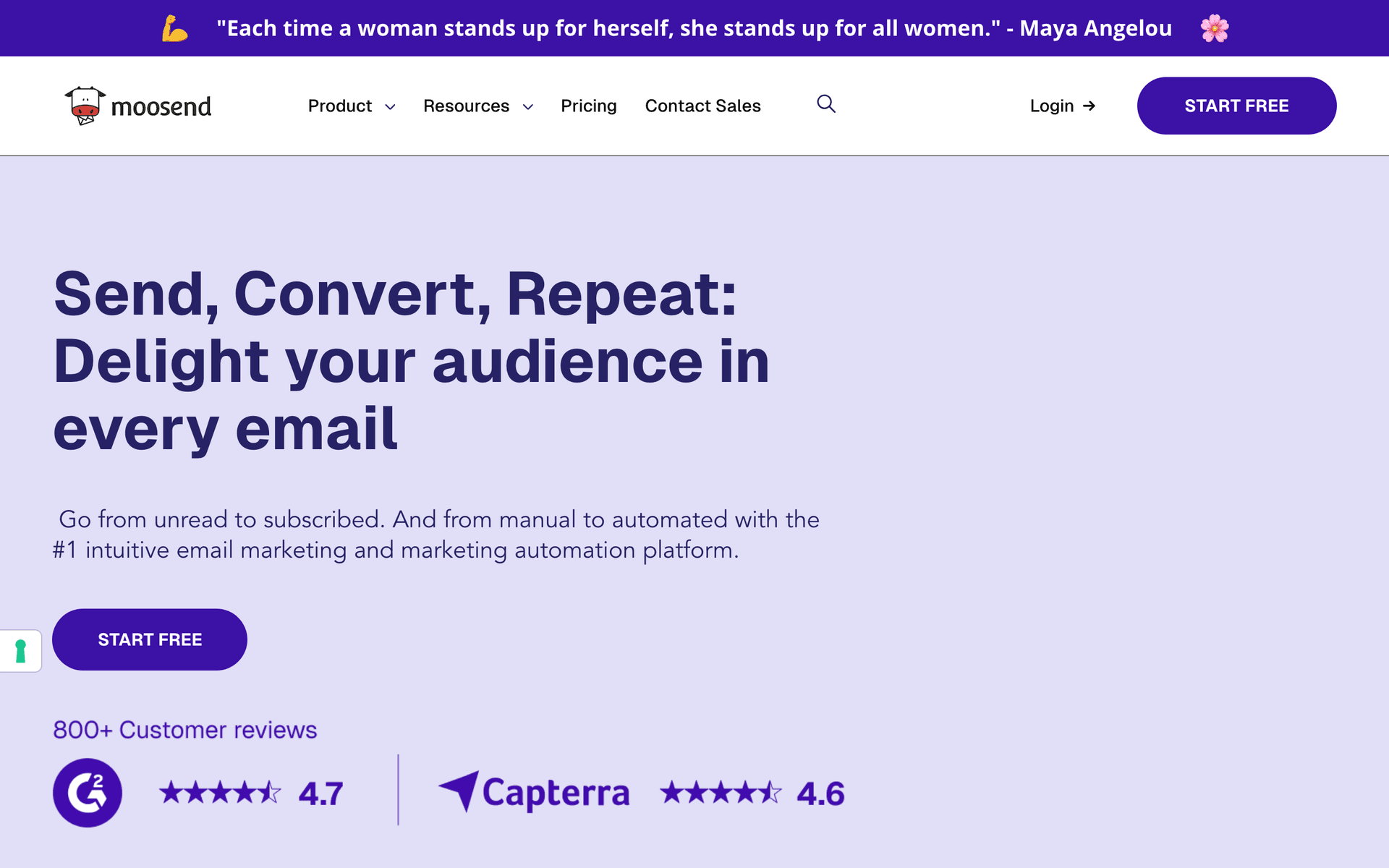
Moosend

Budget email platform with unlimited sends.

Visit
Moosend dashboard screenshot

Moosend offers unlimited email sends at every pricing tier, which appeals to Amazon sellers who send high volumes during product launches and need to maximize email touches without worrying about send limits. Landing pages are included for lead capture from product inserts and social media. The automation builder is solid with visual workflows for welcome sequences and launch campaigns. At $64/month for 10,000 subscribers with unlimited emails, the value proposition is strong for high-volume senders who run aggressive launch campaigns. The 30-day free trial lets you test before committing.

Best for
Amazon sellers wanting unlimited sends for high-volume launch campaigns
Pricing
$9/month for 500 subscribers (unlimited emails)

Pros

  • Unlimited email sends
  • Landing pages included
  • Affordable pricing
  • 30-day free trial

Cons

  • No Amazon integration
  • Basic e-commerce features
  • Smaller company
  • No product recommendations
#10
Omnisend

E-commerce email and SMS platform for multi-channel Amazon sellers.

Visit
Omnisend dashboard screenshot

Omnisend fits Amazon sellers who also sell on their own website or other marketplaces. Its e-commerce automations - cart recovery, browse abandonment, welcome series - work well for the DTC side, while email and SMS together let you reach subscribers through multiple touchpoints. For Amazon sellers driving external traffic to their listings, Omnisend's landing page and popup tools help capture those visitors as email subscribers. The free tier (up to 250 contacts) is enough to start building your off-Amazon list while testing campaigns before committing to a paid plan.

Best for
Amazon sellers with a DTC store wanting email and SMS combined
Pricing
Free up to 250 contacts, then from $16/month

Pros

  • Email and SMS in one platform
  • Pre-built e-commerce automations
  • Landing pages for list building
  • Free tier available

Cons

  • No direct Amazon integration
  • Contact-based pricing
  • Best features require higher tiers
  • Limited for Amazon-only sellers
#11
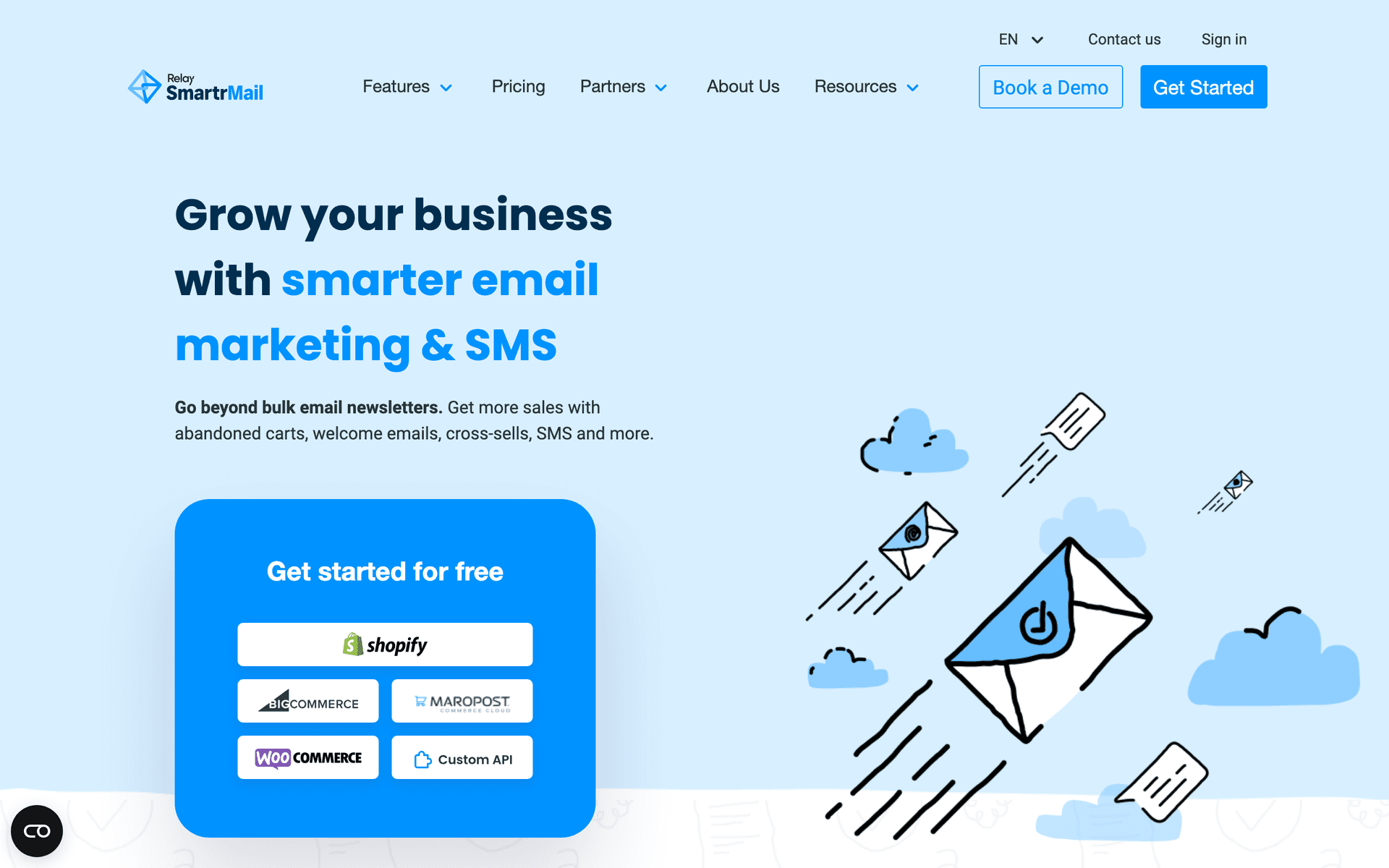
SmartrMail

AI product recommendation email for e-commerce sellers.

Visit
SmartrMail dashboard screenshot

SmartrMail focuses on AI-powered product recommendation emails, which is most useful for Amazon sellers who also run a Shopify or WooCommerce store alongside Amazon. The AI analyzes purchase history to suggest related products in automated emails. For Amazon sellers who have built an off-Amazon DTC catalog, SmartrMail helps convert email subscribers into repeat buyers by surfacing relevant products automatically. Newsletter creation is also streamlined with a smart product picker that pulls items from your catalog.

Best for
Amazon sellers with a DTC catalog wanting AI product recommendations
Pricing
From $19/month

Pros

  • AI product recommendations
  • Shopify and WooCommerce integration
  • Smart newsletter builder
  • Easy setup

Cons

  • No direct Amazon integration
  • Less useful for Amazon-only sellers
  • Smaller feature set
  • No SMS
#12
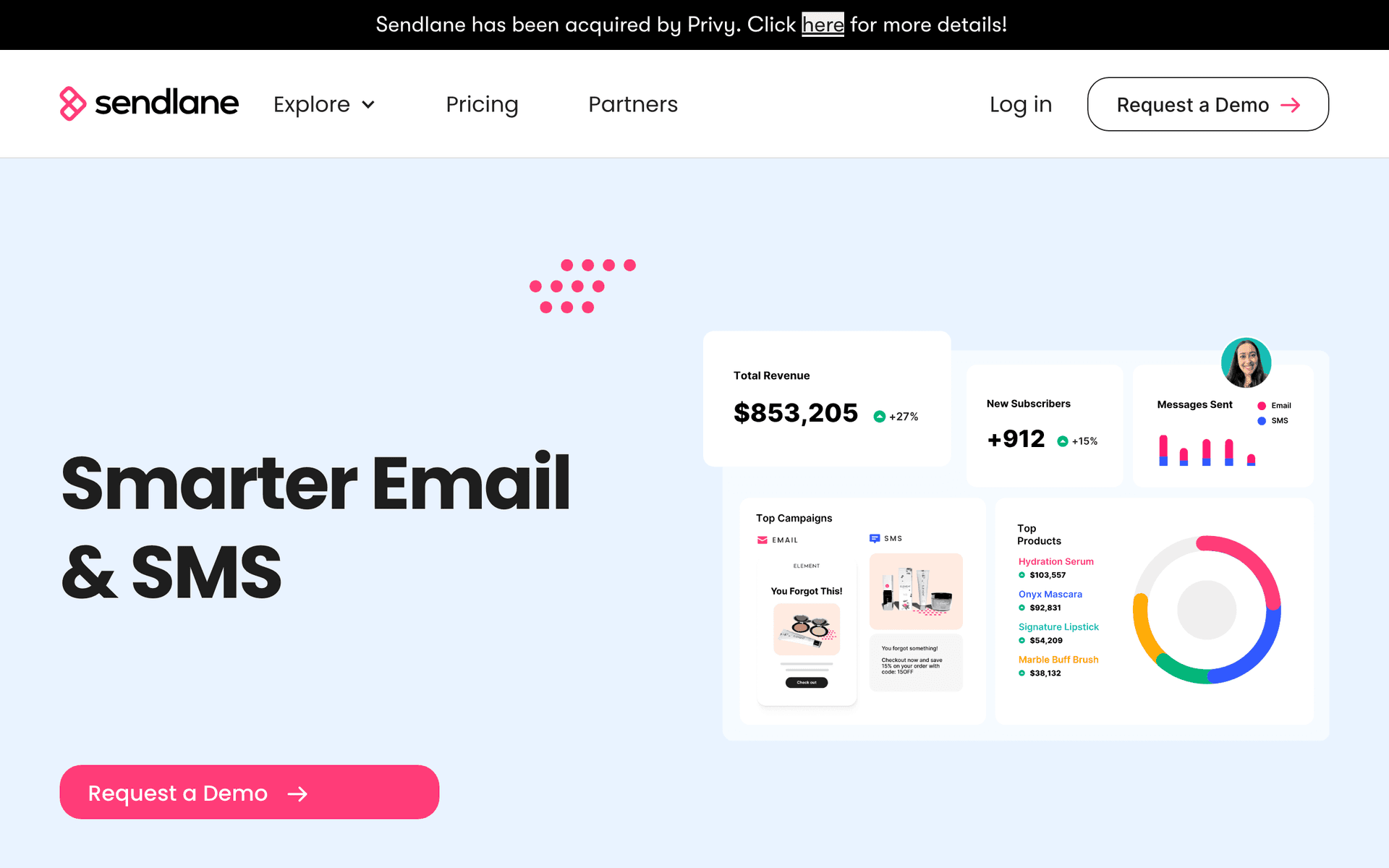
Sendlane

E-commerce email and SMS with deep data analytics.

Visit
Sendlane dashboard screenshot

Sendlane is built specifically for e-commerce with deep revenue analytics and behavioral targeting. For Amazon sellers who have a DTC store alongside Amazon, Sendlane tracks revenue attributed to each email so you know exactly which campaigns drive the most off-Amazon purchases. The real-time event tracking captures browse behavior and purchase signals for highly targeted follow-up. Email and SMS together let you reach your audience through whichever channel converts best. The pricing positions it as a premium option, but the revenue tracking justifies it for sellers generating significant DTC revenue.

Best for
Amazon sellers with high-volume DTC revenue wanting detailed attribution
Pricing
From $99/month

Pros

  • Deep revenue attribution
  • Real-time behavioral tracking
  • Email and SMS combined
  • Built for e-commerce

Cons

  • Higher starting price
  • No direct Amazon integration
  • Overkill for smaller sellers
  • No free tier
#13
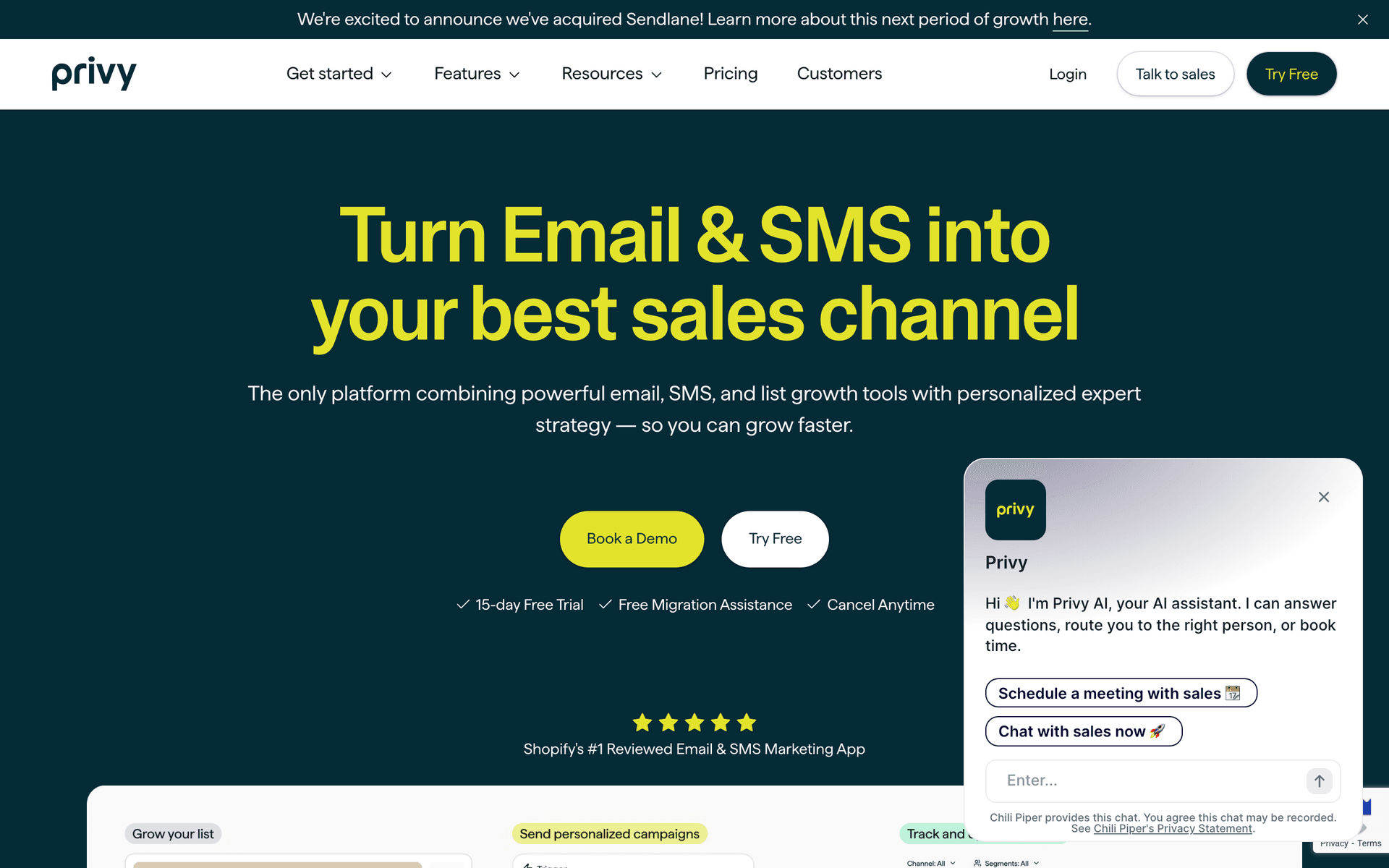
Privy

Conversion optimization and email for Shopify Amazon sellers.

Visit
Privy dashboard screenshot

Privy is best for Amazon sellers who also run a Shopify store and want to aggressively capture email subscribers from their website traffic. The platform specializes in popups, flyouts, and spin-to-win forms that convert website visitors into email subscribers - exactly the on-site lead capture that Amazon sellers need to build their off-Amazon list. Email automations handle welcome series and post-purchase sequences once you capture subscribers. For Amazon sellers who are actively driving traffic to their own website alongside Amazon, Privy's conversion tools can significantly grow the email list faster.

Best for
Amazon sellers using Shopify who want aggressive list growth tools
Pricing
Free up to 100 contacts, then from $30/month

Pros

  • Best-in-class popups and signup forms
  • Shopify-native integration
  • Drives rapid list growth
  • Easy to set up

Cons

  • Limited advanced automation
  • Shopify-only effectively
  • Contact-based pricing
  • Not suited for Amazon-only sellers
#14
EmailOctopus

Low-cost email for Amazon sellers building an off-Amazon audience.

Visit
EmailOctopus dashboard screenshot

EmailOctopus is the most affordable full-featured option for Amazon sellers building their first off-Amazon email list. The free plan supports 2,500 subscribers with 10,000 emails per month, which is among the most generous free tiers available. For Amazon sellers who are just starting to build a list and want to test email marketing without any financial commitment, EmailOctopus provides basic automations, landing pages, and a clean email builder at no cost. The feature set is more limited than Klaviyo or Omnisend, but for basic welcome sequences and product launch announcements it gets the job done affordably.

Best for
Amazon sellers starting email marketing with minimal budget
Pricing
Free up to 2,500 subscribers, then from $9/month

Pros

  • Very generous free tier
  • Simple interface
  • Landing pages included
  • Affordable paid plans

Cons

  • Basic automation
  • Limited segmentation
  • No e-commerce integrations
  • Minimal advanced features
#15
Sender

Affordable email and SMS with unlimited contacts.

Visit
Sender dashboard screenshot

Sender offers one of the most generous free tiers for Amazon sellers with unlimited contacts and 15,000 emails per month at no cost. For Amazon sellers who have built a large list through product inserts and social media but want to keep email costs minimal, Sender's pricing model rewards large lists since contacts are free. Email and SMS together cover both channels from a single platform. Automation handles welcome sequences and product launch series with a visual builder. The feature set is simpler than Klaviyo but covers what most Amazon sellers building an off-Amazon audience need.

Best for
Amazon sellers with large lists who want to minimize per-contact costs
Pricing
Free up to 15,000 emails/month, then from $15/month

Pros

  • Unlimited contacts on free plan
  • Email and SMS included
  • Visual automation builder
  • Affordable at scale

Cons

  • No Amazon integration
  • Basic e-commerce features
  • Limited analytics
  • No AI features
#16
MailerLite

Clean email with landing pages and generous free tier.

Visit
MailerLite dashboard screenshot

MailerLite works well for Amazon sellers who use content marketing alongside their Amazon business. The platform excels at newsletter-style campaigns and landing page creation - both critical for Amazon sellers building an off-Amazon audience. The free tier covers 1,000 subscribers with 12,000 monthly emails, which is enough for sellers just starting out. Landing pages help capture subscribers from product inserts, social media, and content marketing. The automation is straightforward with visual workflows for welcome series and launch sequences. Not e-commerce-specialized, but the clean interface makes it quick to learn and deploy.

Best for
Amazon sellers using content marketing to build their audience
Pricing
Free up to 1,000 subscribers, then from $10/month

Pros

  • Generous free tier
  • Strong landing page builder
  • Clean email editor
  • Easy automation

Cons

  • No Amazon integration
  • Not e-commerce specialized
  • Basic segmentation
  • No revenue tracking
#17
GetResponse

All-in-one email with landing pages, webinars, and automation.

Visit
GetResponse dashboard screenshot

GetResponse is a comprehensive marketing platform that Amazon sellers who also sell DTC will find useful. The landing page builder is excellent - important for capturing off-Amazon leads from product inserts and ads. Webinars are a differentiator for Amazon sellers in educational niches who use content to build their audience. Email automation handles multi-step sequences for product launches and nurture campaigns. The e-commerce integrations connect to Shopify and WooCommerce for DTC sellers. At around $19/month for 1,000 contacts, it is competitively priced and offers more all-in-one functionality than most other options.

Best for
Amazon sellers running content-driven list building with landing pages
Pricing
From $19/month for 1,000 contacts

Pros

  • Excellent landing page builder
  • Built-in webinars
  • Good automation
  • Shopify integration

Cons

  • No Amazon integration
  • Interface can feel dated
  • Contact-based pricing
  • Webinar feature not relevant to all sellers
#18
Attentive

SMS-first platform for Amazon sellers driving launch urgency.

Visit
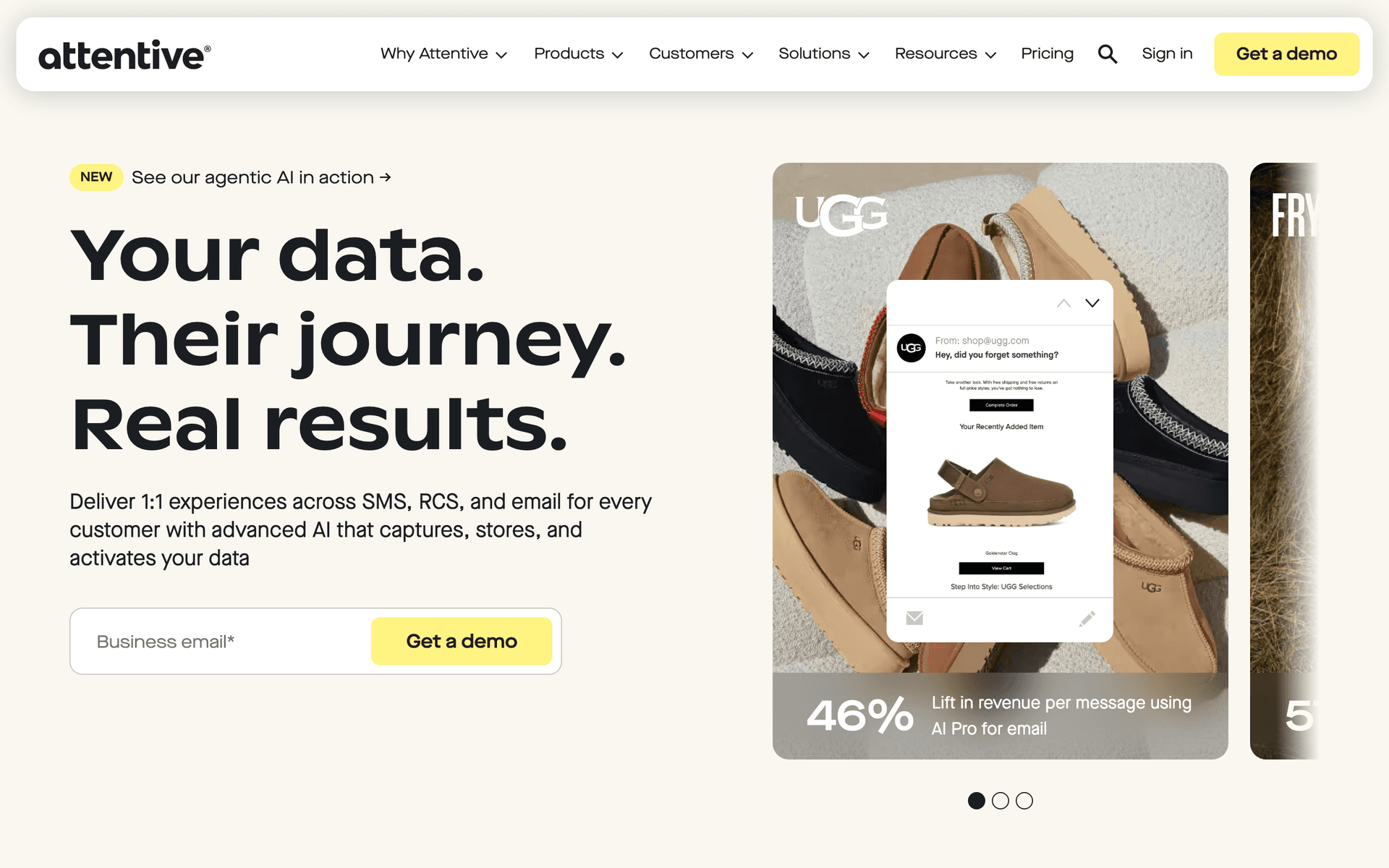
Attentive dashboard screenshot

Attentive is primarily an SMS platform with email capabilities, making it best for Amazon sellers who want to use text messages to drive product launch urgency. SMS open rates above 90% make it uniquely effective for time-sensitive launch announcements where you need immediate action from your subscribers. For Amazon sellers who have built a phone number list alongside their email list, Attentive creates highly personalized SMS flows triggered by subscriber behavior. The pricing is higher than email-first platforms, but SMS subscribers typically convert at higher rates for urgency-driven launches.

Best for
Amazon sellers who want SMS as their primary launch alert channel
Pricing
Custom pricing, typically from $500/month

Pros

  • Best-in-class SMS platform
  • High open and conversion rates
  • Behavioral targeting
  • Strong for urgent launches

Cons

  • Expensive for most Amazon sellers
  • SMS list building required
  • Email secondary to SMS
  • No Amazon integration
#19
Klaviyo (SMS Add-on)

Klaviyo SMS bundled with email for complete Amazon seller campaigns.

Visit
Klaviyo (SMS Add-on) dashboard screenshot

Adding Klaviyo's SMS to your email plan creates a powerful two-channel approach for Amazon sellers using external traffic strategies. When you send a product launch email, you can simultaneously trigger an SMS to your phone-number subscribers - doubling your reach at critical moments. For Amazon Attribution campaigns where you need maximum traffic to a listing during the launch window, coordinated email and SMS campaigns driven from one platform creates the highest possible velocity. Klaviyo tracks revenue from both email and SMS so you can measure combined ROI on your Amazon external traffic investment.

Best for
Amazon sellers wanting coordinated email and SMS product launches
Pricing
Email from $20/month + SMS credits

Pros

  • Coordinated email and SMS campaigns
  • Revenue tracking across both channels
  • Unified subscriber profiles
  • Best for launch velocity campaigns

Cons

  • SMS adds cost on top of email
  • Still no direct Amazon integration
  • Expensive at scale
  • Complex setup for newcomers

Feature Comparison

FeatureKlaviyoMailchimpSequenzyBrevo
Landing pages
Yes
Yes
No
Yes
SMS marketing
Yes
Yes
No
Yes
AI sequences
No
No
Yes
No
Automation builder
Advanced
Basic
AI-powered
Basic
Free tier available
Yes
Yes
Yes
Yes
Transactional email
No
Paid add-on
Yes
Yes
E-commerce focus
Strong
Basic
Basic
Basic
Unlimited emails
No
No
No
No

Common Mistakes to Avoid

We see these mistakes over and over. Skip the learning curve and avoid these from day one.

Trying to email Amazon buyers directly

Amazon does not share buyer email addresses and restricts seller-to-buyer marketing. Your email list must be built independently through landing pages, product inserts, social media, and content marketing. Do not try to extract or purchase Amazon buyer emails.

Sending only promotional emails

A list that only receives 'buy this product' emails loses subscribers fast. Mix in valuable content like product care guides, tips related to your niche, and brand stories. The ratio should be 2-3 value emails for every 1 promotional email.

Ignoring email authentication setup

If your emails land in spam, your entire off-Amazon strategy fails. Set up SPF, DKIM, and DMARC records before sending your first campaign. Use tools like our SPF checker and DMARC checker to verify your configuration.

Not using Attribution links

Without Amazon Attribution links, you cannot measure which emails drive Amazon sales. Every link to an Amazon listing in your emails should use Attribution tags so you can track conversion and optimize your campaigns.

Waiting too long to build your list

Start building your email list from day one, even before you have a clear email strategy. Every day without list building is potential subscribers lost. A product insert in your very first shipment starts the process.

Email Sequences Every Amazon Seller Needs

These are the essential automated email sequences that will help you grow your business and keep clients coming back.

Amazon Product Launch

New product listed

Drive initial sales velocity for a new Amazon listing.

Day 1
We just launched something new

Announce the new product to your email list. Include product photos and key benefits. Link to the Amazon listing with attribution tags.

Day 3
Early reviews are coming in

Share early feedback or use cases. Include social proof from beta testers if available. Remind subscribers about the product with a direct Amazon link.

Day 7
Launch week special ending soon

Create urgency around any launch pricing or bonuses. Include customer testimonials. Final push for launch-period purchases.

Off-Amazon List Building

Lead captured from content, social media, or product insert

Nurture new subscribers and prepare them for future product promotions.

Immediately
Welcome to the [Brand] community

Thank them for joining. Deliver any promised lead magnet (guide, discount, etc.). Introduce your brand story and what they can expect from your emails.

Day 3
Why we started [Brand]

Brand story and mission. Build emotional connection. Mention your Amazon products naturally without hard selling.

Day 7
Our most popular products

Showcase bestselling Amazon products with reviews and ratings. Include Amazon links with attribution tags. Position as helpful recommendations.

Post-Purchase Follow-Up (for DTC + Amazon hybrid)

Purchase on DTC website

Follow up with DTC customers and introduce Amazon products.

Day 3
How is your order?

Check in on their purchase experience. Provide helpful tips for using the product.

Day 10
Quick favor?

Ask for a product review on your website. Include a direct review link.

Day 21
You might also like these

Recommend complementary products. Include both DTC website and Amazon links for flexibility.

Email Marketing for Amazon Sellers

Amazon sellers operate under unique constraints. You do not get customer email addresses, you cannot market directly to buyers, and Amazon controls the entire customer relationship. But email marketing is still one of the most powerful tools for growing an Amazon business.

How Amazon sellers use email differently:

  1. Building off-Amazon audiences. Instead of emailing past customers (like a Shopify store would), Amazon sellers build email lists through content marketing, social media, product inserts, and landing pages. The list is yours to own and control independently of Amazon.
  2. Product launches. An email list gives you a built-in audience to drive early sales when you launch new products. This initial velocity signals to Amazon's algorithm that the product is worth ranking. A list of 5,000 subscribers can generate enough first-day sales to push a new listing onto page one.
  3. External traffic with attribution. Amazon rewards listings that receive external traffic. Email campaigns that send subscribers to Amazon with Attribution links can improve your organic ranking and provide data on which campaigns convert best.

The Product Insert Strategy

Product inserts are the most effective list-building tool for Amazon sellers because they reach people who already bought from you. Here is how to do it well:

Design a card that fits naturally in your packaging. Include your brand story briefly, then offer something valuable in exchange for their email - a warranty registration, care guide, bonus content, or entry into a giveaway.

Use a QR code that links to a mobile-optimized landing page. The page should deliver on the promise immediately and collect only an email address (and optionally a first name). Do not ask for too much information.

Follow up immediately with a welcome sequence that delivers the promised value, tells your brand story, and eventually introduces your other Amazon products.

Building a Launch Sequence

Product launches on Amazon live or die by first-week sales velocity. A well-built email launch sequence creates that velocity from your own audience.

Pre-launch (7 days before): Tease the new product to your list. Build anticipation without revealing everything. Ask for feedback on features or colors to create engagement.

Launch day: Send the announcement with high-quality product photos, key benefits, and a direct Amazon link with Attribution tags. Consider offering an exclusive launch price to your email list.

Mid-launch (day 3-4): Share early reviews or customer reactions. Social proof drives fence-sitters to purchase. Remind them about any launch-period pricing.

Close (day 7): Final email emphasizing urgency if any launch pricing or bonuses are ending. Include a summary of reviews and benefits.

What to Prioritize When Choosing a Tool

  • Landing pages for capturing off-Amazon subscribers from product inserts and social media
  • Automation for welcome sequences, launch campaigns, and nurture series
  • Easy campaign builder since you are running a business, not becoming an email expert
  • Affordable pricing since email is one of many Amazon business expenses
  • Deliverability because if your emails land in spam, your entire off-Amazon strategy fails

The Amazon Email Marketing Stack

For most Amazon sellers, the setup is straightforward. Pick an email tool. Build landing pages to capture subscribers from product inserts and social media. Create a welcome sequence that builds brand connection. Then use the list for product launches, brand building, and eventually transitioning to DTC sales.

Check your deliverability setup with our SPF checker and DMARC checker before sending campaigns. If your emails land in spam, your entire off-Amazon strategy falls apart.

How We Evaluated These Tools

I evaluated these 19 tools based on their suitability for the Amazon seller use case - specifically landing page creation for list building, automation for launch sequences, pricing at typical Amazon seller volumes, and compatibility with Amazon Attribution tracking. Each tool was assessed for how well it supports the off-Amazon audience building strategy.

Frequently Asked Questions

Ready to grow your amazon seller practice?

Start your free trial today. Set up your first email sequence in minutes with AI-powered content generation.

Related Industries

Sequenzy - Complete Pricing Guide

Pricing Model

Sequenzy uses email-volume-based pricing. You only pay for emails you send. Unlimited contacts on all plans — storing subscribers is always free.

All Pricing Tiers

  • 2.5k emails/month: Free (Free annually)
  • 15k emails/month: $19/month ($205/year annually)
  • 60k emails/month: $29/month ($313/year annually)
  • 120k emails/month: $49/month ($529/year annually)
  • 300k emails/month: $99/month ($1069/year annually)
  • 600k emails/month: $199/month ($2149/year annually)
  • 1.2M emails/month: $349/month ($3769/year annually)
  • Unlimited emails/month: Custom pricing (Custom annually)

Yearly billing: All plans offer a 10% discount when billed annually.

Free Plan Features (2,500 emails/month)

  • Visual automation builder
  • Transactional email API
  • Reply tracking & team inbox
  • Goal tracking & revenue attribution
  • Dynamic segments
  • Payment integrations
  • Full REST API access
  • Custom sending domain

Paid Plan Features (15k - 1.2M emails/month)

  • Visual automation builder
  • Transactional email API
  • Reply tracking & team inbox
  • Goal tracking & revenue attribution
  • Dynamic segments
  • Payment integrations (Stripe, Paddle, Lemon Squeezy)
  • Full REST API access
  • Custom sending domain

Enterprise Plan Features (Unlimited emails)

  • Visual automation builder
  • Transactional email API
  • Reply tracking & team inbox
  • Goal tracking & revenue attribution
  • Dynamic segments
  • Payment integrations
  • Full REST API access
  • Custom sending domain

Important Pricing Notes

  • You only pay for emails you send — unlimited contacts on all plans
  • No hidden fees - all features included in the price
  • No credit card required for free tier

Contact

  • Pricing Page: https://sequenzy.com/pricing
  • Sales: hello@sequenzy.com