

Overview
Cloudflare Email Service and Mailtrap target different parts of the email development lifecycle. Cloudflare is a Workers-native production sending pipe. Mailtrap pairs an email testing sandbox (since 2014) with production sending (since 2022) in one dashboard.
The Sandbox Difference
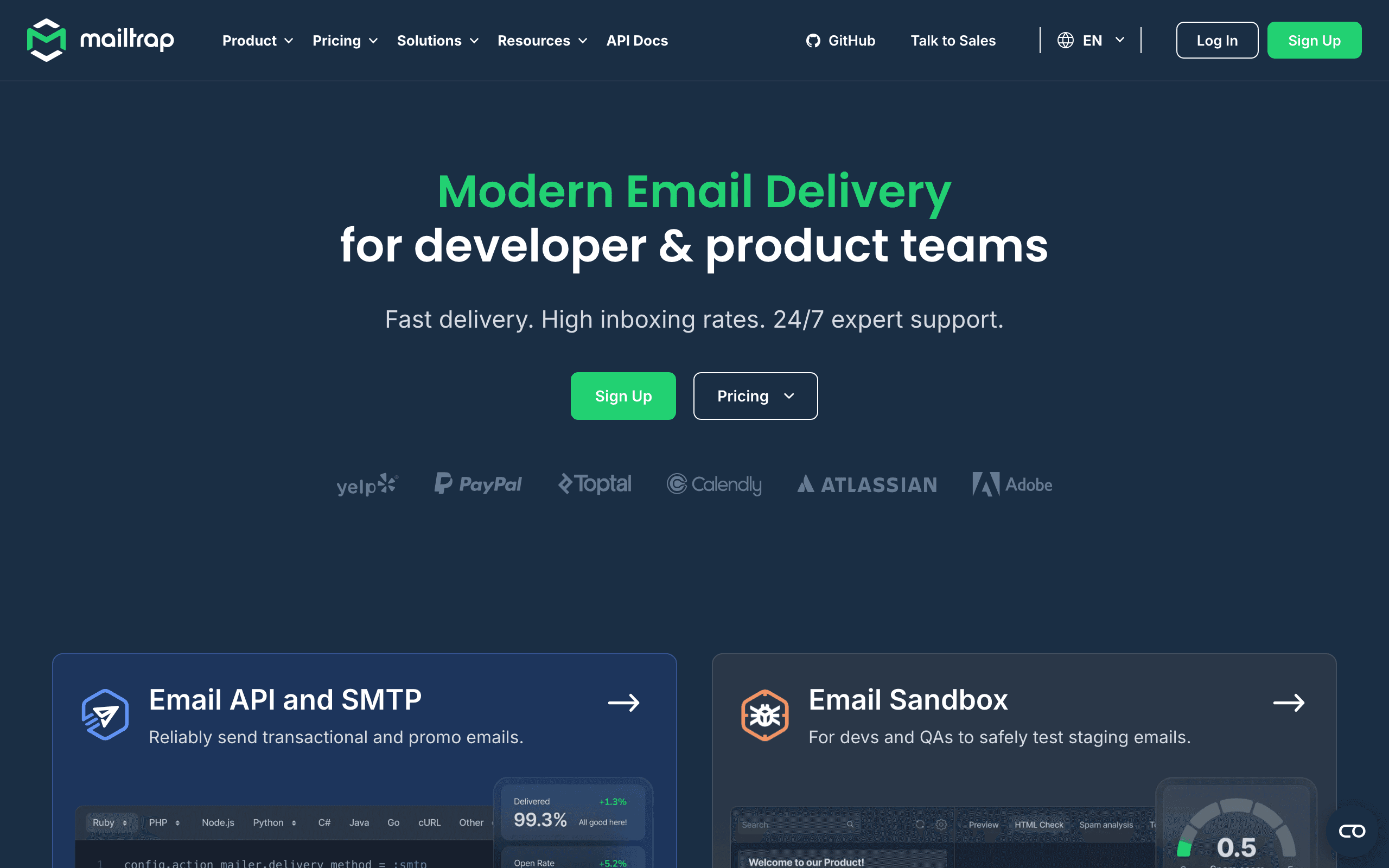
Mailtrap's signature feature is the testing sandbox. Emails sent from dev/staging environments are captured in a virtual inbox instead of being delivered. You get HTML preview, spam score, link checks, and team sharing - all without risk of accidentally emailing real users.
Cloudflare Email has no sandbox concept. To prevent dev sends from reaching production users, you build environment-aware routing in your code. This is fine but adds work.
For development teams that have been burned by accidental production sends (database refresh, staging deploy with prod credentials, test loop running away), Mailtrap's sandbox is hard to beat.
Workers Integration
Cloudflare's send_email binding is genuinely the cleanest DX inside Workers. No API keys, in-process call, edge co-location. Mailtrap works fine from Workers via REST but doesn't have a binding.
Pricing reality
Basically tied. At 100k emails/mo, Cloudflare is ~$39 (Workers Paid + sending) vs Mailtrap Business at $40. The decision isn't about price - it's about which feature set you value.
Review signals
The existing reviews show the decision clearly. Cloudflare Email is praised for Workers production sending, while the reviewer still uses Mailtrap for staging because Cloudflare does not catch dev sends. Mailtrap is praised on G2 for preventing a large accidental test-email blast.
Use reviews to judge development safety, not just production price. If the team has real staging/prod email risk, Mailtrap's sandbox may matter more than the small pricing difference.
Use-case matchups
| Use case | Better fit | What to verify |
|---|---|---|
| Workers-native production sending | Cloudflare Email | Confirm beta status, Workers binding, recipient caps, DNS automation, and edge deployment model. |
| Safe dev and staging email testing | Mailtrap | Verify sandbox inboxes, HTML preview, spam checks, link checks, and environment separation. |
| Inbound email routing | Cloudflare Email | Cloudflare Email Routing and Workers matter if inbound processing is part of the app. |
| Unified dev-to-prod email workflow | Mailtrap | Mailtrap is stronger when the same team owns testing and production delivery. |
| SaaS marketing plus transactional email | Sequenzy | Neither Cloudflare nor Mailtrap is a marketing automation platform. |
Best Fit by Production Runtime and Email QA
Best production email service for Workers-native apps
Choose Cloudflare Email when production sending happens inside Workers and the team values a native binding, Cloudflare DNS automation, low-cost outbound delivery, and inbound Email Routing. It is the cleaner fit when dev/staging safeguards are already handled in application code.
Best email testing platform for development and staging safety
Choose Mailtrap when the team needs sandbox inboxes, previews, spam checks, link checks, HTML debugging, and environment separation before production. It is stronger when accidental test sends, broken templates, or QA collaboration are more painful than adding another provider API.
Best SaaS email platform for campaigns and transactionals
Choose Sequenzy when transactional sending is only one part of the email program. SaaS teams that need lifecycle campaigns, newsletters, billing-triggered messages, and transactional email together will need more than Cloudflare's sending layer or Mailtrap's QA workflow.
Migration checklist
| Step | What to confirm |
|---|---|
| Domain setup | Reverify domains, SPF, DKIM, DMARC, return-path, tracking links, and Cloudflare DNS ownership. |
| Environment routing | Rebuild dev, staging, preview, and production email behavior so test sends cannot reach real users. |
| API integration | Replace Workers bindings, REST calls, SMTP credentials, SDKs, retries, idempotency, and error handling. |
| Templates and previews | Preserve HTML, text fallbacks, variables, attachment handling, previews, spam checks, and link tests. |
| Events and logs | Rebuild delivery, bounce, complaint, open, click, webhook, dashboard, and alerting workflows. |
| Rollout | Move low-risk templates first, then password resets, receipts, billing notices, and other critical transactional paths. |
Decision checklist
| Question | Why it matters |
|---|---|
| Do you need a dev/staging sandbox? | Mailtrap's core advantage is preventing test emails from reaching real users. |
| Is production sending from Workers the only need? | Cloudflare is cleaner when testing is handled elsewhere. |
| Can your app enforce environment routing? | Without Mailtrap, dev/prod separation becomes your responsibility. |
| Do you need inbound email? | Cloudflare Email Routing wins if inbound forwarding or Workers processing matters. |
| Is Sequenzy enough? | SaaS teams needing marketing and transactional together need more than either infrastructure tool. |
Inbound Email
Cloudflare Email Routing is free for inbound forwarding and integrates cleanly with Email Workers. Mailtrap is outbound-only. If you need inbound, Cloudflare wins by default.
When Each Wins
Cloudflare Email wins for Workers-native apps where production sending is the primary need and you handle dev/test routing yourself.
Mailtrap wins for development teams that value the unified test-to-production pipeline and want sandbox protection built in.
The Marketing Gap
Neither product offers real marketing features. For SaaS teams that need both, Sequenzy is a unified alternative with Stripe integration and AI sequence generation.









