
24 Best Affordable Email Marketing Tools in 2026 (Honest Comparison)

What is the cheapest email marketing software?
At the entry tier, Zoho Campaigns ($4/mo) and Selzy ($7/mo) are the cheapest paid plans, and Sender, EmailOctopus and Beehiiv have the most generous free plans at 2,500 subscribers. But entry price is the wrong number: judge the bill at 5,000-10,000 subscribers, where EmailOctopus, Brevo, Zoho, Flodesk and Sequenzy stay cheap and Mailchimp, ActiveCampaign and Constant Contact do not.
Prices verified September 2026 against each vendor's public pricing page.
TL;DR
Short on time? Here is the verdict:
- Best overall value: Sequenzy - $19/month for transactional + marketing email in one tool, with AI sequence generation and a native Shopify integration built in. The strongest all-round value whether you are running an online store, newsletters, or lifecycle email.
- Cheapest that stays cheap at scale: EmailOctopus and Brevo - still affordable at 10,000 subscribers, where most "cheap" tools spike.
- Best free plans: Sender (2,500 subs, automation included), EmailOctopus (2,500 subs), and Beehiiv (2,500 subs for newsletters). Note: MailerLite's free plan dropped to 250 subscribers in 2026, so it is no longer a standout.
- Absolute lowest entry price: Zoho Campaigns at $4/month (if you are on Zoho), Selzy at $7/month standalone, or Substack (free until you charge readers).
- Cheapest at a big list: Flodesk ($38/month flat, unlimited subscribers), Sequenzy (flat tiers, all features included), and Brevo (volume pricing for large lists you email rarely).
- The trap to avoid: Mailchimp, ActiveCampaign, and Constant Contact look cheap at 500 contacts but leave the affordable bracket entirely by 5,000.
The single most important rule: judge the price at 5,000 to 10,000 subscribers, not the entry tier. The "What affordable tools actually cost at scale" table further down is where the real decision is made.
The full breakdown of all 24 tools, free tiers, and pricing models follows below.
"Affordable" is the most abused word in email marketing. Almost every platform claims a low starting price, then quietly triples it the moment your list grows past a few hundred contacts. The headline number gets you in the door. The bill at 5,000 or 10,000 subscribers is what you actually live with.
So I did the unglamorous work: I looked at 24 of the most affordable email marketing tools in 2026 and answered three practical questions for each one. What does it cost to start? What do you actually get at that price? And what happens to the bill when your list grows? No marketing spin, no pretending every tool is great at everything.
If you only want free options, read our guide to free email marketing tools instead. If you want a hard ceiling, see best email marketing tools under $50/month. This guide is broader: it covers genuinely cheap tools, generous free tiers, flat-rate plans, and lifetime deals, with an honest read on where each one fits.
What "affordable" actually means
Before the list, three things that separate a tool that is cheap from a tool that is good value:
- Price at scale, not entry price. A $9/month plan that becomes $90/month at 10,000 contacts is not affordable. It is a trap with a nice front door.
- What is gated. The advertised price often buys the stripped tier. Automation, A/B testing, removing branding, and custom domains frequently sit one plan up.
- The pricing model. Contact-based, volume-based, and flat-rate pricing reward completely different usage patterns. The "cheapest" tool depends entirely on whether you have a big list you rarely email or a small list you email daily.
Keep those three in mind as you read. Now the tools.
Quick comparison table
| Tool | Best for | Starting price | Free tier | Standout |
|---|---|---|---|---|
| Sequenzy | SaaS lifecycle + transactional | $19/mo | Yes (2.5k emails/mo) | Stripe + transactional + marketing in one |
| Brevo | Email + SMS on a budget | $9/mo | Yes (300/day) | Volume-based pricing, multi-channel |
| MailerLite | Landing pages + email | $12/mo | Yes (250 subs) | Built-in landing pages and websites |
| EmailOctopus | Cheap simple newsletters | $10/mo | Yes (2.5k subs) | Low price all the way to 10k subs |
| Mailchimp | Most integrations | $13/mo | Yes (500 contacts) | Largest integration ecosystem |
| Kit (formerly ConvertKit) | Creators selling products | $39/mo | Yes (10k subs) | Built-in digital product sales |
| ActiveCampaign | Advanced automation | $15/mo | No (14-day trial) | Deep visual automation builder |
| Moosend | Cheap automation | $9/mo | No (30-day trial) | Real automation at a low price |
| Omnisend | Small e-commerce | $16/mo | Yes (250 contacts) | Pre-built e-commerce flows |
| Sender | Generous free tier | $8/mo | Yes (2.5k subs) | Best free plan value |
| Benchmark Email | Multilingual audiences | $8/mo | Yes (500/day) | 9-language support |
| Mailjet | European teams | $17/mo | Yes (200/day) | Real-time template collaboration |
| Zoho Campaigns | Zoho ecosystem users | $4/mo | Yes (6k/mo) | Cheapest paid plan + Zoho CRM sync |
| Flodesk | Design-first creators | $38/mo flat | No | Flat rate, unlimited subscribers |
| GetResponse | All-in-one + funnels | $19/mo | Yes (500 contacts) | Landing pages, funnels, webinars |
| AWeber | Beginners + support | $15/mo | Yes (500 subs) | Easy onboarding, strong support |
| Constant Contact | Local + event businesses | $12/mo | No (trial) | Event tools + social posting |
| Buttondown | Newsletter writers | $9/mo | Yes (100 subs) | Minimal, markdown-first |
| SendFox | One-time lifetime deal | $9/mo or $49 once | Yes (1k subs) | AppSumo lifetime pricing |
| Mailercloud | Budget bulk sending | $10/mo | Yes (1k subs) | Cheap, simple, generous free tier |
| Selzy | Cheapest paid entry | $7/mo | Yes (100 contacts) | AI tools at a low price |
| Loops | Modern SaaS startups | $49/mo | Yes (limited) | Clean DX, event-driven |
| Beehiiv | Newsletter businesses | $43/mo | Yes (2.5k subs) | Built-in monetization + referrals |
| Substack | Paid newsletters | Free + 10% of revenue | Yes (unlimited) | No fixed cost, revenue share only |
Starting prices reflect each platform's lowest paid tier at a small list (typically 500 to 1,000 contacts) in 2026. Several climb steeply as your list grows. The "What affordable tools actually cost at scale" table further down is the one that matters for your budget.
How we compared these tools
Every price on this page was checked against the vendor's own public pricing page in September 2026, at three reference points: the entry tier (typically 500-1,000 contacts), 5,000 subscribers, and 10,000 subscribers. Annual-billing discounts are noted where the headline price assumes them. Free plans are recorded with their real subscriber and send caps, plus whether automation and branding removal are included, because "free" means very different things across this list. Sequenzy is our own product; its entry lists real limitations, and its prices come from the same public pricing page as everyone else's.
The 24 best affordable email marketing tools
1. Sequenzy - From $19/month
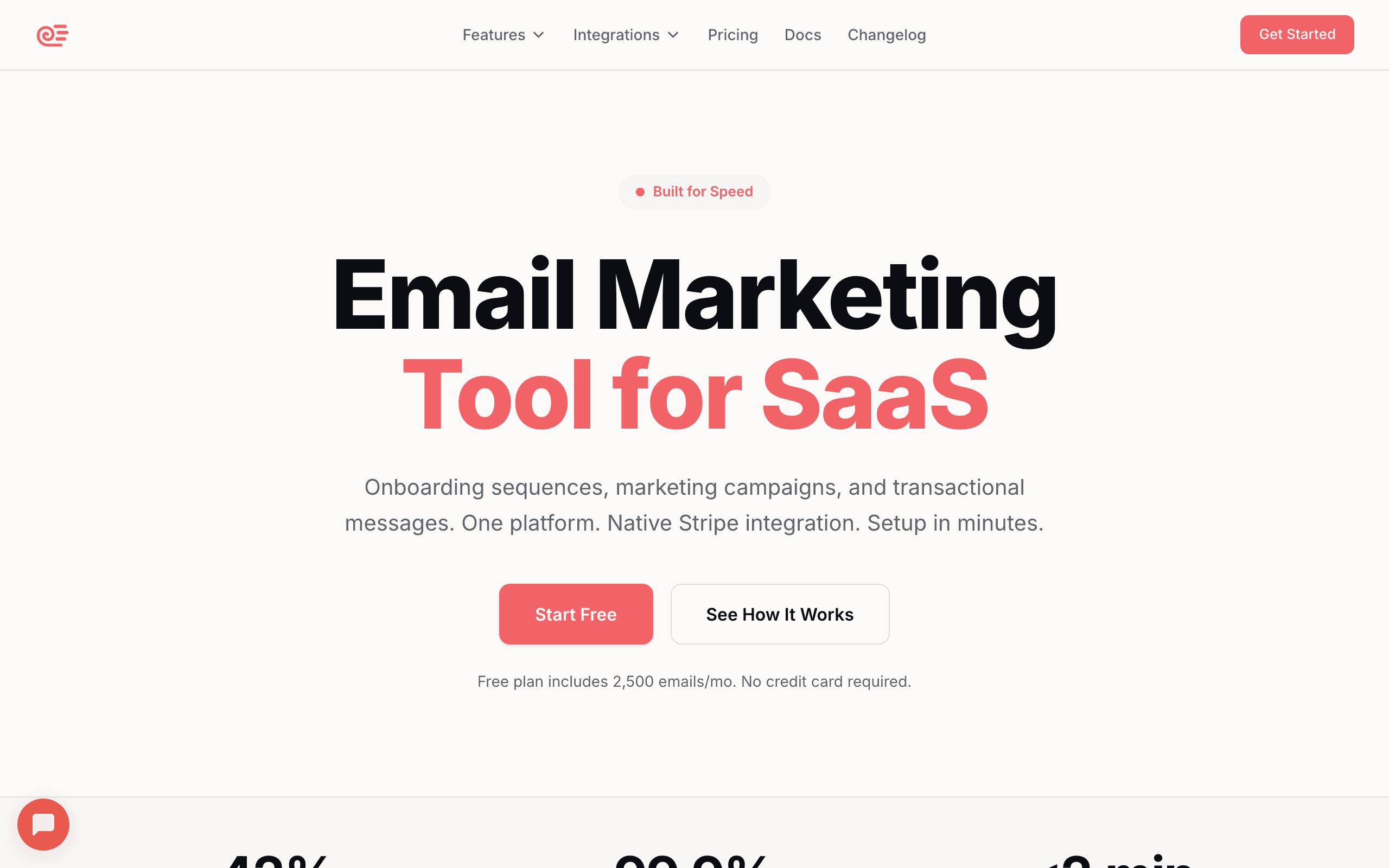
Best for: SaaS founders and subscription businesses that need lifecycle email (onboarding, trial conversion, dunning, retention) plus transactional email, without paying for two separate tools. The Stripe integration saves real engineering hours.
What you get: A full platform with both transactional and marketing email, event-based automations, AI-generated sequences, Stripe integration, subscriber segmentation, campaign management, campaign A/B testing, and hosted landing pages with custom domains (one on the free plan, unlimited on paid). SMS and MMS are available as a paid add-on at $16/month for 1,000 credits, with a managed toll-free number, separate STOP/START/HELP consent and quiet hours. The free tier covers 2,500 emails/month with unlimited subscribers, and paid plans start at $19/month with every feature included (no premium-gated AI).
What's limited: Newer platform with a smaller integration ecosystem than the legacy players, and the template gallery is smaller than Mailchimp's. SMS costs extra and has no two-way inbox, so it is not a replacement for a dedicated SMS platform. There is no website builder or CMS - landing pages are for lead capture, not full sites. WooCommerce support is still a beta sync.
The standout: One platform for transactional and marketing email at $19/month. Most competitors charge separately for each, so the real comparison is Sequenzy against two tools combined. AI sequence generation is included, not an upsell: describe the flow ("recover failed payments," "onboard new trials") and it builds the multi-email sequence with timing and copy tailored to your brand.
- Pricing: Free up to 2,500 emails/month (unlimited subscribers), paid from $19/month; SMS add-on $16/month for 1,000 credits
- Key features: Stripe integration, AI sequences, transactional + marketing in one, A/B testing, landing pages, SMS add-on
- Best for: SaaS, subscription, and developer-led teams
- Limitations: Newer platform, fewer integrations, SMS is a paid add-on with no two-way inbox, no website builder
2. Brevo - From $9/month
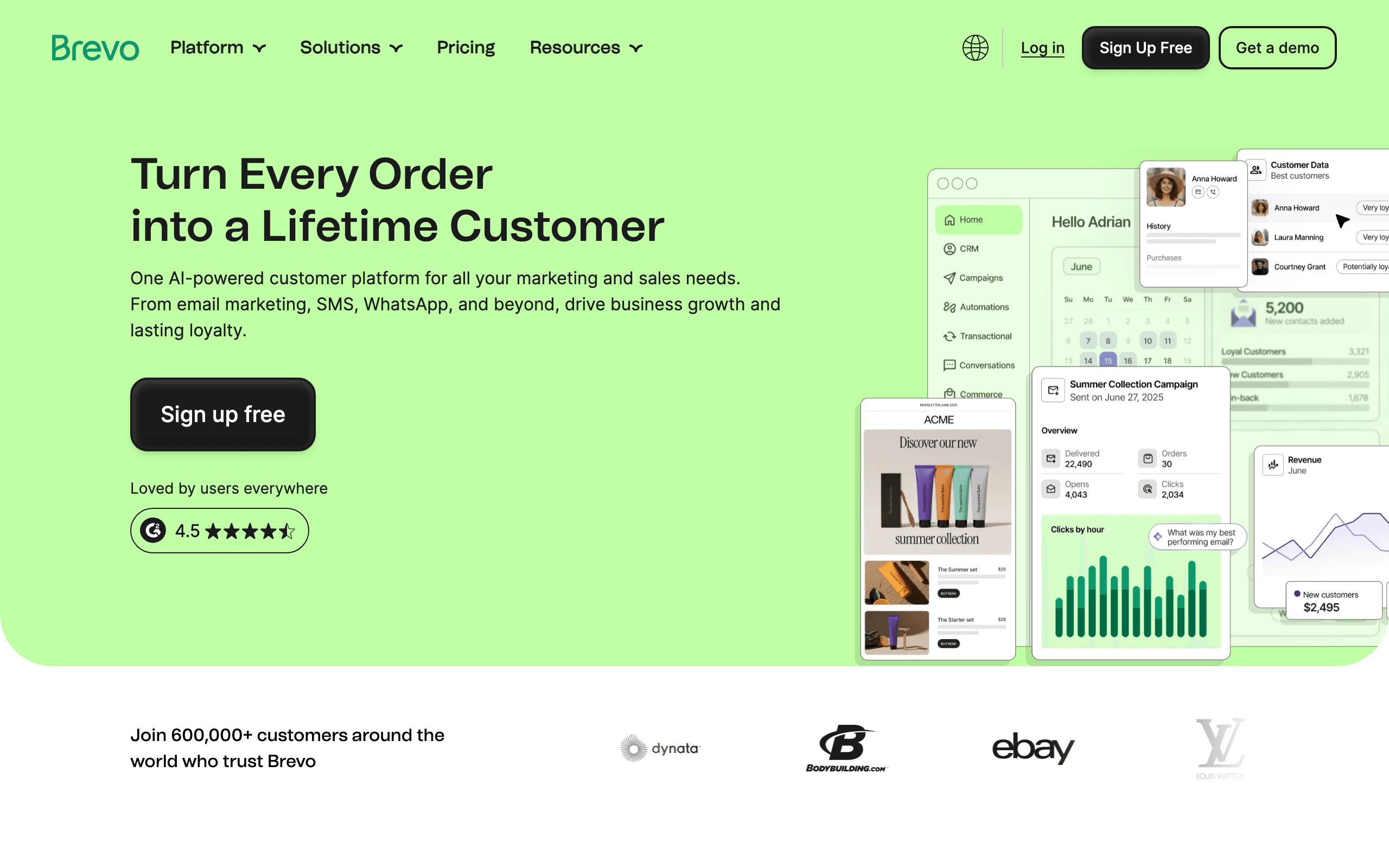
Best for: Small businesses that want email plus SMS in one affordable package, especially those with a large list they email infrequently.
What you get: Email marketing, transactional email, SMS, WhatsApp, and basic automation. The Starter plan at $9/month includes 5,000 emails/month with no daily cap. Pricing scales on email volume, not contact count.
What's limited: Brevo branding on lower tiers, basic automation (the visual builder lives on the $18/month Business plan), and an editor that is functional rather than polished. Deliverability is solid but not best-in-class.
The standout: Volume-based pricing. If you have 10,000 subscribers but send two or three campaigns a month, Brevo costs a fraction of any contact-priced tool. See how it stacks up in our Brevo comparison.
- Pricing: From $9/month (5,000 emails/month)
- Key features: Email + SMS + WhatsApp, volume-based pricing
- Best for: Large lists with low send frequency
- Limitations: Basic automation, branding on free tier
3. MailerLite - From $10/month
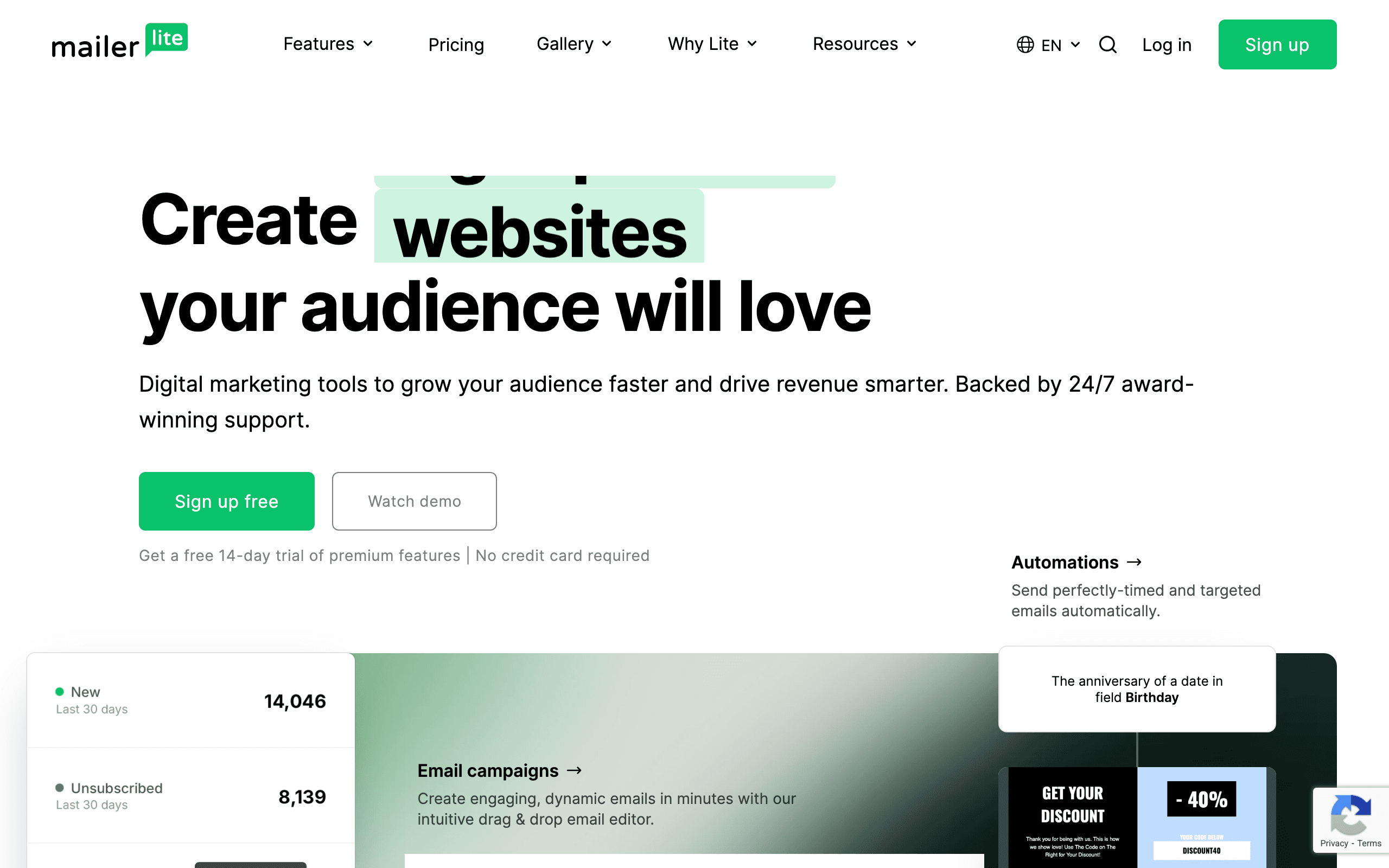
Best for: Small businesses and creators who want a genuinely complete toolkit (email, landing pages, websites) at the lowest credible price.
What you get: Email campaigns, automations, landing pages, forms, and a website builder. The paid plan starts at $10/month, rising to about $39/month at 5,000 subscribers.
What's limited: As of 2026, MailerLite cut its free plan to 250 subscribers and 2,500 emails/month (down from 1,000 subscribers and 12,000 emails), so it is no longer the free-tier bargain it once was. Advanced features (auto-resend, A/B testing on automations, custom HTML) sit on the $20/month Advanced plan. No CRM or phone support.
The standout: The landing page and website builder. Most email tools either skip landing pages or charge extra, so this can replace a $20 to $50/month standalone tool. Compare it in our MailerLite breakdown.
- Pricing: From $10/month (500 subscribers), free up to 250
- Key features: Landing pages, website builder, forms
- Best for: Small businesses needing landing pages
- Limitations: Shrunken free plan (250 subs), advanced features on higher tiers
4. EmailOctopus - From $10/month
Best for: Bloggers, creators, and small businesses that want simple newsletters at a price that stays low as the list grows.
What you get: A clean email editor, landing pages, forms, basic automation, and segmentation. The free plan is unusually generous: 2,500 subscribers and 10,000 emails/month. The Pro plan starts at $10/month and, crucially, is still only about $44.50/month at 10,000 subscribers.
What's limited: Automation is basic compared to ActiveCampaign or Sequenzy. EmailOctopus branding on the free plan. Fewer integrations, no SMS, and reporting history is capped on the free tier.
The standout: Price discipline at scale. Many "cheap" tools spike past 5,000 contacts. EmailOctopus stays affordable into five-figure list sizes, which makes it one of the best raw-cost newsletter options in 2026.
- Pricing: From $10/month, free up to 2,500 subscribers
- Key features: Generous free tier, low cost at scale, simple editor
- Best for: Newsletters and simple broadcasts
- Limitations: Basic automation, fewer integrations
5. Mailchimp - From $13/month
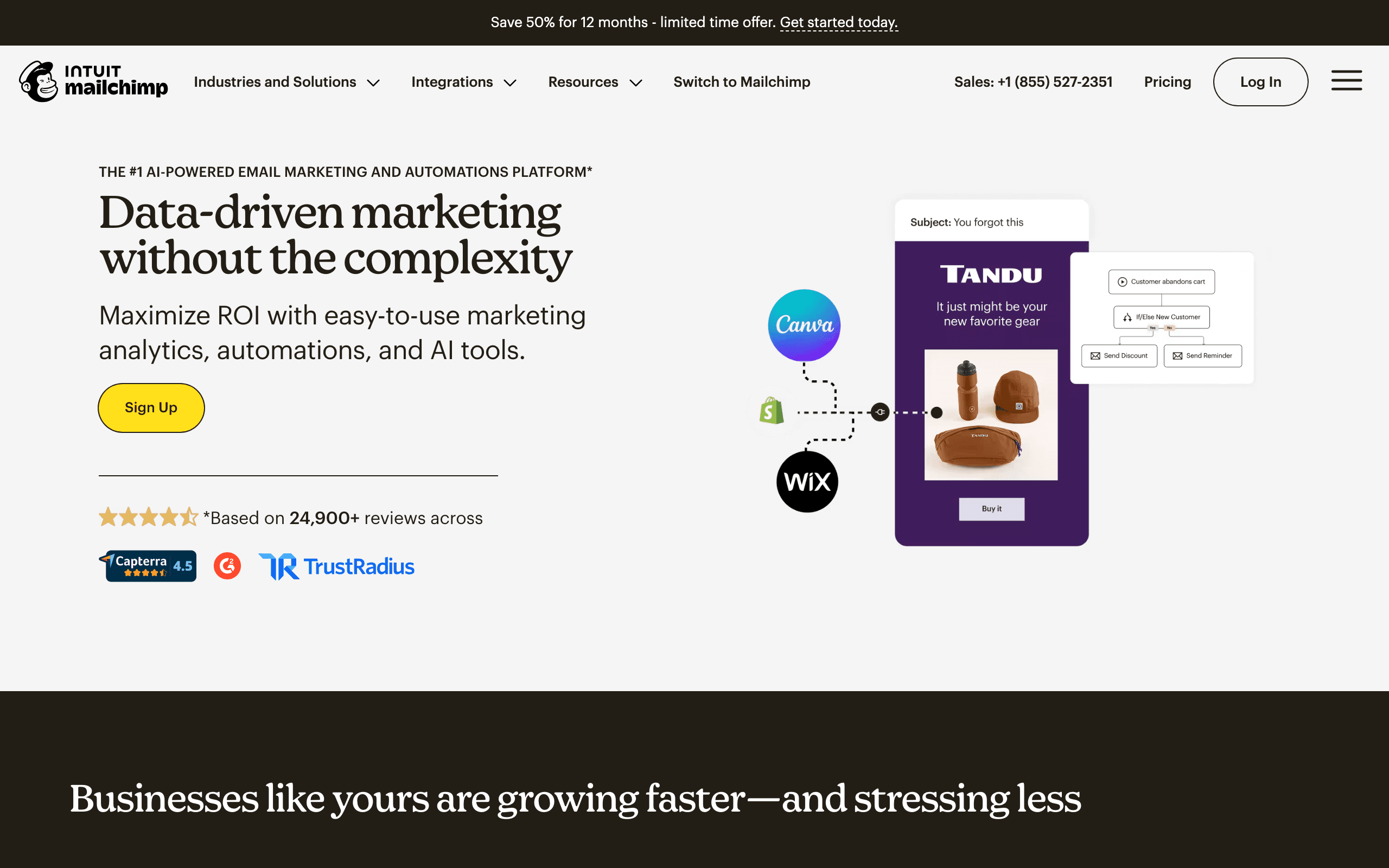
Best for: Very small lists that want a familiar, widely-supported platform with the largest integration ecosystem in email.
What you get: The Essentials plan includes templates, basic Customer Journeys automation, A/B testing, and email support for 500 contacts. The platform connects to 300+ tools (Shopify, WordPress, QuickBooks, and more).
What's limited: Contact-based pricing climbs fast. At 5,000 contacts, Essentials runs roughly $75/month, over most budgets. Support quality has slipped in recent years.
The standout: The integration ecosystem. If your workflow depends on a specific native connection, Mailchimp almost certainly has it.
- Pricing: From $13/month (500 contacts), free up to 500
- Key features: 300+ integrations, brand recognition
- Best for: Integration-heavy small businesses with small lists
- Limitations: Expensive at scale, declining support
6. Kit (ConvertKit) - From $15/month
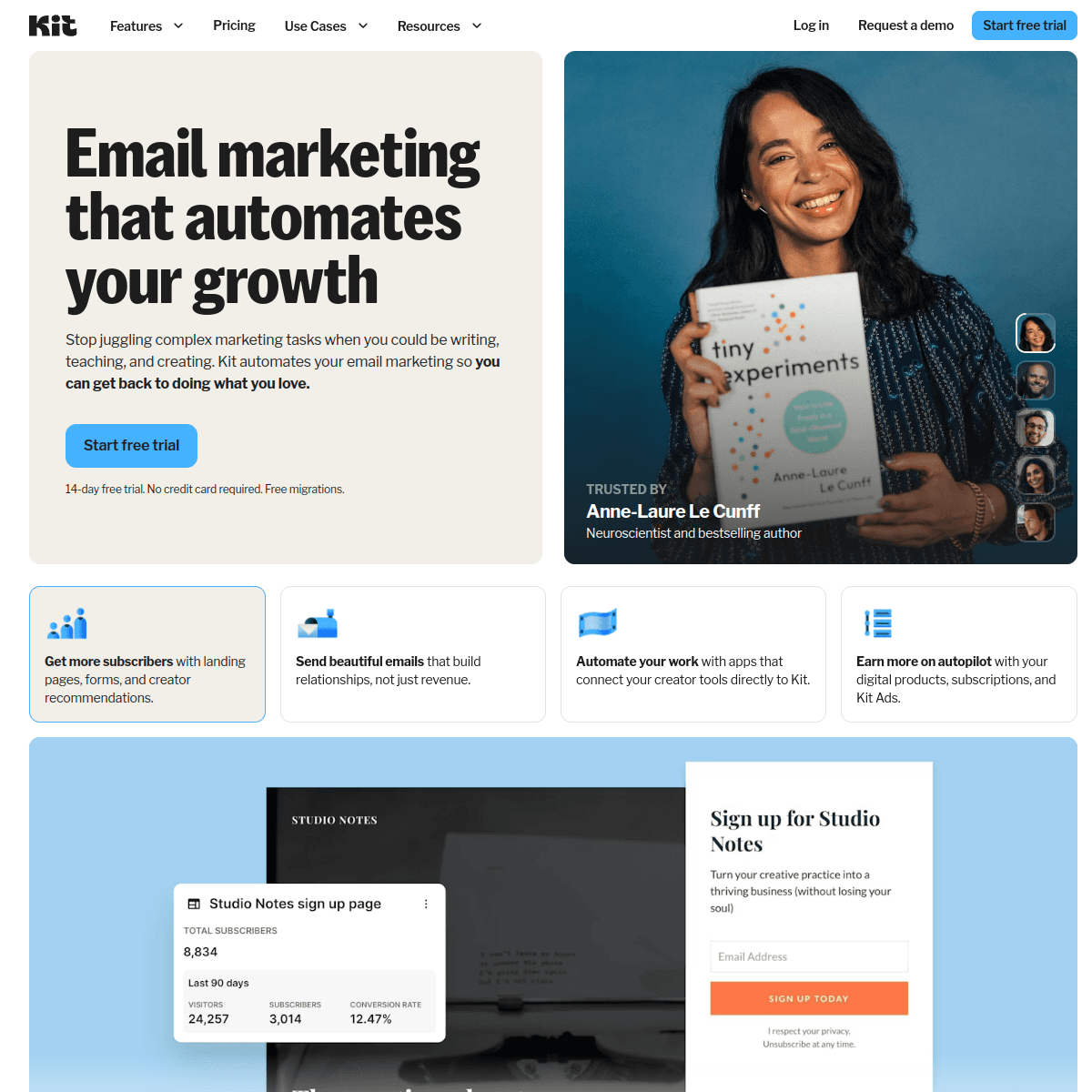
Best for: Creators, bloggers, and newsletter operators who sell digital products. The built-in commerce is rare at this price.
What you get: Unlimited sends, visual automations, sequences, landing pages, and commerce (sell ebooks, courses, memberships). The free plan covers up to 10,000 subscribers with limited features; the Creator plan starts at $15/month and reaches about $49/month at 3,000 subscribers. Tag-based management replaces traditional lists.
What's limited: The editor is plain-text-leaning and basic next to drag-and-drop builders. SaaS-specific features are minimal. Pricing climbs with list size.
The standout: Built-in digital product sales. Sell directly through Kit without Gumroad or Payhip, with automation and product delivery tightly linked. See email tools for creators.
- Pricing: From $15/month, free up to 10,000 subscribers
- Key features: Digital product sales, creator-focused automations
- Best for: Course creators, bloggers, newsletter sellers
- Limitations: Basic templates, expensive at scale
7. ActiveCampaign - From $15/month
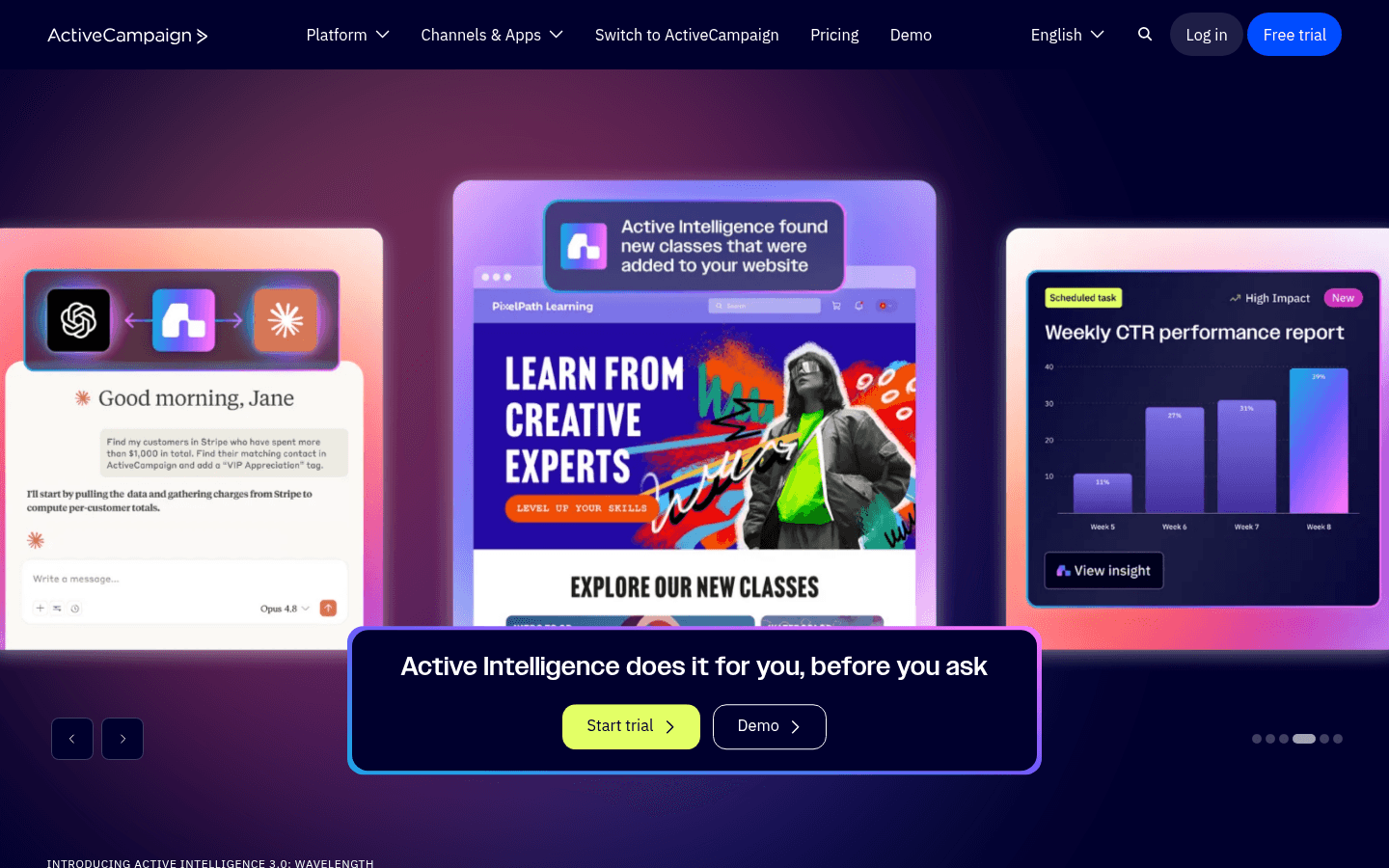
Best for: Teams that want serious marketing automation and a light CRM without enterprise pricing.
What you get: Email marketing, a powerful visual automation builder, basic CRM, and site tracking. The Starter plan begins around $15/month (annual) for a small list, with conditional logic, branching, and multi-step workflows available as you move up.
What's limited: The cheapest tier limits automation depth; the full builder, CRM, and lead scoring live on higher plans. At 5,000 contacts the bill comfortably exceeds $50/month. No free plan, only a 14-day trial.
The standout: Automation sophistication. Even mid-tier, ActiveCampaign's branching and conditional logic outclass most competitors at the same price. See tools with visual workflow builders.
- Pricing: From ~$15/month (annual), no free plan
- Key features: Advanced automation, CRM, site tracking
- Best for: Growing businesses that live in automations
- Limitations: Gets expensive at scale, learning curve
8. Moosend - From $9/month
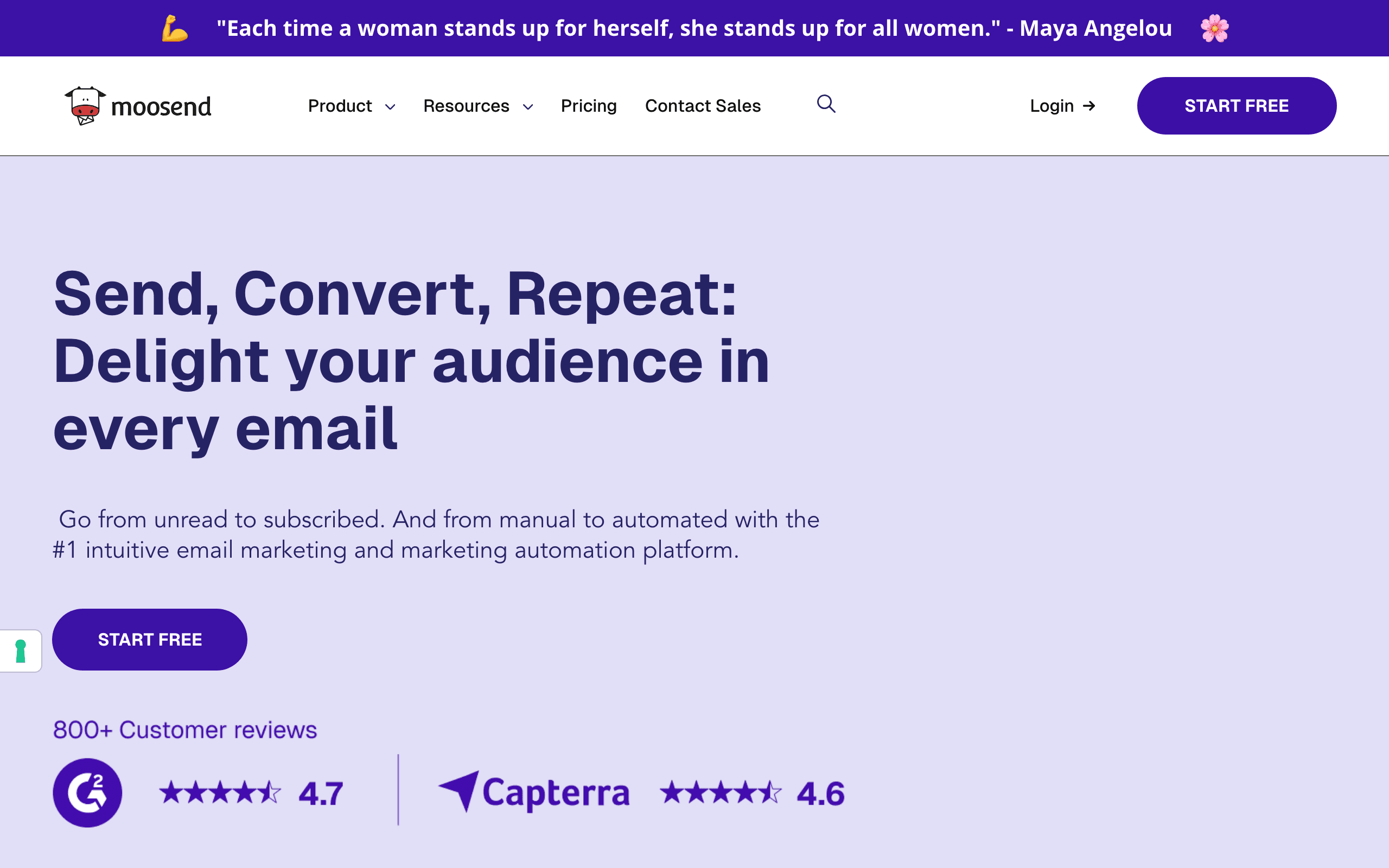
Best for: Budget-conscious small businesses that want real automation without ActiveCampaign pricing.
What you get: Email editor with templates, marketing automation, landing pages, forms, segmentation, A/B testing, and reporting. The Pro plan starts at $9/month for 500 subscribers with unlimited emails.
What's limited: No free plan (30-day trial). Smaller template library, fewer integrations, limited CRM, and less advanced reporting than premium tools.
The standout: Automation at $9/month. You get genuine workflows and e-commerce product recommendations at a price most rivals reserve for their starter newsletter tier.
- Pricing: From $9/month (500 subscribers)
- Key features: Affordable automation, e-commerce recommendations
- Best for: Small businesses that need automation cheaply
- Limitations: No free plan, fewer integrations
9. Omnisend - From $16/month
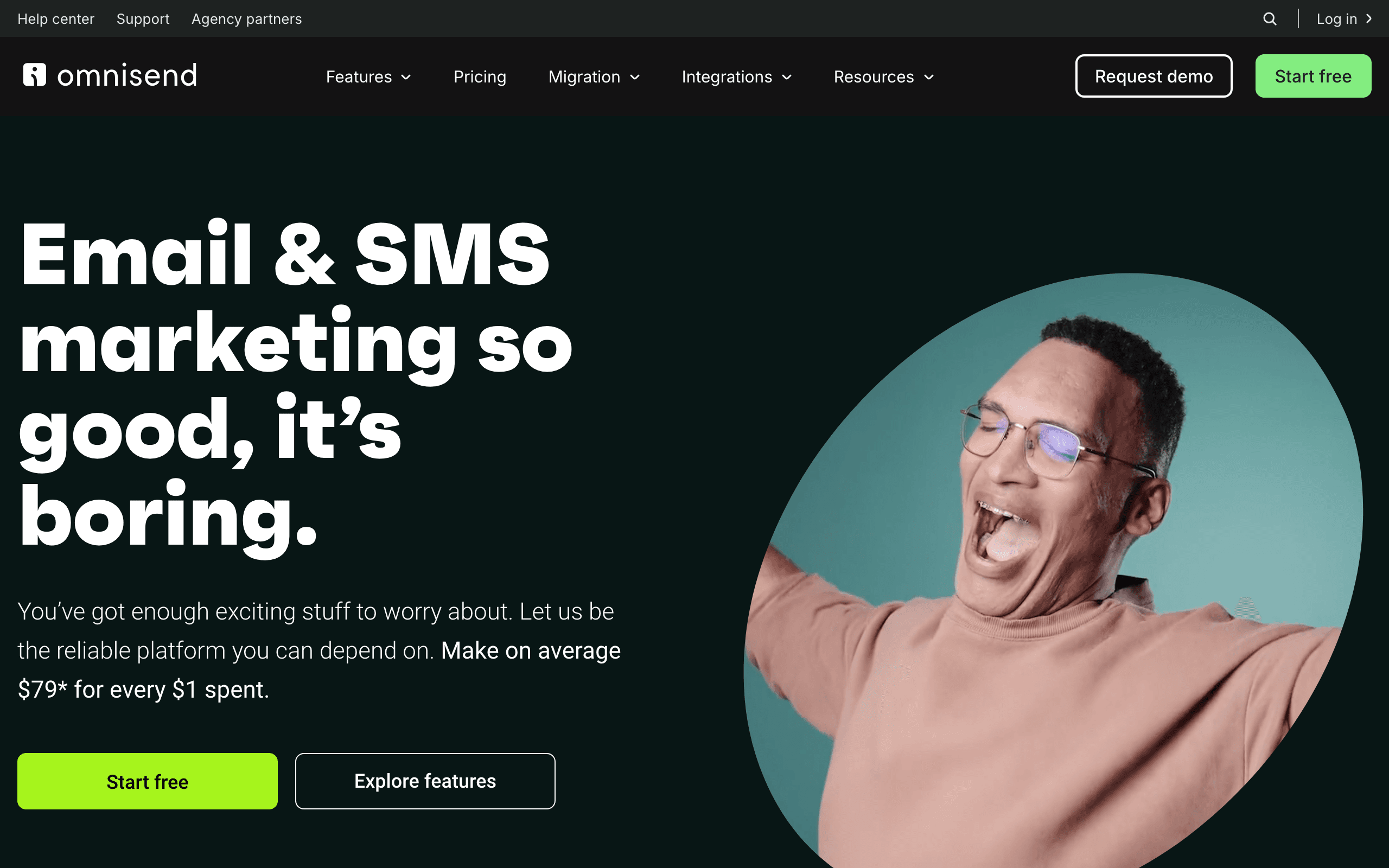
Best for: Small e-commerce stores on Shopify, WooCommerce, or BigCommerce that want abandoned-cart and post-purchase flows that work out of the box.
What you get: Pre-built e-commerce automations (abandoned cart, welcome, order confirmation, post-purchase), email plus SMS plus push, a product picker for emails, discount codes, and behavior-based segmentation.
What's limited: Really only useful for e-commerce. The free plan is tight (250 contacts, 500 emails/month). Per-contact cost runs higher than some rivals, and advanced features need the Pro plan.
The standout: Purpose-built e-commerce flows. The platform already knows which automations a store needs and ships them ready to activate. See email tools for ecommerce.
- Pricing: From $16/month (500 contacts), free up to 250
- Key features: Pre-built e-commerce flows, product picker, SMS
- Best for: Small online stores
- Limitations: E-commerce only, limited free plan
10. Sender - From $8/month
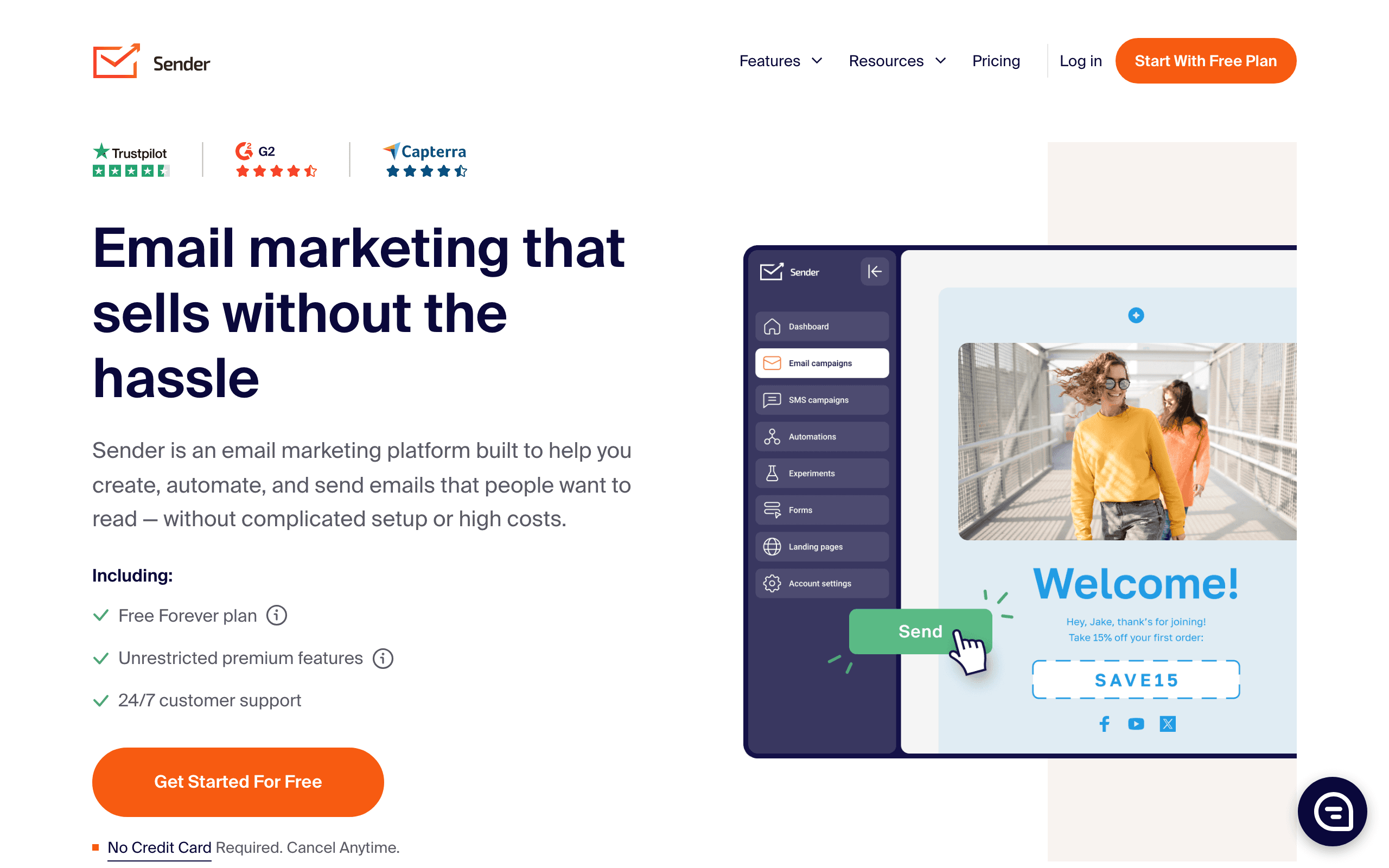
Best for: Cash-strapped startups that want to run real email marketing for as long as possible without paying.
What you get: Email and SMS, marketing automation, pop-ups and forms, segmentation, analytics, and e-commerce integrations. The free plan is one of the most generous anywhere: 2,500 subscribers and 15,000 emails/month, with automation included.
What's limited: Sender branding on the free plan, a smaller company with fewer resources, fewer advanced features, and a smaller template library.
The standout: The free plan. Running automation against 2,500 subscribers for free lets early-stage teams delay paid plans for months. See more in tools with a free tier.
- Pricing: From $8/month, free up to 2,500 subscribers
- Key features: Generous free plan, automation included, SMS
- Best for: Startups and budget-first teams
- Limitations: Smaller ecosystem, branding on free tier
11. Benchmark Email - From $8/month
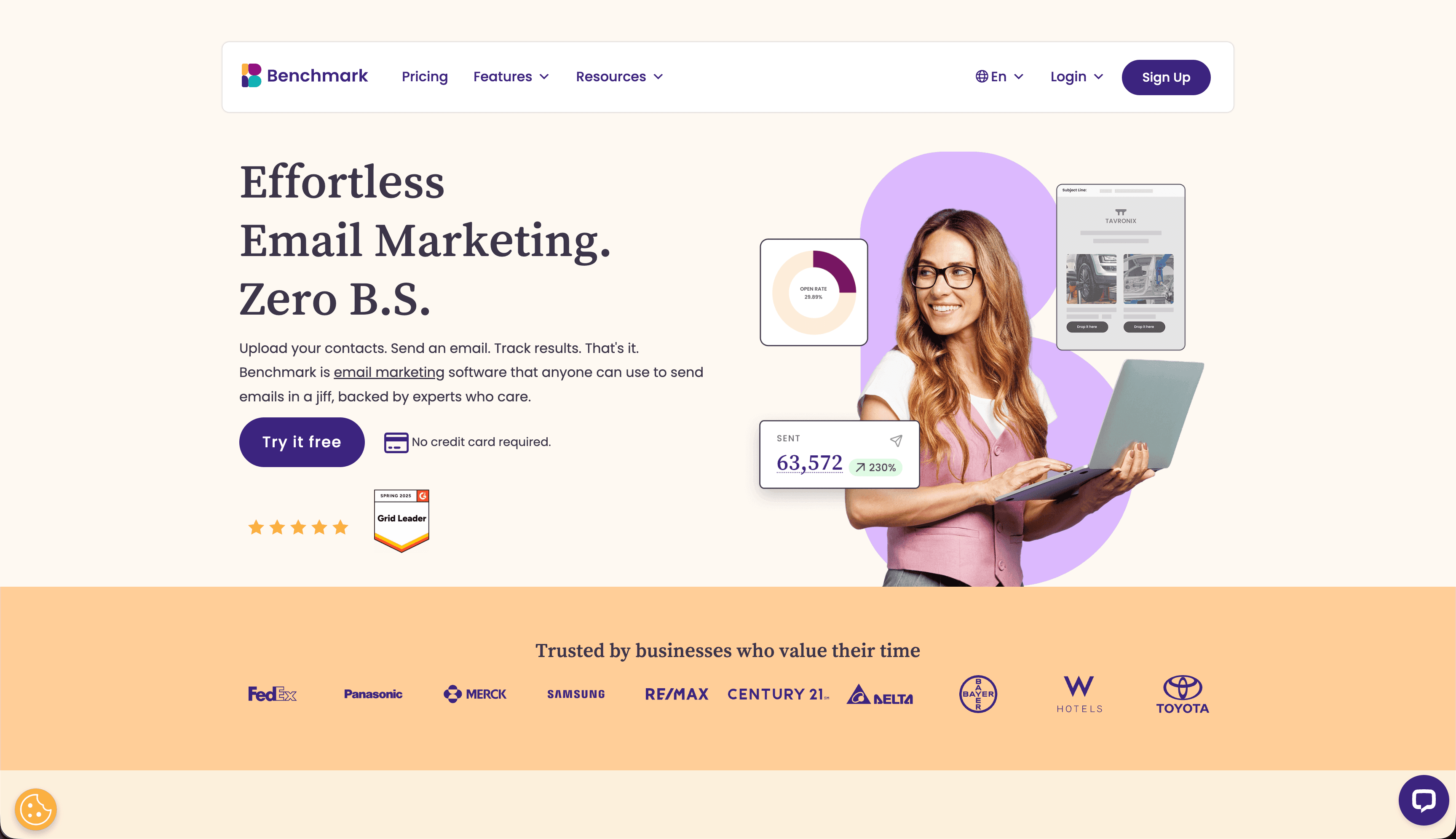
Best for: Small businesses serving multilingual audiences: restaurants, tourism, international retail, and diverse communities.
What you get: Support across nine languages, a drag-and-drop editor, marketing automation, landing pages, surveys, A/B testing, built-in photo editing, and RSS-to-email. It handles both left-to-right and right-to-left scripts.
What's limited: Automation is basic, template design is average, integrations are fewer, and reporting could be deeper.
The standout: Best-in-class multilingual support, from the editor down to the interface itself.
- Pricing: From $8/month (500 subscribers), free 500/day
- Key features: 9-language support, photo editor, RSS-to-email
- Best for: Multilingual businesses
- Limitations: Basic automation, fewer integrations
12. Mailjet - From $17/month
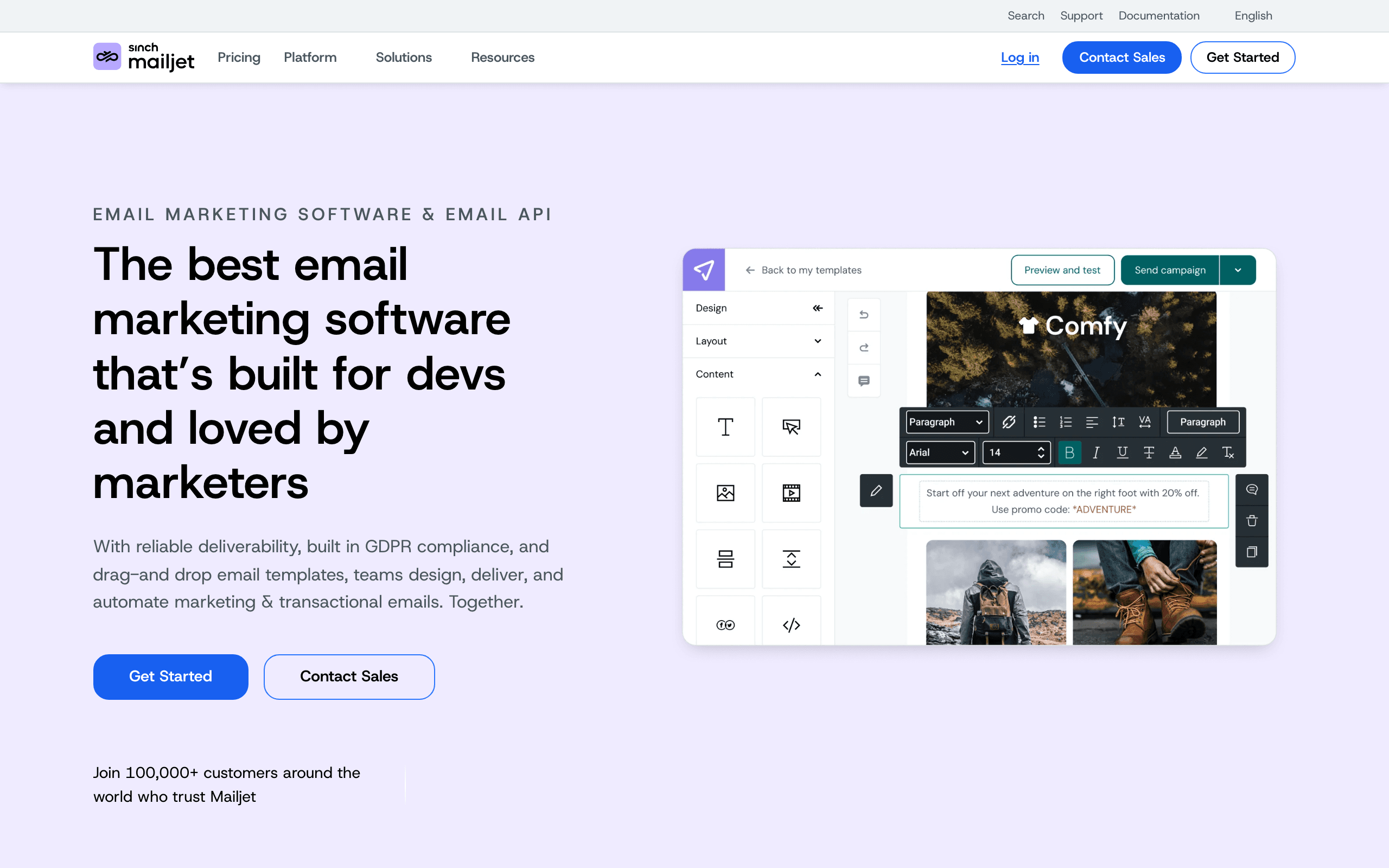
Best for: European teams that need GDPR-first email and real-time collaboration on templates.
What you get: Email marketing with live template collaboration, transactional email, segmentation, basic automation, and EU data residency. The Premium plan at $17/month covers 15,000 emails/month with no daily limit.
What's limited: The automation builder trails ActiveCampaign, the template library is smaller, and the focus leans transactional rather than marketing-automation-heavy.
The standout: Google-Docs-style real-time collaboration on emails. For teams that draft email together, it is a genuine productivity win.
- Pricing: From $17/month (15,000 emails/month), free 200/day
- Key features: Real-time collaboration, GDPR-first, EU residency
- Best for: European and collaborative teams
- Limitations: Basic automation, smaller template library
13. Zoho Campaigns - From $4/month
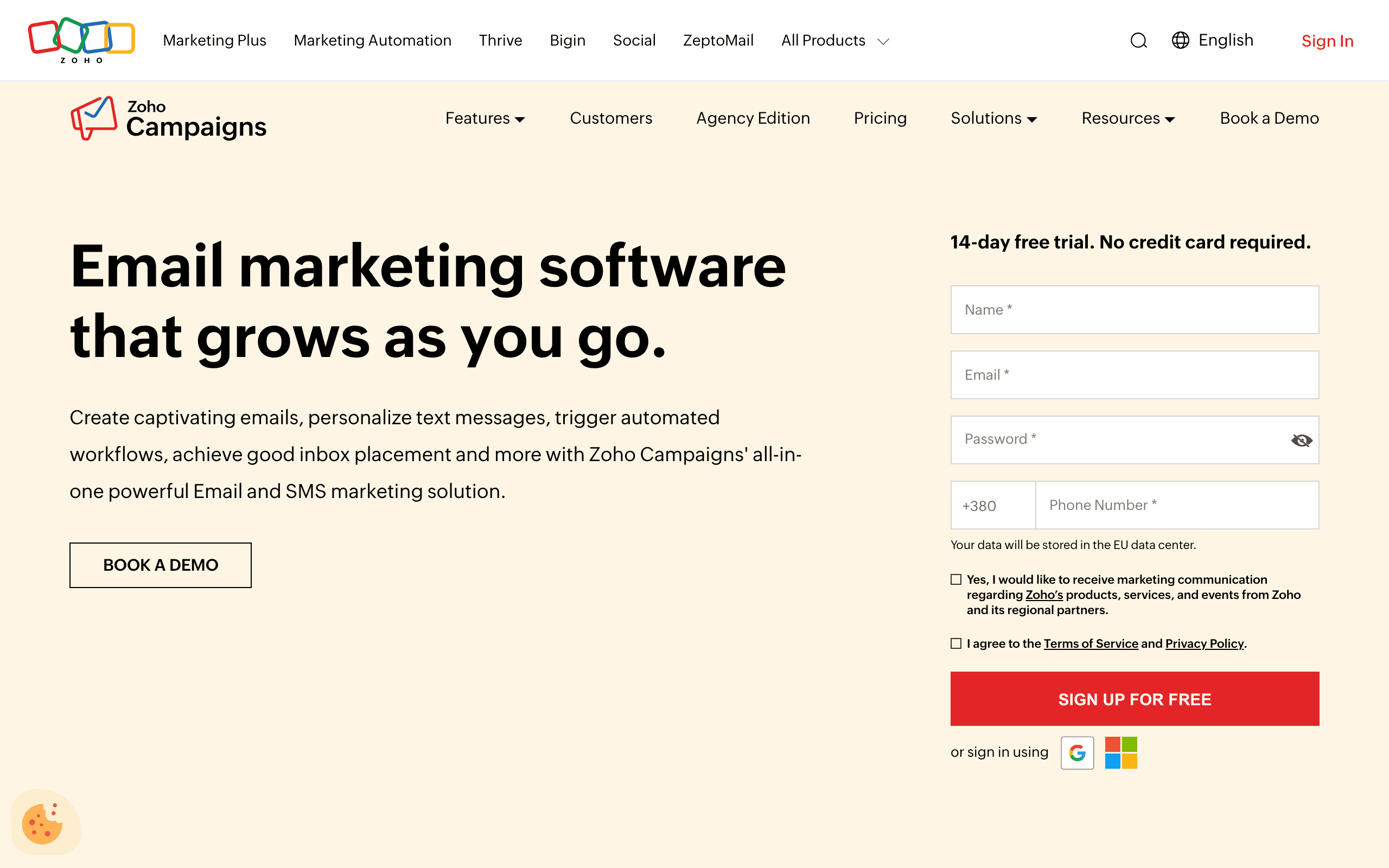
Best for: Businesses already inside the Zoho ecosystem (CRM, Books, Projects) that want email that syncs automatically.
What you get: Email marketing with autoresponders, A/B testing, social integration, and segmentation. The Standard plan starts at $4/month for 500 subscribers and 12,000 emails/month, with deep Zoho suite integration.
What's limited: A less polished interface than dedicated platforms, fewer advanced automations, and functional-but-plain templates. Most of the value evaporates if you are not already on Zoho.
The standout: Cheapest paid plan on this list, plus automatic data sync across the Zoho suite.
- Pricing: From $4/month (500 subscribers), free up to 6,000/month
- Key features: Lowest paid price, Zoho CRM sync
- Best for: Existing Zoho users
- Limitations: Basic features, ecosystem-dependent
14. Flodesk - $38/month flat
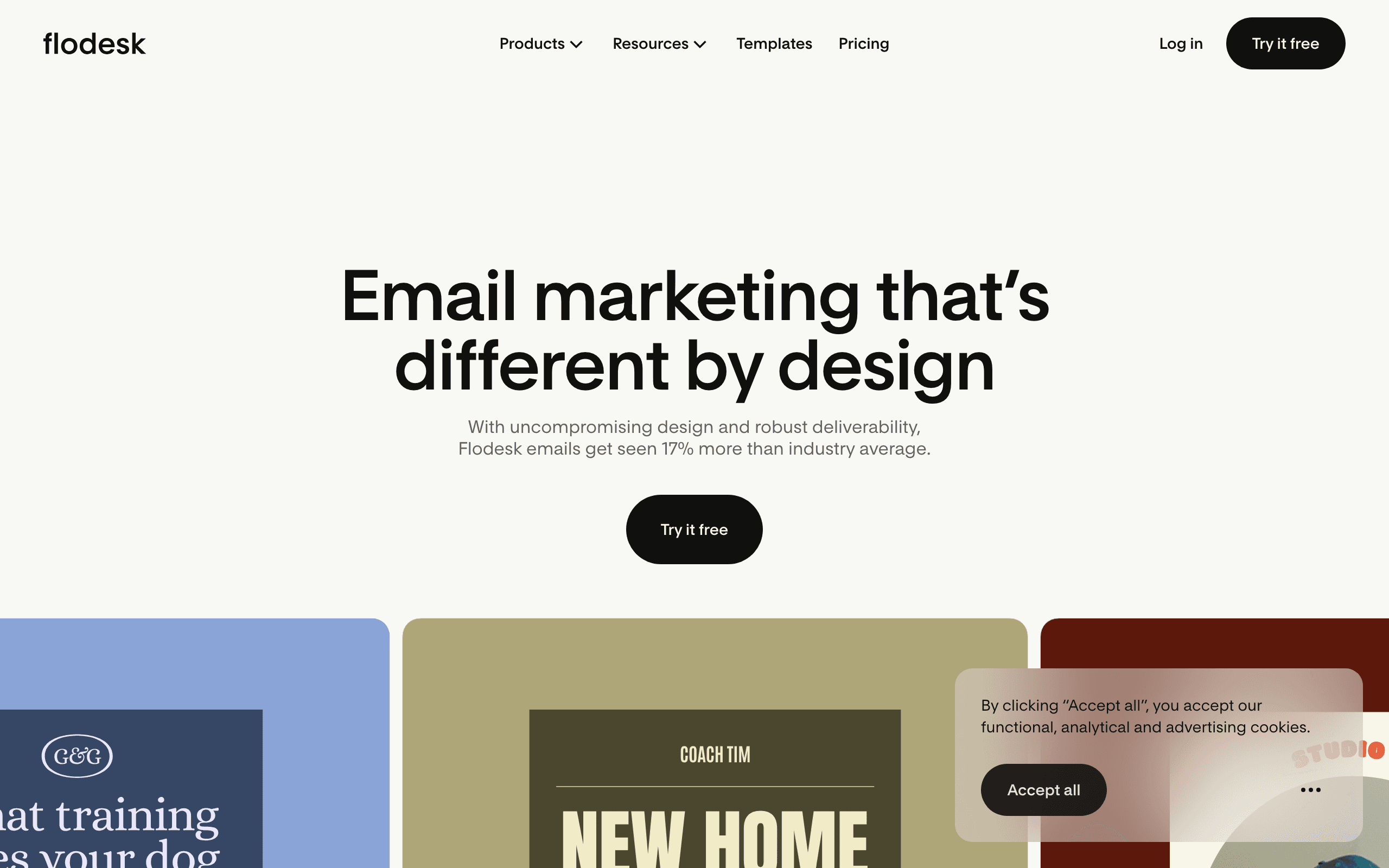
Best for: Designers, photographers, and creative brands that want gorgeous emails and refuse to pay per subscriber.
What you get: Unlimited subscribers and emails, magazine-quality templates, simple automation, forms, and analytics, all for one $38/month flat rate that never changes with list size.
What's limited: Automation is basic next to ActiveCampaign or Klaviyo, there are no real e-commerce features, no CRM, and the template library, while beautiful, is small.
The standout: Flat-rate pricing. At 500 subscribers it is mid-priced; at 50,000 it is one of the cheapest tools you can buy. The break-even is roughly the moment your list passes a few thousand contacts.
- Pricing: $38/month flat, unlimited subscribers
- Key features: Flat rate, stunning templates
- Best for: Design-first brands with large lists
- Limitations: Basic automation, no e-commerce
15. GetResponse - From $19/month
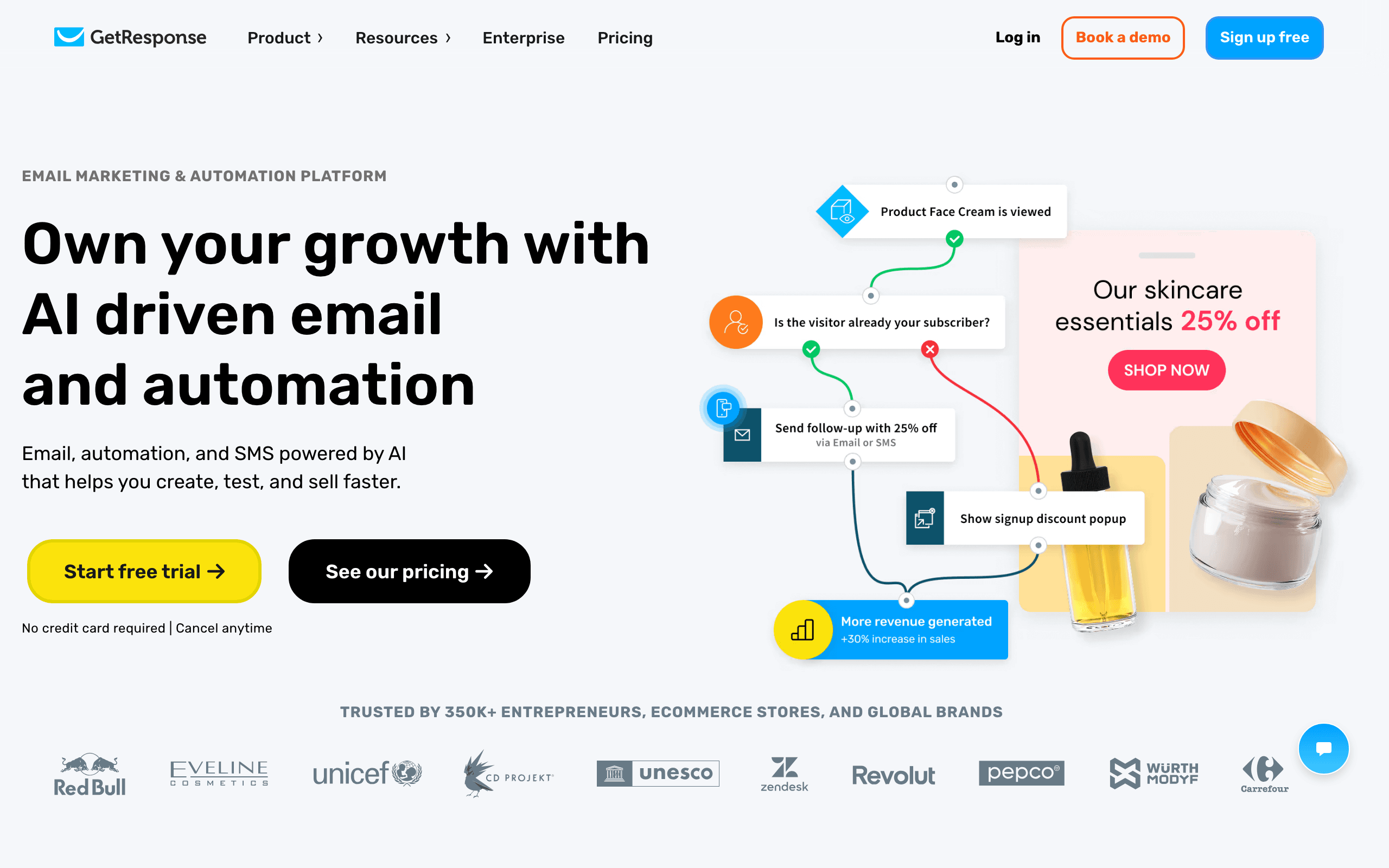
Best for: Small businesses that want an all-in-one marketing suite (email, landing pages, funnels, and webinars) under one login.
What you get: The Starter plan at $19/month covers 1,000 subscribers with unlimited emails, autoresponders, unlimited landing pages, a website builder, basic AI features, and 24/7 chat support. Higher plans add the visual automation builder, webinars, and advanced segmentation. A free plan covers 500 contacts.
What's limited: The Starter plan includes only one automation workflow and limited AI uses. The breadth means none of the individual tools is best-in-class, and the price rises with list size.
The standout: Bundled funnels and webinars. Few affordable tools include conversion funnels and live webinars in the same subscription, which can replace two or three separate products.
- Pricing: From $19/month (1,000 subscribers), free up to 500
- Key features: Landing pages, funnels, webinars, website builder
- Best for: All-in-one small business marketing
- Limitations: Jack-of-all-trades depth, automation gated on Starter
16. AWeber - From $15/month
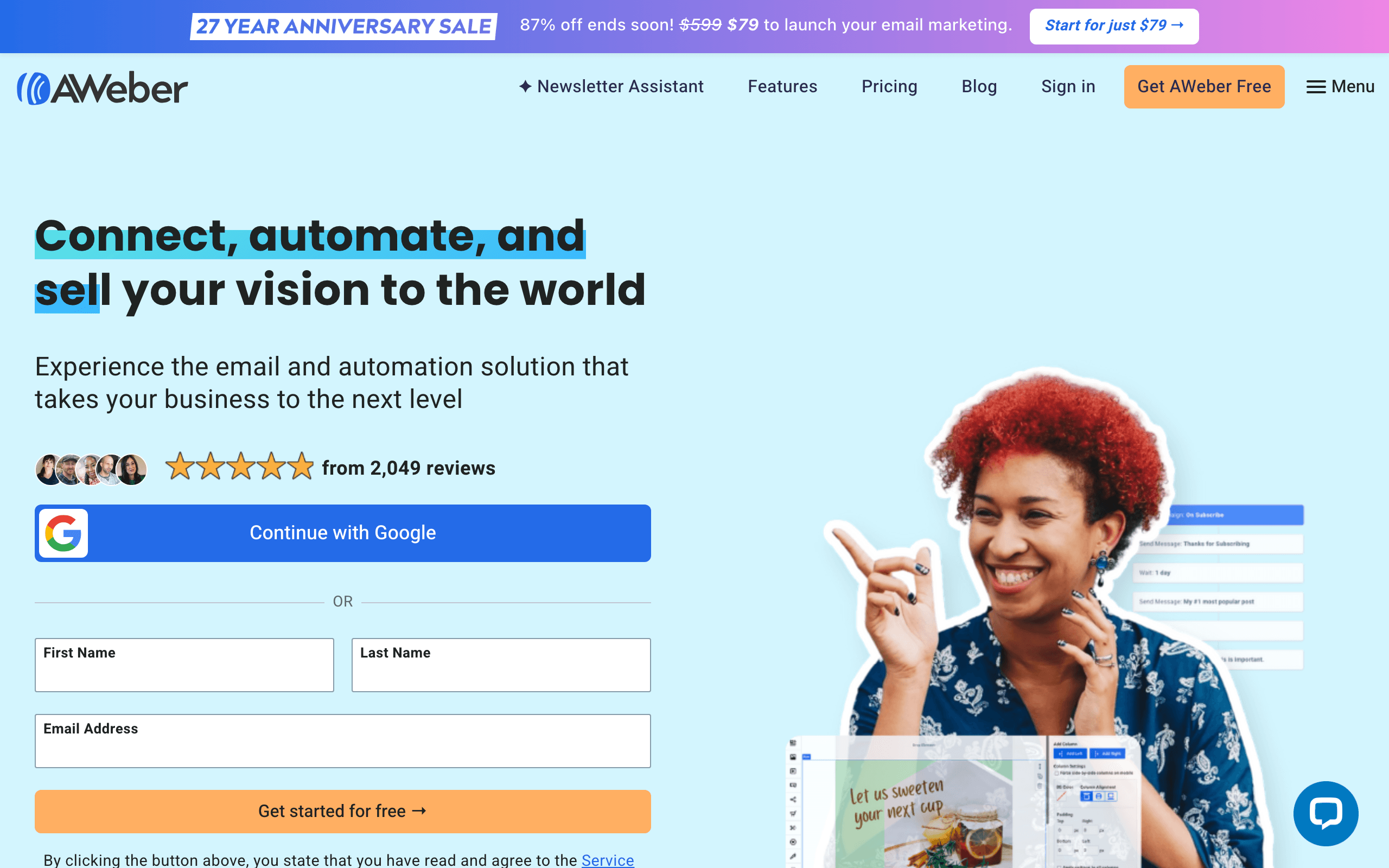
Best for: Beginners and small businesses that value hand-holding support and a gentle learning curve.
What you get: Email campaigns, autoresponders, landing pages, forms, and basic automation. The free plan covers 500 subscribers and 3,000 emails/month. The Lite plan runs about $12.49/month annually (around $15 monthly), with the Plus plan adding advanced reporting and more automation.
What's limited: The interface feels dated, templates are average, and pricing scales with subscriber count, so the same Plus plan gets noticeably more expensive at 5,000 and 10,000 contacts.
The standout: Onboarding and support. AWeber is one of the easiest tools for a non-technical owner to start with, backed by responsive live support.
- Pricing: From $15/month, free up to 500 subscribers
- Key features: Easy setup, strong support, autoresponders
- Best for: Beginners and non-technical owners
- Limitations: Dated UI, climbs with list size
17. Constant Contact - From $12/month
Best for: Local businesses, nonprofits, and event-driven organizations that want email plus event and social tools in one place.
What you get: The Lite plan at $12/month (500 contacts) includes a drag-and-drop editor, basic templates, social posting to Facebook, Instagram and LinkedIn, basic event registration, and a single welcome automation. Standard and Premium add segmentation, A/B testing, and richer automation.
What's limited: The Lite plan is genuinely bare: one user, no A/B testing, no segmentation. Contact-based pricing rises quickly, and the deeper features that justify the brand sit on pricier plans.
The standout: Event marketing and social tools bundled with email, which fits organizations that run real-world events more than pure online senders.
- Pricing: From $12/month (500 contacts), trial only
- Key features: Event registration, social posting, easy editor
- Best for: Local and event-based businesses, nonprofits
- Limitations: Lite plan is thin, climbs with contacts
18. Buttondown - From $9/month
Best for: Writers, journalists, and developers who want a minimalist, markdown-first newsletter with no feature bloat.
What you get: A clean markdown editor, analytics, basic automation, paid subscriptions, and a deliberately simple interface focused on writing and publishing. The free plan covers up to 100 subscribers.
What's limited: No drag-and-drop editor, no landing pages, very basic templates, and limited automation. Not built for marketing-heavy operations.
The standout: Restraint. For technical writers who want to write in markdown and hit send, Buttondown gets out of the way better than any drag-and-drop tool.
- Pricing: From $9/month, free up to 100 subscribers
- Key features: Markdown-first, minimal, paid subscriptions
- Best for: Newsletter writers and developers
- Limitations: No visual editor, limited features
19. SendFox - From $9/month (or $49 one-time)
Best for: Creators and solopreneurs who would rather pay once than carry a monthly subscription.
What you get: Simple email campaigns, automation sequences, smart pages and forms, list tagging, analytics, and a Zapier integration. The free plan covers 1,000 subscribers. Monthly Pro runs $9 and up, but the real draw is the AppSumo lifetime deal: roughly $49 one-time for up to 5,000 subscribers, with higher tiers for larger lists.
What's limited: A genuinely basic feature set, plain templates, limited automation depth, and a smaller ecosystem. It is built for simple broadcasts, not complex marketing.
The standout: Lifetime pricing. Pay once and never see a monthly email bill again, which is hard to beat on pure cost for a small, stable list.
- Pricing: From $9/month, or ~$49 one-time (AppSumo), free up to 1,000
- Key features: Lifetime deal, simple sends, smart pages
- Best for: Creators who want to avoid subscriptions
- Limitations: Basic features, limited automation
20. Mailercloud - From $10/month
Best for: Budget senders who want straightforward bulk email with a generous free tier.
What you get: A drag-and-drop editor, templates, basic automation, segmentation, and real-time analytics. The free plan covers 1,000 subscribers and 12,000 emails/month. Paid plans start at $10/month with unlimited emails and reach about $50/month at 10,000 subscribers (roughly $35 on annual billing).
What's limited: Automation and reporting are basic, the integration list is short, and the brand is far less established than the major players.
The standout: Simple, cheap, and predictable. Subscriber-based pricing with unlimited emails makes the bill easy to forecast for steady senders.
- Pricing: From $10/month, free up to 1,000 subscribers
- Key features: Generous free tier, unlimited emails, simple editor
- Best for: Budget bulk senders
- Limitations: Basic automation, smaller ecosystem
21. Selzy - From $7/month
Best for: Very price-sensitive small businesses that want AI assistance and email automation at the lowest paid entry point on this list.
What you get: Email campaigns, automation, segmentation, forms, and AI tools for subject lines and content. The free plan covers 100 contacts and 1,000 emails/month, and paid plans start at $7/month (1,000 contacts is about $10/month, 7,500 contacts about $45/month). You can choose unlimited-contacts or unlimited-emails models.
What's limited: A smaller brand with fewer integrations, a more basic interface, and shallower reporting than premium tools. The tiny free tier (100 contacts) is more trial than free plan.
The standout: Flexible, rock-bottom pricing with AI built in, plus the option to optimize for either contact count or send volume.
- Pricing: From $7/month, free up to 100 contacts
- Key features: AI tools, flexible pricing models, automation
- Best for: Ultra budget-conscious small businesses
- Limitations: Small free tier, fewer integrations
22. Loops - From $49/month
Best for: SaaS startups that want event-driven email with a clean, modern interface and good developer experience.
What you get: Email sending, event tracking, automations or "loops," and a developer-friendly API with solid docs. A limited free tier exists; paid plans start at $49/month with custom domain, API access, and subscriber management.
What's limited: At $49/month it sits at the top of the affordable range. The feature set is focused (email only, no CRM, no landing pages), and automation is simpler than ActiveCampaign.
The standout: Developer experience. The API, event model, and modern UI feel like a current SaaS product rather than a legacy marketing tool, which is exactly what product-led growth teams want.
- Pricing: From $49/month, limited free tier
- Key features: Event-driven, modern DX, clean API
- Best for: Developer-focused SaaS startups
- Limitations: Pricier entry, focused feature set
23. Beehiiv - From $39/month (free up to 2,500 subs)
Best for: Newsletter businesses and media operators building audience-powered revenue rather than running marketing campaigns.
What you get: A newsletter platform with built-in monetization: an ad network, paid subscriptions, referral programs, a website and content analytics. The free plan covers up to 2,500 subscribers; paid plans start around $39/month and unlock the full monetization and growth toolkit.
What's limited: Built for newsletters, not promotional or transactional marketing. Automation is limited, and it is the wrong tool for SaaS or e-commerce lifecycle email.
The standout: Monetization built in. Ads, paid subscriptions, and referral growth turn a newsletter into a business without bolting on extra tools. See best newsletter platforms.
- Pricing: From $39/month, free up to 2,500 subscribers
- Key features: Ad network, paid subscriptions, referrals
- Best for: Newsletter and media businesses
- Limitations: Newsletter-focused, weak general automation
24. Substack - Free + 10% of paid revenue
Best for: Writers who want zero fixed cost and only pay when they actually earn from paid subscriptions.
What you get: Unlimited free publishing to any list size, a built-in subscriber network and discovery, paid subscriptions, comments, and a podcast and notes feature. There is no monthly fee at all. Substack takes 10% of paid subscription revenue, plus Stripe processing fees (roughly 13 to 16% of gross once payments are included).
What's limited: No real marketing automation, weak segmentation, limited design control, and you build your audience inside Substack's ecosystem rather than fully owning the relationship. Once you earn meaningfully, that 10% can exceed a flat-rate tool's monthly fee.
The standout: No fixed cost. If you are not charging readers, Substack is free forever at any list size, which is unbeatable for a writer just starting out.
- Pricing: Free to publish, 10% of paid subscription revenue (plus Stripe fees)
- Key features: Free at any scale, built-in network, paid subscriptions
- Best for: Writers and paid newsletters
- Limitations: Revenue share, weak automation and segmentation
What affordable tools actually cost at scale
Entry prices lie. Here is the more honest view: roughly what each tool costs once your list reaches 5,000 and 10,000 subscribers in 2026. These are approximate marketing-plan prices on monthly billing and will vary with send volume and features.
| Tool | At 5,000 subs | At 10,000 subs | Pricing model | Notes |
|---|---|---|---|---|
| Zoho Campaigns | ~$24/mo | ~$45/mo | Contacts | Cheapest if you are on Zoho |
| Selzy | ~$30/mo | ~$55/mo | Contacts or volume | Flexible models |
| EmailOctopus | ~$24/mo | ~$45/mo | Contacts | Stays cheap at scale |
| Brevo | ~$18/mo | ~$25/mo+ | Email volume | Cheapest for infrequent senders |
| Mailercloud | ~$30/mo | ~$50/mo | Contacts | Unlimited emails |
| Sequenzy | ~$29/mo | ~$49/mo | Flat tiers | Unlimited subscribers, all features included |
| MailerLite | ~$39/mo | ~$73/mo | Contacts | Landing pages included |
| Sender | ~$33/mo | ~$55/mo | Contacts | Affordable scaling |
| Flodesk | $38/mo | $38/mo | Flat rate | Cheapest at large scale |
| Kit (ConvertKit) | ~$89/mo | ~$119/mo | Contacts | Creator commerce |
| GetResponse | ~$54/mo | ~$79/mo | Contacts | Funnels and webinars |
| AWeber | ~$45/mo | ~$65/mo | Contacts | Strong support |
| Mailchimp | ~$75/mo | ~$110/mo | Contacts | Over budget at scale |
| ActiveCampaign | ~$79/mo | ~$120/mo | Contacts | Best automation, premium price |
| Constant Contact | ~$80/mo | ~$120/mo | Contacts | Climbs fast |
| Beehiiv | ~$39/mo | ~$99/mo | Tiered | Newsletter monetization |
The takeaway: several tools that look cheap at 500 contacts (Mailchimp, ActiveCampaign, Constant Contact) leave the "affordable" bracket entirely by 5,000 subscribers. The genuinely cheap-at-scale options are EmailOctopus, Brevo, Zoho Campaigns, Flodesk, Mailercloud, and Sequenzy. For a deeper model, see our guide to email marketing costs for SaaS.
Free tier comparison
If you are not ready to pay yet, the free plans vary wildly. The generous ones can carry a real email program for months.
| Tool | Free subscribers | Free emails/month | Branding removed? | Automation on free? |
|---|---|---|---|---|
| Sender | 2,500 | 15,000 | No | Yes |
| EmailOctopus | 2,500 | 10,000 | No | Basic |
| Beehiiv | 2,500 | Unlimited | No | Limited |
| Mailercloud | 1,000 | 12,000 | No | Basic |
| Kit (ConvertKit) | 10,000 | Unlimited | No | No (free is broadcast-only) |
| Brevo | Unlimited | 300/day (~9,000) | No | Basic |
| Benchmark Email | Unlimited | 500/day | No | Basic |
| AWeber | 500 | 3,000 | No | Basic |
| Mailchimp | 500 | ~1,000 | No | Single journey |
| GetResponse | 500 | Unlimited | No | No |
| MailerLite | 250 | 2,500 | No | Yes |
| Sequenzy | n/a | 2,500 | Yes | Yes |
| Buttondown | 100 | Unlimited | No | Basic |
| Selzy | 100 | 1,000 | No | Basic |
| Substack | Unlimited | Unlimited | n/a | No |
Free plans almost always include the provider's branding and cap automation. Treat them as a runway, not a destination: most teams outgrow a free tier within three to six months. See our full breakdown of tools with a free tier.
Best affordable email tool by use case
Best affordable tool for SaaS
Sequenzy is the strongest fit when one budget has to cover onboarding, trial conversion, dunning, and transactional email together. A cheap newsletter tool looks tempting, but SaaS needs billing and event context. Compare SaaS onboarding templates and email tools for SaaS onboarding. Loops is the other modern option if you want a focused, event-driven sender.
Best affordable tool for small business newsletters
MailerLite, Brevo, Sender, and EmailOctopus all handle straightforward newsletters and simple automations well. The right pick depends on list size and how often you send. Start from small business email tools and model the cost past the entry tier.
Best affordable tool for creators
Kit, Beehiiv, Buttondown, and Substack make the most sense when the list is tied to writing, courses, or audience monetization. They are not interchangeable: creator commerce, paid newsletters, and markdown publishing have different needs. See email tools for creators and best newsletter platforms.
Best affordable tool for e-commerce
Omnisend starts cheap and ships e-commerce flows out of the box; Klaviyo has deeper features but climbs past affordable fast. Model the real list size before committing, and compare options in email tools for ecommerce and our Klaviyo comparison.
Best affordable tool for the absolute lowest cost
Zoho Campaigns ($4/month) wins if you are already on Zoho. Selzy ($7/month) is the cheapest standalone paid entry. Substack is free until you charge readers. For a large list you email rarely, Brevo's volume pricing beats everything.
What to prioritize on a budget
Must-haves:
- Automation. Even basic automated sequences (welcome, trial reminders) deliver the highest ROI because they run without you.
- Segmentation. Grouping subscribers and sending targeted messages matters even at small scale.
- Deliverability fundamentals. SPF, DKIM, and DMARC support, plus clean sending practices. See the deliverability guide.
- API access. Essential if you are a SaaS that needs programmatic email.
Nice-to-have: landing pages (MailerLite, GetResponse, Sequenzy), a light CRM (ActiveCampaign), transactional plus marketing in one (Sequenzy, Brevo), campaign A/B testing (Sequenzy, ActiveCampaign, GetResponse, Mailchimp on paid tiers), and AI content generation.
Do not overpay for: dedicated IPs (only needed past ~50,000 subscribers, and included on paid plans at some vendors), advanced A/B testing at tiny scale (no statistical significance), or SMS and WhatsApp you will not actually use yet. Where SMS is an add-on rather than a bundled channel (as it is with Sequenzy), you only pay for it once you need it - which is usually cheaper than a bundled multi-channel plan you half-use.
Hidden costs to watch for
Overage charges. Some platforms bill per-email once you pass your limit; others throttle. Know which model applies before you hit the ceiling.
Contact double-counting. Contact-priced tools sometimes count the same person in two lists as two contacts, quietly inflating the bill.
Feature gating. The headline price usually buys the basic tier. Advanced automation, A/B testing, branding removal, and custom domains often sit one plan up.
Migration costs. Switching later costs engineering time, content rebuilds, and a temporary deliverability dip. Picking a tool you can grow into is cheaper than re-platforming in a year. See when to switch email providers.
FAQ
What is the cheapest email marketing tool that is actually good? Zoho Campaigns at $4/month is the cheapest paid plan, but it only shines if you already use Zoho. Selzy at $7/month is the cheapest capable standalone option. Brevo at $9/month is the cheapest with multi-channel and volume pricing. Substack is free until you charge readers. For pure value, EmailOctopus and Sender lead because they stay cheap as your list grows.
Should I choose based on entry price or price at scale? Price at scale, almost always. You will outgrow the entry tier faster than you expect. Compare costs at 5,000 and 10,000 subscribers, not 500. A tool that is $5/month cheaper today but $50/month more expensive at 5,000 contacts is not saving you anything. Flat-rate tools like Flodesk and volume-based tools like Brevo often win at scale.
Can cheap email tools deliver reliably? Yes. Deliverability depends far more on your sending practices (list hygiene, authentication, engagement) than on price. Affordable tools like Brevo, MailerLite, EmailOctopus, and Sequenzy run solid infrastructure. Proper SPF, DKIM, and DMARC plus clean lists matter more than what you pay.
Is one tool for everything better than several specialized tools on a budget? On a budget, one tool almost always wins. Running separate transactional and marketing tools quickly exceeds the cost of an all-in-one and adds integration overhead. Platforms like Sequenzy and Brevo that handle both in one place are more cost-effective at this tier.
How do I know if a free tier is good enough? Free tiers fit very early-stage senders (under ~500 to 2,500 subscribers depending on the tool, sending modestly). The things that force an upgrade are subscriber caps, daily send limits, required branding, and missing automation. Most teams should plan to upgrade within three to six months. Sender and EmailOctopus (both 2,500 subscribers) now have the most usable free plans, especially after MailerLite cut its free tier to 250 subscribers in 2026.
When should I upgrade from a cheap tool to something pricier? Upgrade when you need capabilities the cheap tool lacks (complex multi-step automation, advanced analytics, deep e-commerce or billing context, enterprise security), not simply because your contact count grew. Capability, not list size, should trigger the move.
What about flat-rate vs contact-based vs volume-based pricing? Flat-rate (Flodesk) gets cheaper as your list grows. Contact-based (Mailchimp, AWeber, Constant Contact) rises with list size. Volume-based (Brevo) is best for a large list you email infrequently. Match the model to your actual sending pattern and the "cheapest" tool changes completely.
Which affordable tool is best for SaaS specifically? Sequenzy. The Stripe integration saves real engineering time, and having transactional plus marketing email in one place is rare at this price. Loops is a strong alternative for a focused, modern, event-driven sender, though at $49/month it sits at the top of the affordable range.
Are lifetime deals like SendFox worth it? For a small, stable list that needs simple broadcasts, paying ~$49 once instead of a monthly fee can be a great deal. The catch is a basic feature set and limited automation. If you expect to need real workflows, segmentation, or integrations, a low monthly plan you can grow into is usually the better long-term value.
Are there hidden fees I should watch for? Yes: per-email overage charges, fees to remove branding, charges for custom domains, costs for extra team members, and contact double-counting across lists. Always check what is actually included at your list size and send volume, not just the advertised headline price.
Start on the free plan
Sequenzy's free plan is 2,500 emails a month with unlimited subscribers, one hosted landing page, and no feature gates on automation or AI.
- Create a free account - no card required
- See every tier on the pricing page, including the SMS add-on
- Related: best free email marketing tools and email tools with a free tier