
Overview
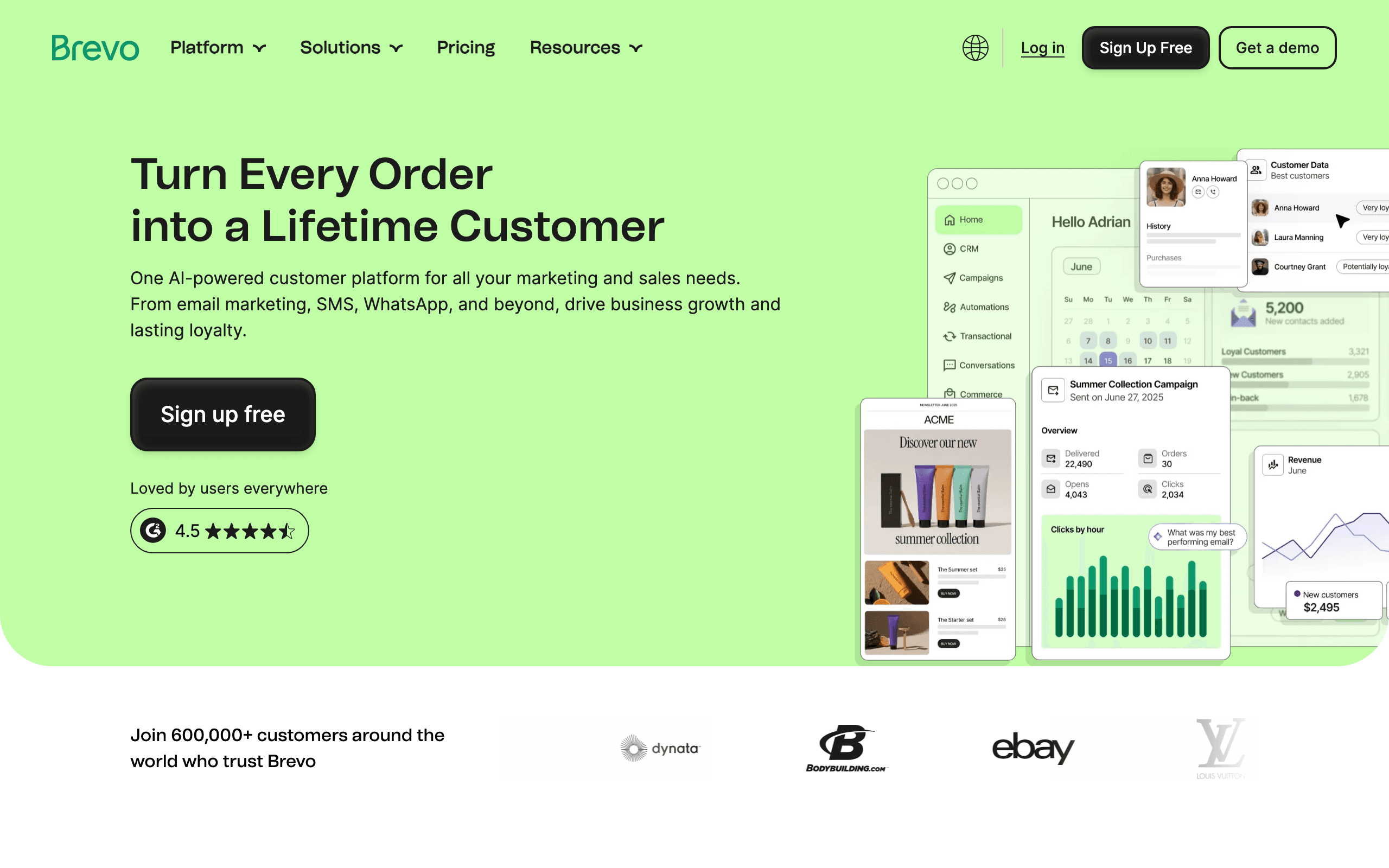
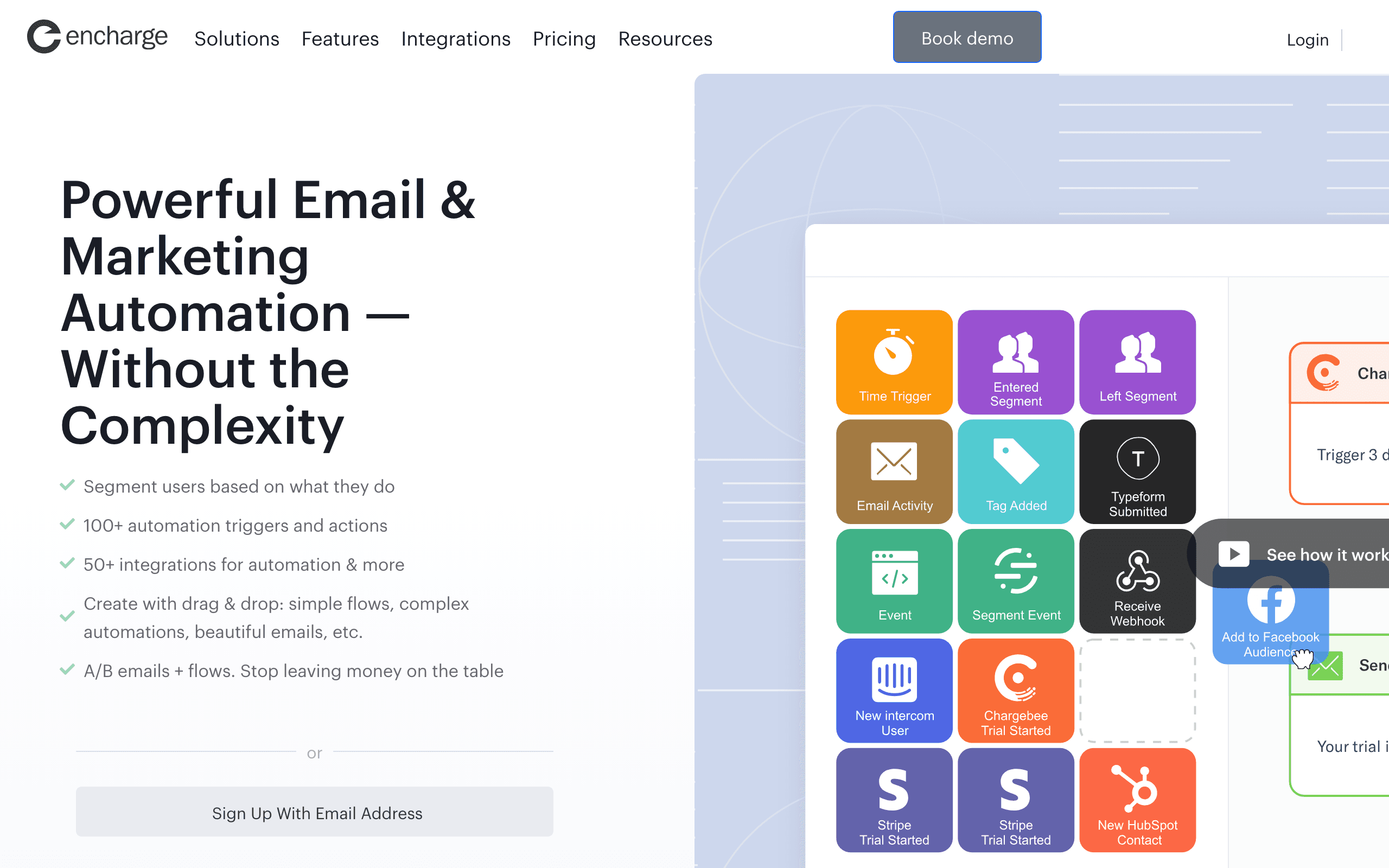
Brevo is best understood as a broad marketing platform: campaigns, contacts, transactional email, SMS, WhatsApp, forms, landing pages, and lightweight CRM-style features. Encharge is narrower and deeper for SaaS lifecycle automation: events, user attributes, scoring, journeys, and product-led segmentation.
That makes the page less about “which is cheaper” and more about whether the buyer is solving a general marketing problem or a product-lifecycle automation problem.
Use-case matchups
| Need | Better fit | Why |
|---|---|---|
| Broad SMB marketing across email and extra channels | Brevo | Brevo includes email, SMS, WhatsApp, forms, landing pages, and CRM-style tools. |
| SaaS lifecycle journeys based on product behavior | Encharge | Encharge is built around events, scoring, behavioral segments, and SaaS automation logic. |
| Native Stripe-triggered SaaS email | Sequenzy | Sequenzy is the better fit when billing events are central to lifecycle messaging. |
| High-contact list with moderate sending | Brevo | Brevo's email-volume model can be favorable when contacts are high but sends are controlled. |
| Product-qualified lead and activation workflows | Encharge | Encharge has the stronger SaaS automation model for scoring and product-event branches. |
Best Fit by Automation Depth
Best email marketing tool for broad SMB campaigns
Brevo is the better fit when the buyer needs a practical marketing suite: email campaigns, transactional sending, SMS, WhatsApp, forms, landing pages, and CRM-style contact management. It is strongest when the team values channel coverage and lower operating cost over deep product-event automation.
Best email marketing tool for SaaS activation and scoring
Encharge is the better fit when the team can feed clean product events into scoring, branches, and activation journeys. It is more relevant for SaaS growth teams that need product-qualified lead workflows, behavior-based nudges, and lifecycle segmentation.
Best email marketing tool for native Stripe-triggered SaaS email
Sequenzy is the better fit when billing state is the main lifecycle signal. Failed payments, trials, upgrades, downgrades, and churn-risk campaigns need native subscription context rather than a general SMB suite or a broader SaaS automation platform.
Pricing reality
Do not evaluate Brevo and Encharge from a headline monthly price alone. The bill can change depending on how each platform counts email volume, contacts, automation features, integrations, support, and implementation help.
| Cost area | Brevo question | Encharge question |
|---|---|---|
| Billing unit | Are you limited by email volume, daily sends, or plan features? | Are you limited by contacts, events, or plan features? |
| Channels | Are SMS, WhatsApp, and transactional email priced separately? | Do you need third-party tools for SMS, transactional, or in-app messaging? |
| Automation | Which plan unlocks the workflows you actually need? | Which plan unlocks scoring, branching, integrations, and advanced segments? |
| Data plumbing | Can your product events reach Brevo cleanly? | Do your events and attributes map cleanly into Encharge? |
| Services | Will onboarding, migration, deliverability, or support cost extra? | Will implementation help or higher-touch support require a higher tier? |
Review signals
The page keeps review snippets from G2, Capterra, and Trustpilot in the structured review data. Use them as directional buyer evidence: Brevo reviewers emphasize stack consolidation and low operating cost, while Encharge reviewers emphasize SaaS-specific automation, scoring, and behavioral segmentation. The main caution is also visible in those reviews: Encharge only pays off if the team will actually use the advanced automation, and Brevo may feel too general for product-led lifecycle work.
Evaluation checklist
Before choosing, map five real journeys: trial signup, activation, failed payment, expansion prompt, and churn-risk follow-up. If those journeys mostly need campaigns and simple segments, Brevo is probably enough. If they depend on product events, user properties, behavioral scoring, and precise branches, Encharge deserves a closer look.
Also verify who owns the tool. Marketing teams often prefer Brevo because it covers more day-to-day communication tasks. Growth and lifecycle teams often prefer Encharge when engineering can supply clean product data.
Migration checklist
| Step | What to check |
|---|---|
| Contact export | Export contacts, consent fields, tags, unsubscribes, bounced contacts, and custom fields. |
| Event model | Decide which product events and user attributes must exist in the new tool before launch. |
| Journey rebuild | Rebuild automations manually; do not expect complex branches or scoring rules to transfer automatically. |
| Templates | Recreate templates and test rendering, links, unsubscribe behavior, and sender identity. |
| Deliverability | Warm important senders, verify domains, and monitor bounces, spam complaints, and engagement during the switch. |
Decision checklist
- Are you buying a broad marketing suite or a SaaS lifecycle automation system?
- Which billing unit matters more for your business: sends, contacts, events, or plan-gated automation?
- Can engineering supply clean product events and attributes if you choose Encharge?
- Do you need SMS, WhatsApp, landing pages, or CRM-style tools in the same product?
- Would native Stripe-triggered email make Sequenzy a cleaner fit than either broader option?
Brevo (formerly Sendinblue) and Encharge serve different markets with different approaches. Brevo is a budget-friendly all-in-one marketing platform for any business type. Encharge is purpose-built for SaaS companies with advanced behavioral automation. See our Brevo and Encharge comparisons for more context.
Different Pricing Models
Brevo and Encharge use different pricing assumptions, so the cheaper option depends on your contact count, email volume, automation requirements, channels, support, and contract terms. High-contact, low-send businesses may prefer Brevo's model. SaaS companies sending frequent lifecycle emails should compare the current tiers against real journey volume before deciding.
All-in-One vs Specialized
Brevo includes email, SMS, WhatsApp, landing pages, and basic CRM in one platform. Encharge focuses exclusively on email automation for SaaS. If you need multi-channel marketing, Brevo delivers more for less. If you need deep email automation for SaaS lifecycle marketing, Encharge's specialization pays off.
Automation Capabilities
Encharge has enterprise-grade SaaS automation. User scoring, complex behavioral triggers, advanced segmentation based on product usage. Brevo's automation covers basics - welcome sequences, cart abandonment, simple triggers. For sophisticated behavioral marketing, Encharge is clearly stronger.
Integration Philosophy
Encharge connects to 50+ SaaS-specific tools including Segment, Intercom, and HubSpot CRM. Brevo has broader but more general integrations. Neither has native Stripe integration - both require Zapier or similar middleware for payment-triggered emails.
The Free Tier Advantage
Brevo offers a generous free plan: 300 emails/day with unlimited contacts. Encharge only provides a 14-day trial with no ongoing free option. For early-stage companies testing the waters, Brevo's free tier is valuable.
Making the Choice
Choose Brevo for: budget constraints, multi-channel needs (SMS/WhatsApp), general marketing, all-in-one simplicity. Choose Encharge for: SaaS-specific behavioral automation, user scoring, advanced lifecycle marketing, deep integrations with SaaS tools. For SaaS with Stripe billing, consider Sequenzy as a unified alternative with native payment integration.
General-Purpose vs SaaS-Specific Tools
The core tension between Brevo and Encharge reflects a broader decision every SaaS company faces: use a general-purpose tool that costs less but fits imperfectly, or invest in a specialized tool that costs more but understands your business model. Neither answer is universally correct.
Brevo was built for any business type. Its email, SMS, and CRM features work for e-commerce, service businesses, nonprofits, and SaaS alike. This generality means the platform does not understand SaaS-specific concepts like trial-to-paid conversion, feature adoption tracking, or product-qualified leads. You can approximate these workflows, but the platform does not think in those terms.
Encharge was built specifically for SaaS. User scoring, behavioral segmentation based on product events, and lifecycle automation templates speak the language of product-led growth. The trade-off is narrower capability and a more specialized buying decision. The question is whether SaaS-specific depth justifies choosing a focused lifecycle tool over a broader general marketing suite.
The Pricing Model Trade-off
Brevo and Encharge use fundamentally different pricing models that dramatically affect total cost depending on your usage patterns. Brevo charges by email volume with unlimited contacts. Encharge charges by contacts with unlimited emails. The cheaper option depends entirely on your sending frequency and list size.
For SaaS teams, the practical pricing exercise is to model real lifecycle volume: onboarding, activation, usage nudges, reactivation, payment recovery, expansion prompts, and product announcements. Then compare current plan gates for contacts, sends, event data, support, and integrations. The cheaper tool can change once you include implementation work and the channels you still need outside the platform.
Understanding your sending patterns before choosing is critical. SaaS companies with aggressive lifecycle email programs (onboarding, feature announcements, usage reports, re-engagement) tend to send more emails per user, which can make Encharge's contact-based pricing more economical at higher sending volumes.
When SaaS Specialization Matters
The gap between Brevo and Encharge becomes most apparent when you need to build sophisticated lifecycle marketing workflows. Consider a product-led growth scenario: you want to score users based on feature adoption, identify product-qualified leads, trigger different nurture sequences based on their engagement level, and route high-score leads to sales.
Encharge handles this natively with user scoring, behavioral triggers, and advanced segmentation. The workflow builder understands concepts like "user completed onboarding" and "user scoring threshold exceeded." Building this in Brevo requires workarounds, manual tagging, and simplified logic that approximates but does not replicate the workflow.
For SaaS companies at the stage where these sophisticated workflows drive measurable revenue, Encharge's premium is justified. For SaaS companies still establishing product-market fit with simpler marketing needs, Brevo's affordability preserves cash for more immediate priorities. Sequenzy sits between both with SaaS-specific features at pricing closer to Brevo, plus native Stripe integration that neither platform offers.








