Overview
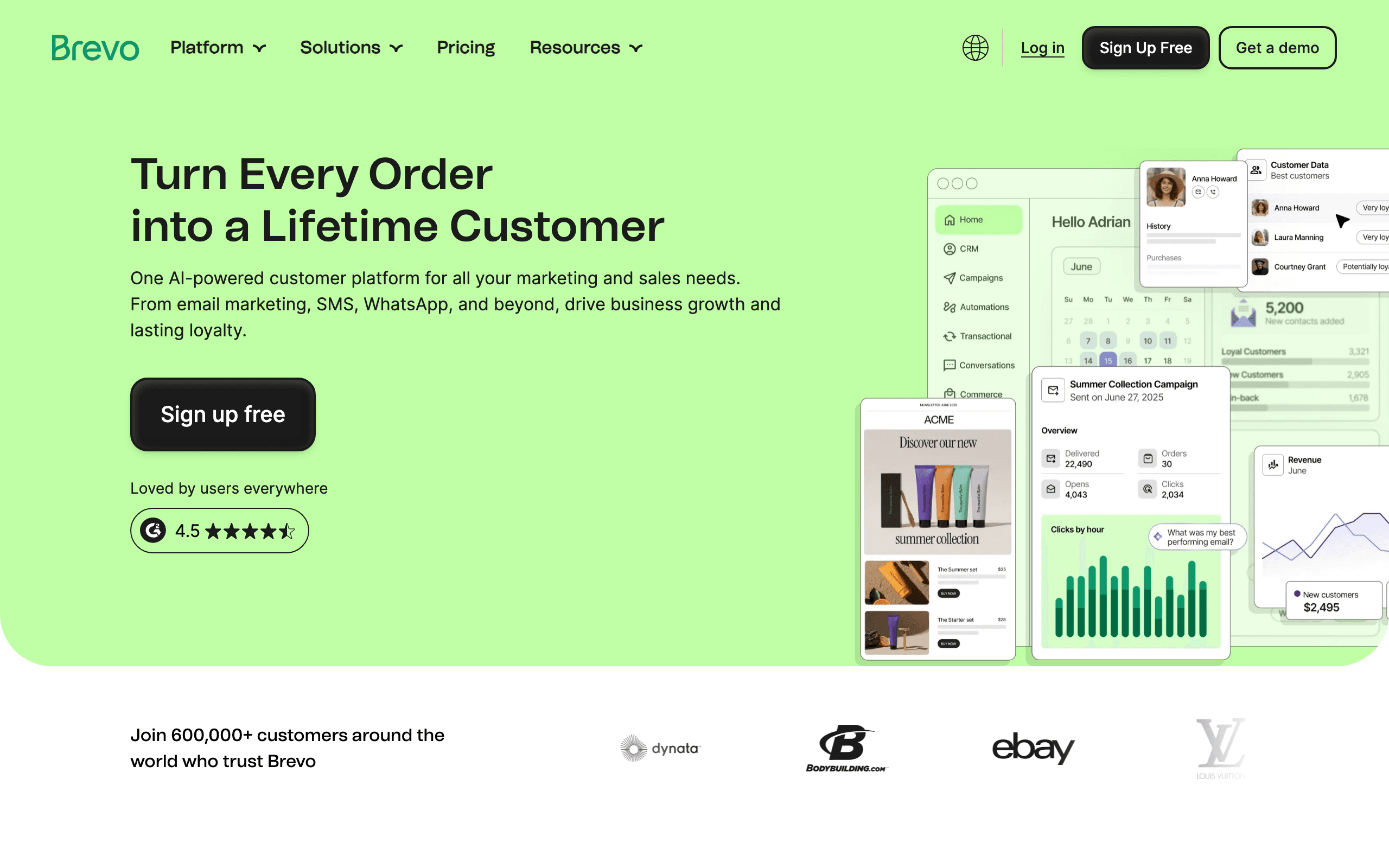
Brevo and Resend are often compared because both can send email, but they are bought for different reasons. Brevo is a marketer-facing platform for campaigns and multi-channel communication. Resend is an engineering-facing platform for product emails, API-driven sending, and template development.
The better user experience is to choose by owner. If marketing owns the workflow, Brevo is easier to justify. If engineering owns the workflow, Resend is usually cleaner.
Use-case matchups
| Need | Better fit | Why |
|---|---|---|
| Visual campaigns, contacts, SMS, WhatsApp, and CRM-style tools | Brevo | Brevo is the broader marketer-facing platform. |
| Transactional email API with modern SDKs and React Email | Resend | Resend is built for developers shipping product emails. |
| Unified SaaS marketing and transactional email | Sequenzy | Sequenzy is the better fit when lifecycle and transactional email should live together. |
| Marketing team owns templates and campaigns | Brevo | Brevo gives non-technical teams a visual builder and campaign workflow. |
| Engineering owns templates, releases, logs, and webhooks | Resend | Resend fits code-first template development and production email monitoring. |
Pricing reality
Do not compare Brevo and Resend from headline plan prices. Brevo may replace several marketing tools. Resend may reduce engineering time and production email risk. Those are different kinds of value.
| Cost area | Brevo question | Resend question |
|---|---|---|
| Billing driver | What changes as contacts, sends, channels, and automation needs grow? | What changes as email volume, domains, team seats, log retention, and overages grow? |
| Required features | Do you need campaigns, forms, SMS, WhatsApp, CRM-style tools, and visual automations? | Do you need SDKs, webhooks, React Email, domains, logs, and API-first workflows? |
| Marketing gaps | Can Brevo cover transactional email well enough for your app? | Will Resend's broadcast features be enough, or will marketing need another platform? |
| Team ownership | Can marketers run the system without engineering support? | Can engineering own templates, releases, events, and production email monitoring? |
Review signals
The structured review data on this page keeps sourced snippets from G2 and Capterra. Brevo reviews emphasize all-in-one marketing value and adequate transactional sending. Resend reviews emphasize developer experience, React Email, API quality, and the fact that marketing features may still require a separate platform.
Migration checklist
| Step | What to check |
|---|---|
| Email streams | Separate marketing campaigns, lifecycle emails, transactional emails, and system alerts. |
| Domain setup | Verify DNS, DKIM, SPF, DMARC, return-path, sender identities, and bounce handling. |
| Template rebuild | Decide which templates live in a visual editor and which live in code. |
| Event mapping | Map product events, API calls, webhooks, and suppression logic before switching providers. |
| Cutover | Move one stream at a time and monitor delivery, bounces, complaints, and application errors. |
Decision checklist
- Is the buyer a marketing team or an engineering team?
- Do you need visual campaign management, or are code-owned templates acceptable?
- Will transactional and marketing email live in one platform or split across tools?
- What log retention, domains, webhooks, and team access are required?
- Would Sequenzy be simpler if the core need is SaaS lifecycle plus transactional email?
Brevo and Resend serve different email needs. Brevo (formerly Sendinblue) is a budget-friendly all-in-one marketing platform with email campaigns, SMS, CRM, and automation. Resend is a modern, developer-first transactional email API built for beautiful code and React Email templates.
Different Tools, Different Jobs
Brevo solves "how do I run marketing campaigns with email, SMS, and automation on a budget?" Resend solves "how do I send transactional emails with a beautiful developer experience?" Comparing them directly is like comparing a Swiss Army knife to a precision tool. See our Brevo alternatives and Resend alternatives for similar options.
Marketing Power vs Developer Experience
Brevo gives marketers everything: visual email builder, drag-and-drop automation, SMS marketing, landing pages, and built-in CRM. It's designed for non-technical users to run complete marketing operations. Resend gives developers a beautiful API, React Email integration, and excellent documentation - but marketing features are just starting.
Pricing Philosophy
Brevo charges per email volume, making it very affordable for high-volume marketing. Resend has a generous free tier (3,000 emails) but prices per email at higher tiers. For pure marketing, Brevo is typically cheaper. For developer-focused transactional, Resend's DX might be worth the premium.
The Unified Alternative
SaaS companies often need both: marketing automation for user engagement AND reliable transactional emails for notifications. Sequenzy offers unified marketing and transactional with native Stripe integration - purpose-built for SaaS rather than general marketing or pure transactional.
Making the Choice
Choose Brevo for budget all-in-one marketing with email, SMS, and CRM. Choose Resend for modern transactional email with excellent developer experience. For SaaS needing unified marketing campaigns and transactional emails, consider Sequenzy.
The Template Development Divide
The biggest day-to-day difference between Brevo and Resend is how you build email templates. Brevo provides a visual drag-and-drop editor designed for marketers who want to create campaigns without writing code. Resend embraces code-first development through React Email, an open-source framework the Resend team created specifically for building email templates as React components.
For development teams, React Email is transformative. Instead of wrestling with table-based HTML layouts and inline CSS, developers write JSX components with proper styling abstractions. Templates become version-controlled code that can be reviewed, tested, and deployed alongside application code. This approach eliminates the disconnect between application development and email creation.
For marketing teams without developer resources, Brevo's visual builder is the only viable option. Not every company has engineers available to write React components for email templates. The drag-and-drop editor lets marketers launch campaigns independently, which is exactly what smaller teams need.
API Ergonomics Beyond Documentation
Resend's API advantage goes deeper than beautiful documentation. The API design itself follows modern conventions that reduce integration time. Sending an email requires a single, clean API call with intuitive parameters. Error responses are descriptive and actionable. Rate limiting headers follow standard patterns. The entire experience feels like it was designed by someone who has integrated dozens of email APIs and decided to fix every pain point.
Brevo's API is functional and complete, covering far more surface area than Resend's focused transactional endpoints. You can manage contacts, campaigns, automation workflows, SMS, and more through the API. But the design reflects its evolution as a marketing platform - endpoints follow older conventions, error messages can be cryptic, and the SDK sometimes requires more boilerplate than feels necessary. For developers who need marketing API capabilities alongside transactional sending, Brevo's API breadth compensates for its rougher ergonomics.
The practical impact of API quality shows up in maintenance costs. Teams using Resend's API report spending less time debugging integration issues and handling edge cases. Teams using Brevo's API gain access to far more functionality but invest more engineering time in the integration layer. The right trade-off depends on whether you need transactional email simplicity or marketing platform depth.
The Multi-Channel vs Single-Channel Decision
Brevo's biggest structural advantage is multi-channel capability. Email, SMS, WhatsApp, live chat, and CRM all live in one platform with shared contact data. A customer's email opens, SMS responses, and chat conversations all contribute to a unified profile. For businesses running cross-channel campaigns, this integration eliminates the data silos that plague multi-tool stacks.
Resend deliberately stays focused on email delivery. There are no plans for SMS, no chat widget, no CRM. This focus is a feature, not a limitation - it means every engineering effort goes toward making email delivery better. But it also means Resend cannot be your only communication platform. You will need additional tools for other channels.
For SaaS companies, the channel question often resolves simply. Most SaaS products communicate with users primarily through email - transactional notifications, onboarding sequences, product updates, and lifecycle campaigns. SMS and WhatsApp matter for consumer-facing businesses but rarely for B2B SaaS. Sequenzy addresses this SaaS reality by focusing on email with native Stripe integration rather than trying to be an everything platform.
Best Fit by Email Stack Shape
Best email marketing tool for budget all-in-one communication
Choose Brevo when the business wants email campaigns, basic automation, CRM, SMS, WhatsApp, and chat in one budget-friendly platform. It is the better fit when marketing breadth matters more than developer experience.
Best transactional email API for developers
Choose Resend when the team needs a clean email API, React Email workflow, and strong transactional developer experience. It is not a marketing platform, so lifecycle campaigns need another tool or custom build.
Best email marketing tool for SaaS transactional and lifecycle email
Choose Sequenzy when the product needs transactional messages, onboarding sequences, newsletters, and Stripe-triggered lifecycle email in one email-first platform. It fills the gap between Brevo's broad marketing suite and Resend's focused sending API.