Overview
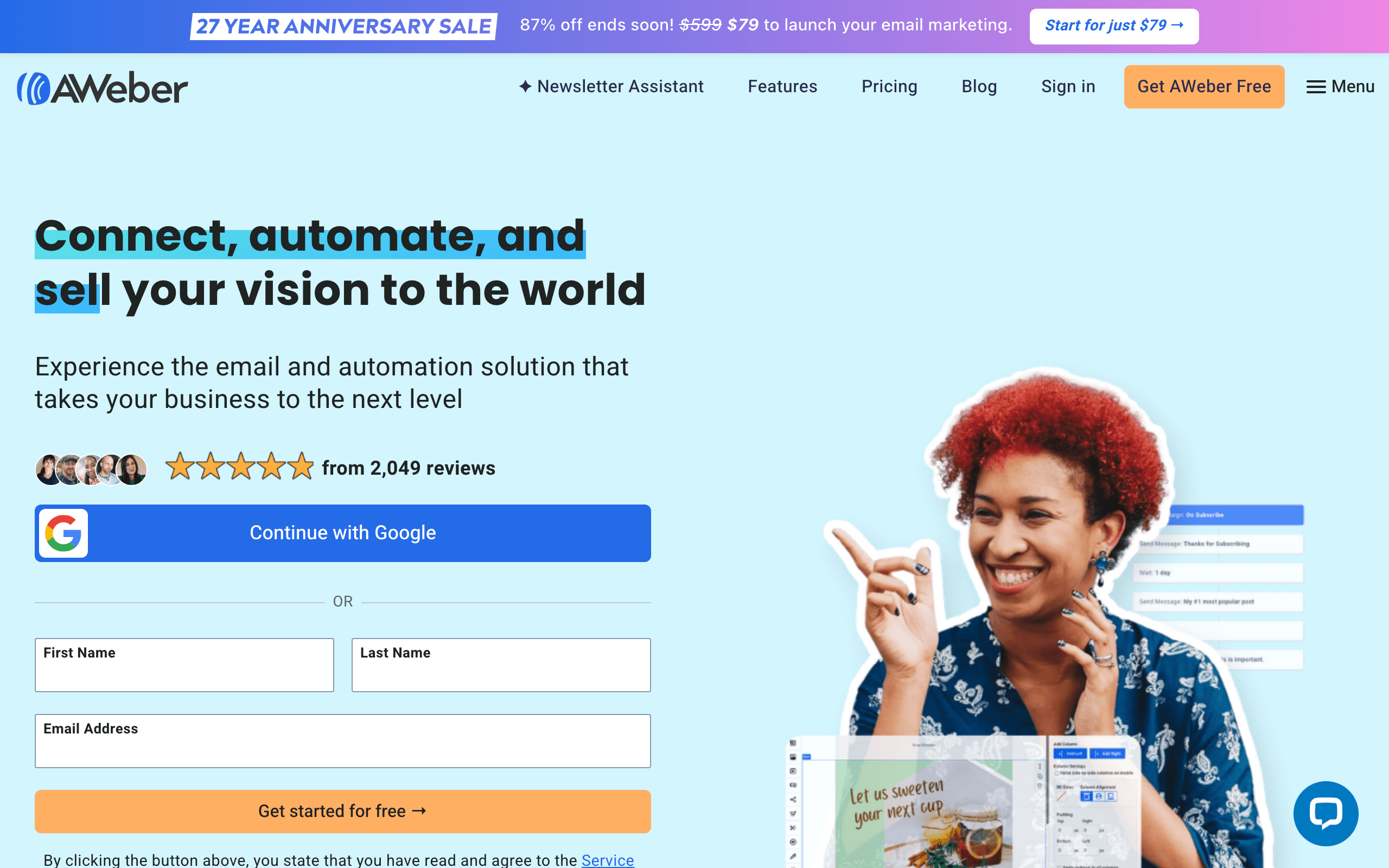
BirdSend and AWeber both serve email marketers but with different priorities. BirdSend is a lightweight email marketing platform built for content creators. AWeber is an established email marketing platform with a long operating history.
BirdSend's Niche
BirdSend keeps its feature list narrow and aimed at one thing: showing you revenue per subscriber. You get LTV and ALTV tracking on every contact, plus unique-contact billing, so subscribers on more than one list only count once. There is no landing page builder or advanced automation here, just a lean tool for creators who want to see which subscribers are actually paying. AWeber trades that focus for a broader, more established toolkit.
AWeber offers a mature platform, support resources, templates, and a broader beginner-friendly toolkit, while BirdSend focuses on revenue tracking and creator email.
Pricing reality
Compare current pricing against real usage. For BirdSend, check subscriber limits, send limits, unique-contact billing, and automation depth. For AWeber, check subscriber limits, sends, landing pages, templates, AI writing, support, and plan-level feature access.
Making the Choice
Choose BirdSend for creator email with revenue tracking. Choose AWeber for a mature general email platform with support, templates, and landing pages. For SaaS email with Stripe, consider Sequenzy.
Platform Longevity and Trust
When choosing an email marketing platform, longevity matters more than most creators realize. AWeber has been in business since 1998, surviving multiple industry shifts, economic downturns, and competitive waves. That track record means your subscriber data, automation workflows, and sending reputation are on a platform unlikely to disappear overnight.
BirdSend is a newer, smaller platform. While it serves its niche well, the risk of a smaller company pivoting, being acquired, or shutting down is higher. For creators whose email list is their primary business asset, platform stability should factor into the decision alongside price and features.
This is not to say newer platforms are bad choices. Many innovate in ways established players cannot. But the risk calculus is different when your livelihood depends on uninterrupted email delivery.
The Revenue Tracking Advantage
BirdSend's LTV and ALTV tracking per subscriber is a genuinely differentiating feature that AWeber does not offer. For creators selling digital products, courses, or coaching, knowing exactly how much revenue each subscriber has generated transforms how you think about your email list.
Instead of optimizing for open rates and click rates - vanity metrics that do not directly correlate with income - you can focus on the subscribers who actually spend money. This insight helps you craft content that resonates with buyers rather than browsers, segment your audience by value, and make data-driven decisions about where to invest your marketing energy.
AWeber provides standard email analytics like opens, clicks, and subscriber growth. These metrics tell you about engagement but not about revenue. If revenue visibility is critical to your business decisions, BirdSend provides data that AWeber simply does not track.
Support and Community Ecosystem
AWeber's customer support is consistently praised across review platforms. Phone support, live chat, and extensive knowledge base articles mean you can get help quickly when issues arise. The platform's large user base also means community resources, tutorials, and third-party guides are abundant.
BirdSend's smaller user base means a thinner support ecosystem. Fewer community resources, fewer integration guides, and a smaller team handling support requests. For technically confident creators who rarely need help, this is irrelevant. For those who rely on support during setup, migration, or troubleshooting, AWeber's infrastructure provides more safety net.
Use-case matchups
| Use case | Better fit | Why |
|---|---|---|
| Creator revenue tracking | BirdSend | BirdSend is more relevant when creator revenue per subscriber is the key metric. |
| Mature support and templates | AWeber | AWeber is stronger when setup help and beginner-friendly resources matter. |
| Simple landing pages | AWeber | AWeber is broader than BirdSend for creator marketing infrastructure. |
| Lower platform-continuity risk | AWeber | Smaller tools can be useful, but mature platforms reduce continuity risk. |
| SaaS lifecycle email | Sequenzy | Sequenzy is more focused when billing events drive messaging. |
Best Fit by Creator Support and Revenue Needs
Best creator email tool for revenue tracking
BirdSend is the better fit when a creator already has an audience and wants email to behave like a revenue channel. Its strongest use case is tracking subscriber value, segmenting around buyer behavior, and keeping the workflow focused on simple broadcasts or sequences that sell courses, coaching, memberships, or digital products. Choose it when revenue per subscriber matters more than template depth or a large support ecosystem.
Best beginner email platform for support and templates
AWeber is stronger for small businesses, coaches, nonprofits, and beginner creators who want more hand-holding. Phone support, live chat, templates, landing pages, and a mature knowledge base reduce setup risk. It is not the newest-feeling platform, but it is a safer choice when someone needs reliable help, broader starter infrastructure, and fewer decisions during migration.
Best SaaS email platform for billing-driven lifecycle messages
Sequenzy is the better fit when the audience is made of trial users, subscribers, or paying customers rather than newsletter readers. If the email plan includes onboarding, invoices, receipts, failed-payment nudges, renewal reminders, and product-triggered campaigns, BirdSend and AWeber are both too creator/small-business oriented. Sequenzy fits the lifecycle workflow better.
Review signals
The reviews show BirdSend's positive signal around LTV tracking and low-cost creator workflows, with caution around limited templates, automation, and ecosystem depth. AWeber's signal is reliability, support, AI writing help, and long-term platform stability, with the tradeoff that automation and interface polish may feel dated.
Migration checklist
Before moving between BirdSend and AWeber, export contacts, lists, suppression data, tags, custom fields, revenue tracking fields, templates, campaign history, and sequences. If moving to AWeber, map creator segments into lists or tags and rebuild forms, landing pages, and autoresponders. If moving to BirdSend, preserve revenue fields where possible and simplify broader AWeber assets into creator-focused email sequences.
Decision checklist
| Question | Why it matters |
|---|---|
| Is subscriber revenue tracking central? | BirdSend is more relevant when creator revenue per subscriber is the key metric. |
| Do you need mature support and templates? | AWeber is stronger when setup help and beginner-friendly resources matter. |
| Are landing pages required? | AWeber is broader than BirdSend for simple creator marketing infrastructure. |
| How much platform risk can you tolerate? | Smaller tools can be useful, but mature platforms reduce continuity risk. |
| Is Stripe lifecycle email central? | Sequenzy is more focused when billing events drive messaging. |