Overview
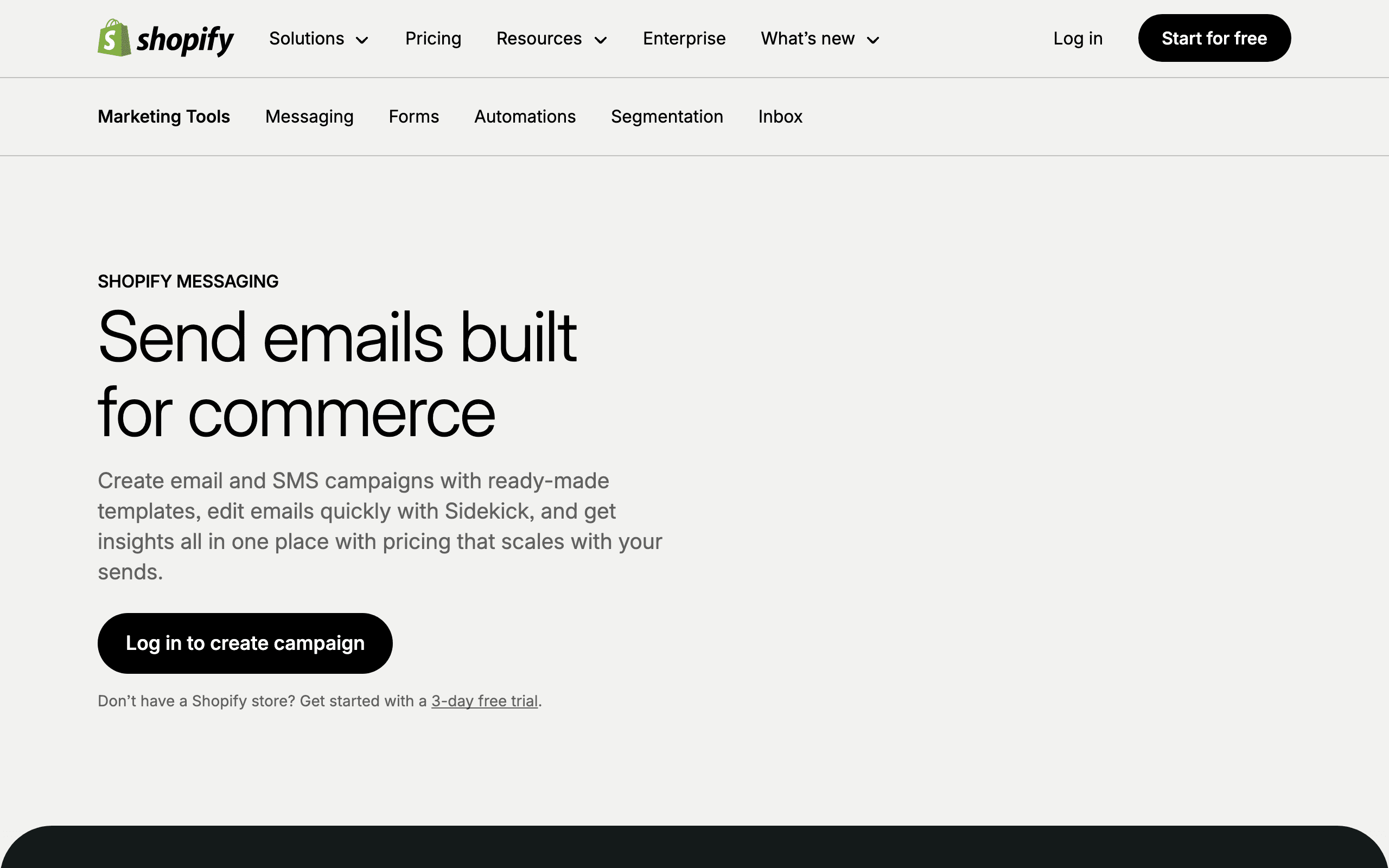
Shopify Email is free and built into your store. Constant Contact is a legacy email platform with event marketing and social tools. For Shopify stores specifically, neither is the best choice for serious e-commerce email.
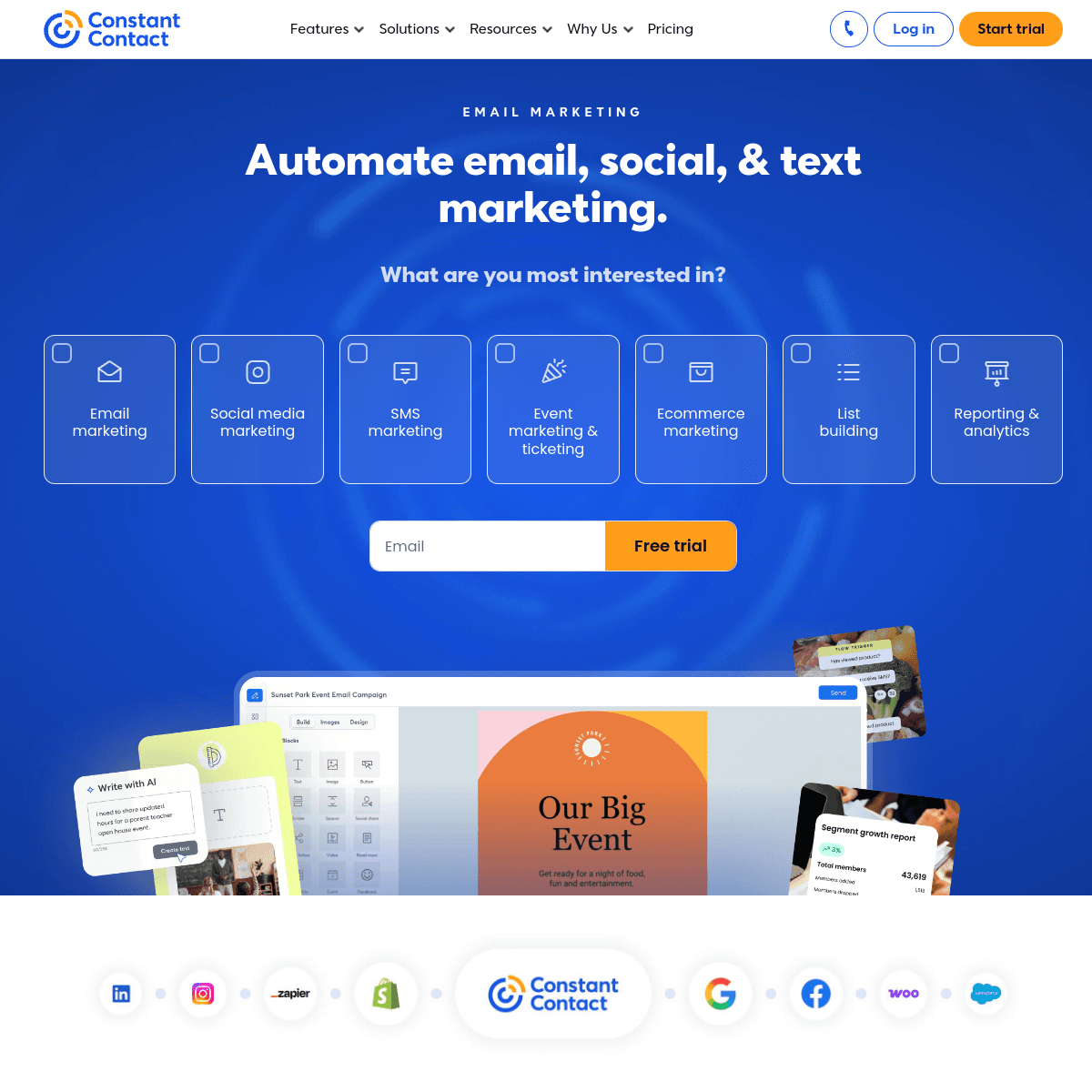
Constant Contact's strength is in event management and social posting alongside email. If your store hosts events, workshops, or trunk shows, that unique combination has value. For standard e-commerce email marketing, dedicated platforms like Sequenzy, Omnisend, or Klaviyo are better investments.
A Free Built-In Tool vs a Legacy Platform That Costs 10x More
Shopify Email costs roughly $10/month for most stores. Constant Contact costs $80-100/month at comparable subscriber counts. The price gap is staggering for what Constant Contact adds - better templates, event management tools, social media posting, and phone support. For Shopify stores that do not host events or need phone support, the premium is difficult to justify when Shopify Email handles basic campaigns for free.
Constant Contact's event marketing tools are its genuine differentiator. Registration pages, ticketing, attendee communication, and follow-up campaigns work within the email platform. For stores that host workshops, trunk shows, pop-up events, or in-store gatherings, this integrated event management has real value that no Shopify email app provides. But for the majority of online-only Shopify stores, event tools are irrelevant overhead.
The Phone Support Premium and Who Benefits From It
Constant Contact remains one of the few email platforms offering phone support, which matters for less technically confident users. Local retailers, brick-and-mortar shops transitioning online, and small business owners who prefer talking to a person over reading documentation genuinely benefit from this support model. Shopify Email relies on Shopify's general support channels, which handle email questions as a secondary concern.
For tech-comfortable Shopify merchants, phone support is not worth $70-90/month in additional cost. Documentation, community forums, and email support handle most issues adequately. But for the small business owner who has never set up email authentication or configured automation triggers, Constant Contact's guided phone support prevents expensive mistakes and reduces the frustration of self-service troubleshooting.
Neither Tool Addresses Subscription Software Business Models
Both Shopify Email and Constant Contact serve product-based businesses - one through Shopify, the other through traditional small business marketing. Neither handles transactional email for SaaS products, subscription lifecycle automation, or billing-triggered sequences. For software companies, Sequenzy combines marketing campaigns and transactional email with native Stripe integration at $49/month - built for recurring revenue businesses rather than e-commerce or local business marketing.
Use-case matchups
| Situation | Best first look | Why |
|---|---|---|
| New Shopify store wants the simplest built-in campaign tool | Shopify Email | Shopify Email is the baseline when the team wants to send basic campaigns without adding another platform. |
| Store wants a familiar SMB marketing platform | Constant Contact | Constant Contact is stronger when conventional campaigns and small-business support matter more than Shopify-native simplicity. |
| Shopify or WooCommerce team wants email automation plus transactional email | Sequenzy | Sequenzy is stronger when the job includes lifecycle automation and transactional messages, not just Shopify campaigns. |
| Store only needs occasional product announcements | Shopify Email | Staying native avoids extra setup when campaigns are simple and infrequent. |
| Team needs the specialist capability | Constant Contact | Constant Contact deserves the first demo when the main requirement is legacy small-business campaigns and support. |
| Team wants store email without SMS or a large suite | Sequenzy | Sequenzy is a focused upgrade when email workflows are deeper than Shopify Email but narrower than a full ecommerce SMS platform. |
Best Fit by Native Shopify Campaigns and Small-Business Support
Best email tool for simple Shopify store updates
Shopify Email is the better fit when the store only needs native product announcements, basic promos, and a minimal workflow inside Shopify admin.
Best email marketing tool for traditional small-business campaigns
Constant Contact is the better fit when the team values familiar campaign workflows, phone support, event or local-business marketing, and hands-on help over Shopify-native simplicity.
Best email tool for store lifecycle without a large suite
Sequenzy is the better fit when Shopify or WooCommerce teams need lifecycle automation and transactional email without SMS or a broad SMB marketing platform.
Pricing reality
The pricing signals on this page list Shopify Email at ~$10/month or equivalent usage cost, Constant Contact at $80+/month, and Sequenzy at $49/month. Shopify Email often looks cheapest because it is built into Shopify, but that does not mean it covers the same work.
Shopify Email's real value is low setup friction for basic campaigns. Constant Contact's real cost depends on whether the store uses legacy small-business campaigns and support.
Review signals
This page has existing review data from Shopify Community, Trustpilot, Capterra. Keep those sources visible because Shopify-native tools and external platforms differ most in day-to-day workflow, support, app reliability, billing, and ecommerce sync quality.
For Shopify Email, validate community and app-context feedback around simplicity, limits, templates, reporting, and what merchants outgrow first. For Constant Contact, focus review research on whether users praise the reason you would choose it: legacy small-business campaigns and support.
Migration checklist
| Workstream | Staying with Shopify Email | Moving toward Constant Contact | Simplifying to Sequenzy |
|---|---|---|---|
| Shopify data | Keep customer segments, products, discounts, and campaign sending inside Shopify. | Map contacts, lists, tags, templates, forms, events, automations, and suppressions. | Connect store events, subscribers, attributes, suppressions, and transactional paths. |
| Consent and suppression | Confirm Shopify customer consent, unsubscribes, and segmentation rules are clean. | Import consent, unsubscribes, tags, fields, and suppression status into Constant Contact. | Import subscribers, tags, attributes, and suppression status. |
| Automations | Use Shopify-native basics and avoid rebuilding complex flows if they are not needed. | Rebuild the workflows that prove Constant Contact's advantage in legacy small-business campaigns and support. | Rebuild lifecycle and transactional email flows without SMS scope. |
| Templates and forms | Keep simple product campaigns and brand settings inside Shopify. | Move templates, forms, popups, brand assets, and Shopify-specific content. | Move email templates and lifecycle message content. |
| Reporting | Accept simpler Shopify campaign reporting if it answers the question. | Validate campaign, revenue, segment, and channel reporting before switching. | Validate campaign, automation, transactional, and lifecycle reporting. |
Decision checklist
- Is Shopify Email's minimal automation holding the store back at its current send volume, or is it still enough?
- Does Constant Contact's strength in legacy small-business campaigns and support justify another vendor, bill, and integration?
- Which handles Shopify consent and unsubscribes more cleanly: native Shopify Email or Constant Contact's basic integration?
- Do these prices still hold once subscriber count and add-ons grow, given Shopify Email's free tier covers only the first 10k emails a month?
- Does the team need SMS or event tools, or just deeper email workflows than Shopify Email's minimal automation offers?
- Constant Contact should justify its monthly cost through support and broader SMB features.