Overview
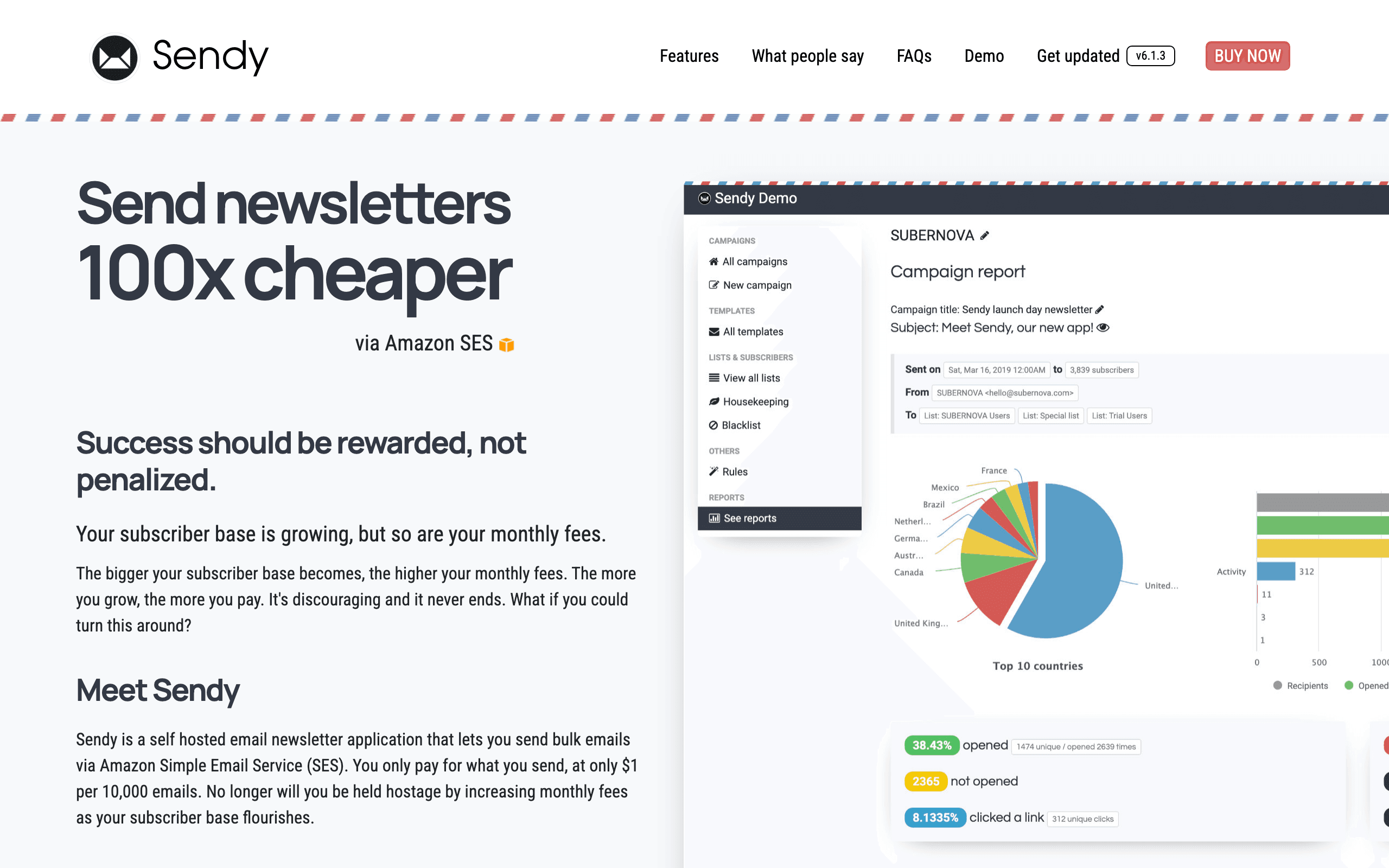
Sendy and MailerLite both target budget-conscious email marketers but take very different approaches. Sendy is self-hosted for maximum savings. MailerLite is a polished SaaS with affordable pricing. Both work, but they serve different skill levels.
Two Budget Approaches
Sendy minimizes cost through self-hosting. You pay $69 once, then just Amazon SES fees. MailerLite minimizes cost through efficient SaaS. You pay monthly but get modern features without technical hassle. Both are "budget" options with different trade-offs.
The Technical Divide
This is the core difference. MailerLite requires zero technical skills. Sign up and start sending. Sendy requires server administration, Amazon SES setup, DNS configuration, and ongoing maintenance. If you're not comfortable with web hosting, MailerLite is your only option.
Feature Comparison
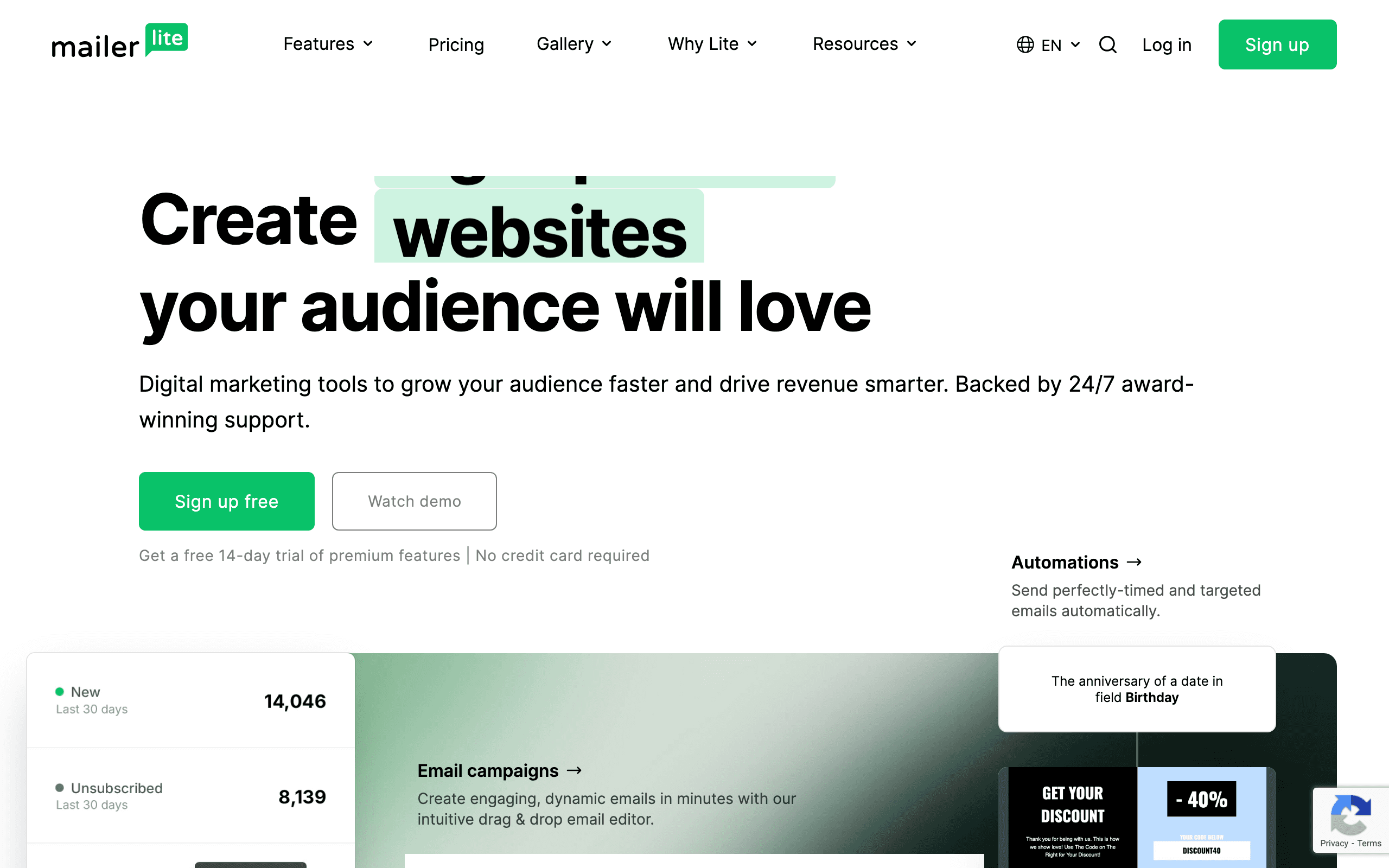
MailerLite includes landing pages, website builder, visual automation, modern templates, and 140+ integrations. Sendy has basic email campaigns and simple autoresponders. The feature gap is significant. MailerLite offers a complete marketing toolkit. Sendy is email-only with dated interfaces.
Cost Comparison
At 10k contacts with moderate sending, Sendy costs ~$5/month (just SES fees after initial purchase). MailerLite costs $39/month. Over a year, that's roughly $400 difference. Whether that's worth the technical hassle and feature limitations depends on your situation.
For SaaS Companies
Neither platform is built for SaaS. Sendy lacks event tracking and sophisticated automation. MailerLite lacks native Stripe integration and SaaS-specific features. For subscription businesses wanting Stripe integration, consider Sequenzy.
Making the Choice
Choose Sendy if you're technical, want absolute minimum costs, and have basic email needs. Choose MailerLite if you want modern features, ease of use, and affordable pricing without server management. Most users should choose MailerLite.
The Most Direct Budget Comparison in Email Marketing
Sendy and MailerLite are arguably the two most direct competitors in the budget email marketing space. Both target cost-conscious senders. Both offer honest, affordable pricing without enterprise upsells. Both deliver reliable email campaigns. The difference is the self-hosted vs managed trade-off, and for most users, this trade-off has a clear winner.
MailerLite is the practical choice for the majority of budget-conscious email marketers. The free tier for up to 1,000 subscribers provides a risk-free starting point. The paid plans at $10-39/month include features that would cost hundreds from premium platforms. The interface is modern and requires zero technical knowledge. For most businesses, MailerLite delivers the best value per dollar in email marketing.
Sendy's niche is narrower but valid. At 50,000+ subscribers with regular sending, the annual savings versus MailerLite reach $500-800. For technically capable teams, this savings funds other tools or growth initiatives. The key qualifier is "technically capable" -- without in-house server management skills, Sendy's savings are offset by the cost of external technical help.
Feature Depth: Where MailerLite Punches Above Its Weight
MailerLite includes features that platforms charging three to four times more gate behind premium tiers. Landing pages, popup forms, website builder, visual automation, and A/B testing are all available on affordable plans. This feature density at the price point is unusual in the industry.
Sendy includes none of these ancillary features. It does email campaigns and basic autoresponders. Landing pages require a separate tool. Popup forms require a separate tool. Automation beyond time-based sequences is not possible. The total cost of Sendy plus supplementary tools often exceeds MailerLite's all-in-one price.
For businesses evaluating total cost of ownership, list every tool your email marketing requires: email sending, landing pages, forms, basic automation, and analytics. MailerLite covers all of these in one subscription. Sendy covers only email sending, with everything else requiring additional solutions. The "cheapest" tool is only cheapest when it covers all your needs.
The Automation Builder Divide
MailerLite's visual automation builder lets users create multi-step workflows with triggers, conditions, delays, and actions. While not as sophisticated as ActiveCampaign or HubSpot, it covers the automation needs of most small businesses: welcome sequences, engagement-based tagging, re-engagement campaigns, and date-triggered emails.
Sendy's autoresponders are limited to sequential emails triggered by list subscription with time delays between messages. No conditions, no branching, no behavior-based triggers. If a subscriber should receive different content based on their engagement, Sendy cannot accommodate this without manual list management.
The practical impact is significant. A MailerLite user can create a welcome sequence that tags engaged subscribers differently from inactive ones, then routes them into appropriate follow-up sequences automatically. A Sendy user sends the same sequence to everyone and manually segments based on open rates -- if they segment at all.
When to Start with MailerLite and When to Start with Sendy
For new businesses testing email marketing, start with MailerLite's free tier. Zero cost, zero risk, modern features. If email becomes a core channel and your technical team wants to optimize costs at scale, evaluate Sendy at that point. Starting with MailerLite costs nothing and provides a complete toolkit for learning and iterating.
For established businesses with technical teams already managing AWS infrastructure, Sendy can be added alongside existing server resources with minimal marginal cost. If your team already administers PHP applications and uses Amazon SES for transactional email, adding Sendy for marketing email is a natural extension that leverages existing competencies.
For SaaS companies at any stage, neither MailerLite nor Sendy provides the event-based automation and Stripe integration that subscription businesses need. Sequenzy offers these capabilities at $49/month -- close to MailerLite's pricing but with SaaS-specific features including transactional email and revenue attribution.
Use-case matchups
| Situation | Best first look | Why |
|---|---|---|
| Team wants the lowest visible email sending cost and can self-host | Sendy | Sendy is the baseline here for teams comfortable operating their own app layer on top of a sending service. |
| Team wants affordable hosted email with cleaner UX | MailerLite | MailerLite is a lower-friction hosted alternative when Sendy maintenance is not worth it. |
| SaaS or subscription team wants lifecycle and transactional email | Sequenzy | Sequenzy is stronger when Stripe events, transactional messages, and campaigns need a hosted lifecycle workflow. |
| Technical team already owns servers and AWS email operations | Sendy | Sendy can make sense when maintenance, updates, deliverability setup, and backup ownership are acceptable. |
| Team needs the specialist capability | MailerLite | MailerLite deserves the first demo when the main requirement is clean affordable newsletters and automations. |
| Team wants hosted workflows without self-hosting | Sequenzy | Sequenzy removes Sendy-style app maintenance while staying focused on email automation and transactional messages. |
Pricing reality
The pricing signals on this page list Sendy at ~$1-5/month or equivalent operating cost, MailerLite at $39/month, and Sequenzy at $49/month. Sendy's number should never be read as the whole cost.
Sendy usually shifts cost from the vendor invoice to operations: hosting, updates, backups, SES or SMTP setup, bounce handling, deliverability monitoring, and internal troubleshooting. MailerLite's real cost depends on whether the team needs clean affordable newsletters and automations.
Review signals
For Sendy, validate reviews around setup, updates, SES integration, bounce handling, deliverability, and the amount of technical maintenance required. For MailerLite, focus review research on whether users praise the reason you would choose it: clean affordable newsletters and automations.
Best Fit by Cost and Simplicity
Best low-cost email tool for AWS SES users
Sendy fits technical teams that can manage a self-hosted app and want very low sending costs through Amazon SES. It is strongest when volume economics justify owning setup, monitoring, bounces, and deliverability details.
Best hosted email platform for creators and small teams
MailerLite is the better fit when the team wants forms, landing pages, websites, templates, automations, and support without self-hosting. It works best when accessibility and polished workflows are worth more than raw SES cost.
Best SaaS lifecycle platform for managed product email
Sequenzy fits SaaS teams that want managed lifecycle email connected to product and billing events. It avoids self-hosting while staying more focused on subscription customer journeys than a general email platform.
Migration checklist
| Workstream | Moving toward Sendy | Moving toward MailerLite | Simplifying to Sequenzy |
|---|---|---|---|
| Hosting and ownership | Provision hosting, backups, updates, SSL, cron jobs, sending service credentials, and admin access. | Map subscribers, groups, fields, automations, forms, landing pages, templates, and unsubscribes. | Import subscribers, attributes, tags, suppressions, and lifecycle events into a hosted workflow. |
| Sending setup | Configure SES or SMTP, SPF, DKIM, DMARC, bounce processing, complaint handling, and suppression logic. | Confirm sender authentication, deliverability tooling, and plan limits. | Configure sending domains and transactional paths without self-hosting. |
| Contacts and consent | Import lists, custom fields, segments, unsubscribes, bounces, and suppression records. | Import the data model MailerLite needs for clean affordable newsletters and automations. | Import subscriber data and lifecycle attributes. |
| Automations | Rebuild simple autoresponders and campaigns; custom lifecycle logic may need outside code. | Rebuild the workflows that prove MailerLite's advantage. | Rebuild campaign, lifecycle, and transactional email flows. |
| Reporting | Decide which analytics are built in and which require outside tooling. | Validate reporting for clean affordable newsletters and automations before committing. | Validate campaign, automation, transactional, and subscription lifecycle reporting. |
Decision checklist
- Is the team honestly willing to own Sendy's hosting, updates, backups, and deliverability operations?
- Does MailerLite's strength in clean affordable newsletters and automations matter more than Sendy's low visible cost?
- Who owns bounce handling, complaint processing, and suppression hygiene after migration?
- Are the listed prices still realistic after adding hosting, support, and engineering time?
- Would hosted lifecycle and transactional email be more useful than a self-hosted newsletter layer?
- MailerLite can replace Sendy when hosted UX matters more than maximum control.