
Overview
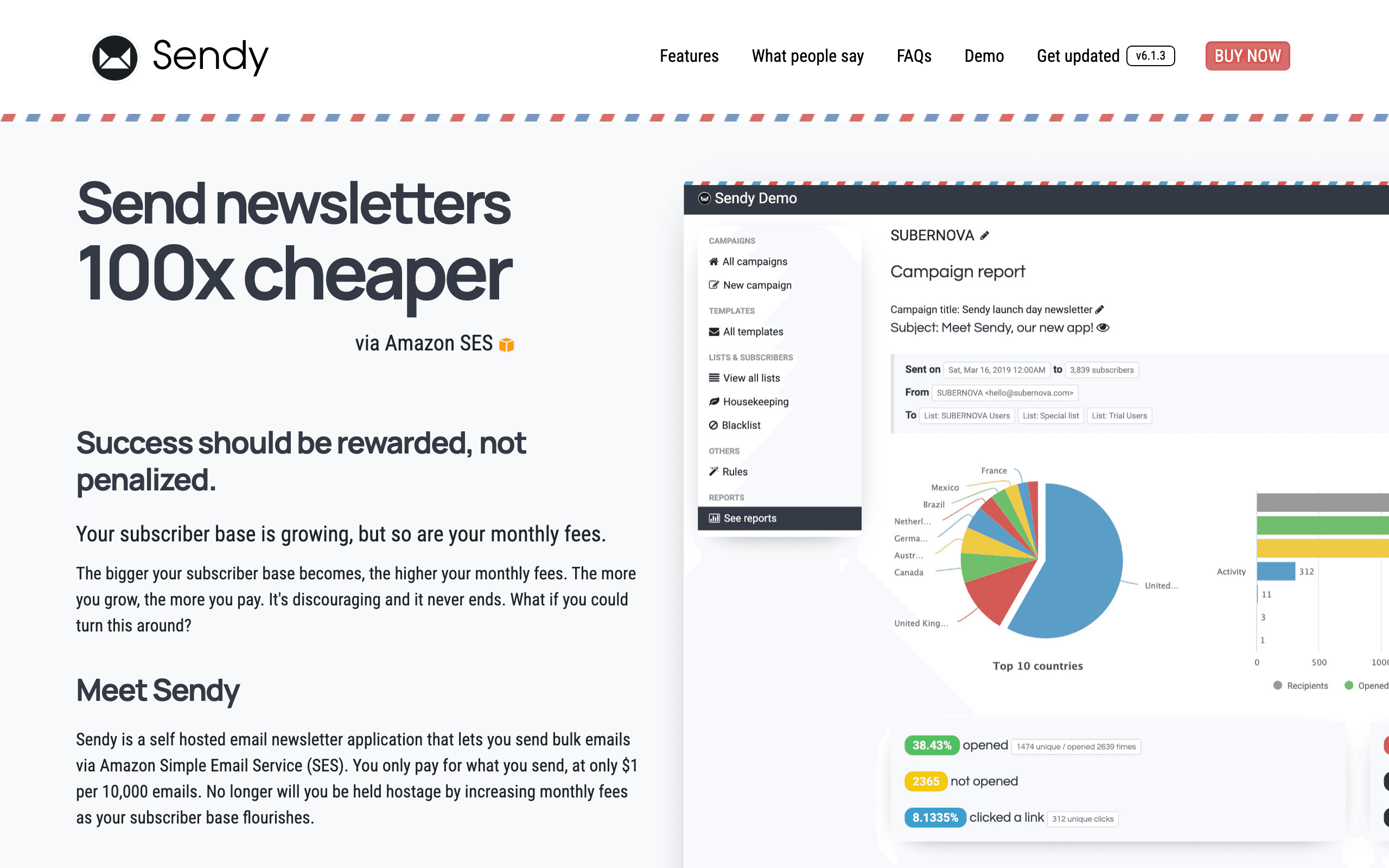
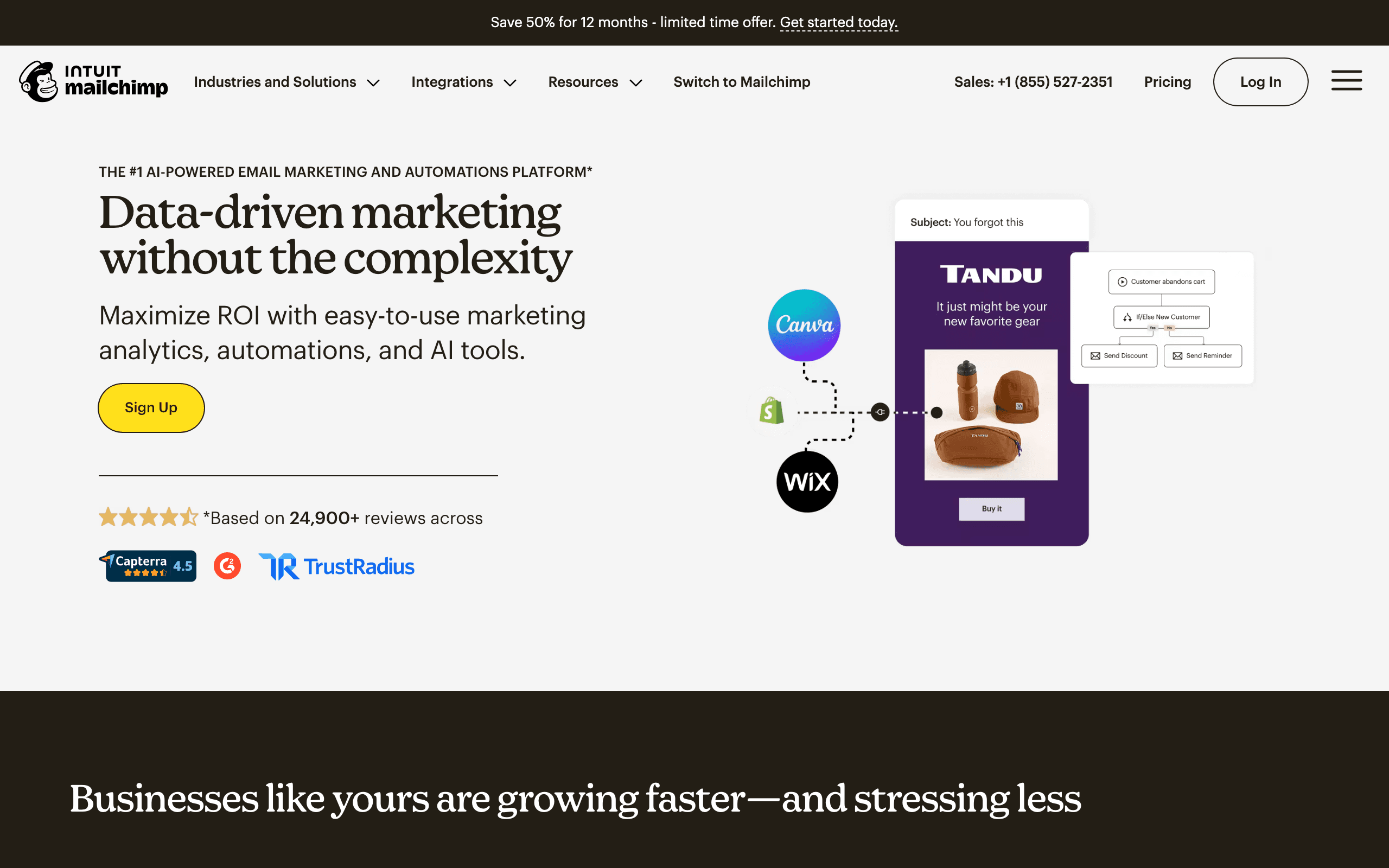
Sendy and Mailchimp represent opposite ends of the email marketing spectrum. Sendy is a $69 self-hosted application that sends through Amazon SES for rock-bottom costs. Mailchimp is a full-featured SaaS platform with 20+ years of development. See our Mailchimp comparison for more context.
The Cost Question
This comparison ultimately comes down to one question: how much is your time worth? Sendy can save you thousands per year at scale, but requires technical skills and ongoing maintenance. Mailchimp costs more but handles everything for you.
Sendy's Massive Cost Advantage
At 100,000 emails/month, Sendy costs roughly $10 (just Amazon SES fees). Mailchimp would charge $350+ for similar volume. Over a year, that's $4,000+ in savings. At higher volumes, savings become even more dramatic. If you're sending millions of emails, Sendy's economics are compelling.
Mailchimp's Feature Advantage
Mailchimp offers visual automation builders, advanced segmentation, landing pages, 300+ integrations, modern templates, and comprehensive analytics. Sendy offers basic campaigns, simple autoresponders, and dated interfaces. For anything beyond newsletters and simple sequences, Mailchimp is far more capable.
Technical Requirements Matter
Sendy requires server administration skills. You need to provision a web server, set up PHP/MySQL, configure Amazon SES (including getting production access), set up DNS records, and handle ongoing maintenance and updates. Mailchimp is sign-up-and-start with automatic updates and support.
For SaaS Companies
Neither platform is ideal for SaaS. Sendy lacks the automation and event tracking modern SaaS needs. Mailchimp lacks native Stripe integration and SaaS-specific features. For subscription businesses wanting Stripe integration and event-based automation, consider Sequenzy.
Making the Choice
Choose Sendy if you're technical, sending high volumes, have basic email needs, and want to minimize costs. Choose Mailchimp if you want modern features, polished UX, advanced automation, and don't want to manage servers. For SaaS companies, consider Sequenzy.
The Great Email Marketing Divide
Sendy and Mailchimp represent the widest possible gap in email marketing approaches. Mailchimp is the industry's most recognized brand with two decades of feature development, $12 billion acquisition by Intuit, and a platform that tries to be everything for everyone. Sendy is a $69 PHP application maintained by a small team. The comparison seems absurd until you look at the economics.
At 100,000 emails per month, Mailchimp charges $350+ depending on your plan and contact count. Sendy charges roughly $10 in Amazon SES fees. That is $4,000+ per year in savings. For businesses sending millions of emails, the savings can exceed $40,000 annually. These are not theoretical numbers -- they represent real budget that could fund other marketing activities.
The question every business must answer: are Mailchimp's features worth $4,000+ per year for your specific use case? For many businesses, the honest answer is no. They use Mailchimp for sending newsletters and basic automations, paying premium prices for features they never touch. For these businesses, Sendy delivers the core functionality at a fraction of the cost.
Feature Comparison: What You Actually Use
Mailchimp's feature list is impressive: visual automation, 300+ integrations, landing pages, social posting, CRM, content studio, predictive analytics, and more. But most users engage with a small subset of these features. Studies consistently show that email marketers primarily use: campaign creation, list management, basic automation, and reporting.
Sendy covers three of these four adequately. Campaign creation is basic but functional. List management handles subscriber imports, segmentation by list, and unsubscribe processing. Reporting includes opens, clicks, and bounces. Automation is where Sendy falls short -- basic autoresponders versus Mailchimp's visual workflow builder.
For businesses that need only campaigns and list management, Sendy provides 80% of the value at 3% of the cost. For businesses that rely on Mailchimp's automation, integrations, or landing pages, the value proposition shifts. The key is honest self-assessment: which features do you actually use, and which do you pay for but never touch?
The Integration Ecosystem Advantage
Mailchimp's 300+ integrations connect with virtually every business tool: Shopify, WordPress, Salesforce, Zapier, social platforms, CRM systems, and more. This ecosystem makes Mailchimp a hub for marketing data, connecting email engagement with other business systems. Sendy has minimal integrations -- essentially limited to Amazon SES and basic webhook support.
For e-commerce businesses, Mailchimp's Shopify integration enables abandoned cart emails, product recommendations, and purchase-triggered automation. These revenue-generating workflows require deep data integration that Sendy cannot provide. The integration is not a nice-to-have -- it directly drives revenue that justifies Mailchimp's pricing.
For content businesses that only need email delivery, integrations add no value. A newsletter sender does not need Shopify integration or social posting. They need reliable delivery at reasonable cost. Understanding whether integrations create value for your specific business model is essential to making the right platform choice.
Migration Economics and Lock-in Reality
Moving from Mailchimp to Sendy means exporting subscribers (easy), recreating templates (tedious), and losing automations (painful). Complex Mailchimp automations built over months cannot transfer to Sendy's basic autoresponders. The migration cost includes not just the move itself but the loss of accumulated automation logic.
Moving from Sendy to Mailchimp is straightforward: import subscribers, build templates in a better builder, and create automations from scratch. The asymmetry means starting with Sendy has lower switching costs than starting with Mailchimp. If there is any chance you will need advanced features, this migration path flexibility is worth considering.
For SaaS companies evaluating either platform, both lack native Stripe integration for subscription-based businesses. Sequenzy offers payment-triggered automation, transactional email, and revenue attribution at $49/month -- avoiding the Mailchimp vs Sendy dilemma entirely for software companies.
Use-case matchups
| Situation | Best first look | Why |
|---|---|---|
| Team wants the lowest visible email sending cost and can self-host | Sendy | Sendy is the baseline here for teams comfortable operating their own app layer on top of a sending service. |
| Team wants a familiar hosted marketing platform | Mailchimp | Mailchimp is broader and easier to operate than Sendy, but much more expensive at larger list sizes. |
| SaaS or subscription team wants lifecycle and transactional email | Sequenzy | Sequenzy is stronger when Stripe events, transactional messages, and campaigns need a hosted lifecycle workflow. |
| Technical team already owns servers and AWS email operations | Sendy | Sendy can make sense when maintenance, updates, deliverability setup, and backup ownership are acceptable. |
| Team needs the specialist capability | Mailchimp | Mailchimp deserves the first demo when the main requirement is feature-rich hosted email marketing and broad small-business workflows. |
| Team wants hosted workflows without self-hosting | Sequenzy | Sequenzy removes Sendy-style app maintenance while staying focused on email automation and transactional messages. |
Pricing reality
The pricing signals on this page list Sendy at ~$10/month or equivalent operating cost, Mailchimp at $350+/month, and Sequenzy at $99/month. Sendy's number should never be read as the whole cost.
Sendy usually shifts cost from the vendor invoice to operations: hosting, updates, backups, SES or SMTP setup, bounce handling, deliverability monitoring, and internal troubleshooting. Mailchimp's real cost depends on whether the team needs feature-rich hosted email marketing and broad small-business workflows.
Review signals
For Sendy, validate reviews around setup, updates, SES integration, bounce handling, deliverability, and the amount of technical maintenance required. For Mailchimp, focus review research on whether users praise the reason you would choose it: feature-rich hosted email marketing and broad small-business workflows.
Best Fit by Cost and Operations
Best low-cost email tool for AWS SES users
Sendy fits teams that can manage a self-hosted app and want very low sending costs through Amazon SES. It is strongest when the team has technical ownership and sends enough volume for the savings to matter.
Best managed email marketing platform for marketers
Mailchimp fits teams that want templates, signup forms, segmentation, automation, and support without owning infrastructure. It is the better fit when marketing execution speed is worth paying more for.
Best SaaS lifecycle platform for managed product email
Sequenzy fits SaaS teams that want managed lifecycle automation connected to product and billing data. It avoids self-hosting while serving more SaaS-specific needs than a general marketing platform.
Migration checklist
| Workstream | Moving toward Sendy | Moving toward Mailchimp | Simplifying to Sequenzy |
|---|---|---|---|
| Hosting and ownership | Provision hosting, backups, updates, SSL, cron jobs, sending service credentials, and admin access. | Map audiences, tags, groups, journeys, templates, forms, ecommerce sync, and suppressions. | Import subscribers, attributes, tags, suppressions, and lifecycle events into a hosted workflow. |
| Sending setup | Configure SES or SMTP, SPF, DKIM, DMARC, bounce processing, complaint handling, and suppression logic. | Confirm sender authentication, deliverability tooling, and plan limits. | Configure sending domains and transactional paths without self-hosting. |
| Contacts and consent | Import lists, custom fields, segments, unsubscribes, bounces, and suppression records. | Import the data model Mailchimp needs for feature-rich hosted email marketing and broad small-business workflows. | Import subscriber data and lifecycle attributes. |
| Automations | Rebuild simple autoresponders and campaigns; custom lifecycle logic may need outside code. | Rebuild the workflows that prove Mailchimp's advantage. | Rebuild campaign, lifecycle, and transactional email flows. |
| Reporting | Decide which analytics are built in and which require outside tooling. | Validate reporting for feature-rich hosted email marketing and broad small-business workflows before committing. | Validate campaign, automation, transactional, and subscription lifecycle reporting. |
Decision checklist
- Is the team honestly willing to own Sendy's hosting, updates, backups, and deliverability operations?
- Does Mailchimp's strength in feature-rich hosted email marketing and broad small-business workflows matter more than Sendy's low visible cost?
- Who owns bounce handling, complaint processing, and suppression hygiene after migration?
- Are the listed prices still realistic after adding hosting, support, and engineering time?
- Would hosted lifecycle and transactional email be more useful than a self-hosted newsletter layer?
- Mailchimp should justify its cost through features the team will actually use.









