Overview
SendFox and AWeber represent different eras of email marketing. AWeber is one of the original email marketing platforms, operating since 1998 with a proven deliverability track record. SendFox is a newer, ultra-budget tool from the AppSumo ecosystem. For SaaS businesses, Sequenzy offers purpose-built features that neither provides.
The Deliverability Track Record
AWeber's decades of operation have built institutional knowledge about email deliverability that newer platforms cannot replicate. Relationships with ISPs, IP reputation management, and abuse prevention processes have been refined over 25+ years. When your emails need to reach inboxes reliably, AWeber's track record provides confidence.
SendFox's deliverability is adequate for basic newsletters but lacks the depth of AWeber's infrastructure. The smaller team and newer infrastructure mean less institutional deliverability expertise. For most small-list newsletters, this difference is not noticeable. For businesses where inbox placement directly affects revenue, AWeber's proven infrastructure matters.
The deliverability advantage is not just about technology. AWeber actively monitors sending patterns, blocks suspicious accounts, and maintains IP reputation across their shared infrastructure. This vigilance benefits all senders on the platform.
Web Push Notifications
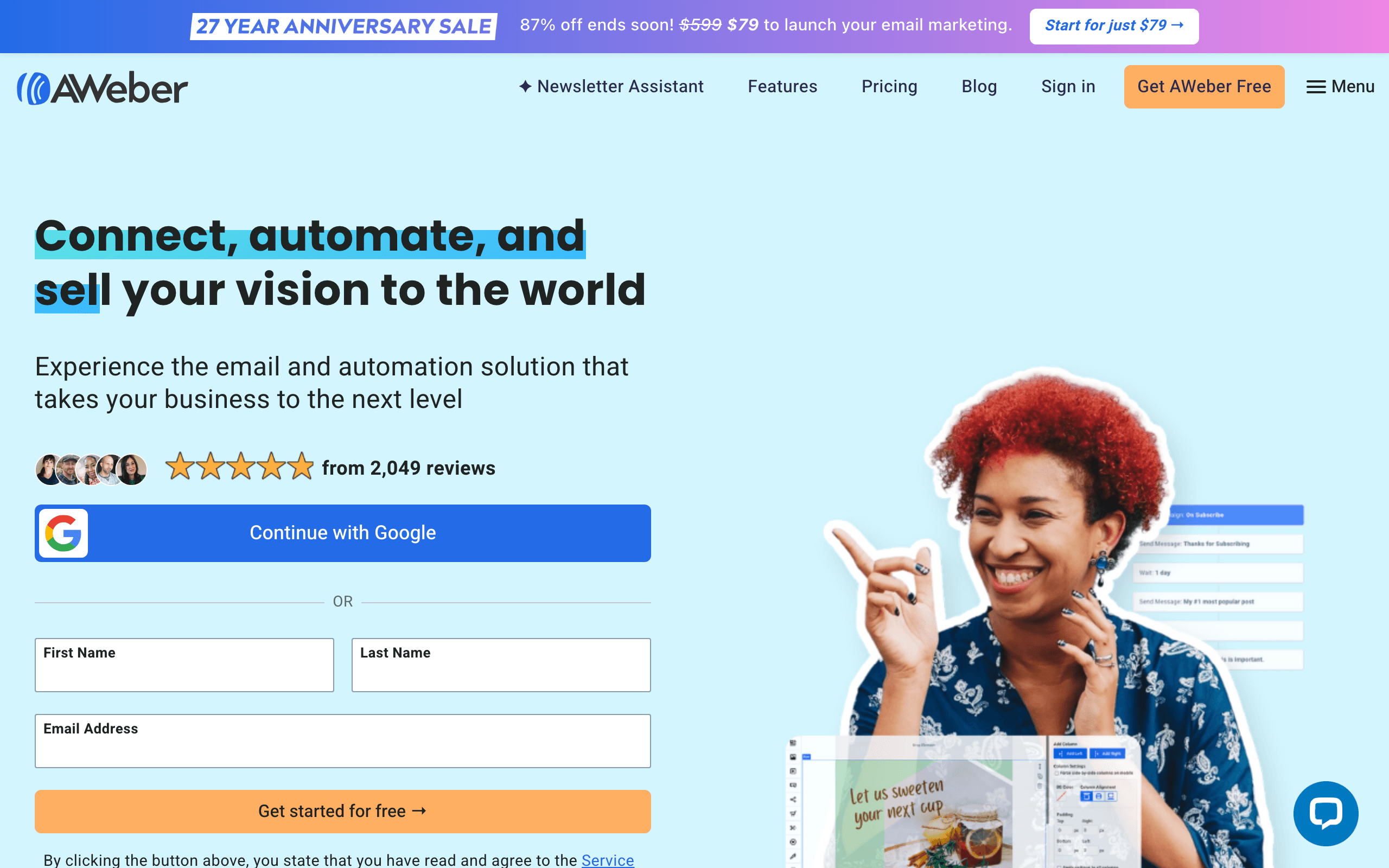
AWeber offers web push notifications alongside email. When subscribers opt in to push notifications through your website, AWeber can deliver messages directly to their browser or device even when they are not checking email. This additional channel reaches subscribers who have email fatigue or overflow.
SendFox has no push notification capability. Communication is limited exclusively to email. For businesses that want multiple touchpoints with their audience, AWeber's push notifications add a channel without requiring a separate tool.
Push notifications are particularly effective for time-sensitive content: breaking news, flash sales, live event starts, and new content alerts. The immediacy of push notifications complements the depth of email newsletters, creating a more complete communication strategy.
The Canva Integration
AWeber integrates directly with Canva, allowing users to design email graphics, headers, and promotional images without leaving the email creation workflow. For non-designers who struggle with visual content, this integration dramatically improves email aesthetics with minimal effort.
SendFox has no design tool integration. Creating visual emails requires designing images externally and uploading them. For teams without a designer, this extra step either slows down the process or results in text-heavy emails that lack visual appeal.
The Canva integration matters most for small businesses and solo creators who handle their own marketing. Professional designers will use their preferred tools regardless. But for the majority of email senders who are not designers, built-in access to Canva's template library and design tools is genuinely useful.
The Billing Controversy
AWeber counts unsubscribed contacts toward your billing total. If someone unsubscribes from your emails, they still count as a contact unless you manually delete them. This billing practice inflates costs and frustrates users who expect unsubscribed contacts to stop counting.
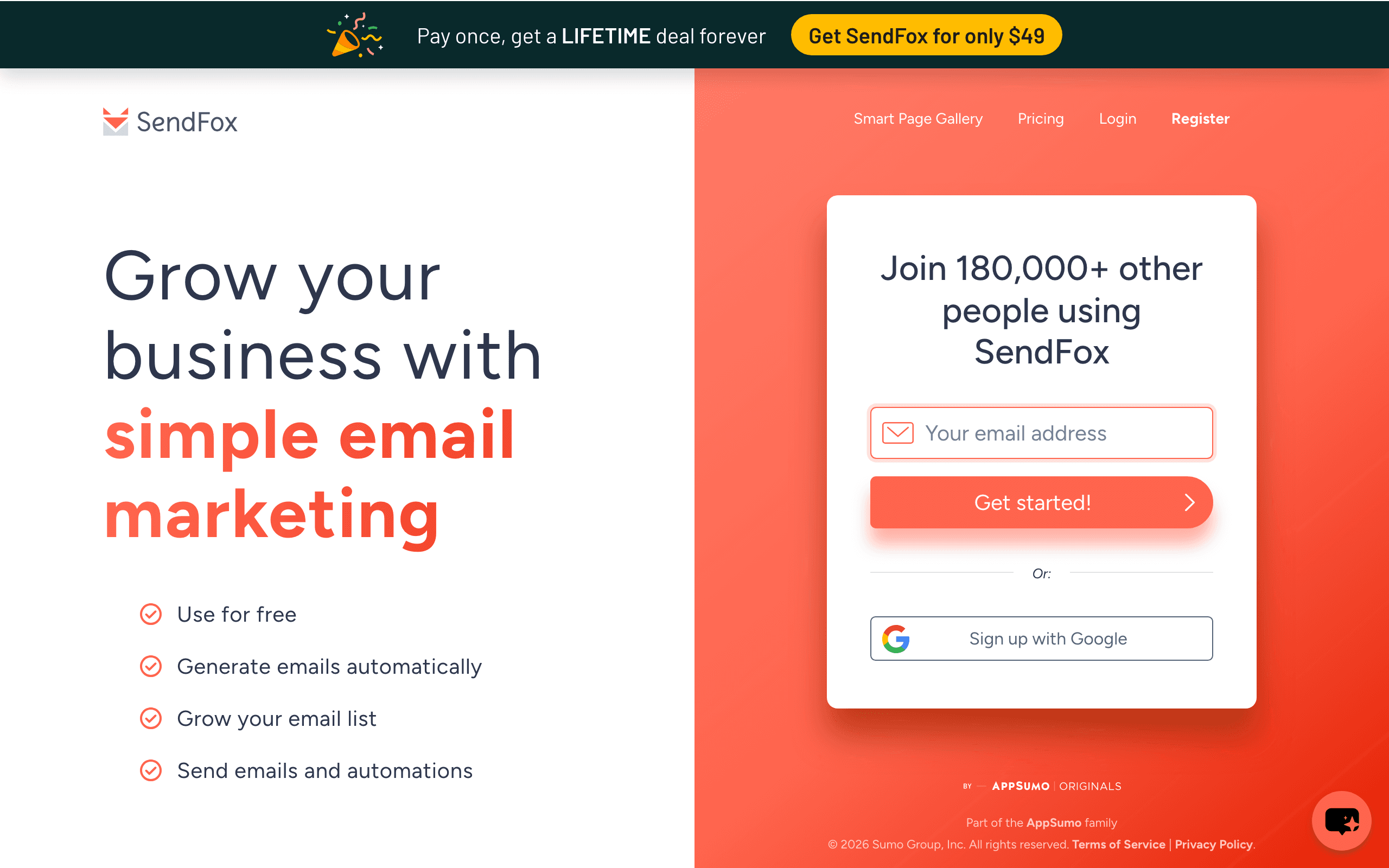
SendFox's lifetime deal and subscription model avoid this issue. The pricing model is straightforward without hidden contact counting surprises. For cost-conscious users, SendFox's transparent pricing is a legitimate advantage over AWeber's billing approach.
This billing issue is AWeber's most criticized practice. Users who migrate from other platforms where unsubscribes are automatically removed from billing find AWeber's approach surprising and unfair. Check your contact list regularly and manually remove unsubscribed contacts to keep costs accurate.
For SaaS Companies
Neither SendFox nor AWeber is built for software businesses. Both lack Stripe integration, transactional email, and subscription lifecycle automation. Sequenzy at $49/month combines marketing and transactional email with native Stripe integration for SaaS companies. Use our email validator to clean your subscriber list and our email warmup calculator to plan sending ramp-up when migrating platforms.
Use-case matchups
| Need | Better fit | Why |
|---|---|---|
| Low-cost creator newsletter sending | SendFox | SendFox is stronger when the buyer wants a simple, low-cost newsletter tool and can accept fewer advanced features. |
| Classic email marketing and autoresponders | AWeber | AWeber is stronger when classic email marketing and autoresponders are the main requirements. |
| SaaS lifecycle and transactional email | Sequenzy | Sequenzy fits when the team needs Stripe-aware lifecycle campaigns, newsletters, and transactional email in one product. |
Best Fit by Creator Newsletter Simplicity
Best newsletter tool for creators testing email on a tiny budget
SendFox fits creators who want to start a list, send simple campaigns, and keep costs low before investing in a broader email marketing platform.
Best autoresponder platform for small businesses with classic follow-up
AWeber is the better fit when the team wants mature autoresponder workflows, list-building forms, and traditional small-business email marketing.
Best SaaS email platform for transactionals and lifecycle newsletters
Sequenzy fits software teams that need lifecycle email and transactional messages tied to subscriber or billing behavior rather than classic autoresponder sequences.
Pricing reality
The page data lists SendFox at "$49 lifetime", AWeber at "$67"/month, and Sequenzy at "$49"/month for the cited comparison tier. SendFox's lifetime-style pricing can be attractive, but it should not be compared as if it includes every workflow in more mature platforms.
Review signals
For SendFox, pay attention to simplicity, lifetime pricing appeal, and feature limits. For AWeber, pay attention to classic email marketing and autoresponders, onboarding effort, pricing, and support quality.
Migration checklist
| Workstream | What to verify |
|---|---|
| Subscriber data | Export subscribers, tags, custom fields, segments, consent, unsubscribes, bounces, and suppressions. |
| Content archive | Preserve broadcasts, newsletters, subject lines, templates, and performance history. |
| Automations | Rebuild welcome, nurture, newsletter, promotion, reactivation, and lifecycle workflows manually. |
| Forms and pages | Recreate signup forms, landing pages, embeds, incentives, and confirmation flows. |
| Integrations | Reconnect website forms, ecommerce, CRM, payment, analytics, and Zapier-style handoffs. |
| Sender setup | Recheck SPF, DKIM, DMARC, branded links, sender identities, and warmup. |
Decision checklist
- Choose SendFox if low-cost newsletter sending is the main requirement.
- Choose AWeber if classic email marketing and autoresponders matter more than lifetime-price simplicity.
- Avoid SendFox if advanced automation, ecommerce, CRM, or transactional email are required.
- Avoid AWeber if the buyer only needs a simple newsletter sender.
- Consider Sequenzy if SaaS lifecycle, transactional email, and Stripe-triggered messages are the core jobs.