
Overview
EmailIt and Mailjet serve different needs in the email space. EmailIt is a budget pay-per-email delivery service. Mailjet is a EU-based email platform with transactional and marketing.
The choice depends on what you need: cheapest per-email pricing (EmailIt) or eu-based company (Mailjet). For SaaS businesses specifically, Sequenzy offers purpose-built features that neither tool provides.
Pricing reality
- EmailIt: about $1 to $2 per 10k emails, billed only as you send, with SMTP and API access.
- Mailjet: $17/month (15k emails) - EU-based. Transactional + marketing. Collaboration features.
- Sequenzy: $99/month for 120,000 emails. Its $19/month tier covers 15,000 emails, a close match for Mailjet's $17 entry plan, and yearly billing takes 10% off. See pricing.
Review signals
The EmailIt reviews on this page support solo-developer or minimal transactional sending. One reviewer says Mailjet's collaboration and marketing features are impressive but unnecessary for simple app notifications.
The negative EmailIt review shows the point where Mailjet becomes more useful: team growth, collaborative email editing, and EU/GDPR requirements.
Mailjet's reviews reinforce collaboration and compliance as the differentiators. Reviewers cite real-time template collaboration, MJML, and EU-based operations, while one also warns that built-in automation is basic enough to require custom API workflows.
Where EmailIt Wins
Cheapest per-email pricing
EmailIt's per-email rate is the lowest of the three tools here, a clear edge for anyone who wants to pay as little as possible per message.
No monthly subscription
With no monthly subscription and no minimum commitment, EmailIt's bill follows your sending from month to month.
Simple SMTP/API
Integration with EmailIt is short: it exposes just SMTP and an API, with no configuration layer to learn first.
Fast delivery
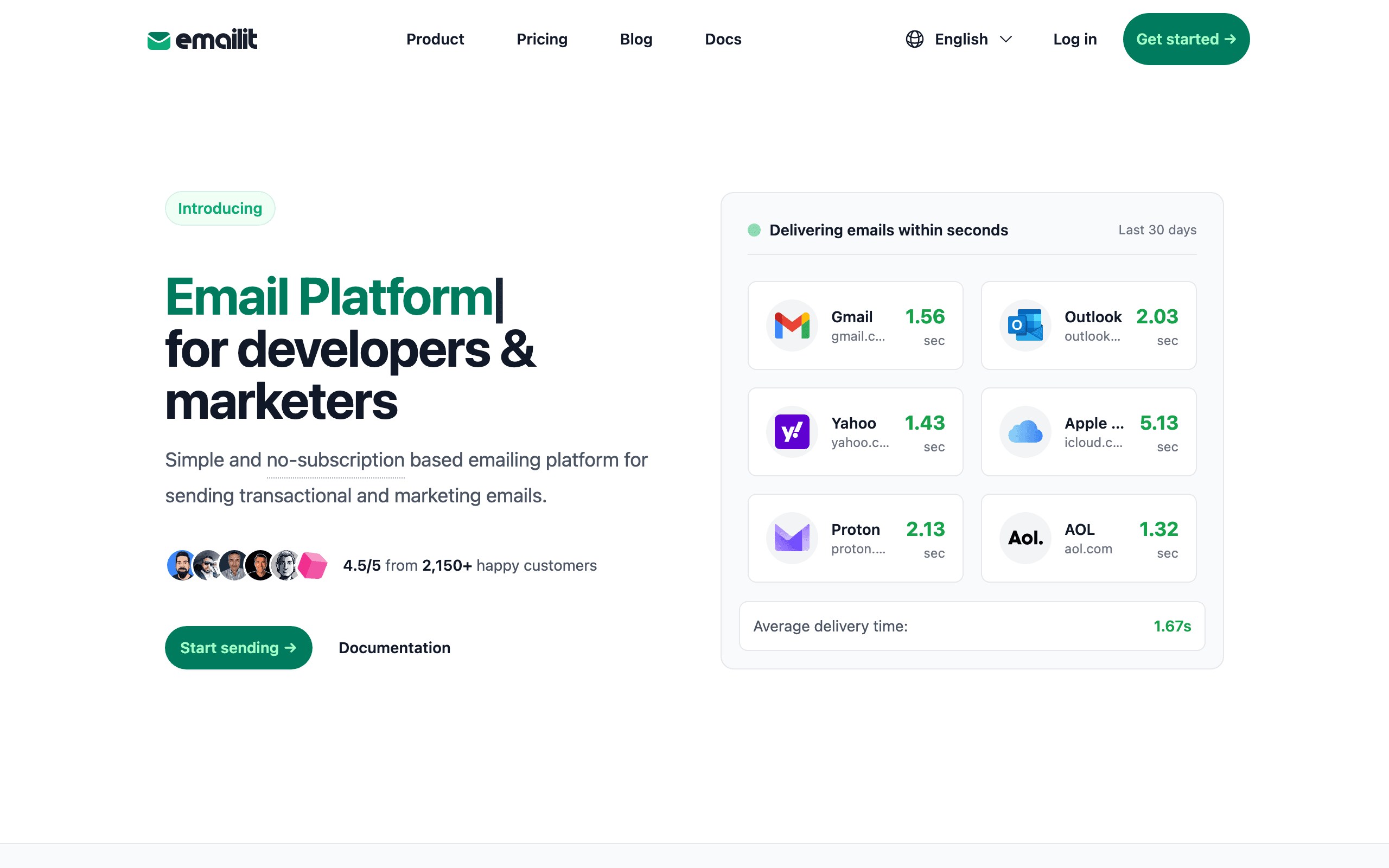
The fastest path from signup to a first delivered message runs through EmailIt, which suits teams that mainly want messages out quickly.
Where Mailjet Wins
EU-based company
Mailjet offers eu-based company, which matters for teams that prioritize this.
Transactional + marketing
Mailjet offers transactional + marketing, which matters for teams that prioritize this.
Collaboration features
Mailjet offers collaboration features, which matters for teams that prioritize this.
GDPR compliant
Mailjet offers gdpr compliant, which matters for teams that prioritize this.
Delivery Speed and Reliability
Delivery speed for transactional email is non-negotiable, and both EmailIt and Mailjet handle it without issue for typical sending volumes. The bigger difference is what surrounds that delivery: EmailIt sticks to pay-per-email SMTP and API sending with no subscription and no marketing layer, while Mailjet, based in the EU, bundles transactional with marketing campaigns and a real-time collaborative editor. If you only need fast, cheap sends, EmailIt is simpler; if you also need marketing tools, Mailjet does more.
API Design and Developer Experience
EmailIt and Mailjet target developers with very different philosophies. EmailIt keeps things minimal: a simple API or SMTP relay with no configuration overhead, which gets you sending in minutes but leaves you without templates, automation, or team features. Mailjet layers on MJML for responsive templates, real-time collaboration for teams building emails together, and native GDPR compliance as an EU-based company. Choose EmailIt for the leanest possible integration, and Mailjet when your team needs more built around that API.
Scaling and Cost at Volume
At low volumes, EmailIt's pay-per-email model at roughly $1 to $2 per 10,000 emails with no subscription is hard to beat, since you pay only for what you send. Mailjet charges $17 a month for 15,000 emails but includes marketing campaigns, collaboration, and EU-based GDPR compliance in that price. As your list grows and you start running newsletters alongside transactional mail, Mailjet's bundled pricing can end up cheaper than paying separately for a marketing tool on top of EmailIt.
Use-case matchups
| Use case | Better fit | Why |
|---|---|---|
| Lowest-cost transactional sending | EmailIt | EmailIt is better when the team only needs cheap SMTP/API delivery and can own templates elsewhere. |
| EU-based marketing and transactional platform | Mailjet | Mailjet is stronger when GDPR posture, EU data handling, marketing email, and transactional email all matter. |
| Collaborative template production | Mailjet | Mailjet's collaboration and MJML workflow are useful when marketing, design, and engineering share email work. |
| Developer-owned minimal sending | EmailIt | EmailIt keeps the stack smaller when the app generates emails and only needs a delivery pipe. |
| SaaS lifecycle automation | Sequenzy | Sequenzy is better when Stripe events, transactional email, and lifecycle campaigns need one SaaS-focused workspace. |
| Agency or multi-account sending | Mailjet | Mailjet's sub-account and collaboration model is more useful for teams managing multiple brands or clients. |
Best Fit by Sending Stack
Best transactional email service for lowest-cost app delivery
EmailIt fits developers who only need a cheap SMTP/API pipe and are comfortable keeping templates, subscriber logic, reporting, and lifecycle workflows elsewhere.
Best EU email platform for agencies and collaborative teams
Mailjet is the better fit when GDPR posture, sub-accounts, marketing campaigns, transactional email, and real-time template collaboration all matter.
Best SaaS email platform for Stripe lifecycle automation
Sequenzy fits teams that need transactional email and lifecycle campaigns tied to subscription events rather than only a delivery service.
The GDPR and EU Compliance Factor
Mailjet's strongest differentiator for European businesses is its EU headquarters and built-in GDPR compliance. Data processed through Mailjet stays within EU jurisdictions, which simplifies compliance for businesses subject to European data protection regulations. EmailIt does not provide specific guarantees about data residency or GDPR compliance infrastructure.
For SaaS businesses serving EU customers, data residency is not optional -- it is a legal requirement. Mailjet's EU-based infrastructure means your compliance team can check a box that EmailIt cannot provide. The $17/month premium over EmailIt's pay-per-email model is trivial compared to the legal risk of non-compliant email processing.
For businesses outside the EU or without EU customers, this advantage is irrelevant. EmailIt's simpler, cheaper approach makes more sense when GDPR data residency is not a factor in your decision. Evaluate based on your actual compliance requirements, not theoretical ones.
The Collaboration Advantage
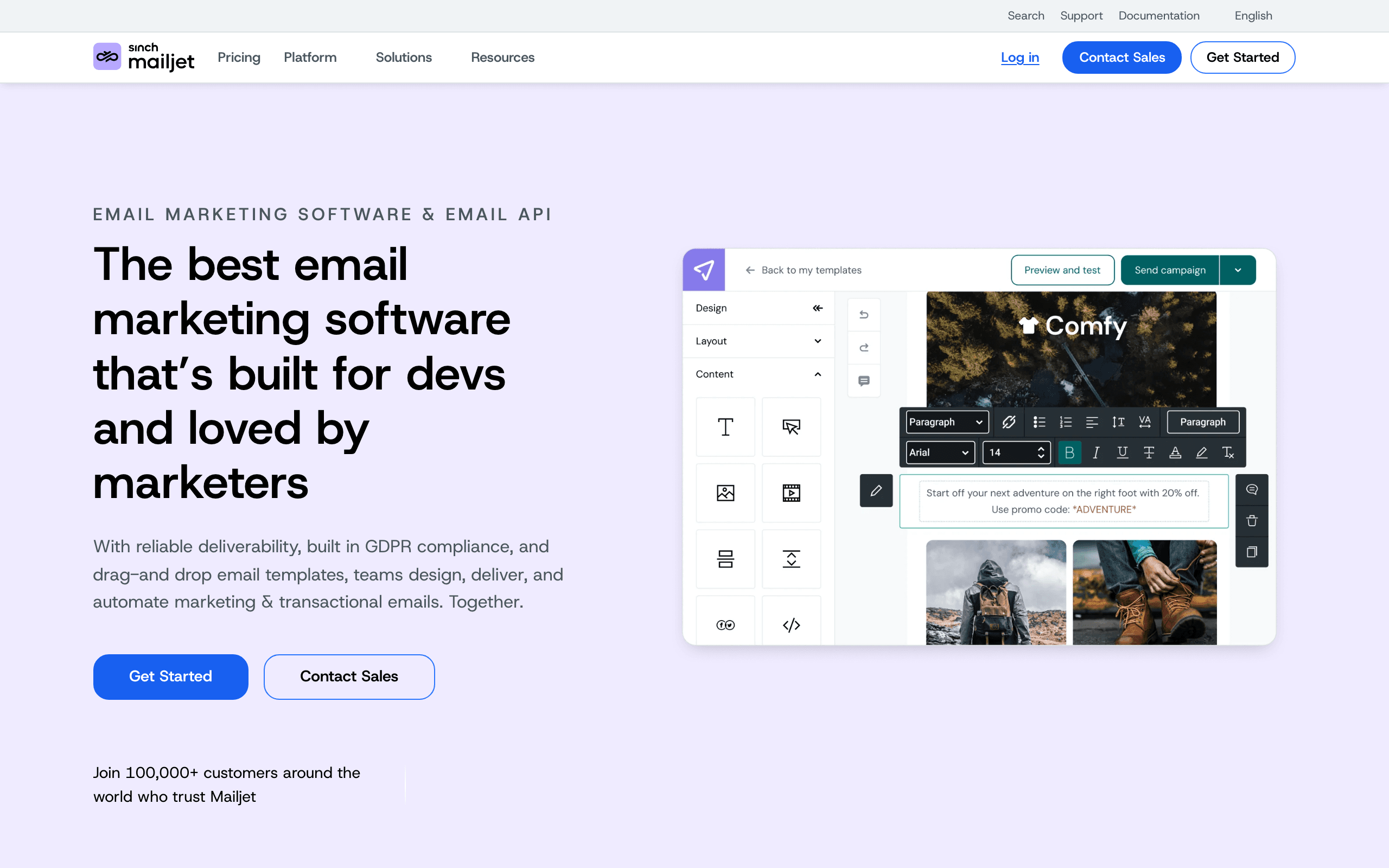
Mailjet's real-time collaboration feature lets multiple team members edit email templates simultaneously -- similar to Google Docs for email design. This is genuinely unique in the email platform space and valuable for teams where marketing, design, and development all contribute to email content.
EmailIt has no collaboration features because it has no template editor. Emails are constructed in your application code and sent through the API. For solo developers or small teams where one person handles all email-related work, this is perfectly fine. For larger teams with cross-functional email responsibilities, Mailjet's collaboration removes a significant workflow bottleneck.
The MJML template language also sets Mailjet apart. MJML produces responsive emails that render correctly across email clients without the pain of hand-coding HTML tables. EmailIt requires you to handle responsive email design entirely on your own, which adds development time for teams without email HTML expertise.
When Neither Serves SaaS Well
Both EmailIt and Mailjet are general-purpose email tools without SaaS-specific features. Mailjet comes closer with its transactional API, but neither understands subscription billing events, trial expirations, or user lifecycle stages. Building SaaS email automation on either platform requires custom development work.
Sequenzy addresses this gap with native Stripe integration that triggers emails from billing events, AI-powered sequences for onboarding and retention workflows, and unified transactional plus marketing email. At $49/month, it provides SaaS-specific automation that saves significant development time compared to building custom integrations on top of EmailIt or Mailjet.
Migration checklist
| Workstream | What to verify |
|---|---|
| Compliance and data | Export contacts, suppressions, sender identities, templates, consent records, sub-accounts, and data-residency requirements. |
| Collaboration workflow | If moving to Mailjet, rebuild MJML templates, team roles, approvals, sub-accounts, and shared editing processes. |
| Minimal API sending | If moving to EmailIt, confirm the app owns template rendering, responsive HTML, logs, bounces, and marketing workflows. |
| SaaS lifecycle | If moving to Sequenzy, map Stripe events, transactional routes, subscriber data, and lifecycle campaigns into one flow. |
| Cutover | Test SPF, DKIM, DMARC, GDPR-critical fields, template rendering, unsubscribe behavior, and production delivery by region. |
Decision checklist
Are EU data residency, GDPR posture, or compliance review key requirements?
Does the team need collaborative template editing or MJML support?
Is the workload mostly app-generated transactional email, or also marketing campaigns?
Would Mailjet's basic automation force custom workflow development anyway?
Would SaaS lifecycle automation and billing-aware triggers make Sequenzy a cleaner fit?
Decide whether the team needs only delivery infrastructure or a combined marketing and transactional platform.
Export verified domains, sender identities, SMTP/API keys, templates, MJML/HTML assets, suppression lists, contacts, segments, sub-accounts, webhooks, and delivery reports.
If moving to Mailjet, map EmailIt templates into Mailjet transactional templates or MJML and define which contacts belong in marketing lists.
If moving to EmailIt, identify which Mailjet campaigns, collaboration workflows, sub-accounts, SMS, template editor, and unsubscribe logic need replacement elsewhere.
Rebuild critical transactional templates first: verification, password reset, invite, receipt, invoice, billing, and notification emails.
Reconnect API/SMTP calls, webhooks, bounce handling, complaint handling, list imports, sub-account routing, and analytics exports.
Authenticate SPF, DKIM, and DMARC, then test EU consent, unsubscribes, and a small production cohort before moving all traffic.
Preserve historical delivery, campaign, compliance, cost, and support reports so the team can compare low-cost sending against platform capabilities.









