
Overview
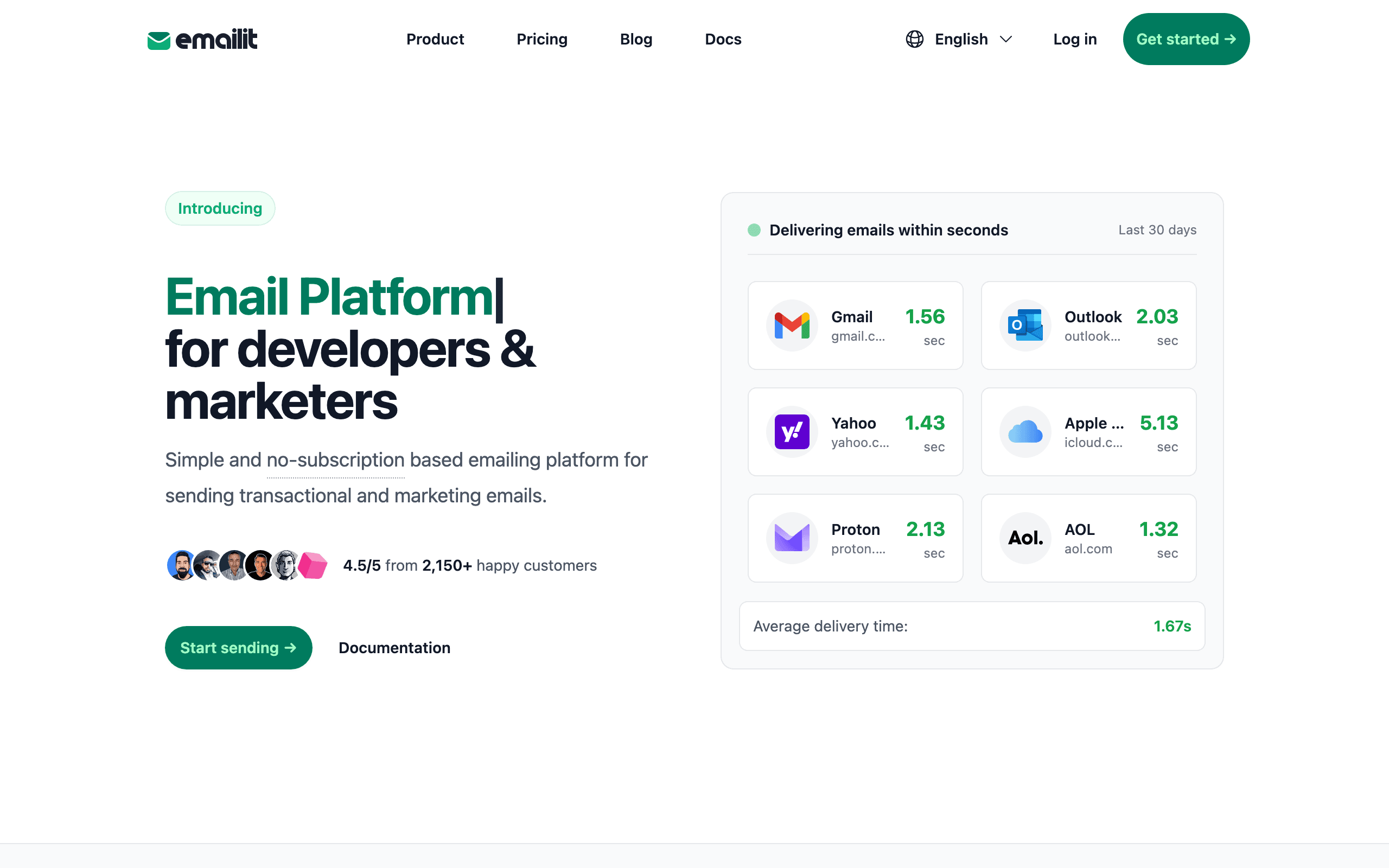
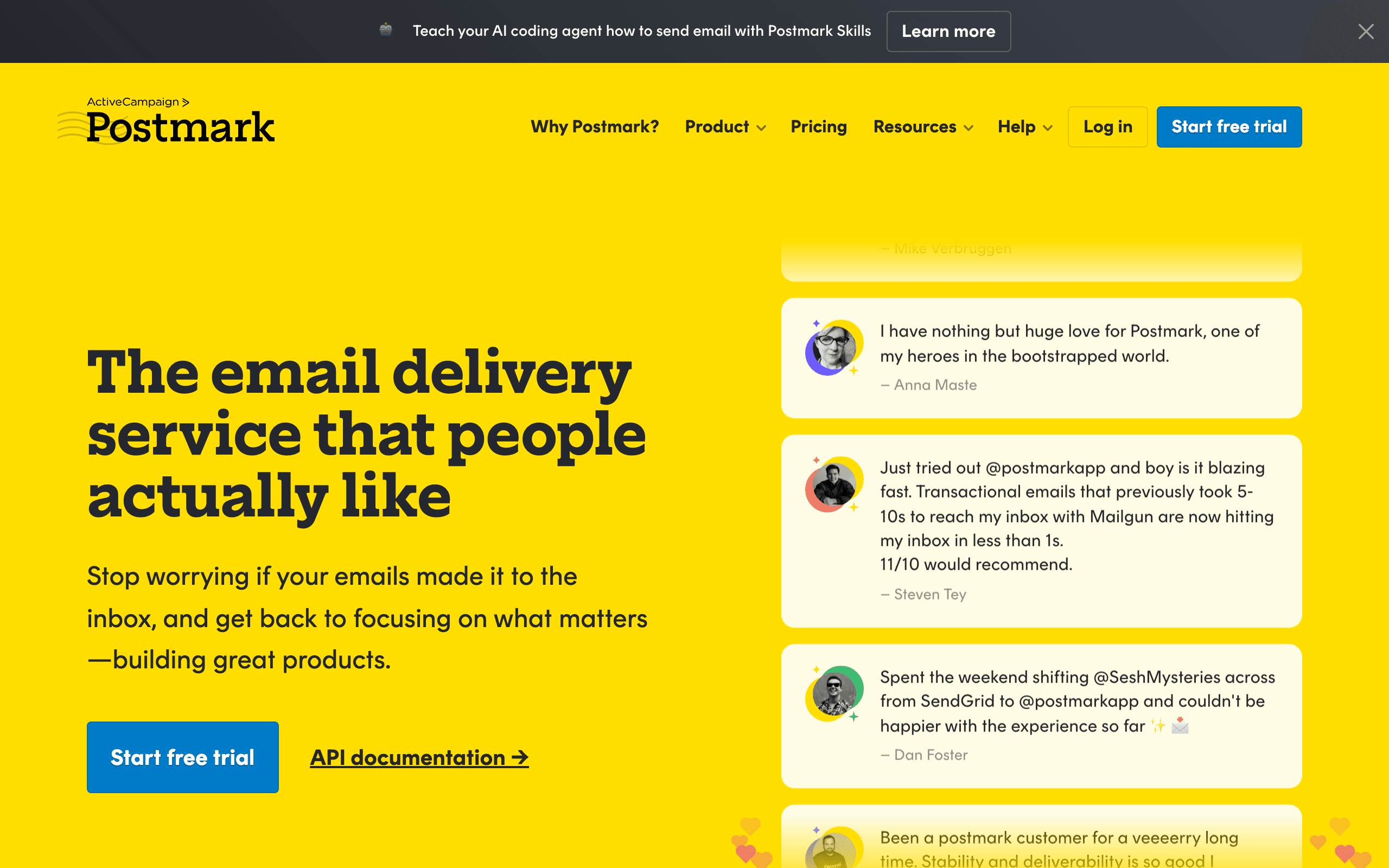
EmailIt and Postmark serve different needs in the email space. EmailIt is a budget pay-per-email delivery service. Postmark is a premium transactional email with best-in-class deliverability.
The choice depends on what you need: cheapest per-email pricing (EmailIt) or best deliverability (Postmark). For SaaS businesses specifically, Sequenzy offers purpose-built features that neither tool provides.
Pricing reality
- EmailIt: ~$1-2/10k emails - Pay-per-email, no subscription. SMTP and API.
- Postmark: $15/month - Premium transactional. Best-in-class deliverability.
- Sequenzy: $99/month for 120,000 emails, unlimited subscribers, fully managed. See pricing.
Review signals
The EmailIt reviews on this page support the low-volume cost case. One reviewer says Postmark's $15/month minimum is hard to justify for a side project sending 200 emails per month.
The negative EmailIt review is about delivery speed: password reset emails started arriving minutes late, and the team switched to Postmark because seconds mattered.
Postmark's reviews validate the premium for critical transactional email. Reviewers cite verification codes arriving in seconds and message streams, while also noting the need for a separate marketing platform because Postmark deliberately limits promotional sending.
Where EmailIt Wins
Cheapest per-email pricing
EmailIt offers cheapest per-email pricing, which is a genuine advantage for teams that need it.
No monthly subscription
EmailIt offers no monthly subscription, which is a genuine advantage for teams that need it.
Simple SMTP/API
EmailIt offers simple smtp/api, which is a genuine advantage for teams that need it.
Fast delivery
EmailIt offers fast delivery, which is a genuine advantage for teams that need it.
Where Postmark Wins
Best deliverability
Postmark offers best deliverability, which matters for teams that prioritize this.
Fast delivery
Postmark offers fast delivery, which matters for teams that prioritize this.
Message streams
Postmark offers message streams, which matters for teams that prioritize this.
Great support
Postmark offers great support, which matters for teams that prioritize this.
Delivery Speed and Reliability
EmailIt and Postmark both aim for fast transactional delivery, but only one backs that up with measurable guarantees. Postmark advertises delivery under ten seconds and separates transactional from broadcast traffic through message streams, which protects your sender reputation from marketing sends. EmailIt skips that structure entirely, charging roughly $1 to $2 per 10,000 emails with no subscription and no delivery speed commitment. If speed needs to be provable, Postmark's streams and 45-day logs give you that; if cost per email is what matters, EmailIt is cheaper.
API Design and Developer Experience
Postmark's API pairs with comprehensive SDKs and detailed delivery logs, plus a support team that specializes in deliverability troubleshooting, all included at $15 a month. EmailIt keeps its API and SMTP setup simple and fast to integrate, but offers minimal logs and no proactive bounce or complaint handling, so ongoing maintenance falls more on your team. Developers who want built-in troubleshooting tools should expect to pay Postmark's monthly minimum; developers optimizing purely for signup-to-first-send speed will find EmailIt faster to start with.
Scaling and Cost at Volume
EmailIt's pay-per-email pricing, roughly $1 to $2 per 10,000 messages with no monthly subscription, scales cheaply for low and irregular volumes since there is no baseline cost to carry. Postmark charges a $15 monthly minimum even for light senders, but that price includes message streams, real-time delivery statistics, and proactive bounce management that EmailIt does not provide. Teams sending occasional low-volume transactional email save money with EmailIt; teams that need consistent, monitored delivery should budget for Postmark's minimum.
The Deliverability Premium
Postmark's entire business model centers on email deliverability. They maintain strict sending policies, reject senders who damage shared IP reputation, and invest heavily in ISP relationships. The result is consistently fast delivery -- password resets and verification codes arriving in 3-5 seconds rather than minutes.
EmailIt offers no deliverability guarantees or specialized infrastructure. Your emails are delivered through standard sending infrastructure without the reputation management that Postmark provides. For many transactional email use cases -- system notifications, activity summaries, non-urgent alerts -- this is perfectly adequate.
The decision comes down to how critical your transactional emails are. If delayed or missing password resets frustrate users and drive support tickets, Postmark's premium pays for itself through reduced support costs and better user experience. If your transactional emails are informational rather than time-critical, EmailIt's lower cost makes more sense.
Message Streams and Email Organization
Postmark's message streams feature lets you separate different types of email into distinct sending channels. Transactional emails (password resets, receipts) flow through one stream while broadcast emails (announcements, updates) flow through another. This separation protects transactional deliverability from broadcast engagement patterns.
EmailIt has no concept of email categorization. Every email sent through the API is treated identically regardless of whether it is a time-critical password reset or a bulk notification. For low-volume senders who only send transactional email, this simplification is harmless. For teams sending both transactional and informational emails, the lack of stream separation means all emails share the same reputation.
Message streams also provide cleaner analytics in Postmark. You can track delivery metrics for each stream independently, identifying whether transactional or broadcast emails are experiencing issues. EmailIt's basic analytics do not offer this level of categorization.
The SaaS Lifecycle Gap
Both EmailIt and Postmark focus on reliable email delivery without understanding your SaaS business context. Postmark delivers your emails faster and more reliably, but neither platform knows when a user's trial expires, when a payment fails, or when engagement drops to concerning levels.
Sequenzy bridges this gap with native Stripe integration that triggers emails from billing events, AI-powered sequences for automated onboarding and churn prevention, and unified transactional plus marketing email at $49/month. For SaaS businesses, the automation intelligence layer matters as much as delivery speed.
Use-case matchups
| Situation | Best first look | Why |
|---|---|---|
| Hobby app or low-volume product notifications | EmailIt | EmailIt is cost-effective when emails are low volume and not mission-critical. |
| Password resets, verification codes, and receipts are critical | Postmark | Postmark's speed, reputation management, logs, and message streams justify the premium. |
| Team wants the fastest path to basic SMTP/API sending | EmailIt | EmailIt is simpler when the team does not need operational depth. |
| Team needs delivery troubleshooting and stream separation | Postmark | Postmark gives clearer operational controls for transactional email. |
| SaaS team also needs onboarding, retention, and billing emails | Sequenzy | Sequenzy adds lifecycle automation and marketing context around transactional sending. |
Pricing reality details
EmailIt wins if the only metric is cost per email. That is a valid metric for side projects, prototypes, or non-urgent notifications.
Postmark's minimum monthly cost buys operational confidence. For critical transactional flows, the cost of delayed or missing emails can be higher than the vendor bill.
Sequenzy should be considered when the same team also needs marketing campaigns, onboarding flows, churn prevention, and Stripe-triggered lifecycle emails. It is broader than a pure transactional delivery tool.
Best Fit by Operational Risk
Best low-cost SMTP API sender for non-critical app email
EmailIt fits hobby apps, prototypes, and low-volume products where basic SMTP/API sending is enough and email failures are not business-critical. It should be evaluated first when simplicity and price are the main buying criteria.
Best transactional email service for password resets and receipts
Postmark fits teams where login codes, receipts, verification emails, and alerts must arrive quickly and be easy to debug. Choose it when message streams, searchable logs, and stronger delivery operations are worth the higher minimum cost.
Best SaaS email platform for lifecycle and billing messages
Sequenzy fits teams that need transactional email plus onboarding, retention, churn prevention, campaigns, and Stripe-triggered lifecycle paths. It is the broader choice when delivery alone does not cover the customer journey.
Migration checklist
| Workstream | Moving toward EmailIt | Moving toward Postmark | Simplifying to Sequenzy |
|---|---|---|---|
| Domains | Configure SPF, DKIM, DMARC, sender identity, and SMTP/API credentials. | Configure sender signatures, DKIM/SPF/DMARC, return-path, and message streams. | Configure domains for transactional and campaign sending together. |
| Templates | Keep simple transactional templates in the app or API payloads. | Rebuild transactional templates, metadata, streams, and test variables. | Rebuild transactional, lifecycle, and marketing templates in one platform. |
| Events | Capture basic sends, bounces, and failures if needed. | Map webhooks for delivery, bounces, opens, clicks, and spam complaints. | Map transactional events, campaign engagement, Stripe events, and subscriber state. |
| Application code | Swap API/SMTP credentials and validate retries and errors. | Update SDK/API calls, stream selection, webhook verification, and log handling. | Connect app and billing events to lifecycle automations. |
| Operations | Monitor deliverability manually and keep alerting simple. | Use message logs, stream-level reporting, bounce handling, and support workflows. | Track delivery and lifecycle outcomes in one customer journey. |
Decision checklist
- Are delayed password resets or verification emails a serious user-experience problem?
- Does the team need message streams and retained logs?
- Is the send volume too small to justify Postmark's minimum?
- Will marketing and lifecycle email be handled somewhere else?
- Would unifying transactional and lifecycle email reduce operational work?









