
Overview
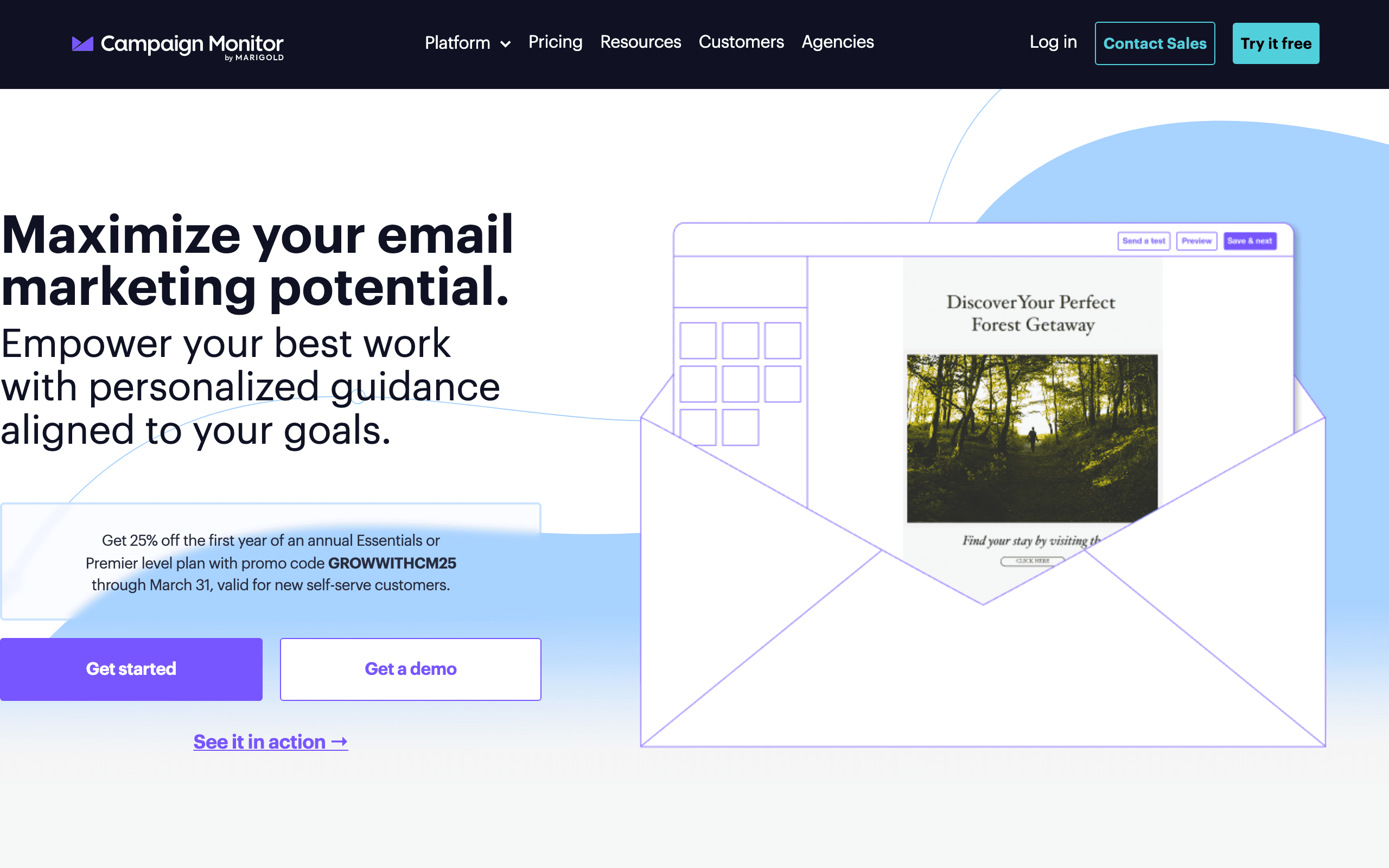
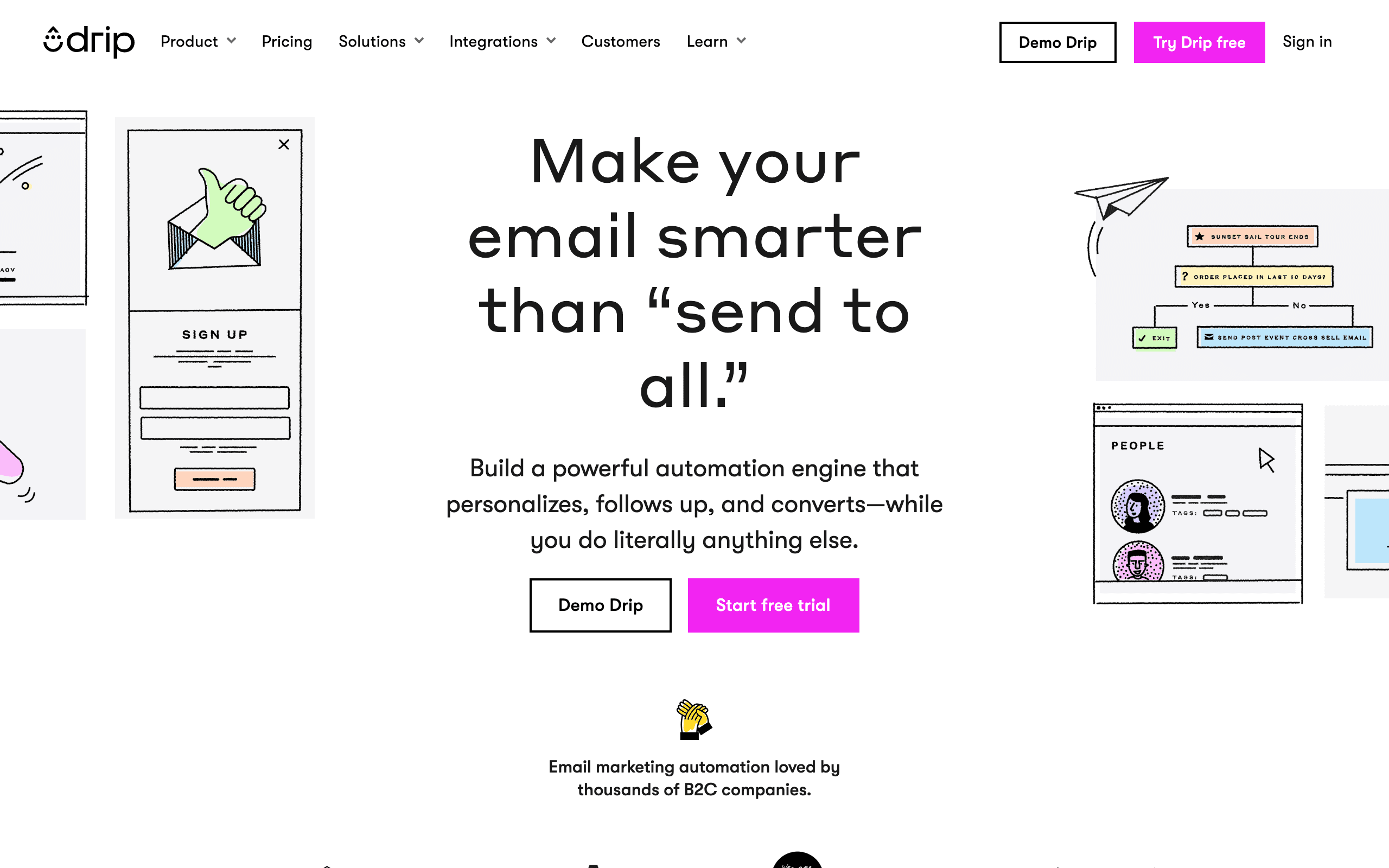
Campaign Monitor and Drip serve different markets. Campaign Monitor is for agencies and brands wanting premium email design. Drip is built for e-commerce with deep automation and behavioral tracking.
Different Markets
Campaign Monitor helps agencies manage client campaigns with premium design tools. Drip helps e-commerce stores drive revenue with behavioral automation. Little overlap in use cases.
Pricing reality
Do not compare Campaign Monitor and Drip from a single monthly number. Campaign Monitor is usually justified by design quality, brand control, client management, and agency workflow. Drip is usually justified by e-commerce data, store integrations, product behavior, revenue attribution, and lifecycle automations.
| Cost area | Campaign Monitor question | Drip question |
|---|---|---|
| Billing driver | What changes as subscribers, send volume, client accounts, and agency features grow? | What changes as contacts, store integrations, SMS, automation volume, and ecommerce data grow? |
| Required workflow | Do you need branded templates, approval workflows, white labeling, and client management? | Do you need cart recovery, product recommendations, customer behavior, and revenue attribution? |
| Tool overlap | Will Campaign Monitor need separate ecommerce automation and analytics tools? | Is Drip too ecommerce-specific for your non-store email work? |
| Team ownership | Will an agency or brand team own most email work? | Will ecommerce marketing, lifecycle, or retention teams own the workflows? |
Use-case matchups
| Use case | Better fit | Why |
|---|---|---|
| Agency or brand design workflow | Campaign Monitor | Campaign Monitor is stronger for polished templates, brand control, client management, and approvals. |
| Ecommerce revenue automation | Drip | Drip is built around store data, product behavior, cart recovery, revenue attribution, and lifecycle flows. |
| Shopify or WooCommerce retention | Drip | Drip has deeper ecommerce triggers and pre-built playbooks than Campaign Monitor. |
| White-label client email programs | Campaign Monitor | Campaign Monitor has agency-specific account and branding features. |
| SaaS subscription lifecycle email | Sequenzy | Sequenzy is more relevant when Stripe events and transactional email matter more than ecommerce data. |
Best Fit by Revenue Model
Best email marketing tool for agency and brand design workflows
Campaign Monitor is the better fit when the team needs polished templates, brand controls, client approvals, and white-label campaign delivery. It is strongest when email quality and client presentation matter more than store behavior.
Best email marketing tool for ecommerce lifecycle automation
Drip is the better fit when orders, product views, carts, customer value, winback, and revenue attribution drive the email program. Its ecommerce CRM depth matters when store data should decide who gets which message.
Best email marketing tool for SaaS subscription lifecycle email
Sequenzy is the better fit when the revenue model is recurring software rather than ecommerce purchases. Trial, billing, usage, transactional, and retention events need product and subscription context.
Review signals
| Platform | Review signal used here | What it suggests | What to validate |
|---|---|---|---|
| Campaign Monitor | G2 and Capterra reviews in this comparison | Teams value Campaign Monitor for design quality and agency fit, but not ecommerce depth. | Validate agency workflow, client management, design needs, and whether ecommerce data must live elsewhere. |
| Drip | G2 and Trustpilot reviews in this comparison | Teams value Drip for Shopify revenue, cart recovery, and ecommerce automation, while noting narrow fit and cost. | Validate store integration depth, revenue attribution, SMS cost, and whether ecommerce specialization is the core need. |
Migration checklist
| Step | What to check |
|---|---|
| Contacts and consent | Export subscribers, tags, segments, custom fields, unsubscribes, bounces, and consent records. |
| Store data | If moving to Drip, map products, orders, carts, customer IDs, revenue fields, and ecommerce events. |
| Templates and brand assets | Move templates, images, saved sections, brand rules, and approval workflows. |
| Automations | Rebuild cart recovery, browse abandonment, win-back, post-purchase, suppression rules, and personalization. |
| Sender setup | Reverify domains, DKIM, SPF, DMARC, unsubscribe behavior, link tracking, and ecommerce event testing. |
Decision checklist
- Is the buyer optimizing brand/client email design or ecommerce revenue workflows?
- Does the store need product data, cart events, and revenue attribution inside the email platform?
- Are agency features like white labeling and client management required?
- Can Drip's ecommerce specialization justify its cost for non-store email work?
- If this is SaaS, should subscription billing events replace ecommerce triggers as the buying criterion?
E-commerce Capabilities
Drip has deep Shopify and WooCommerce integration with behavioral tracking, revenue attribution, and product recommendations. Campaign Monitor has basic e-commerce features only.
Email Design Quality
Campaign Monitor has premium email design tools with polished templates. Drip's builder has e-commerce product blocks but isn't as design-focused. For brand aesthetics, Campaign Monitor wins.
Agency Features
Campaign Monitor has robust agency features: client management, white labeling, reseller programs. Drip has no agency features. For agencies, Campaign Monitor is the better choice.
For SaaS Companies
Neither is ideal for SaaS. Drip is e-commerce focused. Campaign Monitor is agency focused. Sequenzy offers Stripe integration for subscription businesses.
Making the Choice
E-commerce store: Drip. Marketing agency: Campaign Monitor. The markets are different enough that the choice is usually clear.
The Revenue Attribution Gap
Drip's most compelling feature for e-commerce is revenue attribution - the ability to see exactly how much revenue each email campaign, automation, and sequence generated. Cart recovery emails that show "$8,432 recovered this month" provide ROI clarity that justifies the platform cost. Campaign Monitor reports open rates and click rates but cannot connect those metrics to actual purchases.
This gap means Campaign Monitor users must use external analytics to measure email marketing ROI. Google Analytics, Shopify's built-in attribution, or custom tracking setups can approximate what Drip provides natively. The workaround works but adds complexity and typically underestimates email's contribution to revenue.
For agencies, revenue attribution creates a different dynamic. An agency using Drip can show clients exactly how much revenue their email campaigns generated, strengthening retention and justifying retainers. An agency using Campaign Monitor relies on proxy metrics that are less compelling in client reporting.
Platform Specialization vs Generalism
Drip is one of the most specialized email platforms available - it is built exclusively for e-commerce. Every feature, integration, and automation template assumes you sell products online. This specialization means e-commerce users get exactly what they need, but non-e-commerce users get very little value from the platform.
Campaign Monitor is more general - it serves any business that sends email marketing campaigns. This generalism means adequate capability across many use cases but excellence in none except design. The trade-off between specialization and generalism is fundamental to this comparison.
For SaaS companies, neither specialization fits. Drip's e-commerce focus means product catalog features and purchase-triggered automations that have no SaaS equivalent. Campaign Monitor's general approach lacks the subscription lifecycle understanding that SaaS companies need. Sequenzy provides SaaS-specific specialization with native Stripe integration and AI-powered sequences designed for subscription businesses.
The Pre-Built Automation Advantage
Drip includes pre-built e-commerce automation playbooks - cart abandonment, browse abandonment, post-purchase follow-up, win-back campaigns, and customer reactivation sequences. These playbooks represent years of e-commerce email optimization distilled into ready-to-use templates. A new Drip user can launch proven revenue-generating automations in minutes.
Campaign Monitor's automation templates are generic - welcome sequences, birthday emails, and basic triggers. There are no industry-specific playbooks, no e-commerce flows, and no pre-optimized sequences. Building effective automation on Campaign Monitor requires more manual work and email marketing expertise.
The playbook advantage is particularly valuable for small e-commerce teams without dedicated email marketing specialists. Following Drip's proven patterns produces better results than building automation from scratch on a general-purpose platform.









