Overview
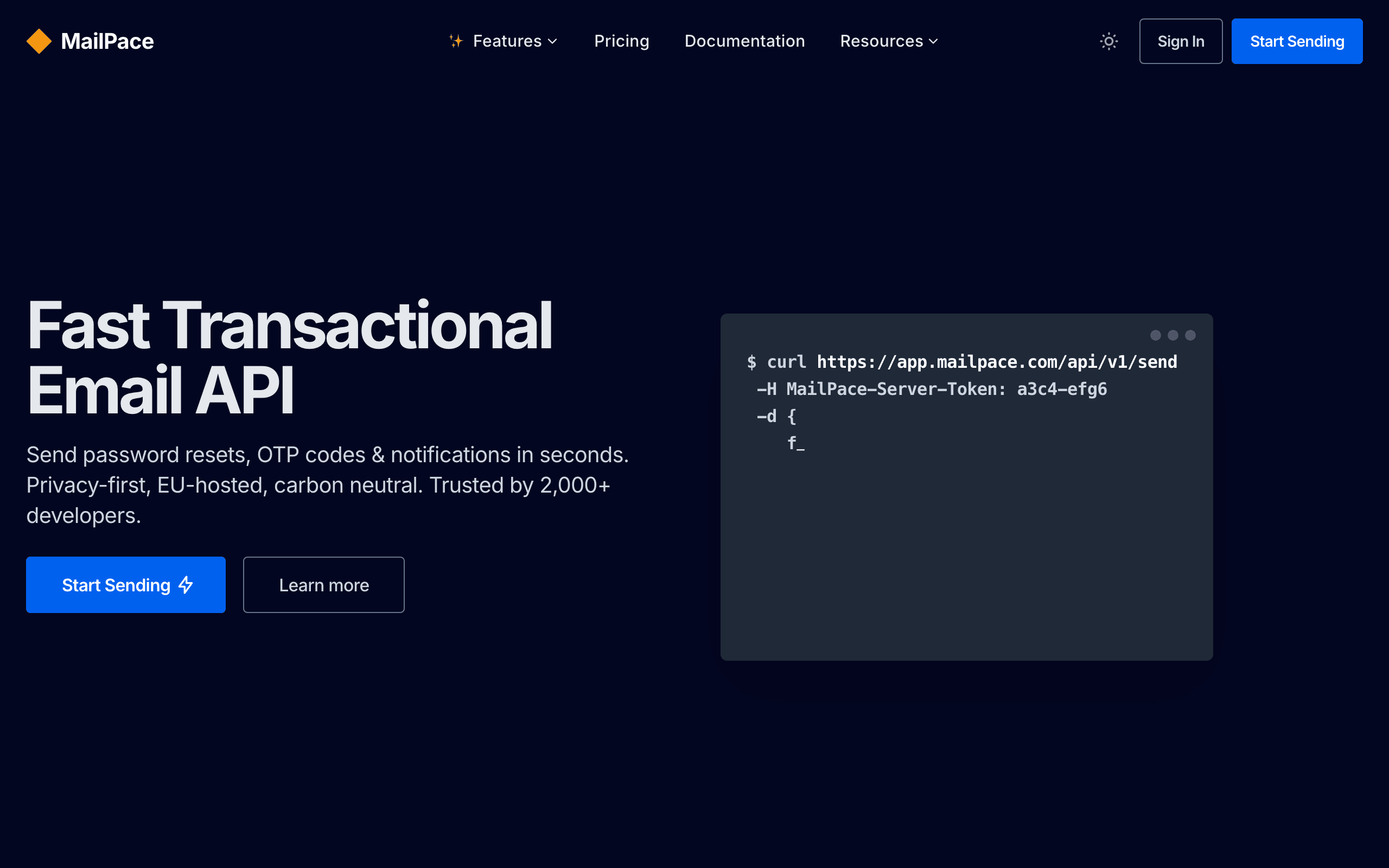
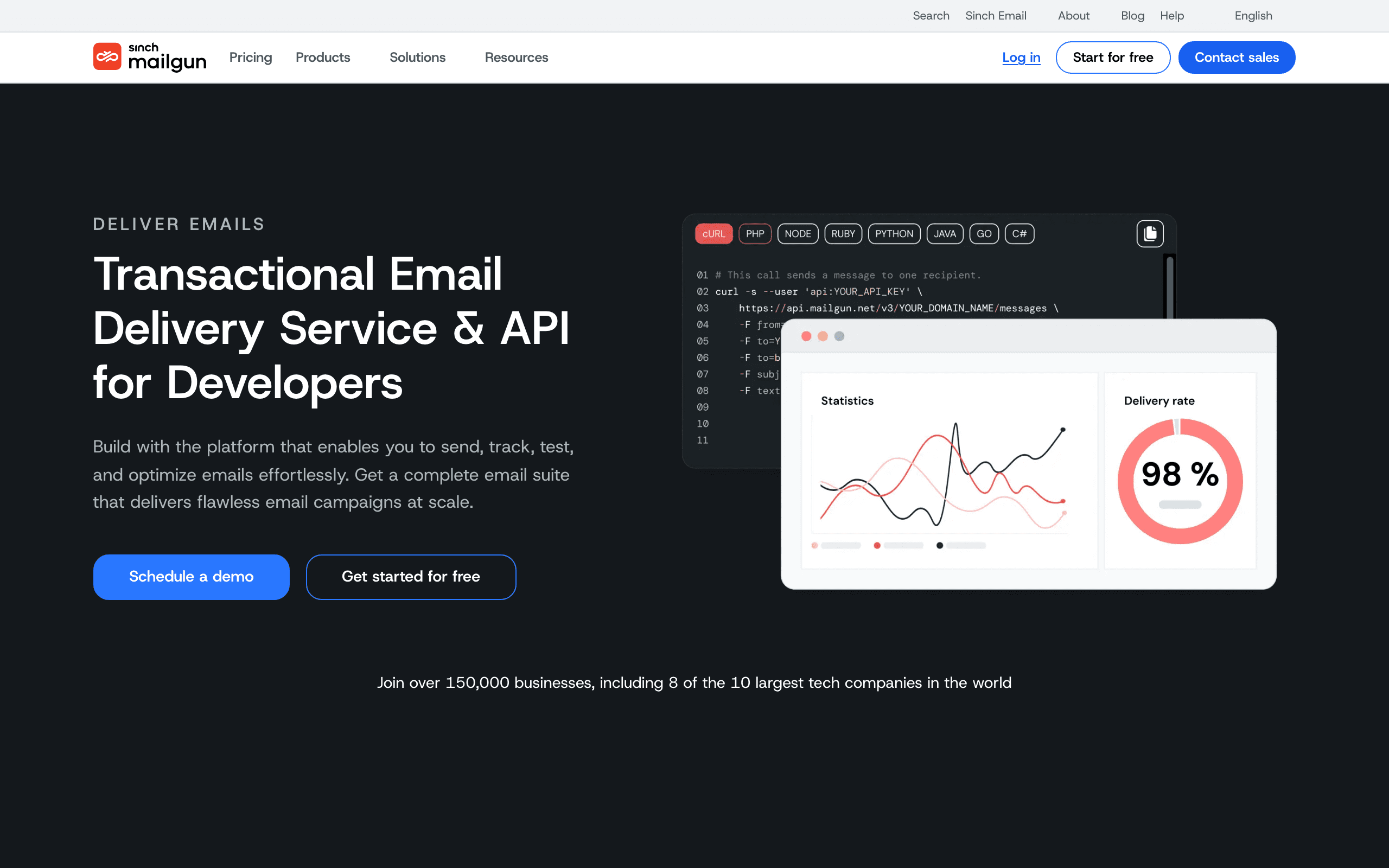
MailPace and Mailgun serve different needs in the email space. MailPace is a privacy-first EU-hosted transactional email API. Mailgun is a developer-focused email API with validation tools.
The choice depends on what you need: eu-only hosting (MailPace) or powerful api (Mailgun). For SaaS businesses specifically, Sequenzy offers purpose-built features that neither tool provides.
Pricing Comparison
- MailPace: $10/month - Transactional only. EU-hosted. Privacy-first.
- Mailgun: $35/month (50k) - Developer-focused API. Email validation included.
- Sequenzy: $99/month for 120,000 emails, unlimited subscribers, fully managed. See pricing.
Where MailPace Wins
EU-only hosting
MailPace offers eu-only hosting, which is a genuine advantage for teams that need it.
Privacy-first design
MailPace offers privacy-first design, which is a genuine advantage for teams that need it.
Idempotent sending
MailPace offers idempotent sending, which is a genuine advantage for teams that need it.
Inbound email
MailPace offers inbound email, which is a genuine advantage for teams that need it.
Where Mailgun Wins
Powerful API
Mailgun offers powerful api, which matters for teams that prioritize this.
Email validation
Mailgun offers email validation, which matters for teams that prioritize this.
EU region
Mailgun offers eu region, which matters for teams that prioritize this.
Inbound email
Mailgun offers inbound email, which matters for teams that prioritize this.
Why Sequenzy for SaaS
If you are building a SaaS product, Sequenzy offers what neither MailPace nor Mailgun provides: native Stripe integration for billing-based automation, AI sequences that generate onboarding and retention emails, and unified transactional + marketing email in one platform. Check our pricing page for details.
Simplicity vs Power
Mailgun provides a comprehensive email platform with validation, inbound parsing, extensive SDKs, and detailed analytics. MailPace provides a focused transactional API with EU hosting. The trade-off is power versus simplicity.
For developers building email-powered applications with inbound processing or address validation needs, Mailgun's feature depth is essential. For teams that just need reliable transactional email delivery with EU compliance, MailPace's simplicity avoids unnecessary complexity.
Developer Feature Gap
Mailgun's email validation API, inbound parsing with routing rules, and 8+ SDKs represent genuine developer infrastructure. These are not marketing features dressed up for developers. They enable sophisticated email-powered applications.
MailPace's API is clean and functional but limited in scope. If your application needs to receive and process incoming emails or validate addresses at scale, Mailgun provides capabilities MailPace does not offer.
Compliance and Data Hosting
MailPace's EU-only hosting addresses a compliance need that Mailgun does not. For European businesses with data sovereignty requirements, this is not optional. Mailgun processes data across multiple regions, which may complicate GDPR compliance documentation for some organizations.
Delivery Speed and Reliability
MailPace keeps its infrastructure deliberately small and EU-hosted, which suits teams that want a privacy-first setup for receipts and verification codes without extra routing complexity. Mailgun runs a larger, more feature-rich API with inbound routing and email validation layered on top, reflecting its developer-first positioning. Both send transactional email reliably, but MailPace's simplicity contrasts with Mailgun's broader toolset and its higher cost since the Sinch acquisition.
API Design and Developer Experience
MailPace ships clean, minimal documentation that matches its small, privacy-first API, so integration tends to be quick with little ongoing upkeep. Mailgun's documentation covers a much larger surface, including SMTP, REST, inbound routing, and validation, which takes longer to learn but supports more complex sending setups. Teams that want a lean integration lean toward MailPace, while teams needing validation and inbound processing get more from Mailgun's fuller feature set.
Scaling and Cost at Volume
MailPace charges a flat $10 a month with transparent, simple pricing that does not shift as your sending grows. Mailgun costs around $35 a month for 50,000 emails, and its pricing rose after the Sinch acquisition, so it is worth checking current tiers before committing. If predictable low cost matters most, MailPace's flat rate is easier to budget around than Mailgun's volume-based plans.
The Independent vs Acquired Platform Question
MailPace is an independent company focused exclusively on privacy-first email delivery. Mailgun was acquired by Sinch in 2021, making it part of a large communications conglomerate. This ownership difference affects product direction, support quality, and pricing predictability.
Mailgun users have reported declining support quality and increasing pricing complexity since the Sinch acquisition. Enterprise sales conversations have replaced straightforward self-service signups for higher tiers. MailPace's independence means direct communication with the team building the product, without corporate layers.
For teams that value vendor stability and predictable pricing, MailPace's independence is an advantage. For teams that need enterprise features like email validation, dedicated IPs, and large-scale sending infrastructure, Mailgun's Sinch-backed resources provide capabilities that a smaller independent company cannot match.
The Email Validation Divide
Mailgun includes an email validation API that verifies addresses before sending, reducing bounces and protecting sender reputation. MailPace has no validation capability, meaning you need a third-party service for address verification.
Email validation becomes critical at scale. Even small bounce rates compound when sending millions of emails, damaging domain reputation with ISPs. Mailgun's built-in validation catches most invalid addresses before they become problems. MailPace users must integrate a separate validation service, adding cost and complexity.
For SaaS companies, validation is one piece of a larger subscriber management puzzle. Connecting email health to subscriber segments, tracking which users engage with campaigns, and automating responses to Stripe billing events requires capabilities beyond what either sending-focused platform provides.
Use-case matchups
| Need | Better fit | Why |
|---|---|---|
| Privacy-first EU-hosted transactional email | MailPace | MailPace is listed as EU-hosted, privacy-first, GDPR compliant, and no tracking by default. |
| Powerful developer email API with validation and inbound routing | Mailgun | Mailgun's cited strengths are powerful API, email validation, inbound routing, analytics, and SMTP plus REST. |
| Simple transparent transactional pricing | MailPace | MailPace is listed at $10/month with simple transparent pricing. |
| SaaS marketing plus transactional automation | Sequenzy | Sequenzy is the listed option with SaaS marketing, transactional email, and Stripe integration. |
Best Fit by Privacy Posture and Developer API Depth
Best privacy-first transactional API for EU data residency
Choose MailPace when the app needs focused transactional sending with EU hosting, no tracking by default, and transparent pricing. It is the cleaner fit when compliance, privacy posture, and minimal provider complexity matter more than validation, inbound routing, or deep delivery analytics.
Best developer email API with validation and inbound routing
Choose Mailgun when engineering needs a broader infrastructure toolkit: validation API, inbound routes, SMTP plus REST, analytics, webhooks, and mature operational controls. It is stronger when email is a full developer subsystem rather than a narrow privacy-first sender.
Best SaaS email platform for lifecycle automation
Choose Sequenzy when transactional sending needs to connect with subscriber segments, campaigns, and Stripe billing events. SaaS teams can keep product and lifecycle messages together instead of pairing a delivery API with a separate marketing automation platform.
Pricing reality
MailPace is listed at $10/month for transactional-only, EU-hosted sending. Mailgun is listed at $35/month for 50k emails with developer API and email validation included. Sequenzy is listed at $49/month for SaaS marketing plus transactional email with Stripe integration.
MailPace is cheaper and simpler for focused transactional sending. Mailgun costs more but adds a broader developer toolkit, validation, inbound routing, and analytics.
Review signals
MailPace reviews cited here highlight privacy-first sending, transparent pricing, and no tracking by default. The cautions are limited features and a very small team.
Mailgun reviews cited here highlight the powerful API, validation, and inbound routing. The tradeoffs are pricing increases after acquisition, a limited free tier, complex pricing, and support quality that varies.
Migration checklist
- Export domains, DKIM/SPF records, templates, routes, inbound parsing rules, webhooks, suppressions, validations, and API credentials.
- If moving to Mailgun, map API calls, validation usage, inbound routes, and analytics events before production cutover.
- If moving to MailPace, confirm which Mailgun features such as validation, inbound routing, and detailed analytics need replacement.
- Reconfigure SPF, DKIM, DMARC, return-path, tracking domains, webhook endpoints, and sender identities.
- Test transactional templates, inbound routes if any, bounce processing, suppression sync, and retry behavior in staging.
- Roll traffic gradually and compare delivery, latency, error rates, and webhook counts before decommissioning the old provider.
Decision checklist
- Choose MailPace if privacy, EU data hosting, and simple transactional sending are the priority.
- Choose Mailgun if API depth, validation, inbound routing, and analytics matter more.
- Avoid MailPace if you depend on Mailgun's broader developer feature set.
- Avoid Mailgun if pricing complexity and acquisition-related concerns outweigh its API strengths.
- Choose Sequenzy if the app needs SaaS lifecycle marketing and transactional email connected to Stripe.
MailPace processes all email data exclusively within EU data centers. Mailgun's infrastructure spans multiple global regions, with EU processing available but not the default configuration. For organizations where data sovereignty is a legal or contractual requirement, this difference is significant.
GDPR compliance with Mailgun requires careful configuration to ensure data stays within EU borders. With MailPace, EU-only processing is the default and only option -- there is nothing to configure and nothing to get wrong. This simplicity in compliance is valuable for organizations where regulatory audits are routine.
The EU hosting advantage extends beyond GDPR. Some industries and government contracts require data to remain within specific jurisdictions. MailPace's architecture guarantees this without additional configuration, while Mailgun requires enterprise-level conversations and custom agreements to achieve the same level of data residency assurance.