
Overview
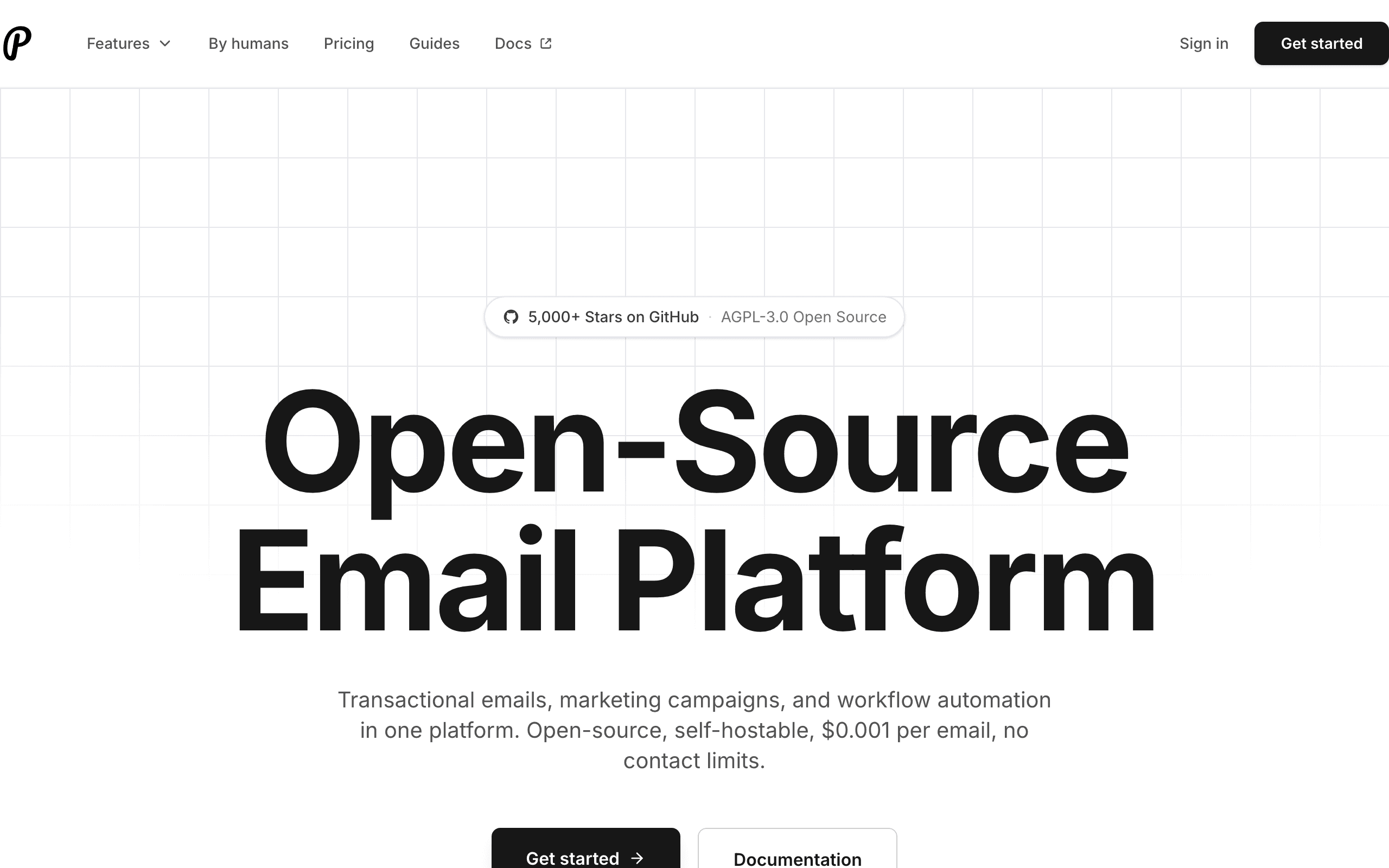
Encharge and Plunk represent opposite approaches to email. Encharge is a managed SaaS marketing automation platform with advanced behavioral triggers and native integrations. Plunk is an open-source email platform built on AWS SES for simple, affordable email. See our Plunk comparison for more context.
The Feature Gap
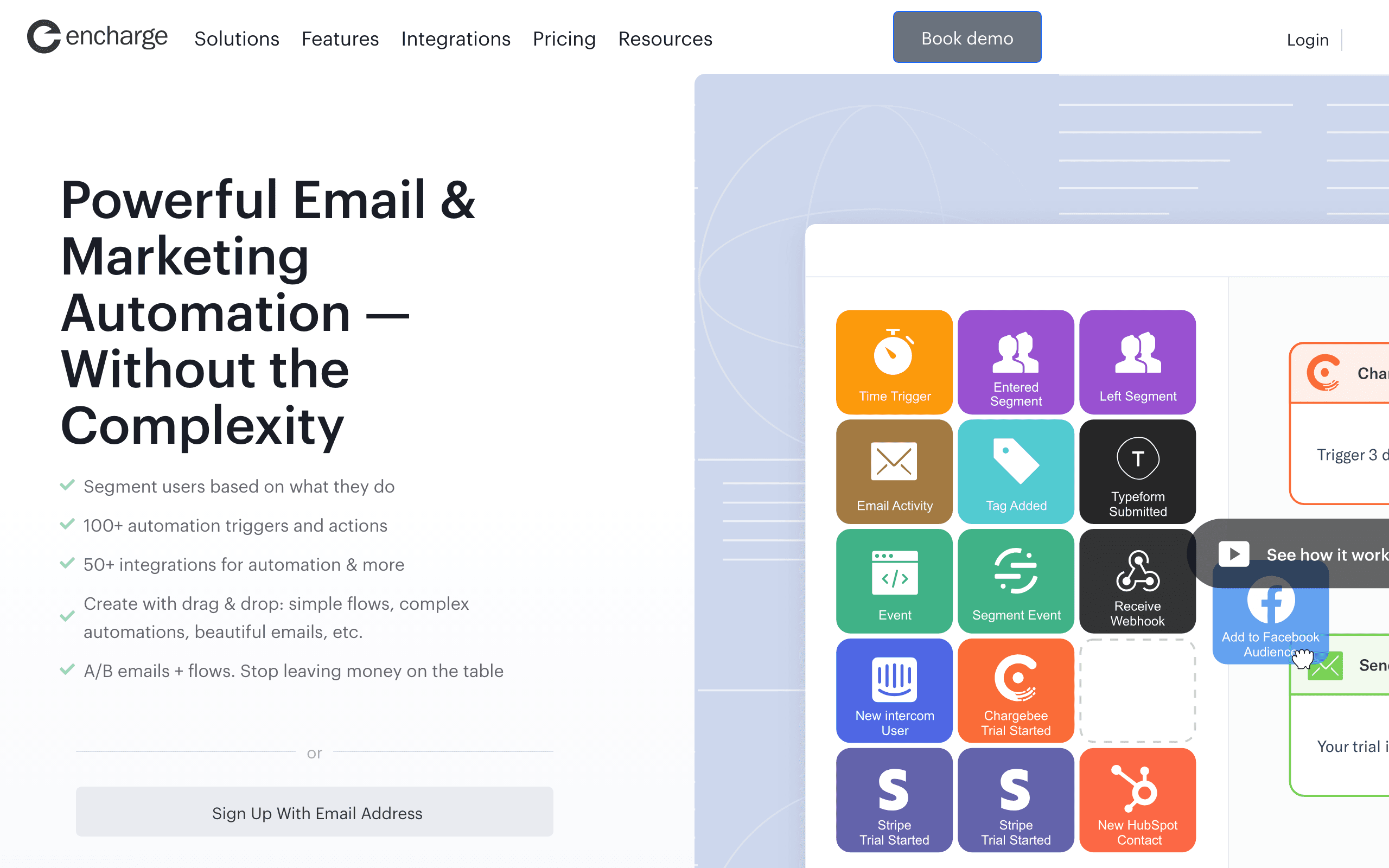
Encharge offers sophisticated behavioral automation - onboarding flows triggered by user events, advanced segmentation, 45+ native integrations. Plunk offers basic workflows with email sending. This isn't a close competition on features. Encharge is built for complex SaaS lifecycle marketing.
The Price Gap
But Plunk is dramatically cheaper. Encharge starts at $99/month and scales to $179+/month at 10k contacts. Plunk is $0.001/email, or free if self-hosted (just AWS SES costs ~$0.10/1000 emails). For startups, this 10-20x price difference matters.
Open Source vs Managed
Plunk is fully open-source. Self-host on your infrastructure, keep data under your control, customize as needed. Encharge is proprietary SaaS - managed for you, but no self-hosting option. Choose based on whether you value control or convenience.
DevOps Reality
Self-hosted Plunk requires maintaining infrastructure, managing AWS SES reputation, handling updates. Encharge is fully managed - deliverability, infrastructure, support all handled for you. If your team lacks DevOps capacity, Encharge's managed approach has value.
SaaS Integrations
Encharge connects natively to Stripe, Chargebee, Intercom, and 45+ tools. Trigger campaigns when subscriptions change or users interact with support. Plunk has minimal native integrations - you build what you need via API.
Different Stages
Plunk makes sense for early-stage startups with limited budget and simple needs, especially if you have DevOps capability. Encharge makes sense when you've validated product-market fit and need sophisticated behavioral automation. Most companies start simple and graduate to more complex tools.
The Middle Ground
Sequenzy offers more features than Plunk (proper behavioral triggers, segmentation) without Encharge's enterprise pricing. With native Stripe OAuth, it's managed like Encharge at a fraction of the cost.
Making the Choice
Choose Encharge for advanced SaaS behavioral automation with native integrations and managed service. Choose Plunk for affordable, open-source email with self-hosting control. For SaaS-focused automation with Stripe integration at reasonable pricing, consider Sequenzy.
Review signals
The Encharge reviews on this page describe the upside of buying a managed automation product: product events through Segment and stronger onboarding conversion. The caution is feature overkill when an early-stage team only uses a small part of the platform.
The Plunk reviews are consistent with an open-source starting point. Users praise self-hosting and near-zero infrastructure cost for onboarding emails and receipts, but also flag limited automation and segmentation once the lifecycle program grows.
The Build vs Buy Decision
The Encharge vs Plunk choice often comes down to the classic build vs buy trade-off. Self-hosted Plunk gives you maximum control and minimal cost, but you are responsible for infrastructure, deliverability management, and building any advanced features you need. Encharge gives you a complete solution out of the box, but you pay a significant premium and give up control over your email infrastructure.
For technical founders comfortable with DevOps, Plunk's self-hosted option is genuinely compelling at the early stage. You get reliable email delivery through AWS SES, basic automation, and the freedom to customize the codebase. The total cost can be under $10/month for a startup sending thousands of emails. The hidden cost is your engineering time maintaining it.
Growth Stage Transitions
Most SaaS companies follow a predictable email tool journey: start with something simple and cheap, then graduate to more sophisticated tools as needs grow. Plunk fits the first stage perfectly - affordable, functional, no commitment. Encharge fits the second stage - when you need behavioral triggers based on product events, sophisticated segmentation, and integrations with your growing tool stack.
The transition point typically comes when you need to automate based on user behavior inside your product. When "send email 3 days after signup" needs to become "send email when user has logged in 3 times but hasn't used feature X," that is when basic tools show their limitations and platforms like Encharge or Sequenzy earn their subscription cost.
Deliverability Ownership
With Encharge, deliverability is managed for you - sender reputation, IP warming, bounce handling, and compliance are all handled by the platform. With self-hosted Plunk, you own the entire deliverability stack. You manage your AWS SES reputation, handle bounces, monitor blacklists, and ensure compliance yourself. This is manageable for low-volume senders but becomes a meaningful operational burden as you scale. The choice between managed and self-hosted deliverability is often more important than feature comparisons.
Use-case matchups
| Use case | Better fit | Why |
|---|---|---|
| Advanced SaaS lifecycle automation | Encharge | Behavioral triggers, segmentation, and native SaaS integrations are the main reason to pay for it. |
| Bootstrapped transactional and simple product email | Plunk | Open-source control and low sending costs fit early technical teams. |
| Self-hosting for data control | Plunk | Plunk can run on your own infrastructure; Encharge cannot. |
| No-DevOps managed automation | Encharge | Infrastructure, deliverability, and support are handled by the vendor. |
| Stripe-aware managed email at a middle price | Sequenzy | Sequenzy fits teams that want managed SaaS email without Encharge-level pricing or self-hosting work. |
Best Fit by Build vs Buy Stage
Best SaaS marketing automation tool after product-market fit
Choose Encharge when the company has enough lifecycle volume to justify managed automation, behavioral segmentation, user scoring, and native integrations. It fits teams that have moved beyond simple onboarding emails and need a vendor-owned platform instead of maintaining email infrastructure themselves.
Best open-source email platform for technical bootstrapped startups
Choose Plunk when the team is comfortable owning AWS SES, hosting, updates, monitoring, and deliverability operations. It is the better fit for technical founders who need low-cost product and transactional email before they need sophisticated segmentation or marketer-owned workflow tooling.
Best managed middle-ground email tool for Stripe-driven SaaS
Choose Sequenzy when self-hosting is too much operational work but Encharge is more platform than the team needs. Stripe-triggered onboarding, payment recovery, renewal, and lifecycle emails can justify a managed product without paying for advanced scoring or running an open-source stack.
Pricing reality
Plunk's low cost is real, but it is not the full cost if your team self-hosts. Include engineering time, AWS SES setup, monitoring, compliance, deliverability maintenance, backups, and incident response.
Encharge's cost is easier to justify when the platform replaces custom lifecycle logic and multiple integrations. If the team only needs simple product email, the extra automation depth may be unused.
Migration checklist
| Workstream | What to check |
|---|---|
| Contacts and users | Export subscribers, user attributes, events, tags, unsubscribes, bounces, and suppression lists. |
| Event taxonomy | Map product events, billing events, account states, and lifecycle milestones before rebuilding automation. |
| Hosting responsibility | If moving to Plunk, decide who owns infrastructure, AWS SES reputation, monitoring, updates, and backups. |
| Integrations | Reconnect Stripe, Chargebee, Segment, Intercom, Zapier, API events, and support tools where applicable. |
| Automations | Rebuild onboarding, activation, trial, payment, churn-risk, and reactivation flows manually. |
| Transactional email | Confirm which messages are transactional, which are marketing, and how unsubscribe rules apply. |
| Deliverability | Verify DKIM, SPF, DMARC, bounce processing, warm-up, suppression handling, and complaint monitoring. |
Decision checklist
- Is the team optimizing for engineering control or marketer autonomy?
- Can the team maintain self-hosted email infrastructure responsibly?
- Are behavioral triggers and native integrations worth Encharge's price?
- Which lifecycle events actually drive conversion or retention?
- Would a managed middle-ground tool remove enough complexity without overbuying?








