Updated 2026-01-17
Elastic Email
SendGrid

Elastic Email vs SendGrid

Budget volume sender vs enterprise infrastructure

20
Features Compared
4
Key Differences
4
User Reviews
10
FAQs Answered
TL;DR

Elastic Email wins on price - it's one of the cheapest email services available, starting at $19/month for 37,500 emails. SendGrid wins on enterprise credibility with Twilio backing, billions of emails processed monthly, and proven infrastructure. Choose Elastic Email to minimize costs, SendGrid when enterprise reliability and scale matter.

Platform Overview

See how each platform looks

Elastic Email

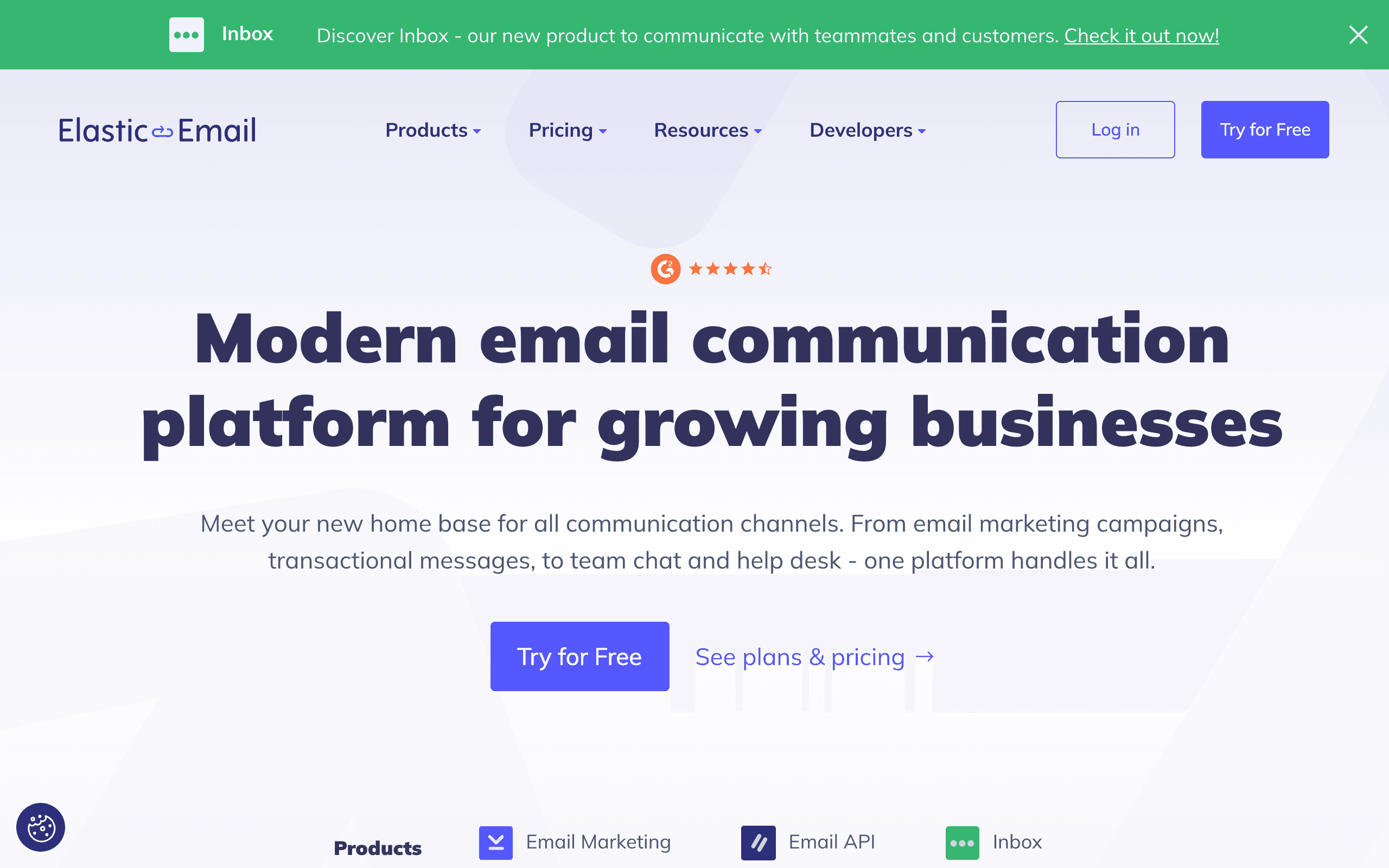
Elastic Email dashboard screenshot

Email delivery service with competitive pricing and basic marketing automation.

SendGrid

SendGrid dashboard screenshot

Transactional and marketing email platform with powerful API.

Key Differences

The main things that set these tools apart

Enterprise Credibility
SendGrid wins

SendGrid is backed by Twilio and processes over 100 billion emails monthly. Major companies trust it for mission-critical email. Elastic Email is solid but doesn't have the same enterprise credentials or reputation.

Cost Efficiency
Elastic Email wins

Elastic Email consistently undercuts competitors on price. For high-volume senders watching budgets, Elastic Email can cost 50%+ less than SendGrid. If cost is your primary concern, Elastic Email wins.

Product Simplicity
Elastic Email wins

Elastic Email includes transactional and marketing in one product. SendGrid splits these into separate products (Email API and Marketing Campaigns) with separate billing. For all-in-one simplicity, Elastic Email is easier.

Developer Resources
SendGrid wins

SendGrid has more SDKs, better documentation, larger community, and more Stack Overflow answers. When you hit problems, you're more likely to find SendGrid solutions. Developer ecosystem favors SendGrid.

Pricing Comparison

At 50,000 emails/month

Elastic Email
~$35/month

Starter plans scale with volume. Pay-as-you-go also available.

Visit Elastic Email
SendGrid
$20-90/month

Essentials $20 for API. Pro $90 for 100k with dedicated IP. Marketing separate.

Visit SendGrid
Best for SaaS
Sequenzy
$49/month

10k contacts, unlimited sends, transactional + marketing unified.

Start Free Trial

Feature Comparison

20 features compared side-by-side

Feature
Elastic Email
SendGrid
Sequenzy
Pricing & Cost
Entry Price
$19/mo
$20/mo (Essentials)
$49/mo
High-Volume Pricing
Very competitive
Standard enterprise
Unlimited sends
Free Tier
100 emails/day
100 emails/day (trial)
Free trial
Dedicated IP
Extra cost
Included in Pro ($90/mo)
Available
Overage Fees
~$0.0005/email
~$0.001/email
N/A (contact-based)
Infrastructure & Scale
Processing Capacity
High volume
100B+ emails/month
High
Deliverability Reputation
Adequate
Industry leading
Good
Uptime SLA
Available
Enterprise SLAs
Available
Track Record
Since 2010
Since 2009 (Twilio 2019)
Modern
IP Warming
Basic
Automated
Available
Developer Experience
API Quality
Functional REST
Comprehensive
Simple REST
SDK Support
Multiple languages
7+ languages
TypeScript, Python
Documentation
Adequate
Extensive
Developer-focused
Community Size
Small
Very large
Growing
Webhooks
Available
Comprehensive
Available
Marketing Features
Email Campaigns
Included
Separate product
Core feature
Automation
Premium plans
Marketing Advanced
AI-powered
Contact Management
Built-in
Marketing product
Built-in CRM
Visual Editor
Available
Design Library
Available
A/B Testing
Available
Available
Available

Pros & Cons

Honest strengths and weaknesses of each platform

Elastic Email

Pros
  • Significantly cheaper than SendGrid at high volumes
  • Marketing and transactional unified in one product
  • Simple pricing without split product complexity
  • Contact management and basic marketing included
  • Pay-as-you-go option for variable sending patterns
  • Visual email editor and template library
Cons
  • Lacks SendGrid's enterprise credibility and scale
  • API and documentation less polished
  • Smaller developer community and fewer resources
  • Deliverability not a primary competitive advantage
  • Support less comprehensive on lower tiers
  • Automation limited to premium plans

SendGrid

Pros
  • Enterprise-grade processing 100B+ emails monthly
  • Comprehensive developer SDK support in 7+ languages
  • Extensive documentation and large community
  • Twilio ecosystem integration for multi-channel
  • Dedicated IP included in Pro plan
  • Automated IP warming and deliverability tools
  • 99.99% uptime SLA on enterprise plans
Cons
  • Split product pricing - API and Marketing billed separately
  • More expensive than Elastic Email at comparable volumes
  • Post-Twilio acquisition support quality concerns
  • Marketing Campaigns product feels secondary
  • Pricing complexity with separate product tiers
  • Enterprise pricing opaque without sales conversations

What Users Say

Real reviews from Elastic Email and SendGrid users

Elastic Email Reviews

G2

Elastic Email saves us thousands annually compared to SendGrid. We send 2M emails monthly and the cost difference is massive. Deliverability is adequate and the unified pricing is simpler than SendGrid's split products.

Simon P.2025-10-05
Capterra

Cheap but you feel the difference. SendGrid's API documentation and SDK support are in a different league. We switched from Elastic Email when our engineering team kept hitting documentation gaps.

Julia W.2025-12-18

SendGrid Reviews

G2

SendGrid handles our mission-critical transactional email without breaking a sweat. Millions of daily emails with near-perfect uptime. The enterprise credibility matters when email is core infrastructure.

Robert M.2025-11-12
Trustpilot

Support has declined since the Twilio acquisition. The product still works but getting help when things go wrong is harder. Also, the split pricing between API and Marketing keeps catching new team members off guard.

Linda K.2026-02-02

Best For

When to choose each tool

Choose Elastic Email if you...
  • High-volume senders on tight budgets
  • Startups minimizing costs
  • Agencies managing multiple clients economically
  • Teams needing marketing + transactional in one product
Choose SendGrid if you...
  • Enterprises needing proven infrastructure
  • Companies sending billions of emails
  • Developers wanting comprehensive SDK support
  • Teams already in Twilio ecosystem

When to Consider Sequenzy Instead

Simpler Than SendGrid Pricing

SendGrid's split products mean complex pricing calculations. Elastic Email is simpler but general-purpose. Sequenzy offers unified SaaS email at straightforward per-contact pricing.

SaaS-Focused Features

Both Elastic Email and SendGrid are general-purpose email tools. Sequenzy is built specifically for SaaS with trial-to-paid sequences, MRR segmentation, and behavior-based automation.

Native Stripe Integration

Trigger emails based on Stripe payments, subscriptions, and billing events. Neither Elastic Email nor SendGrid offers native Stripe OAuth integration.

Overview

Elastic Email and SendGrid both handle transactional email but at different scales and price points. Elastic Email (since 2010) competes primarily on aggressive pricing for high-volume senders. SendGrid (owned by Twilio since 2019) is enterprise-grade infrastructure processing 100+ billion emails monthly. The choice often comes down to budget vs enterprise credibility.

Budget Leader vs Enterprise Standard

The fundamental difference: Elastic Email is one of the cheapest email services available, making it attractive for cost-conscious senders. SendGrid is the enterprise standard with Twilio backing and proven scale. If cost is your primary driver, Elastic Email. If enterprise reliability matters more, SendGrid.

Pricing reality

At lower volumes (under 50k emails), both are similarly priced around $20/month. The gap widens at scale. Elastic Email stays aggressive with volume pricing while SendGrid follows enterprise pricing curves. Also remember: SendGrid splits API and Marketing into separate products with separate bills.

Developer Experience

SendGrid wins on developer resources. More SDKs (7+ languages), extensive documentation, larger community, more Stack Overflow answers. When you hit problems, SendGrid solutions are easier to find. Elastic Email's API works but feels more dated.

Unified vs Split Products

Elastic Email includes marketing features in their main product. SendGrid separates Email API (transactional) and Marketing Campaigns (promotional) with separate pricing. If you need both, factor in combined SendGrid costs vs Elastic Email's unified pricing.

Deliverability

SendGrid has the stronger reputation here. They've invested heavily in deliverability infrastructure and ISP relationships. Elastic Email is adequate but deliverability isn't their primary selling point. For critical transactional email, SendGrid inspires more confidence.

The Unified Alternative

SaaS companies often find both options lacking SaaS-specific features. Sequenzy offers unified marketing and transactional built for SaaS, with native Stripe integration and simpler pricing than SendGrid's split products.

Making the Choice

Choose Elastic Email for maximum cost efficiency, especially at high volumes. Choose SendGrid for enterprise credibility, comprehensive developer tools, and proven scale. For SaaS with Stripe integration and marketing automation, consider Sequenzy.

Delivery Speed and Reliability

For transactional email, delivery speed is non-negotiable. Receipts, password resets, and verification codes need to arrive in seconds. Both Elastic Email and SendGrid prioritize fast delivery, but their approaches differ in infrastructure and routing.

Transactional email reliability involves more than just speed. It requires consistent inbox placement, proper authentication, and monitoring. Compare how each platform handles DKIM, SPF, and DMARC setup, and which provides better tools for ongoing email deliverability monitoring.

API Design and Developer Experience

Elastic Email and SendGrid both target developers, but with different philosophies. The quality of API documentation, SDK support, and error handling directly impacts how quickly your team can integrate and how much ongoing maintenance is needed.

Developer experience goes beyond the API itself. Consider webhook support for tracking delivery events, sandbox environments for testing, and how each platform handles rate limiting and error recovery. These details matter when your application depends on email delivery.

Scaling and Cost at Volume

Email costs become significant at scale. What starts as a few hundred emails per day can grow to millions. Understanding how Elastic Email and SendGrid price at different volume tiers helps you plan for growth without budget surprises.

Beyond per-email pricing, consider dedicated IP costs, email validation charges, and support tier pricing. Some platforms offer volume discounts that significantly change the economics at higher sending volumes. For SaaS companies needing both transactional and marketing email, explore Sequenzy's unified approach.

Use-case matchups

Review signals

The Elastic Email reviews on this page support the cost argument at scale. One reviewer says the platform saves thousands annually compared with SendGrid at 2M emails per month and appreciates the simpler unified pricing.

The negative Elastic Email review points to engineering friction: SendGrid's API documentation and SDK support were strong enough to justify switching away from Elastic Email.

SendGrid's reviews confirm the enterprise infrastructure positioning, especially for mission-critical transactional email. The caution is support and pricing complexity, with one reviewer mentioning post-acquisition support concerns and confusion around API versus Marketing billing.

Use case Better fit Why
Lowest high-volume sending cost Elastic Email Elastic Email is the first place to look when the main constraint is per-email cost and the team can accept a lighter developer ecosystem.
Enterprise transactional infrastructure SendGrid SendGrid is stronger when email is mission-critical and the team values Twilio-backed infrastructure, SDKs, uptime history, and support tiers.
Marketing plus transactional in one budget tool Elastic Email Elastic Email keeps campaigns, contacts, templates, and sending closer together instead of splitting API and marketing products.
Developer ecosystem depth SendGrid SendGrid has broader SDK coverage, documentation, community answers, webhook examples, and integration patterns.
SaaS lifecycle automation Sequenzy Sequenzy is better when Stripe events, transactional email, and lifecycle campaigns need one SaaS-focused workspace.
Dedicated IP and deliverability operations SendGrid SendGrid is usually the safer first evaluation when dedicated IPs, warming, SLAs, and enterprise deliverability workflows matter.

Best Fit by Scale and Risk

Best email platform for high-volume senders watching cost

Elastic Email fits teams that send enough email for per-message pricing to dominate the decision and can accept a lighter developer ecosystem.

Best email infrastructure for enterprise transactional scale

SendGrid is the better fit when Twilio-backed infrastructure, SDKs, dedicated IP operations, deliverability support, and enterprise scale matter more than raw cost.

Best SaaS email platform for billing-triggered lifecycle automation

Sequenzy fits subscription teams that need lifecycle campaigns and transactionals tied to Stripe events rather than general infrastructure scale.

Migration checklist

Decision checklist

  • Is the team optimizing for lowest high-volume sending cost or enterprise reliability?

  • Will SendGrid's SDKs, documentation, and community reduce engineering time enough to justify the cost?

  • Does the team need both SendGrid Email API and Marketing Campaigns, or only one product?

  • How important are dedicated IPs, warming, SLAs, and enterprise support?

  • Would SaaS billing-aware lifecycle automation make Sequenzy a better fit than either infrastructure tool?

  • Decide whether the target system should optimize for budget, enterprise reliability, or SaaS lifecycle automation before moving traffic.

  • Export verified domains, sender identities, API keys, SMTP credentials, suppression lists, templates, contacts, webhooks, event history, and delivery reports.

  • If moving to SendGrid, separate transactional API sends from Marketing Campaigns and confirm which product owns each template and contact list.

  • If moving to Elastic Email, map SendGrid templates, suppression groups, event webhooks, contacts, campaigns, and API sends into Elastic Email's unified setup.

  • Rebuild critical transactional templates first: verification, password reset, invite, receipt, invoice, billing, alert, and security emails.

  • Reconnect API/SMTP calls, webhooks, bounce handling, complaint handling, unsubscribe groups, alerts, dashboards, and suppression syncing.

  • Authenticate SPF, DKIM, and DMARC, then warm domains or dedicated IPs gradually before shifting all production traffic.

  • Preserve historical delivery, bounce, complaint, latency, support, and cost reports so the team can compare budget savings against infrastructure reliability.


Frequently Asked Questions

10 questions answered about Elastic Email vs SendGrid

Testimonials

Sequenzy Testimonials

Max Eccles

Max Eccles

Founder, InstantInterior AI

$600 revenue in 30d from email automations. Very happy I migrated to Sequenzy. Before I was making zero from email automations.

Leo

Leo

Maintainer, Email SDK

I get to talk to my users 1:1 and help them set it up for their use case.

Jim

Jim

Founder

I run a SaaS, and found Nic on X where I kept seeing posts about his email marketing tool, Sequenzy. I decided to try it for email marketing. Literally on the first day, I used it to send a marketing campaign and I got 5 sales. What I like most is the ai assistant because it actually writes emails that feel real instead of the usual ai slop chatgpt returns, so they do not end up in spam. It also has a 2.5k free email limit which is way better than most tools that only give you around 1k. The best part though is that it handles everything for me, tags, subscribers, sequences and all of it. Without it i would probably be managing a database and a bunch of cron jobs just to make email automation work. Sequenzy just makes my life a lot easier. it can also be set up with 2-3 clicks! Give it a try!!

Mar 10, 2026

Dhiva Logu

Dhiva Logu

Founder

I love everything about Sequenzy and also the kind of support I get from Nic. It's already the best choice for campaigns & Sequences. Specially the integrations with payment providers, auth providers & analytics etc.. is really spot on. Best in terms of features & pricing in the email segment 100% recommend it for SaaS emails :)

Mar 10, 2026

Petros

Petros

Shopify App Store review

The setup was fast and simple. It synced customer, product, and order data quickly. Generating automated flows was simple, and it improved my monthly bottom line by about 7%.

Elvis Sun

Elvis Sun

Founder, PressPulse & Medialyst

Codex basically one-shotted the migration for syncing our audience from SendGrid to Sequenzy. Sequenzy is fully observable, so agents can just set everything up. The net impact is saving $45/mo, plus 2 hours of my time every time I need to repurpose a newsletter. That's 8 hours a month. My consulting rate is $550/hr, so every hour automated is super valuable.

Louis

Louis

Founder

Easy migration from another tool. Premium customer service and easy to set everything up

Apr 9, 2026

Jim

Jim

Founder, FixMyLanding

It helped me grow to $100 MRR, get #1 on Uneed, make more sales, get acquired.

King Killers

King Killers

Shopify App Store review

Loving the Sequenzy app so far due to the affordability and large subscriber limits. Planning on this becoming my main email app. Campaign + flows setup with the help of their AI took less than 30 minutes.

Verified User

Verified User

Computer Software

SaaS-focused feedback, fast processing, and plenty of integrations. It is very SaaS-focused, supports a wide range of integrations, and processes feedback right away.

Jun 17, 2026

G2

Not sure which to pick?

If you're a SaaS founder who needs Stripe integration and unified email, try Sequenzy free. No credit card required.

Related Comparisons

Sequenzy pricing reference

Sequenzy - Complete Pricing Guide

Pricing Model

Sequenzy uses email-volume-based pricing. You only pay for emails you send. Unlimited contacts on all plans — storing subscribers is always free.

All Pricing Tiers

  • 2.5k emails/month: Free (Free annually)
  • 15k emails/month: $19/month ($205/year annually)
  • 30k emails/month: $29/month ($313/year annually)
  • 60k emails/month: $49/month ($529/year annually)
  • 120k emails/month: $99/month ($1069/year annually)
  • 300k emails/month: $199/month ($2149/year annually)
  • 600k emails/month: $399/month ($4309/year annually)
  • 900k emails/month: $599/month ($6469/year annually)
  • 1.2M emails/month: $799/month ($8629/year annually)
  • 2M emails/month: $1299/month ($14029/year annually)
  • 3M emails/month: $1999/month ($21589/year annually)
  • 4M emails/month: $2499/month ($26989/year annually)
  • 5M emails/month: $2999/month ($32389/year annually)
  • Unlimited emails/month: Custom pricing (Custom annually)

Yearly billing: All plans offer a 10% discount when billed annually.

Free Plan Features (2,500 emails/month)

  • Visual automation builder
  • Transactional email API
  • Reply tracking & team inbox
  • Landing pages
  • Unlimited team members
  • Goal tracking & revenue attribution
  • Unlimited lists and segments
  • Payment integrations
  • API, MCP, and CLI access
  • Unlimited sending domains
  • SPF, DKIM, and DMARC
  • Deliverability monitoring
  • Send time optimization
  • A/B testing

Paid Plan Features (15k - 5M emails/month)

  • Visual automation builder
  • Transactional email API
  • Reply tracking & team inbox
  • Landing pages (Create hosted signup pages and attach a custom domain.)
  • Unlimited team members
  • Goal tracking & revenue attribution
  • Unlimited lists and segments
  • Payment integrations (Stripe, Paddle, Lemon Squeezy)
  • API, MCP, and CLI access
  • Unlimited sending domains
  • SPF, DKIM, and DMARC
  • Deliverability monitoring
  • Send time optimization
  • A/B testing

Enterprise Plan Features (Unlimited emails)

  • Visual automation builder
  • Transactional email API
  • Reply tracking & team inbox
  • Landing pages
  • Unlimited team members
  • Goal tracking & revenue attribution
  • Unlimited lists and segments
  • Payment integrations
  • API, MCP, and CLI access
  • Unlimited sending domains
  • SPF, DKIM, and DMARC
  • Deliverability monitoring
  • Send time optimization
  • A/B testing

Important Pricing Notes

  • You only pay for emails you send — unlimited contacts on all plans
  • No hidden fees - all features included in the price
  • No credit card required for free tier

Contact

  • Pricing Page: https://sequenzy.com/pricing
  • Sales: hello@sequenzy.com