

Overview
SendGrid and SparkPost are both enterprise-grade transactional email providers competing in the same market. SendGrid (owned by Twilio since 2019) has larger market share and processes 100+ billion emails monthly. SparkPost (owned by MessageBird since 2020) is known for excellent deliverability analytics through their Signals product. Both handle enterprise scale reliably.
Market Position
SendGrid has the larger installed base. More developers have used it, more Stack Overflow answers exist, and hiring SendGrid-experienced developers is easier. SparkPost is respected in the industry but has smaller market share. If ecosystem and community matter, SendGrid has the edge.
Analytics and Insights
SparkPost's biggest differentiator is Signals - their predictive analytics platform. It goes beyond basic open/click tracking to provide email health scores, deliverability predictions, and actionable recommendations. SendGrid has good analytics but nothing as sophisticated as Signals.
Pricing Comparison
SparkPost is generally slightly more competitive on pricing. Their Premier plan with dedicated IP runs ~$75/month vs SendGrid Pro at ~$90/month. Both offer volume discounts at enterprise scale. The gap isn't huge, but SparkPost edges ahead.
Developer Experience
SendGrid has more SDKs (7+ languages) and larger community. When you hit problems, SendGrid solutions are easier to find. SparkPost's API is modern and well-documented but the community is smaller. For raw developer resources, SendGrid wins.
Parent Company Dynamics
SendGrid benefits from Twilio integration - if you're already using Twilio for SMS or voice, SendGrid is a natural choice. SparkPost with MessageBird offers similar multi-channel potential but the integration is less seamless. Consider your existing stack.
Marketing Features
Neither is primarily a marketing platform. SendGrid offers Marketing Campaigns as a separate product (additional cost). SparkPost focuses purely on transactional email without a marketing product. If you need both, factor in that cost.
The Sequenzy Alternative
Both SendGrid and SparkPost are general-purpose email infrastructure. If you're building a SaaS and need marketing campaigns and transactional email unified with native Stripe integration, Sequenzy offers a more focused solution.
Making the Choice
Choose SendGrid for largest community, best ecosystem, and Twilio integration. Choose SparkPost for superior analytics (Signals) and slightly better pricing. For SaaS needing unified email with Stripe triggers, consider Sequenzy.
Signals: SparkPost's Differentiator
SparkPost Signals goes beyond basic email metrics to provide predictive deliverability intelligence. The system monitors engagement patterns, bounce trends, and complaint rates to generate a health score that predicts future deliverability problems before they manifest. When your Gmail engagement drops below a threshold, Signals alerts you days before inbox placement deteriorates.
SendGrid provides standard email analytics: opens, clicks, bounces, and delivery rates. These metrics are backward-looking. You discover problems after they have impacted your sending. For teams that can afford reactive approaches, SendGrid's analytics are sufficient. For teams where email deliverability directly affects revenue, SparkPost's predictive approach provides a meaningful operational advantage.
The analytics gap is SparkPost's strongest argument against SendGrid. Everything else in the comparison is a trade-off. Signals is an area where SparkPost offers capability that SendGrid simply does not match at comparable price points.
The Acquisition Factor
Both platforms changed hands within a year of each other. Twilio acquired SendGrid in 2019. MessageBird acquired SparkPost in 2020. Both acquisitions introduced uncertainty about long-term product direction and independence.
SendGrid has integrated relatively well into the Twilio ecosystem. The brand remains, the API is maintained, and Twilio's multi-channel capabilities (SMS, voice) create genuine synergy. The acquisition has been stable.
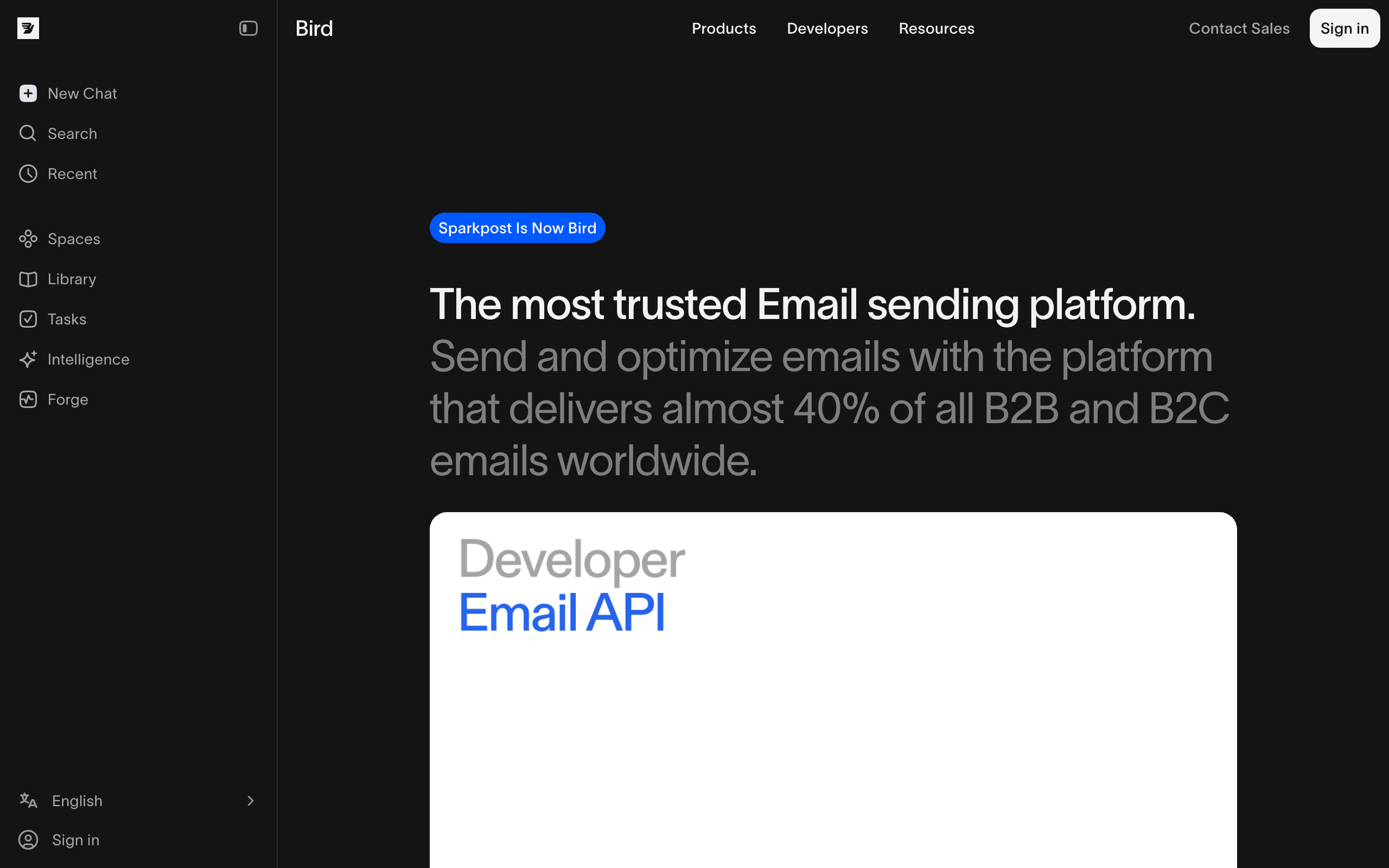
SparkPost's path has been less smooth. MessageBird rebranded to Bird in 2022, creating confusion about the SparkPost product's future. SparkPost continues operating but the parent company's direction has shifted. For enterprise customers making five-year infrastructure decisions, SendGrid's Twilio integration feels more stable than SparkPost's current positioning under Bird.
Community and Ecosystem
SendGrid's larger installed base creates compounding advantages. More developers have integrated SendGrid, meaning more blog posts, tutorials, Stack Overflow answers, and npm packages exist. When you encounter an edge case with DKIM configuration or webhook parsing, the answer is more likely to exist for SendGrid.
SparkPost's community is smaller but technically capable. The developers who choose SparkPost tend to be more deliberate about their email infrastructure decisions, which means community resources, while fewer, tend to be higher quality. The documentation is good. But the volume of external resources does not match SendGrid's ecosystem.
For hiring, SendGrid experience is more common on resumes. Finding developers who have integrated SparkPost requires more targeted recruitment. This practical consideration matters for teams planning email infrastructure that others will maintain.
For SaaS Companies
Neither SendGrid nor SparkPost is designed for SaaS marketing automation. Both are general-purpose transactional email infrastructure. SendGrid has a basic marketing product. SparkPost has none. For SaaS companies that need transactional email, marketing campaigns, and Stripe integration in one platform, Sequenzy at $49/month offers a focused alternative. Use our email validator to clean sending lists and our email warmup calculator to plan dedicated IP reputation building on either platform.
Use-case matchups
| Situation | Best first look | Why |
|---|---|---|
| Team wants the largest ecosystem and Twilio alignment | SendGrid | SendGrid has wider adoption, more examples, more hiring familiarity, and Twilio ecosystem fit. |
| Deliverability team wants predictive analytics | SparkPost | SparkPost Signals is the main reason to evaluate SparkPost first for deliverability monitoring. |
| SaaS team wants lifecycle campaigns plus transactional email | Sequenzy | Sequenzy fits when the product needs automation, transactional email, campaigns, and Stripe triggers together. |
| Team wants marketing email in the same vendor | SendGrid | SendGrid has a marketing product; SparkPost is presented here as infrastructure-focused. |
| Enterprise sender cares most about deliverability diagnostics | SparkPost | SparkPost is stronger in the page content where predictive deliverability intelligence matters. |
| Team wants one subscriber model instead of infrastructure plus automation | Sequenzy | Sequenzy is more relevant when email workflows are driven by customer lifecycle events. |
Best Fit by Platform Ecosystem and Predictive Deliverability Analytics
Best email API for broad ecosystem support and marketing add-ons
SendGrid is the better fit when the team wants API delivery, templates, analytics, Twilio ecosystem alignment, wider adoption, and marketing email options from one vendor.
Best email infrastructure for predictive deliverability diagnostics
SparkPost is the better fit when deliverability teams care most about Signals, advanced analytics, enterprise sender diagnostics, and high-volume delivery intelligence.
Best email tool for lifecycle campaigns plus transactional email
Sequenzy is the better fit when campaigns, Stripe triggers, transactional messages, and subscriber lifecycle data should live together instead of pairing infrastructure with another automation tool.
Pricing reality
The pricing signals on this page list SendGrid around $90/month, SparkPost around $75/month, and Sequenzy at $99/month. The real comparison depends on whether analytics or ecosystem depth is the priority.
SendGrid can be easier to justify when the team benefits from Twilio, a larger community, and broader marketing options. SparkPost can be easier to justify when predictive deliverability analytics reduce revenue risk for a high-volume sender.
Sequenzy should not be treated as the same category as SparkPost Signals. It is the better comparison when the buyer needs SaaS lifecycle email rather than dedicated enterprise deliverability intelligence.
Review signals
This page has existing review data from G2, Trustpilot, and Capterra. Keep those sources because infrastructure email buyers need external validation around deliverability, support, analytics, reliability, and product direction.
For SendGrid, validate current reviews around support quality, account management, deliverability, and Twilio integration. For SparkPost, validate reviews around Signals, analytics usefulness, support, and any product-direction concerns under its parent company.
Use the reviews to shape proof-of-concept tests around Gmail deliverability, bounce handling, webhook reliability, reporting exports, and alert quality.
Migration checklist
| Workstream | Moving toward SendGrid | Moving toward SparkPost | Simplifying to Sequenzy |
|---|---|---|---|
| API migration | Move API calls, templates, event webhooks, and suppression handling. | Move API calls, templates, webhooks, suppression handling, and Signals setup. | Move lifecycle events, campaign templates, and transactional messages. |
| Deliverability monitoring | Confirm dashboards, alerts, dedicated IPs, and support escalation by plan. | Configure Signals, health alerts, domains, IPs, and deliverability workflows. | Confirm reporting covers campaign and transactional lifecycle needs. |
| Marketing scope | Decide whether SendGrid Marketing Campaigns belongs in scope. | Choose a separate marketing platform if SparkPost is only infrastructure. | Keep marketing and transactional messages in one subscriber model. |
| Vendor risk | Validate Twilio account, procurement, and support model. | Validate current SparkPost/Bird product direction and support commitments. | Validate Sequenzy covers the needed volume and lifecycle channels. |
| Cutover | Warm IPs, replay test events, and watch bounces and complaints. | Warm IPs, compare Signals output, and monitor delivery trends. | Test event triggers, suppressions, and transactional paths before switching. |
Decision checklist
- Is predictive deliverability intelligence a must-have or a nice-to-have?
- Does Twilio ecosystem alignment matter to the broader stack?
- Will marketing email live inside this vendor or a separate product?
- How much product-direction risk is acceptable for core email infrastructure?
- Is the actual job infrastructure delivery or SaaS lifecycle communication?








