
Overview
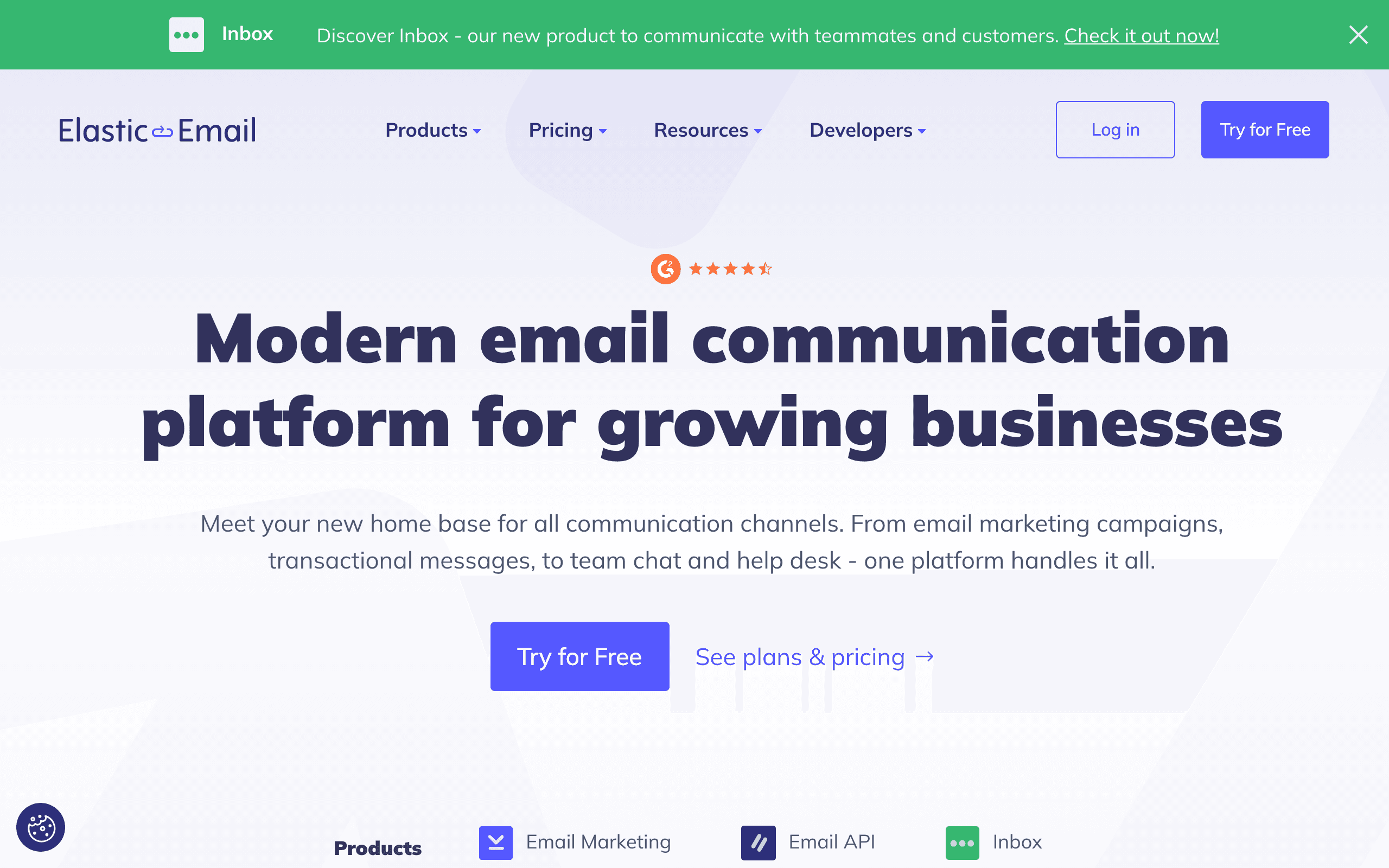
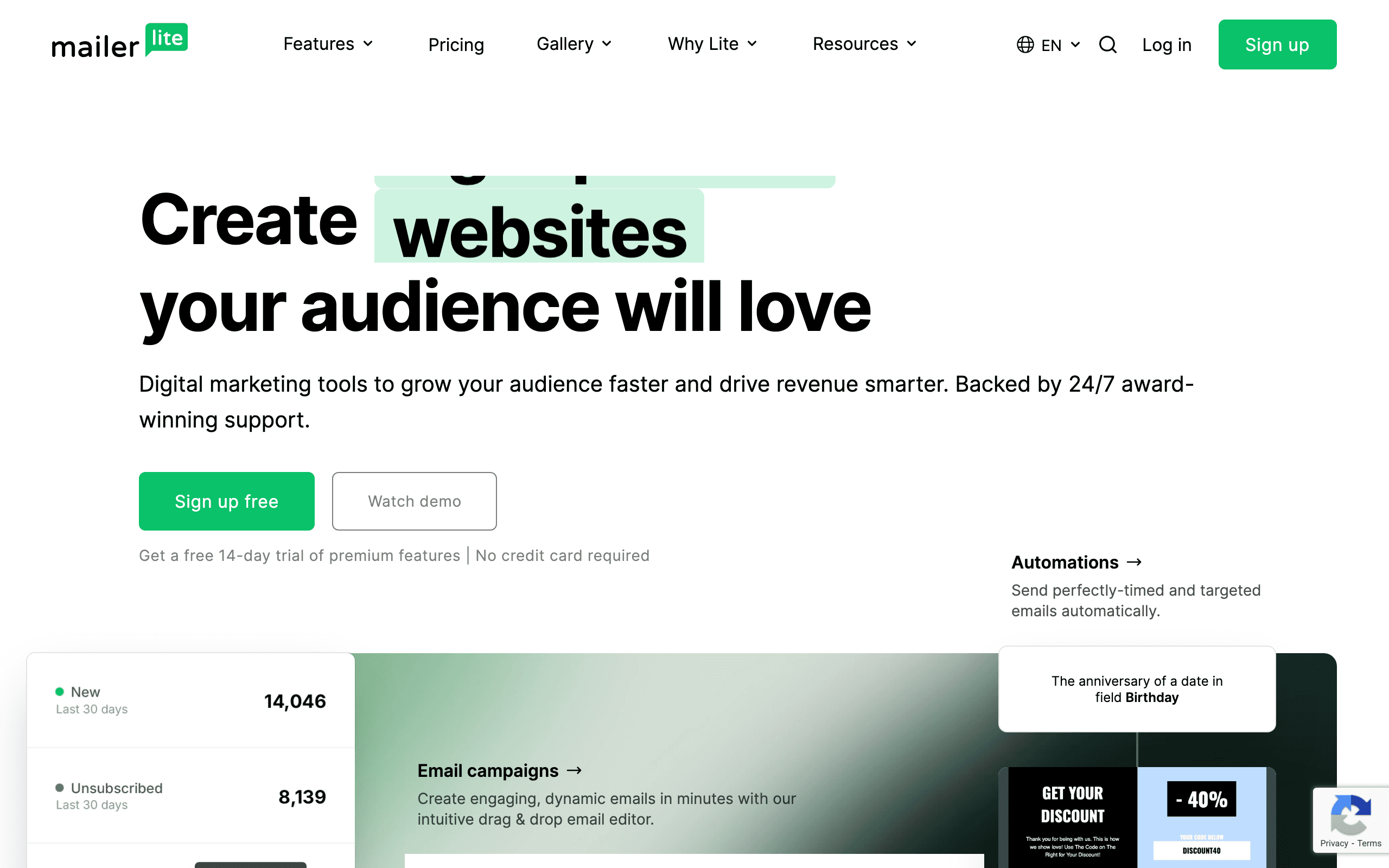
Elastic Email and MailerLite serve different needs in the email space. Elastic Email is a budget-friendly email delivery and marketing platform. MailerLite is a affordable managed email marketing with landing pages.
The choice depends on what you need: very affordable (Elastic Email) or no server management (MailerLite). For SaaS businesses specifically, Sequenzy offers purpose-built features that neither tool provides.
Pricing reality
- Elastic Email: $19/month - Budget delivery + basic marketing. Free tier available.
- MailerLite: $73/month - Landing pages, website builder. 500 sub free tier.
- Sequenzy: $99/month for 120,000 emails, unlimited subscribers, fully managed. See pricing.
Review signals
The Elastic Email reviews on this page frame it as the cheaper practical option for newsletters and transactional email. The favorable review compares $19/month against MailerLite's listed $73/month and says the missing landing-page and website tools were not needed.
The negative Elastic Email signal is product depth: one reviewer describes it as cheap but basic and says the team moved to MailerLite for stronger features.
MailerLite's reviews support the opposite buyer profile. Reviewers call out the editor, landing pages, automation, and polished workflow, while one also flags that approval took five days before sending was smooth.
Where Elastic Email Wins
Very affordable
Elastic Email offers very affordable, which is a genuine advantage for teams that need it.
Marketing + transactional
Elastic Email offers marketing + transactional, which is a genuine advantage for teams that need it.
Template library
Elastic Email offers template library, which is a genuine advantage for teams that need it.
Basic automation
Elastic Email offers basic automation, which is a genuine advantage for teams that need it.
Where MailerLite Wins
No server management
MailerLite offers no server management, which matters for teams that prioritize this.
Landing pages + websites
MailerLite offers landing pages + websites, which matters for teams that prioritize this.
Good email editor
MailerLite offers good email editor, which matters for teams that prioritize this.
User-friendly
MailerLite offers user-friendly, which matters for teams that prioritize this.
The Platform vs Pipe Decision
MailerLite is a marketing platform - it helps you create, manage, and optimize email campaigns with tools for the entire workflow. Landing pages capture subscribers, the email editor builds campaigns, automation nurtures contacts, and analytics measure results. Everything connects in a coherent marketing system.
Elastic Email is a sending pipe - it delivers emails you've created elsewhere at the lowest possible cost. There's a template library and basic list management, but the platform doesn't try to be your complete marketing solution. It optimizes for reliability and affordability in email delivery.
This distinction matters more than the price comparison. Choosing Elastic Email means you need other tools for landing pages, automation, and sophisticated list management. Choosing MailerLite means email marketing is handled in one place. The $54/month difference often disappears when you account for the additional tools Elastic Email users need.
The Free Tier Comparison
Both platforms offer free tiers, but they serve different purposes. MailerLite's free tier includes 1,000 subscribers with most features - automation, landing pages, the email editor - giving you a genuine taste of the platform before paying. It's designed to let you build your email marketing program and upgrade when you outgrow the limits.
Elastic Email's free tier focuses on sending volume rather than features. You can test the delivery infrastructure, but the limited feature set means you're evaluating price more than capability. For teams that want to explore email marketing without commitment, MailerLite's free tier is more useful for learning what works.
The Transactional Divide
One area where Elastic Email has a clear edge: transactional email. MailerLite doesn't handle transactional emails natively - password resets, receipts, and system notifications go through their separate MailerSend product. Elastic Email includes transactional sending alongside marketing in the same platform and API.
For SaaS companies that need both marketing and transactional email, this matters. Managing two platforms (MailerLite plus MailerSend) adds complexity. Sequenzy solves this with unified marketing and transactional email plus native Stripe integration for subscription-aware automation at $49/month.
MailerLite's Approval Gatekeeping Benefits Everyone Who Gets Through
MailerLite's strict account approval process rejects applications that look like potential spam operations. This frustrates legitimate businesses who face delays or rejections, but it creates a cleaner sending pool that benefits everyone who makes it through. Better shared IP reputation means higher inbox placement rates for all MailerLite users.
Elastic Email's more permissive onboarding means you can start sending immediately, but you share infrastructure with a wider range of sender quality. For businesses that prioritize deliverability over convenience, MailerLite's gatekeeping is an investment in long-term inbox placement. For businesses that need to send immediately and are willing to manage their own sender reputation through dedicated IPs, Elastic Email's open onboarding is the better fit.
The Hidden Cost of Choosing the Cheapest Option
Elastic Email's $19/month headline price looks attractive until you account for what it does not include. No landing pages means adding Carrd ($19/year) or Unbounce ($99/month). No website builder means maintaining a separate hosting subscription. No visual automation builder means either building integrations manually or using Zapier ($20-30/month). The total stack cost can easily exceed MailerLite's $73/month while requiring more technical skill to maintain.
MailerLite's higher base price includes landing pages, a website builder, visual automation, and forms in a single platform. For non-technical users who want to manage their entire email marketing operation without touching code or managing multiple tool subscriptions, MailerLite's bundled approach is genuinely cheaper when you account for the alternatives Elastic Email users need to purchase separately.
Two Budget Platforms, One Shared Blind Spot
Both Elastic Email and MailerLite serve cost-conscious businesses effectively within their respective lanes. But neither addresses the SaaS business model where email needs to integrate with subscription billing. MailerLite's automation handles subscriber behavior triggers well. Elastic Email's API handles transactional delivery reliably. Neither can detect that a customer's Stripe trial ends tomorrow or that a payment just failed for the third time.
For subscription software businesses, these billing-triggered emails are the highest-ROI automations in the entire stack. A trial expiration reminder sent at the right moment converts at 3-5x the rate of a generic nurture email. Sequenzy provides native Stripe integration that connects billing events directly to email sequences, replacing the middleware both budget platforms would require with a purpose-built connection at $49/month.
The Budget Platform Showdown
Elastic Email and MailerLite both compete in the affordable email marketing segment, but they approach it differently. Elastic Email leans toward transactional and developer-oriented use cases with API-first design. MailerLite focuses on user-friendly marketing tools with a polished visual editor, landing page builder, and website creation.
At comparable subscriber counts, Elastic Email is typically cheaper. But MailerLite's higher price includes features like landing pages, pop-up forms, and a website builder that would require separate tools alongside Elastic Email. The total cost comparison depends on whether you need those additional marketing tools.
For SaaS companies evaluating budget email platforms, neither is purpose-built for subscription businesses. Both lack native Stripe integration and behavioral event tracking. Sequenzy addresses this gap at $49/month with automated sequences triggered by billing and product usage events.
The Approval Process and Account Vetting
MailerLite is known for a strict account approval process that reviews new signups for spam risk before granting access. This protects their shared IP reputation and benefits legitimate senders, but it frustrates users who get rejected or face delays during onboarding.
Elastic Email has a less restrictive onboarding process, making it easier to get started quickly. However, this also means the shared IP pool may include lower-quality senders, potentially affecting deliverability for all users on shared IPs. The trade-off between easy onboarding and IP reputation protection is real.
For businesses that can pass MailerLite's vetting, the stricter approach often translates to better inbox placement since your emails share IP space with other vetted senders. Elastic Email users who want maximum deliverability control should consider dedicated IPs, which isolate their sender reputation from other users on the platform.
The Landing Page and Website Factor
MailerLite includes a landing page builder and basic website builder on paid plans. These tools let small businesses create web pages without separate subscriptions to landing page tools like Unbounce or website builders like Squarespace. Elastic Email has no landing page or website capabilities.
For solo entrepreneurs and small businesses that need a simple web presence alongside email marketing, MailerLite's bundled tools provide genuine value. A landing page for lead capture, an email signup form, and automated welcome sequences all work together in one platform without additional integrations.
Elastic Email users who need landing pages must use external tools, adding cost and complexity. However, if you already have a website and landing page solution, MailerLite's bundled tools offer no additional value. The landing page advantage only matters if you would otherwise need to purchase a separate landing page tool.
Use-case matchups
| Use case | Better fit | Why |
|---|---|---|
| Lowest-cost email sending with basic marketing | Elastic Email | Elastic Email is better when the team mainly needs cheap delivery, templates, contact lists, and API/SMTP access. |
| Managed email marketing with landing pages | MailerLite | MailerLite is stronger when forms, landing pages, website builder, a polished editor, and visual automation matter. |
| Marketing plus transactional in one low-cost tool | Elastic Email | Elastic Email includes transactional sending while MailerLite pushes that need to MailerSend. |
| Non-technical newsletter operations | MailerLite | MailerLite is easier for marketers who want a full workflow without managing separate tools. |
| SaaS lifecycle automation | Sequenzy | Sequenzy is better when Stripe events, transactional email, and lifecycle campaigns need one SaaS-focused workspace. |
| Teams with existing landing page stack | Elastic Email | Elastic Email can be enough when landing pages, websites, and advanced automation already live elsewhere. |
Best Fit by Budget Email Stack
Best budget email platform for low-cost sending and API access
Elastic Email fits teams that already have landing pages and only need cheap delivery, basic marketing, contacts, templates, and transactional sending.
Best affordable email platform for newsletters forms and landing pages
MailerLite is the better fit when non-technical marketers need a polished editor, forms, landing pages, website tools, and visual automation.
Best SaaS email platform for transactional lifecycle automation
Sequenzy fits subscription teams that need Stripe-triggered lifecycle campaigns and transactionals in one workspace instead of splitting tools.
Decision checklist
Is the team buying low-cost sending, or does it need landing pages, forms, and a more polished editor?
Will MailerLite's approval process affect launch timing?
Are transactional emails part of the same workflow as newsletters?
Which Elastic Email limits would become painful as automation needs grow?
Would SaaS billing events, subscriber attributes, and lifecycle automations justify Sequenzy instead?
Decide whether the destination should optimize for low-cost delivery, all-in-one marketing workflow, or SaaS lifecycle automation.
Export subscribers, custom fields, tags, segments, campaigns, templates, forms, landing pages, transactional templates, suppression data, and reports.
If moving to MailerLite, rebuild Elastic Email campaigns, lists, forms, and basic automations inside MailerLite's subscriber and landing page model.
If moving to Elastic Email, identify which MailerLite landing pages, websites, forms, automations, and approval-gated deliverability benefits need replacement elsewhere.
Rebuild priority flows first: welcome, newsletter, lead magnet delivery, transactional notices, re-engagement, and win-back.
Reconnect forms, landing pages, API/SMTP calls, analytics, webhooks, unsubscribe logic, and suppression syncing.
Authenticate SPF, DKIM, and DMARC, then test one campaign, one form, one automation, and one transactional path before full migration.
Preserve historical campaign, landing page, transactional, deliverability, approval, and cost reports so the team can compare cheap sending against bundled workflow value.









