
Overview
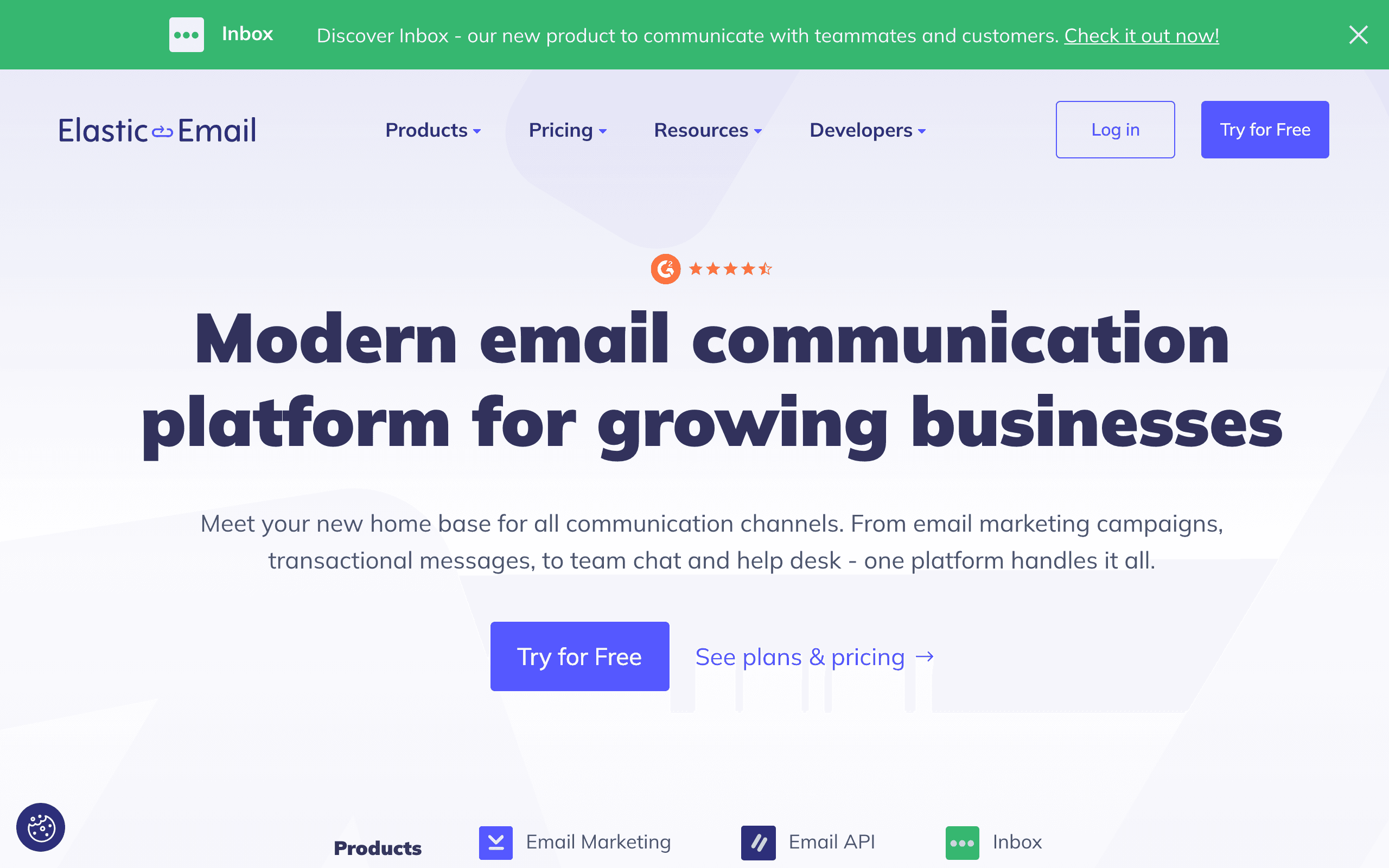
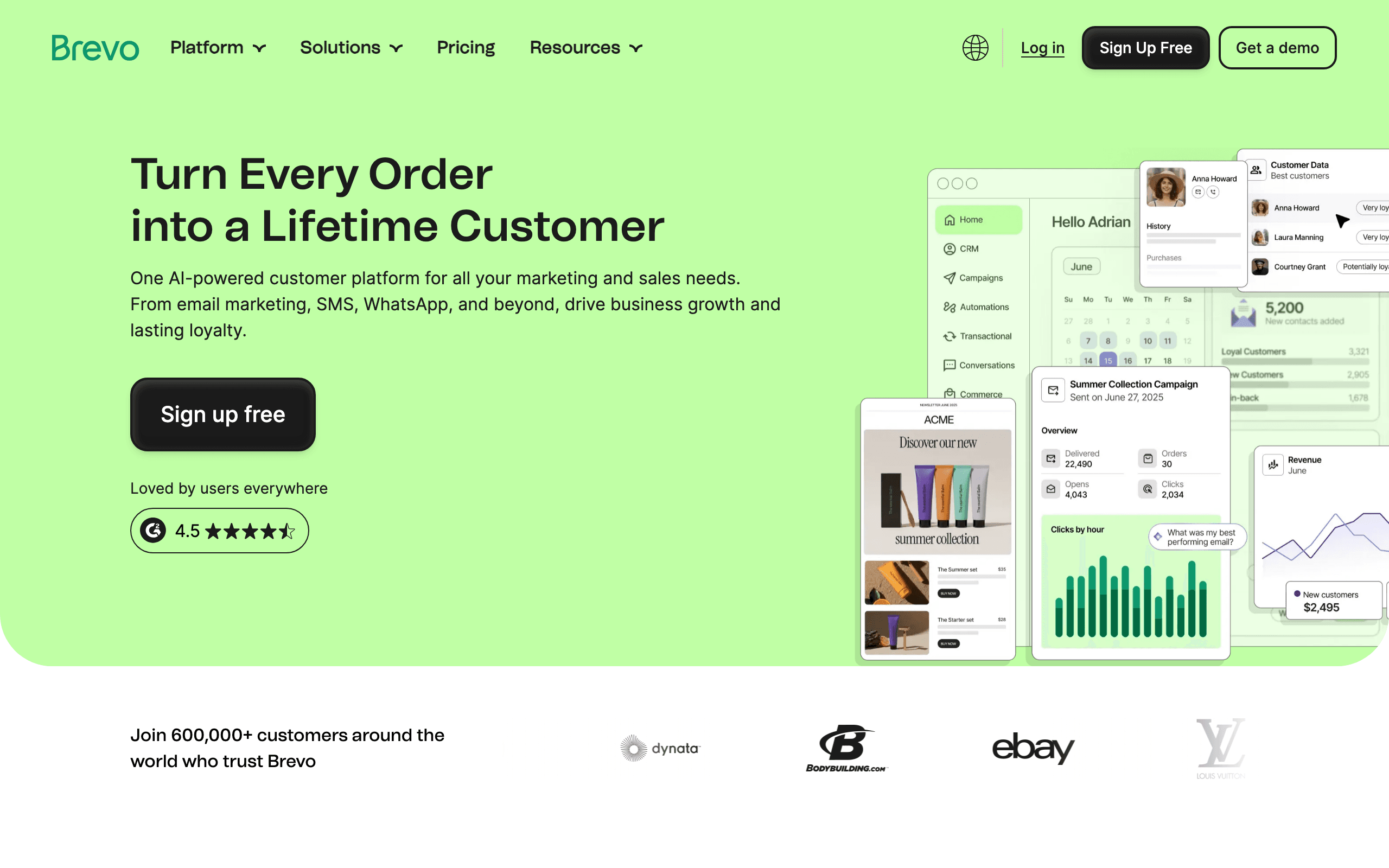
Elastic Email and Brevo serve different needs in the email space. Elastic Email is a budget-friendly email delivery and marketing platform. Brevo is a all-in-one marketing platform with unlimited contacts.
The choice depends on what you need: very affordable (Elastic Email) or unlimited contacts (Brevo). For SaaS businesses specifically, Sequenzy offers purpose-built features that neither tool provides.
Pricing reality
- Elastic Email: $19/month for budget delivery and basic marketing, with a free tier to try first.
- Brevo: $25/month (20k emails) - Unlimited contacts. Marketing + transactional + SMS + CRM.
- Sequenzy: $99/month for 120,000 emails, with the service fully managed on your behalf. See pricing.
Elastic Email is cheaper at the cited comparable usage, but Brevo's unlimited contacts, CRM, SMS, WhatsApp, and automation can replace separate tools. The better value depends on whether the team only needs email sending or a broader marketing workspace.
Review signals
The sourced Elastic Email reviews praise cheap transactional and newsletter sending, while warning that teams can outgrow its limited automation and segmentation.
The sourced Brevo reviews praise unlimited contacts, CRM, SMS, and all-in-one workflow value, while noting branding and plan/support limitations.
Where Elastic Email Wins
Very affordable
Elastic Email's $19 plan undercuts Brevo's $25 plan, which helps teams with tight budgets.
Marketing + transactional
Elastic Email runs newsletters and transactional messages on one platform, so you are not adding a second service for receipts or alerts.
Template library
The template library helps Elastic Email users launch campaigns quickly, since you can start from an existing layout.
Basic automation
Elastic Email's basic automation covers simple use cases, so it suits teams with light needs rather than complex sequences.
Where Brevo Wins
Unlimited contacts
Brevo offers unlimited contacts, which matters for teams that prioritize this.
Marketing + transactional + SMS
Brevo offers marketing + transactional + sms, which matters for teams that prioritize this.
CRM included
Brevo offers crm included, which matters for teams that prioritize this.
Affordable
Brevo offers affordable, which matters for teams that prioritize this.
The Unlimited Contacts Advantage
Brevo's pricing model - charging by email volume rather than contacts - is a genuine differentiator. If you have a large subscriber list but send infrequently, Brevo's unlimited contacts on all plans means you never pay for dormant subscribers. Elastic Email's pricing is also volume-based, but without Brevo's broader feature set backing it up.
This matters for businesses with seasonal sending patterns or large lists with segmented engagement. A company with 50,000 contacts that sends 20,000 emails monthly pays Brevo $25/month for the Starter plan. On contact-based platforms, 50,000 contacts would cost significantly more regardless of send volume.
The limitation is that Brevo's unlimited contacts come with email volume caps. If you send frequently to your full list, the cost per email can become less competitive than Elastic Email's straightforward volume pricing.
The CRM and Multi-Channel Factor
Brevo has evolved well beyond email into an all-in-one marketing platform. The built-in CRM, SMS marketing, WhatsApp messaging, and marketing automation create a unified customer engagement system. For small businesses that would otherwise need three or four separate tools, Brevo consolidates everything at an affordable price point.
Elastic Email does none of this. It sends emails - marketing and transactional - and does it cheaply. No CRM, no SMS, no automation workflows. If you need only email sending at the lowest possible cost, Elastic Email delivers. If you need a marketing platform, Brevo is in a different category entirely.
For SaaS companies specifically, neither platform offers native subscription billing integration. Sequenzy fills this gap with Stripe integration that triggers automated sequences from subscription events - trial expirations, payment failures, plan changes - at $49/month with purpose-built automation for subscription businesses.
When Budget Trumps Features
The $6/month difference between Elastic Email ($19) and Brevo ($25) is trivial, but it illustrates a broader pattern in email tool selection. Teams that choose Elastic Email usually prioritize absolute minimum cost over functionality. Teams that choose Brevo want a platform they can grow into.
The honest recommendation for most businesses is to start with the tool that has the features you'll need in six months, not the cheapest option today. Migrating email platforms is disruptive - rebuilding templates, reconfiguring authentication, re-warming sender reputation. The $72/year saved by choosing Elastic Email over Brevo rarely compensates for a migration six months later when you need automation, CRM, or SMS.
The API-First vs Platform-First Design Philosophy
Elastic Email was built for developers who want to send email through an API. The platform's strengths are its REST API, SMTP relay, and webhook infrastructure. Marketing features were added on top of a delivery engine. Brevo was built for marketers who want a visual platform with API access as a bonus. The design priority shapes everything from onboarding to daily workflow.
Developer teams that integrate email sending into their own applications will find Elastic Email's API documentation clearer and its infrastructure more straightforward. Marketing teams that manage campaigns through a visual interface will find Brevo's drag-and-drop builder, automation workflows, and contact management more intuitive. The right choice aligns with who on your team actually manages email and how they prefer to work.
Use-case matchups
| Use case | Better fit | Why |
|---|---|---|
| Lowest-cost basic email sending | Elastic Email | Elastic Email is a better fit when the team mostly needs affordable marketing and transactional delivery. |
| All-in-one small business marketing | Brevo | Brevo adds contacts, CRM, automation, SMS, WhatsApp, landing pages, and campaign workflows. |
| Developer-owned API/SMTP sending | Elastic Email | Elastic Email is stronger when engineering owns templates, events, and delivery logic. |
| Large list with moderate send volume | Brevo | Brevo's unlimited contacts model is useful when send volume is lower than list size. |
| SaaS lifecycle automation | Sequenzy | Sequenzy is better when Stripe events, transactional email, and lifecycle campaigns need one SaaS workspace. |
| Multi-channel growth path | Brevo | Brevo is stronger if SMS, WhatsApp, and CRM may matter later. |
Best Fit by Budget Growth Path
Best email platform for low-cost API and SMTP sending
Elastic Email fits teams that mostly need affordable delivery, basic campaigns, templates, and API/SMTP access while owning deeper workflow logic elsewhere.
Best marketing platform for SMS WhatsApp CRM and unlimited contacts
Brevo is the better fit when the buyer needs a broader small-business stack with CRM, automation, SMS, WhatsApp, landing pages, and volume-based pricing.
Best SaaS email platform for billing-triggered lifecycle messages
Sequenzy fits software teams that need transactional email and lifecycle campaigns tied to Stripe events rather than a general multi-channel marketing suite.
Brevo's SMS and WhatsApp as a Growth Path
The $6/month price difference between these platforms understates the real value gap. Brevo's SMS marketing, WhatsApp messaging, and live chat features mean you can grow into multi-channel communication without switching platforms. Elastic Email is email-only. A business that starts with email and later wants to add SMS or WhatsApp would need to migrate entirely or add separate tools alongside Elastic Email.
For businesses with international audiences where WhatsApp open rates exceed 90%, Brevo's multi-channel capability is transformative. For US-focused businesses that communicate primarily through email, the additional channels are nice-to-have but rarely used. The value of multi-channel depends entirely on your audience's communication preferences.
When $19/Month Is Actually the Wrong Choice
Choosing the cheapest option feels responsible, but Elastic Email's bare-bones approach creates hidden costs. Without built-in automation, teams spend hours manually scheduling campaigns. Without a CRM, contact relationship data lives in spreadsheets. Without landing pages, lead capture requires a separate tool subscription. The $72/year saved by choosing Elastic Email over Brevo can easily be consumed by the first month of a separate landing page tool subscription. For SaaS businesses, neither platform offers native billing integration. Sequenzy at $49/month provides Stripe-connected automation that both budget platforms would require expensive middleware to approximate.
The Multi-Channel Gap
Brevo offers SMS, WhatsApp, and chat alongside email, creating a genuine multi-channel marketing platform. Elastic Email is email-only. For businesses that communicate with customers across multiple channels, Brevo's unified approach eliminates the need for separate SMS and chat tools.
However, multi-channel capabilities come with complexity. Many small businesses only use email marketing and never activate Brevo's SMS or chat features. In that case, the additional channels add interface clutter without value, and Elastic Email's focused approach feels cleaner and more affordable.
For SaaS companies, the relevant channels are typically email and in-app messaging rather than SMS. Neither platform excels at product-driven communication. Sequenzy focuses specifically on SaaS lifecycle email triggered by Stripe billing events and user behavior, addressing the gap both platforms leave open.
The CRM Integration Factor
Brevo includes a built-in CRM that tracks contacts, deals, and communication history in one platform. Elastic Email has no CRM functionality, so teams needing contact relationship management must integrate with external tools like HubSpot or Salesforce.
Brevo's CRM is basic compared to dedicated CRM platforms, but having contacts, email history, and deal tracking in one interface eliminates data silos for small sales teams. For businesses where email marketing directly supports a sales pipeline, this integration saves time and reduces the risk of leads falling through cracks.
Elastic Email's lack of CRM means cleaner pricing but more tool sprawl. Teams using Elastic Email for email and a separate CRM for sales lose the unified view that Brevo provides. The trade-off depends on whether your marketing and sales workflows benefit from tight integration or function independently.
Migration checklist
- Decide whether the target stack is low-cost email delivery or an all-in-one marketing platform before moving contacts.
- Export verified domains, sender identities, API/SMTP keys, templates, contacts, lists, segments, suppression lists, automations, CRM fields, SMS consent, and delivery reports.
- If moving to Brevo, map Elastic Email templates, lists, suppressions, and transactional sends into Brevo campaigns, contacts, automations, and transactional API.
- If moving to Elastic Email, identify which Brevo CRM records, SMS/WhatsApp flows, forms, landing pages, and automations need replacement elsewhere.
- Rebuild critical transactional templates and priority marketing campaigns before reconnecting production traffic.
- Reconnect API/SMTP calls, webhooks, bounce handling, complaint handling, CRM syncs, forms, SMS channels, analytics, and suppression syncing.
- Authenticate SPF, DKIM, and DMARC, then test transactional sends, marketing unsubscribes, and SMS consent separately.
- Preserve historical delivery, campaign, CRM, SMS, cost, and support reports so the team can compare cheap sending against platform breadth.
Decision checklist
| Choose | When this is true |
|---|---|
| Elastic Email | Cheap email delivery, simple newsletters, transactional API, and minimal platform overhead are enough. |
| Brevo | Unlimited contacts, CRM, SMS, WhatsApp, automation, and small-business platform breadth matter. |
| Sequenzy | SaaS lifecycle automation, transactional email, and Stripe-triggered sequences are the main requirements. |
| Verify before buying | Compare email volume, contact count, SMS/WhatsApp needs, CRM replacement value, branding limits, and automation depth. |
Pricing Model Differences
Elastic Email and Brevo use fundamentally different pricing models. Elastic Email charges per subscriber with unlimited sends. Brevo charges per email sent with unlimited contacts. This distinction matters significantly depending on your sending patterns.
If you have a large list but send infrequently -- perhaps a monthly newsletter to 50,000 subscribers -- Brevo's per-send model is more economical. If you have a smaller list but send frequently -- daily updates to 5,000 subscribers -- Elastic Email's unlimited sends model saves money.
Neither pricing model is inherently better. The right choice depends on your specific ratio of contacts to sends. For SaaS companies with predictable subscriber counts and consistent communication needs, Sequenzy's straightforward pricing at $49/month for 60k emails (unlimited subscribers) keeps it simple: fixed tiers by email volume, with unlimited contacts.









