
Overview
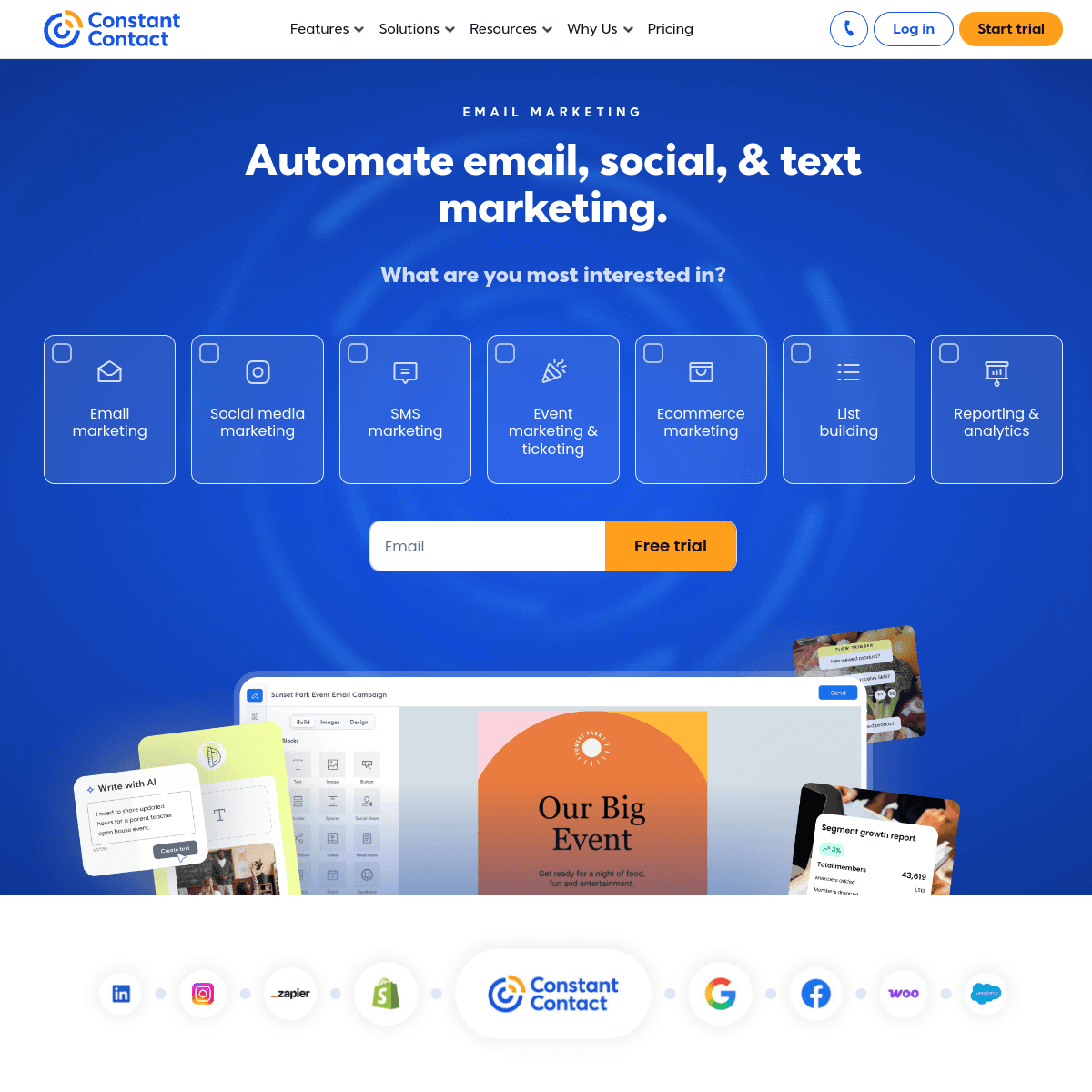
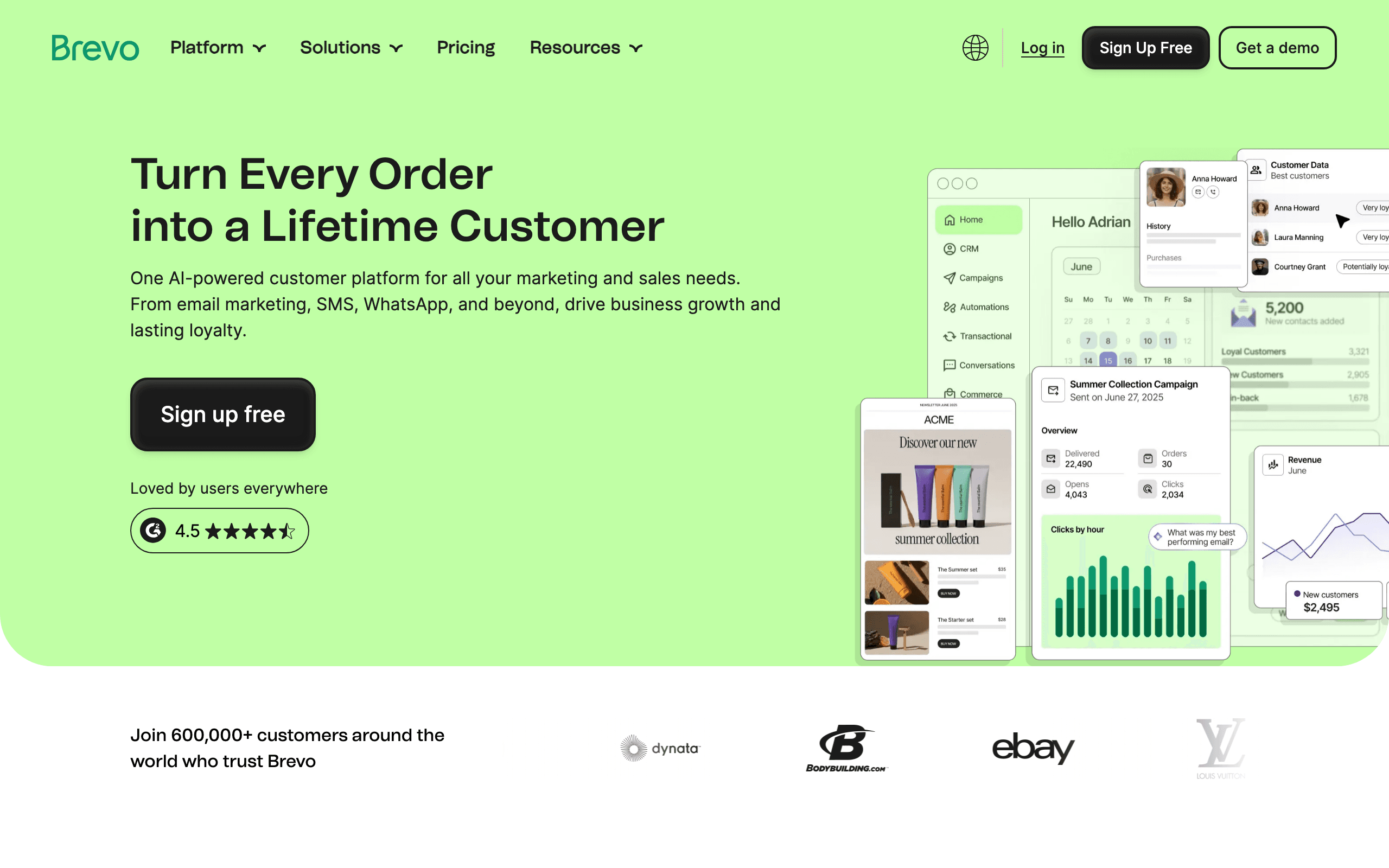
Constant Contact and Brevo represent different approaches to email marketing. Constant Contact is an established platform with event marketing and strong support. Brevo (formerly Sendinblue) is an all-in-one suite with email, SMS, and transactional capabilities.
Pricing reality
Brevo is dramatically cheaper - $25/month vs $80/month for 10k contacts. That's 69% savings. Brevo's email-based pricing model can offer exceptional value for large lists with moderate sending frequency.
Multi-Channel Marketing
Brevo offers email, SMS, WhatsApp, and transactional email from one platform. Constant Contact is focused on email marketing. For unified multi-channel campaigns, Brevo is comprehensive.
Event Marketing
Constant Contact includes event management with registration, ticketing, and follow-ups. Brevo has no event features. If you run events, Constant Contact provides built-in tools.
Support Comparison
Constant Contact offers phone support - you can call and talk to someone. Brevo provides chat and email support only. For businesses that value phone access, Constant Contact wins.
Transactional Email
Brevo handles both marketing and transactional email from one platform with a unified API. Constant Contact is marketing-only. For development teams needing both, Brevo simplifies the stack.
For SaaS Companies
Neither platform offers native Stripe integration for subscription automation. Brevo has better transactional email but lacks SaaS-specific features. For SaaS companies, consider Sequenzy which offers purpose-built SaaS automation.
Making the Choice
Choose Constant Contact for event marketing and phone support. Choose Brevo for multi-channel marketing and significant cost savings. For SaaS, consider Sequenzy.
Review signals
The existing reviews are from G2, Capterra, and Trustpilot. Constant Contact reviews praise event invitations, nonprofit workflows, and phone support, while also flagging rising price and basic email value concerns. Brevo reviews praise the savings, SMS, transactional email, and unlimited-contact economics, while flagging no phone support.
Use reviews to decide whether the price premium buys something you actually need. Constant Contact reviews should prove events and support value; Brevo reviews should prove multi-channel value and acceptable support tradeoffs.
Use-case matchups
| Use case | Better fit | What to verify |
|---|---|---|
| Event-heavy nonprofit, association, or local business | Constant Contact | Confirm event registration, ticketing, reminders, surveys, phone support, and template needs. |
| Affordable email, SMS, WhatsApp, CRM, and transactional email | Brevo | Verify send volume, paid tier features, CRM depth, transactional API, and support expectations. |
| Large list emailed infrequently | Brevo | Run the email-volume math against Constant Contact's contact-based pricing. |
| Team that wants phone support and simple campaigns | Constant Contact | Confirm support availability, coaching needs, campaign builder fit, and event workflow usage. |
| SaaS lifecycle and billing email | Sequenzy | Compare native Stripe-triggered email against Brevo's broader SMB channels and Constant Contact's event focus. |
| Business replacing multiple communication tools | Brevo | Check SMS, WhatsApp, chat, CRM, transactional, and email automation scope in the exact plan. |
Best Fit by Local and Multichannel Workflow
Best email marketing tool for event-heavy local businesses
Constant Contact is the better fit when event registration, reminders, surveys, local newsletters, and phone support are more important than advanced automation. Nonprofits, associations, and community businesses can justify the higher cost when event workflow is the core need.
Best email marketing tool for affordable multichannel communication
Brevo is the better fit when the team wants email, SMS, WhatsApp, chat, CRM, and transactional sending in one lower-cost system. It works best for businesses replacing multiple communication tools rather than buying a specialist event platform.
Best email marketing tool for SaaS billing lifecycle email
Sequenzy is the better fit when the key triggers are trials, plans, payments, cancellations, and product activity. SaaS teams should not choose between event tooling and broad SMB channels if Stripe-aware lifecycle email is the real requirement.
Automation Capabilities Compared
Brevo's automation has evolved significantly since its Sendinblue days. You get multi-step workflows with conditional branching, send time optimization, and the ability to trigger automations based on page visits, email engagement, and purchase behavior. The workflow builder is visual and intuitive, making it accessible to non-technical marketers who want sophisticated campaigns.
Constant Contact's automation is more straightforward - welcome sequences, birthday emails, and basic drip campaigns. While reliable for simple use cases, it lacks the conditional logic and behavioral triggers that modern marketing demands. If you need to send different follow-up sequences based on which links a subscriber clicked, Brevo handles this natively while Constant Contact requires manual workarounds.
WhatsApp and Conversational Marketing
One of Brevo's standout features is built-in WhatsApp marketing - something Constant Contact does not offer at all. For businesses with international customers, particularly in Europe, Latin America, and parts of Asia, WhatsApp open rates regularly exceed 90%. Brevo lets you send promotional messages, order updates, and even run WhatsApp automations from the same platform you use for email.
This multi-channel approach extends to live chat as well. Brevo includes a website chat widget that feeds conversations into the same CRM where your email contacts live. This unified view of customer interactions across email, SMS, WhatsApp, and chat is something Constant Contact simply cannot match, regardless of which plan you choose.
Deliverability and Reputation Management
Both platforms have invested in deliverability infrastructure, but they take different approaches. Constant Contact has decades of sender reputation built up, and their compliance team actively monitors accounts for spam-like behavior. This long track record means most email providers trust Constant Contact's infrastructure by default.
Brevo offers more technical deliverability tools - dedicated IP addresses, detailed sending statistics, and the ability to separate your transactional and marketing sending reputations. For businesses with technical teams who want granular control over their email deliverability, Brevo provides more levers to pull. You can also validate your sending setup using tools like our email validator.
API and Developer Experience
If your team includes developers who need to integrate email into your product, Brevo has a significant advantage. Its REST API covers marketing campaigns, transactional email, SMS, contacts management, and automation - all from a well-documented, modern interface. Constant Contact has an API too, but it is more limited in scope and less frequently updated.
For SaaS companies building product-led email workflows, neither API is ideal. Both lack native support for subscription billing events and SaaS lifecycle triggers. Sequenzy's API is designed specifically for this use case, letting you trigger transactional emails based on Stripe events without building custom middleware.
The Email-Based vs Contact-Based Pricing Revolution
The pricing model difference between these platforms is more important than the sticker prices suggest. Brevo charges based on email volume, not contact count. Constant Contact charges based on contacts, regardless of how often you email them. For businesses with large lists that send infrequently, such as monthly newsletters to 50,000 contacts, Brevo's model can cost 80% less because you only pay for the emails you actually send.
Conversely, for businesses with small lists that email multiple times daily, such as transactional-heavy e-commerce, Brevo's per-email model can scale up quickly. The right pricing model depends on your sending ratio: if you email each contact less than 4 times per month, Brevo is almost always cheaper. If you send daily to your entire list, run the math carefully before assuming Brevo's headline price reflects your real cost.
The CRM Nobody Asked For But Brevo Included Anyway
Brevo bundles a CRM at no extra charge, which sounds impressive until you evaluate it against dedicated CRM tools. The CRM handles basic contact management, deal tracking, and pipeline visualization. For small businesses currently tracking customers in spreadsheets, it is a genuine upgrade. For businesses already using HubSpot, Salesforce, or even Pipedrive, Brevo's CRM is too basic to replace them.
The real value of Brevo's CRM is data unification. When your email marketing, SMS campaigns, WhatsApp messages, and CRM conversations all live in one platform, you get a unified view of each contact's history across channels. Constant Contact has no CRM at all, meaning contact insights are limited to email engagement data. For small businesses that want one tool to handle customer communication and basic sales tracking, Brevo's bundled CRM eliminates the need for a separate subscription and the integration headaches that come with it.
Why Event-Heavy Organizations Should Ignore the Price Difference
For nonprofits, community centers, and event-focused businesses, Constant Contact's event marketing features justify the price premium despite Brevo's dramatic cost advantage. Building event registration pages, tracking RSVPs, sending automated reminders, and managing attendee lists from the same platform as your email campaigns eliminates the need for Eventbrite ($50-200/month) or similar tools. The effective cost comparison becomes $80/month for Constant Contact versus $25/month for Brevo plus $50-100/month for a separate event platform.
If your organization runs three or more events per quarter, the integrated workflow saves both money and the hours of manual data syncing between separate platforms. SaaS companies running webinars might consider this angle too, but for subscription software businesses the more impactful integration is billing data, not event data. Sequenzy's Stripe integration addresses that specific need by connecting subscription lifecycle events directly to email automation at $49/month.
Migration checklist
| Step | What to confirm |
|---|---|
| Export contacts and consent | Preserve contacts, lists, tags, segments, opt-in source, SMS/WhatsApp consent, unsubscribes, bounces, and complaints. |
| Preserve event data | If leaving Constant Contact, export event registrations, attendee lists, ticketing data, reminders, surveys, and historical event reports. |
| Rebuild campaigns and automations | Recreate newsletters, welcome flows, event follow-ups, Brevo automations, transactional sends, and multi-channel workflows. |
| Replace forms and embeds | Update signup forms, event pages, landing pages, website chat, popups, and confirmation pages. |
| Recreate templates | Test email templates, SMS/WhatsApp copy, event blocks, merge fields, unsubscribe links, and mobile rendering. |
| Reconfigure senders | Set SPF, DKIM, DMARC, branded links, reply-to addresses, transactional sender domains, and dedicated IPs if needed. |
| Reconnect integrations | Verify ecommerce, CRM, event, payment, webinar, API, and analytics connections before launch. |
| Phase the move | Start with low-risk newsletters, then migrate events, transactional messages, SMS/WhatsApp, and revenue-critical automation. |
Decision checklist
| Question | Why it matters |
|---|---|
| Do event tools justify the higher price? | Constant Contact is strongest when registration, ticketing, reminders, and attendee workflows replace another event platform. |
| Is email volume or contact count the better pricing model? | Brevo's email-based pricing favors large lists with moderate send frequency. |
| Do you need SMS, WhatsApp, or transactional email? | Brevo includes channels Constant Contact does not. |
| Is phone support important? | Constant Contact's support model is a real differentiator for less technical teams. |
| Is Sequenzy enough? | SaaS teams should compare Stripe-triggered lifecycle email instead of event or SMB channel bundles. |









