
Overview
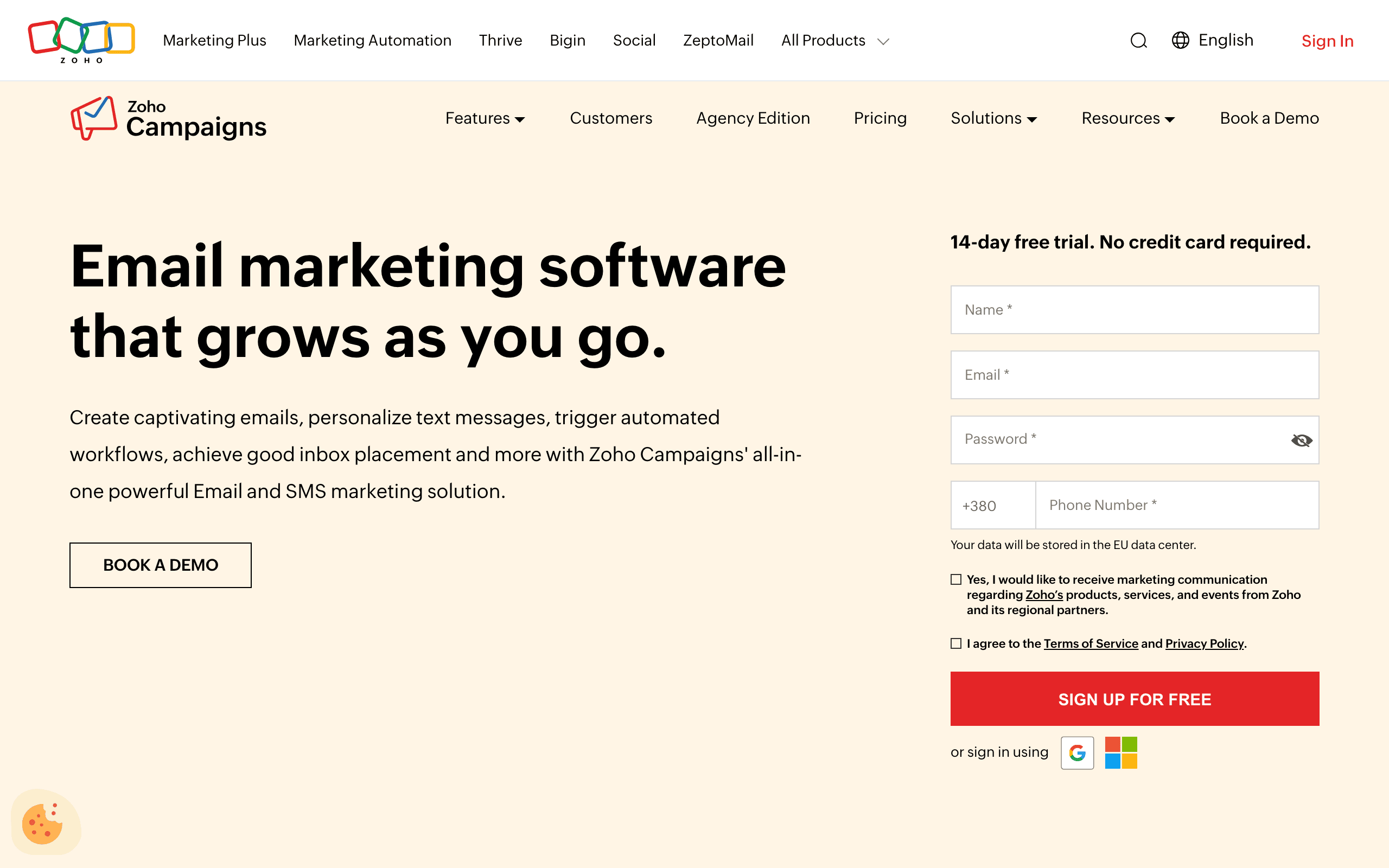
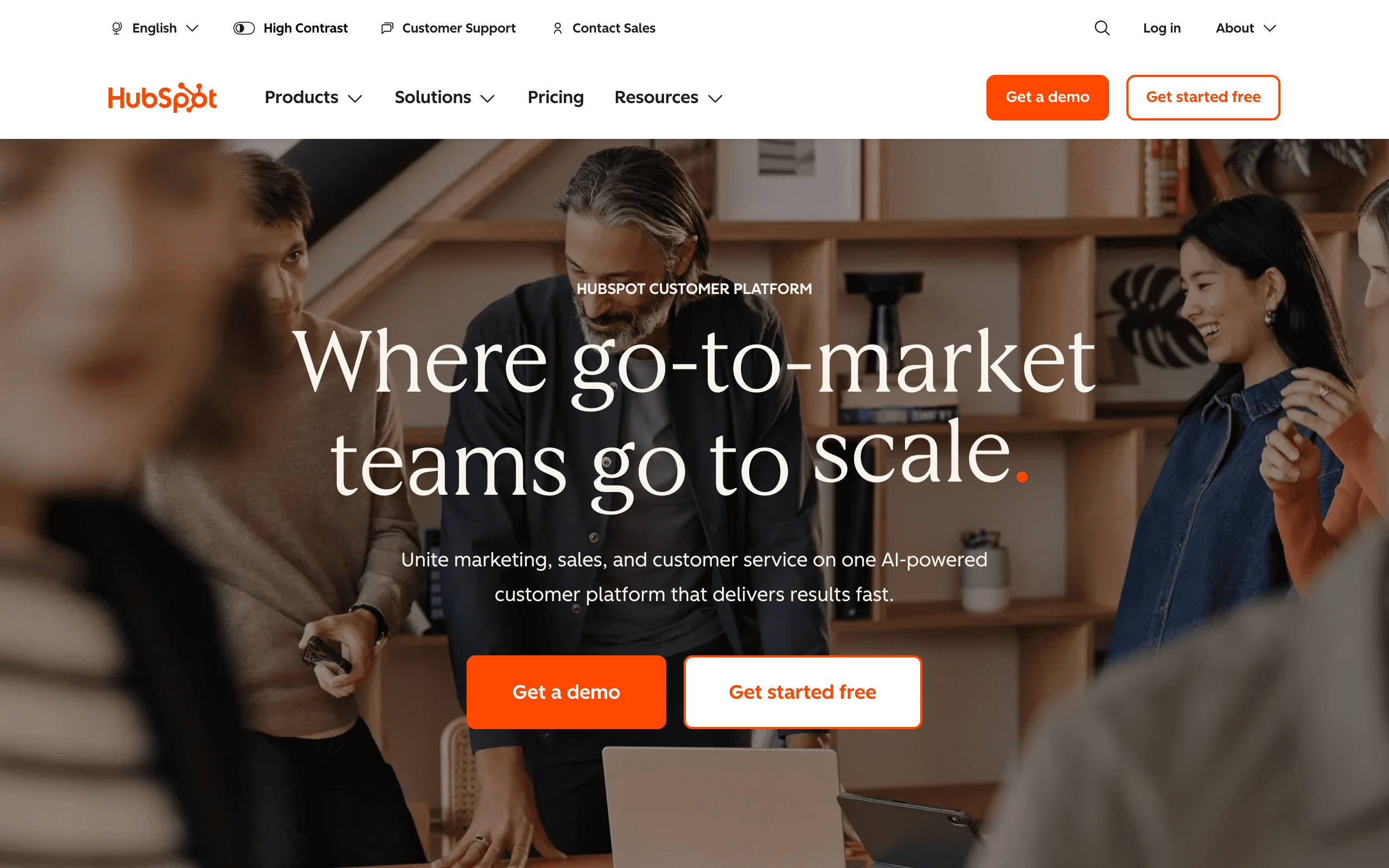
Zoho Campaigns and HubSpot are not really competitors in the traditional sense. HubSpot is an enterprise marketing suite. Zoho Campaigns is a focused email marketing tool. The price difference reflects this: $40/month vs $800+/month. See our HubSpot comparison for more context.
Comparing them is like comparing a reliable sedan to a luxury SUV. Both get you places, but they serve different needs and budgets.
The Price Reality
At 10,000 contacts, Zoho Campaigns costs around $40/month. HubSpot Marketing Hub Professional starts at $800/month (and contact limits can push this higher).
That is a 20x difference. HubSpot offers more features, but the question is whether you need enterprise marketing capabilities or just solid email marketing.
What HubSpot Adds
HubSpot is a complete marketing platform including:
- Advanced CRM with deep marketing integration
- Landing page builder
- Blog and content management
- SEO tools
- Social media management
- Multi-touch attribution
- Advanced automation workflows
Zoho can match some of these with separate products (Zoho CRM, Zoho Social, Zoho Sites), but the integration is not as seamless.
When Zoho Makes Sense
Zoho Campaigns makes sense when:
- You already use Zoho CRM
- Email marketing is your primary need
- Your budget is under $100/month for marketing tools
- You prefer simpler, focused tools
- Enterprise features are overkill for your stage
When HubSpot Makes Sense
HubSpot makes sense when:
- Marketing is a major revenue driver
- You need all-in-one platform convenience
- Advanced attribution matters for decisions
- Budget allows $800+/month for marketing
- You are scaling past DIY marketing
The Middle Ground Problem
Many businesses outgrow Zoho Campaigns but cannot justify HubSpot pricing. This is where alternatives like ActiveCampaign (more automation, lower cost) or niche tools fit.
For SaaS specifically, neither Zoho nor HubSpot is purpose-built. Sequenzy offers Stripe integration with subscription-aware automation at $49/month. Better fit, better price.
When Each Platform Shines
Choose Zoho Campaigns when: You use Zoho CRM. You need solid email marketing at a reasonable price. Enterprise features would be wasted on your current needs. You want to keep marketing costs low.
Choose HubSpot when: You have substantial marketing budget. You need all-in-one platform with advanced features. Marketing ROI justifies enterprise pricing. You want industry-leading attribution and analytics.
For SaaS Companies
HubSpot is used by many SaaS companies but is expensive and generalist. Zoho Campaigns lacks subscription-specific features. If you are building SaaS, Sequenzy offers purpose-built features at startup-friendly pricing with Stripe integration.
The Budget Reality Check
The price gap between Zoho Campaigns and HubSpot is not a rounding error. At 10,000 contacts, Zoho costs approximately $40 per month. HubSpot Marketing Hub Professional starts at $800 per month, and that does not include mandatory onboarding fees that can add $3,000 to $6,000 in the first year. By the time you factor in additional contacts, add-on features, and annual contract commitments, HubSpot can cost 30x to 40x more than Zoho.
This price difference reflects a genuine capability gap. HubSpot provides multi-touch attribution, advanced workflow automation, content management, SEO tools, social media management, and sales alignment features that Zoho Campaigns does not offer. The question is whether your business generates enough revenue from marketing to justify that investment.
For most small businesses and early-stage companies, the answer is no. Zoho Campaigns handles email marketing competently at a price that does not consume the entire marketing budget. Allocating the $760 monthly savings toward content creation, paid ads, or product development often generates better returns than HubSpot's advanced attribution could identify.
Enterprise Marketing vs Focused Email
HubSpot is designed for organizations where marketing is a major revenue engine with dedicated teams, substantial budgets, and complex multi-channel strategies. The platform excels when you need to track a prospect's journey from first blog visit through webinar attendance, email engagement, and sales conversation to closed deal.
Zoho Campaigns is designed for businesses where email marketing is one channel among many, managed by a small team or even a single person. The platform handles campaigns, basic automation, and CRM sync without requiring a marketing operations specialist to configure and maintain.
The organizational fit matters as much as the feature set. A five-person startup using HubSpot Professional will underutilize most features while paying enterprise prices. A 200-person company relying on Zoho Campaigns may hit limitations that cost more in workarounds than HubSpot would cost directly. Match the tool to your current scale and growth trajectory.
The Middle Ground Problem
Many growing businesses find themselves between Zoho's simplicity and HubSpot's enterprise pricing. They need more than basic email marketing but cannot justify $800 per month for features they will grow into over the next two to three years. This gap in the market explains why platforms like ActiveCampaign and Brevo attract businesses that have outgrown starter tools but are not ready for enterprise investment.
For SaaS companies specifically, this middle ground is especially painful. HubSpot's features are powerful but generic, built for any business type rather than subscription software specifically. Zoho lacks the billing integration that SaaS email requires. Sequenzy addresses this gap with Stripe integration, AI-generated sequences, and combined transactional and marketing email at $49 per month, purpose-built for the business model that neither Zoho nor HubSpot was designed to serve.
Use-case matchups
| Situation | Best first look | Why |
|---|---|---|
| Team already uses Zoho and wants low-cost email campaigns | Zoho Campaigns | Zoho Campaigns is the baseline when Zoho ecosystem fit and affordable campaigns matter most. |
| Company wants CRM and marketing operations together | HubSpot | HubSpot is stronger when CRM alignment and attribution matter more than low-cost email. |
| SaaS or commerce team wants lifecycle and transactional email | Sequenzy | Sequenzy is stronger when Stripe events, transactional messages, and lifecycle automation matter more than Zoho suite alignment. |
| Team wants straightforward newsletters inside a familiar business suite | Zoho Campaigns | Zoho Campaigns should be tested first if contacts and CRM data already live in Zoho. |
| Team needs the specialist capability | HubSpot | HubSpot deserves the first demo when the main requirement is CRM-centered marketing, sales, and service operations. |
| Team wants focused email workflows without a broader business suite | Sequenzy | Sequenzy is more relevant when app, store, and billing events drive the email program. |
Pricing reality
The pricing signals on this page list Zoho Campaigns at $40/month, HubSpot at $800+/month, and Sequenzy at $49/month. Compare total workflow cost, not only list price.
Zoho Campaigns can be a strong value when the team already uses Zoho CRM or Zoho apps. HubSpot's real cost depends on whether the team needs CRM-centered marketing, sales, and service operations.
Review signals
This page has existing review data from G2, Capterra, TrustRadius. Keep those sources in the decision because buyers often discover differences in support, editor quality, deliverability, integration depth, pricing, and day-to-day usability through reviews.
For Zoho Campaigns, validate review themes around Zoho CRM integration, campaign editor workflow, support, deliverability, and list management. For HubSpot, focus review research on whether users praise the reason you would choose it: CRM-centered marketing, sales, and service operations.
Best Fit by Budget and CRM Ecosystem
Best email platform for Zoho-centered businesses
Zoho Campaigns fits teams already using Zoho CRM, Books, Desk, or other Zoho apps and wanting affordable email inside that ecosystem. It is strongest when vendor alignment and budget matter more than broad enterprise marketing features.
Best CRM growth suite for inbound teams
HubSpot is the better fit when the business needs CRM, content, landing pages, forms, pipelines, automation, reporting, service tools, and a large partner ecosystem. It works best when sales and marketing operations need a shared growth platform.
Best SaaS lifecycle platform for product and billing automation
Sequenzy fits SaaS teams where lifecycle email should react to signups, product behavior, subscriptions, invoices, and failed payments. It is more focused when revenue events matter more than either Zoho ecosystem fit or HubSpot breadth.
Migration checklist
| Workstream | Moving toward Zoho Campaigns | Moving toward HubSpot | Simplifying to Sequenzy |
|---|---|---|---|
| Contacts and consent | Import contacts, lists, segments, Zoho CRM fields, consent, unsubscribes, and suppressions. | Map contacts, companies, lifecycle stages, lists, forms, workflows, CRM fields, deals, attribution, and permissions. | Import subscribers, attributes, tags, suppressions, store events, Stripe events, and transactional paths. |
| Ecosystem fit | Confirm Zoho CRM, Zoho Forms, Zoho Commerce, or other Zoho apps are actually part of the workflow. | Confirm whether HubSpot replaces or integrates with the existing CRM and store stack. | Keep CRM-suite features outside scope unless they feed lifecycle email. |
| Automations | Rebuild welcome, newsletter, CRM nurture, ecommerce, and reactivation flows. | Rebuild the workflows that prove HubSpot's advantage in CRM-centered marketing, sales, and service operations. | Rebuild lifecycle and transactional email flows. |
| Templates and forms | Move templates, signup forms, sender identities, brand assets, and preference paths. | Move templates, forms, brand assets, and workflow-specific content. | Move email templates and transactional message content. |
| Reporting | Validate campaign reports, CRM attribution, exports, segment performance, and deliverability. | Validate reporting for CRM-centered marketing, sales, and service operations before committing. | Validate campaign, automation, transactional, and lifecycle reporting. |
Decision checklist
- Is Zoho ecosystem alignment a real advantage, or is the team only comparing email price?
- Does HubSpot's strength in CRM-centered marketing, sales, and service operations matter more than Zoho Campaigns' low-cost suite fit?
- Which platform handles consent, suppressions, and imports with the least manual cleanup?
- Are the listed prices still realistic at real contact count, send volume, and required add-ons?
- Would lifecycle and transactional email create more value than another general newsletter platform?
- HubSpot only makes sense if CRM operations are part of the buying case.









