Overview
SmartrMail and Mailchimp approach email marketing from opposite directions. See our SmartrMail comparison and Mailchimp comparison for individual breakdowns.
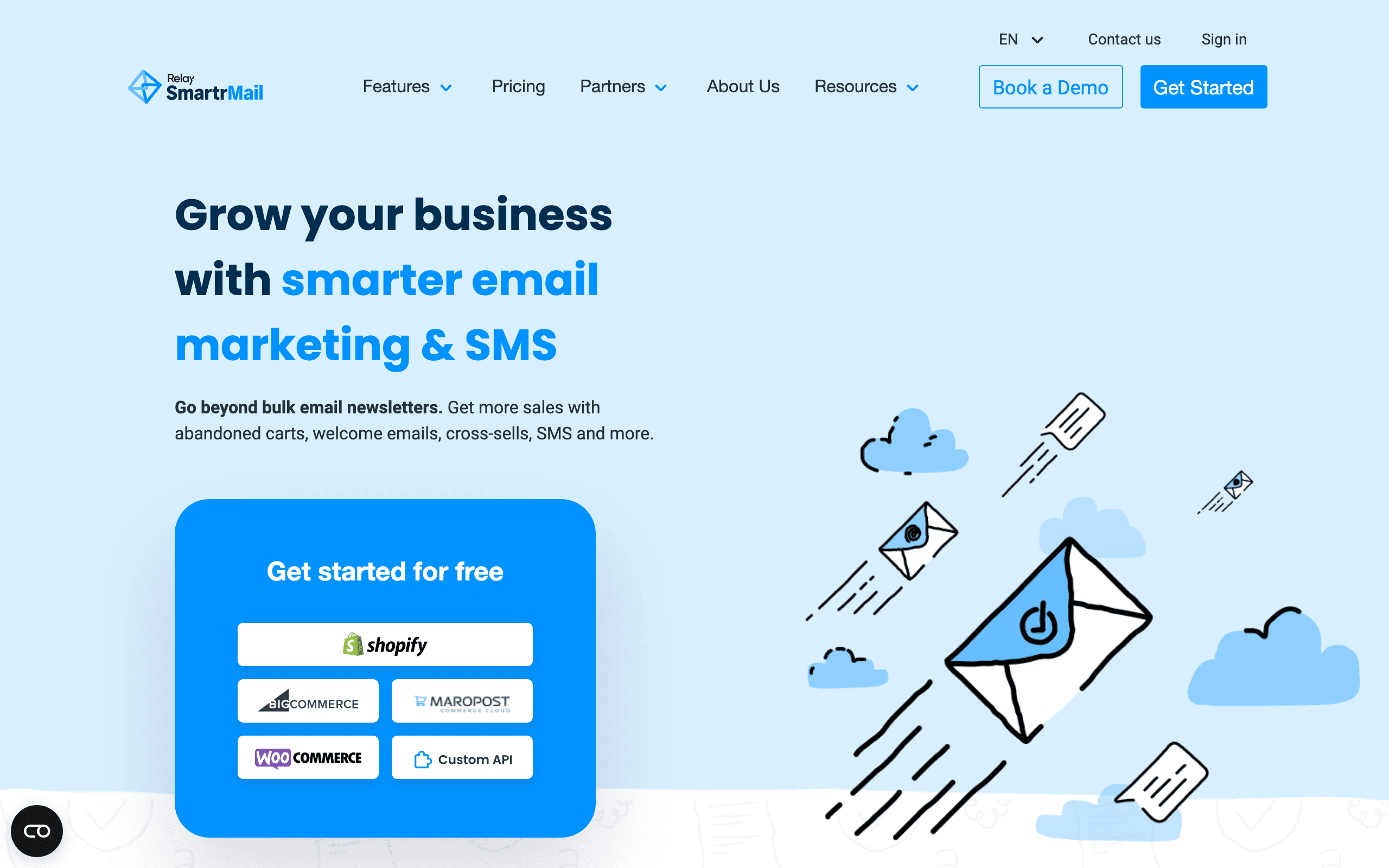
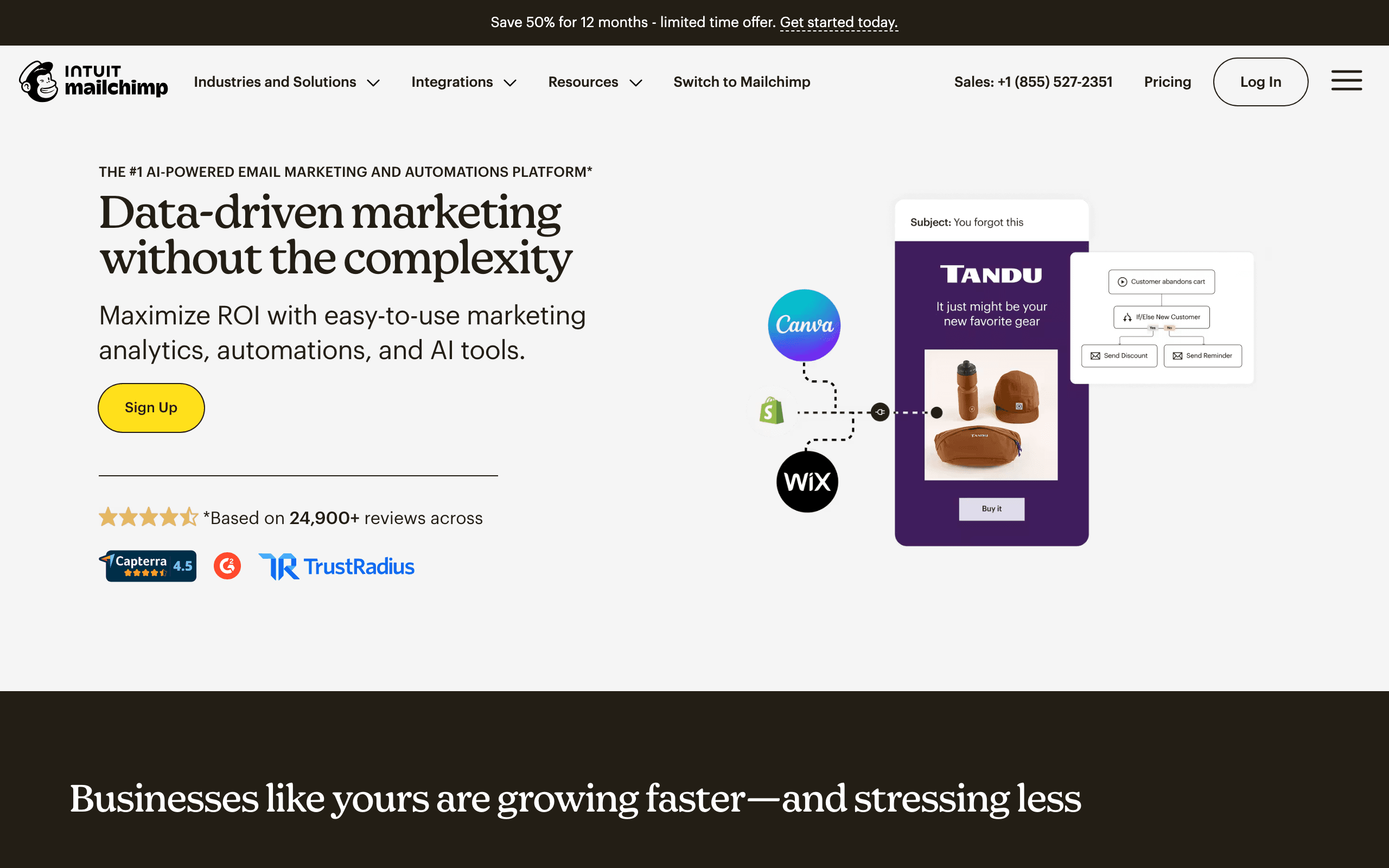
SmartrMail is the e-commerce specialist with AI product recommendations. Mailchimp is the all-purpose marketing platform with email, landing pages, social ads, and 300+ integrations. They overlap on email marketing but diverge in almost everything else.
Pricing Comparison
Mailchimp is the cheaper option:
- SmartrMail Essential: $135/month for 10,000 subscribers
- SmartrMail Pro: $199/month for 10,000 subscribers
- Mailchimp Standard: $100/month for 10,000 contacts
- Sequenzy: $49/month for 60,000 emails with unlimited subscribers
Mailchimp saves $35/month over SmartrMail Essential while offering a much broader feature set. See our pricing page for details.
Where SmartrMail Wins
AI product recommendations
SmartrMail's AI recommendation engine is its defining feature. It predicts products subscribers will like based on browsing and purchase behavior, creating personalized product emails automatically. Mailchimp's product recommendations are more basic and less AI-driven.
Auto-generated product newsletters
SmartrMail creates product-focused newsletters from your catalog automatically. No manual product selection, image uploading, or description writing. Just configure your preferences and let the AI build the email.
Pre-built e-commerce segments
SmartrMail automatically creates customer segments like "loyal customers," "big spenders," and "at-risk" from purchase data. These work out of the box without manual segment creation.
Faster e-commerce setup
SmartrMail connects to Shopify in under 2 minutes and auto-generates email designs from your store branding. It is purpose-built for getting e-commerce email running fast.
Where Mailchimp Wins
Broader marketing toolkit
Mailchimp includes landing pages, social ad management (Facebook and Instagram), postcards, website builder, and surveys. SmartrMail is email-only. For businesses wanting an all-in-one marketing platform, Mailchimp covers far more ground.
Template and design flexibility
Mailchimp has 100+ email templates and supports custom HTML for full design control. SmartrMail's editor is simpler but more limited. Creative teams that care about email design will prefer Mailchimp.
Integration ecosystem
Mailchimp integrates with 300+ apps and services. SmartrMail focuses on e-commerce platforms (Shopify, BigCommerce, WooCommerce). If you need your email platform to connect with CRMs, help desks, or other business tools, Mailchimp has a broader ecosystem.
Lower pricing
Mailchimp Standard at $100/month is $35 cheaper than SmartrMail Essential at $135/month. And Mailchimp includes landing pages and social ads at that price.
Better reporting
Mailchimp offers more detailed analytics, A/B testing, comparative reports, and audience insights. SmartrMail's reporting is basic by comparison.
Why Sequenzy Is the Affordable Alternative
Neither SmartrMail nor Mailchimp generates email content with AI. Sequenzy creates entire email sequences from a goal description, including subject lines, body copy, and timing. At $49/month, it costs 71% less than Mailchimp and 78% less than SmartrMail.
Sequenzy also includes transactional email that Mailchimp charges extra for (via Mandrill) and SmartrMail does not support at all. Add in Shopify integration and Stripe integration for SaaS, and Sequenzy covers both e-commerce and subscription businesses in one platform. See our pricing page for details.
E-commerce Data Integration
SmartrMail and Mailchimp integrate with your store differently. SmartrMail's AI product recommendations and auto-generated newsletters pull directly from browsing and purchase behavior to build content automatically. Mailchimp's product recommendation feature is more basic, but it connects to a much broader integration ecosystem beyond just ecommerce data.
Revenue Attribution and ROI
Measuring email's contribution to revenue looks different on each platform. SmartrMail's smart e-commerce segments and recommendation engine are built specifically to justify e-commerce email spend through personalized product emails. Mailchimp's reporting covers a wider range of campaign types, including landing pages and social ads, but its e-commerce-specific attribution is less specialized than SmartrMail's.
Cart Recovery and Product Flows
Both platforms offer abandoned cart and browse abandonment flows, but SmartrMail's are paired with auto-generated smart segments and AI product recommendations that Mailchimp's more general automation doesn't match. Mailchimp compensates with a far larger template library and design flexibility for the emails those flows send.
Use-case matchups
| Situation | Best first look | Why |
|---|---|---|
| Store wants ecommerce email with product recommendations | SmartrMail | SmartrMail is the baseline here for stores that want product-driven email without a heavier platform. |
| Store wants a familiar general email platform | Mailchimp | Mailchimp is broader and more familiar, while SmartrMail is more ecommerce-specific. |
| Store or SaaS team wants lifecycle and transactional email | Sequenzy | Sequenzy is stronger when email automation and transactional messages need one workflow without SMS or enterprise scope. |
| Shopify team wants recommendation-led campaigns | SmartrMail | SmartrMail should be tested first when product blocks and store data are the core use case. |
| Team needs the specialist capability | Mailchimp | Mailchimp deserves the first demo when the main requirement is all-purpose email marketing and brand familiarity. |
| Team wants simpler email automation and transactional paths | Sequenzy | Sequenzy is a focused alternative when the team does not need product AI, SMS, or a large suite. |
Best Fit by Email Marketing Specificity
Best ecommerce email tool for product recommendation campaigns
SmartrMail fits stores that want product-driven Shopify email without a broad all-purpose marketing suite.
Best email marketing platform for familiar general campaigns
Mailchimp is the better fit when brand familiarity, templates, audiences, landing pages, and broad small-business email workflows matter more than ecommerce recommendations.
Best email platform for lifecycle and transactional paths
Sequenzy fits when email automation and transactional messages are the priority and the team does not need product AI or a large suite.
Pricing reality
The pricing signals on this page list SmartrMail at $135/month, Mailchimp at $100/month, and Sequenzy at $49/month. Use those numbers as anchors, then check the plan details against actual subscriber count and store volume.
SmartrMail's value depends on whether product recommendations, store data, and ecommerce email automation are important enough to pay for. Mailchimp's real cost depends on whether the team needs all-purpose email marketing and brand familiarity.
Review signals
This page has existing review data from Shopify App Store, Capterra, Trustpilot. Keep those sources visible because ecommerce app reviews often reveal support, Shopify sync quality, deliverability, billing, and day-to-day workflow issues.
For SmartrMail, validate review themes around product recommendations, Shopify or store integration, editor workflow, support, and deliverability. For Mailchimp, focus review research on whether users praise the reason you would choose it: all-purpose email marketing and brand familiarity.
Migration checklist
| Workstream | Moving toward SmartrMail | Moving toward Mailchimp | Simplifying to Sequenzy |
|---|---|---|---|
| Store data | Sync products, customers, orders, carts, recommendations, tags, and consent status. | Map audiences, tags, groups, journeys, templates, forms, ecommerce sync, and suppressions. | Connect store, Stripe, subscriber, suppression, and transactional event data. |
| Product recommendations | Validate recommendation blocks, fallback products, catalog freshness, and merchandising rules. | Confirm whether Mailchimp handles product recommendations or needs another tool. | Keep product recommendations out of scope unless handled elsewhere. |
| Automations | Rebuild welcome, product recommendation, cart, post-purchase, winback, and newsletter flows. | Rebuild the workflows that prove Mailchimp's advantage in all-purpose email marketing and brand familiarity. | Rebuild lifecycle and transactional email flows without SMS paths. |
| Templates and forms | Move campaign templates, product blocks, forms, popups, and brand assets. | Move templates, forms, brand assets, and channel-specific content. | Move email templates and lifecycle message content. |
| Reporting | Validate product revenue, campaign revenue, automation reports, exports, and list growth. | Validate reporting for all-purpose email marketing and brand familiarity before committing. | Validate campaign, automation, transactional, and lifecycle reporting. |
Decision checklist
- Will AI product recommendations drive enough revenue to justify SmartrMail's advanced engine, or would Mailchimp's basic product blocks be good enough for your store?
- Does Mailchimp's strength in all-purpose email marketing and brand familiarity matter more than SmartrMail's ecommerce email focus?
- After connecting Shopify, which tool leaves less consent and suppression cleanup: SmartrMail or Mailchimp?
- Do the $135 and $100 figures at 10,000 subscribers still hold once your real list size and monthly send volume are factored in?
- If lifecycle and transactional messages are the main need, would Sequenzy at $49/month cover that better than paying for SmartrMail's product AI?
- Mailchimp can be convenient, but validate ecommerce depth at real store complexity.