Overview
Sendlane and Mailchimp approach email marketing from opposite directions. See our Sendlane comparison and Mailchimp comparison for individual breakdowns.
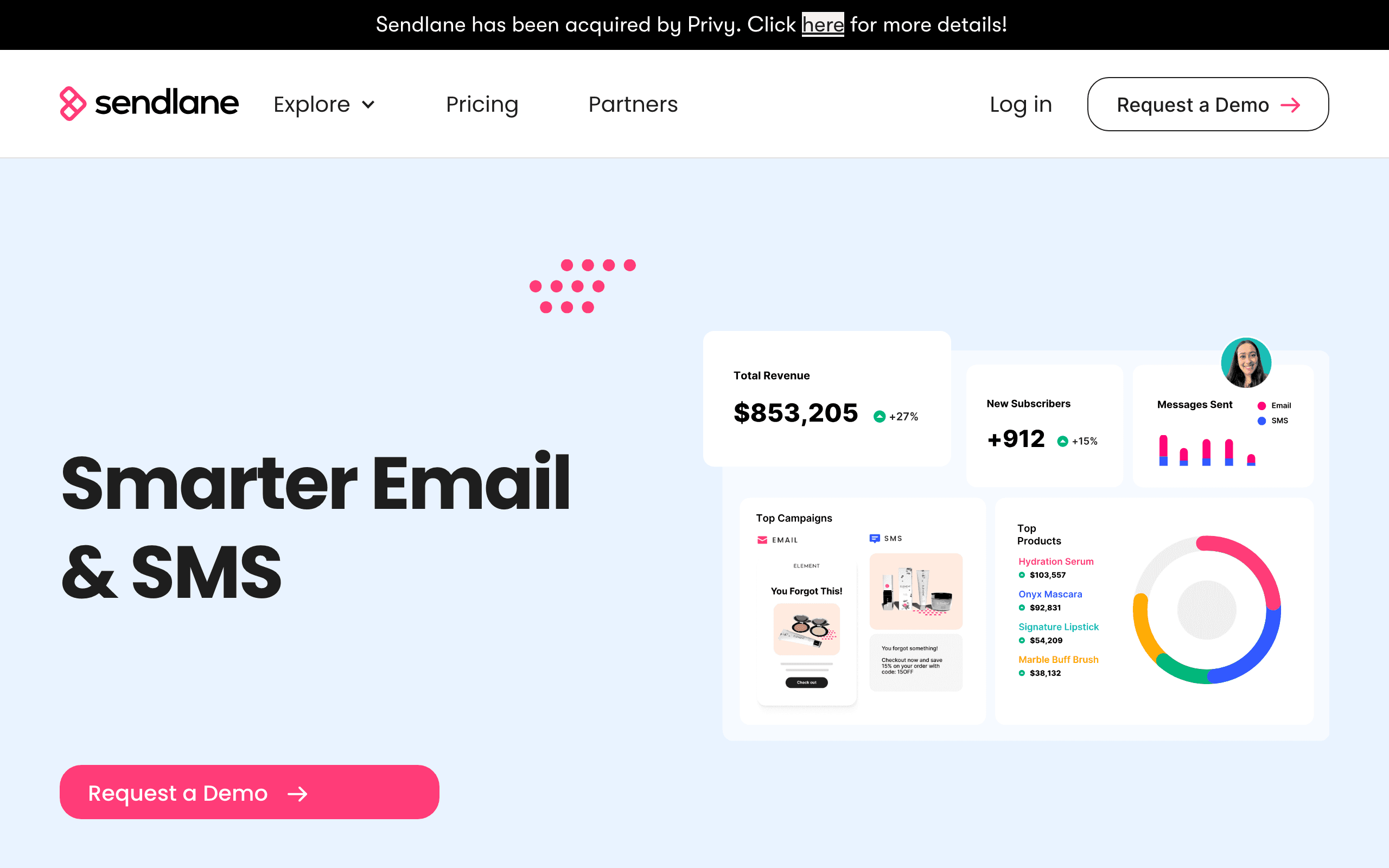
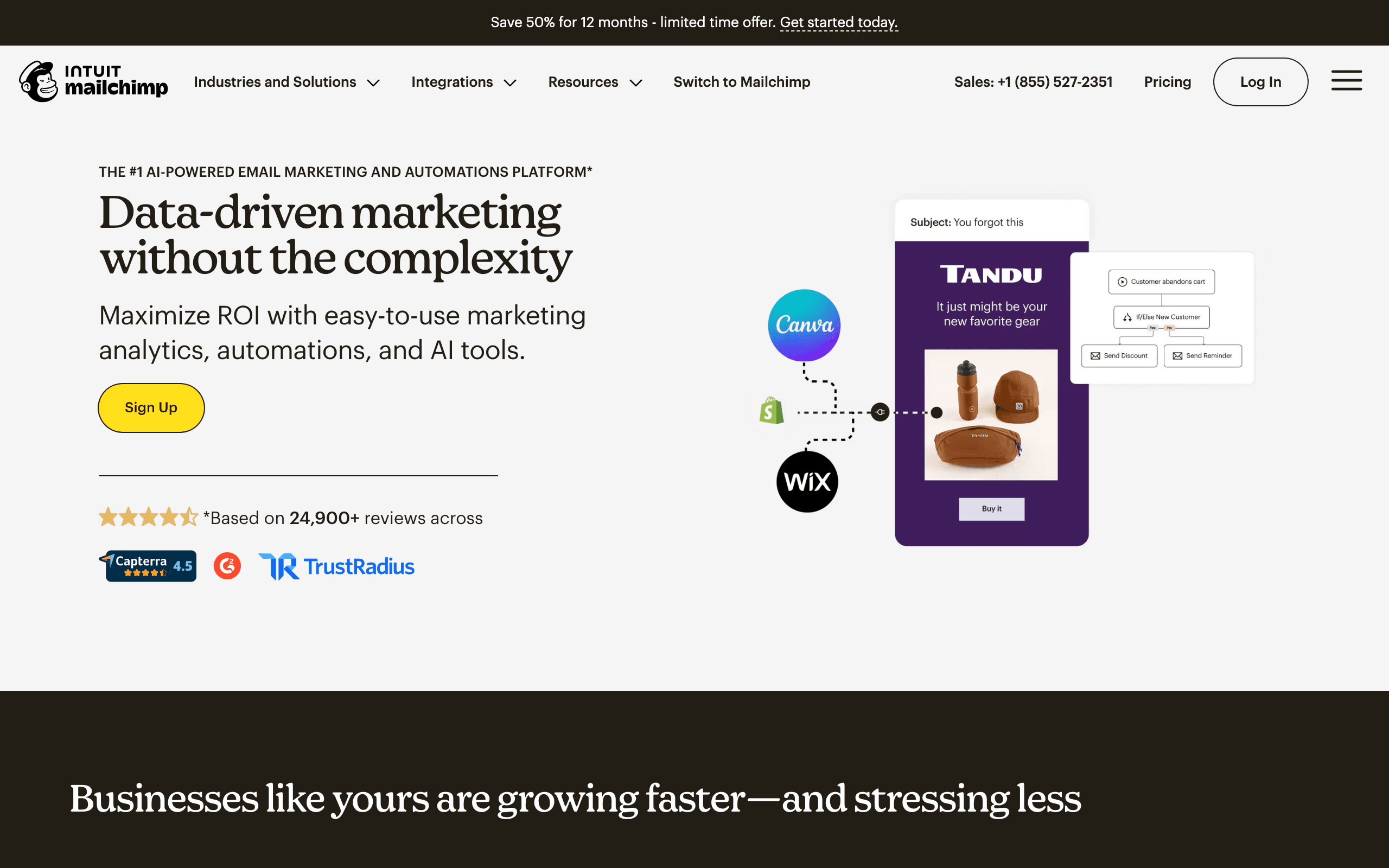
Mailchimp is the Swiss Army knife of email marketing. It works for any business, integrates with everything, and has a free tier. Sendlane is the surgeon's scalpel. Built exclusively for e-commerce with deep behavioral automation, SMS, and review collection.
Pricing Comparison
- Sendlane: $100/month for 50,000 emails (unlimited contacts)
- Mailchimp: $135/month for 10,000 contacts (Standard plan)
- Sequenzy: Free tier, then $49/month for 60,000 emails
Mailchimp's free tier is useful for getting started, but the Standard plan at 10,000 contacts costs more than Sendlane. Sendlane's per-email pricing with unlimited contacts can be a better deal at scale. See our pricing page.
Where Sendlane Wins
E-commerce automation
Sendlane has 50+ pre-built e-commerce funnels with behavioral triggers designed for online stores. Mailchimp's automation works but is not specialized for the e-commerce customer lifecycle.
SMS marketing
Sendlane offers SMS as an add-on with cross-channel automation. Mailchimp does not have SMS at all. For stores that want email and SMS coordinated, Sendlane is the better pick.
Built-in reviews
Sendlane's review collection and display system replaces separate tools. Mailchimp has no review features.
Behavioral tracking
Sendlane tracks granular customer behavior including browse patterns, purchase frequency, and engagement scoring for advanced segmentation. Mailchimp's behavioral data is more basic.
Where Mailchimp Wins
Integration ecosystem
Mailchimp integrates natively with 300+ tools. Almost every SaaS product has a Mailchimp integration. Sendlane relies more on Zapier for connections.
Landing pages and extras
Mailchimp includes landing pages, a basic CRM, social media posting tools, and content creation features. Sendlane focuses solely on email and SMS.
Free tier
Mailchimp's free plan with 500 contacts lets you get started without any commitment. Sendlane has no free option.
Brand recognition
Mailchimp is a household name. Stakeholders, vendors, and partners all know it. This can matter for team buy-in.
Why Sequenzy Is the Budget-Friendly Alternative
If neither Sendlane's $100/month nor Mailchimp's $135/month pricing works for you, Sequenzy at $49/month for 60,000 emails offers:
- AI-generated email sequences (neither competitor has this)
- Native Shopify and Stripe integrations
- Transactional email included (Sendlane does not support it, Mailchimp charges extra via Mandrill)
- All features on every plan with simple per-email pricing
The Generalist vs Specialist Trade-off
Mailchimp's biggest strength is also its limitation for e-commerce. Because it serves agencies, creators, nonprofits, restaurants, and every other business type, its e-commerce features are built as additions to a general platform rather than as core functionality. The abandoned cart flows work but lack the behavioral nuance of a dedicated e-commerce tool.
Sendlane made the opposite bet. By focusing exclusively on e-commerce, every feature is designed around the online store customer lifecycle. The trade-off is that if your business is not e-commerce, Sendlane is not for you. There is no landing page builder, no CRM, no social posting -- just email, SMS, reviews, and automation optimized for selling products online.
For stores that want email marketing plus other marketing tools in one platform, Mailchimp's breadth wins. For stores that want the best possible e-commerce email automation, Sendlane's depth wins.
Deliverability Considerations
Mailchimp's enormous user base has implications for deliverability. With millions of senders on shared IPs, your sending reputation is partly influenced by other users. Mailchimp has invested heavily in anti-abuse systems, but shared IP reputation remains a concern for high-volume senders.
Sendlane uses Tier 1 ESP infrastructure with proactive deliverability monitoring. Their smaller user base means more controlled IP pools. Enterprise plans include dedicated IP options. For stores where inbox placement directly impacts revenue, this difference can matter.
Both platforms support proper authentication with SPF, DKIM, and DMARC. The fundamentals of deliverability -- list hygiene, engagement-based sending, and proper authentication -- matter more than the platform choice. Use our email validator to check your list health before sending.
Integration Ecosystem Impact
Mailchimp's 300+ native integrations create a gravitational pull that is hard to ignore. Almost every SaaS product has a Mailchimp integration built in. This means connecting your accounting software, CRM, help desk, loyalty program, and analytics tools is typically a one-click process.
Sendlane has fewer native integrations and relies more on Zapier for connections. While Zapier bridges most gaps, it adds another cost ($20-50/month for a paid Zapier plan) and introduces a dependency on a third-party service. Some integrations through Zapier may also have delays compared to native connections.
For stores with a complex tech stack where data flows between many tools, Mailchimp's integration advantage is significant. For stores with a simpler stack centered on Shopify and a few key tools, Sendlane's native integrations cover the essentials.
Use-case matchups
| Situation | Best first look | Why |
|---|---|---|
| Ecommerce brand wants email and SMS in one specialist platform | Sendlane | Sendlane is the baseline here for ecommerce teams that want campaigns, flows, segmentation, and SMS together. |
| Team wants a familiar all-purpose email platform | Mailchimp | Mailchimp is broader and more familiar, but less ecommerce-specialized than Sendlane for revenue automation. |
| SaaS or subscription team wants email without SMS complexity | Sequenzy | Sequenzy is stronger when Stripe events, transactional email, and lifecycle campaigns matter more than SMS. |
| Team is migrating from a store-first stack | Sendlane | Sendlane should be tested with real ecommerce events, revenue flows, SMS consent, and reporting needs. |
| Team is comparing against a narrower or broader specialist | Mailchimp | Mailchimp is the better first look when the main requirement is general-purpose email marketing and broad small-business workflows. |
| Team wants one lower-cost email lifecycle workflow | Sequenzy | Sequenzy keeps the scope to marketing email, transactional email, and lifecycle events instead of ecommerce SMS. |
Pricing reality
The pricing signals on this page list Sendlane at $100/month, Mailchimp at $135/month, and Sequenzy at $49/month. Treat those as comparison anchors, not final procurement numbers.
Sendlane's real cost depends on contacts, email volume, SMS usage, plan limits, migration help, and any discounts. Mailchimp's real cost depends on whether the team uses the capabilities that make it different from Sendlane: general-purpose email marketing and broad small-business workflows.
Review signals
For Sendlane, validate review themes around ecommerce automation, SMS, segmentation, support responsiveness, reporting, and total cost at your contact count. For Mailchimp, focus review research on whether teams praise the exact capability you are buying it for: general-purpose email marketing and broad small-business workflows.
Best Fit by Ecommerce Lifecycle Depth
Best email platform for ecommerce retention and SMS
Sendlane fits ecommerce teams that need customer tracking, behavioral automations, SMS, and retention workflows beyond basic campaigns. It is strongest when revenue depends on lifecycle automation across purchase behavior.
Best email marketing platform for general store campaigns
Mailchimp fits stores that want approachable templates, newsletters, forms, and broad integrations without committing to an ecommerce-specialist platform. It is more practical when the store still runs a simple campaign calendar.
Best email tool for stores choosing between simplicity and specialization
If the store mostly sends promotions and announcements, Mailchimp is easier to run. If the store needs deeper post-purchase, winback, and customer-value workflows, Sendlane is the more focused ecommerce option.
Migration checklist
| Workstream | Moving toward Sendlane | Moving toward Mailchimp | Simplifying to Sequenzy |
|---|---|---|---|
| Contacts and consent | Import contacts, tags, custom fields, SMS consent, email consent, suppressions, and unsubscribes. | Map audiences, tags, groups, journeys, templates, forms, ecommerce sync, and unsubscribes. | Import subscribers, tags, attributes, suppressions, and lifecycle events. |
| Ecommerce data | Sync products, orders, carts, browse events, coupons, and revenue attribution. | Confirm the ecommerce data model supports the flows you plan to keep. | Connect only the store, Stripe, and transactional events needed for email workflows. |
| Automations | Rebuild welcome, browse, cart, post-purchase, winback, replenishment, and SMS flows. | Rebuild the flows that match Mailchimp's strongest use case and retire weak duplicates. | Rebuild lifecycle and transactional email flows without SMS paths. |
| Templates and forms | Move email templates, signup forms, popups, coupons, and brand rules. | Move templates, forms, and brand assets that match the new platform's editor model. | Move email templates and lifecycle message content. |
| Reporting | Compare revenue attribution, SMS reporting, flow reporting, campaign exports, and cohort visibility. | Validate reporting for general-purpose email marketing and broad small-business workflows before committing. | Validate campaign, automation, transactional, and subscription lifecycle reporting. |
Decision checklist
- Sendlane's SMS add-on adds cost and consent work, so confirm texts will bring in revenue first. Mailchimp has no SMS to compare.
- Does Mailchimp's strength in general-purpose email marketing and broad small-business workflows matter more than Sendlane's ecommerce email and SMS focus?
- Sendlane's advanced tracking captures store events in more depth, while Mailchimp's basic tracking may leave gaps to fill by hand.
- Check whether Sendlane's $100/month for 50,000 emails or Mailchimp's $135/month at 10,000 contacts fits your real list, send volume, and SMS add-on use.
- If SMS is optional, Sequenzy covers campaigns, sequences, Shopify and WooCommerce flows, and transactional email in one email-focused product.
- Mailchimp can be convenient, but ecommerce teams should verify automation depth and pricing at real list size.