
Compare ecommerce retention against B2B marketing automation
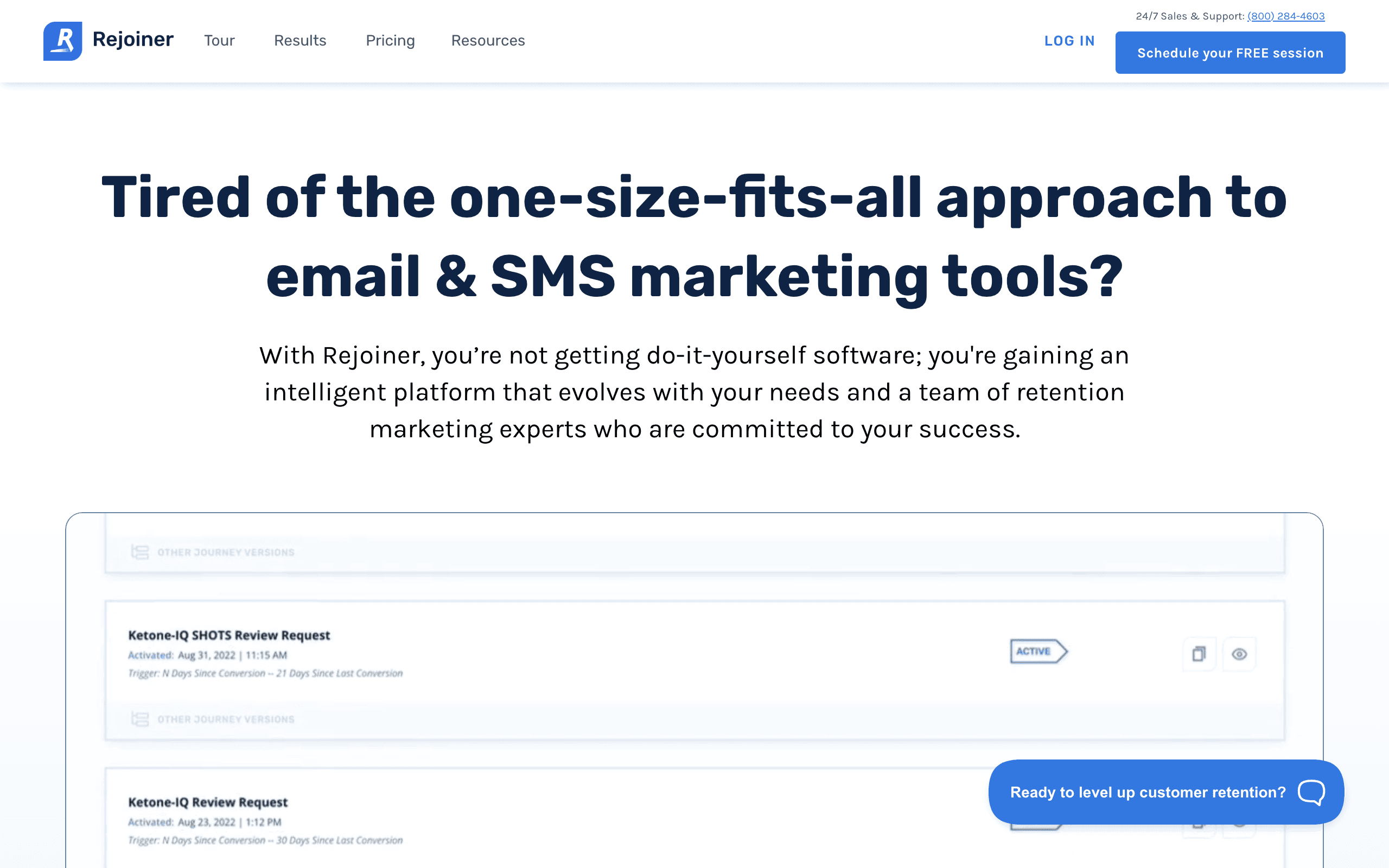
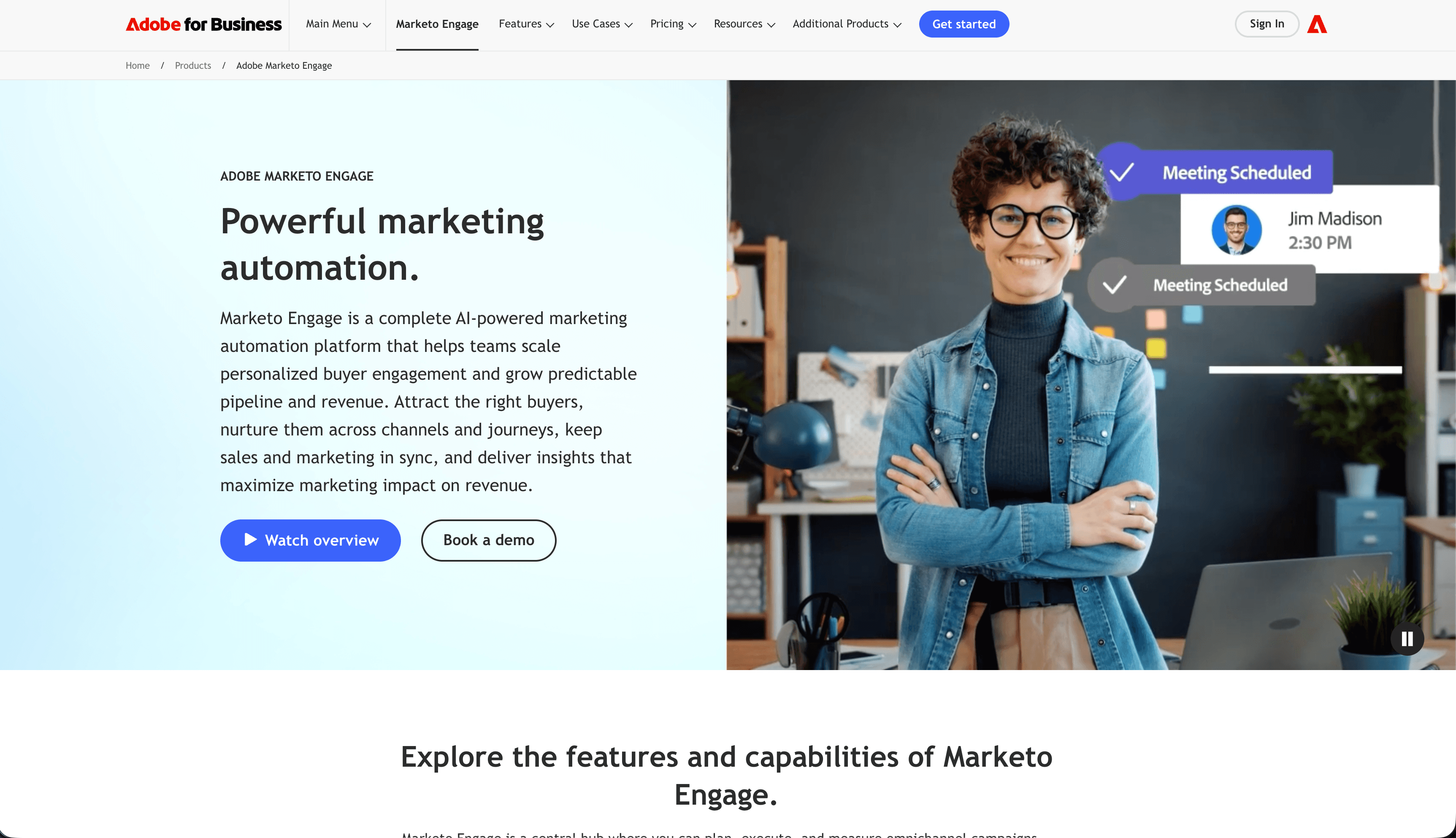
Rejoiner and Marketo solve very different marketing problems. Rejoiner is built around ecommerce lifecycle revenue: cart recovery, retention emails, SMS, and strategic help for online stores. Marketo is historically stronger for B2B demand generation, lead management, scoring, nurture programs, and enterprise marketing operations.
For most ecommerce teams, this is not a close feature-by-feature comparison. It is a question of whether the company is optimizing shopper retention or managing complex lead-to-revenue programs.
Use-case table
| Use case | Better starting point | Why |
|---|---|---|
| Abandoned cart, repeat purchase, and ecommerce lifecycle revenue | Rejoiner | Rejoiner is more directly aligned with shopper behavior and retention campaigns. |
| B2B lead scoring, nurture, and sales handoff | Marketo | Marketo is more relevant when marketing operations revolve around leads, accounts, and CRM stages. |
| Marketing team wants services around ecommerce email performance | Rejoiner | Rejoiner is easier to evaluate as a retention partner, not just a platform license. |
| Enterprise marketing ops team already works inside Adobe/CRM workflows | Marketo | Marketo can make sense when governance, programs, scoring, and sales alignment are the buying reasons. |
| Storefront email and transactional lifecycle messaging | Sequenzy | Use a smaller email-first product when neither B2B demand-gen depth nor managed retention is required. |
Where Rejoiner is stronger
Rejoiner is stronger when the customer lifecycle is tied to store behavior. Cart abandonment, purchase timing, product interest, repeat buying, and winback are the natural objects in the system. It is also a better fit when a retail team wants help designing and improving the lifecycle program.
The more your marketing motion looks like ecommerce retention, the less sense it makes to evaluate Marketo as the primary replacement.
Where Marketo is stronger
Marketo is stronger when the organization has a mature B2B marketing operations function. If campaigns depend on lead scoring, account stages, sales follow-up, program attribution, and enterprise governance, Marketo may fit the internal process better than an ecommerce retention tool.
For ecommerce, verify the exact store integration, order data model, product-level targeting, and whether the team has the operations capacity to manage Marketo cleanly.
Pricing reality
Rejoiner is listed as custom pricing based on retention program scope, channels, and services. Marketo is listed as variable pricing based on plan, contacts, usage, and selected features. Sequenzy is listed at $49/month for the cited email-first scope.
Rejoiner pricing belongs in a managed ecommerce retention context. Marketo pricing belongs in an enterprise B2B marketing-ops context with lead scoring, CRM sync, attribution, admin ownership, and implementation support.
Review signals
The cited Rejoiner review themes should be read for lifecycle strategy, cart recovery, email/SMS retention, hands-on support, setup effort, and pricing clarity. Marketo review themes should be read for enterprise automation, lead management, CRM integration, implementation effort, and admin ownership. The review split is shopper retention versus leads/accounts marketing operations.
Migration checklist
- Identify whether each current journey is shopper-retention logic or lead-nurture logic.
- Export Rejoiner suppression lists, profile fields, purchase history, and campaign benchmarks.
- Confirm how ecommerce orders, products, and customer tags would be represented in Marketo.
- Decide whether sales-stage fields and lead scoring are genuinely needed.
- Pilot one high-value ecommerce flow before migrating the full campaign calendar.
Buying questions to ask
- Is the business primarily ecommerce, B2B, or a hybrid motion?
- Does the team need lead scoring and sales handoff, or purchase-based segmentation?
- Who will administer Marketo programs, fields, governance, and QA?
- What ecommerce reporting would be lost or rebuilt after migration?
- Are services and lifecycle optimization included with the Rejoiner option?
Where Sequenzy fits
Sequenzy is the practical option when the team needs email automation without Marketo-level marketing ops or Rejoiner-level managed services. It supports Shopify, WooCommerce, transactional email, newsletters, and Stripe-aware lifecycle messages in a more focused setup.
Use-case matchups
| Need | Better fit | Why |
|---|---|---|
| Managed ecommerce retention strategy | Rejoiner | Rejoiner is stronger when the team wants service-backed retention programs, lifecycle planning, and hands-on optimization. |
| B2B marketing operations | Marketo | Marketo is stronger when the team wants to own B2B marketing operations directly in-platform. |
| Email-first store or subscription lifecycle | Sequenzy | Sequenzy fits when the team wants Shopify, WooCommerce, Stripe, newsletters, and transactional email without SMS or managed-service scope. |
Best Fit by Revenue Motion
Best managed retention partner for ecommerce lifecycle programs
Rejoiner fits commerce teams that want expert help with retention strategy, lifecycle campaigns, and ongoing optimization around customer purchases.
Best marketing automation platform for B2B demand generation
Marketo is the better fit when the work is lead scoring, sales handoff, nurture programs, account journeys, and enterprise B2B marketing operations.
Best email platform for commerce or subscription lifecycle messages
Sequenzy fits teams whose email program is driven by product, purchase, or billing events rather than a B2B lead-management motion.
Decision checklist
- Choose Rejoiner if managed ecommerce retention strategy is the main need.
- Choose Marketo if B2B marketing operations is the main need and the team can operate it directly.
- Avoid Rejoiner if the team only wants self-serve software and no service layer.
- Avoid Marketo if the missing piece is retention strategy, not tool access.
- Consider Sequenzy if the practical need is email automation, transactional email, and store or Stripe lifecycle messages.









