Overview
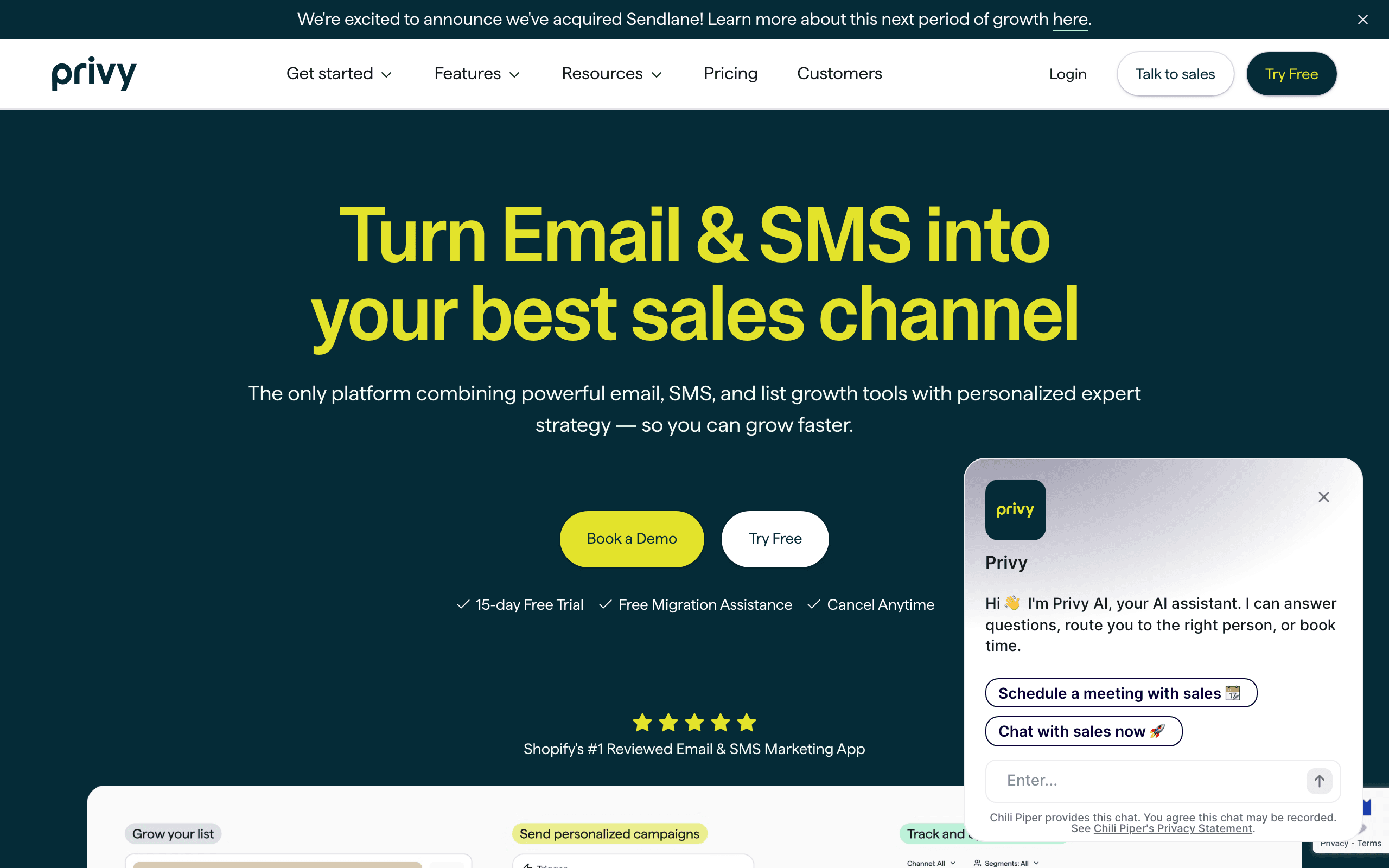
Privy and tinyEmail are both Shopify apps but serve different needs. Privy is for popup conversion optimization. tinyEmail is for simple, cheap email campaigns. For Shopify stores that want real e-commerce automation, platforms like Sequenzy or Omnisend offer significantly more capability.
Two Shopify Apps Competing at the Budget Tier
Both Privy and tinyEmail live in the Shopify App Store, targeting small to mid-sized merchants who want affordable email marketing. Privy's strength is popup conversion - it captures subscribers better than almost any alternative. tinyEmail's strength is simple, cheap email sending with AI-assisted content creation. Together they could work as a popup-plus-email stack, but the combined cost approaches platforms like Omnisend that handle both natively.
tinyEmail's AI subject line generator and pre-built audience segments are useful for merchants who lack marketing expertise. Privy's email features, by contrast, are functional but lack the AI-powered assistance that helps small teams write better campaigns. For stores with limited marketing resources, tinyEmail's AI tools provide a genuine advantage over Privy's more manual approach to email creation.
Budget stack map
| Store need | Privy | tinyEmail | Sequenzy |
|---|---|---|---|
| Grow the list with high-converting popups | Strong | Basic | Not the capture layer. |
| Send simple product campaigns cheaply | Weak for the price | Strong | Strong if automations are also needed. |
| Get help writing subject lines and simple campaigns | Weak | Stronger | Stronger for full sequence structure, not only subject lines. |
| Use pre-built Shopify customer segments | Partial | Stronger | Stronger when tags and attributes need to power flows. |
| Build custom lifecycle automations | Basic | Basic | Stronger fit. |
| Keep the stack very cheap while proving email | Partial | Strong | Only if the team already needs more than basic sending. |
When tinyEmail is the right temporary step
tinyEmail is a reasonable choice when the store needs to start sending campaigns, keep costs low, and avoid a heavy automation platform. Its strongest role is not enterprise retention strategy; it is helping a small Shopify team send better-looking campaigns with less manual effort.
Privy remains the better tool if the store is losing visitors before they join the list. Better subject lines do not help if the list is not growing, and tinyEmail's popup layer is not the reason to choose it.
Sequenzy is worth comparing when the store has moved past "send a campaign this week" and into "build a repeatable retention system." That means custom flows, better customer attributes, transactional email, and automations that are not limited to pre-built basics.
Pricing reality
tinyEmail should be judged as a low-cost Shopify email sender. If the team only needs simple campaigns and starter segmentation, the low monthly cost can be the deciding factor.
Privy's cost should be judged against incremental capture and cart recovery. If the store pays for Privy mostly to send email, tinyEmail or another email platform may expose that mismatch quickly.
Sequenzy sits between the two roles: it is not as narrow as a popup tool and not as bare-bones as a starter sender. The comparison is strongest when the store needs automation depth without moving into a large enterprise ecommerce suite.
Review signals
Privy review themes should be read for popup conversion, list growth, onsite targeting, setup effort, and subscriber quality. tinyEmail review themes should be read for low-cost Shopify sending, starter campaigns, AI-assisted copy or subject-line workflows, and basic segmentation limits. The review split is capture optimization versus inexpensive starter email.
Migration checklist
| Area | Moving toward Privy | Moving toward tinyEmail | Moving toward Sequenzy |
|---|---|---|---|
| Capture | Recreate popup campaigns, display timing, discount rules, and cart-value targeting. | Use simple forms only if capture is already good enough. | Connect current forms and Shopify subscriber sources into one subscriber model. |
| Campaign workflow | Keep emails simple or send from another platform. | Prepare campaign templates, AI subject-line workflow, and basic customer segments. | Build reusable campaign templates plus lifecycle and transactional templates. |
| Segmentation | Use popup and basic purchase context. | Review pre-built Shopify segments and where they fall short. | Map tags, purchase behavior, custom attributes, and event triggers. |
| Automation | Use basic cart or welcome follow-up. | Use starter workflows while the program is simple. | Rebuild welcome, abandoned cart, post-purchase, winback, and transactional flows. |
| Reporting | Track popup conversion and subscriber purchase quality. | Track open rate, campaign revenue, and segment performance. | Track campaign revenue, flow performance, deliverability, and transactional reliability. |
Decision questions
- Is the store trying to minimize email cost, or build a retention system?
- Is AI subject-line help enough, or does the team need complete lifecycle flows?
- Is popup conversion still the biggest constraint?
- Will pre-built segments cover the campaigns you actually want to send?
- At what subscriber or revenue level would tinyEmail become too basic?
The Pre-Built Segment Advantage for Small Teams
tinyEmail ships with pre-built audience segments - first-time buyers, repeat customers, high-value shoppers, recent browsers - that would take hours to configure manually on other platforms. For small Shopify stores without a dedicated marketing team, these ready-made segments let you send targeted campaigns immediately without understanding the segmentation logic underneath.
Privy's segmentation is more basic, built around popup interaction history and purchase data rather than sophisticated behavioral analysis. A store choosing between these tools should consider whether popup optimization (Privy) or campaign targeting (tinyEmail) will drive more incremental revenue. For most stores beyond the startup phase, targeted campaigns to behavioral segments outperform broad campaigns captured by better popups.
Why Shopify-Native Tools Miss the SaaS Market Entirely
Both Privy and tinyEmail are built exclusively for Shopify merchants selling physical or digital products. There is no subscription billing integration, no concept of monthly recurring revenue, and no trial-to-paid conversion tracking. SaaS companies browsing the Shopify App Store for email tools will find nothing relevant to their business model.
For software businesses, Sequenzy provides transactional email and marketing campaigns with native Stripe integration at $49/month. Subscription lifecycle events - trial expiration, payment failure, plan changes - drive automated sequences without external middleware. The tools are fundamentally different because the business models are fundamentally different.
Use-case matchups
| Need | Better fit | Why |
|---|---|---|
| Popup capture, onsite offers, and Shopify list growth | Privy | Privy is strongest when the immediate bottleneck is converting store traffic into subscribers. |
| Simple Shopify email with ready-made segments | tinyEmail | tinyEmail is stronger for pre-built Shopify segments and low-cost email campaigns. |
| Email-first ecommerce or SaaS lifecycle messages | Sequenzy | Sequenzy fits when the useful next step is post-capture email automation, transactional email, and store or Stripe lifecycle messages. |
Best Fit by Shopify Simplicity
Best Shopify popup tool for onsite offers and subscriber capture
Privy is the better fit when the store needs popups, coupons, forms, and opt-in growth before investing in more campaign depth.
Best simple Shopify email tool for ready-made segments
tinyEmail is the better fit when the team wants low-cost Shopify email campaigns, pre-built segments, and simpler sending rather than a dedicated popup tool.
Best email platform for lifecycle automation after capture
Sequenzy is the better fit when the team needs stronger automated follow-up, transactional messages, and store or subscription lifecycle email.
Decision checklist
- Privy makes the most sense when the store loses visitors before they subscribe, since its cart-value triggers and exit-intent popups target that gap directly.
- Choose tinyEmail if simple Shopify email with ready-made segments is the main requirement.
- Privy is hard to justify once popups already fill the list, since its email tools are basic and overpriced for sending.
- Avoid tinyEmail if onsite capture and popup targeting are the actual gaps.
- Sequenzy suits teams that need automated welcome, cart recovery, and post-purchase flows, plus transactional and Stripe billing email in one product.