Overview
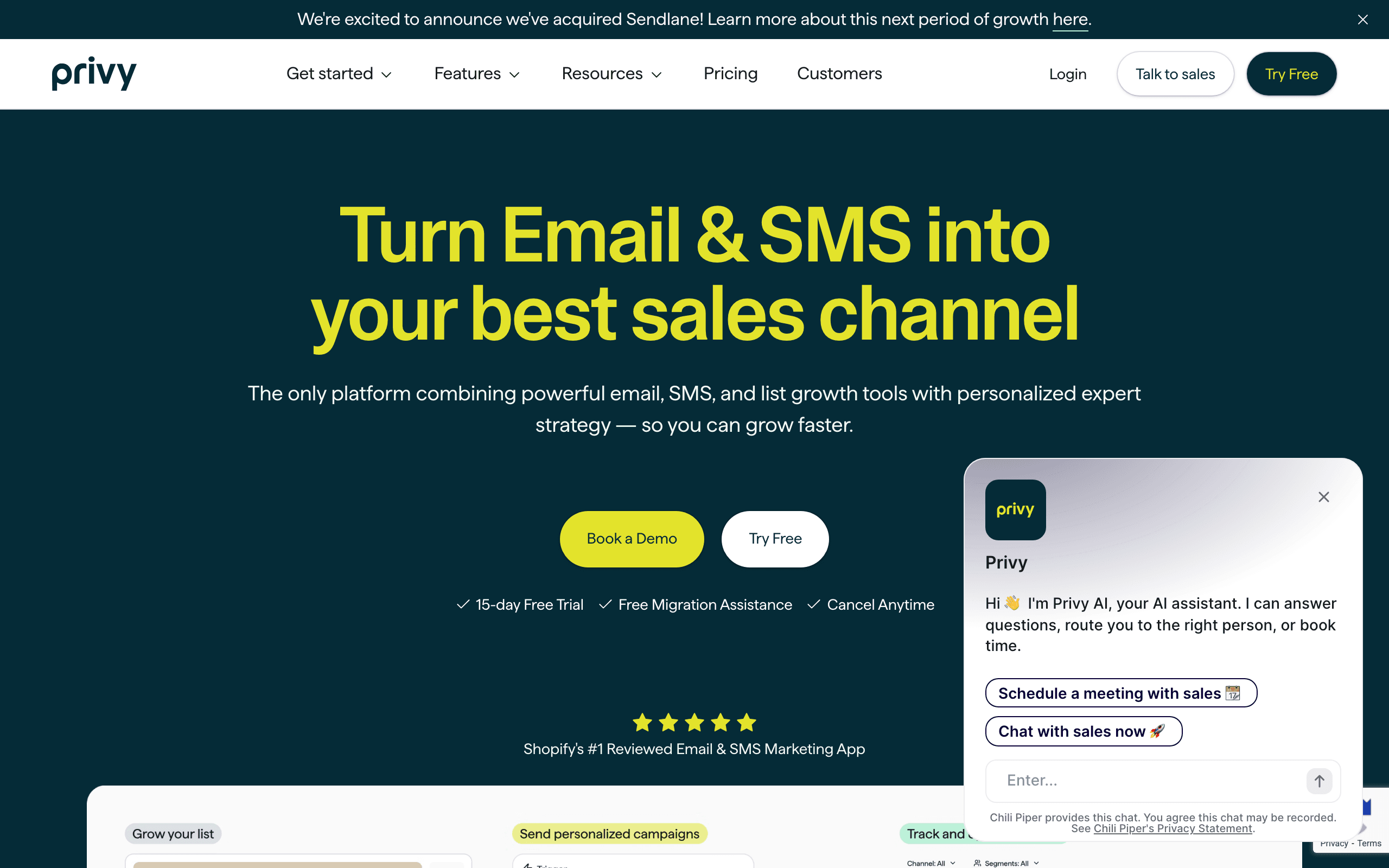
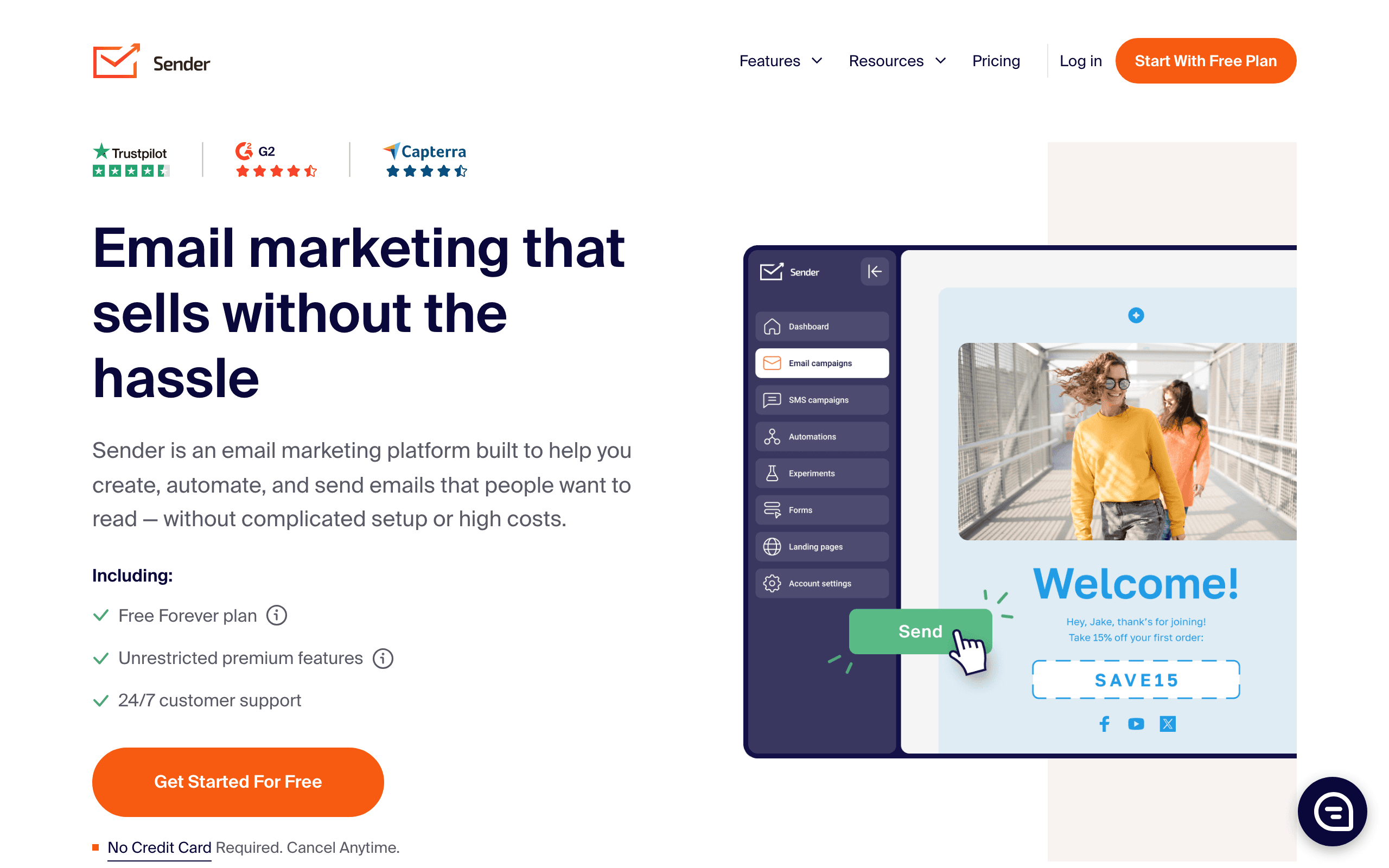
Privy and Sender are both affordable options but for different needs. Privy is for Shopify popup conversion. Sender is for budget email and SMS marketing. For Shopify stores that want real e-commerce automation, platforms like Sequenzy or Omnisend offer more relevant features.
Two Budget Tools With Different Shopify Integration Depth
Privy was built inside the Shopify ecosystem - its cart saver popups, cross-sell displays, and exit-intent overlays all pull from Shopify's product catalog and cart data in real time. Sender offers Shopify integration but treats it as one of many e-commerce connections rather than its primary focus. For pure Shopify popup conversion, Privy's integration is deeper. For email marketing across multiple platforms, Sender is more flexible.
The price comparison favors Sender at scale. Sender's free plan includes 2,500 subscribers and 15,000 emails per month with both email and SMS capabilities. Privy's free plan focuses on popups with limited email sends. For small Shopify stores testing email marketing on a tight budget, Sender's generous free tier provides more room to grow before hitting a paywall.
Budget channel table
| Need | Privy | Sender | Sequenzy |
|---|---|---|---|
| High-converting Shopify popups | Strong | Basic | Not the capture layer. |
| Free-tier testing with meaningful email volume | Limited | Strong | Not positioned as a free-tier sender. |
| Email plus SMS on a tight budget | Partial | Stronger | Email-first, SMS is a paid add-on. |
| Push notifications for re-engagement | No | Available | Included on every plan. |
| Deep Shopify lifecycle automation | Basic | Basic to moderate | Stronger fit. |
| Replace a popup specialist | Strong | Weak | No. |
When Sender is enough
Sender is a good fit when a store needs to prove whether email and SMS can work before committing to a more specialized ecommerce platform. The generous free tier and bundled channels reduce the risk of starting.
That same budget-first appeal can hide the ceiling. As the store grows, the important questions become less about monthly cost and more about whether flows understand products, purchase timing, customer value, consent, and channel fatigue.
Privy is still the better choice when list growth is the blocker. Sequenzy is the better comparison when the blocker is email automation depth and the team does not need SMS bundled into a budget plan.
Pricing reality
Sender should be evaluated as a budget multichannel sender. If email, SMS, and push are all being used at a small-store scale, it can be a very practical starting point.
Privy should be evaluated against its capture lift. If Sender already sends the campaigns, Privy only needs to justify its place through better popup conversion, cart-save overlays, and subscriber quality.
Sequenzy should be evaluated as an email automation platform with push included, rather than an SMS replacement. The value is in stronger flows, transactional email, and ecommerce customer context.
Review signals
Privy review themes should be read for popup conversion, list growth, onsite targeting, setup effort, and subscriber quality. Sender review themes should be read for budget-friendly email/SMS/push, free-tier value, basic automation, and the ceiling as ecommerce needs become more complex. The review split is capture lift versus low-cost multichannel sending.
Migration checklist
| Area | Moving toward Privy | Moving toward Sender | Moving toward Sequenzy |
|---|---|---|---|
| Capture | Rebuild popup offers, cart-value triggers, exit intent, and display rules. | Use basic forms and popups only if conversion lift is not the priority. | Sync existing capture sources into subscriber records with consent and tags. |
| Channel consent | Keep email and SMS consent separated in popup collection. | Audit email, SMS, and push permission sources before sending. | Preserve email consent and suppress non-marketable contacts. |
| Automation | Use Privy for simple welcome and cart recovery. | Start with basic email/SMS/push recovery workflows. | Rebuild lifecycle email flows from store, purchase, and subscriber attributes. |
| Content | Write popup copy and short recovery offers. | Prepare email, SMS, and push variants with frequency controls. | Prepare campaign, lifecycle, and transactional email templates. |
| Reporting | Measure opt-in rate, cart recovery, and buyer quality. | Separate email, SMS, and push contribution so the cheapest channel does not hide unsubscribes. | Track flow revenue, campaign performance, deliverability, and transactional reliability. |
Decision questions
- Is the store choosing Sender for channel breadth or just because the free tier is generous?
- Do you need SMS and push enough to manage consent, frequency, and reporting across channels?
- Is the popup conversion lift from Privy still worth paying for beside a budget sender?
- Are basic automation templates enough for the store's current revenue stage?
- Would deeper email flows matter more than having SMS and push in the same budget tool?
The SMS Marketing Gap Between Popup-First and Email-First Tools
Sender includes SMS marketing alongside email with automated flows and campaign tools. Privy added SMS but its implementation is more limited - primarily text-based cart reminders and promotional blasts rather than sophisticated multi-step SMS automation. For stores that want coordinated email and SMS marketing, Sender offers more automation depth at a lower price point.
However, neither tool provides the deep Shopify-native SMS automation that platforms like Omnisend or Klaviyo offer. Sender's SMS is functional but generic - it does not automatically pull product images, dynamic discount codes, or personalized recommendations into text messages. For stores where SMS is a growth channel, consider whether either budget tool provides enough SMS sophistication or if a dedicated e-commerce platform is worth the premium.
Why Budget E-Commerce Tools Hit a Ceiling for Software Companies
Both Privy and Sender are built around product-based commerce - cart abandonment, purchase follow-ups, product recommendations. Neither has any concept of subscription billing, trial periods, or recurring revenue metrics. A SaaS company using either tool would need to manually tag subscribers based on subscription status and build automation triggers externally through Zapier or custom API integrations.
Sequenzy addresses this gap with native Stripe integration that treats billing events as first-class automation triggers. Trial expiration, payment failure, plan changes - these events drive email sequences without middleware. At $49/month with unified transactional and marketing email, it replaces the workarounds required by tools built for physical product commerce.
Use-case matchups
| Need | Better fit | Why |
|---|---|---|
| Popup capture, onsite offers, and Shopify list growth | Privy | Privy is strongest when the immediate bottleneck is converting store traffic into subscribers. |
| Budget email and SMS campaigns | Sender | Sender is stronger for lower-cost email/SMS with standard campaign features. |
| Email-first ecommerce or SaaS lifecycle messages | Sequenzy | Sequenzy fits when the useful next step is post-capture email automation, transactional email, and store or Stripe lifecycle messages. |
Best Fit by Cost and Channel Need
Best Shopify popup tool for onsite list growth
Privy is the better fit when the store needs popups, forms, coupon offers, and subscriber capture tied closely to Shopify traffic.
Best budget email and SMS platform for standard campaigns
Sender is the better fit when the team needs lower-cost email and SMS campaigns with standard automation features rather than a Shopify popup specialist.
Best email platform for lifecycle and transactional follow-up
Sequenzy is the better fit when the useful next step is automated email follow-up, transactional messages, and store or Stripe lifecycle communication.
Decision checklist
- Pick Privy when cart-saver and exit-intent popups are what is holding back Shopify list growth.
- Choose Sender if budget email and SMS campaigns is the main requirement.
- Skip Privy if popups already fill your list and the gap is lifecycle email, where its basic email trails Sender.
- Avoid Sender if onsite capture and popup targeting are the actual gaps.
- Look at Sequenzy if AI-built sequences, transactional email, and Stripe or Shopify lifecycle flows matter more than popups or bundled SMS.