Overview
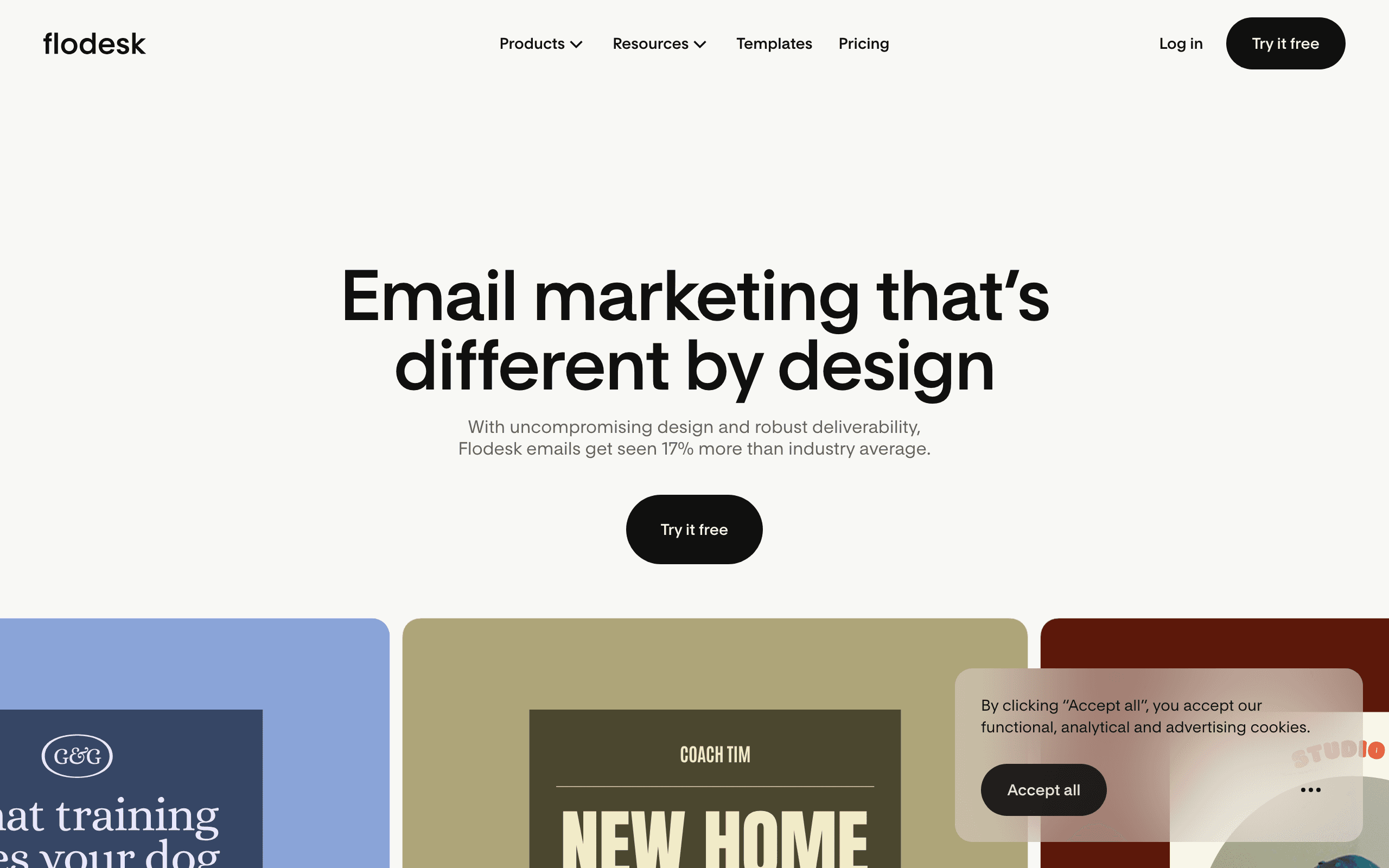
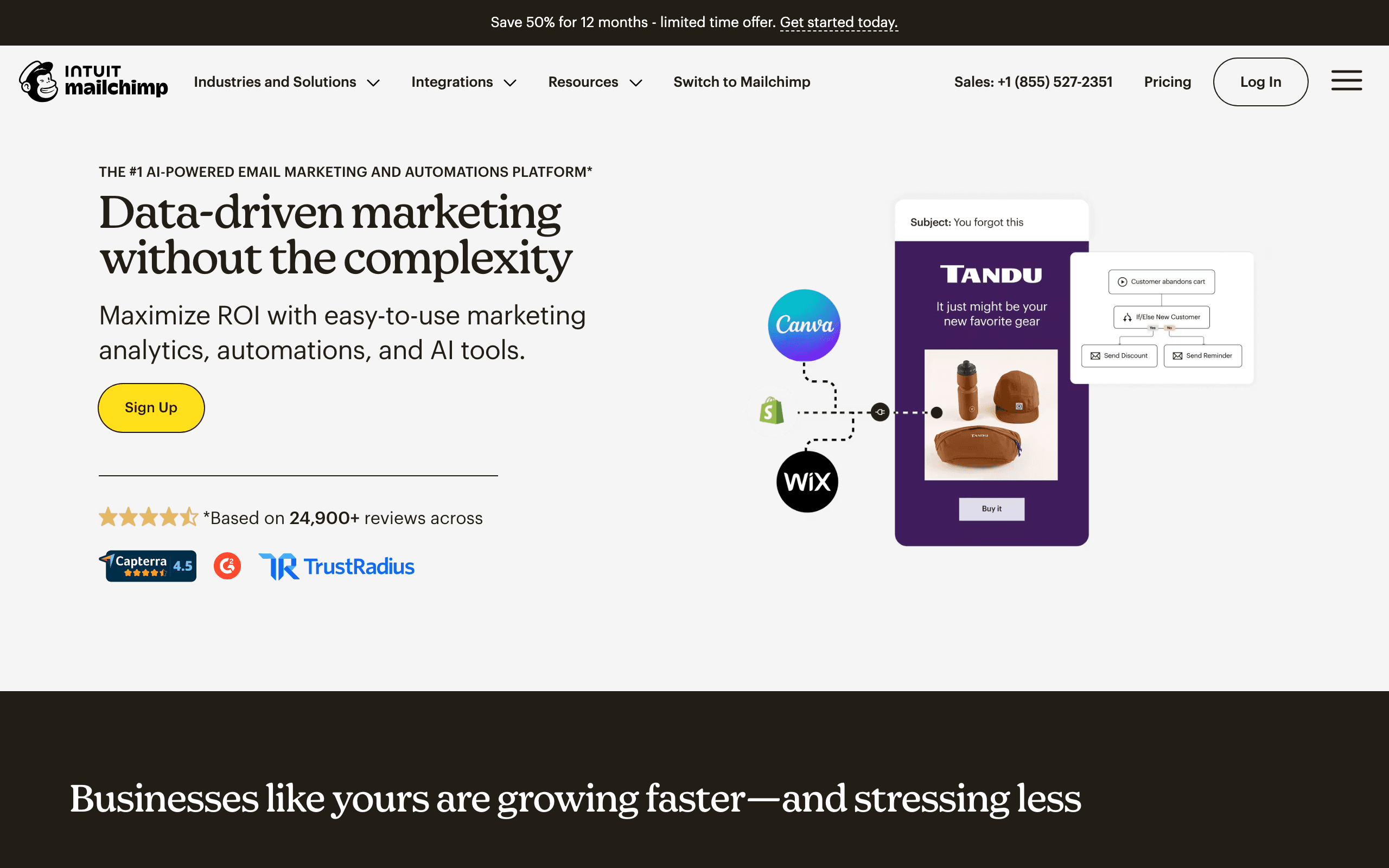
Flodesk and Mailchimp represent different philosophies in email marketing. Flodesk is design-first - stunning templates, intuitive builder, clean aesthetic. Mailchimp is feature-first - comprehensive marketing suite with broader capabilities. See our Mailchimp comparison for more context.
Design vs Features
Flodesk asks "how do I make beautiful emails?" Mailchimp asks "how do I run comprehensive marketing?" Both are valid questions. If visual appeal is your priority, Flodesk delivers. If you need a full marketing toolkit, Mailchimp has more depth.
Email Design Quality
This is Flodesk's superpower. Templates are stunning - modern, aesthetic, design-forward. The builder is intuitive with beautiful results. For creators who want their emails to feel like art, Flodesk delivers. Mailchimp has good templates but they're more functional than beautiful.
Feature Breadth
Mailchimp offers more - social media posting, advertising integrations, website builder, advanced automation, e-commerce features. Flodesk focuses narrowly on email marketing and digital product sales. If you need marketing beyond email, Mailchimp is more comprehensive.
Automation Depth
Mailchimp wins on automation power. More triggers, advanced branching, sophisticated segmentation. Flodesk's automations are intentionally simple - enough for welcome sequences and basic workflows, limited for complex scenarios.
Pricing Comparison
Flodesk now uses subscriber-based pricing rather than its former flat-rate model. Current monthly plans are Lite at $25, Pro at $28, and Everything at $54; annual pricing is $19/month, $25/month, and $49/month, respectively. Mailchimp includes more features, but the exact comparison depends on subscriber count, plan, and the features you need.
Use-case matchups
| Use case | Better fit | Why |
|---|---|---|
| Beautiful newsletters for creators and coaches | Flodesk | Flodesk prioritizes design quality and a simpler creation workflow. |
| Full marketing suite with ecommerce and social tools | Mailchimp | Mailchimp is broader across email, landing pages, ecommerce, social, ads, and automations. |
| Simple brand communication | Flodesk | The focused interface is easier when polished email is the main job. |
| Advanced segmentation and testing | Mailchimp | Mailchimp has deeper automation, segmentation, and testing controls. |
| SaaS lifecycle and Stripe-triggered email | Sequenzy | Neither platform is purpose-built for subscription lifecycle automation. |
Best Fit by Marketing Scope
Best email marketing tool for design-led creators
Flodesk is the better fit when the team values visual polish, fast creation, branded forms, simple launches, and a focused creator workflow. It is strongest when email design is the differentiator and broad marketing-suite features would slow the team down.
Best email marketing tool for broad SMB and ecommerce campaigns
Mailchimp is the better fit when the business needs integrations, landing pages, ecommerce connections, ads, social tools, segmentation, and more advanced testing. It is broader than Flodesk and better when multiple marketing surfaces must live together.
Best email marketing tool for SaaS lifecycle and transactional email
Sequenzy is the better fit when product and billing events should trigger the email program. SaaS teams need transactional messages, onboarding, retention, failed payment recovery, and subscription-state campaigns rather than creator design or SMB campaign breadth.
Pricing reality
Flodesk's pricing story changed after flat-rate pricing ended for new users. Current buyers should price their exact subscriber count, plan, checkout needs, and automation requirements instead of assuming unlimited-list economics. The free plan only includes forms, landing pages, and a link-in-bio page; it does not include email sending.
Mailchimp's higher benchmark includes broader marketing features, but its contact-counting rules and higher tiers can raise the real bill. Clean inactive and unsubscribed contacts before using Mailchimp's calculator for a fair comparison.
Sequenzy's $49/month benchmark only matters if the team is evaluating SaaS email, Stripe automation, and transactional messages. It is not a design-first creator platform or a general marketing suite.
Review signals
The sourced review snippets are useful because they disagree in practical ways: Flodesk wins praise for email design, while Mailchimp wins praise for breadth and automation. The cautions also matter: Flodesk can feel limited, and Mailchimp can feel expensive or complex.
Migration checklist
| Workstream | Moving toward Flodesk | Moving toward Mailchimp | Moving toward Sequenzy |
|---|---|---|---|
| Subscribers and consent | Import active subscribers, tags, fields, opt-ins, and suppressions. | Map audiences, groups, tags, segments, merge fields, unsubscribes, and non-subscribed contacts. | Map subscribers, attributes, tags, suppression status, and billing/product events. |
| Templates | Rebuild emails around Flodesk's design system. | Rebuild templates with Mailchimp blocks, ecommerce content, and testing variants. | Rebuild lifecycle and transactional email templates. |
| Automations | Simplify complex journeys into Flodesk-supported workflows. | Rebuild advanced journeys, branches, segmentation, ecommerce, and testing logic. | Rebuild trial, payment, onboarding, retention, and transactional paths. |
| Forms and pages | Replace embedded forms, landing pages, and checkout links. | Reconnect forms, landing pages, website builder, social, ads, and ecommerce tools. | Keep web and social assets elsewhere unless they feed email flows. |
| Ecommerce | Use Flodesk only for simple digital-product or creator commerce needs. | Reconnect Shopify, WooCommerce, product catalog, cart, and purchase events. | Connect Stripe and required product/store events. |
| Reporting | Export campaign, automation, audience, ecommerce, and design asset history before switching. | Export campaign, ecommerce, audience, automation, and revenue reports. | Export lifecycle and transactional metrics. |
Decision checklist
- Is email design the main differentiator, or does the business need a broader marketing suite?
- Will Mailchimp's extra features actually be used?
- Does Flodesk's current subscriber-based pricing still provide the expected savings?
- How much does Mailchimp's contact counting affect the real bill?
- Is the real problem SaaS lifecycle email instead of creator or ecommerce marketing?
For SaaS Companies
Neither platform is ideal for SaaS. Flodesk is creator-focused with limited behavioral triggers. Mailchimp is general-purpose without deep SaaS integrations. For subscription businesses needing Stripe integration and event-based automation, consider Sequenzy.
Making the Choice
Choose Flodesk for beautiful emails and simplicity - ideal for creators, coaches, and design-focused businesses. Choose Mailchimp for comprehensive marketing features and advanced automation. For SaaS companies, both platforms lack the subscription-focused features that tools like Sequenzy provide.
The All-in-One vs Focused Tool Decision
Mailchimp has evolved into a comprehensive marketing platform - email, social media, website building, advertising, CRM, and e-commerce. This breadth means one login, one bill, and one data set for your entire marketing operation. Flodesk remains focused on email marketing, doing one thing beautifully rather than many things adequately. The choice reflects a broader philosophy: do you want an integrated marketing suite or a specialized email tool that excels at design?
For businesses that want to consolidate their marketing stack, Mailchimp reduces tool sprawl. For businesses that prefer best-in-class tools for each function, Flodesk handles email beautifully while you use specialized tools for social media, website, and advertising.
Contact Counting Controversy
Mailchimp counts unsubscribed and non-subscribed contacts toward your billing tier, which means you pay for contacts who cannot receive your emails. This pricing approach frustrates many users and inflates costs compared to platforms that only count active subscribers. Flodesk counts active subscribers only. This difference can be significant for businesses with high churn or large numbers of historical contacts - you might pay for 10,000 contacts on Mailchimp when only 7,000 can actually receive emails.
Regularly cleaning your Mailchimp list becomes a cost optimization exercise. Some businesses set up automated archiving workflows just to keep their contact count and billing manageable. Flodesk's approach is simpler and more transparent.
The Pricing Shift
Flodesk's flat-rate pricing ended for new customers in December 2025. New users now pay based on subscriber count, similar to other platforms, while existing unlimited-plan users may be grandfathered under their legacy terms. Current plans are Lite at $25/month, Pro at $28/month, and Everything at $54/month; annual pricing is $19/month, $25/month, and $49/month, respectively. The pricing landscape continues to evolve, so compare current rates directly before making a decision.