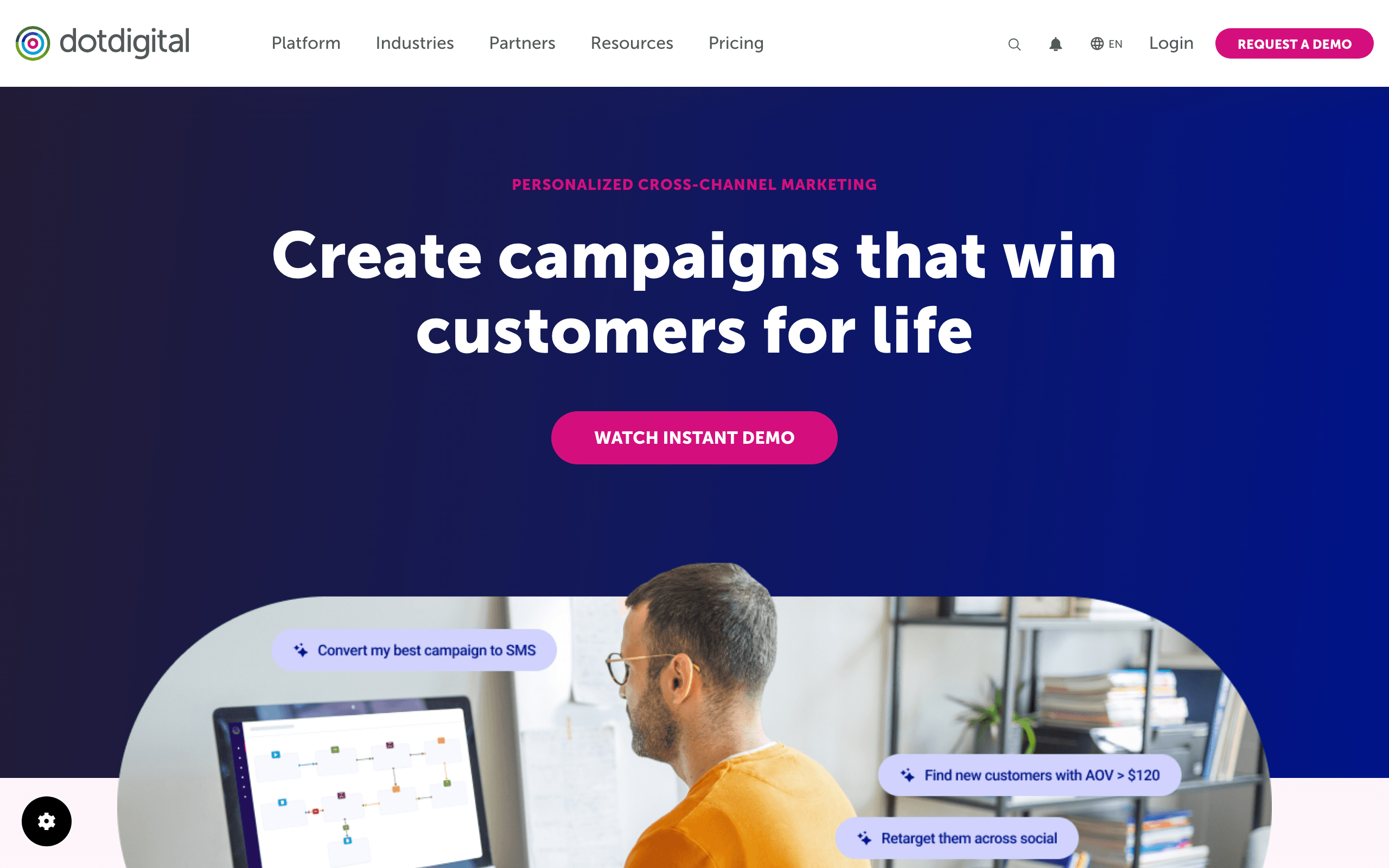
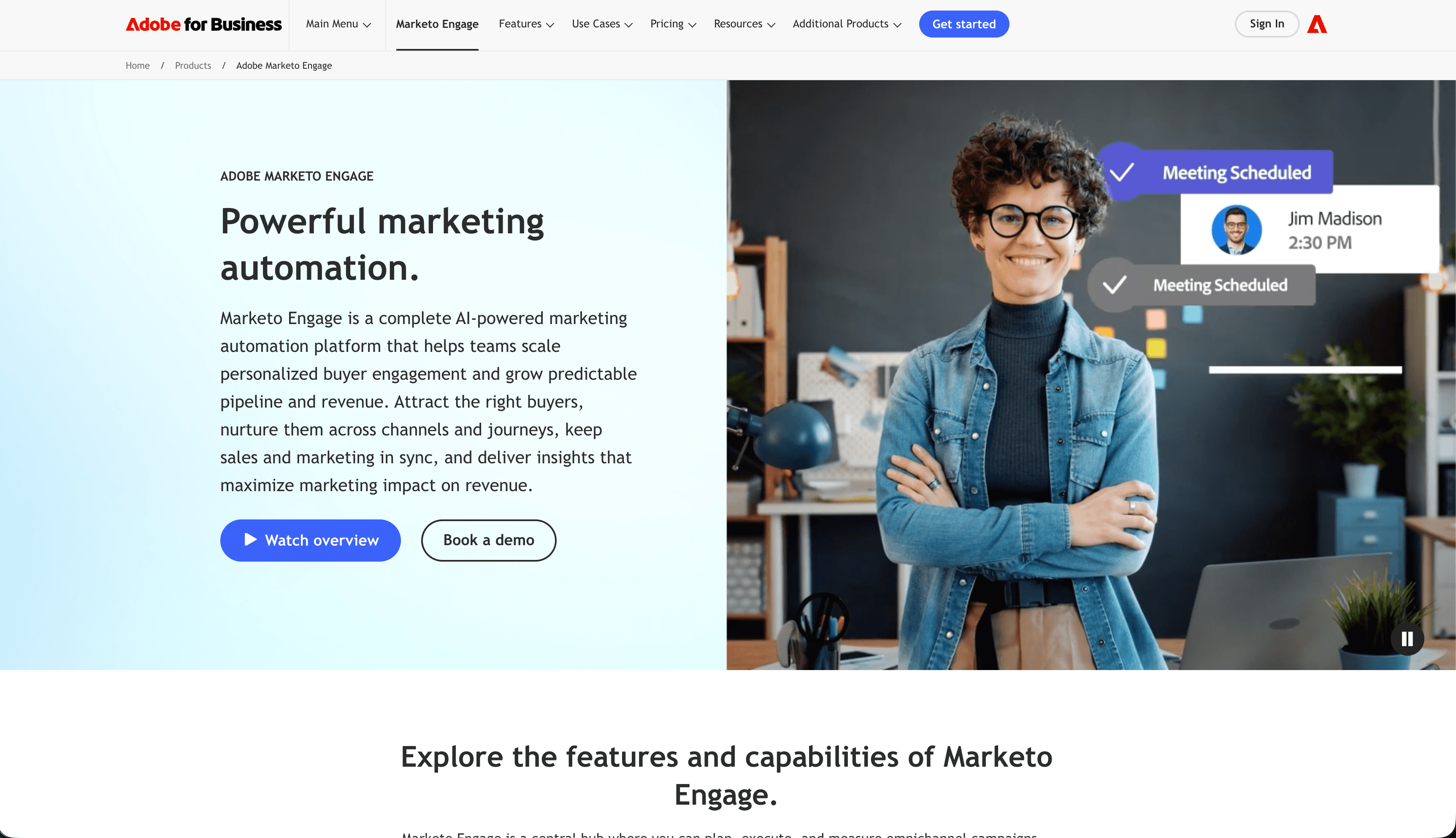
Start with the workflow
Dotdigital and Marketo can both look good on a comparison chart. The real question is which one matches the way your team works. If mid-market and enterprise ecommerce engagement is central to your retention strategy, Dotdigital deserves a closer look. If your team already prefers Marketo's editor, reporting, or ecosystem, that may matter more than a marginal feature difference.
Where Dotdigital wins
Dotdigital wins when you will actually use Shopify and Magento ecosystem, email and SMS journeys, segmentation. It is easiest to justify when those features are tied directly to revenue recovery or repeat purchase campaigns.
Where Marketo wins
Marketo wins when it is easier for the team to operate. A tool with slightly less specialized depth can still be the better choice if campaigns ship faster and reporting is easier to understand.
Use-case matchups
| Use case | Better fit | Why |
|---|---|---|
| Mid-market ecommerce engagement | Dotdigital | Dotdigital is stronger when Shopify/Magento ecosystem, email/SMS journeys, segmentation, and customer data activation are central. |
| B2B lead management and nurture | Marketo | Marketo is stronger when lead scoring, sales handoff, CRM alignment, and enterprise B2B nurture are central. |
| Magento-heavy lifecycle marketing | Dotdigital | Dotdigital has a clearer fit when Magento and enterprise ecommerce data are the operating center. |
| Enterprise demand generation | Marketo | Marketo is a better fit for complex B2B buying committees, lead stages, and campaign operations. |
| Email-only Shopify/WooCommerce flows | Sequenzy | Sequenzy is better when the store mainly needs practical email automation and transactional email. |
| Vendor diligence on plan limits | Tie | Both require checking current contract scope, integrations, implementation effort, SMS needs, and support expectations. |
Review themes to check
Do not stop at star ratings. Read reviews from teams with similar list sizes and ecommerce platforms. Look for comments about onboarding, deliverability, support, editor speed, segmentation, and billing surprises.
Pricing reality
Dotdigital is listed with custom pricing, and Marketo is listed as varying by plan, contacts, usage, and selected features. Compare quotes for the same contact database, ecommerce integrations, CRM sync, lead scoring, support, implementation services, SMS needs, and reporting scope.
Marketo can be worth the cost when B2B lead management and CRM alignment are central. Dotdigital is easier to justify when ecommerce retention and store data are the main job.
Review signals
The review themes in this page point to Dotdigital's Shopify/Magento ecosystem, practical ecommerce workflows, and reporting, with cautions around plan limits, setup effort, and support expectations.
For Marketo, the review themes point to campaign workflow, integrations, and day-to-day usability, with cautions around pricing and advanced-feature fit. Look for reviews from teams using Marketo for lead scoring and CRM-connected nurture, not just basic email.
Where Sequenzy fits
Sequenzy is the simpler route when ecommerce email is the job. It is built for Shopify, WooCommerce, Stripe lifecycle email, newsletters, and transactional messages without adding SMS, loyalty, or enterprise personalization you may not use.
Best Fit by Ecommerce Retention vs B2B Demand Generation
Best ecommerce engagement platform for Magento and store data
Dotdigital is the better fit when the team is optimizing ecommerce retention through Shopify/Magento data, email/SMS journeys, segmentation, and customer lifecycle campaigns. It should be judged on store-data activation, revenue flows, and marketer usability.
Best B2B marketing automation platform for lead management
Marketo is the better fit when lead scoring, CRM alignment, sales handoff, nurture streams, forms, and enterprise demand generation are the main requirements. It is less natural for store-first ecommerce retention but stronger for complex B2B buying committees.
Best practical email platform for store and transactional workflows
Sequenzy fits when teams need lifecycle campaigns and transactional email without B2B lead-scoring complexity or a full ecommerce SMS suite. It is relevant when the buying job is email-first customer messaging around store, product, or billing events.
Migration checklist
- Export contacts, consent records, suppression lists, segments, templates, campaigns, journeys, SMS data, ecommerce fields, lead fields, scoring rules, and revenue reports.
- If moving to Dotdigital, map product, order, customer, segment, SMS, and Magento/Shopify data into ecommerce lifecycle journeys before campaign rebuild.
- If moving to Marketo, map ecommerce contacts, fields, programs, lead scores, nurture streams, CRM syncs, forms, and campaign assets.
- Rebuild welcome, browse recovery, cart recovery, post-purchase, replenishment, lead nurture, MQL handoff, win-back, and promotional campaigns first.
- Reconnect Shopify, Magento, WooCommerce, CRM, analytics, SMS, forms, attribution, data feeds, and suppression integrations.
- Authenticate sending domains, validate SMS consent, and test one ecommerce flow plus one lead-nurture flow with a small segment.
- Preserve old campaign, revenue, lead, onboarding, support, and billing notes so the team can audit the reason for switching.
- Document feature loss if moving to a simpler workflow, especially lead scoring, CRM sync, SMS depth, segmentation, and product recommendations.
Decision checklist
| Choose | When this is true |
|---|---|
| Dotdigital | Ecommerce retention, Shopify/Magento data, email/SMS journeys, and customer data activation are central. |
| Marketo | B2B lead scoring, CRM alignment, nurture streams, sales handoff, and enterprise demand generation are central. |
| Sequenzy | The ecommerce need is mainly Shopify/WooCommerce lifecycle email and transactional messages. |
| Verify before buying | Compare quotes, CRM sync, lead scoring, store integrations, SMS, support, implementation services, and review themes. |