
Short answer: is SendGrid better than Brevo?
Neither is better outright. They win different purchases, and the question resolves cleanly once you name who owns the email program:
- SendGrid is better if you are sending transactional email from an application. Receipts, password resets, alerts, notifications. Its API, webhooks, event tracking, and delivery controls are more mature, and engineering can own it end to end.
- Brevo is better if marketing owns email. Campaigns, contacts, automations, SMS, WhatsApp, and CRM live in one product with one bill, and a non-technical team can run it without engineering.
- If you need both, note that SendGrid usually means two purchases (Email API and Marketing Campaigns) while Brevo is one. That difference often matters more to the total bill than the headline prices do.
The trap in this comparison is buying SendGrid for its transactional reputation and then discovering the marketing product is a separate subscription with a weaker builder, or buying Brevo for its breadth and then finding the transactional API is not what your engineers wanted. If both jobs are genuinely central and your product runs on subscriptions, a SaaS-specific platform such as Sequenzy is worth including in the evaluation, since it keeps lifecycle and transactional email in one product with billing context attached.
Overview
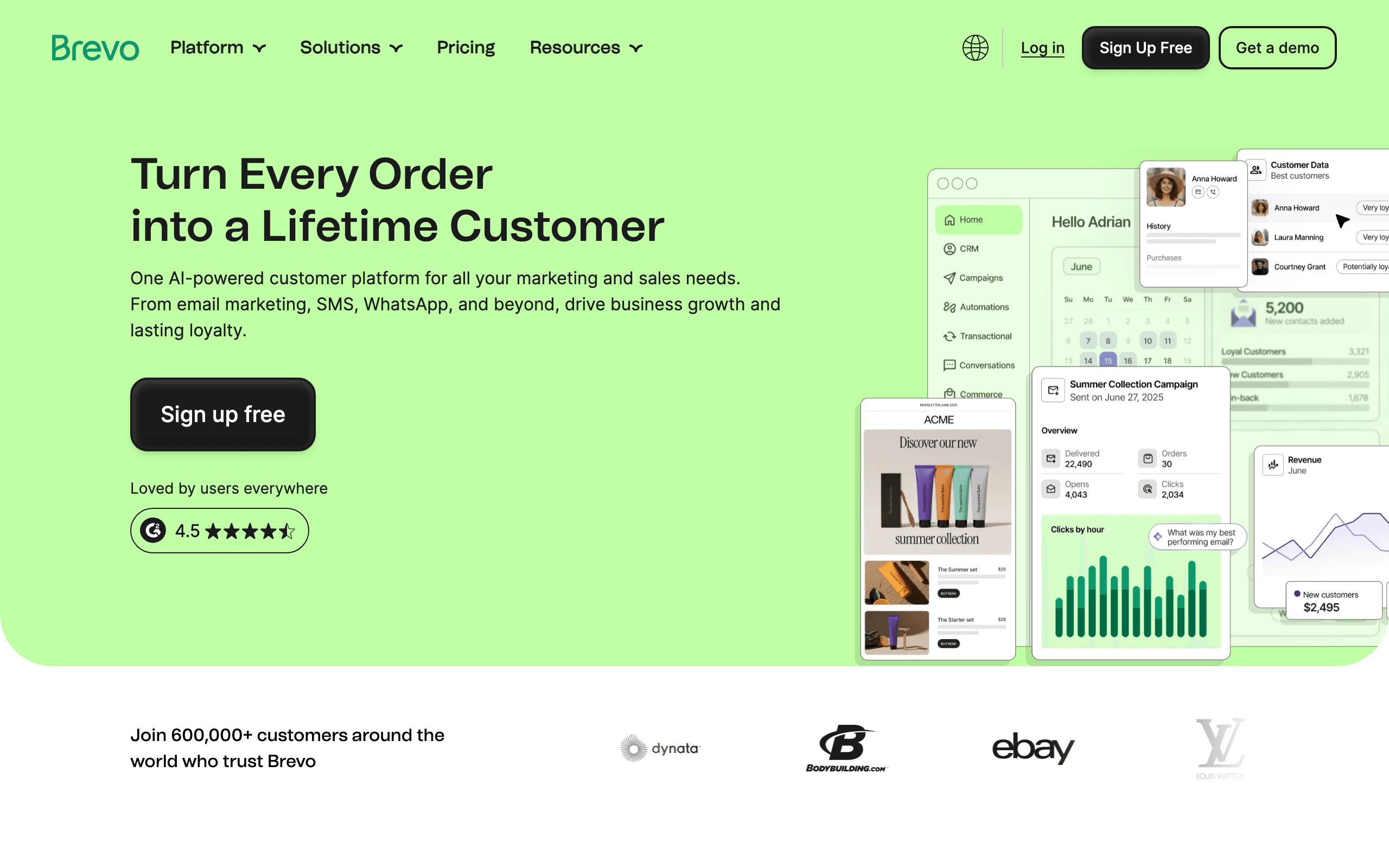
Brevo and SendGrid overlap on email sending, but their center of gravity is different. Brevo is a marketing-first platform for campaigns, contacts, automations, SMS, WhatsApp, and CRM-style workflows. SendGrid is stronger as developer email infrastructure, especially for transactional email, APIs, webhooks, analytics, and high-volume delivery operations.
Use Brevo when the email program is owned by marketing and needs a broad campaign tool. Use SendGrid when engineering needs a mature transactional email provider and can manage the implementation details.
Use-case matchups
| Need | Better fit | Why |
|---|---|---|
| Marketing campaigns with SMS, WhatsApp, CRM, and visual workflows | Brevo | Brevo is the broader marketing platform. |
| High-volume transactional email and developer APIs | SendGrid | SendGrid is stronger for API-driven delivery infrastructure. |
| SaaS lifecycle plus transactional email with Stripe context | Sequenzy | Sequenzy is the cleaner fit when billing events and lifecycle automation are central. |
| Marketing team needs one dashboard | Brevo | Brevo avoids splitting campaigns, contacts, and channels across multiple products. |
| Engineering needs webhooks, event tracking, and delivery controls | SendGrid | SendGrid has the deeper transactional and infrastructure workflow. |
Best Fit by Sending Infrastructure Need
Best email marketing tool for multichannel campaigns
Brevo is the better fit when marketing needs campaigns, contacts, automations, SMS, WhatsApp, CRM-style workflows, and transactional email in one dashboard. It reduces vendor split when the team values breadth and marketer ownership.
Best transactional email API for high-volume engineering teams
SendGrid is the better fit when engineering needs mature email infrastructure: APIs, SMTP, webhooks, event tracking, suppression controls, validation, dedicated IP options, and high-volume delivery operations. The marketing product may still require separate evaluation.
Best email marketing tool for SaaS lifecycle plus transactional email
Sequenzy is the better fit when a SaaS team wants transactional email and lifecycle campaigns connected to product and billing context. It is less infrastructure-first than SendGrid and less SMB-suite-oriented than Brevo.
Pricing reality
SendGrid can involve separate buying decisions for Email API and Marketing Campaigns, while Brevo bundles more marketing workflow into one product. That means the useful comparison is the complete operating cost: products required, email volume, contacts, IPs, validation, support, and the number of tools the team will still need around the platform.
| Cost area | Brevo question | SendGrid question |
|---|---|---|
| Billing driver | What changes as contacts, sends, channels, and automation needs grow? | What changes as API volume, marketing contacts, validation, IPs, and overages grow? |
| Product scope | Can one Brevo account cover campaigns and transactional needs? | Do you need both Email API and Marketing Campaigns? |
| Deliverability | Do you need dedicated IPs, deliverability help, or advanced sender controls? | Which sender controls, IP options, suppression tools, and support are required? |
| Team ownership | Can marketing run campaigns without engineering? | Can engineering own templates, webhooks, alerts, and event processing? |
Review signals
The structured review data on this page keeps sourced snippets from G2, Capterra, and Trustpilot. Brevo reviewers emphasize consolidated marketing value and the limits of its transactional API. SendGrid reviewers emphasize transactional reliability and webhooks, while also calling out that marketing features and separate billing can be awkward.
Migration checklist
| Step | What to check |
|---|---|
| Stream inventory | Split marketing campaigns, lifecycle emails, transactional emails, and internal notifications. |
| DNS and senders | Verify DKIM, SPF, DMARC, return-path, sender identities, IP setup, and bounce handling. |
| Suppressions | Move unsubscribes, bounces, spam complaints, and suppression lists carefully. |
| API migration | Update SMTP/API calls, webhook handlers, event mappings, and retry behavior. |
| Launch monitoring | Move one stream at a time and watch delivery, bounces, complaints, latency, and failed sends. |
Decision checklist
- Is marketing breadth or transactional infrastructure the primary purchase?
- Do you need both SendGrid Email API and Marketing Campaigns?
- Does your organization require EU data residency, and have you confirmed the current hosting region and DPA terms with the vendor rather than a comparison page?
- Can marketing operate the chosen platform without engineering bottlenecks?
- What sender controls, validation, dedicated IP, webhook, and suppression features are mandatory?
- Would a SaaS-specific platform reduce complexity by combining lifecycle and transactional email?
How to make the Brevo vs Sendgrid decision
SendGrid excels at transactional email with powerful APIs and developer tools. Brevo offers all-in-one marketing with email, SMS, and CRM.
Look hardest at these differences: Core Focus; Marketing Capabilities; Developer Experience. Those are the areas most likely to affect daily work after the demo is over.
| Decision area | Pick Brevo when... | Pick Sendgrid when... |
|---|---|---|
| Primary workflow | Its core strength matches the campaign you need next. | Its core strength matches the campaign you need next. |
| Data model | Your customer data already fits its segments and triggers. | Your customer data already fits its segments and triggers. |
| Team ownership | Someone can own setup, testing, and reporting inside the tool. | Someone can own setup, testing, and reporting inside the tool. |
| Budget | The price is justified by workflows you will use now. | The price is justified by workflows you will use now. |
My read: SendGrid is the stronger choice for transactional email with developer-grade APIs and proven delivery infrastructure at scale. Brevo wins for marketing teams that need email, SMS, and CRM in one affordable package. SaaS companies needing both marketing automation and transactional email with subscription awareness should consider Sequenzy for native Stripe integration and unified billing.