Compare identity-led recovery against ecommerce email automation
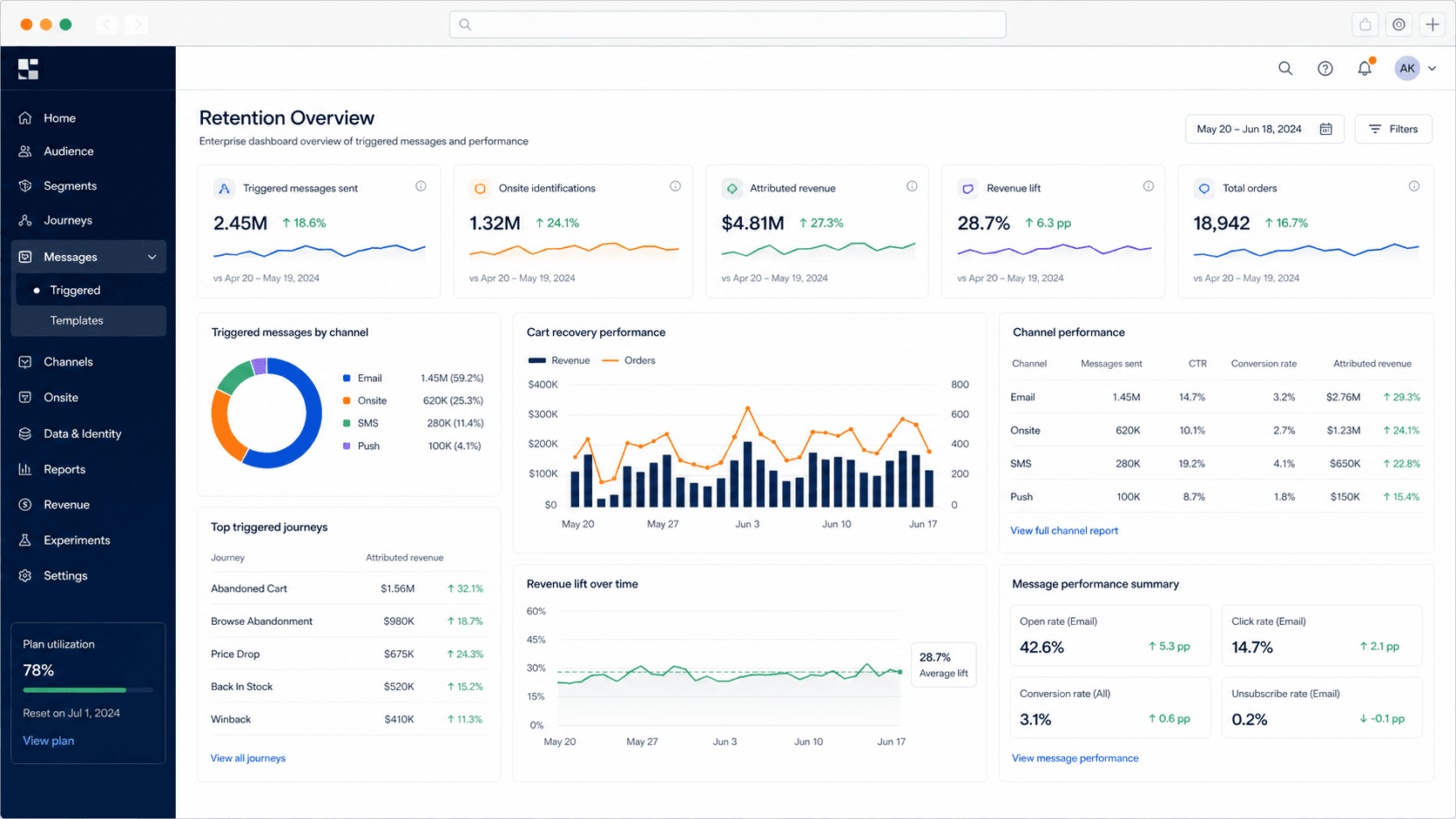
Wunderkind is usually evaluated as a performance layer for ecommerce sites: identify more visitors, trigger email or text messages from onsite behavior, and recover revenue that would otherwise be anonymous. Drip is closer to a marketer-operated ecommerce email platform for broadcasts, segments, automations, and store-connected lifecycle campaigns.
The core question is whether the store needs more reachable shoppers from site traffic or a clearer email automation workspace.
Use-case table
| Use case | Better starting point | What to verify |
|---|---|---|
| Anonymous visitor identification and triggered recovery | Wunderkind | Ask how identity matching, consent, triggers, incrementality, and revenue attribution are measured. |
| Marketer-built email flows and ecommerce segments | Drip | Check store integration depth, segment controls, automation builder, and campaign reporting. |
| Brand wants managed performance tied to site behavior | Wunderkind | The value is strongest when the vendor helps capture and activate more onsite intent. |
| Team wants direct control over newsletters and lifecycle emails | Drip | Drip is easier to justify when marketers want to own the email program inside one tool. |
| Simple storefront and subscription email | Sequenzy | Sequenzy fits when the need is email automation and transactionals, not identity-led recovery. |
Where Wunderkind is stronger
Wunderkind is stronger when traffic volume is high and the business believes anonymous or unidentified visitors are a major lost-revenue source. Its case is strongest around identification, triggered messages, and performance programs tied to onsite intent.
The tradeoff is that Wunderkind is not just a standard email workspace. Teams should understand what they control directly, what the vendor operates, and how incrementality is proven.
Where Drip is stronger
Drip is stronger when the team wants to build and manage its own ecommerce email program. Broadcasts, automations, customer segments, and store-triggered flows are more directly in the marketer's hands.
Before choosing Drip instead of Wunderkind, confirm whether replacing an identity layer will reduce reachable traffic or triggered recovery revenue.
Migration checklist
- Separate identity-triggered recovery messages from normal lifecycle automations.
- Export subscribers, suppressions, consent fields, custom properties, templates, and flow performance.
- Confirm whether visitor identification data can or should move to the new platform.
- Rebuild owned email flows first, then evaluate whether identity-led triggers still need a specialist.
- Compare recovered revenue using holdouts or another incrementality method, not only platform-attributed revenue.
Buying questions to ask
- Is the problem anonymous traffic recovery or email program control?
- What lift is proven by holdout, incrementality, or controlled testing?
- Who controls trigger rules, creative, cadence, and suppression logic?
- Can Drip reproduce the highest-value site-triggered messages?
- How will consent and identity data be handled across systems?
Where Sequenzy fits
Sequenzy is the simpler email-first option when the team needs Shopify/WooCommerce automations, newsletters, transactional email, and Stripe lifecycle messages without a dedicated identity-performance layer.
Pricing reality
Wunderkind is listed with custom monthly pricing based on identity, channels, traffic, and contract scope. Drip is listed as varying by plan, contacts, usage, and selected features. Sequenzy is listed at $49/month for 60,000 emails, unlimited subscribers, Shopify, WooCommerce, and Stripe.
Wunderkind is quote-based and tied to identity-led recovery. Drip should be checked against list size, send volume, and ecommerce automation needs before comparing final cost.
Review signals
The cited Wunderkind review themes mention onsite identification, reporting, ecommerce retention fit, setup effort, and pricing clarity. The cited Drip review themes mention campaign work, integrations, day-to-day usability, and checking pricing and advanced features against real usage.
Use-case matchups
| Situation | Best first look | Why |
|---|---|---|
| Enterprise ecommerce brand wants identity capture and triggered revenue programs | Wunderkind | Wunderkind is the baseline here when anonymous visitor identification, onsite capture, triggered email, and managed ecommerce revenue programs are central. |
| Team wants ecommerce email automation and segmentation | Drip | Drip deserves the first demo when that specialist capability matters more than Wunderkind's identity-led ecommerce model. |
| Store or SaaS team wants simpler lifecycle and transactional email | Sequenzy | Sequenzy is more relevant when email automation and transactional messages matter more than enterprise identity resolution. |
| Team needs a managed service motion | Wunderkind | Wunderkind should be evaluated when services, strategy, and performance programs are part of the buying case. |
| Team wants software-first control | Drip | Drip is usually the better first look if the team wants to own configuration and day-to-day execution internally. |
Best Fit by Ecommerce Flow Ownership
Best identity-led revenue partner for enterprise ecommerce recovery
Wunderkind fits brands that want to identify more visitors and run managed triggered programs around browse, cart, and onsite conversion behavior.
Best ecommerce email platform for segmentation and revenue flows
Drip is the better fit when the team wants software-first control over ecommerce automations, segments, product behavior, and revenue attribution.
Best email platform for simpler store and SaaS lifecycle
Sequenzy fits when the team needs lifecycle email and transactionals without enterprise identity resolution or a larger ecommerce automation platform.
Decision checklist
- Is the team buying identity-led managed ecommerce growth, or a configurable marketing platform?
- Does Drip's strength in ecommerce email automation and segmentation matter more than Wunderkind's onsite identity and triggered revenue model?
- Which vendor can prove incrementality and attribution with the team's actual ecommerce data?
- Are custom pricing, services scope, and implementation responsibilities clear before signing?
- Would a simpler lifecycle and transactional email product cover the current need without enterprise identity tooling?