
Different jobs, occasionally the same person
Substack and Flodesk come up together when someone is starting a newsletter and does not yet know what kind it will be. A food writer might want to publish essays and charge readers. A food photographer might want a monthly email that looks gorgeous and sells a presets pack. They sound similar, but one is a publication and the other is marketing, and the tools reflect that.
What you are really choosing
| If you mostly want to... | Choose | Because |
|---|---|---|
| Publish essays readers pay for | Substack | Paywall, archive, comments and paid tiers are built in |
| Be discovered by new readers | Substack | Recommendations, Notes and the app bring readers to you |
| Make every email look on brand | Flodesk | Templates are designed for visual brands |
| Sell workshops, presets or downloads | Flodesk | Checkout, sales pages and abandoned cart flows on Everything |
| Nurture new subscribers automatically | Flodesk | Workflows beyond Substack's single welcome email |
| Send lifecycle email for a software product | Sequenzy | Product and billing events drive the email |
Pricing after Flodesk's change
For years Flodesk's pitch was one flat price for unlimited subscribers. That ended for new customers in December 2025. Plans are now Lite, Pro and Everything, each priced by list size. Lite is capped at 25,000 subscribers and includes a single workflow. Pro removes Flodesk branding, adds unlimited workflows and one checkout. Everything adds unlimited checkouts, sales pages, subscriptions, payment plans and abandoned cart automations. Third-party trackers put Pro at about $126 a month at 10,000 subscribers on annual billing. If you signed up on the old flat rate, you keep it as long as you stay subscribed.
Substack's model has not changed: free to publish, then 10% of paid subscription revenue plus Stripe processing fees, and a one-time $50 if you want a custom domain.
The practical difference: Flodesk costs money from the first month and scales with your list, regardless of revenue. Substack costs nothing for a free newsletter and scales with revenue, regardless of list size. A free newsletter with 10,000 readers costs nothing on Substack and over $100 a month on Flodesk. A paid publication earning $5,000 a month pays Substack $500 plus Stripe fees.
Two ways to take payment
This is where the pricing models really diverge. Substack takes 10% of every paid subscription, plus Stripe's processing fees, and handles the paywall for you. Flodesk charges nothing per sale: checkout on Pro and Everything uses Stripe, and Flodesk says it adds no transaction fee on top.
| Monthly sales | Substack fee (10%) | Flodesk fee | Stripe fees |
|---|---|---|---|
| $500 | $50 | $0, plus your plan | Both |
| $2,000 | $200 | $0, plus your plan | Both |
| $8,000 | $800 | $0, plus your plan | Both |
The catch is that Flodesk's plan costs money whether you sell or not, and what you sell there is a product or a recurring payment, not access to a paywalled archive of posts. A writer earning $2,000 a month from subscriptions pays Substack $200 and gets the paywall, archive and app. A photographer selling $2,000 of presets pays Flodesk only the plan fee and gets checkout, sales pages and abandoned cart emails.
Sender identity and inbox rules
Substack sends your posts from its own infrastructure, so there is no DNS work and deliverability is Substack's job. The trade-off is that your newsletter arrives from a Substack address and shares Substack's sending reputation.
Flodesk sends from your own domain once you authenticate it with DKIM, SPF and DMARC, which Gmail and Yahoo now expect from bulk senders. Flodesk can add those records automatically through Entri. Your emails then carry your brand's domain, and their reputation is tied to how your own list behaves.
Design and reading experience
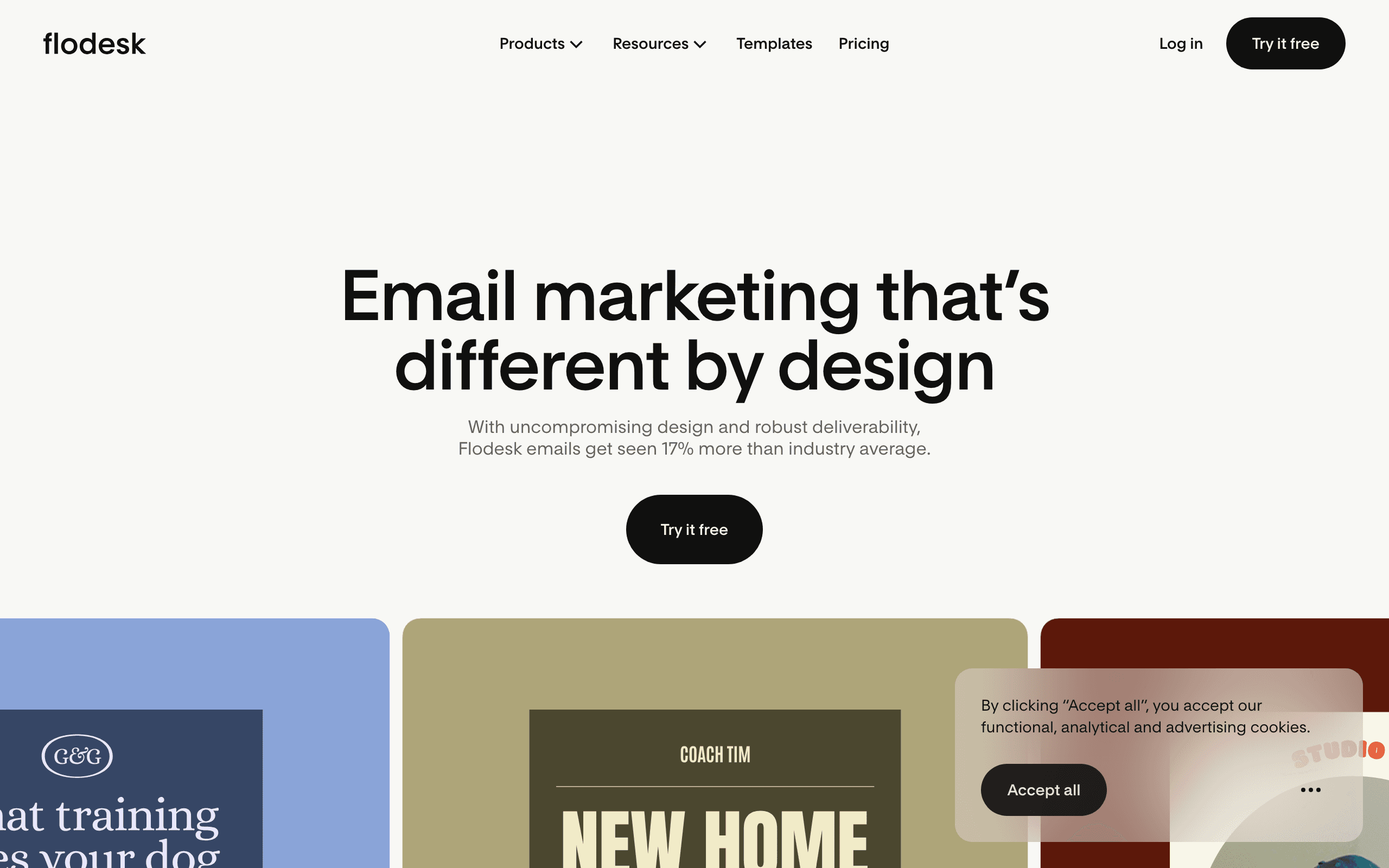
Flodesk emails look designed. You pick a template, drop in images and brand fonts, and the result looks like a lifestyle magazine or a product lookbook. That matters for businesses where the email is part of the brand.
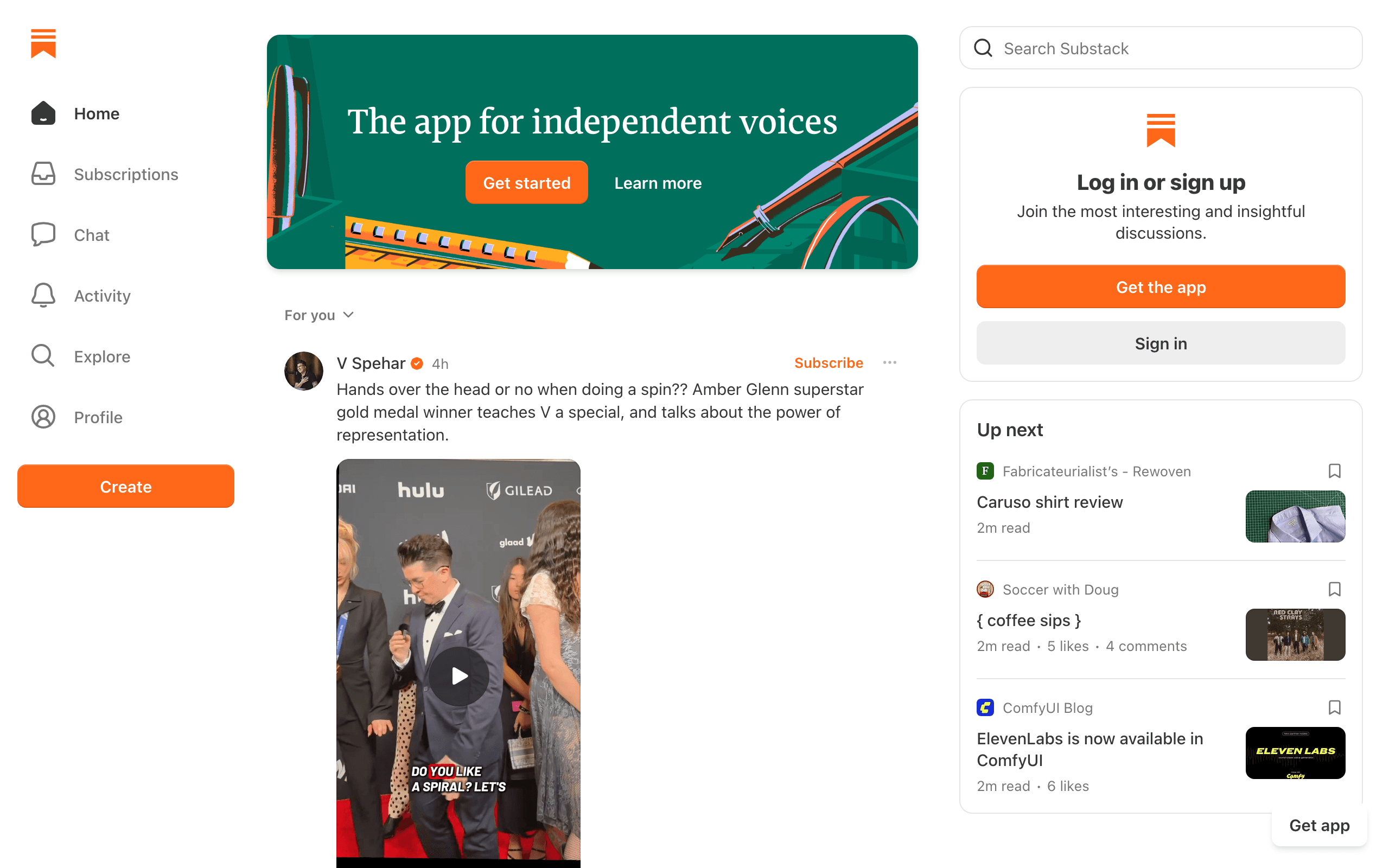
Substack posts look like articles. The focus is text, and every publication shares a familiar layout on the web, in email and in the app. Readers who follow several Substack writers get a consistent experience, and writers spend no time on design.
One practical note on image-heavy design: some email clients block images until the reader allows them, and very large emails can be clipped. Flodesk's templates look best when you keep important text as live text rather than baked into images. Substack sidesteps this by being mostly text.
Automations and selling
On Substack, a new subscriber gets a welcome email and then your posts. Readers can choose sections, and you can send to free or paid subscribers.
On Flodesk, a new subscriber can enter a workflow: a welcome series, a freebie delivery, a delayed offer, and a follow-up if they abandon checkout. For a business selling a $49 workshop, that sequence often does more work than any single newsletter.
Moving your list
Substack to Flodesk. Export your subscribers as a CSV from Substack settings. Import them into a Flodesk segment such as "Substack readers". Your post archive stays on Substack or moves to your own site. Paid subscriptions do not transfer to Flodesk automatically; decide whether to rebuild them on the Everything plan or end them.
Flodesk to Substack. Export subscribers from Flodesk and import the CSV into Substack. Workflows, templates and checkout pages have no Substack equivalent, so anything you sold through Flodesk needs another home.
Moving checklist
| Item | Substack to Flodesk | Flodesk to Substack |
|---|---|---|
| Subscribers | Export CSV, import into a Flodesk segment | Export CSV, import as free subscribers |
| Paid readers | Rebuild as subscriptions on Everything, or end with notice | Recreate paid tiers with a connected Stripe account |
| Content | Archive stays on Substack or moves to your site | Posts can be published fresh on Substack |
| Sender | Authenticate your domain in Flodesk | No DNS needed; mail sends from Substack |
| Automations | Build welcome and sales workflows | Only a welcome email carries over conceptually |
| Selling | Set up checkout and sales pages | Products need another store |
Running it with a team
Substack lets a publication add contributors and admins, so several writers can publish under one name while the owner controls settings and payouts. The editor is the same for everyone, which keeps onboarding simple.
Flodesk sizes seats by plan: Lite includes one seat, Pro two and Everything three. For a solo coach or photographer that is enough; for a small brand team where a designer, a marketer and the owner all touch email, check whether the seat count fits before choosing a plan. Because Flodesk emails are more designed, teams also tend to spend more time on template upkeep, such as refreshing brand colors, fonts and layouts each season.
Where Sequenzy fits
For a writer or a brand, Sequenzy is probably not the right tool. It has no reader network, no post archive and no checkout pages.
It is the right tool when your subscribers are users of a software product. Sequenzy sends onboarding, trial, billing and product update email triggered by what users do and by Stripe, Paddle or Polar events, alongside campaigns and transactional email. It prices by emails sent with unlimited contacts, free up to 2,500 emails/mo, then $19/mo for 15k emails, and its migration tool imports Flodesk subscribers, segments and custom fields.
Deciding in four questions
Will readers pay for your writing itself? Substack.
Will you sell products, workshops or services? Flodesk.
Is your newsletter free and large? Substack costs nothing; Flodesk bills by list size.
Does email need to look like your brand? Flodesk.
Substack if you are a writer and the posts are what people pay for.
Flodesk if you run a visual brand or service business and email is how you sell.
Sequenzy if your list is made of product users and email should follow their behavior.








