
Overview
SmartrMail and Remarkety both use AI to personalize e-commerce emails, but at different levels of sophistication. See our SmartrMail comparison and Remarkety comparison for individual breakdowns.
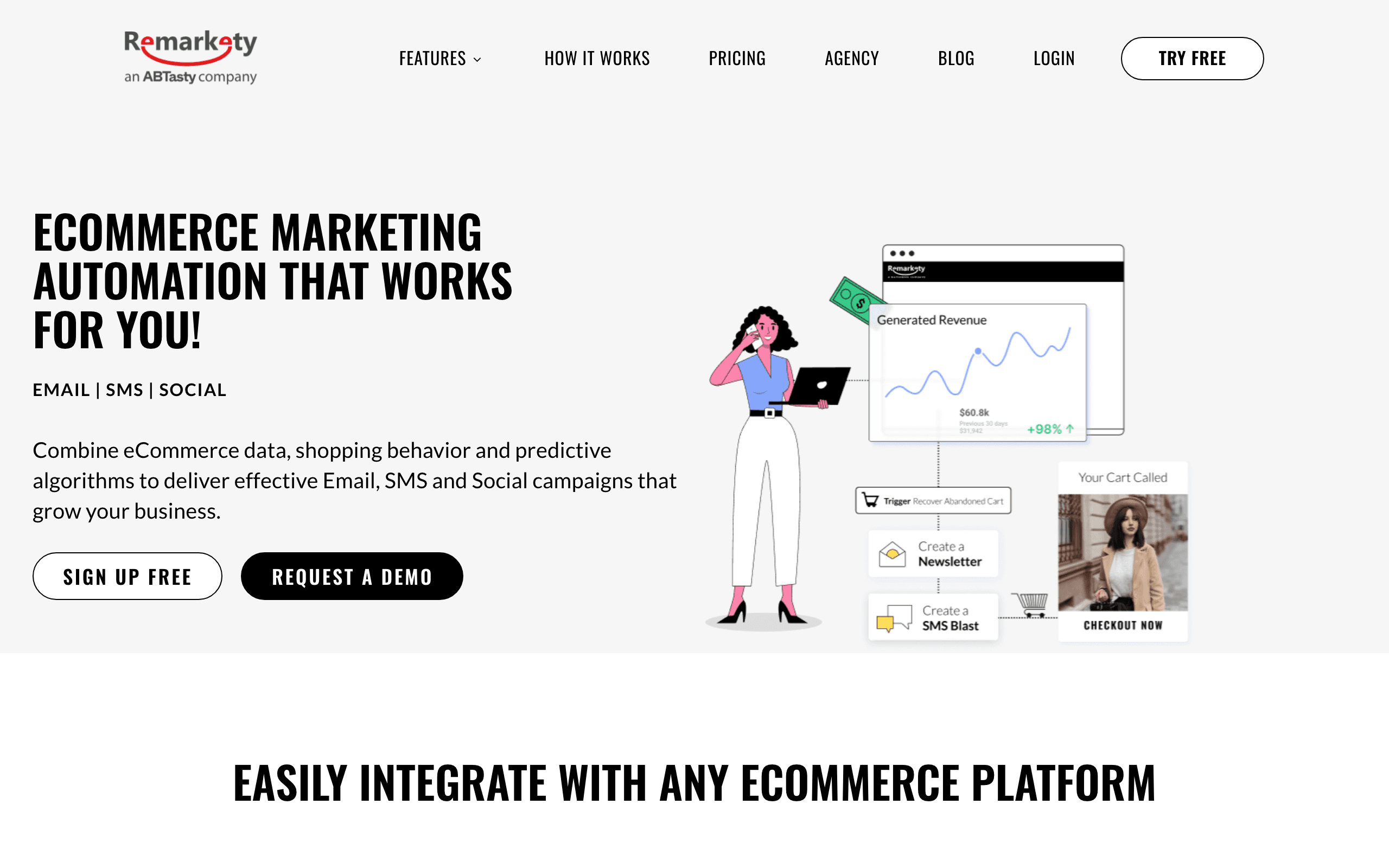
SmartrMail keeps things simple with product recommendations based on browsing and purchase behavior, plus auto-generated newsletters. Remarkety goes deeper with RFM analysis, predictive customer lifetime value, and multi-channel marketing.
Pricing Comparison
SmartrMail is the cheaper option:
- SmartrMail Essential: $135/month at 10,000 subscribers
- SmartrMail Pro: $199/month at 10,000 subscribers
- Remarkety Starter: ~$200/month at 10,000 subscribers
- Sequenzy: $49/month for 60,000 emails with unlimited subscribers
SmartrMail Essential saves $65/month over Remarkety with a simpler feature set. See our pricing page.
Where SmartrMail Wins
Simpler setup and use
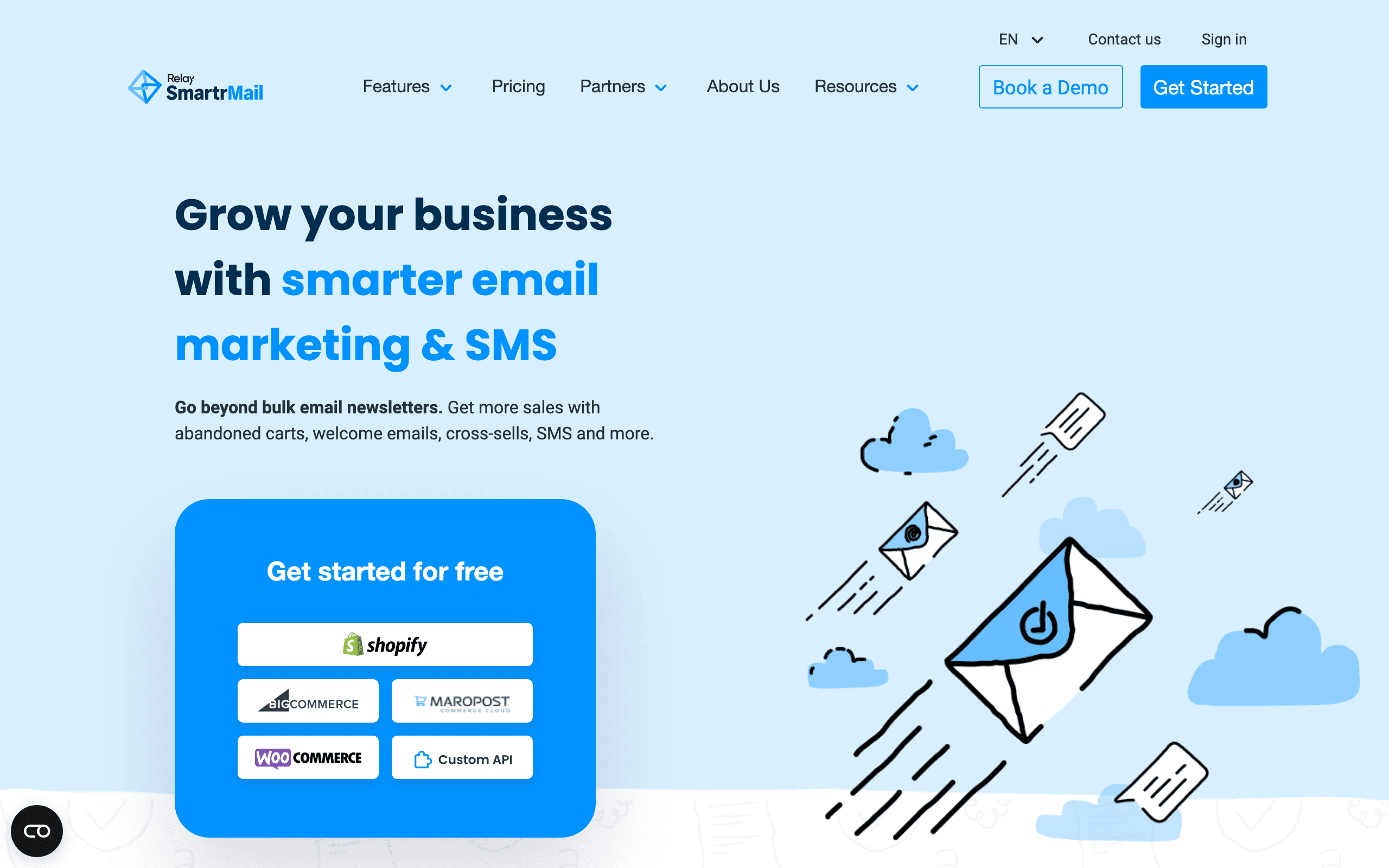
SmartrMail connects to Shopify in under 2 minutes, auto-generates email designs from your store branding, and creates smart segments automatically. Remarkety requires more configuration to take full advantage of its data analysis capabilities.
Auto-generated newsletters
SmartrMail automatically creates product newsletters from your catalog with images, descriptions, and prices. This is a time-saver for stores that send regular product roundup emails. Remarkety does not auto-generate newsletter content.
Lower pricing
SmartrMail Essential at $135/month is $65 cheaper than Remarkety at 10,000 subscribers. For stores that do not need RFM analysis or SMS, SmartrMail offers good product personalization at a lower price.
Free plan
SmartrMail has a free plan for 200 subscribers. Remarkety only offers a free trial. For very small stores getting started, SmartrMail lets you begin at no cost.
Where Remarkety Wins
RFM analysis
Remarkety segments customers using Recency, Frequency, and Monetary analysis. This creates more accurate customer groups like "champions," "loyal," "at-risk," and "hibernating." SmartrMail's smart segments are simpler and less data-driven.
Predictive analytics
Remarkety predicts customer lifetime value and purchase probability. This data powers more targeted automation sequences and helps prioritize marketing spend. SmartrMail does not offer predictive analytics.
SMS and social retargeting
Remarkety includes SMS marketing and Facebook audience sync for social retargeting. SmartrMail SMS is a basic add-on without the same integration depth.
Magento support
Remarkety integrates with Magento in addition to Shopify, BigCommerce, and WooCommerce. SmartrMail does not support Magento. For Magento stores, Remarkety is the choice between these two.
Why Sequenzy Is the Budget Alternative
At $49/month, Sequenzy costs 78% less than SmartrMail and 86% less than Remarkety. It uses AI differently, generating entire email sequences from a goal description rather than recommending products. Add in Shopify integration, Stripe integration for SaaS, and transactional email, and Sequenzy serves businesses that neither e-commerce specialist covers.
Data-Driven Personalization: Two Different Philosophies
SmartrMail takes a lightweight approach to personalization. It watches what subscribers browse, what they buy, and what they click, then uses those signals to surface relevant products in emails. The result is a recommendation engine that works well for most small to mid-size stores without requiring any manual configuration.
Remarkety goes deeper with its RFM framework. By scoring every customer on how recently they purchased, how often they buy, and how much they spend, Remarkety creates actionable segments like "champions," "loyal customers," and "at risk." This data powers not just product recommendations but also strategic decisions about which customers deserve VIP treatment and which need win-back campaigns.
The trade-off is clear: SmartrMail gets you personalized emails faster with less effort, while Remarkety gives you more granular control over customer segmentation at the cost of a steeper learning curve.
Migration Considerations
Switching between SmartrMail and Remarkety is straightforward since both pull customer data from your e-commerce platform. Your order history, product catalog, and customer profiles live in Shopify, BigCommerce, or WooCommerce, not in the email tool itself. The main migration work involves rebuilding automation workflows and email templates.
If you are moving from SmartrMail to Remarkety, expect to spend time configuring RFM segments and learning the analytics dashboard. Moving the other direction, from Remarkety to SmartrMail, means giving up RFM analysis but gaining simplicity and auto-generated newsletters. Either way, your subscriber list and purchase data carry over through the e-commerce platform integration.
Deliverability and Sending Infrastructure
Both platforms maintain reasonable deliverability rates for e-commerce senders. SmartrMail uses shared IP pools for most plans, which works fine for stores sending under 100,000 emails per month. Remarkety offers dedicated IP options on higher-tier plans, which gives larger senders more control over their sender reputation.
Neither platform is known for deliverability issues specifically, but both benefit from proper domain authentication. Make sure SPF, DKIM, and DMARC records are configured regardless of which platform you choose. For a deeper understanding of what affects inbox placement, see our email deliverability guide.
When Neither Platform Fits
Both SmartrMail and Remarkety are built for e-commerce product recommendation emails. If your business model does not revolve around physical or digital product catalogs, neither tool will deliver its full value. SaaS companies, service businesses, and content creators would find the product-focused AI features largely irrelevant.
For SaaS businesses specifically, a platform with native Stripe integration and subscription lifecycle awareness makes more sense than adapting an e-commerce tool. Sequenzy handles trial-to-paid conversions, churn prevention sequences, and billing event triggers that product recommendation engines were never designed for.
E-commerce Data Integration
How well an ecommerce email tool reads your store data shapes what it can automate. SmartrMail connects to Shopify in under two minutes and builds smart segments automatically from that catalog and order data, while Remarkety layers in RFM analysis across Shopify, WooCommerce, BigCommerce and Magento to model recency, frequency and monetary value. Remarkety's extra Magento support and deeper analysis mean more setup, but SmartrMail's simpler sync gets newsletters running sooner.
Revenue Attribution and ROI
Justifying either tool's cost usually comes down to revenue it can be credited with recovering. Remarkety's RFM-based segmentation and predicted customer lifetime value give you a more analytical read on which customers a campaign influenced, though that depth adds a learning curve. SmartrMail keeps measurement simpler, tied to browsing and purchase-based recommendations rather than predictive modeling. If you need attribution across SMS and email together, Remarkety's included SMS and Facebook audience sync give it an edge.
Cart Recovery and Product Flows
Cart recovery and other lifecycle flows are where both tools earn their keep. SmartrMail auto-generates product newsletters straight from your store catalog, saving setup time on recurring campaigns, while Remarkety leaves newsletter content to you but adds AI-driven segments and predictive recommendations for follow-up sequences. Neither platform includes transactional email, so plan on a separate tool for order confirmations and receipts alongside whichever one you pick for marketing automation.
Use-case matchups
| Situation | Best first look | Why |
|---|---|---|
| Store wants ecommerce email with product recommendations | SmartrMail | SmartrMail is the baseline here for stores that want product-driven email without a heavier platform. |
| Store wants another ecommerce retention specialist | Remarkety | Remarkety is a closer ecommerce automation comparison when retention campaigns are the main job. |
| Store or SaaS team wants lifecycle and transactional email | Sequenzy | Sequenzy is stronger when email automation and transactional messages need one workflow without SMS or enterprise scope. |
| Shopify team wants recommendation-led campaigns | SmartrMail | SmartrMail should be tested first when product blocks and store data are the core use case. |
| Team needs the specialist capability | Remarkety | Remarkety deserves the first demo when the main requirement is ecommerce retention automation and product-driven campaigns. |
| Team wants simpler email automation and transactional paths | Sequenzy | Sequenzy is a focused alternative when the team does not need product AI, SMS, or a large suite. |
Best Fit by Retention Specialization
Best ecommerce email tool for recommendation-led Shopify campaigns
SmartrMail fits stores that want product recommendations and product-block campaigns without a heavier ecommerce retention platform.
Best ecommerce retention tool for product-driven campaigns
Remarkety is the better fit when the team wants another ecommerce retention specialist with deeper campaign automation around product and order behavior.
Best email platform for simpler lifecycle and transactionals
Sequenzy fits when lifecycle automation and transactional messages matter more than product AI or ecommerce-retention specialization.
Pricing reality
The pricing signals on this page list SmartrMail at $135/month, Remarkety at $200/month, and Sequenzy at $49/month. Use those numbers as anchors, then check the plan details against actual subscriber count and store volume.
SmartrMail's value depends on whether product recommendations, store data, and ecommerce email automation are important enough to pay for. Remarkety's real cost depends on whether the team needs ecommerce retention automation and product-driven campaigns.
Review signals
This page has existing review data from Capterra, G2. Keep those sources visible because ecommerce app reviews often reveal support, Shopify sync quality, deliverability, billing, and day-to-day workflow issues.
For SmartrMail, validate review themes around product recommendations, Shopify or store integration, editor workflow, support, and deliverability. For Remarkety, focus review research on whether users praise the reason you would choose it: ecommerce retention automation and product-driven campaigns.
Migration checklist
| Workstream | Moving toward SmartrMail | Moving toward Remarkety | Simplifying to Sequenzy |
|---|---|---|---|
| Store data | Sync products, customers, orders, carts, recommendations, tags, and consent status. | Map customers, products, orders, coupons, segments, flows, templates, and unsubscribes. | Connect store, Stripe, subscriber, suppression, and transactional event data. |
| Product recommendations | Validate recommendation blocks, fallback products, catalog freshness, and merchandising rules. | Confirm whether Remarkety handles product recommendations or needs another tool. | Keep product recommendations out of scope unless handled elsewhere. |
| Automations | Rebuild welcome, product recommendation, cart, post-purchase, winback, and newsletter flows. | Rebuild the workflows that prove Remarkety's advantage in ecommerce retention automation and product-driven campaigns. | Rebuild lifecycle and transactional email flows without SMS paths. |
| Templates and forms | Move campaign templates, product blocks, forms, popups, and brand assets. | Move templates, forms, brand assets, and channel-specific content. | Move email templates and lifecycle message content. |
| Reporting | Validate product revenue, campaign revenue, automation reports, exports, and list growth. | Validate reporting for ecommerce retention automation and product-driven campaigns before committing. | Validate campaign, automation, transactional, and lifecycle reporting. |
Decision checklist
- Do product picks drive your email strategy, or are they a secondary touch? Remarkety's RFM-based recommendations matter most when they do.
- Does Remarkety's strength in ecommerce retention automation and product-driven campaigns matter more than SmartrMail's ecommerce email focus?
- Which tool needs less cleanup after sync: SmartrMail's two-minute Shopify setup or Remarkety's heavier configuration?
- Do the 10,000-subscriber quotes of $135 for SmartrMail and about $200 for Remarkety hold at your size?
- Would a platform built for lifecycle and transactional email, like Sequenzy, fit better than a product-AI tool if you do not need SMS?
- Remarkety should be validated for current integrations, support, and reporting.








