
Overview
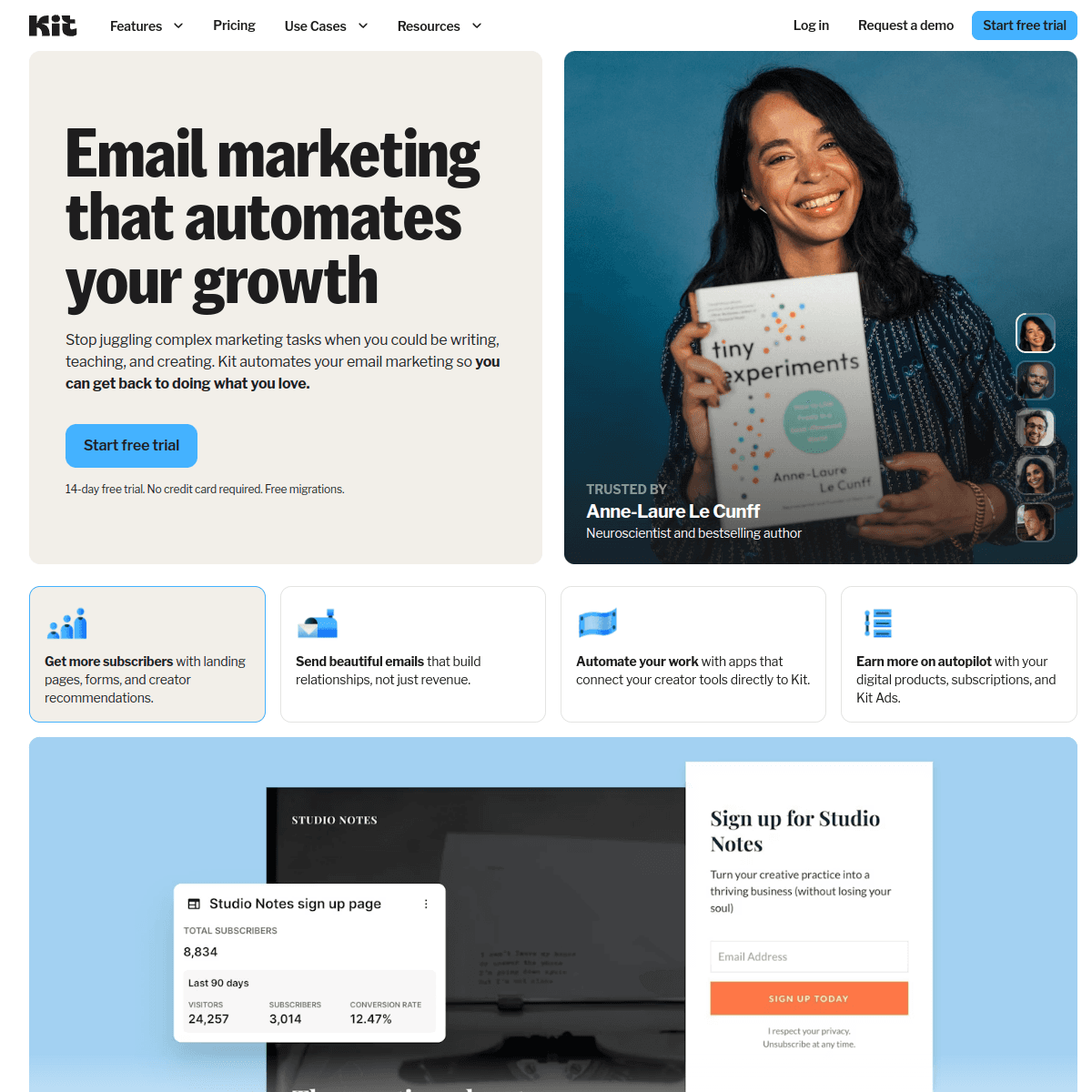
This comparison comes up when Shopify store owners see ConvertKit recommended for email marketing. But ConvertKit (now rebranded as Kit) is designed for content creators, not e-commerce stores. It has paid newsletters, digital product sales, and a creator network. It does not have Shopify product integration, abandoned cart flows, or e-commerce automation.
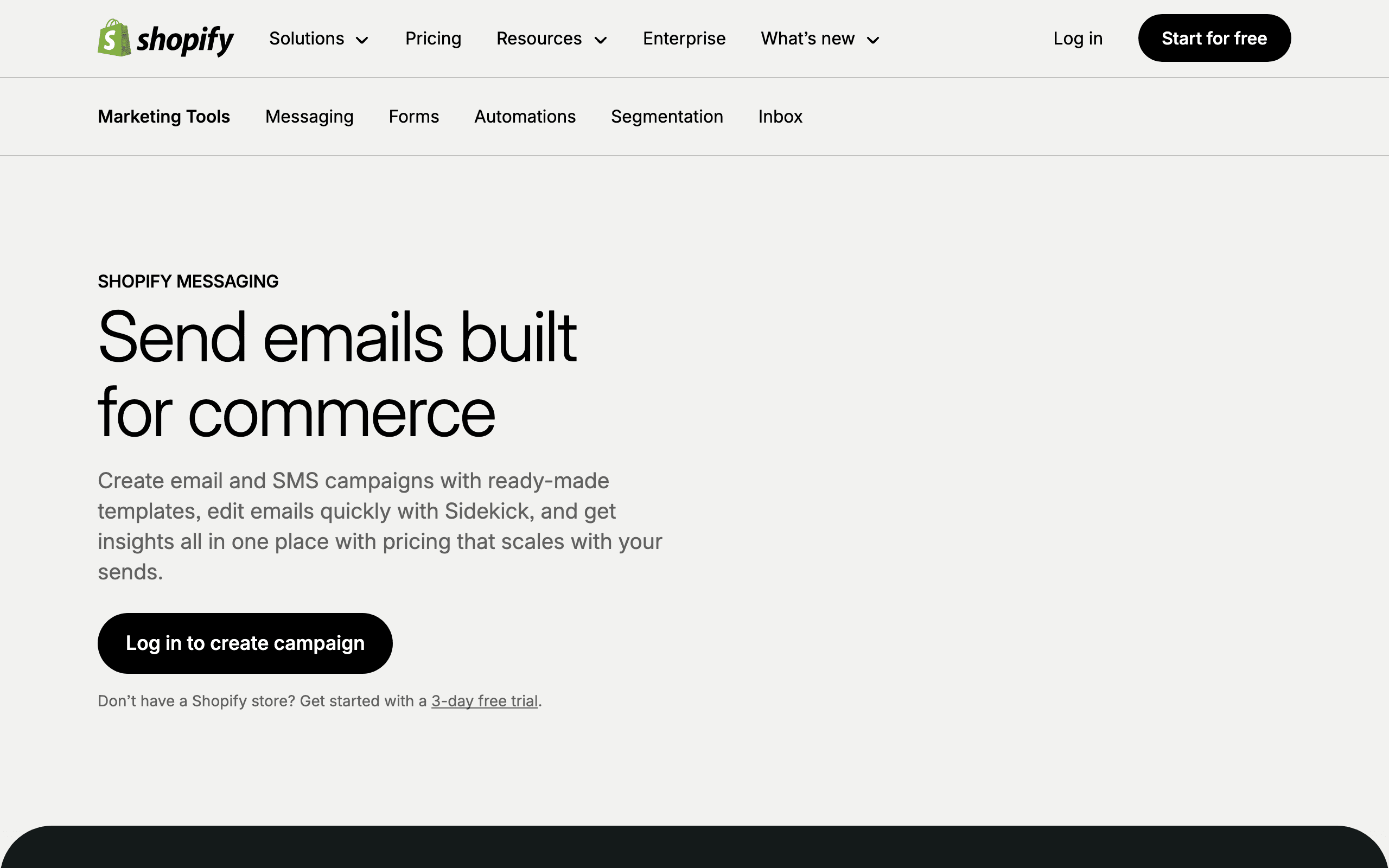
Shopify Email is basic but at least it is built for stores. For most Shopify stores, the real comparison should be between Shopify Email and e-commerce-focused platforms like Sequenzy, Omnisend, or Klaviyo.
The Bottom Line
If you run a Shopify store, ConvertKit is not the right tool. Its features are designed for creators, not store owners. Shopify Email is free and handles basics. When you need more, upgrade to a platform that understands e-commerce.
Why a Creator Platform Cannot Replace a Shopify Tool
Kit (ConvertKit) was built for newsletters, paid subscriptions, and digital product sales to creator audiences. Shopify Email was built for product-based e-commerce stores. Kit has no abandoned cart flows, no product recommendation blocks, no Shopify order data integration. Shopify Email has no paid newsletter features, no creator network for cross-promotion, no digital product commerce tools. They solve entirely different problems for entirely different businesses.
The comparison typically arises when a Shopify store owner who also creates content - a chef selling cookware and publishing recipes, or a designer selling prints and running a newsletter - considers Kit for their content side while keeping Shopify Email for their store. This dual-use case is legitimate but creates two separate email ecosystems that do not share subscriber data or coordinate messaging without manual effort.
Kit's Deliverability Advantage for Text-Based Email
Kit's user base consists primarily of creators sending text-focused newsletters to engaged, permission-based audiences. This naturally produces high open rates, low spam complaints, and strong sender reputation across Kit's shared IP infrastructure. Shopify Email handles email through Shopify's general infrastructure, which serves a broader range of sender quality and email types.
For stores that prioritize inbox placement and send primarily text-based communications - product stories, brand updates, educational content - Kit's deliverability advantage is real. But this advantage evaporates for stores sending image-heavy promotional emails, which are more likely to trigger spam filters regardless of the platform. The email content matters more than the sending infrastructure for most Shopify merchants.
When Creators Build Software: The Third Use Case
Some Kit users eventually build SaaS products alongside their content businesses - membership platforms, tools for their audience, or software that extends their expertise. At that point, neither Kit nor Shopify Email handles software subscription billing, transactional email for application notifications, or trial management. Sequenzy fills this gap at $49/month with native Stripe integration for subscription businesses, combining marketing campaigns and transactional email with billing-triggered automation.
Use-case matchups
| Situation | Best first look | Why |
|---|---|---|
| New Shopify store wants the simplest built-in campaign tool | Shopify Email | Shopify Email is the baseline when the team wants to send basic campaigns without adding another platform. |
| Creator-led store wants audience-first marketing | ConvertKit | ConvertKit is stronger when the Shopify store is part of a creator business or newsletter audience. |
| Shopify or WooCommerce team wants email automation plus transactional email | Sequenzy | Sequenzy is stronger when the job includes lifecycle automation and transactional messages, not just Shopify campaigns. |
| Store only needs occasional product announcements | Shopify Email | Staying native avoids extra setup when campaigns are simple and infrequent. |
| Team needs the specialist capability | ConvertKit | ConvertKit deserves the first demo when the main requirement is creator-focused newsletters, products, forms, and sequences. |
| Team wants store email without SMS or a large suite | Sequenzy | Sequenzy is a focused upgrade when email workflows are deeper than Shopify Email but narrower than a full ecommerce SMS platform. |
Best Fit by Shopify Product Updates and Creator Audience Marketing
Best email tool for simple Shopify product announcements
Shopify Email is the better fit when a store wants native product announcements, simple promotions, and Shopify-admin convenience.
Best creator email platform for newsletters and digital products
ConvertKit is the better fit when the store is part of a creator business and the main work is newsletters, products, forms, sequences, and audience monetization.
Best email tool for store lifecycle and transactional messages
Sequenzy is the better fit when Shopify or WooCommerce email workflows need lifecycle automation and transactional messages without SMS or a full ecommerce SMS platform.
Pricing reality
The pricing signals on this page list Shopify Email at ~$10/month or equivalent usage cost, ConvertKit at $139/month, and Sequenzy at $49/month. Shopify Email often looks cheapest because it is built into Shopify, but that does not mean it covers the same work.
Shopify Email's real value is low setup friction for basic campaigns. ConvertKit's real cost depends on whether the store uses creator-focused newsletters, products, forms, and sequences.
Review signals
This page has existing review data from Shopify Community, G2, Product Hunt. Keep those sources visible because Shopify-native tools and external platforms differ most in day-to-day workflow, support, app reliability, billing, and ecommerce sync quality.
For Shopify Email, validate community and app-context feedback around simplicity, limits, templates, reporting, and what merchants outgrow first. For ConvertKit, focus review research on whether users praise the reason you would choose it: creator-focused newsletters, products, forms, and sequences.
Migration checklist
| Workstream | Staying with Shopify Email | Moving toward ConvertKit | Simplifying to Sequenzy |
|---|---|---|---|
| Shopify data | Keep customer segments, products, discounts, and campaign sending inside Shopify. | Map subscribers, tags, segments, forms, landing pages, broadcasts, sequences, products, and Shopify purchasers. | Connect store events, subscribers, attributes, suppressions, and transactional paths. |
| Consent and suppression | Confirm Shopify customer consent, unsubscribes, and segmentation rules are clean. | Import consent, unsubscribes, tags, fields, and suppression status into ConvertKit. | Import subscribers, tags, attributes, and suppression status. |
| Automations | Use Shopify-native basics and avoid rebuilding complex flows if they are not needed. | Rebuild the workflows that prove ConvertKit's advantage in creator-focused newsletters, products, forms, and sequences. | Rebuild lifecycle and transactional email flows without SMS scope. |
| Templates and forms | Keep simple product campaigns and brand settings inside Shopify. | Move templates, forms, popups, brand assets, and Shopify-specific content. | Move email templates and lifecycle message content. |
| Reporting | Accept simpler Shopify campaign reporting if it answers the question. | Validate campaign, revenue, segment, and channel reporting before switching. | Validate campaign, automation, transactional, and lifecycle reporting. |
Decision checklist
- Are Shopify Email's simple templates and limited automation holding the store back, or do its free 10,000 monthly emails still cover the volume?
- Does ConvertKit's strength in creator-focused newsletters, products, forms, and sequences justify another vendor, bill, and integration?
- Shopify Email handles consent and unsubscribes most cleanly because they stay inside Shopify, while ConvertKit requires an import.
- Do the listed prices hold as lists grow? Shopify Email rises at $1 per 1,000 emails past its first 10,000 free, and ConvertKit costs more per subscriber.
- If the store needs SMS, Shopify Email offers none, while Sequenzy sells it as a paid add-on. Otherwise, better automation is the real need.
- ConvertKit only wins if creator workflows matter more than ecommerce-native automation.








