
Overview
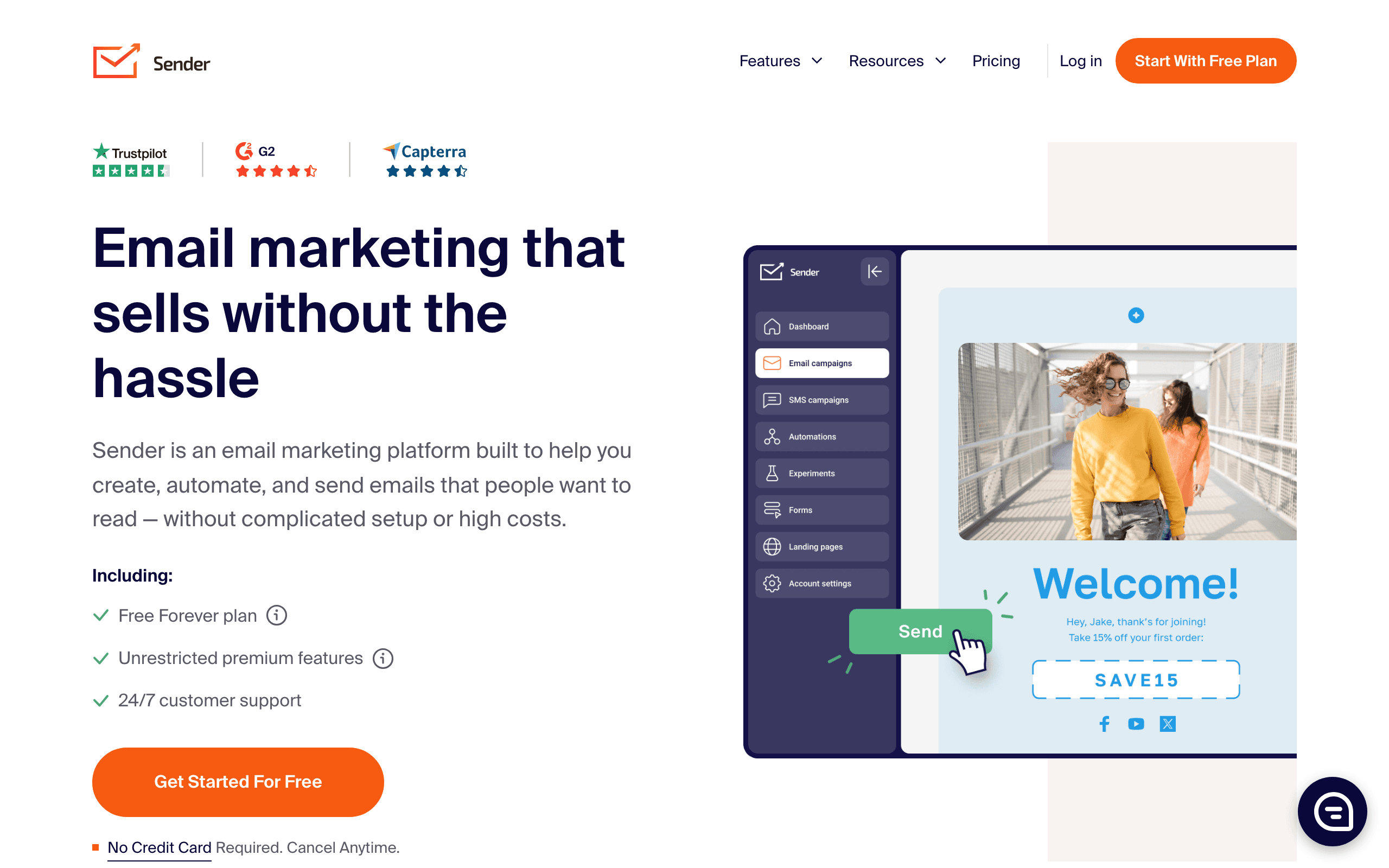
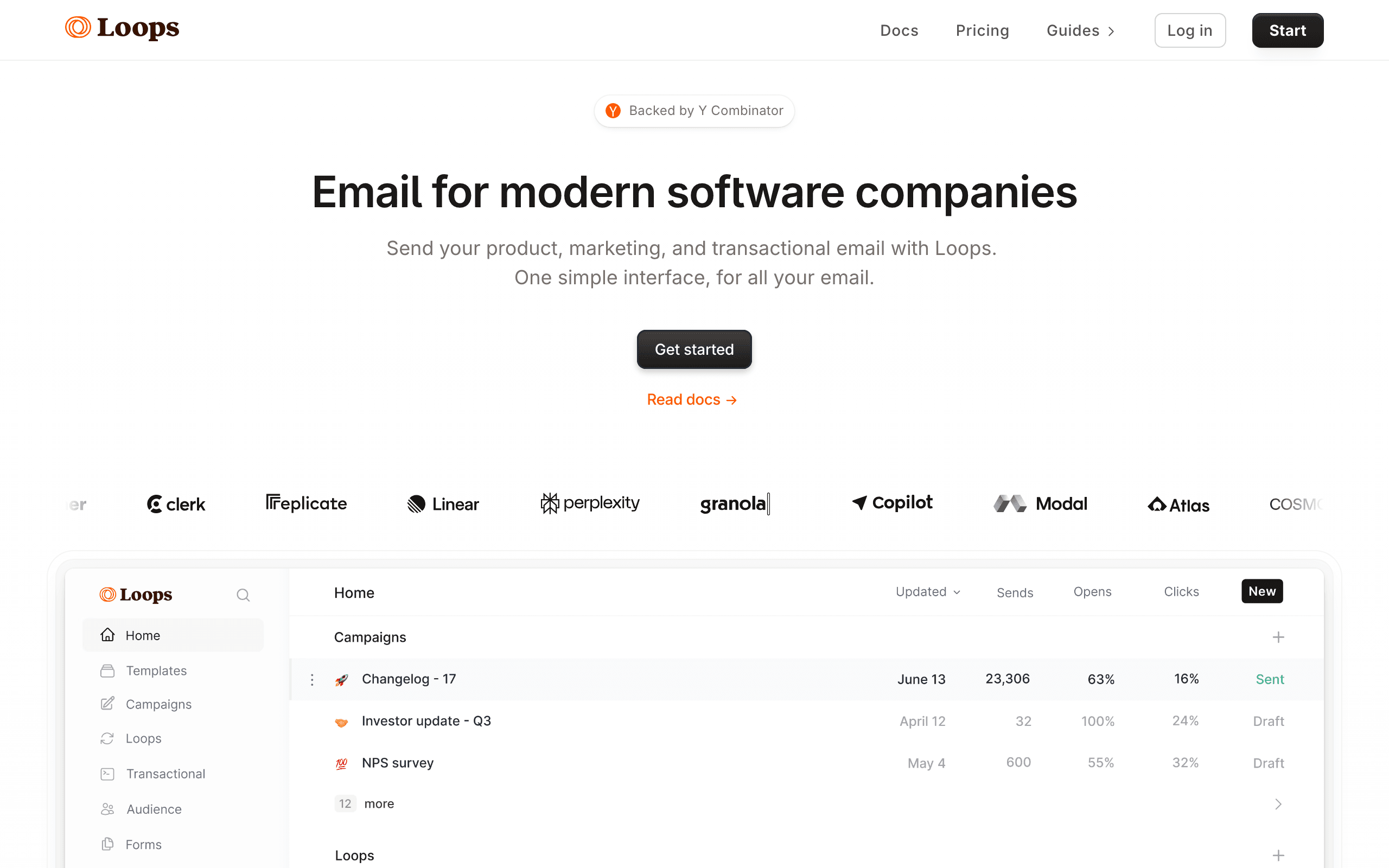
Sender and Loops target different markets. Sender is a budget-friendly e-commerce platform with email + SMS. Loops is a modern SaaS-focused email platform. See our Loops comparison for more context.
Different Business Models
This comparison is about choosing the right tool for your business type:
- E-commerce/SMB: Sender has Shopify, WooCommerce, abandoned cart, SMS, and 1600+ templates
- SaaS: Loops has event-based automation, modern API, and free transactional email
Price Comparison
At 10,000 contacts, Sender costs ~$50/month while Loops costs ~$99/month. Sender is about half the price, but Loops includes unlimited sends and transactional email. For SaaS companies, Loops' transactional inclusion may justify the higher price.
SMS Marketing
Sender includes native SMS marketing. Loops is email-only. If you need email + SMS from one platform, Sender is your only option here.
Transactional Email
Loops includes free transactional email with all paid plans - password resets, receipts, notifications. Sender's transactional capabilities are limited. For SaaS needing unified marketing + transactional, Loops is more complete.
E-commerce Features
Sender excels at e-commerce with Shopify and WooCommerce integrations, abandoned cart automation, and product-focused templates. Loops has zero e-commerce features. For online stores, Sender is the clear choice.
Developer Experience
Loops has a modern, clean API built for developers. Fast setup, modern design, event-based architecture. Sender is more traditional. For SaaS dev teams, Loops feels more native to how they work.
Template Libraries
Sender has 1600+ templates - one of the largest libraries available. Loops has minimal templates with a focus on clean, modern design. Different approaches: variety vs. quality.
For SaaS Companies
If you're a SaaS company, Loops is the better fit between these two. But neither has native Stripe integration. Sequenzy offers Stripe integration with payment-triggered automation at $49/month - cheaper than both and purpose-built for subscription businesses.
Making the Choice
Choose Sender for e-commerce, SMS marketing, and budget email marketing. Choose Loops for SaaS-focused email with transactional included. For SaaS with Stripe billing, consider Sequenzy.
The Business Model Decision
Choosing between Sender and Loops is fundamentally a question about your business model, not about features or price. If you sell physical products through Shopify or WooCommerce, Sender is the obvious choice because Loops has zero e-commerce capabilities. If you run a SaaS product and need event-based automation with transactional email, Loops is the obvious choice because Sender was not designed for software companies.
The confusion arises when businesses do not fit neatly into either category. A digital product creator might consider either platform. A marketplace with both physical goods and software subscriptions might need features from both. In these edge cases, consider which type of automation matters more: product purchase workflows point to Sender, user behavior workflows point to Loops.
For SaaS companies specifically, neither platform offers the deep payment integration that subscription businesses need. Sequenzy connects directly to Stripe for trial conversions, failed payment recovery, and upgrade triggers at $49/month, which is cheaper than both Sender and Loops while being purpose-built for the subscription model.
Transactional Email as a Deciding Factor
Loops includes free transactional email with all paid plans. Password resets, receipt confirmations, system notifications, and user-triggered messages all send from the same platform as marketing campaigns. This unification matters for SaaS companies because it means one sender reputation, one analytics dashboard, and one set of templates to maintain.
Sender's transactional capabilities are limited. Most Sender users pair it with a dedicated transactional provider like SendGrid or Postmark. This two-platform approach works but doubles the operational overhead: two dashboards to monitor, two sender reputations to protect, two billing relationships to manage.
The cost of this operational split is easy to underestimate. When a transactional email has deliverability issues, troubleshooting across two platforms takes longer. When branding changes, templates need updating in two places. For small teams where every hour counts, platform consolidation creates real efficiency gains.
Template Philosophy: Quantity vs Minimalism
Sender's 1600+ template library gives e-commerce stores virtually unlimited starting points for every occasion: seasonal sales, product launches, abandoned carts, loyalty programs, and holiday promotions. This quantity-first approach ensures you never start from a blank page, though template quality varies across the library.
Loops takes the opposite approach with minimal templates and a focus on clean, modern design. The philosophy is that SaaS emails should be simple, text-forward messages that look like they came from a real person rather than a marketing department. Product update emails, onboarding sequences, and feature announcements benefit from this understated aesthetic.
Neither approach is inherently better. E-commerce emails benefit from visual richness because product images and promotional layouts drive purchases. SaaS emails benefit from simplicity because trust and authenticity drive engagement. The template philosophy reflects the target audience of each platform. Use our email validator to ensure clean subscriber lists regardless of which platform and template approach you choose.
Use-case matchups
| Need | Better fit | Why |
|---|---|---|
| Budget email and SMS campaigns | Sender | Sender is stronger when the buyer wants low-cost email/SMS with practical campaign tools. |
| SaaS lifecycle messaging | Loops | Loops is stronger when SaaS lifecycle messaging are the main requirements. |
| SaaS lifecycle and transactional email | Sequenzy | Sequenzy fits when the team needs Stripe-aware lifecycle campaigns, newsletters, and transactional email in one product. |
Best Fit by SaaS Lifecycle Need
Best budget email and SMS tool for general campaigns
Sender fits teams that want affordable email and SMS without a SaaS-specific lifecycle product. It should be evaluated first when newsletters, promotions, simple automations, and SMS campaigns are the core workflow.
Best email platform for SaaS lifecycle messaging
Loops is the better fit when product-led lifecycle messaging, SaaS onboarding, and modern lifecycle workflows are the main requirements. Choose it when user events, product states, and lifecycle milestones need to drive email beyond list-based campaigns.
Best email platform for Stripe lifecycle and transactionals
Sequenzy fits when Stripe-aware lifecycle campaigns, newsletters, and transactional email need one subscriber model. It is strongest when billing events and transactionals matter more than SMS breadth or budget campaign sending.
Pricing reality
The page data lists Sender at ~$50/month, Loops at ~$99/month, and Sequenzy at $49/month for the cited comparison tier. Keep the original pricing context rather than turning these into generic equivalents.
Sender should be priced as a budget email/SMS platform. Loops should be priced around SaaS lifecycle messaging. Sequenzy should be compared when SaaS lifecycle, transactional email, and Stripe-aware workflows matter more than general email/SMS pricing.
Review signals
For Sender, pay attention to affordability and whether email/SMS depth is enough. For Loops, pay attention to SaaS lifecycle messaging, onboarding effort, support quality, and pricing as the list grows.
Migration checklist
| Workstream | What to verify |
|---|---|
| Subscriber data | Export subscribers, tags, custom fields, segments, consent, unsubscribes, bounces, and suppressions. |
| Channel consent | Preserve email consent, SMS consent if used, opt-out history, and suppression rules. |
| Automations | Rebuild welcome, nurture, cart, post-purchase, reactivation, newsletter, and promotional workflows manually. |
| Templates and forms | Recreate templates, forms, landing pages, coupons, dynamic content, and mobile rendering. |
| Integrations | Reconnect ecommerce, CRM, analytics, forms, billing, webhooks, and Zapier-style handoffs. |
| Reporting | Export campaign, automation, deliverability, revenue, and list-growth reports before cutover. |
Decision checklist
- Choose Sender if low-cost email/SMS is the main requirement.
- Choose Loops if SaaS lifecycle messaging matter more than budget email/SMS basics.
- Skip Sender if you need SaaS product-event automation or a modern developer API, since its developer experience is basic.
- Avoid Loops if the buyer only needs practical low-cost campaigns.
- Consider Sequenzy if Stripe events such as failed payments and cancellations drive your emails, since neither Sender nor Loops has native Stripe integration.









