

Compare managed retention against lightweight store email
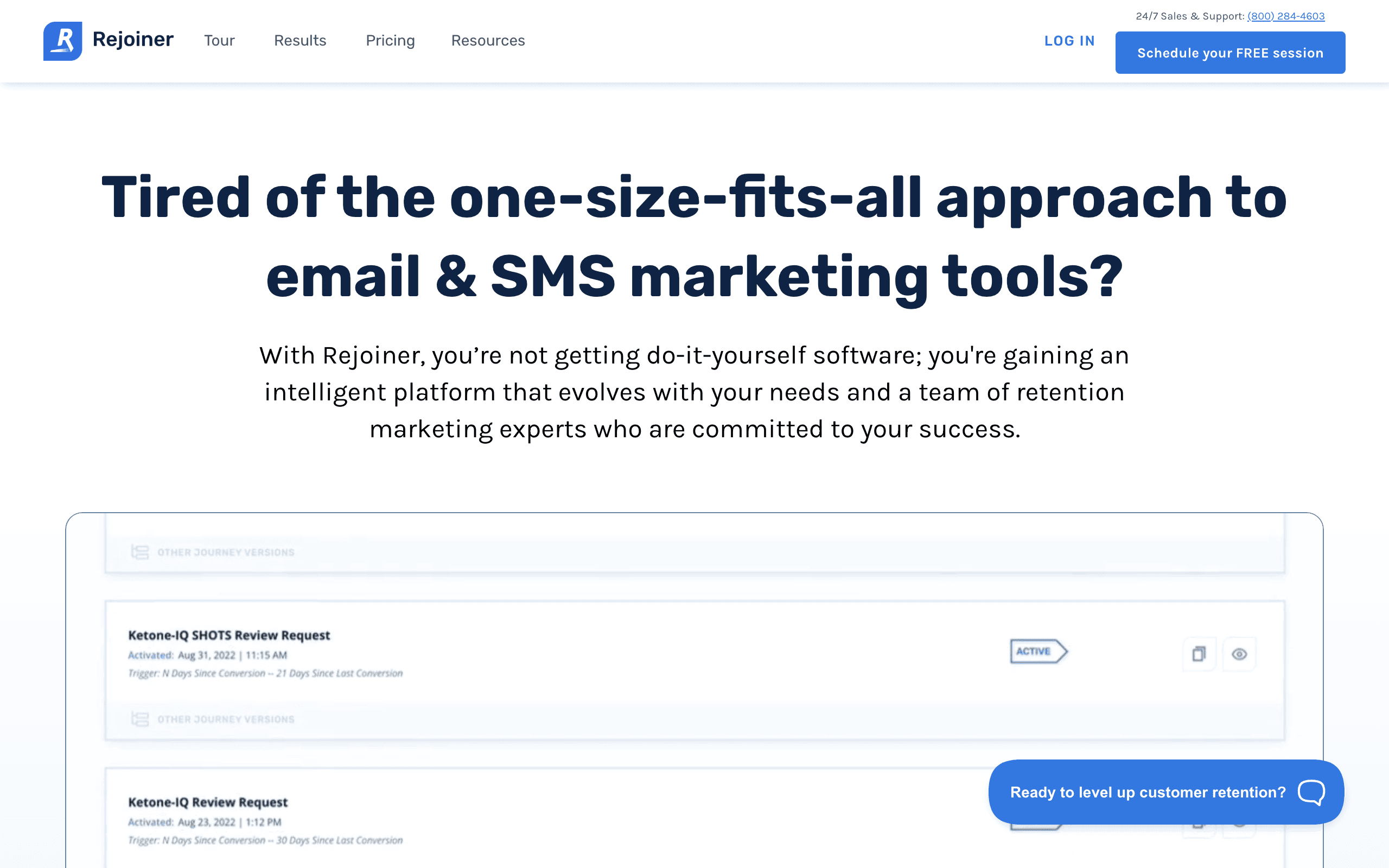
Rejoiner and SmartrMail are both ecommerce-oriented, but they serve different levels of team maturity. Rejoiner is a deeper retention option for stores that want lifecycle strategy, cart recovery, email/SMS execution, and optimization support. SmartrMail is more relevant when a smaller store wants a simpler ecommerce email tool for newsletters and basic automations.
The right choice depends on whether you need a partner to improve lifecycle revenue or a lighter tool the team can operate without much process.
Use-case table
| Use case | Better starting point | Why |
|---|---|---|
| Managed cart recovery and retention program optimization | Rejoiner | Rejoiner is stronger when services, strategy, testing, and revenue improvement are part of the plan. |
| Simple ecommerce newsletters and basic automations | SmartrMail | SmartrMail is easier to evaluate when the store needs a straightforward email workflow. |
| Team needs deeper lifecycle reporting and campaign support | Rejoiner | A specialist retention partner makes more sense once the email program is revenue-critical. |
| Small team wants low operational overhead | SmartrMail | A simpler ecommerce email tool can be the better fit when nobody owns advanced lifecycle strategy. |
| Storefront email plus transactional and subscription lifecycle messages | Sequenzy | Sequenzy fits teams that want a focused email system with more lifecycle scope than basic newsletters. |
Where Rejoiner is stronger
Rejoiner is stronger when the store has meaningful lifecycle revenue to improve. If the marketing plan includes abandoned cart, browse recovery, post-purchase, replenishment, winback, SMS, and ongoing optimization, Rejoiner is the more serious option.
The main caution is fit. A store that only sends occasional newsletters will not get the full value from a more involved retention program.
Where SmartrMail is stronger
SmartrMail is stronger when the team wants ecommerce email without a heavy implementation. It can be a better fit for smaller teams that want to send product newsletters, basic automations, and store-connected campaigns without adopting a services-led lifecycle program.
Before choosing it over Rejoiner, check whether it supports the exact segmentation, cart logic, SMS needs, and reporting the store depends on.
Pricing reality
Rejoiner is listed as custom pricing based on retention program scope, channels, and services. SmartrMail is listed as variable pricing based on plan, contacts, usage, and selected features. Sequenzy is listed at $49/month for the cited email-first scope.
Rejoiner pricing should be evaluated around lifecycle revenue support. SmartrMail pricing should be evaluated around contacts, store-connected campaign needs, basic automations, and whether the team wants a simpler ecommerce email workflow.
Review signals
The cited Rejoiner review themes should be read for lifecycle strategy, cart recovery, email/SMS retention, hands-on support, setup effort, and pricing clarity. SmartrMail review themes should be read for ecommerce email usability, simple campaigns, store integrations, and pricing as contacts grow. The review split is managed retention optimization versus lightweight store email.
Migration checklist
- List all active flows by trigger, audience, revenue role, and owner.
- Export subscribers, unsubscribes, suppression lists, custom fields, and purchase-based segments.
- Confirm how Shopify or WooCommerce products, orders, and discounts sync into the new tool.
- Rebuild cart recovery and post-purchase before migrating lower-volume newsletters.
- Compare revenue attribution before and after migration to avoid reading reporting changes as performance changes.
Buying questions to ask
- Is the store ready for lifecycle optimization, or does it need simpler email operations?
- Who will write and test emails after migration?
- Which ecommerce events and product fields are available for segmentation?
- Are SMS and services included or separate?
- What reporting proves the move improved retention revenue?
Where Sequenzy fits
Sequenzy is the practical email-first option when SmartrMail is too basic for lifecycle work and Rejoiner is more service-heavy than needed. It supports Shopify and WooCommerce automations, newsletters, transactional email, and Stripe-aware lifecycle messages.
Use-case matchups
| Need | Better fit | Why |
|---|---|---|
| Managed ecommerce retention strategy | Rejoiner | Rejoiner is stronger when the team wants service-backed retention programs, lifecycle planning, and hands-on optimization. |
| Ecommerce email recommendations and store campaigns | SmartrMail | SmartrMail is stronger when the team wants to own ecommerce email recommendations and store campaigns directly in-platform. |
| Email-first store or subscription lifecycle | Sequenzy | Sequenzy fits when the team wants Shopify, WooCommerce, Stripe, newsletters, and transactional email without SMS or managed-service scope. |
Best Fit by Recommendation vs Strategy Need
Best managed retention partner for ecommerce email planning
Rejoiner fits brands that want strategic help building and optimizing retention email, not just another product-recommendation campaign tool.
Best ecommerce email tool for product recommendations
SmartrMail is the better fit when the team wants to run store campaigns and recommendation-led ecommerce email directly.
Best email platform for lifecycle and transactional follow-up
Sequenzy fits when the core need is store or subscription-triggered email, newsletters, and transactionals rather than recommendation-first campaign tooling.
Decision checklist
- Choose Rejoiner if managed ecommerce retention strategy is the main need.
- Choose SmartrMail if ecommerce email recommendations and store campaigns is the main need and the team can operate it directly.
- Avoid Rejoiner if the team only wants self-serve software and no service layer.
- Avoid SmartrMail if the missing piece is retention strategy, not tool access.
- Consider Sequenzy if the practical need is email automation, transactional email, and store or Stripe lifecycle messages.









