
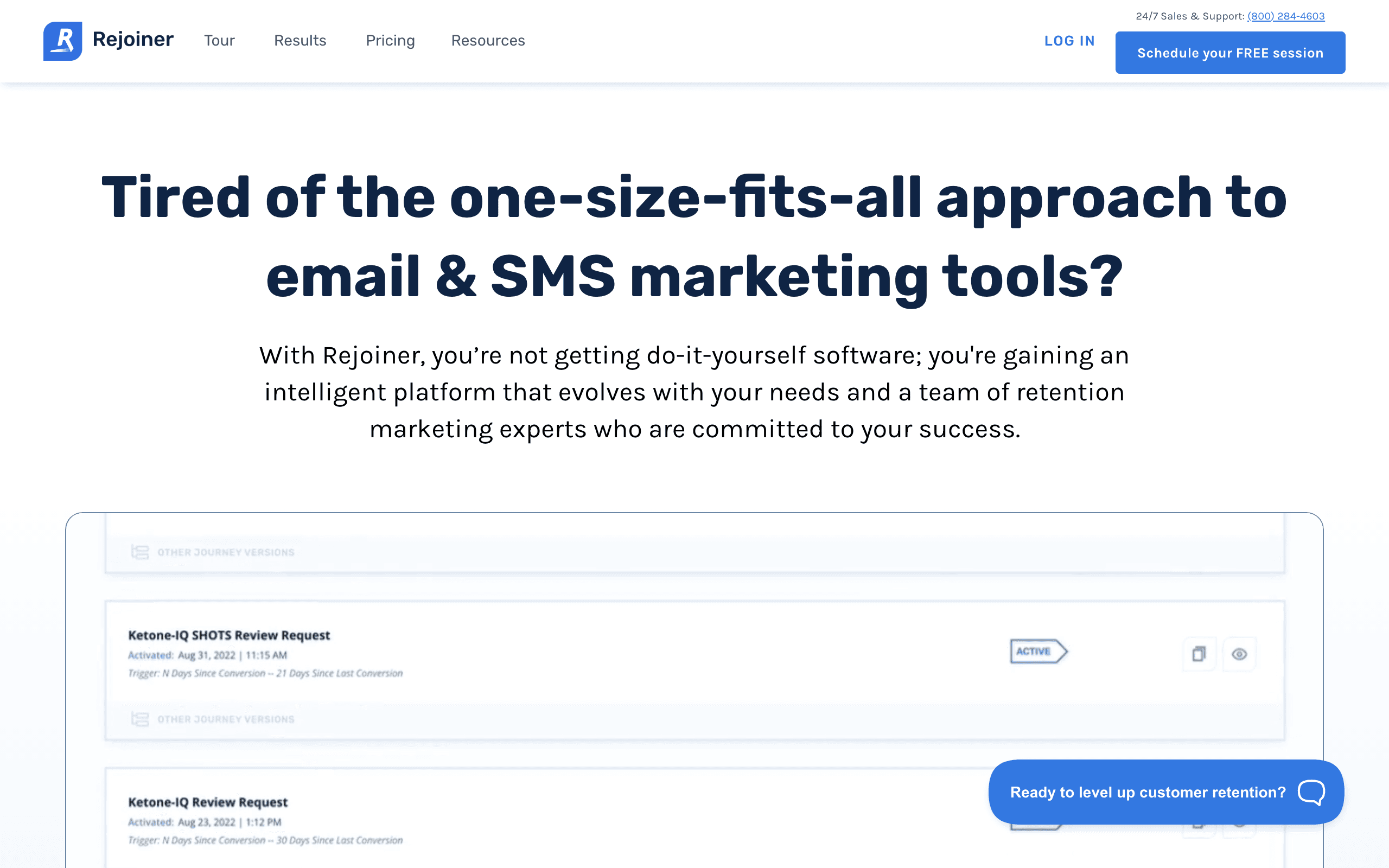
Compare retention strategy against traditional campaign sending
Rejoiner is the more specialized option for ecommerce lifecycle revenue: cart recovery, retention strategy, email/SMS campaigns, and performance optimization. Campaigner is more of a general email marketing platform for teams that need campaign sending, lists, templates, segmentation, and automation without a dedicated ecommerce-retention partner.
This comparison turns on how much strategy and ecommerce depth the business expects from the vendor.
Use-case table
| Use case | Better starting point | Why |
|---|---|---|
| Store needs abandoned cart, post-purchase, and winback optimization | Rejoiner | Rejoiner is more aligned with ecommerce retention outcomes and lifecycle strategy. |
| Team mainly needs newsletters and regular promotional campaigns | Campaigner | A general campaign tool can be enough when the lifecycle program is not complex. |
| Marketing team wants help writing, testing, and improving flows | Rejoiner | Services and optimization support are part of the buying case for Rejoiner. |
| Business wants a straightforward email platform without ecommerce specialization | Campaigner | Campaigner is easier to evaluate when the needs are broad email marketing basics. |
| Storefront automation plus transactional and subscription email | Sequenzy | Sequenzy is focused on practical lifecycle email without a services-heavy engagement. |
Where Rejoiner is stronger
Rejoiner is stronger when email is expected to produce measurable ecommerce retention revenue, not just send campaigns. It is the better fit when the team wants a partner to help improve cart recovery, repeat purchase, and lifecycle timing.
That value depends on volume and focus. A store with basic promotional needs may not need Rejoiner's level of specialization.
Where Campaigner is stronger
Campaigner is stronger when the requirement is traditional email marketing: campaigns, lists, templates, segments, and automations. It can be a practical option for teams that do not need ecommerce-specific services or deep store-event logic.
Before replacing Rejoiner, confirm whether Campaigner supports the exact ecommerce events, purchase-based segments, and revenue reports the team already relies on.
Pricing reality
Rejoiner is listed as custom pricing based on retention program scope, channels, and services. Campaigner is listed as variable pricing based on plan, contacts, usage, and selected features. Sequenzy is listed at $49/month for the cited email-first scope.
Rejoiner pricing should be evaluated as managed ecommerce retention scope. Campaigner pricing should be evaluated around contacts, campaign volume, templates, automation needs, and whether ecommerce event depth is sufficient.
Review signals
The cited Rejoiner review themes should be read for lifecycle strategy, cart recovery, email/SMS retention, hands-on support, setup effort, and pricing clarity. Campaigner review themes should be read for traditional campaign workflow, templates, list management, support, and pricing as usage grows. The review split is ecommerce retention support versus conventional email marketing.
Migration checklist
- Inventory all Rejoiner journeys by trigger, audience, and revenue contribution.
- Export subscribers, unsubscribes, suppression lists, templates, and custom fields.
- Confirm how ecommerce purchase history and cart events would enter Campaigner.
- Rebuild cart and post-purchase flows before moving regular newsletters.
- Compare deliverability and attribution after the first few sends before shutting down the old setup.
Buying questions to ask
- Is the team buying campaign software or retention expertise?
- Which ecommerce triggers and purchase fields are available in Campaigner?
- Who will own copy, testing, reporting, and optimization?
- What services are included with Rejoiner?
- Does the platform handle transactional or lifecycle email alongside newsletters?
Where Sequenzy fits
Sequenzy fits when the store wants focused email automation for Shopify, WooCommerce, Stripe, newsletters, and transactional messages. It is lighter than Rejoiner and more ecommerce-lifecycle oriented than a generic campaign-only workflow.
Use-case matchups
| Need | Better fit | Why |
|---|---|---|
| Managed ecommerce retention strategy | Rejoiner | Rejoiner is stronger when the team wants service-backed retention programs, lifecycle planning, and hands-on optimization. |
| Traditional email campaign execution | Campaigner | Campaigner is stronger when the team wants to own traditional email campaign execution directly in-platform. |
| Email-first store or subscription lifecycle | Sequenzy | Sequenzy fits when the team wants Shopify, WooCommerce, Stripe, newsletters, and transactional email without SMS or managed-service scope. |
Best Fit by Campaign Operating Model
Best managed retention partner for ecommerce campaign planning
Rejoiner fits stores that want lifecycle campaigns planned, written, analyzed, and improved with help from a retention-focused partner.
Best email campaign tool for traditional newsletter execution
Campaigner is the better fit when the team mainly needs to send standard promotional email campaigns and prefers to manage the work directly.
Best email platform for automated store and subscription follow-up
Sequenzy fits when the priority is owned lifecycle email tied to purchases, subscriptions, and product events rather than a managed-service relationship.
Decision checklist
- Choose Rejoiner if managed ecommerce retention strategy is the main need.
- Choose Campaigner if traditional email campaign execution is the main need and the team can operate it directly.
- Avoid Rejoiner if the team only wants self-serve software and no service layer.
- Avoid Campaigner if the missing piece is retention strategy, not tool access.
- Consider Sequenzy if the practical need is email automation, transactional email, and store or Stripe lifecycle messages.









