Overview
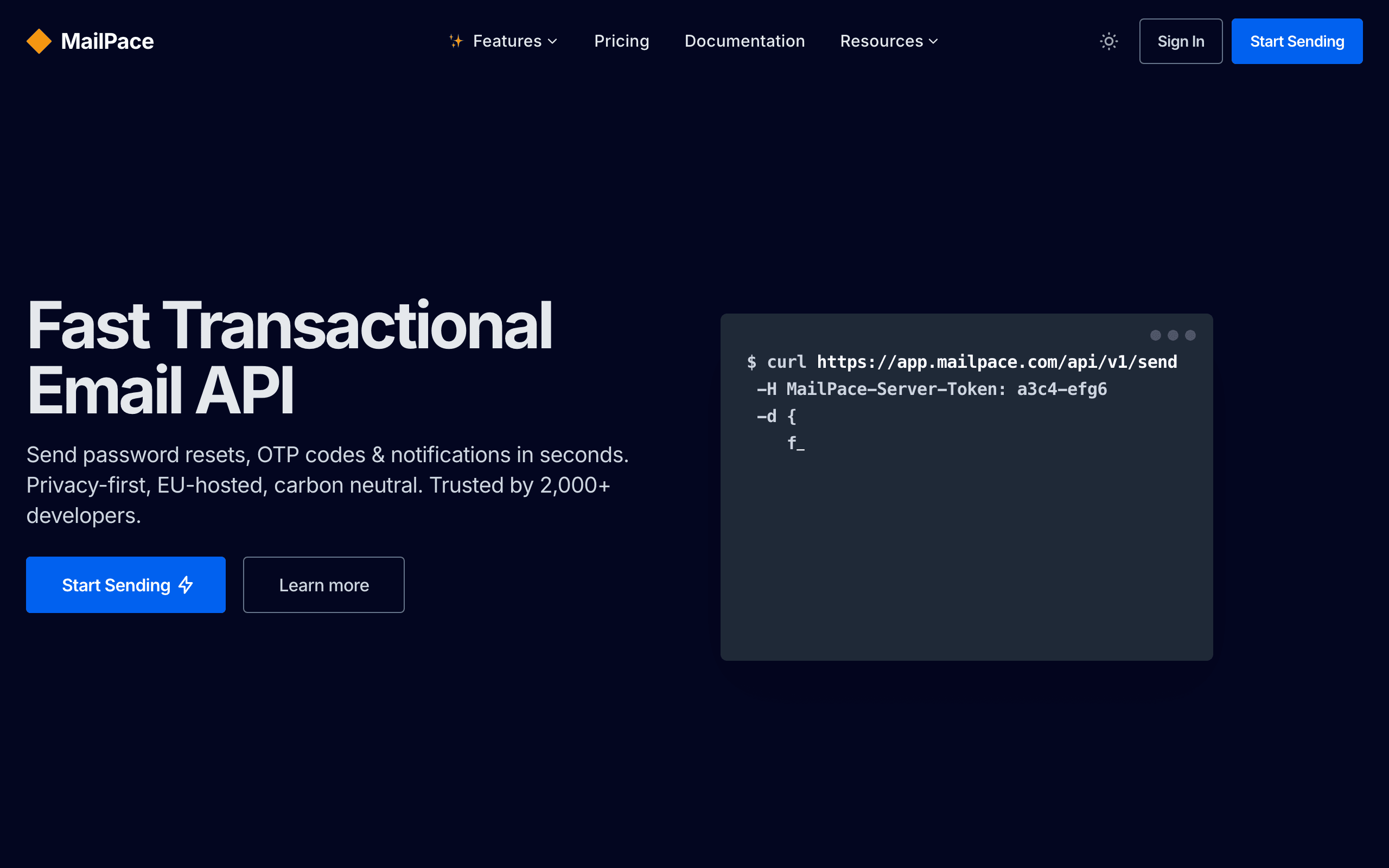
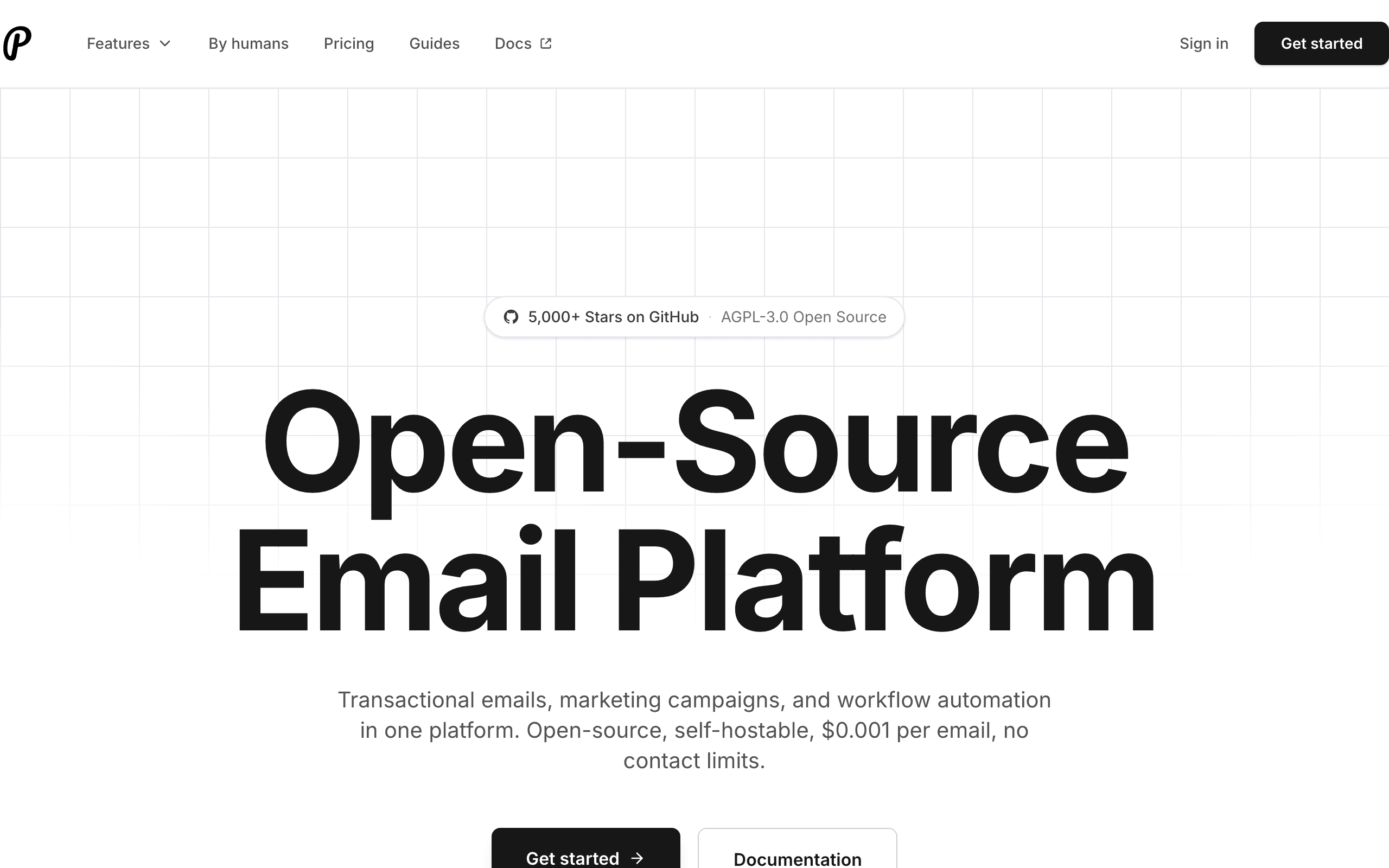
MailPace and Plunk serve different needs in the email space. MailPace is a privacy-first EU-hosted transactional email API. Plunk is a open-source modern email platform.
The choice depends on what you need: eu-only hosting (MailPace) or open source (Plunk). For SaaS businesses specifically, Sequenzy offers purpose-built features that neither tool provides.
Pricing Comparison
- MailPace: $10/month flat for transactional sending from an EU-hosted, privacy-first service.
- Plunk: Free tier, then usage-based - Open source. Modern stack. Transactional + marketing.
- Sequenzy: $49/month for 60,000 emails with unlimited contacts, fully managed. See pricing for higher tiers.
Where MailPace Wins
EU-only hosting
MailPace keeps data in EU-only hosting, which matters if your customers' data must stay in Europe.
Privacy-first design
Privacy-first design is MailPace's clearest draw, with no tracking by default for senders who want less data collected.
Idempotent sending
Idempotent sending means a retried API call will not send a duplicate email, a safeguard MailPace lists as a strength.
Inbound email
MailPace also lists inbound email, so it can receive replies as well as send. Plunk's listed strengths do not include it.
Where Plunk Wins
Open source
Plunk offers open source, which matters for teams that prioritize this.
Modern stack
Plunk offers modern stack, which matters for teams that prioritize this.
Transactional + marketing
Plunk offers transactional + marketing, which matters for teams that prioritize this.
Developer-friendly
Plunk offers developer-friendly, which matters for teams that prioritize this.
Why Sequenzy for SaaS
If you are building a SaaS product, Sequenzy offers what neither MailPace nor Plunk provides: native Stripe integration for billing-based automation, AI sequences that generate onboarding and retention emails, and unified transactional + marketing email in one platform. Check our pricing page for details.
Managed vs Open Source
MailPace is a managed service. You sign up, configure your domain, and start sending. No infrastructure to manage, no updates to apply, no scaling concerns. Plunk offers a self-hosted open-source option where you control everything but also manage everything.
The managed approach suits teams that want to focus on building their product rather than managing email infrastructure. The open-source approach suits teams with DevOps capability who want maximum control and customization.
Maturity Considerations
MailPace has focused on transactional email with EU hosting for longer, providing a more proven track record for production workloads. Plunk is newer with an evolving feature set. For mission-critical transactional email where reliability is paramount, MailPace's maturity provides more confidence.
For teams willing to invest in a newer platform with open-source flexibility, Plunk offers customization possibilities that managed services cannot match. The trade-off is proven reliability versus future-oriented flexibility.
Combined Email Capabilities
Plunk handles both transactional and marketing email, reducing the need for multiple tools. MailPace is transactional only. For teams that need both email types, Plunk eliminates a tool from the stack. For teams focused solely on transactional delivery with compliance, MailPace remains more focused and mature.
Delivery Speed and Reliability
MailPace and Plunk both ship transactional email quickly, but they come from different philosophies. MailPace is a small, privacy-first service with EU-only hosting and no tracking by default, priced at a flat $10 a month. Plunk is open source with a free tier before usage-based billing kicks in, and it covers both transactional and marketing sending rather than transactional alone.
API Design and Developer Experience
Plunk's open-source codebase means you can self-host it and inspect exactly how it handles your email if that matters to your team. MailPace stays closed but keeps its documentation clean and its API narrow, backed by a small team focused on privacy and simplicity rather than breadth of features. Developers wanting to audit or modify the code lean toward Plunk; developers wanting a smaller, ready-made service lean toward MailPace.
Scaling and Cost at Volume
MailPace's flat $10-a-month price is predictable regardless of volume, which suits steady, moderate transactional sending. Plunk's free tier and usage-based pricing after that can start cheaper for low volume but will scale up as your sending grows, similar to most usage-based providers. Compare your expected monthly email count against each pricing model before assuming one is cheaper than the other.
Two Small Players with Different Philosophies
MailPace and Plunk are both smaller platforms competing against email industry giants, but their approaches differ fundamentally. MailPace is a managed service with EU-only hosting and privacy-first design. Plunk is open-source, meaning you can self-host it or use their managed offering.
The open-source advantage of Plunk means full visibility into how your email platform works, the ability to customize behavior, and no vendor lock-in. MailPace's managed-only approach means less operational overhead but less control. For teams with the technical capability to run their own infrastructure, Plunk's self-hosting option provides maximum flexibility.
Both platforms are early-stage compared to established services like SendGrid or Postmark. This means smaller teams, fewer integrations, and less battle-tested infrastructure. The trade-off for using either is getting in early with a modern platform versus the proven reliability of larger competitors.
The Privacy vs Open Source Trade-off
MailPace's privacy-first approach processes data exclusively in EU data centers with minimal collection. Plunk's open-source model lets you host email infrastructure wherever you choose, including your own EU servers, giving you even more control over data residency.
For organizations with strict data sovereignty requirements, Plunk's self-hosting option theoretically provides the strongest privacy guarantees -- your data never leaves your infrastructure. MailPace's managed service keeps data in the EU but you still rely on a third party. The choice depends on whether your team can manage self-hosted email infrastructure.
Neither platform offers the marketing automation or business logic that SaaS companies need. Event-based sequences, Stripe billing triggers, and subscriber segmentation require a platform designed for subscription businesses rather than a pure sending service.
Use-case matchups
| Need | Better fit | Why |
|---|---|---|
| Managed privacy-first transactional email | MailPace | MailPace is listed as EU-hosted, privacy-first, transactional-only, and no tracking by default. |
| Open-source, self-hostable email with event-based automation | Plunk | Plunk's cited strengths are open source, SaaS-focused, simple API, event automations, and self-hosting. |
| Lowest starting cost with ownership/control | Plunk | Plunk is listed with a free tier and usage-based pricing, plus self-hosting. |
| Managed SaaS marketing plus transactional email tied to Stripe | Sequenzy | Sequenzy is listed with SaaS marketing, transactional email, Stripe integration, and unlimited contacts with 60,000 emails a month. |
Best Fit by Managed Privacy and Open-Source Control
Best managed privacy-first transactional email service
Choose MailPace when the team wants EU-hosted transactional sending without running its own email infrastructure. It is the better fit for privacy-conscious products that want no tracking by default, simple pricing, and a managed provider rather than self-hosting, upgrades, backups, and monitoring.
Best open-source email tool for self-hosting control
Choose Plunk when source availability, self-hosting, and event-based automation matter more than using a narrowly managed sender. It is stronger for developer teams willing to own operational risk in exchange for deeper control over deployment, data location, customization, and product-specific workflows.
Best managed SaaS lifecycle platform with Stripe
Choose Sequenzy when the team wants managed lifecycle email without self-hosting or stitching separate delivery and marketing tools together. SaaS teams can connect transactional messages, campaigns, and Stripe-triggered journeys while keeping subscriber context in one system.
Pricing reality
MailPace is listed at $10/month for privacy-first transactional email. Plunk is listed with a free tier, then usage-based pricing, and an open-source modern stack. Sequenzy is listed at $49/month for SaaS marketing plus transactional email with Stripe integration.
Plunk is attractive when open source and a free starting point matter. MailPace is simpler if you want a managed paid transactional sender. Sequenzy costs more because it bundles SaaS marketing and transactional lifecycle automation.
Review signals
MailPace reviews cited here emphasize privacy-first sending, transparent pricing, no tracking by default, and good value. The cautions are the very small team and limited features.
Plunk reviews cited here highlight open source, SaaS focus, and a simple API. The tradeoffs are early-stage maturity, limited features, a small team, and a still-growing community.
Migration checklist
- Export domains, templates, API keys, event definitions, automations, webhooks, suppressions, and activity logs where available.
- If moving to Plunk, decide between managed and self-hosted deployment and prepare hosting, updates, backups, and monitoring if self-hosting.
- If moving to MailPace, identify which event automations or marketing flows must be rebuilt elsewhere.
- Reconfigure SPF, DKIM, DMARC, return-path, tracking domains if used, sender identities, and webhook destinations.
- Test event triggers, transactional sends, bounces, suppressions, retries, and unsubscribe behavior before production cutover.
- Keep both systems active until event counts and delivery metrics match.
Decision checklist
- Choose MailPace if you want a managed privacy-first transactional sender.
- Choose Plunk if open source, self-hosting, and simple event automation are the priority.
- Avoid MailPace if you need built-in event-based marketing automation.
- Avoid Plunk if early-stage maturity and operational ownership are unacceptable.
- Choose Sequenzy if the team wants managed SaaS lifecycle and transactional email connected to Stripe.
Self-hosting Plunk gives you complete control over your email infrastructure, but it requires maintaining servers, managing updates, monitoring deliverability, and handling IP reputation. MailPace handles all of this as a managed service, letting your team focus on building product rather than running email infrastructure.
The self-hosting decision comes down to team capability and priorities. Organizations with DevOps teams and existing server infrastructure may prefer Plunk for control. Organizations that want email to work reliably without ongoing maintenance prefer MailPace's managed approach.
For SaaS companies evaluating both platforms, the self-hosting versus managed question is secondary to the more fundamental issue: neither platform connects email to subscription lifecycle events. Building product-aware email automation on top of either requires significant custom development that a purpose-built SaaS email platform eliminates.