
Overview
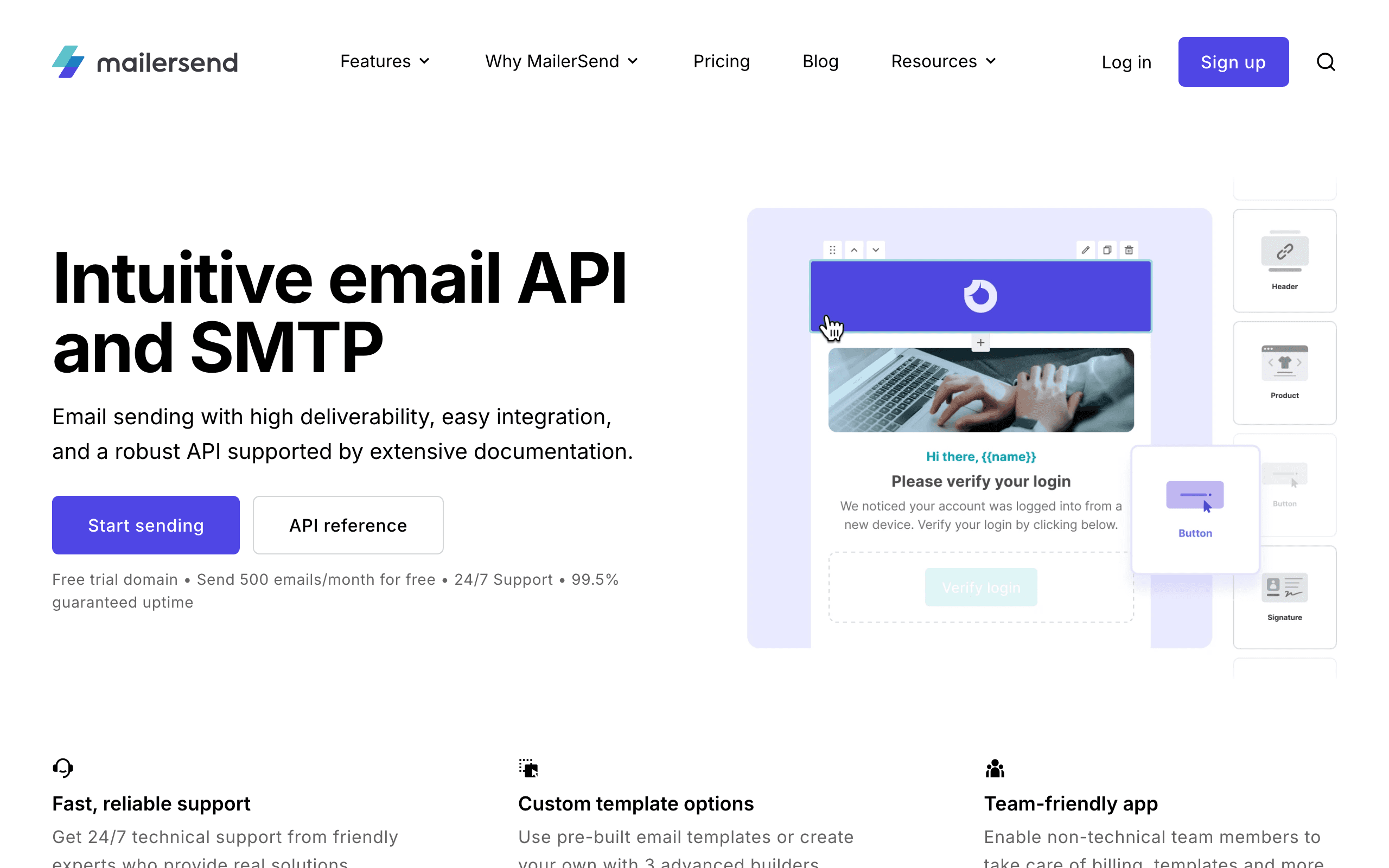
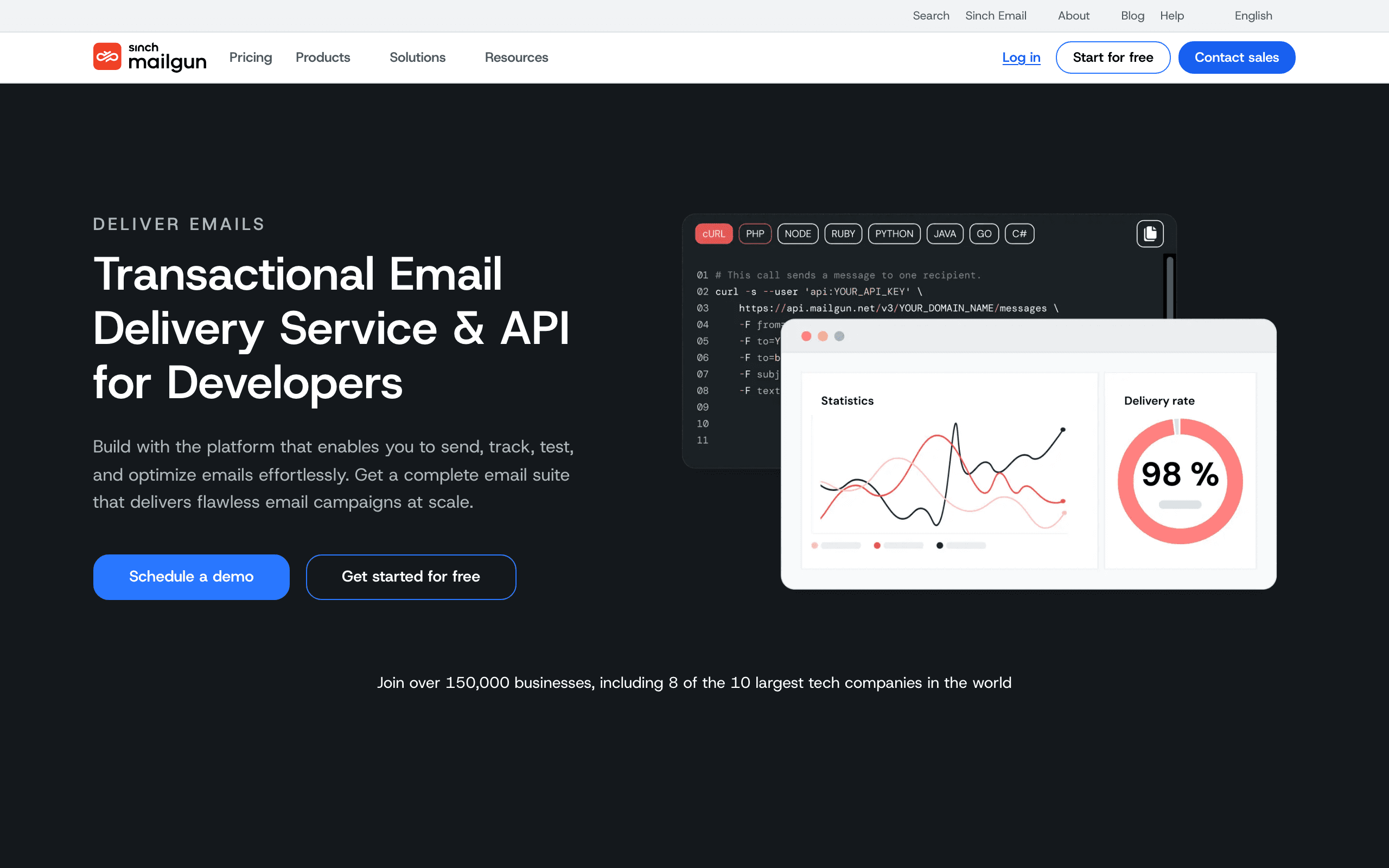
MailerSend and Mailgun are both transactional email services with email verification included. MailerSend is newer with cleaner APIs and SMS. Mailgun is established with basic marketing features.
Email Verification
Both include email verification to validate addresses. This is a key feature that sets them apart from competitors like Resend and Postmark. For clean lists, both deliver.
Developer Experience
MailerSend has cleaner, more modern APIs. Mailgun is established but the DX feels less polished. For developer experience, MailerSend wins.
SMS Capability
MailerSend offers SMS as an add-on channel. Mailgun is email-only. For multi-channel transactional, MailerSend is more complete.
Making the Choice
Both are solid with email verification included. Choose MailerSend for cleaner DX and SMS. Choose Mailgun if you prefer an established platform.
Shared Infrastructure Through Sinch
An interesting but often overlooked fact is that both MailerSend and Mailgun are part of the same corporate family under Sinch. MailerSend was created by the MailerLite team (also under Sinch), while Mailgun was acquired by Sinch separately. Despite shared ownership, they remain distinct products targeting different audiences - MailerSend for teams wanting modern DX, Mailgun for developers wanting comprehensive API tools.
This shared ownership means both platforms benefit from Sinch's communication infrastructure, and neither is likely to be discontinued. However, it also means that choosing between them is less about vendor risk and more about which interface and feature set matches your workflow.
Inbound Email Processing
One area where Mailgun has a clear advantage is inbound email processing. Mailgun can receive emails, parse them, and route them based on configurable rules. This is valuable for applications that need to process incoming email, such as customer support systems, comment-by-email features, or automated data extraction from email.
MailerSend has basic inbound capabilities but nothing approaching Mailgun's routing flexibility. If your application needs sophisticated inbound email handling alongside outbound transactional, Mailgun is the better choice between these two.
API Maturity vs Modernity
Mailgun's API has more features and supports more edge cases, reflecting years of enterprise development. You get detailed event tracking, advanced routing, and comprehensive SDKs in over eight languages. MailerSend's API is cleaner and more intuitive but covers fewer advanced scenarios. The trade-off is typical of established versus modern platforms - depth versus elegance.
Delivery Speed and Reliability
MailerSend and Mailgun both start at $15 a month for around 10,000 emails and include email verification on that entry plan, so the pricing floor is not the differentiator here. What separates them for time-sensitive sends is API design: MailerSend's newer, cleaner endpoints are simpler to integrate quickly, while Mailgun's more established but denser API gives you more configuration options once you need them.
API Design and Developer Experience
MailerSend, built by the MailerLite team, ships a modern REST API, SMS as an add-on, and inbound email parsing with documentation aimed at fast setup. Mailgun's API is more mature and covers more edge cases, backed by Sinch's larger support organization, but the learning curve is steeper for a first integration. Teams that want to ship quickly tend to prefer MailerSend; teams needing Mailgun's deeper routing options accept the added complexity.
Scaling and Cost at Volume
Both providers charge roughly $15 a month at 10,000 emails, so early-stage costs track closely. Mailgun's pricing rose after Sinch's acquisition of the company, a shift worth checking against current plans before committing to higher volumes. MailerSend's tie to MailerLite means marketing features, if you ever need them, come through a separate but related product rather than Mailgun's more limited built-in campaigns.
Use-case matchups
| Situation | Better fit | Why |
|---|---|---|
| You want a cleaner modern transactional API | MailerSend | The page positions MailerSend as the better developer experience with cleaner APIs. |
| You need mature inbound routing and edge-case API depth | Mailgun | Mailgun has the longer API history and stronger inbound routing story. |
| You want SMS next to transactional email | MailerSend | MailerSend offers SMS as an add-on; Mailgun is email-only here. |
| You need basic marketing campaigns in the same vendor | Mailgun | The comparison gives Mailgun the advantage for basic marketing features. |
| You need SaaS lifecycle email tied to billing | Sequenzy | Sequenzy is the option here built around Stripe plus marketing and transactional email. |
Best Fit by API Maturity
Best transactional email service for cleaner modern setup
MailerSend is the better fit when the team wants a smoother dashboard, cleaner API workflow, built-in verification, and SMS as an adjacent channel. It suits teams that value usability and a newer product experience.
Best transactional email API for mature routing and infrastructure depth
Mailgun is the better fit when inbound routing, validation depth, long API history, logs, and infrastructure flexibility are central. It is more appealing when engineering wants proven email plumbing over polish.
Best email platform for SaaS billing lifecycle campaigns
Sequenzy is the better fit when the real requirement is not only delivery, but subscription-aware communication. Stripe events, product lifecycle, transactional email, and campaigns should operate together.
Pricing reality
At the 10,000-email scenario on this page, both MailerSend and Mailgun are listed at $15/month with verification. That makes the decision less about headline price and more about support, API ergonomics, verification limits, inbound routing, SMS, and expected scale.
If you already use MailerLite, MailerSend may be easier to fit into the broader stack. If your application depends on inbound routing, validation, and production email infrastructure depth, Mailgun's maturity may be worth the rougher interface.
Review signals
The MailerSend reviews emphasize the MailerLite connection, SMS support, free-tier value, and a newer transactional product as the main caution. That fits teams that want a modern workflow but should validate scale and support before committing.
The Mailgun reviews emphasize powerful API, validation, inbound routing, and useful documentation. The cautions are pricing changes, limited free tier, and support variability.
Migration checklist
- Inventory transactional templates, API calls, SMTP credentials, inbound routes, webhooks, verification calls, and suppression logic.
- Recreate SPF, DKIM, DMARC, return-path, tracking domains, and webhook endpoints in the target provider.
- Port templates and test password resets, verification emails, receipts, invites, alerts, and inbound processing.
- Compare verification behavior and limits before replacing list-validation workflows.
- If SMS is part of the move, confirm consent handling, sender IDs, country coverage, and pricing before launch.
- Shift traffic gradually while monitoring latency, bounces, complaints, webhook delivery, and inbox placement.
Decision checklist
- Choose MailerSend if modern DX, SMS, and the MailerLite ecosystem matter most.
- Choose Mailgun if inbound routing, validation maturity, and API depth are the priority.
- Choose Sequenzy if your email stack should combine transactional, marketing, and Stripe-aware lifecycle automation.








