
Overview
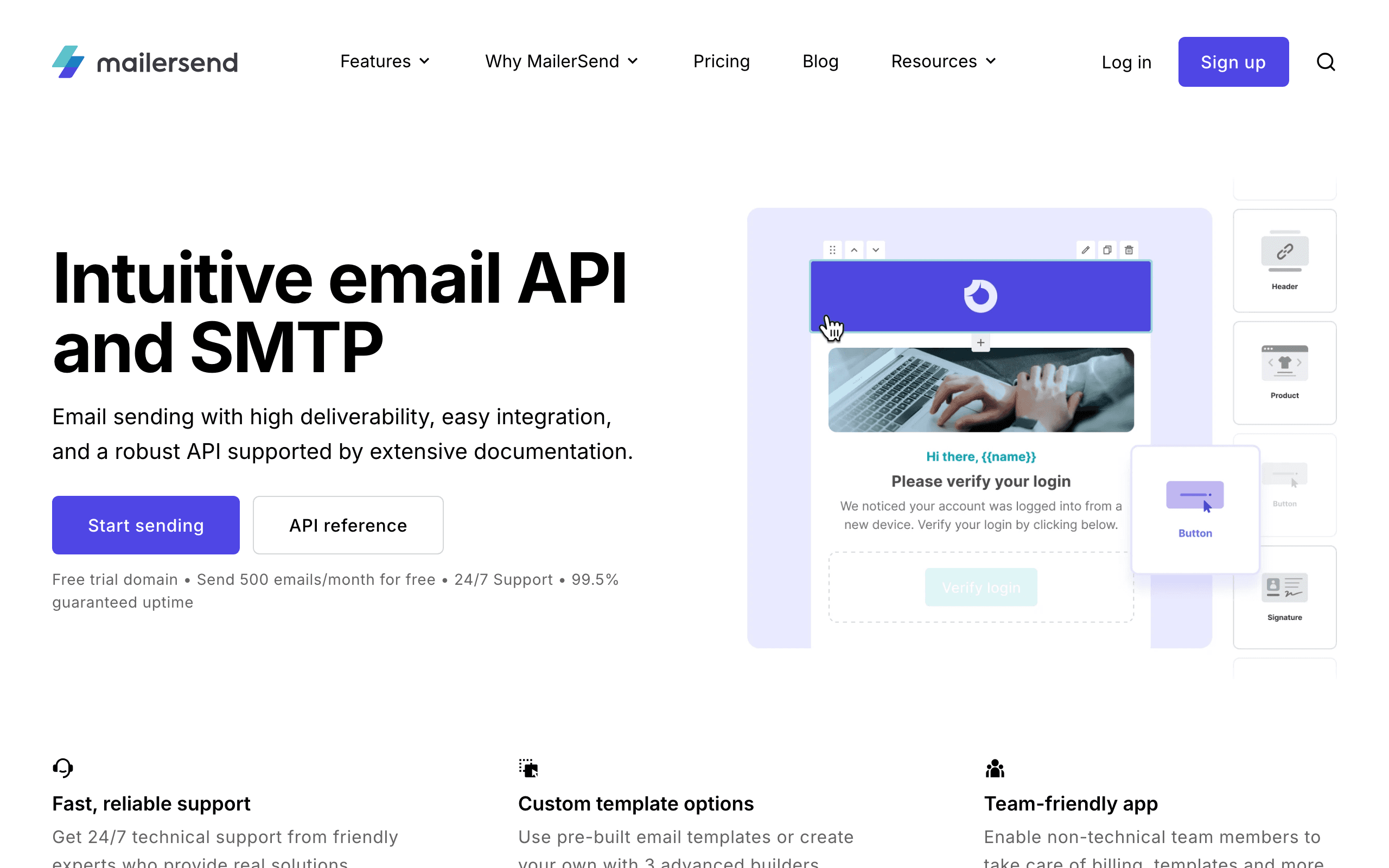
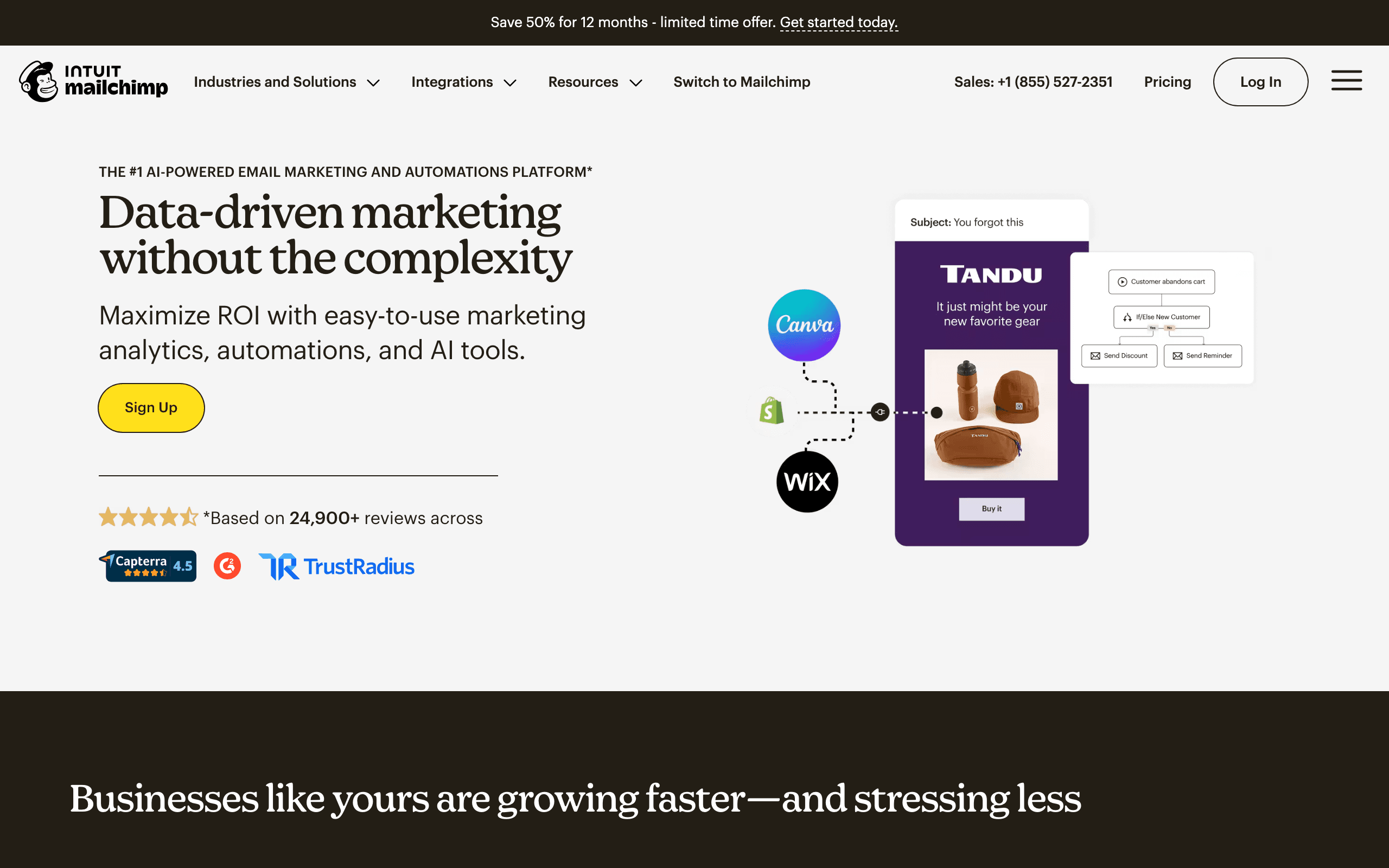
MailerSend and Mailchimp serve different purposes. MailerSend specializes in transactional email with verification. Mailchimp is a full marketing platform. They're not direct competitors.
Different Purposes
MailerSend sends password resets, receipts, and notifications. Mailchimp sends marketing campaigns, newsletters, and automations. If you need both, you'd use MailerSend + Mailchimp (or Mandrill).
Email Verification
MailerSend includes email verification. Mailchimp doesn't. For transactional with validated addresses, MailerSend is more complete.
Marketing Features
Mailchimp has landing pages, CRM, e-commerce integrations, and full automation. MailerSend is transactional-only and suggests MailerLite for marketing.
For SaaS Companies
Neither offers unified transactional + marketing with Stripe. Sequenzy offers Stripe integration with both transactional and marketing in one platform.
Making the Choice
Use MailerSend for transactional email. Use Mailchimp for marketing. Or use Sequenzy for unified SaaS email with Stripe integration.
The Mandrill Problem
One of the most telling differences between these platforms is how they handle transactional email. MailerSend was built for transactional from day one with a clean API and built-in verification. Mailchimp treats transactional as an afterthought through its Mandrill add-on, which requires a separate purchase, separate dashboard, and per-email pricing on top of your existing Mailchimp subscription.
For teams that need both transactional and marketing email, the Mailchimp plus Mandrill combination can be awkward and expensive. You end up managing two interfaces and two billing structures within the same ecosystem. This is where unified platforms like Sequenzy offer a cleaner alternative.
E-commerce vs SaaS Considerations
Mailchimp excels in e-commerce with deep Shopify and WooCommerce integrations, abandoned cart automations, and product recommendation features. If you run an online store, Mailchimp's marketing capabilities are hard to match at its price point.
For SaaS companies, Mailchimp's e-commerce focus is mostly irrelevant. You do not need product feeds or cart abandonment - you need trial-to-paid sequences, feature announcement campaigns, and billing-event triggers. Neither MailerSend nor Mailchimp addresses these SaaS-specific needs well, which is where purpose-built tools shine.
Template and Design Ecosystem
Mailchimp's template library is one of the most extensive in the industry with over 100 professionally designed templates. Its email editor has been refined over two decades and supports complex layouts with relative ease. For marketing teams that produce visually rich campaigns, Mailchimp's design ecosystem is a genuine advantage that MailerSend simply does not compete with, nor does it try to.
Email Design and Template Flexibility
MailerSend keeps its templates functional rather than flashy, which fits its transactional focus, while its consA notes the template selection stays fairly basic. Mailchimp goes the other direction with an extensive template library built for marketing campaigns, backed by a website builder and social media tools for teams building a full brand presence. If polished campaign design matters more than transactional reliability, Mailchimp's library has far more to work with.
List Management and Segmentation
MailerSend counts toward transactional sending volume and includes email verification built in, which helps keep bounce rates down before a message ever goes out. Mailchimp, at $135 a month for 10,000 contacts, manages subscribers as part of its full marketing platform, with automation and segmentation layered on top, though its consB notes automation gets limited on lower tiers. The two aren't really managing the same kind of list, since one is transactional and the other marketing-first.
Deliverability and Sender Reputation
Mailchimp's consB flags mixed reputation on pricing and support rather than raw deliverability, and it relies on its scale and market share to back its sending infrastructure. MailerSend, built by the MailerLite team, adds activity tracking webhooks and inbound parsing that help you monitor what happens after a transactional email leaves your servers. Neither replaces the other here: for pure marketing sends, Mailchimp's tooling goes deeper, while MailerSend stays lighter and cheaper for receipts and alerts.
Use-case matchups
| Situation | Best first look | Why |
|---|---|---|
| App-generated transactional email | MailerSend | MailerSend is built for API, SMTP, verification, inbound parsing, and transactional delivery workflows. |
| Marketing campaigns, newsletters, and ecommerce promotions | Mailchimp | Mailchimp is the broader marketing platform with templates, automations, landing pages, and ecommerce features. |
| Team that wants transactional plus SMS without Mailchimp | MailerSend | MailerSend is independent and avoids the Mailchimp/Mandrill dependency. |
| Team that needs a familiar marketing suite and large integration ecosystem | Mailchimp | Mailchimp wins when template library, integrations, and marketer familiarity are the priority. |
| SaaS team needing one place for marketing, transactional, and Stripe events | Sequenzy | Sequenzy is the better fit when MailerSend plus Mailchimp would create two systems and no subscription context. |
Best Fit by Transactional vs Marketing Need
Best transactional email service for app-generated messages
MailerSend is the better fit when the primary workload is password resets, receipts, alerts, verification, inbound parsing, and API-triggered email. It avoids buying a broad marketing suite for delivery work.
Best email marketing platform for broad SMB campaigns
Mailchimp is the better fit when marketers need templates, landing pages, ecommerce integrations, social tools, automations, and a familiar campaign ecosystem. It is the broader marketing choice.
Best email platform for SaaS marketing and transactional email together
Sequenzy is the better fit when using MailerSend plus Mailchimp would split customer context. SaaS teams need campaigns, transactional messages, and Stripe lifecycle triggers in one place.
Pricing reality
MailerSend and Mailchimp are not priced for the same job. MailerSend should be evaluated by transactional volume, verification, SMS, and deliverability tooling. Mailchimp should be evaluated by contacts, marketing features, ecommerce needs, and whether automations require higher tiers.
If you need both, the real comparison is not MailerSend vs Mailchimp; it is MailerSend plus a marketing platform versus Mailchimp plus Mandrill versus a unified product.
Sequenzy is relevant when the team wants one workspace for campaigns, transactional email, subscriber data, and Stripe-triggered lifecycle automation.
Review signals
The MailerSend review snippets emphasize the MailerLite backing, free-tier value, SMS, and transactional utility, with cautions about limited marketing features.
The Mailchimp snippets emphasize market share, templates, social tools, and general platform capability, while warning about price increases and a limited free plan. Use those signals to test the exact tier and feature set you would buy.
Migration checklist
| Workstream | Moving to MailerSend | Moving to Mailchimp | Moving to Sequenzy |
|---|---|---|---|
| Scope split | Decide what handles marketing once transactional email moves to MailerSend. | Decide whether Mandrill is needed for transactional email. | Consolidate marketing and transactional scope into one workspace. |
| Contacts | Move only transactional recipients and suppressions if marketing stays elsewhere. | Import audiences, segments, tags, ecommerce data, and suppressions. | Import subscribers, attributes, tags, suppressions, and customer lifecycle data. |
| Templates | Rebuild API templates, variables, and transactional layouts. | Rebuild campaign templates, automations, landing pages, and forms. | Rebuild campaign and transactional templates together. |
| Integrations | Replace app API calls, SMTP settings, webhooks, and validation flows. | Reconnect ecommerce, forms, CRM, ads, and Mandrill if needed. | Connect app events, Stripe, ecommerce, and transactional paths. |
| Reporting | Validate delivery, bounce, complaint, and verification logs. | Validate campaign, automation, ecommerce, and audience reporting. | Validate campaign, automation, transactional, and subscription reporting. |
Decision checklist
- Are you solving transactional email, marketing email, or both?
- Does Mailchimp's marketing suite justify its contact-based pricing?
- Would MailerSend require a second marketing platform immediately?
- Is Mandrill acceptable, or do you want transactional email independent of Mailchimp?
- Do SaaS billing events need to drive email automatically?









