Overview
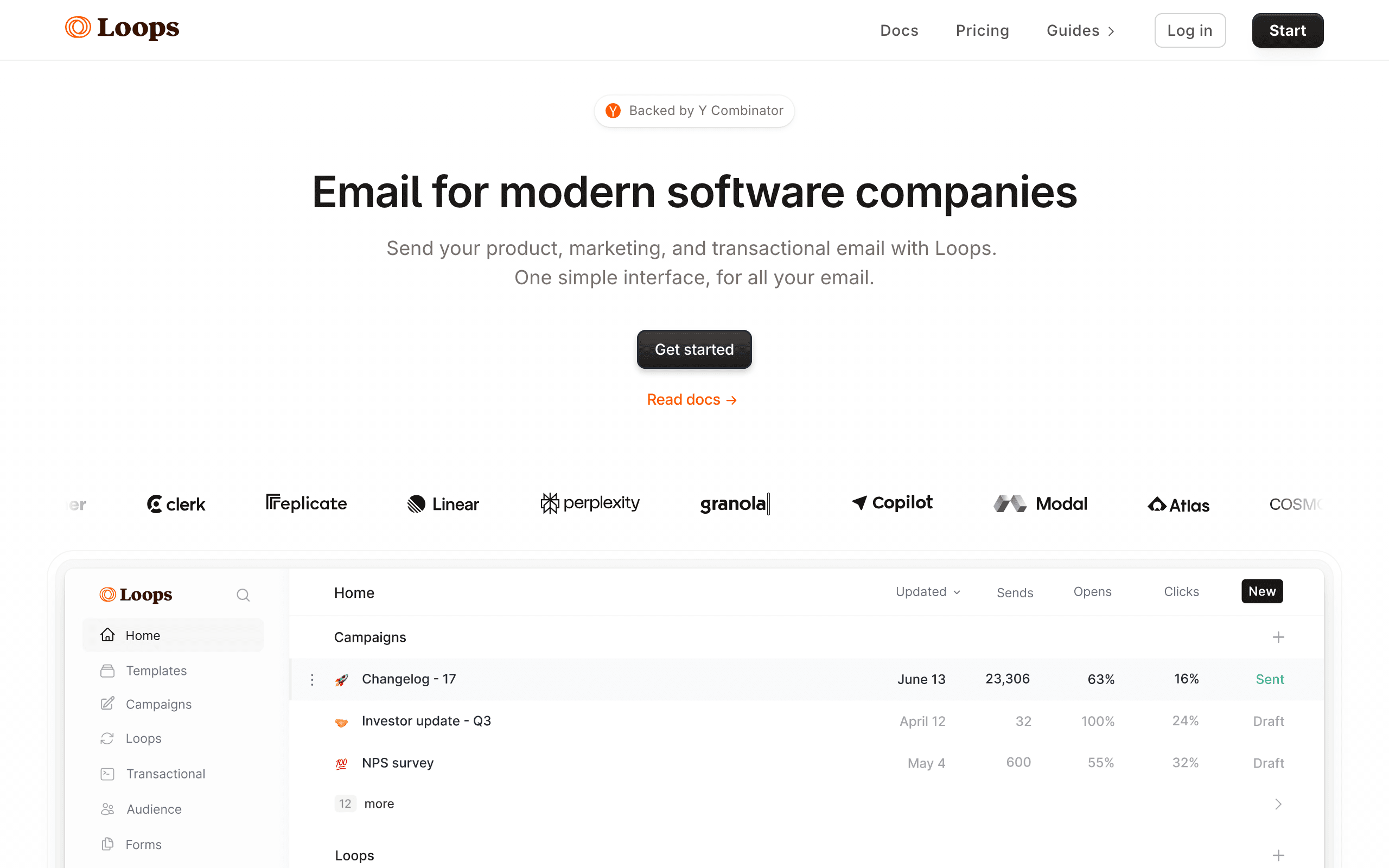
Loops and SendGrid serve different email needs. Loops is a SaaS-focused email marketing platform built for lifecycle automation, onboarding sequences, and behavioral triggers. SendGrid (owned by Twilio) is enterprise-grade transactional email infrastructure used by companies sending billions of emails. Understanding this difference is key to choosing.
Different Problems, Different Tools
Loops solves "how do I send the right marketing email at the right time to my SaaS users?" SendGrid solves "how do I reliably deliver millions of transactional emails?" These are related but distinct problems. See our Loops alternatives guide for more SaaS-focused options.
Marketing Automation
Loops excels at email automation for SaaS. Visual workflow builders, behavioral triggers from your app events, audience segmentation - it's built for this. SendGrid has Marketing Campaigns, but it's a separate product that's less focused. If marketing automation is your priority, Loops is purpose-built.
Transactional at Scale
SendGrid is the industry standard for transactional email. 15+ years of deliverability optimization, dedicated IPs, inbound parsing, and proven scale to billions of emails. Loops includes transactional free, but SendGrid's infrastructure is more battle-tested for critical email.
The Unified Alternative
Many SaaS companies end up using both: Loops for marketing, SendGrid for transactional. This works but means two platforms. Sequenzy offers unified marketing and transactional with native Stripe integration - one platform for SaaS email.
Making the Choice
Choose Loops for SaaS marketing automation with quick setup. Choose SendGrid for enterprise-grade transactional at scale. For SaaS needing both marketing campaigns and reliable transactional emails in one platform, consider Sequenzy.
Scale and Infrastructure
SendGrid processes billions of emails monthly across its infrastructure. For companies sending millions of transactional emails, this proven scale provides confidence. Dedicated IPs, IP warming tools, and sophisticated deliverability monitoring support high-volume sending.
Loops is designed for the volumes typical of SaaS marketing: thousands to hundreds of thousands of emails monthly. For most SaaS companies, this is sufficient. Companies with unusually high transactional volume may find SendGrid's infrastructure more appropriate for that specific workload.
Post-Twilio Acquisition Reality
SendGrid was acquired by Twilio in 2019, and the impact on the product has been mixed. The transactional infrastructure remains solid, but the marketing side has seen less investment. Support quality and response times have declined according to many users. Pricing has become more complex with multiple product tiers.
Loops is an independent company focused entirely on SaaS email. This focus translates to faster feature development, more responsive support, and a clearer product direction. For SaaS companies that value vendor responsiveness and product focus, Loops' independence is an advantage.
The Unified vs Split Stack Decision
Running Loops for marketing and SendGrid for transactional means managing two vendors, two API integrations, and two billing relationships. The advantage is best-in-class capabilities for each email type. The disadvantage is operational complexity and split analytics.
A unified platform like Loops handles both but may not match SendGrid's transactional infrastructure at scale. The right choice depends on your sending volume and how much you value operational simplicity versus specialized capabilities. Use our email warmup calculator to plan any infrastructure changes.
Use-case matchups
| Situation | Best first look | Why |
|---|---|---|
| SaaS team needs lifecycle campaigns and product emails | Loops | Loops is built around SaaS contacts, events, and marketing messages. |
| Application needs high-volume transactional infrastructure | SendGrid | SendGrid is stronger for API delivery, scale, dedicated IPs, and infrastructure controls. |
| Team wants one SaaS email platform with Stripe events | Sequenzy | Sequenzy combines marketing, transactional, and billing-triggered email. |
| Marketing team owns onboarding and lifecycle | Loops | It is easier to operate than a transactional-first API. |
| Engineering team owns delivery at massive volume | SendGrid | Its API, SDKs, webhooks, and deliverability tooling fit infrastructure ownership. |
Best Fit by Email Stack Ownership
Best SaaS email platform for marketing-owned lifecycle campaigns
Loops is the better fit when product or growth owns onboarding, lifecycle campaigns, product updates, and routine transactional-style messages. It keeps the workflow closer to contacts, events, and campaigns.
Best transactional email API for high-volume engineering teams
SendGrid is the better fit when engineering owns delivery infrastructure at scale. Dedicated IPs, API depth, SDKs, webhooks, and deliverability controls matter more than a SaaS marketing workflow.
Best email platform for Stripe-aware marketing and transactional email
Sequenzy is the better fit when the team wants campaigns, transactional messages, and subscription events in one stack. It is most relevant when billing triggers are as important as product events.
Pricing reality
Loops prices around contacts and SaaS marketing usage, with transactional email included. Confirm contact tier, event volume, transactional limits, and whether its delivery controls are enough for production-critical mail.
SendGrid prices around sending volume and separates marketing from transactional. Confirm API plan, Marketing Campaigns cost, dedicated IP needs, validation add-ons, retention, support, and any overage rules.
Sequenzy is relevant when one SaaS team wants lifecycle campaigns, transactional email, and Stripe triggers without operating separate marketing and infrastructure tools.
Review signals
| Platform | What reviews in this page suggest | What to validate |
|---|---|---|
| Loops | Buyers value SaaS focus, clean setup, event-driven lifecycle email, and modern workflow. | Confirm maturity, deliverability controls, API fit, and transactional requirements. |
| SendGrid | Buyers value scale, API depth, SDKs, deliverability tooling, dedicated IPs, and infrastructure reliability. | Confirm support quality, pricing complexity, marketing limitations, and split-stack analytics. |
Migration checklist
| Workstream | Moving toward Loops | Moving toward SendGrid | Moving toward Sequenzy |
|---|---|---|---|
| Data | Import contacts, properties, events, lists, and suppressions. | Import contacts for marketing, suppression lists, templates, and domain data. | Import subscribers, attributes, tags, suppressions, Stripe IDs, and app events. |
| API work | Track product events and update transactional calls if moving app mail. | Implement SendGrid API/SMTP, webhooks, templates, categories, and unsubscribe groups. | Implement transactional routes, product events, and Stripe-triggered flows. |
| Automations | Rebuild lifecycle campaigns, onboarding, product updates, and transactional-style emails. | Rebuild marketing workflows separately from transactional templates. | Rebuild onboarding, trial, upgrade, dunning, transactional, and campaign flows. |
| Deliverability | Configure domains and validate sending reputation. | Configure SPF, DKIM, DMARC, IP warming, dedicated IPs, bounce/complaint webhooks, and monitoring. | Configure domains, transactional streams, suppressions, and lifecycle reporting. |
| Reporting | Track lifecycle, product email, and campaign performance. | Track API delivery, bounces, blocks, spam reports, and marketing campaign metrics separately. | Track lifecycle, billing, transactional, and campaign reporting together. |
Decision checklist
- Is the main problem lifecycle marketing or delivery infrastructure?
- Do you need SendGrid-level dedicated IP and scale controls now?
- Will split analytics between marketing and transactional create operational pain?
- Are Stripe events part of the email logic?
- Who owns the system: marketing, product, engineering, or lifecycle?