

Overview
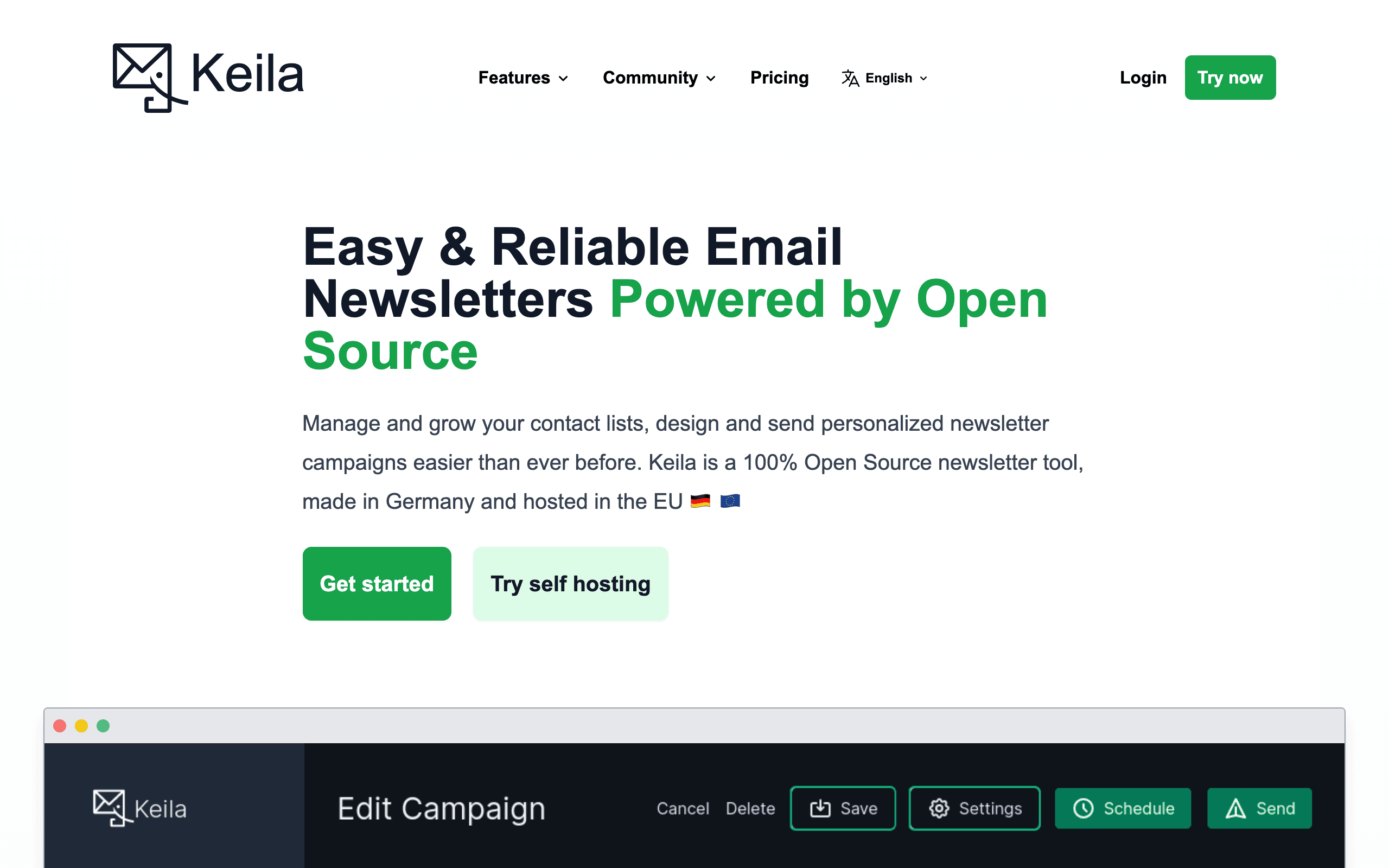
Keila and Elastic Email serve different needs in the email space. Keila is a open-source email newsletter tool with EU hosting. Elastic Email is a budget-friendly email delivery and marketing platform.
The choice depends on what you need: open source (agplv3) (Keila) or very affordable (Elastic Email). For SaaS businesses specifically, Sequenzy offers purpose-built features that neither tool provides.
Pricing Comparison
- Keila: $8-32/month (cloud) - Open source (AGPLv3). Self-hosted free. EU cloud.
- Elastic Email: $19/month - Budget delivery + basic marketing. Free tier available.
- Sequenzy: $99/month for 120,000 emails, unlimited subscribers, fully managed. See pricing.
Where Keila Wins
Open source (AGPLv3)
Keila offers open source (agplv3), which is a genuine advantage for teams that need it.
EU cloud hosting
Keila offers eu cloud hosting, which is a genuine advantage for teams that need it.
Visual editor + MJML
Keila offers visual editor + mjml, which is a genuine advantage for teams that need it.
Privacy-first
Keila offers privacy-first, which is a genuine advantage for teams that need it.
Where Elastic Email Wins
Very affordable
Elastic Email offers very affordable, which matters for teams that prioritize this.
Marketing + transactional
Elastic Email offers marketing + transactional, which matters for teams that prioritize this.
Template library
Elastic Email offers template library, which matters for teams that prioritize this.
Basic automation
Elastic Email offers basic automation, which matters for teams that prioritize this.
Use-case matchups
| Use case | Better fit | Why |
|---|---|---|
| Open-source newsletter stack | Keila | AGPL licensing, self-hosting, and EU hosting support data-control requirements. |
| Budget delivery and basic marketing | Elastic Email | SMTP/API delivery, templates, and low-cost sending fit teams that want convenience. |
| Privacy-first EU operations | Keila | Self-hosting or EU cloud can simplify data-residency conversations. |
| Managed email without infrastructure work | Elastic Email | Teams avoid maintaining their own stack and deliverability operations. |
| SaaS lifecycle and transactional email | Sequenzy | Stripe-triggered product and billing workflows are outside both tools' main focus. |
Best Fit by Data Control
Best open-source newsletter platform for EU data-control requirements
Keila fits teams that want AGPL source access, self-hosting, EU hosting options, and tighter control over subscriber data. It is strongest for privacy-sensitive newsletters, public-sector communication, nonprofits, and European organizations that need auditability and data residency.
Best managed email platform for budget delivery and basic marketing
Elastic Email is the better fit when the team wants SMTP/API delivery, templates, contacts, and low-cost campaigns without operating its own newsletter stack. Choose it when convenience, campaign tooling, and managed infrastructure matter more than source access.
Best SaaS email platform for Stripe lifecycle and transactionals
Sequenzy fits subscription teams that need product and billing-triggered lifecycle email alongside transactional sending. It is more relevant when onboarding, payment, upgrade, cancellation, and product-event messages should share one managed subscriber model.
Open-Source vs Commercial Trade-off
Keila ships under the AGPLv3 license, so you can read the code, run it yourself, and never worry about a vendor changing your terms. Elastic Email keeps its platform closed, at $19 a month, which buys convenience rather than access to the underlying system. Choosing Keila makes sense if avoiding lock-in matters more than having a bigger team behind the tool; choosing Elastic Email makes sense if you'd rather not maintain servers yourself and can live with fewer automation features.
EU Data Sovereignty
Self-hosting Keila keeps subscriber data entirely on infrastructure you control, which matters if GDPR or data residency rules apply to your organization. Elastic Email's $19-a-month plan stores your lists on its own servers instead, and while that's simpler day to day, you're trusting a third party with that data and its future pricing decisions. Keila's EU cloud option splits the difference for teams that want European hosting without running their own hardware.
The Self-Hosting Reality
Running Keila yourself means you own updates, backups, and uptime, work that suits a team with DevOps skills already in place. Elastic Email removes that burden entirely for $19 a month, handling the infrastructure so you can focus on sending. Keila's cloud tier, priced from $8 to $32, offers a middle option if you want the open-source codebase without hosting it yourself. Pick based on whether your team has the technical bandwidth to manage servers or would rather not.
Pricing reality
Keila can be extremely affordable, especially self-hosted, but self-hosting has operational cost: maintenance, backups, deliverability, updates, and incident response. Elastic Email's low monthly price buys convenience and managed infrastructure.
The cheaper option depends on whether the team values control or time. A technical team may prefer Keila; a team that wants a vendor-managed sender may prefer Elastic Email.
Review signals
The cited Keila review themes should be read for open-source control, privacy, self-hosting responsibility, MJML/template workflow, and the operational burden of running the stack. The cited Elastic Email review themes should be read for affordability, managed infrastructure, transactional plus marketing coverage, templates, and support or deliverability tradeoffs. The useful review question is whether your team wants ownership of infrastructure or a lower-friction vendor-managed sender.
Migration checklist
| Workstream | What to check |
|---|---|
| Contacts and consent | Export subscribers, unsubscribes, bounces, tags, segments, and consent records. |
| Hosting responsibility | If moving to Keila, assign ownership for hosting, updates, backups, monitoring, and security. |
| Templates | Rebuild MJML, visual templates, saved layouts, and transactional templates in the destination platform. |
| Automations | Recreate basic automations, campaign sequences, transactional sends, and suppression rules manually. |
| Deliverability | Verify SMTP credentials, DKIM, SPF, DMARC, bounce handling, complaint handling, and warm-up. |
| Data residency | Confirm whether EU hosting, self-hosting, or vendor storage meets compliance requirements. |
| Reporting | Export campaign, delivery, bounce, click, and subscriber reports before closing the old setup. |
Decision checklist
- Is open-source control a requirement or a preference?
- Can the team maintain self-hosted email infrastructure?
- Is budget delivery more important than marketing automation depth?
- Are EU hosting and data residency part of the buying criteria?
- Is SaaS billing-triggered automation the actual requirement?









