Overview
Flodesk and Buttondown serve different newsletter creators. Flodesk emphasizes beautiful visual design with flat pricing. Buttondown is a minimalist, developer-friendly platform with Markdown support and paid newsletter features.
Different Philosophies
Flodesk is for visual creators who want stunning emails with minimal effort. Buttondown is for writers and developers who prefer Markdown and don't need fancy designs. These are fundamentally different approaches to newsletters.
Design vs Simplicity
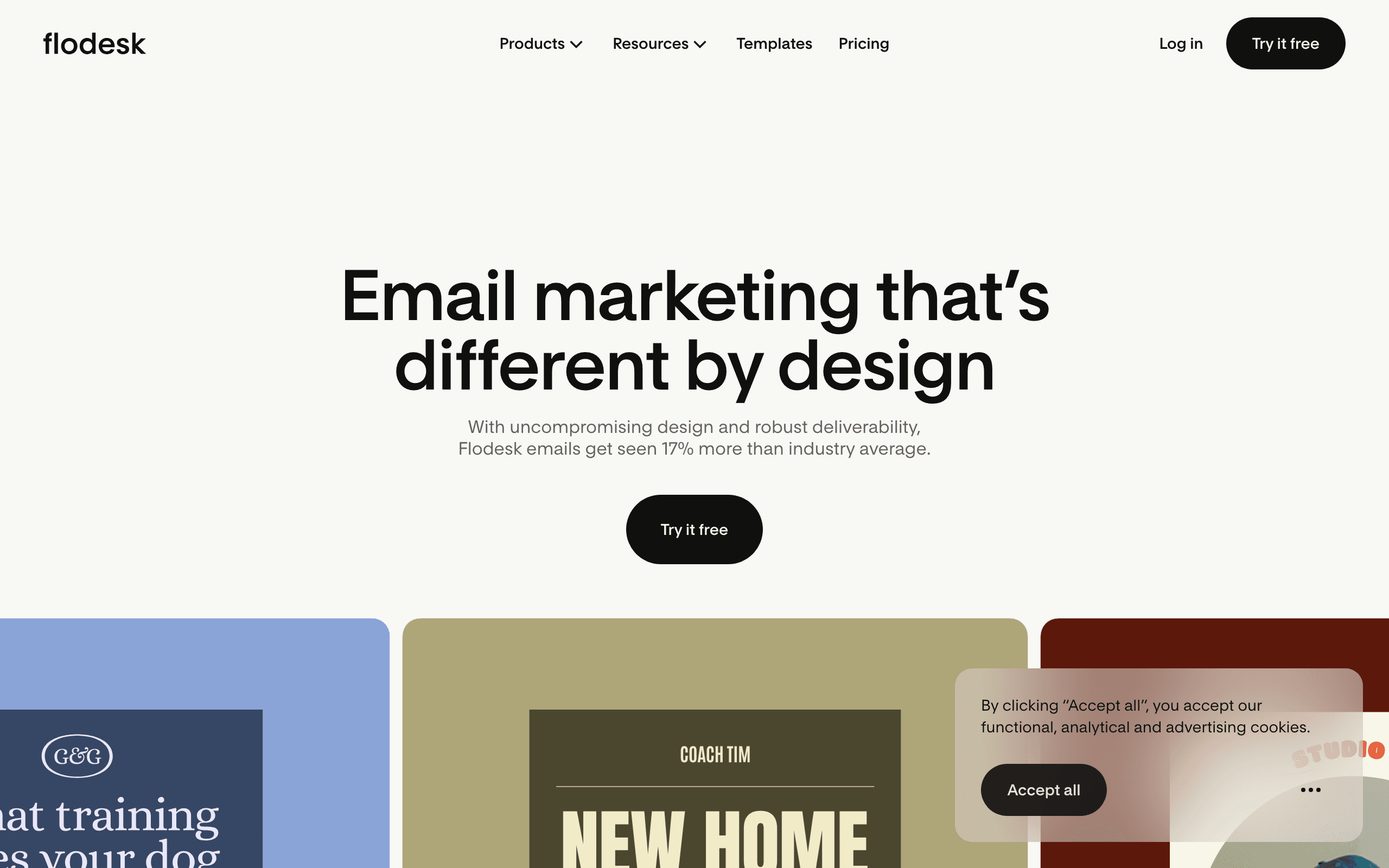
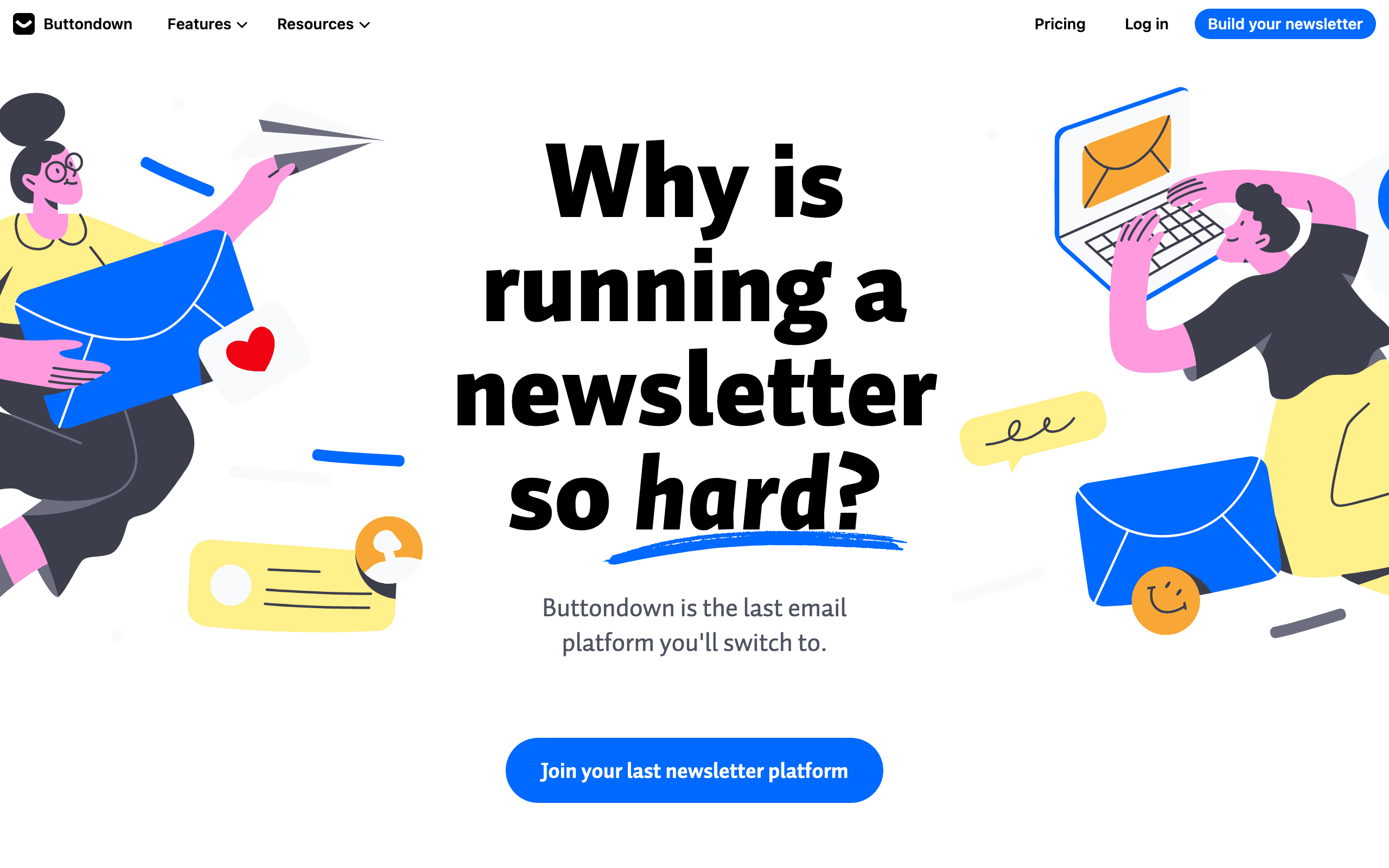
Flodesk has stunning, modern templates that make every email look professionally designed. Buttondown is intentionally minimal - text-focused emails that feel personal and authentic. Neither is wrong; they serve different content styles.
Developer Experience
Buttondown is built for developers - native Markdown support, excellent API documentation, and automation features. Flodesk is designed for visual creators with limited technical capabilities.
Paid Newsletters
Buttondown supports paid subscriptions natively. You can monetize your newsletter directly through the platform. Flodesk has no monetization features - it's purely for sending beautiful free emails.
Pricing at Scale
Flodesk's flat $38/month is revolutionary for growing lists. At 50k subscribers, Flodesk stays $38 vs Buttondown's ~$79. For audiences that grow, Flodesk's model offers predictable costs.
For SaaS Companies
Neither platform is built for SaaS. Both are newsletter tools, not business automation platforms. For SaaS companies, consider Sequenzy which offers purpose-built SaaS features.
Making the Choice
Choose Flodesk for beautiful visual newsletters. Choose Buttondown for developer-friendly features and paid newsletter monetization. For SaaS, consider Sequenzy.
Two Completely Different Content Philosophies
Flodesk and Buttondown represent polar opposite approaches to newsletter content. Flodesk assumes your content is visual - images, branded layouts, design elements that communicate through aesthetics. Buttondown assumes your content is text - ideas, analysis, and writing that communicates through words. Choosing between them is really choosing what kind of newsletter you are building.
For photographers, designers, and lifestyle brands, visual presentation is the content. An email from a photographer that looks plain undermines the brand. For technical writers, analysts, and thought leaders, clean text feels more authentic and personal than a designed template. Neither approach is superior - they serve different communication styles.
The API and Automation Divide
Buttondown's API is a first-class feature that enables programmatic newsletter management. You can create subscribers, send issues, manage tags, and query analytics through well-documented endpoints. This lets developers integrate newsletters into their existing workflows - publishing from a CMS, triggering sends from CI/CD pipelines, or syncing subscriber data with other systems.
Flodesk's API is limited and clearly secondary to the visual interface. This is not a weakness for its target audience - visual creators rarely need API access. But for technically inclined newsletter operators who want to automate their workflow, Buttondown's API capabilities are a genuine differentiator that cannot be replicated through Flodesk's interface.
Monetization Through Paid Subscriptions
Buttondown supports paid newsletter subscriptions natively, allowing writers to charge subscribers for premium content. This feature has become increasingly important as the creator economy matures and audiences show willingness to pay for valuable newsletters. Flodesk has no monetization features - it is purely a tool for sending beautiful free emails. For newsletter creators who view their audience as a revenue source, Buttondown's paid subscription capability transforms a marketing channel into a business.
Review signals
The Flodesk reviews here support the visual-brand fit: a photographer values portfolio-quality newsletters, while a developer complains about missing Markdown and API workflows.
The Buttondown reviews support the developer-newsletter fit: Markdown, API automation, and paid subscriptions are praised, while design flexibility is the tradeoff. That makes this a content-workflow decision rather than a generic newsletter comparison.
Use-case matchups
| Use case | Better fit | Why |
|---|---|---|
| Visual creator newsletter | Flodesk | Polished templates and landing pages make image-heavy emails look professional. |
| Technical or Markdown-first newsletter | Buttondown | Markdown, API access, and a minimal writing workflow fit developer audiences. |
| Large list with simple visual campaigns | Flodesk | Flat pricing becomes more valuable as subscriber count grows. |
| Paid newsletter business | Buttondown | Paid subscriptions are built in, while Flodesk needs external monetization tools. |
| SaaS lifecycle and transactional email | Sequenzy | Product-event and billing email are outside both newsletter-focused platforms. |
Best Fit by Creative Workflow
Best email marketing tool for visual creator newsletters
Flodesk is the better fit when the newsletter is image-heavy, brand-led, and presentation-sensitive. Designers, photographers, coaches, and boutiques get more value from polished templates and landing pages than from Markdown control.
Best newsletter tool for technical writers
Buttondown is the better fit when the writing workflow is Markdown-first and API-friendly. It suits developer newsletters, text-heavy publications, code examples, paid subscriptions, and creators who want a focused publishing tool instead of a visual campaign builder.
Best email marketing tool for SaaS lifecycle email
Sequenzy is the better fit when the list belongs to a product business and messages need transactional, onboarding, billing, and retention context. Flodesk and Buttondown are newsletter tools, not product lifecycle email systems.
Pricing reality
Buttondown is cheaper at 10,000 subscribers, but Flodesk's flat pricing can become cheaper at larger list sizes. The better value depends on whether subscriber growth or paid newsletter revenue is the more important economic driver.
Do not choose Flodesk only for price if the writing workflow needs Markdown and API automation. Do not choose Buttondown only for price if the brand depends on visual presentation.
Migration checklist
| Workstream | What to check |
|---|---|
| Subscribers and consent | Export subscribers, unsubscribes, bounces, tags, custom fields, and consent records. |
| Content format | Decide whether archives and future issues should be rebuilt as visual templates or Markdown posts. |
| Paid subscriptions | If leaving Buttondown, preserve paid subscriber data, Stripe status, pricing, access rules, and revenue history. |
| Design assets | If leaving Flodesk, export or recreate templates, forms, landing pages, brand styles, and images. |
| Automations | Rebuild welcome, RSS, paid-subscriber, segment, and newsletter workflows manually. |
| Integrations | Reconnect API workflows, CMS publishing, forms, analytics, Stripe, and Zapier-style automations. |
| Sender setup | Reverify SPF, DKIM, DMARC, custom domains, branded links, unsubscribe behavior, and test rendering. |
Decision checklist
- Is the newsletter primarily visual or text-driven?
- Is Markdown a must-have workflow?
- Will paid subscriptions be sold directly through the newsletter platform?
- Does flat pricing matter at projected list size?
- Will API automation be part of the publishing workflow?