Capture tool or enterprise personalization platform
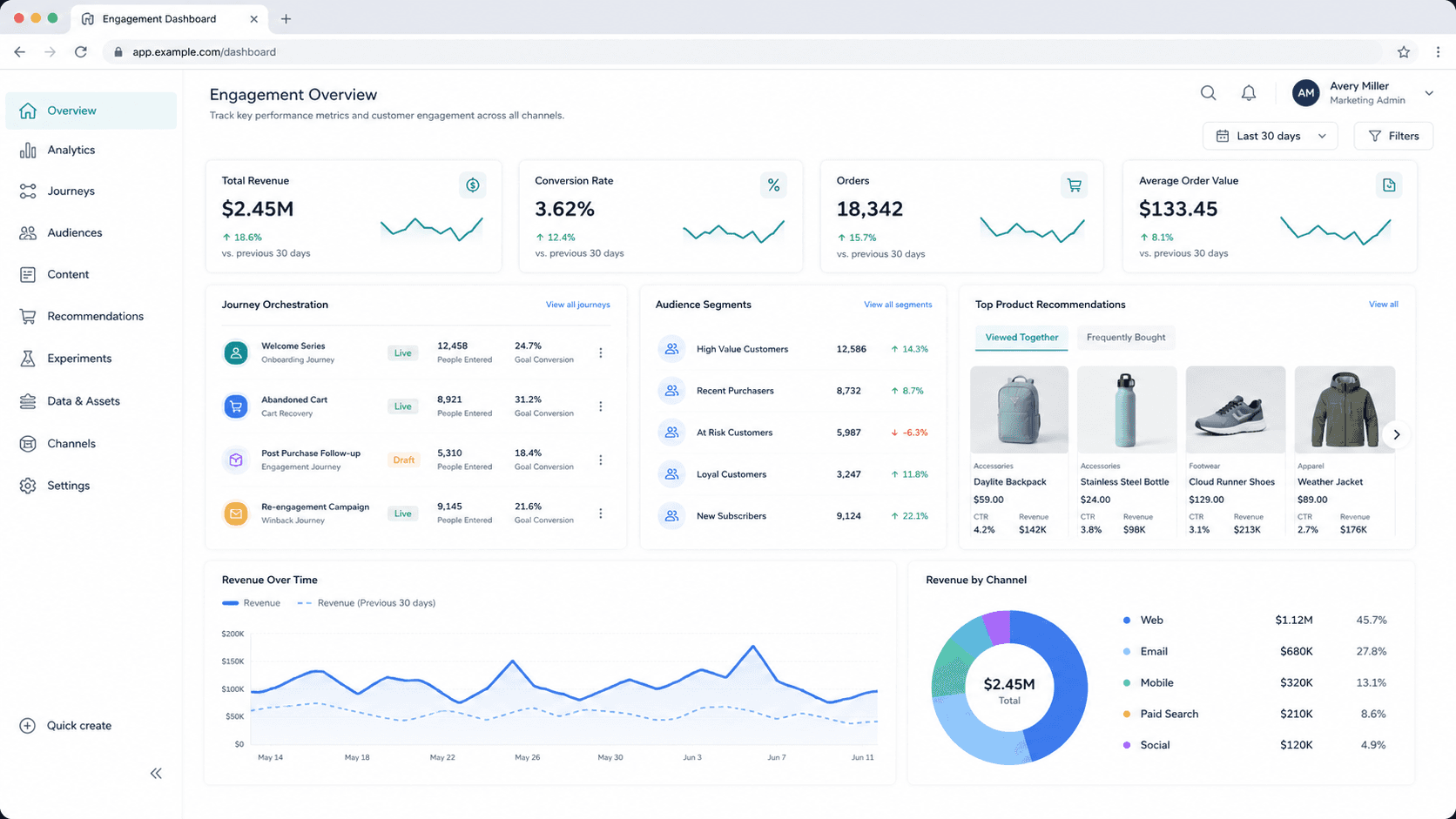
Bloomreach and Privy are not usually direct substitutes. Bloomreach is an enterprise customer engagement and personalization platform. Privy is primarily useful for onsite capture, popups, offers, cart-save prompts, and simple ecommerce follow-up. They answer different funnel problems.
If the store needs more subscribers and better onsite offers, Privy is closer to the current job. If the store already has scale and needs customer data activation across journeys, Bloomreach is the more relevant platform.
Use-case matchups
| Need | Better fit | Why |
|---|---|---|
| Enterprise CDP and personalization | Bloomreach | Bloomreach is built for deeper customer data activation and personalization programs. |
| Onsite capture, popups, and offers | Privy | Privy is closer to subscriber growth, cart-save prompts, and simple ecommerce follow-up. |
| Product recommendations and journey orchestration | Bloomreach | That requires more data depth than a capture-focused tool. |
| Fast Shopify list growth | Privy | It is easier to validate with opt-in rate and offer conversion. |
| Shopify/WooCommerce email with transactional messages | Sequenzy | Sequenzy is narrower and avoids popup or enterprise personalization scope. |
Best Fit by Onsite Capture and Personalization Scope
Best enterprise platform for customer data activation
Bloomreach is the better fit when the project requires CDP depth, recommendations, product discovery, catalog-driven personalization, and enterprise journeys. It should be considered when customer data activation is the funded initiative, not just list growth.
Best Shopify popup tool for onsite capture
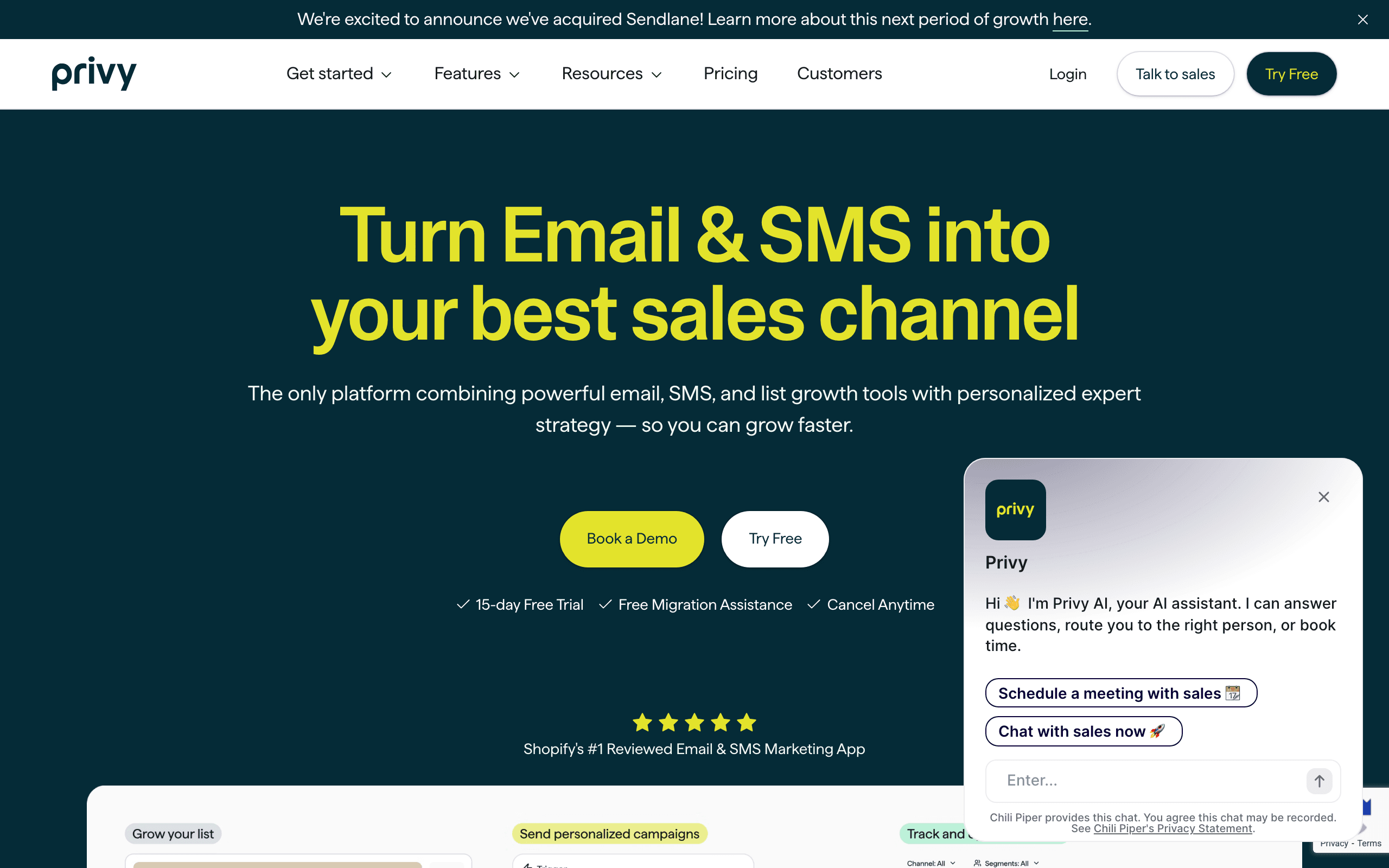
Privy is the better fit when the immediate work is popups, offers, cart-save prompts, list growth, and simple ecommerce follow-up. It is easier to validate quickly through opt-in rate, offer conversion, and recovered revenue.
Best email tool for Shopify and WooCommerce lifecycle messages
Sequenzy is the better fit when the team wants ecommerce lifecycle email, newsletters, Stripe triggers, and transactional messages without popup tooling or enterprise personalization. It sits between capture-only workflows and large data platforms.
Pricing reality
The existing pricing data is directional: Bloomreach is custom-priced based on modules, channels, data volume, and contract scope, while Privy varies by plan, contacts, usage, and selected features. Do not compare a custom enterprise quote against a generic plan page. Price Bloomreach around CDP depth, catalog/data activation, personalization, implementation, and services; price Privy around contacts, sends, onsite displays, ecommerce features, and support.
Review signals
Existing review themes for Bloomreach mention CDP depth, reporting, ecommerce retention fit, setup effort, and pricing clarity. Existing Privy review themes focus on campaign work, integrations, and day-to-day usability, with pricing and advanced features needing real-usage checks. Read reviews from stores with similar traffic, ecommerce platform, and capture or personalization goals.
Why Bloomreach can be the better fit
Bloomreach is stronger when the team needs advanced customer data, segmentation, personalization, product recommendations, and omnichannel journey orchestration. It should be evaluated against data maturity and personalization use cases, not against popup builders.
It is too heavy when the real problem is list growth or abandoned-cart capture on a small Shopify site.
Why Privy can be the better fit
Privy is stronger when the store needs to improve opt-in rate, test offers, recover abandoning visitors, and start simple campaign flows. It is more approachable and easier to validate with conversion metrics.
The tradeoff is downstream depth. Privy does not replace a CDP, enterprise segmentation, or personalization engine.
Evaluation checklist
| Question | Why it matters |
|---|---|
| Is the core problem onsite capture? | Privy is stronger when opt-in rate, offers, and cart-save prompts are the immediate work. |
| Is the core problem customer data activation? | Bloomreach is stronger when CDP depth, recommendations, and personalization are the funded project. |
| Are catalog and identity data ready? | Bloomreach needs clean data and journey ownership to justify the implementation. |
| Can conversion lift be measured quickly? | Privy should be validated against opt-in rate, cart recovery, and email revenue. |
| What needs to migrate? | Forms, offers, templates, segments, suppressions, reports, consent, and ecommerce data sync need separate handling. |
Migration checklist
- Export current popup rules, forms, offers, templates, flows, segments, suppression lists, and reporting baselines.
- Rebuild capture experiences first: welcome offer, exit intent, cart saver, newsletter signup, and post-purchase capture.
- Preserve consent and unsubscribe state before importing contacts into a new email layer.
- QA mobile and desktop display rules so forms do not hurt checkout or storefront usability.
- Monitor opt-in rate, cart recovery, unsubscribe rate, spam complaints, and revenue attribution after launch.
Where Sequenzy fits
Sequenzy can be the email layer after a capture tool. It does not replace Privy's popups or Bloomreach's enterprise personalization, but it can run Shopify/WooCommerce lifecycle email, transactional messages, newsletters, and Stripe-aware flows.
Decision checklist
| Choose | When |
|---|---|
| Bloomreach | You need CDP depth, personalization, product recommendations, customer data activation, and enterprise journeys. |
| Privy | You need onsite capture, popups, offers, cart-save prompts, and simpler ecommerce follow-up. |
| Sequenzy | You need Shopify/WooCommerce lifecycle email, newsletters, Stripe triggers, and transactional email. |
| Re-check pricing | Modules, channels, data volume, contacts, sends, stores, add-ons, implementation, and support can change the real cost materially. |