
Updated 2026-03-15

Best Email Marketing Tools for Garden and Outdoor Stores

Seasonal demand, regional growing zones, and repeat purchases make email marketing essential for garden retailers.

Garden and outdoor living e-commerce operates on nature's calendar. Planting seasons, weather patterns, and regional growing zones drive purchase timing. The right email platform helps you send region-specific planting reminders, capture spring demand before competitors, and build year-round revenue through seasonal product cycles. I reviewed 19 email marketing tools that work well for garden and outdoor retailers, focusing on segmentation, seasonal automation, and pricing that matches the seasonal revenue pattern.

TL;DR

For most garden stores, Sequenzy offers the best combination of AI seasonal campaigns and pay-per-email pricing that matches seasonal send patterns - start free with up to 2,500 emails/month. For established stores with large catalogs wanting predictive product recommendations, Klaviyo is the most powerful but expensive option. For budget-conscious stores wanting email plus SMS for time-sensitive alerts, Omnisend or Brevo deliver good value.

Why Garden and Outdoor Stores Need Email Marketing

Seasonal Revenue Optimization

Spring and early summer account for the bulk of garden sales. Email campaigns that start in late winter build anticipation and capture early planners. A well-timed spring campaign sequence can account for 30-40% of annual email revenue.

Regional Segmentation

A customer in Florida has a completely different planting schedule than one in Minnesota. Segmenting by region or USDA zone and sending location-relevant content dramatically improves engagement and conversion.

Repeat Purchase Cycles

Garden supplies are inherently repeatable: seeds, soil, fertilizer, and pest control need replenishing. Automated replenishment reminders drive predictable recurring revenue throughout the growing season.

Expert Content Builds Loyalty

Garden enthusiasts value expertise. Emails with planting tips, care guides, and seasonal advice position your store as an authority and keep subscribers engaged between purchases.

Garden and Outdoor Living E-commerce Email Marketing Benchmarks

Know these numbers before you start. They'll help you set realistic goals and pick the right tool.

22-30%
Average Open Rate

Garden e-commerce emails typically see 22-30% open rates. Seasonal planting content and regional tips perform best. Spring campaign emails often exceed 35% as gardeners actively seek information.

3-5%
Average Click Rate

Click rates of 3-5% are typical. Product recommendation emails and spring preparation campaigns drive the highest clicks. Replenishment reminders also perform well because they address an immediate need.

Saturday-Sunday 8-10am
Best Send Time

Gardeners plan and shop on weekend mornings. Saturday and Sunday emails catch people in gardening mode. Weekday sends work for time-sensitive alerts (weather, limited stock) but weekend mornings consistently outperform for general campaigns.

30-40% of annual email revenue
Spring Campaign Revenue Share

A well-executed spring campaign sequence can account for 30-40% of annual email revenue. This makes your late-winter to early-spring email strategy the most important revenue driver of the year.

Important Tips Before You Choose

Lessons from garden and outdoor living e-commercewho've been doing this for years. Save yourself the trial and error.

Segment your list by USDA growing zone or region

A customer in zone 9 (Florida) has a completely different planting schedule than one in zone 4 (Minnesota). Ask for zip code at signup and map it to a growing zone. Then stagger your spring campaigns by region - southern zones get emails 6-8 weeks earlier than northern zones. This single segmentation strategy dramatically improves relevance and conversion.

Start spring campaigns 8-10 weeks before last frost date

Spring is your holiday season. Start building anticipation with seed planning content well before planting time. Indoor seed-starting guides, soil preparation tips, and garden planning tools get customers thinking (and buying) weeks before they go outside. Early campaigns also capture revenue before competitors ramp up.

Automate replenishment reminders for consumable products

Seeds, soil, fertilizer, and pest control products need regular replenishing. Set up automated reminders based on product lifecycle - 30 days for pest control, 60 days for fertilizer, 90 days for soil amendments. These simple automations create predictable recurring revenue throughout the growing season.

Send weather-triggered emails for time-sensitive products

Frost warnings paired with frost cloth promotions, heat waves paired with shade cloth and watering supplies, and rain delays paired with indoor gardening alternatives make your emails feel responsive and helpful. Even manual weather-based sends (when you see a forecast event) outperform scheduled campaigns.

Keep emailing through the off-season with planning content

Do not stop emailing in winter. Garden planning guides, indoor gardening tips, holiday gift guides for garden tools, and educational content maintain subscriber engagement. Reduce frequency to 1-2 emails per month instead of weekly, but maintain the connection so spring emails get opened.

19 Best Email Marketing Tools for Garden and Outdoor Living E-commerce

#ToolDescriptionBest ForPricing
1SequenzyAI-powered email marketing with pay-per-email pricing ideal for seasonal businesses.Garden stores wanting AI seasonal campaigns with flexible pricingFree up to 2,500 emails/mo, then $19/mo (unlimited contacts)
2KlaviyoAdvanced e-commerce email platform with predictive analytics.Established garden stores with large catalogs and strong email programsFree up to 250 contacts, then from $20/month
3OmnisendMulti-channel e-commerce marketing with email, SMS, and push.Garden stores wanting email + SMS for time-sensitive seasonal promotionsFree up to 250 contacts, then from $16/month
4DripE-commerce email automation with advanced workflows.Garden stores wanting complex seasonal automation with revenue tracking$39/month for 2,500 contacts
5MailchimpPopular email platform with a large template library.Small garden stores wanting an easy-to-use platformFree up to 500 contacts, then from $13/month
6BrevoBudget email and SMS platform with pay-by-email pricing.Budget-conscious garden stores with seasonal email volumesFree up to 300 emails/day, then from $25/month
7ActiveCampaignAdvanced automation and CRM platform.Garden businesses with complex customer journey requirements$29/month for 1,000 contacts
8MailerLiteSimple email marketing with a generous free tier.Small garden stores wanting simplicity and a free tierFree up to 1,000 subscribers, then from $10/month
9SendlaneE-commerce email and SMS with pre-built funnels.Garden stores wanting quick-launch e-commerce funnels$104/month at 10,000 contacts
10OmnisendE-commerce email and SMS for seasonal garden product campaigns.Garden stores wanting email and SMS for seasonal product launches and restocking alertsFree up to 250 contacts, then from $16/month
11KlaviyoAdvanced e-commerce email for garden stores with complex seasonal segmentation.Established garden retailers wanting regional zone segmentation and AI predictionsFree up to 250 contacts, then from $20/month
12DripRevenue-focused email for garden and outdoor stores tracking seasonal ROI.Garden stores wanting revenue attribution across seasonal campaign cycles$39/month for 2,500 contacts
13ActiveCampaignAdvanced automation and CRM for garden brands with complex customer journeys.Multi-category garden retailers wanting seasonal CRM and complex automation$29/month for 1,000 contacts
14BrevoBudget email and SMS for small garden and outdoor stores.Small garden stores and nurseries wanting affordable seasonal email and SMSFree plan (300 emails/day), then from $25/month
15MailerLiteClean email for garden stores sending seasonal newsletters and planting guides.Small garden stores and nurseries focused on content newsletters and seasonal guidesFree up to 1,000 subscribers, then from $10/month
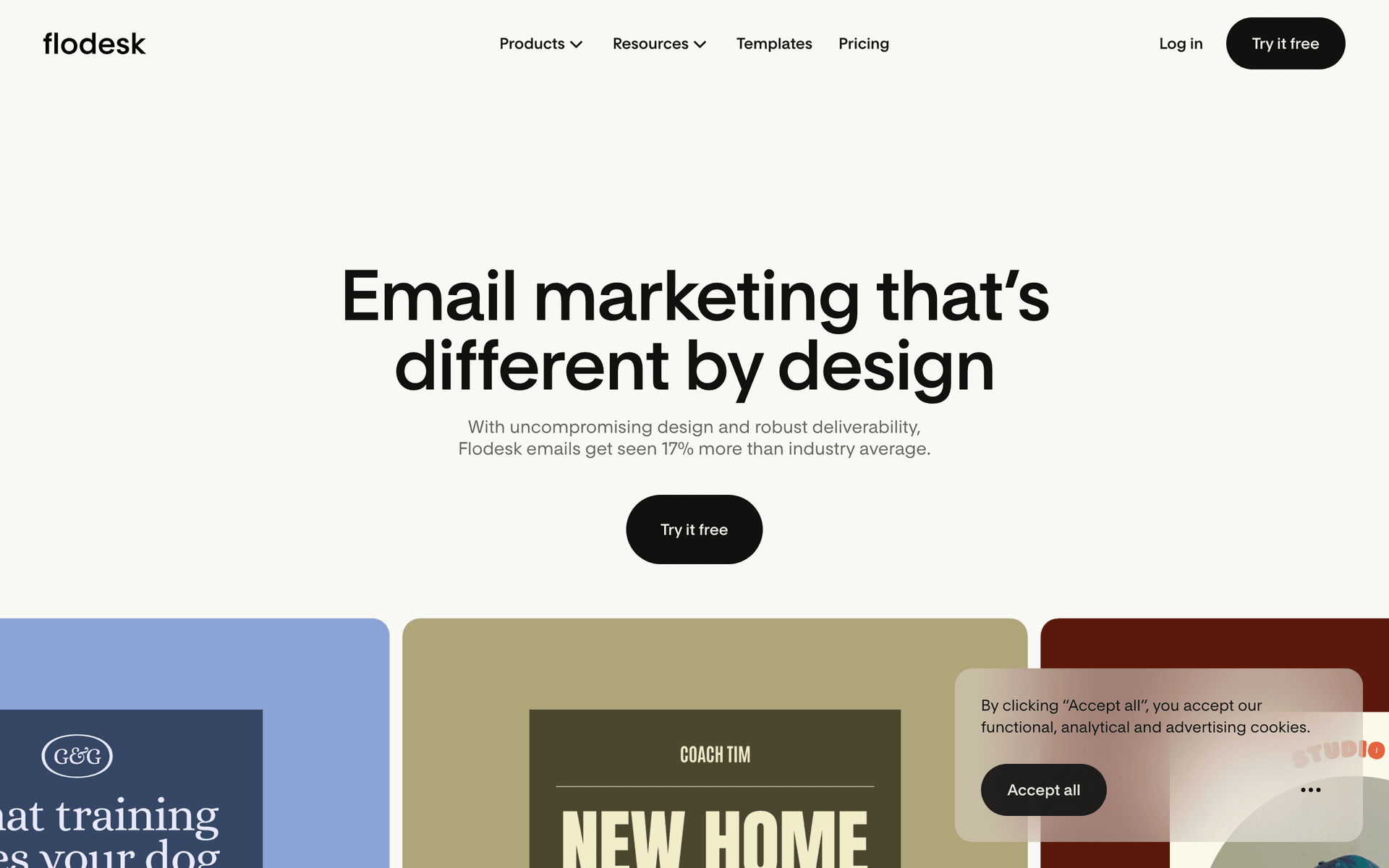
16FlodeskBeautiful email design for premium garden and outdoor lifestyle brands.Premium garden lifestyle brands prioritizing beautiful seasonal lookbook emails$38/month flat rate
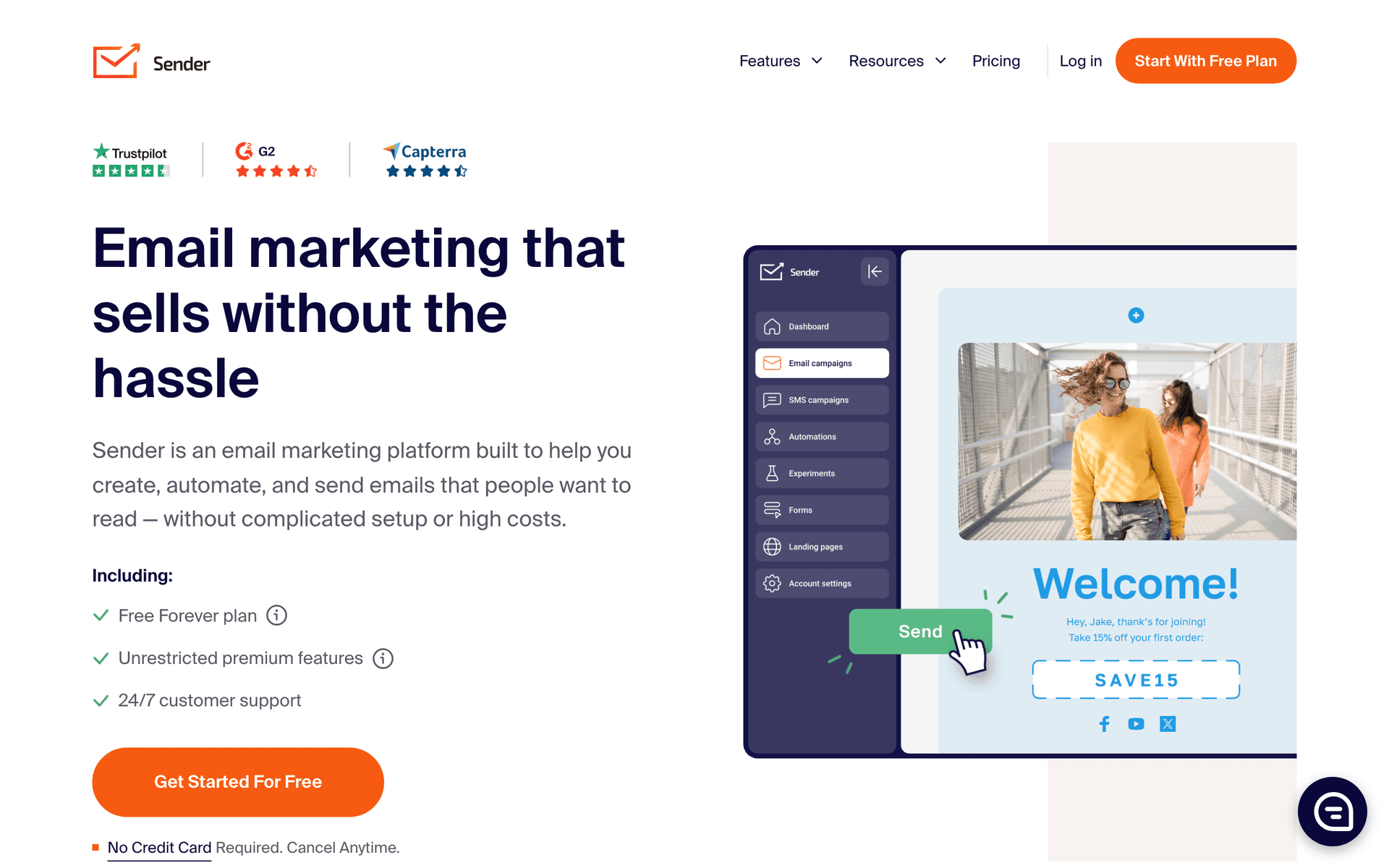
17SenderFree email and SMS with automation for budget garden stores.Small garden retailers wanting free email automation for seasonal campaignsFree up to 2,500 subscribers and 15,000 emails/month, then from $15/month
18EmailOctopusLow-cost email for small garden stores.Family-owned garden centers and nurseries starting with basic email marketingFree up to 2,500 subscribers, then from $9/month
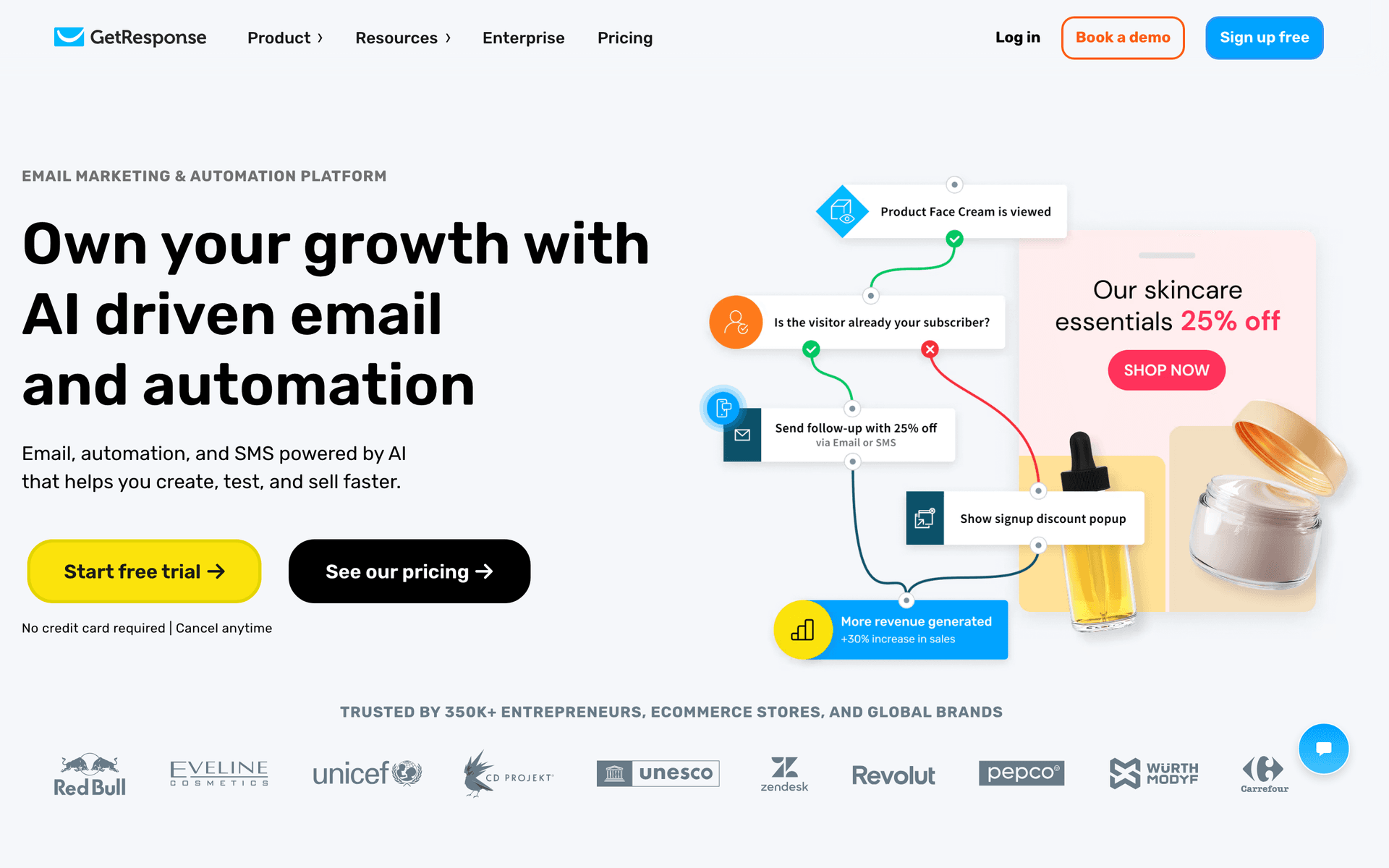
19GetResponseAll-in-one platform with landing pages for garden stores running seasonal ads.Garden stores running seasonal paid advertising wanting landing pages and email unifiedFrom $19/month for 1,000 contacts
Our Top Pick for Garden and Outdoor Living E-commerce
#1
Sequenzy

AI-powered email marketing with pay-per-email pricing ideal for seasonal businesses.

Visit
Sequenzy dashboard screenshot

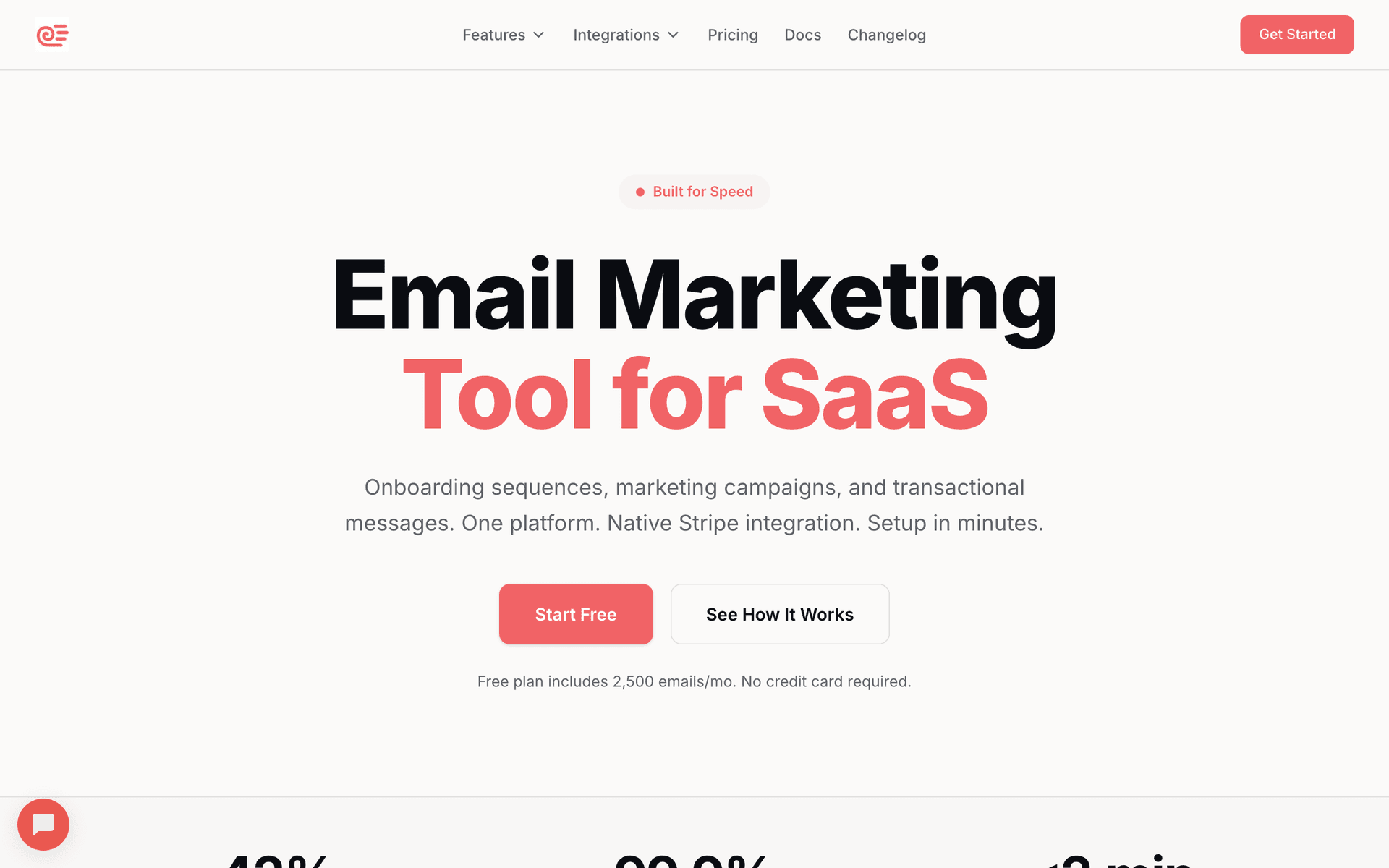
Sequenzy is the best fit for most garden stores because pay-per-email pricing perfectly matches the seasonal sending pattern of garden e-commerce. Send heavily in spring and summer when revenue is highest, scale back in fall and winter, and your email costs follow the same curve. The free tier covers up to 2,500 emails per month, enough for small stores to run their off-season program at zero cost. The $29/month paid plan covers 50,000 emails with unlimited contacts. The AI sequence builder creates entire seasonal campaigns from a single goal description - tell it you want a 'spring preparation campaign for zone 6 gardeners' and get a multi-email sequence with planting timelines, product recommendations, and care tips. Shopify integration syncs order data for product-specific follow-ups and replenishment reminders. For garden stores that want effective seasonal email marketing without dedicating hours to content creation, Sequenzy delivers the best combination of AI capability and pricing alignment.

Best for
Garden stores wanting AI seasonal campaigns with flexible pricing
Pricing
Free up to 2,500 emails/mo, then $19/mo (unlimited contacts)

Pros

  • AI generates seasonal campaign sequences
  • Free tier for off-season and small stores
  • Pay-per-email pricing matches seasonal send patterns
  • Shopify integration for customer data
  • Transactional email included

Cons

  • Newer platform
  • No built-in SMS
  • No product recommendation engine
  • Regional segmentation requires manual setup
#2
Klaviyo

Advanced e-commerce email platform with predictive analytics.

Visit
Klaviyo dashboard screenshot

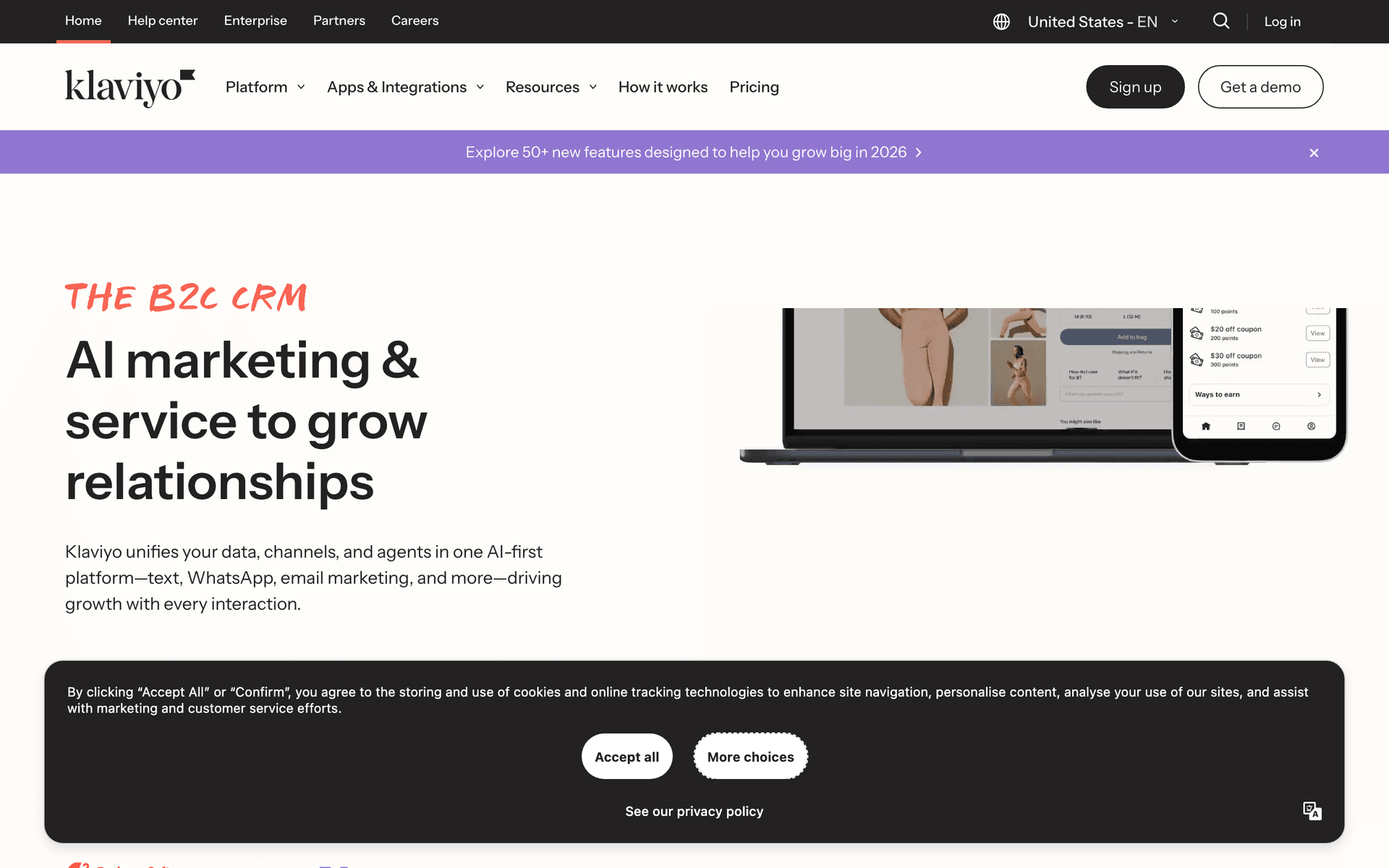
Klaviyo is the most powerful option for established garden stores with large product catalogs and significant email revenue. Predictive analytics forecast when individual customers will buy again, which is valuable for timing replenishment campaigns precisely. AI product recommendations suggest complementary items based on purchase history - a customer who bought tomato cages might see tomato fertilizer and pest spray. Deep Shopify integration and pre-built e-commerce flows handle cart recovery, browse abandonment, and post-purchase sequences out of the box. Advanced segmentation handles regional filtering alongside purchase behavior. The significant downside is per-contact pricing that gets expensive as your customer list grows, and the cost stays the same whether you are sending spring volume or winter trickle.

Best for
Established garden stores with large catalogs and strong email programs
Pricing
Free up to 250 contacts, then from $20/month

Pros

  • AI product recommendations
  • Predictive analytics for replenishment timing
  • Deep Shopify integration
  • Advanced segmentation

Cons

  • Expensive at scale
  • Complex interface
  • Contact-based pricing hurts seasonal senders
  • Steep learning curve
#3
Omnisend

Multi-channel e-commerce marketing with email, SMS, and push.

Visit
Omnisend dashboard screenshot

Omnisend's multi-channel approach works well for time-sensitive garden promotions where urgency matters. SMS alerts about limited plant stock, flash sales on seasonal clearance, and push notifications for restocked popular items create urgency that email alone cannot match. Pre-built workflows handle cart recovery and post-purchase follow-ups with minimal setup. The free tier for up to 250 contacts gets small stores started. For garden stores that want email plus SMS for seasonal urgency campaigns without managing separate platforms, Omnisend provides good mid-range value.

Best for
Garden stores wanting email + SMS for time-sensitive seasonal promotions
Pricing
Free up to 250 contacts, then from $16/month

Pros

  • Email, SMS, and push combined
  • Pre-built automations
  • Free tier
  • Good for seasonal urgency campaigns

Cons

  • Less powerful than Klaviyo
  • Basic reporting
  • Some features on higher tiers
  • Limited product recommendation
#4
Drip

E-commerce email automation with advanced workflows.

Visit
Drip dashboard screenshot

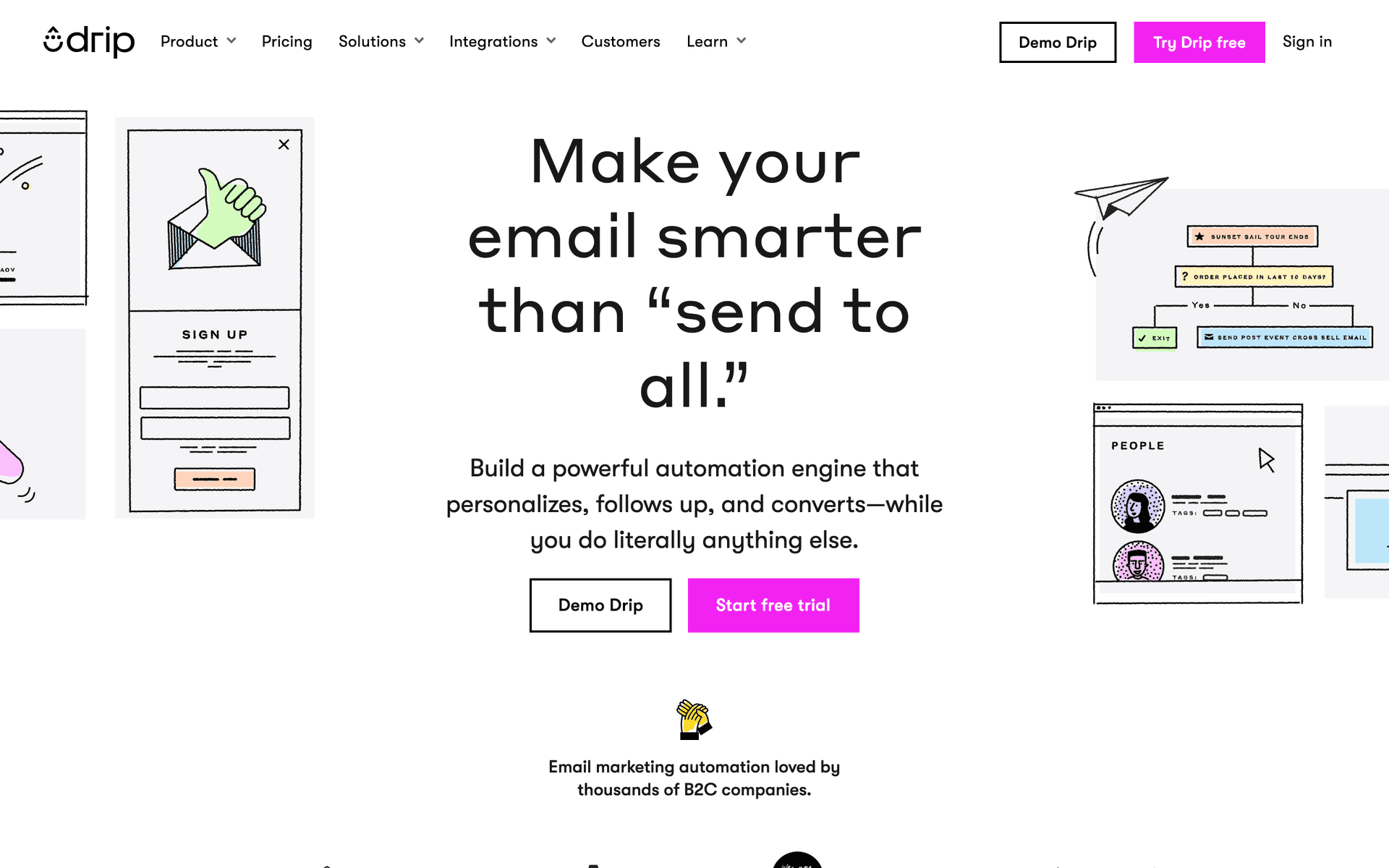
Drip's visual workflow builder excels at creating complex seasonal automation with branching logic based on region, purchase history, and engagement level. Revenue attribution shows which seasonal campaigns perform best year over year, helping you optimize your annual email calendar. Multi-store support works for garden businesses with multiple locations or brands. The $39/month starting price is higher than alternatives, and the lack of a free tier makes it less accessible for small stores testing email marketing.

Best for
Garden stores wanting complex seasonal automation with revenue tracking
Pricing
$39/month for 2,500 contacts

Pros

  • Advanced visual automation builder
  • Revenue attribution by campaign
  • Multi-store support
  • Good Shopify integration

Cons

  • Higher starting price
  • No free tier
  • Steeper learning curve
  • Limited SMS
#5
Mailchimp

Popular email platform with a large template library.

Visit
Mailchimp dashboard screenshot

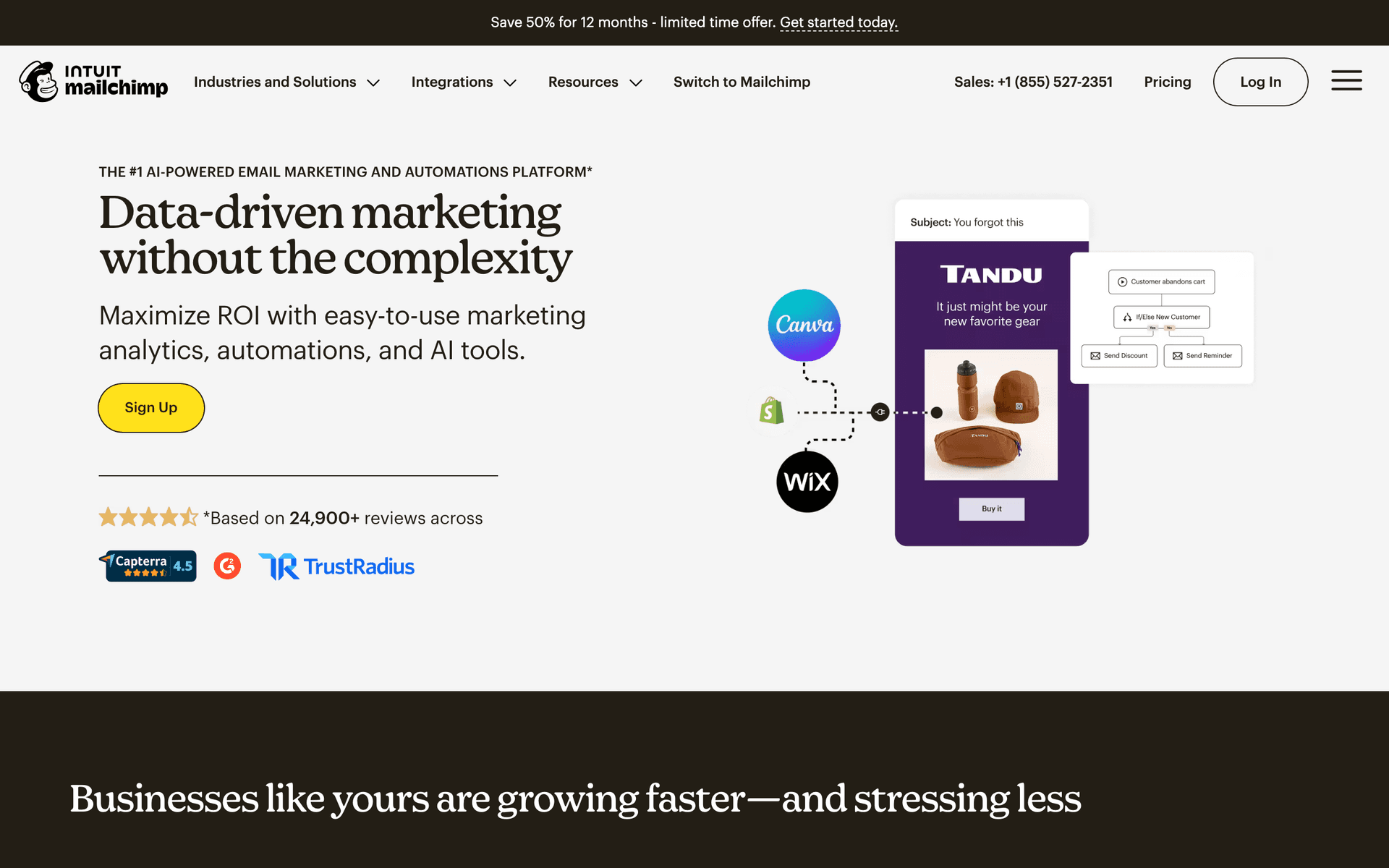
Mailchimp's large template library and easy drag-and-drop editor make it simple to create attractive garden promotions without design skills. The free tier for up to 500 contacts works for very small stores getting started. Customer journey builder handles basic seasonal campaigns with scheduling. Content optimization features suggest better send times and subject lines. The main limitations are basic automation compared to e-commerce-specific platforms and indirect Shopify integration that requires a third-party connector.

Best for
Small garden stores wanting an easy-to-use platform
Pricing
Free up to 500 contacts, then from $13/month

Pros

  • Large template library
  • Free tier
  • Easy to learn
  • Content optimization

Cons

  • Basic automation
  • Gets expensive at scale
  • Not e-commerce specialized
  • Indirect Shopify integration
#6
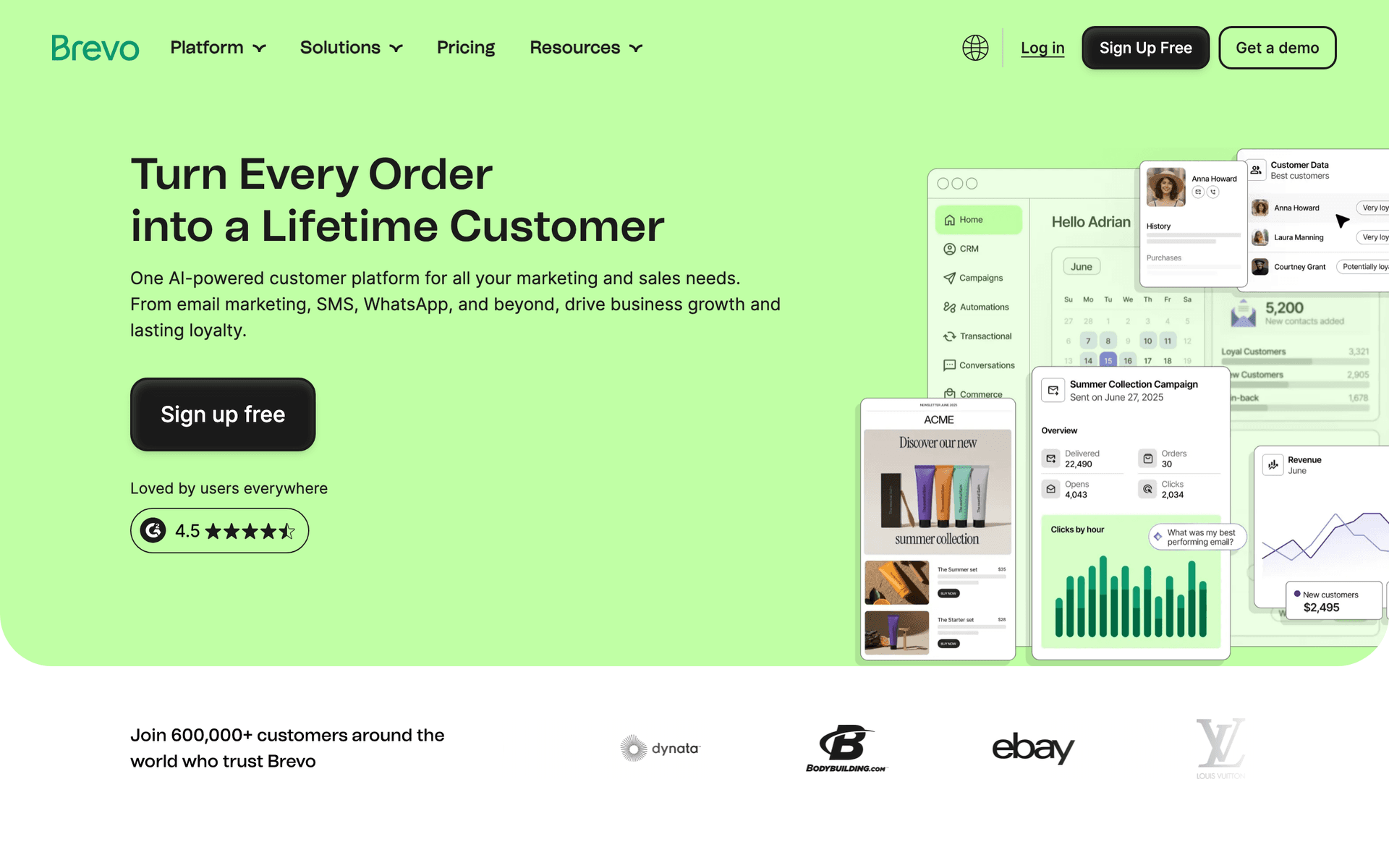
Brevo

Budget email and SMS platform with pay-by-email pricing.

Visit
Brevo dashboard screenshot

Brevo's pay-by-email pricing is great for garden stores with pronounced seasonal send patterns. Send heavily in spring and summer, scale back in winter, and only pay for what you use. The free tier provides 300 emails per day with unlimited contacts stored. SMS for shipping notifications and seasonal arrival alerts adds a second channel. Transactional email handles order confirmations. For budget-conscious garden stores that want seasonal cost flexibility, Brevo provides excellent value.

Best for
Budget-conscious garden stores with seasonal email volumes
Pricing
Free up to 300 emails/day, then from $25/month

Pros

  • Budget-friendly
  • Pay-by-email suits seasonal businesses
  • SMS included
  • Transactional email built in

Cons

  • Basic automation
  • Limited e-commerce features
  • Daily limits on free plan
  • Basic segmentation
#7
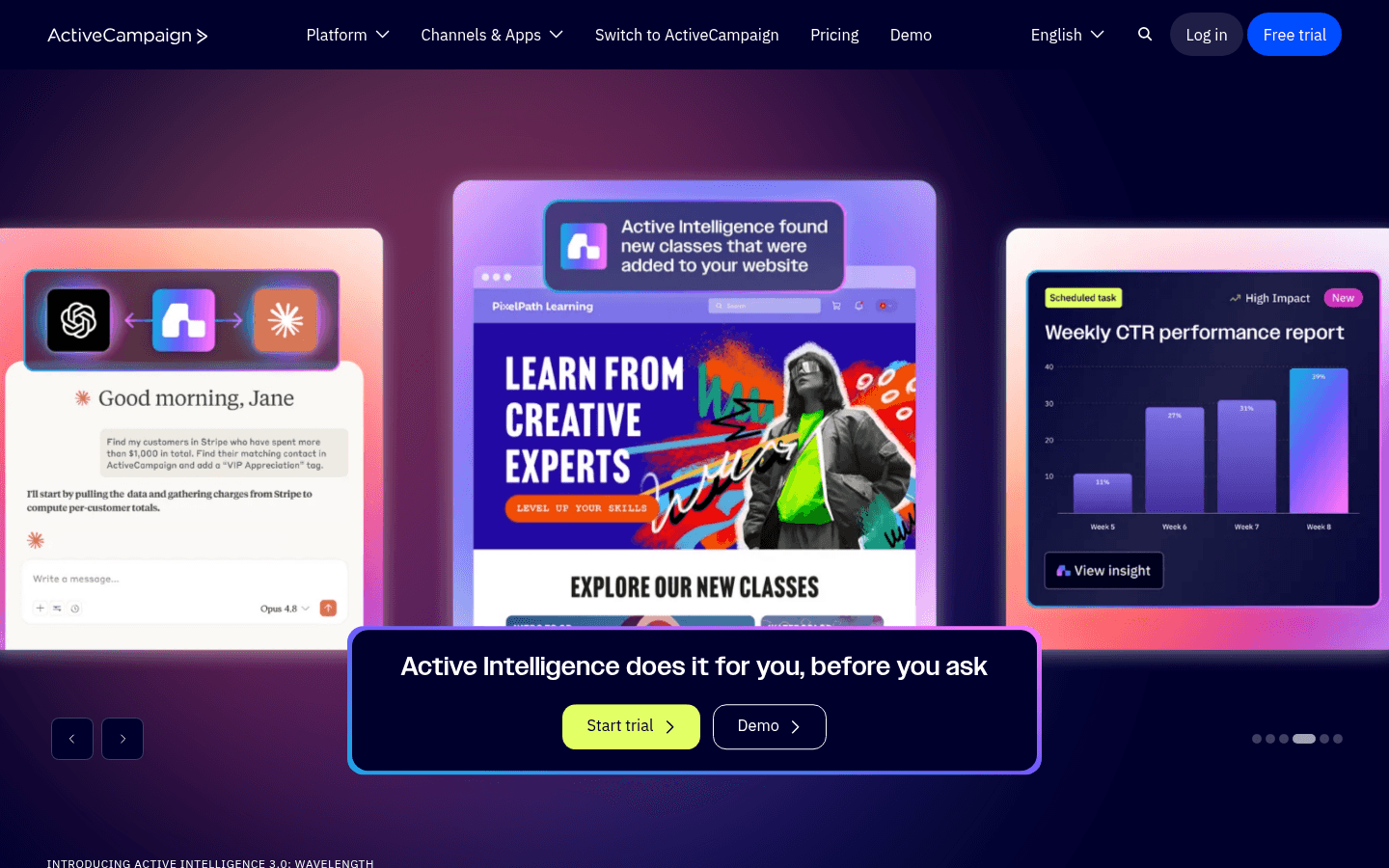
ActiveCampaign

Advanced automation and CRM platform.

Visit
ActiveCampaign dashboard screenshot

ActiveCampaign's automation builder handles complex regional segmentation and multi-step seasonal campaigns with the most sophisticated conditional logic available. CRM features track customer relationships over multiple growing seasons, building long-term purchase profiles. Lead scoring identifies your most engaged gardeners for VIP treatment. Best for garden businesses with dedicated marketing staff who can leverage the advanced features. For most garden stores, the complexity exceeds what is needed.

Best for
Garden businesses with complex customer journey requirements
Pricing
$29/month for 1,000 contacts

Pros

  • Most powerful automation
  • CRM for long-term customer tracking
  • Lead scoring
  • Excellent deliverability

Cons

  • Steep learning curve
  • Not e-commerce specialized
  • Higher price at scale
  • Overkill for most garden stores
#8
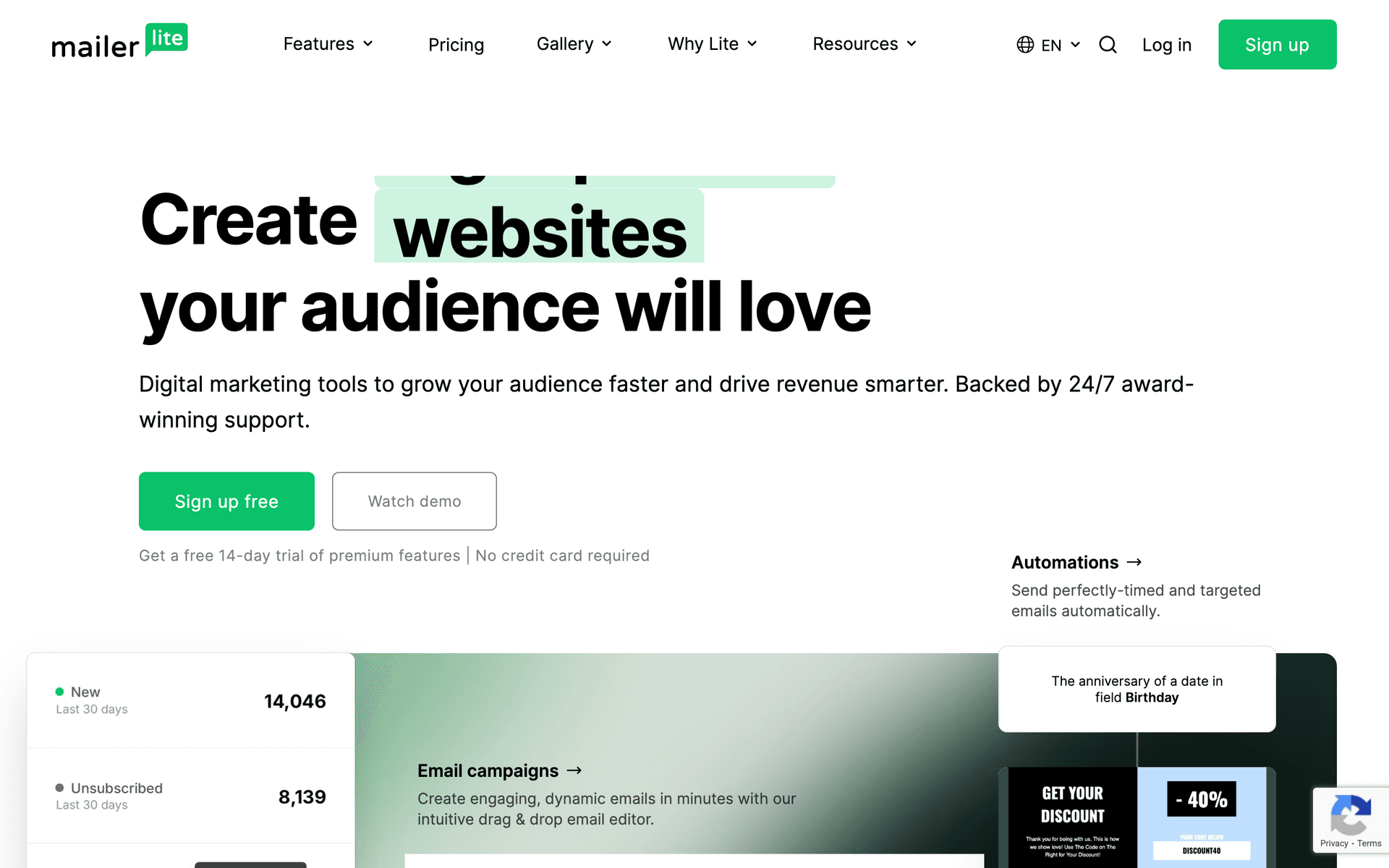
MailerLite

Simple email marketing with a generous free tier.

Visit
MailerLite dashboard screenshot

MailerLite's free tier supports 1,000 subscribers with most features available, making it the most accessible entry point for small garden stores. The clean interface and landing page builder help capture seasonal traffic from gardeners searching for planting guides. Basic automation handles welcome and post-purchase sequences. A good starting platform before upgrading to something more powerful as your email program grows.

Best for
Small garden stores wanting simplicity and a free tier
Pricing
Free up to 1,000 subscribers, then from $10/month

Pros

  • Generous free tier
  • Clean interface
  • Landing page builder
  • Affordable

Cons

  • Limited e-commerce features
  • Basic automation
  • Strict approval process
  • May outgrow quickly
#9
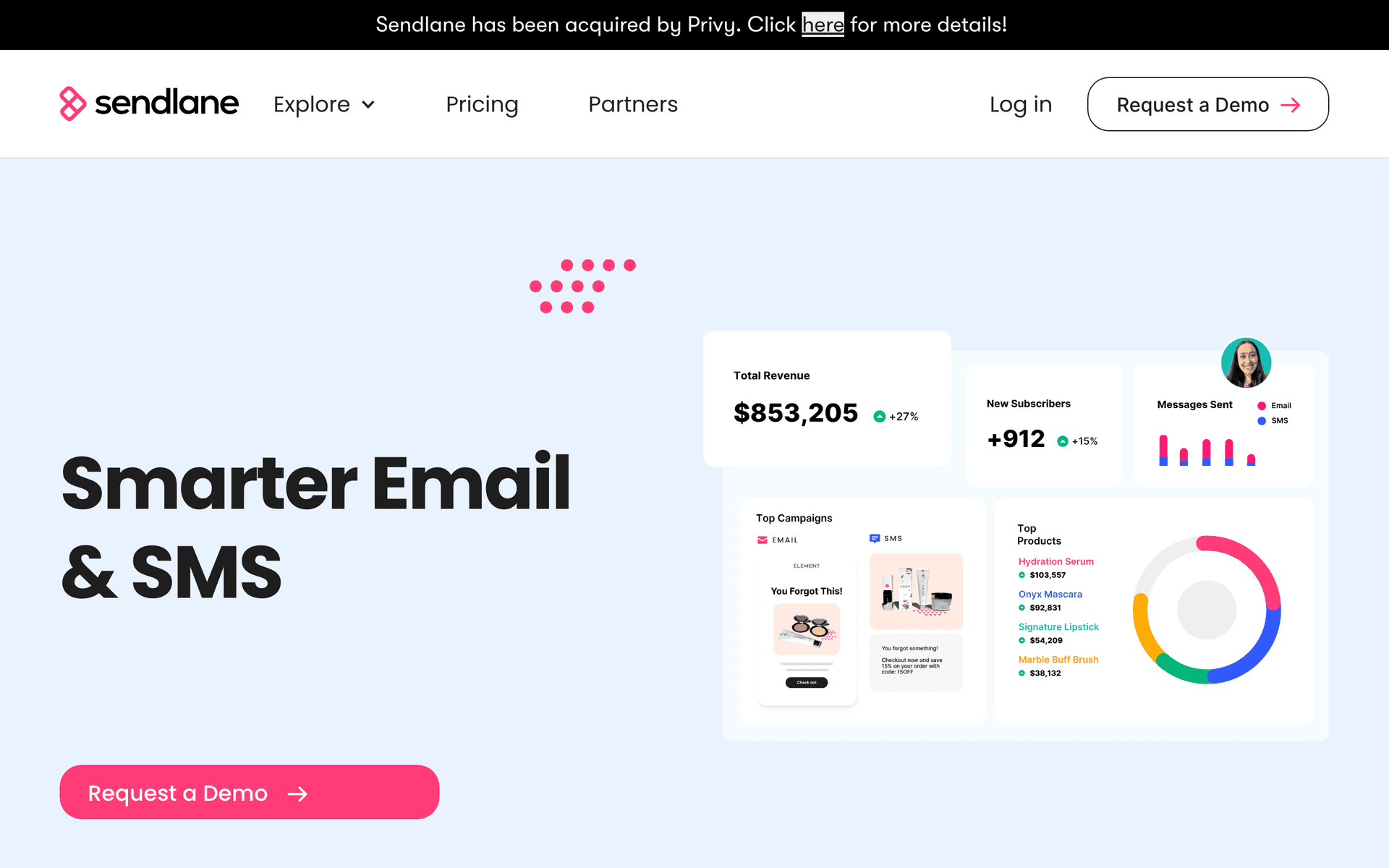
Sendlane

E-commerce email and SMS with pre-built funnels.

Visit
Sendlane dashboard screenshot

Sendlane's pre-built revenue funnels get seasonal campaigns running quickly without building everything from scratch. Real-time data processing helps with time-sensitive promotions on perishable garden products where stock moves fast. Email and SMS combined work well for alerting customers about seasonal inventory arrivals and limited stock items. The $104/month starting price at 10,000 contacts makes it expensive for smaller operations.

Best for
Garden stores wanting quick-launch e-commerce funnels
Pricing
$104/month at 10,000 contacts

Pros

  • Pre-built revenue funnels
  • Real-time data
  • Email and SMS
  • Quick seasonal campaign setup

Cons

  • Higher price point
  • No free tier
  • Less established
  • Contact-based pricing
#10
Omnisend

E-commerce email and SMS for seasonal garden product campaigns.

Visit
Omnisend dashboard screenshot

Omnisend works well for garden and outdoor stores because its pre-built e-commerce automations cover the seasonal product cycles these retailers depend on. Cart abandonment, back-in-stock alerts for popular spring seeds and plants, and post-purchase care instructions all come pre-configured. SMS adds urgency for time-sensitive restocking alerts when popular seasonal inventory arrives. The product catalog sync pulls garden items directly from Shopify or other platforms for recommendation emails. The free tier (up to 250 contacts) suits small garden boutiques just starting with email marketing.

Best for
Garden stores wanting email and SMS for seasonal product launches and restocking alerts
Pricing
Free up to 250 contacts, then from $16/month

Pros

  • Pre-built seasonal automations
  • Back-in-stock SMS alerts
  • Product catalog sync
  • Free tier available

Cons

  • No regional growing zone segmentation
  • Contact-based pricing
  • Basic AI features
  • Not garden-specific
#11
Klaviyo

Advanced e-commerce email for garden stores with complex seasonal segmentation.

Visit
Klaviyo dashboard screenshot

Klaviyo is the best option for established garden and outdoor retailers who need to segment customers by growing zone, past seasonal purchase patterns, and product category (vegetable gardening vs. landscaping vs. outdoor furniture). Custom properties let you store customer location data to send region-appropriate spring planting reminders - a capability that generic email platforms cannot match. AI predictions identify which customers are most likely to make their annual spring purchase, allowing targeted pre-season campaigns before competitors reach them. The pricing gets expensive at scale, but for garden stores with detailed regional segmentation needs, the data capabilities justify it.

Best for
Established garden retailers wanting regional zone segmentation and AI predictions
Pricing
Free up to 250 contacts, then from $20/month

Pros

  • Custom properties for growing zone data
  • AI seasonal purchase predictions
  • Deep Shopify integration
  • Advanced segmentation

Cons

  • Expensive at scale
  • No native growing zone database
  • Complex setup
  • Contact-based pricing
#12
Drip

Revenue-focused email for garden and outdoor stores tracking seasonal ROI.

Visit
Drip dashboard screenshot

Drip tracks revenue per email campaign, which is particularly valuable for garden retailers who invest heavily in pre-season campaigns and want to measure which spring email sequences actually generate sales. E-commerce playbooks provide structured seasonal campaign strategies that garden stores can adapt for planting season kickoffs, summer outdoor living promotions, and fall harvest content. For established garden stores that want to prove the ROI of their email investment before and after each seasonal peak, Drip provides that attribution clearly.

Best for
Garden stores wanting revenue attribution across seasonal campaign cycles
Pricing
$39/month for 2,500 contacts

Pros

  • Revenue attribution per campaign
  • E-commerce seasonal playbooks
  • Visual workflow builder
  • Good segmentation

Cons

  • No free tier
  • Higher starting price
  • No growing zone features
  • Contact-based pricing
#13
ActiveCampaign

Advanced automation and CRM for garden brands with complex customer journeys.

Visit
ActiveCampaign dashboard screenshot

ActiveCampaign works for garden and outdoor retailers who sell across multiple categories (seeds, tools, furniture, irrigation) and need complex conditional automation based on what customers have bought and when. The CRM tracks customer relationships over multiple seasons - if someone bought tomato seeds in spring, you know to send companion planting suggestions in summer and seed saving guides in fall. For outdoor living brands with higher price-point products and longer buying cycles, the CRM component adds relationship-tracking that pure email tools lack.

Best for
Multi-category garden retailers wanting seasonal CRM and complex automation
Pricing
$29/month for 1,000 contacts

Pros

  • Advanced automation with CRM
  • Multi-season customer tracking
  • Complex conditional workflows
  • Good segmentation

Cons

  • Not garden-specific
  • Complex interface
  • No growing zone features
  • Higher price per contact
#14
Brevo

Budget email and SMS for small garden and outdoor stores.

Visit
Brevo dashboard screenshot

Brevo's unlimited contacts free plan suits small garden stores and nurseries with large customer lists built over many growing seasons. Pay-by-email pricing on paid plans works well for the garden retail pattern: heavy sends in spring, moderate in summer, and light in winter. SMS lets you alert local customers about weekend plant sales, new arrivals, and limited inventory items. Transactional emails cover order confirmations and shipping notifications from the same platform. For garden businesses with tight margins and seasonal revenue, Brevo keeps email costs in check.

Best for
Small garden stores and nurseries wanting affordable seasonal email and SMS
Pricing
Free plan (300 emails/day), then from $25/month

Pros

  • Unlimited contacts free
  • Email and SMS
  • Pay-per-email flexibility
  • Transactional included

Cons

  • No seasonal automation
  • No growing zone features
  • Basic e-commerce integration
  • Limited segmentation
#15
MailerLite

Clean email for garden stores sending seasonal newsletters and planting guides.

Visit
MailerLite dashboard screenshot

MailerLite suits garden stores whose primary email format is an editorial newsletter featuring planting guides, seasonal tips, and product spotlights. The clean editor produces visually appealing newsletters that showcase gardening content and product photography well. The free tier (1,000 subscribers, 12,000 emails per month) covers small nurseries and garden boutiques. Landing pages are included for capturing emails from local events and garden shows. Not an e-commerce-specialized tool, but for garden brands focused on content-driven marketing rather than automated product sequences, MailerLite delivers solid value.

Best for
Small garden stores and nurseries focused on content newsletters and seasonal guides
Pricing
Free up to 1,000 subscribers, then from $10/month

Pros

  • Generous free tier
  • Clean editorial design
  • Good for newsletters
  • Landing pages included

Cons

  • No seasonal automation
  • Basic e-commerce features
  • No SMS
  • Limited product integration
#16
Flodesk

Beautiful email design for premium garden and outdoor lifestyle brands.

Visit
Flodesk dashboard screenshot

Flodesk creates visually stunning emails that suit premium garden lifestyle brands - those selling artisan garden tools, luxury outdoor furniture, or curated plant collections where aesthetic presentation matters. The flat-rate pricing ($38/month) provides budget predictability regardless of list size, which suits seasonal businesses where subscriber counts fluctuate. The limitation is minimal e-commerce automation - no cart recovery or product catalog integration. Best used for curated garden lifestyle newsletters and seasonal lookbooks rather than automated product sequences.

Best for
Premium garden lifestyle brands prioritizing beautiful seasonal lookbook emails
Pricing
$38/month flat rate

Pros

  • Beautiful template design
  • Flat-rate pricing
  • Great for lookbooks
  • Easy to use

Cons

  • No e-commerce automation
  • No cart recovery
  • No product sync
  • Very basic automation
#17
Sender

Free email and SMS with automation for budget garden stores.

Visit
Sender dashboard screenshot

Sender is a cost-effective entry point for garden stores that want email automation without upfront investment. The free plan covers 2,500 subscribers and 15,000 monthly emails including basic automation, which is enough for a seasonal welcome series, planting reminder sequence, and re-engagement campaign. Popups and landing pages help capture subscribers from the store website during peak spring traffic. For small garden retailers managing their own operations, Sender's simplicity and generous free tier reduce the barrier to starting email marketing.

Best for
Small garden retailers wanting free email automation for seasonal campaigns
Pricing
Free up to 2,500 subscribers and 15,000 emails/month, then from $15/month

Pros

  • Generous free tier
  • Automation included free
  • Popups included
  • SMS on paid plans

Cons

  • No seasonal garden features
  • Basic e-commerce integration
  • No product recommendations
  • Smaller platform
#18
EmailOctopus

Low-cost email for small garden stores.

Visit
EmailOctopus dashboard screenshot

EmailOctopus offers 2,500 subscribers and 10,000 monthly emails free, making it one of the most accessible entry points for small garden stores or nurseries starting with email marketing. The platform handles basic automation and segmentation for welcome sequences and seasonal promotional campaigns. For family-owned garden centers and small specialty plant sellers who want simple, affordable email without the complexity of larger platforms, EmailOctopus provides what is needed at the lowest cost.

Best for
Family-owned garden centers and nurseries starting with basic email marketing
Pricing
Free up to 2,500 subscribers, then from $9/month

Pros

  • Very generous free tier
  • Simple interface
  • Among lowest paid pricing
  • Basic automation

Cons

  • No e-commerce integrations
  • No SMS
  • Limited segmentation
  • No seasonal-specific features
#19
GetResponse

All-in-one platform with landing pages for garden stores running seasonal ads.

Visit
GetResponse dashboard screenshot

GetResponse fits garden stores that run paid advertising to capture customers during peak season and want landing pages, email capture, and nurture sequences all in one tool. The landing page builder creates seasonal campaign pages for spring seed sales, summer outdoor furniture promotions, and fall planting campaigns. Conversion funnels handle the full flow from ad click through email capture and welcome sequence. For garden retailers who drive significant paid traffic during peak season and want to convert those visitors to email subscribers efficiently, GetResponse simplifies the funnel.

Best for
Garden stores running seasonal paid advertising wanting landing pages and email unified
Pricing
From $19/month for 1,000 contacts

Pros

  • Landing pages and funnels
  • Good for seasonal ad campaigns
  • All-in-one platform
  • Competitive pricing

Cons

  • Interface feels dated
  • Not garden-specific
  • No growing zone features
  • Limited e-commerce automation

Feature Comparison

FeatureSequenzyKlaviyoOmnisendBrevo
Shopify integration
Yes
Deep
Yes
Via plugin
AI sequences
Yes
No
No
No
Product recommendations
No
AI-powered
Basic
No
SMS marketing
No
Yes
Yes
Yes
Pay-per-email
Yes
No
No
Yes
Seasonal automation
AI-generated
Advanced
Pre-built
Basic
Free tier available
Yes
Yes
Yes
Regional segmentation
Manual
Advanced
Basic
Basic

Common Mistakes to Avoid

We see these mistakes over and over. Skip the learning curve and avoid these from day one.

Sending one-size-fits-all planting advice

A March planting email that is perfect for zone 8 customers is too early for zone 4 and too late for zone 10. Regional segmentation is not optional for garden stores - it is the difference between helpful advice and irrelevant content. Invest in proper segmentation even if it means extra setup work.

Going silent during the off-season

Stores that stop emailing from November through February lose subscriber engagement. When spring emails arrive, open rates are lower because subscribers have forgotten about you. Maintain a reduced cadence with planning, educational, and gift content to keep the relationship warm.

Using per-contact pricing with seasonal send patterns

Garden stores send far more email in spring and summer than fall and winter. Per-contact tools charge the same monthly fee regardless of how many emails you send. Pay-per-email pricing aligns your costs with your actual seasonal sending volume - higher costs when revenue is highest.

Not capturing customer data at purchase for personalization

Knowing what a customer bought (tomato seeds, rose bushes, lawn fertilizer) tells you exactly what follow-up content and product recommendations they need. If you are not tracking purchase categories and using them for segmentation, you are missing the biggest personalization opportunity in garden e-commerce.

Email Sequences Every Garden and Outdoor Living E-commerce Needs

These are the essential automated email sequences that will help you grow your business and keep clients coming back.

Spring Preparation Campaign

Late February (regional timing)

Build anticipation for the growing season with progressively urgent planting preparation content.

8 weeks before spring
Start planning your garden now

Seed catalogs, planning tools, and early-bird discounts on pre-orders. Garden planning content.

6 weeks before spring
What to start indoors this month

Indoor seed-starting guide with product recommendations. Grow light and seed tray promotions.

4 weeks before spring
Your soil needs attention before planting

Soil preparation guides with compost, fertilizer, and amendment product features.

2 weeks before spring
It is almost planting time - are you ready?

Final checklist with direct links to everything they need. Last chance for free shipping on bulk orders.

Replenishment Reminder Sequence

Based on product lifecycle (30-90 days after purchase)

Remind customers to reorder consumable garden products.

Based on product
Time to restock your [product category]

Personalized reorder reminder based on the specific product purchased. Direct reorder link with previous order details.

7 days later
Your garden needs you - restock before it is too late

Urgency-based follow-up with tips on what happens without the product (e.g., pest damage without pest control).

End-of-Season Clearance

Late summer / early fall

Clear seasonal inventory while engaging customers for fall projects.

Early September
Summer clearance - up to 50% off seasonal items

Clearance pricing on remaining summer inventory. Urgency with limited stock counts.

Mid September
Prepare your garden for fall - new arrivals

Transition to fall products: bulbs, mums, winterization supplies. Fall planting guides.

Email Marketing Strategy for Garden and Outdoor Stores

Garden e-commerce runs on nature's calendar. Your email marketing strategy needs to follow the seasons as closely as your inventory does.

The seasonal reality of garden email marketing:

  1. Spring is your holiday season. Just as toy stores depend on Christmas, garden stores depend on spring. Start campaigns 8-10 weeks before planting season in each region.
  2. Regional timing is everything. A one-size-fits-all campaign that goes out March 1 is too early for Zone 4 (Minnesota) and too late for Zone 9 (Florida). Segment by region.
  3. Consumables drive repeat revenue. Seeds, soil, fertilizer, and pest control need regular replenishment. Automated reorder reminders based on purchase date and product lifecycle create predictable recurring revenue.

Three email automations every garden store needs:

  • Spring preparation sequence starting 8 weeks before planting season (by region)
  • Replenishment reminders based on product lifecycle (30-90 day cycles)
  • End-of-season clearance transitioning inventory while engaging for the next season

These automations generate revenue throughout the year, not just during peak season.

The Regional Segmentation Strategy

Regional segmentation is the single most impactful thing you can do for your garden email program. Here is how to implement it effectively:

Setting Up Growing Zone Segments

Collect zip codes at signup and map them to USDA growing zones. Create three primary segments: early season (zones 8-10, start campaigns in January), mid-season (zones 5-7, start in February-March), and late season (zones 3-4, start in March-April).

Staggering Content by Region

Each region gets the same general content sequence but staggered by 2-3 weeks. Indoor seed starting, soil preparation, direct sowing, and summer care tips all shift based on local frost dates. This makes every email feel personally relevant rather than generically timed.

Building Year-Round Revenue

Spring Revenue (March-May)

Your peak season. Spring preparation campaigns, seed launches, soil amendments, and starter plants drive 40-50% of annual revenue.

Summer Revenue (June-August)

Maintenance products, pest control, watering supplies, and outdoor living accessories. Replenishment reminders are your primary revenue driver.

Fall Revenue (September-November)

Fall planting (bulbs, mums, garlic), winterization supplies, and end-of-season clearance. Transition campaigns move customers from summer to fall seamlessly.

Winter Revenue (December-February)

Gift guides, indoor gardening supplies, garden planning tools, and early spring pre-orders. Lower volume but important for maintaining subscriber engagement and cash flow.

Measuring Garden E-commerce Email Success

Track revenue per email campaign, seasonal revenue attribution (what percentage of spring revenue comes from email), replenishment reminder conversion rates, and regional campaign performance differences. These metrics help you optimize your annual email calendar for maximum revenue impact across all four seasons.

How We Evaluated These Tools

Tools were evaluated based on garden e-commerce needs - regional segmentation capabilities, seasonal automation with flexible scheduling, product recommendation features, pricing that matches seasonal send patterns, and Shopify integration for order data sync.

Frequently Asked Questions

Ready to grow your garden and outdoor living e-commerce practice?

Start your free trial today. Set up your first email sequence in minutes with AI-powered content generation.

Related Industries

Sequenzy - Complete Pricing Guide

Pricing Model

Sequenzy uses email-volume-based pricing. You only pay for emails you send. Unlimited contacts on all plans — storing subscribers is always free.

All Pricing Tiers

  • 2.5k emails/month: Free (Free annually)
  • 15k emails/month: $19/month ($205/year annually)
  • 60k emails/month: $29/month ($313/year annually)
  • 120k emails/month: $49/month ($529/year annually)
  • 300k emails/month: $99/month ($1069/year annually)
  • 600k emails/month: $199/month ($2149/year annually)
  • 1.2M emails/month: $349/month ($3769/year annually)
  • Unlimited emails/month: Custom pricing (Custom annually)

Yearly billing: All plans offer a 10% discount when billed annually.

Free Plan Features (2,500 emails/month)

  • Visual automation builder
  • Transactional email API
  • Reply tracking & team inbox
  • Goal tracking & revenue attribution
  • Dynamic segments
  • Payment integrations
  • Full REST API access
  • Custom sending domain

Paid Plan Features (15k - 1.2M emails/month)

  • Visual automation builder
  • Transactional email API
  • Reply tracking & team inbox
  • Goal tracking & revenue attribution
  • Dynamic segments
  • Payment integrations (Stripe, Paddle, Lemon Squeezy)
  • Full REST API access
  • Custom sending domain

Enterprise Plan Features (Unlimited emails)

  • Visual automation builder
  • Transactional email API
  • Reply tracking & team inbox
  • Goal tracking & revenue attribution
  • Dynamic segments
  • Payment integrations
  • Full REST API access
  • Custom sending domain

Important Pricing Notes

  • You only pay for emails you send — unlimited contacts on all plans
  • No hidden fees - all features included in the price
  • No credit card required for free tier

Contact

  • Pricing Page: https://sequenzy.com/pricing
  • Sales: hello@sequenzy.com